
Report Feature
No-Sting Antiseptic Cleansing Spray Market Trends and Forecast
The future of the global no-sting antiseptic cleansing spray market looks promising with opportunities in the pharmacy, hospital and clinic markets. The global no-sting antiseptic cleansing spray market is expected to grow with a CAGR of 5.1% from 2025 to 2031. The major drivers for this market are the rising awareness among consumer about wound hygiene, the growing adoption of at-home healthcare, and the increasing focus of hospitals & clinic on infection control.• Lucintel forecasts that, within the type category, skin cleansing spray is expected to witness higher growth over the forecast period.
• Within the application category, pharmacy is expected to witness the highest growth.
• In terms of region, APAC is expected to witness the highest growth over the forecast period. Gain valuable insights for your business decisions with our comprehensive 150+ page report. Sample figures with some insights are shown below.

Emerging Trends in the No-Sting Antiseptic Cleansing Spray Market
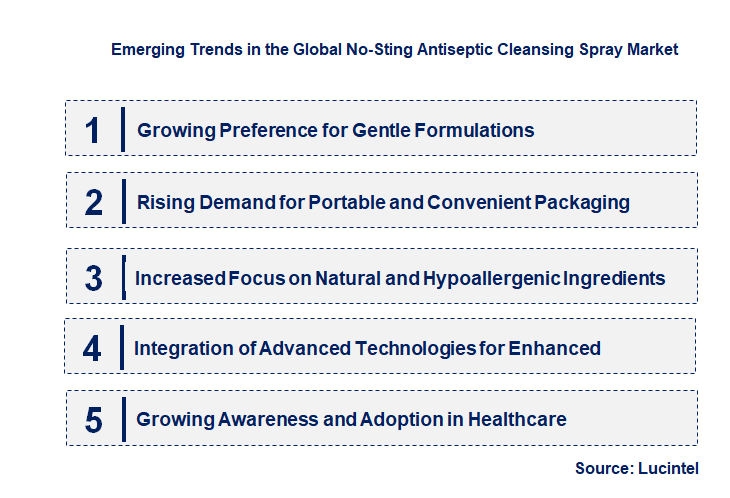
The no-sting antiseptic cleansing spray market is experiencing rapid growth driven by increasing demand for gentle, effective, and convenient antiseptic solutions. Consumers are seeking products that combine efficacy with comfort, especially in healthcare, personal care, and household settings. Innovations in formulation, rising awareness of hygiene, and a shift towards portable and easy-to-use products are shaping this market. As consumers become more health-conscious and prefer products that minimize discomfort, manufacturers are adapting to meet these evolving needs. These developments are not only expanding market size but also redefining product standards and consumer expectations in antiseptic care.• Growing Preference for Gentle Formulations: Consumers favor no-sting antiseptic sprays that provide effective disinfection without causing discomfort or irritation. This trend is driven by increased awareness of skin sensitivities and a desire for pain-free hygiene solutions. Manufacturers are investing in formulations that balance antimicrobial efficacy with skin-friendly ingredients, making products suitable for all age groups, including children and sensitive skin users. This shift enhances user compliance and broadens market appeal, positioning gentle antiseptic sprays as a preferred choice in both healthcare and personal care sectors.
• Rising Demand for Portable and Convenient Packaging: The market is witnessing a surge in demand for compact, easy-to-use spray bottles that facilitate on-the-go disinfection. Consumers seek products that can be conveniently carried in bags, pockets, or car compartments for quick access during daily activities. This trend is particularly prominent among travelers, working professionals, and parents. Packaging innovations such as single-use sachets and refillable bottles are also gaining popularity, contributing to increased product accessibility and user convenience. The focus on portability is driving product development toward smaller, more ergonomic designs that cater to modern lifestyles.
• Increased Focus on Natural and Hypoallergenic Ingredients: Consumers are increasingly inclined toward products formulated with natural, plant-based, and hypoallergenic ingredients to reduce the risk of allergic reactions and skin irritation. This trend reflects a broader shift toward clean-label and eco-friendly products in the hygiene sector. Manufacturers are incorporating botanical extracts, essential oils, and other natural antimicrobials to meet these preferences. The emphasis on natural ingredients not only appeals to health-conscious consumers but also aligns with sustainability goals, thereby expanding the market to environmentally aware demographics and fostering brand loyalty.
• Integration of Advanced Technologies for Enhanced Efficacy: Technological innovations such as nanotechnology, encapsulation, and advanced antimicrobial agents are being integrated into no-sting antiseptic sprays to improve their effectiveness and longevity. These advancements enable products to deliver rapid, broad-spectrum antimicrobial action while maintaining skin safety. Enhanced formulations also offer longer-lasting protection, reducing the frequency of application. The adoption of such technologies is setting new standards for product performance, attracting consumers seeking reliable and scientifically backed hygiene solutions. This trend is expected to continue driving product differentiation and market competitiveness.
• Growing Awareness and Adoption in Healthcare: The COVID-19 pandemic has significantly heightened awareness of hygiene and infection control, leading to increased adoption of no-sting antiseptic sprays in healthcare settings, homes, and personal care routines. Hospitals, clinics, and households are prioritizing easy-to-apply, non-irritating disinfectants to prevent cross-contamination. This trend is also encouraging the development of specialized formulations for sensitive skin and specific pathogens. As hygiene consciousness persists, the market is expanding beyond traditional sectors, integrating into daily personal routines and professional environments, thereby fueling sustained growth and innovation. In summary, these trends are collectively transforming the no-sting antiseptic cleansing spray market by emphasizing user comfort, convenience, natural ingredients, technological innovation, and heightened hygiene awareness. This evolution is leading to more personalized, effective, and accessible products, ultimately reshaping consumer expectations and market dynamics in the hygiene and healthcare sectors.
Recent Development in the No-Sting Antiseptic Cleansing Spray Market
The no-sting antiseptic cleansing spray market has experienced significant growth driven by increasing demand for quick, effective, and pain-free antiseptic solutions. Consumers are seeking products that combine convenience with safety, especially in healthcare and personal care sectors. Recent developments reflect advancements in formulation, regulatory approvals, and market expansion, shaping the competitive landscape. These innovations aim to enhance user experience, improve efficacy, and meet evolving health standards. As awareness about infection control rises, the market is poised for further growth, driven by technological innovations and expanding applications across various sectors.• Introduction of Natural and Organic Formulations: Companies are developing natural, organic antiseptic sprays to cater to health-conscious consumers. These products emphasize plant-based ingredients, reducing chemical exposure, and aligning with eco-friendly trends. This development broadens market appeal and attracts a wider consumer base, including those with sensitive skin or allergies, thereby increasing sales and market penetration.
• Regulatory Approvals and Certifications: Recent approvals from health authorities for specific formulations have boosted consumer confidence and product credibility. Certifications such as FDA approval or eco-labels enhance market trust and facilitate entry into new regions. This development ensures product safety and compliance, and supports marketing strategies, ultimately expanding market reach and consumer adoption.
• Technological Innovations in Delivery Systems: Advances in spray technology, such as fine mist and long-lasting formulations, improve application efficiency and user experience. These innovations make the product more convenient and effective, encouraging repeated use. Enhanced delivery systems also enable targeted application, reducing waste and increasing consumer satisfaction, thereby driving market growth.
• Expansion into New Geographic Markets: Emerging markets in Asia-Pacific, Latin America, and Africa are witnessing increased adoption of no-sting antiseptic sprays. Companies are establishing local manufacturing and distribution channels to meet regional demand. This expansion diversifies revenue streams, increases market size, and accelerates global market development.
• Increased Focus on Pediatric and Sensitive Skin Products: Manufacturers are developing specialized formulations for children and sensitive skin, emphasizing safety and gentleness. These products meet specific consumer needs and comply with stricter safety standards. This focus broadens the consumer base, enhances brand loyalty, and stimulates market growth through targeted marketing strategies. In summary, these recent developments are significantly impacting the no-sting antiseptic cleansing spray market by enhancing product efficacy, safety, and appeal. Regulatory advancements and technological innovations are expanding market reach and consumer trust. Geographic expansion and product specialization are opening new growth avenues, positioning the market for sustained growth and increased competitiveness.
Strategic Growth Opportunities in the No-Sting Antiseptic Cleansing Spray Market
The no-sting antiseptic cleansing spray market is experiencing rapid growth driven by increasing demand for effective, pain-free wound care solutions across various sectors. As consumers and healthcare providers seek convenient and gentle antiseptic options, key applications are expanding, creating significant opportunities for market players. These developments are influenced by rising awareness of infection control, advancements in formulation technology, and a shift towards non-invasive, user-friendly products. Understanding these growth opportunities across different applications is essential for stakeholders aiming to capitalize on emerging trends and enhance their market presence in this evolving landscape.• Healthcare Facilities: The demand for no-sting antiseptic sprays in healthcare settings is driven by the need for quick, pain-free wound disinfection, improving patient compliance, and reducing infection rates. This growth enhances patient comfort and streamlines wound management processes, making it a preferred choice among medical professionals.
• Personal Care & Hygiene: Consumers are increasingly seeking gentle, non-irritating antiseptic options for everyday use, including minor cuts and abrasions. This trend boosts sales in personal care, emphasizing product safety, ease of use, and portability, thereby expanding market reach.
• First Aid & Emergency Kits: The convenience and pain-free application of no-sting antiseptic sprays make them ideal for inclusion in first aid kits for homes, workplaces, and outdoor activities. This increases product penetration and encourages regular use, especially among outdoor enthusiasts and parents.
• Veterinary Applications: The veterinary sector is adopting no-sting antiseptic sprays for animal wound treatment due to their safety and ease of application. This opens new revenue streams and broadens the market scope beyond human healthcare.
• Sports & Fitness: Athletes and fitness enthusiasts prefer no-sting antiseptic sprays for quick wound cleaning during sports activities. Their portability and pain-free application support faster recovery and injury prevention, fueling growth in this niche. In summary, these growth opportunities across key applications are significantly impacting the no-sting antiseptic cleansing spray market by expanding its reach, enhancing product adoption, and driving innovation. The increasing demand for safe, effective, and user-friendly antiseptic solutions is fostering market expansion and creating new avenues for growth across diverse sectors.
No-Sting Antiseptic Cleansing Spray Market Driver and Challenges
The no-sting antiseptic cleansing spray market is influenced by a variety of technological, economic, and regulatory factors. Advances in formulation technology and increased focus on consumer safety are driving innovation and product development. Economic factors such as rising healthcare awareness and disposable income levels contribute to market growth. Regulatory standards for antiseptic products ensure safety and efficacy, shaping product offerings and marketing strategies. Additionally, changing consumer preferences towards convenient, non-stinging antiseptic solutions further propel market expansion. However, the market also faces challenges related to regulatory compliance, competition from alternative disinfectants, and concerns over antimicrobial resistance, which could impact future growth trajectories. The factors responsible for driving the no-sting antiseptic cleansing spray market include:• Technological Innovation: The development of advanced formulations that ensure effective antiseptic action without sting has significantly boosted consumer confidence and product adoption. Innovations such as alcohol-free or hypoallergenic sprays cater to sensitive skin, expanding the target audience. Continuous R&D efforts improve product efficacy, stability, and user experience, fostering market growth. Companies investing in new delivery mechanisms and natural ingredients are gaining competitive advantages, making technological progress a key driver.
• Increasing Healthcare Awareness: Growing awareness about hygiene and infection prevention, especially in the wake of global health crises, has heightened demand for antiseptic products. Consumers are more conscious of the importance of hand hygiene and antiseptic sprays in daily routines, leading to increased sales in both retail and institutional sectors. Healthcare providers and consumers alike prefer quick, effective, and non-stinging antiseptic solutions, which fuels market expansion.
• Regulatory Environment: Stringent regulations regarding the safety, efficacy, and labeling of antiseptic products influence market dynamics. Compliance with standards set by agencies such as the FDA or EMA ensures consumer trust and product legitimacy. Regulatory frameworks also encourage innovation by setting quality benchmarks, thereby fostering a competitive environment that promotes product improvements aligned with safety standards.
• Rising Disposable Income and Urbanization: Economic growth and urbanization have increased disposable incomes, enabling consumers to spend more on personal hygiene products. Urban lifestyles demand convenient, portable, and effective antiseptic solutions like sprays. This economic shift supports premium product offerings and broadens market reach, especially in emerging markets where hygiene awareness is rapidly increasing.
• Product Diversification and Marketing Strategies: Companies are diversifying product lines to include natural, alcohol-free, and skin-sensitive variants to meet diverse consumer needs. Strategic marketing campaigns emphasizing safety, convenience, and efficacy attract a wider customer base. Collaborations with healthcare professionals and endorsements further enhance brand credibility, driving sales and market penetration. The challenges in the no-sting antiseptic cleansing spray market are:
• Regulatory Compliance and Stringent Standards: Navigating complex regulatory landscapes can be challenging for manufacturers. Variations in standards across regions require extensive testing, certification, and documentation, increasing time-to-market and costs. Non-compliance can lead to product recalls, legal issues, and damage to brand reputation, hindering market growth and innovation.
• Competition from Alternative Disinfectants: The market faces stiff competition from traditional antiseptics like alcohol wipes, gels, and other disinfectant products. These alternatives often offer longer-lasting effects or lower costs, making it difficult for spray formulations to gain a dominant market share. Additionally, natural and herbal disinfectants are gaining popularity, further intensifying competition.
• Concerns Over Antimicrobial Resistance: Growing awareness of antimicrobial resistance (AMR) poses a significant challenge. Overuse or misuse of antiseptic products can contribute to resistant strains of bacteria, leading to regulatory restrictions and consumer skepticism. Addressing these concerns requires ongoing research, responsible marketing, and formulation adjustments, which can increase costs and complicate product development. In summary, the no-sting antiseptic cleansing spray market is driven by technological advancements, increasing hygiene awareness, supportive regulatory frameworks, economic growth, and product diversification strategies. However, it faces challenges such as regulatory complexities, intense competition, and concerns over antimicrobial resistance. These factors collectively shape the markets trajectory, demanding continuous innovation and strategic adaptation. The overall impact suggests a promising yet competitive landscape, where success hinges on balancing innovation with regulatory compliance and consumer trust.
List of No-Sting Antiseptic Cleansing Spray Companies
Companies in the market compete on the basis of product quality offered. Major players in this market focus on expanding their manufacturing facilities, R&D investments, infrastructural development, and leverage integration opportunities across the value chain. With these strategies no-sting antiseptic cleansing spray companies cater increasing demand, ensure competitive effectiveness, develop innovative products & technologies, reduce production costs, and expand their customer base. Some of the no-sting antiseptic cleansing spray companies profiled in this report include-• 3M
• Cardinal Health
• B. Braun
• Smith & Nephew
• Medline Industries
• ConvaTec
• Coloplast
• Hollister
• NovaBay
• Dettol
No-Sting Antiseptic Cleansing Spray Market by Segment
The study includes a forecast for the global no-sting antiseptic cleansing spray market by type, application, and region.No-Sting Antiseptic Cleansing Spray Market by Type [Value from 2019 to 2031]:
• Skin Cleansing Spray
• Wound Care Spray
• Others
No-Sting Antiseptic Cleansing Spray Market by Application [Value from 2019 to 2031]:
• Pharmacy
• Hospital
• Clinic
• Others
No-Sting Antiseptic Cleansing Spray Market by Region [Value from 2019 to 2031]:
• North America
• Europe
• Asia Pacific
• The Rest of the World
Country Wise Outlook for the No-Sting Antiseptic Cleansing Spray Market
The no-sting antiseptic cleansing spray market has experienced significant growth driven by increasing demand for quick, pain-free antiseptic solutions, especially in healthcare, personal care, and travel sectors. Innovations in formulation, rising awareness of hygiene, and expanding distribution channels have contributed to market expansion across major economies. As consumers seek effective yet gentle antiseptic options, companies are investing in product development and marketing strategies to capture market share. The following summarizes recent developments in the United States, China, Germany, India, and Japan, highlighting key advancements and trends shaping this market.• United States: The US market has seen a surge in demand for no-sting antiseptic sprays, driven by heightened hygiene awareness post-pandemic. Major brands are launching new formulations with added skin-soothing ingredients, and e-commerce sales are expanding rapidly. Hospitals and clinics increasingly adopt these sprays for quick, pain-free disinfection, boosting market growth. Regulatory agencies are also providing clearer guidelines, encouraging innovation and product safety. The focus on convenience and portability has led to the popularity of travel-sized bottles, further fueling sales.
• China: In China, rapid urbanization and rising health consciousness have propelled the market. Local companies are investing in R&D to develop affordable, effective, no-sting antiseptic sprays tailored to consumer preferences. E-commerce platforms like Alibaba and JD.com facilitate widespread distribution, increasing accessibility. The government’s emphasis on public health initiatives has also supported market expansion. Additionally, collaborations with healthcare providers are enhancing product credibility. The growing beauty and personal care sectors are integrating these sprays into daily routines, further expanding the market.
• Germany: The German market emphasizes product safety, quality, and eco-friendliness. Companies are introducing organic and dermatologically tested no-sting antiseptic sprays to meet consumer demand for sustainable options. Retail chains and pharmacies are expanding their offerings, and there is a rising trend of using these sprays in hospitals and clinics. Regulatory standards in Germany ensure high product safety, encouraging innovation in formulations. Consumer awareness about skin sensitivities and allergies has increased demand for gentle, no-sting antiseptic solutions, fostering market growth.
• India: The Indian market is witnessing rapid growth due to increasing awareness of hygiene and infection control. Local manufacturers are launching affordable, effective, no-sting antiseptic sprays to cater to a large population. The rise of e-commerce and rural outreach programs has expanded product reach. The COVID-19 pandemic has further accelerated demand, with hospitals and households adopting these sprays for quick disinfection. Additionally, the growing beauty and wellness industry is integrating these products into daily skincare routines, contributing to market expansion.
• Japan: In Japan, the focus is on innovative formulations that combine antiseptic efficacy with skin comfort. Companies are developing sprays with added moisturizing and soothing agents to appeal to health-conscious consumers. The market benefits from strict regulatory standards ensuring product safety and quality. The aging population has increased demand for gentle, non-sting antiseptic solutions suitable for sensitive skin. Retail channels include pharmacies, convenience stores, and online platforms. Consumer preference for high-quality, reliable products continues to drive innovation and market growth in Japan.

Features of the Global No-Sting Antiseptic Cleansing Spray Market
Market Size Estimates: No-sting antiseptic cleansing spray market size estimation in terms of value ($B). Trend and Forecast Analysis: Market trends (2019 to 2024) and forecast (2025 to 2031) by various segments and regions. Segmentation Analysis: No-sting antiseptic cleansing spray market size by type, application, and region in terms of value ($B). Regional Analysis: No-sting antiseptic cleansing spray market breakdown by North America, Europe, Asia Pacific, and Rest of the World. Growth Opportunities: Analysis of growth opportunities in different types, applications, and regions for the no-sting antiseptic cleansing spray market. Strategic Analysis: This includes M&A, new product development, and competitive landscape of the no-sting antiseptic cleansing spray market. Analysis of competitive intensity of the industry based on Porter’s Five Forces model.
FAQ
Q1. What is the growth forecast for no-sting antiseptic cleansing spray market? Answer: The global no-sting antiseptic cleansing spray market is expected to grow with a CAGR of 5.1% from 2025 to 2031. Q2. What are the major drivers influencing the growth of the no-sting antiseptic cleansing spray market? Answer: The major drivers for this market are the rising awareness among consumer about wound hygiene, the growing adoption of at-home healthcare, and the increasing focus of hospitals & clinic on infection control. Q3. What are the major segments for no-sting antiseptic cleansing spray market? Answer: The future of the no-sting antiseptic cleansing spray market looks promising with opportunities in the pharmacy, hospital and clinic markets. Q4. Who are the key no-sting antiseptic cleansing spray market companies? Answer: Some of the key no-sting antiseptic cleansing spray companies are as follows:• 3M
• Cardinal Health
• B. Braun
• Smith & Nephew
• Medline Industries
• ConvaTec
• Coloplast
• Hollister
• NovaBay
• Dettol Q5. Which no-sting antiseptic cleansing spray market segment will be the largest in future? Answer: Lucintel forecasts that, within the type category, skin cleansing spray is expected to witness higher growth over the forecast period. Q6. In no-sting antiseptic cleansing spray market, which region is expected to be the largest in next 5 years? Answer: In terms of region, APAC is expected to witness the highest growth over the forecast period. Q7. Do we receive customization in this report? Answer: Yes, Lucintel provides 10% customization without any additional cost.
Table of Contents
List of Figures
List of Tables
Methodology
- In-depth interviews of the major players in this market
- Detailed secondary research from competitors’ financial statements and published data
- Extensive searches of published works, market, and database information pertaining to industry news, company press releases, and customer intentions
- A compilation of the experiences, judgments, and insights of Lucintel’s professionals, who have analyzed and tracked this market over the years.


Buy Now
Choose a license that fits your team. Instant PDF delivery.
Prices exclude taxes. Instant delivery. Custom licensing available on request.
Key Questions
- • What are some of the most promising, high-growth opportunities for the no-sting antiseptic cleansing spray market by type (skin cleansing spray, wound care spray, and others), application (pharmacy, hospital, clinic, and others), and region (North America, Europe, Asia Pacific, and the Rest of the World)?
- • Which segments will grow at a faster pace and why?
- • Which region will grow at a faster pace and why?
- • What are the key factors affecting market dynamics? What are the key challenges and business risks in this market?
- • What are the business risks and competitive threats in this market?
- • What are the emerging trends in this market and the reasons behind them?
- • What are some of the changing demands of customers in the market?
- • What are the new developments in the market? Which companies are leading these developments?
- • Who are the major players in this market? What strategic initiatives are key players pursuing for business growth?
- • What are some of the competing products in this market and how big of a threat do they pose for loss of market share by material or product substitution?
- • What M&A activity has occurred in the last 5 years and what has its impact been on the industry? For any questions related to No-Sting Antiseptic Cleansing Spray Market, No-Sting Antiseptic Cleansing Spray Market Size, No-Sting Antiseptic Cleansing Spray Market Growth, No-Sting Antiseptic Cleansing Spray Market Analysis, No-Sting Antiseptic Cleansing Spray Market Report, No-Sting Antiseptic Cleansing Spray Market Share, No-Sting Antiseptic Cleansing Spray Market Trends, No-Sting Antiseptic Cleansing Spray Market Forecast, No-Sting Antiseptic Cleansing Spray Companies, write Lucintel analyst at email: helpdesk@lucintel.com. We will be glad to get back to you soon.


