
Market Report · July 16, 2026

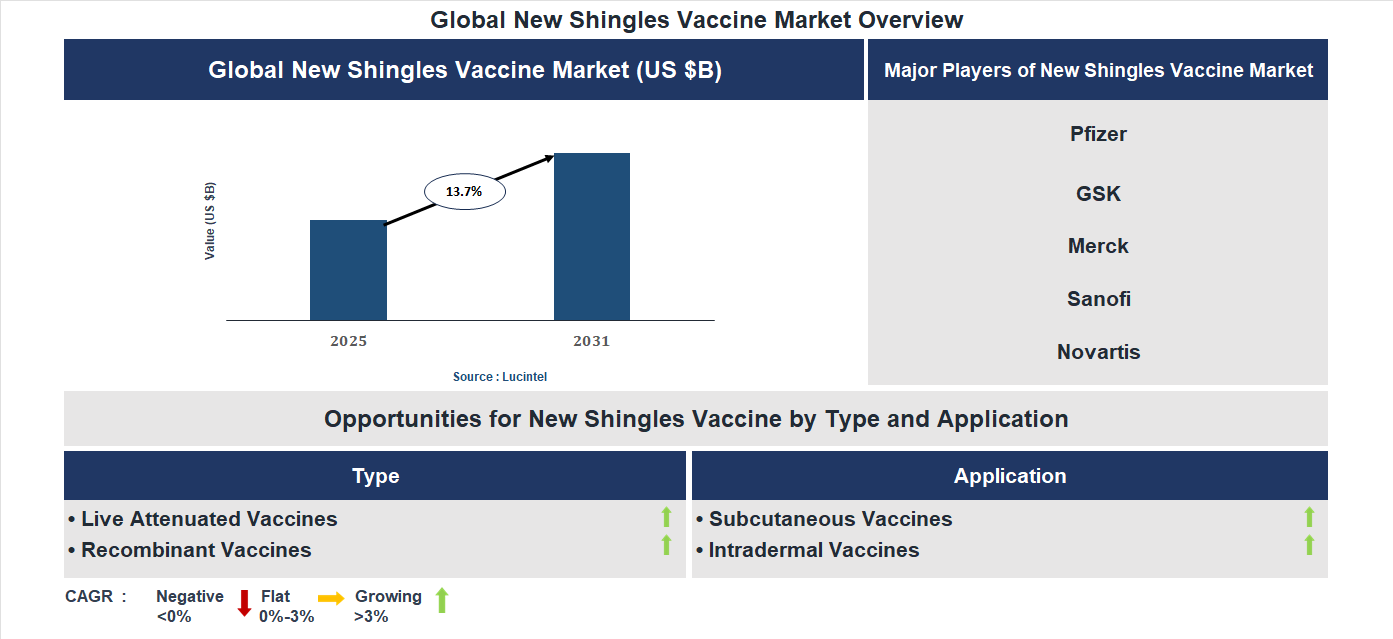
Key data points: The growth forecast = 13.7% annually for the next 7 years. Scroll below to get more insights. This market report covers trends, opportunities and forecasts in new shingles vaccine market to 2031 by type (live attenuated vaccines and recombinant vaccines), application (subcutaneous vaccines and intradermal vaccines), and region (North America, Europe, Asia Pacific, and the Rest of the World)
We'll send your sample report shortly.
• Lucintel forecasts that, within the type category, recombinant vaccine is expected to witness higher growth over the forecast period.
• Within the application category, subcutaneous vaccine is expected to witness higher growth.
• In terms of region, APAC is expected to witness the highest growth over the forecast period. Gain valuable insights for your business decisions with our comprehensive 150+ page report. Sample figures with some insights are shown below.
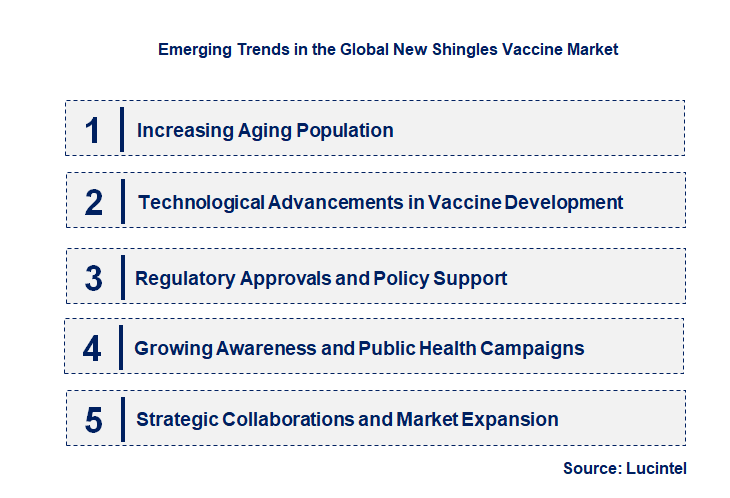
• Increasing Aging Population: The global rise in the elderly demographic is a key driver for the shingles vaccine market. Older adults are more susceptible to shingles and its complications, prompting healthcare systems to prioritize vaccination. This demographic shift results in higher demand for effective vaccines, encouraging manufacturers to develop more targeted and long-lasting solutions. The aging population also influences healthcare policies, with governments and insurers increasingly covering vaccination costs, thus expanding market access. As this trend continues, the market is expected to grow substantially, with a focus on vaccines tailored for older age groups to reduce disease burden.
• Technological Advancements in Vaccine Development: Innovations in vaccine technology, such as mRNA and recombinant platforms, are revolutionizing shingles vaccine development. These advancements lead to vaccines with improved efficacy, safety profiles, and longer-lasting immunity. Enhanced manufacturing processes also reduce costs and increase production capacity, making vaccines more accessible. The integration of novel adjuvants and delivery systems further boosts immune responses, especially in immunocompromised individuals. These technological strides are fostering competitive differentiation among manufacturers and expanding the market by offering more effective and safer options for diverse patient populations.
• Regulatory Approvals and Policy Support: Regulatory agencies worldwide are streamlining approval processes for new shingles vaccines, facilitating faster market entry. Governments and health organizations are actively endorsing vaccination programs, often including shingles vaccines in national immunization schedules. Policy support, such as subsidies and insurance coverage, reduces out-of-pocket costs for patients, increasing uptake. These regulatory and policy developments are crucial in driving market expansion, especially in emerging markets. They also encourage innovation by providing clear pathways for new vaccine approval, ultimately enhancing public health outcomes and market stability.
• Growing Awareness and Public Health Campaigns: Increased awareness about shingles and its potential complications is boosting vaccine demand. Public health campaigns educate populations about the benefits of vaccination, dispelling myths and encouraging uptake among at-risk groups. Digital media and community outreach programs play a vital role in disseminating information, especially in underserved areas. This heightened awareness leads to higher vaccination rates, reducing disease incidence and healthcare costs. As awareness continues to grow, the market is expected to expand further, with increased emphasis on education and outreach to maximize vaccination coverage.
• Strategic Collaborations and Market Expansion: Partnerships between pharmaceutical companies, healthcare providers, and governments are accelerating market growth. Collaborations facilitate research, development, and distribution of vaccines, especially in emerging markets. Market expansion strategies include licensing agreements, joint ventures, and public-private partnerships aimed at increasing access and affordability. These collaborations also foster innovation and help overcome logistical challenges in vaccine delivery. As companies expand their geographic reach and product portfolios, the market becomes more competitive and diverse, ultimately improving the availability and affordability of shingles vaccines worldwide. In summary, these emerging trends are collectively transforming the new shingles vaccine market by enhancing vaccine efficacy, expanding access, and increasing awareness. The convergence of technological innovation, policy support, demographic shifts, and strategic collaborations is driving substantial growth and reshaping how shingles prevention is approached globally. This evolution promises improved health outcomes and a more resilient, accessible market in the coming years.
• Introduction of a Recombinant Shingles Vaccine: This new vaccine offers higher efficacy and fewer side effects compared to traditional options, leading to increased adoption among older adults and boosting market growth.
• Regulatory Approvals and Launches: Recent approvals by health authorities in various countries have facilitated the launch of new vaccines, expanding access and driving market expansion globally.
• Technological Advancements in Vaccine Formulation: Innovations such as mRNA technology have improved vaccine stability and effectiveness, attracting more healthcare providers and patients to vaccination programs.
• Growing Awareness and Immunization Campaigns: Increased public health campaigns and awareness initiatives have elevated demand, especially in developing regions, contributing to market penetration.
• Strategic Collaborations and Partnerships: Pharmaceutical companies are forming alliances for research, development, and distribution, enhancing innovation capacity and market reach. In summary, these developments are significantly impacting the new shingles vaccine market by increasing vaccine availability, improving efficacy, and expanding access worldwide. The market is becoming more competitive and innovative, which is expected to lead to better prevention strategies, reduced disease burden, and overall growth in vaccination rates.
• Elderly Population Vaccination: The aging demographic is a primary driver, with increased vaccination rates among those aged 50 and above, reducing shingles incidence and related complications.
• Healthcare Provider Adoption: Growing awareness among healthcare professionals about vaccine efficacy is leading to higher recommendation rates, boosting market penetration.
• Travel and Tourism Sector: Increased travel activities among older adults are prompting targeted vaccination campaigns, expanding market reach in travel clinics and pharmacies.
• Workplace Immunization Programs: Employers are adopting vaccination initiatives for older employees, contributing to broader coverage and market growth.
• Innovative Vaccine Technologies: Development of new vaccine formulations and delivery methods, such as single-dose vaccines, enhances accessibility and patient compliance, fueling market expansion. In summary, these growth opportunities are significantly impacting the new shingles vaccine market by broadening its application scope, increasing vaccination rates, and fostering innovation. This dynamic environment is expected to sustain robust growth, improve public health outcomes, and create new revenue streams for industry stakeholders.
• Technological Advancements: Innovation in vaccine development, such as mRNA and recombinant technologies, enhances efficacy and safety profiles, leading to increased adoption. These advancements enable faster production, improved storage, and broader distribution, making vaccines more accessible. As technology evolves, new formulations can target diverse populations, expanding market reach. The continuous improvement in vaccine technology also fosters confidence among healthcare providers and patients, further accelerating market growth.
• Rising Aging Population: The global increase in the elderly demographic significantly contributes to market growth. Older adults are at higher risk of developing shingles, and the aging populations healthcare needs drive demand for effective vaccines. Governments and healthcare providers prioritize vaccination programs to reduce disease burden and associated complications, such as postherpetic neuralgia. This demographic shift ensures a steady increase in vaccine uptake, supporting sustained market expansion.
• Increasing Awareness and Education: Public health campaigns and healthcare provider initiatives have improved awareness about shingles and its potential complications. Educating the population about vaccine benefits encourages higher vaccination rates, especially among high-risk groups. Increased awareness also reduces vaccine hesitancy, leading to broader acceptance. As knowledge dissemination continues, market demand is expected to grow, especially in regions with previously low vaccination coverage.
• Regulatory Approvals and Support: Favorable regulatory environments and accelerated approval processes facilitate quicker market entry for new shingles vaccines. Regulatory agencies support for innovative vaccine platforms encourages manufacturers to invest in research and development. Additionally, government initiatives and subsidies promote vaccination programs, further boosting market growth. Clear guidelines and streamlined approval processes reduce time-to-market, enabling companies to capitalize on emerging opportunities.
• Strategic Collaborations and Investments: Partnerships between pharmaceutical companies, research institutions, and healthcare organizations foster innovation and expand distribution networks. Investments in research and manufacturing capacity enhance vaccine availability and affordability. Collaborations also facilitate clinical trials and regulatory approvals, reducing timeframes. These strategic alliances help companies penetrate new markets and meet increasing demand efficiently, ensuring sustained growth in the shingles vaccine market. The challenges facing this Market include:-
• Vaccine Accessibility and Distribution: Ensuring equitable access to vaccines remains a significant challenge, especially in low- and middle-income countries. Distribution infrastructure, cold chain requirements, and logistical hurdles hinder widespread vaccination efforts. Limited healthcare resources and supply chain disruptions can delay vaccine delivery, impacting market growth. Addressing these issues requires substantial investment and coordination among stakeholders to improve distribution networks and ensure vaccines reach vulnerable populations.
• Vaccine Hesitancy and Public Perception: Misinformation, safety concerns, and lack of awareness contribute to vaccine hesitancy among certain populations. Negative perceptions can reduce vaccination rates, undermining herd immunity goals. Overcoming these barriers necessitates targeted education campaigns and transparent communication about vaccine safety and efficacy. Managing public trust is crucial for maintaining high vaccination coverage and market stability.
• Pricing and Reimbursement Challenges: High vaccine costs and inconsistent reimbursement policies pose barriers to market expansion. Affordability issues limit access for uninsured or underinsured populations. Negotiating favorable pricing and establishing comprehensive reimbursement frameworks are essential for widespread adoption. Economic constraints and policy variations across regions can influence market dynamics, requiring strategic pricing and partnership approaches to sustain growth. In summary, the new shingles vaccine market is driven by technological innovations, demographic shifts, increased awareness, regulatory support, and strategic collaborations. However, challenges such as distribution hurdles, vaccine hesitancy, and pricing issues must be addressed to realize its full potential. The interplay of these factors will shape the markets future trajectory, requiring concerted efforts from stakeholders to maximize benefits and overcome barriers. Overall, the market holds promising growth prospects, provided that challenges are managed effectively through innovation, policy support, and public engagement.
• Pfizer
• GSK
• Merck
• Sanofi
• Novartis
• Yidao Biotechnology
• Jiangsu Ruike Biotechnology
• Live Attenuated Vaccines
• Recombinant Vaccines
• Subcutaneous Vaccines
• Intradermal Vaccines
• North America
• Europe
• Asia Pacific
• The Rest of the World
• United States: The US has seen increased adoption of the newer shingles vaccines, such as Shingrix, supported by CDC recommendations and insurance coverage. The market growth is driven by rising awareness among older adults and healthcare providers. Regulatory agencies continue to approve new formulations and booster options, enhancing vaccine accessibility. Public health campaigns emphasize vaccination to reduce shingles incidence and complications, leading to higher vaccination rates nationwide.
• China: China is rapidly expanding its shingles vaccine market with government initiatives promoting adult immunization. Local manufacturers are developing and launching new vaccines, often at lower costs, to meet domestic demand. Regulatory pathways are becoming more streamlined, encouraging innovation. The aging population and increasing healthcare infrastructure support market growth. Public awareness campaigns are improving vaccine acceptance, and collaborations with international companies are enhancing product quality and distribution.
• Germany: Germanys market is characterized by high vaccine awareness and strong healthcare infrastructure. The country primarily uses the Shingrix vaccine, with widespread recommendations for adults over 50. The government promotes vaccination through public health policies, and insurance coverage facilitates access. Ongoing research focuses on vaccine efficacy in immunocompromised populations. Market growth is also driven by an aging demographic and increased physician advocacy for shingles prevention.
• India: India is witnessing a burgeoning shingles vaccine market driven by rising awareness and expanding healthcare access. Local manufacturers are developing affordable vaccines to cater to a large population segment. Regulatory approvals are improving, and government health programs are beginning to include shingles vaccination. The market is also influenced by increasing urbanization and awareness campaigns. Challenges remain in distribution and cold chain logistics, but overall growth prospects are positive.
• Japan: Japan has a mature shingles vaccine market with high vaccination rates among older adults. The government recommends shingles vaccination for those over 60, supported by insurance coverage. Ongoing research aims to improve vaccine formulations and reduce side effects. The aging population continues to drive demand, and public health initiatives focus on preventing shingles-related complications. Market players are investing in new vaccine development and expanding distribution channels to meet rising needs.


• Pfizer
• GSK
• Merck
• Sanofi
• Novartis
• Yidao Biotechnology
• Jiangsu Ruike Biotechnology Q5. Which new shingles vaccine market segment will be the largest in future? Answer: Lucintel forecasts that, within the type category, recombinant vaccine is expected to witness higher growth over the forecast period. Q6. In new shingles vaccine market, which region is expected to be the largest in next 5 years? Answer: In terms of region, APAC is expected to witness the highest growth over the forecast period. Q7. Do we receive customization in this report? Answer: Yes, Lucintel provides 10% customization without any additional cost.


Choose a license that fits your team. Instant PDF delivery.
Prices exclude taxes. Instant delivery. Custom licensing available on request.
Market Report · July 16, 2026
Market Report · July 15, 2026
Market Report · July 15, 2026
Trusted partner for strategic intelligence and business growth


Receive a complimentary market analysis tailored to your industry. Our analysts will identify key growth opportunities and competitive dynamics specific to your business.

Market size, growth rate, and key trend analysis for your specific sector.

Top competitor positioning and market share analysis.

Strategic recommendations backed by data-driven insights.
Get curated market intelligence and competitive moves straight to your inbox.
By subscribing, you agree to receive our monthly insights. Unsubscribe anytime.
Receive a complimentary market analysis tailored to your industry. Our analysts will identify key growth opportunities and competitive dynamics specific to your business.
Market size, growth rate, and key trend analysis for your specific sector.
Top competitor positioning and market share analysis.
Strategic recommendations backed by data-driven insights.
Get curated market intelligence, emerging trends, and competitive moves straight to your inbox each month.
By subscribing, you agree to receive our monthly insights. Unsubscribe anytime.
We'll send your sample report shortly.