
Report Feature
Neurology Clinical Trial Market Trends and Forecast
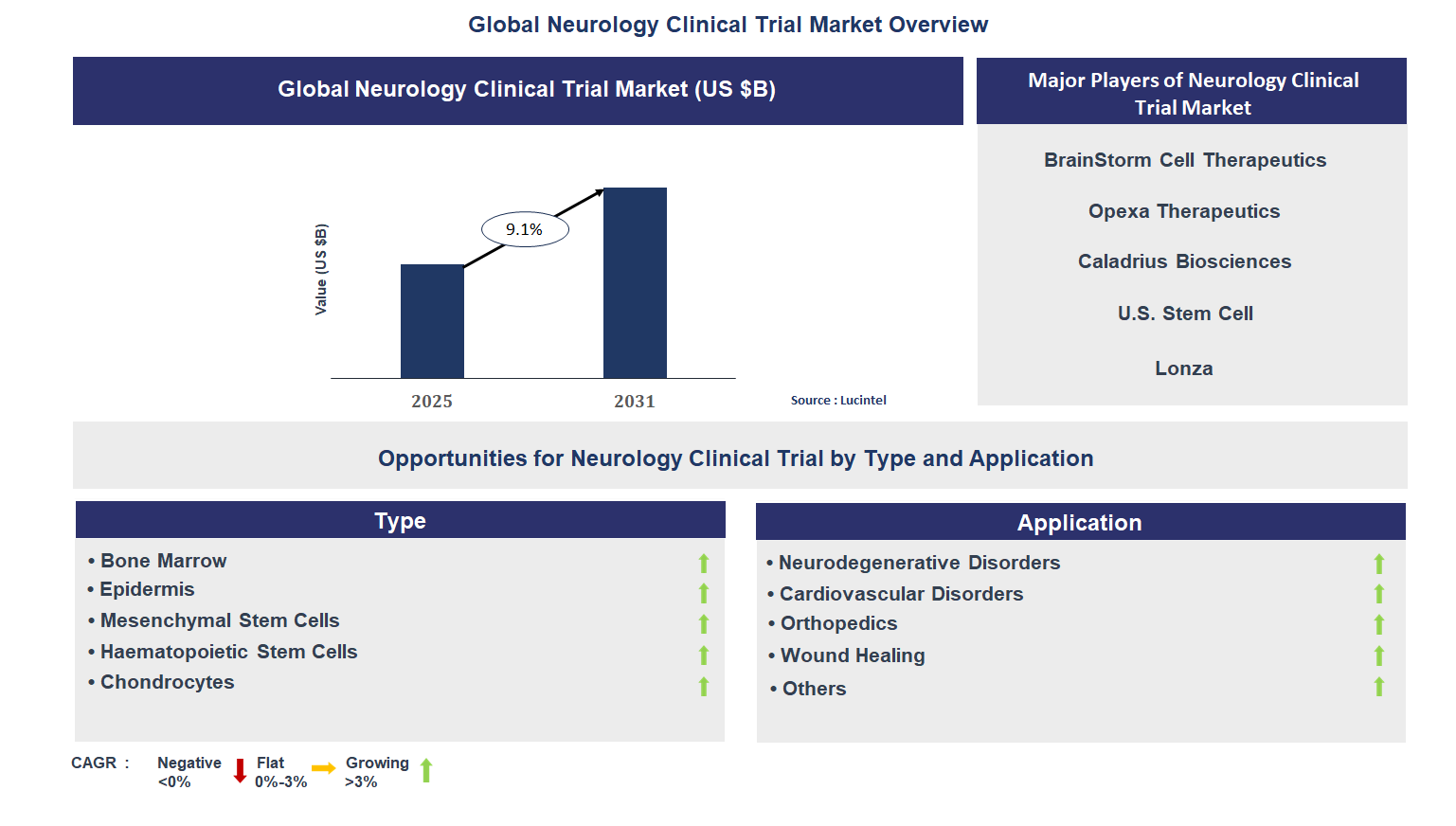
The future of the global neurology clinical trial market looks promising with opportunities in the neurodegenerative disorder, cardiovascular disorder, orthopedics, and wound healing markets. The global neurology clinical trial market is expected to grow with a CAGR of 9.1% from 2025 to 2031. The major drivers for this market are the increasing prevalence of neurological disorder cases, the rising investment in neuroscience drug development, and the growing demand for advanced clinical research studies.• Lucintel forecasts that, within the type category, mesenchymal stem cell is expected to witness the highest growth over the forecast period.
• Within the application category, neurodegenerative disorder is expected to witness the highest growth.
• In terms of region, APAC is expected to witness the highest growth over the forecast period. Gain valuable insights for your business decisions with our comprehensive 150+ page report. Sample figures with some insights are shown below.
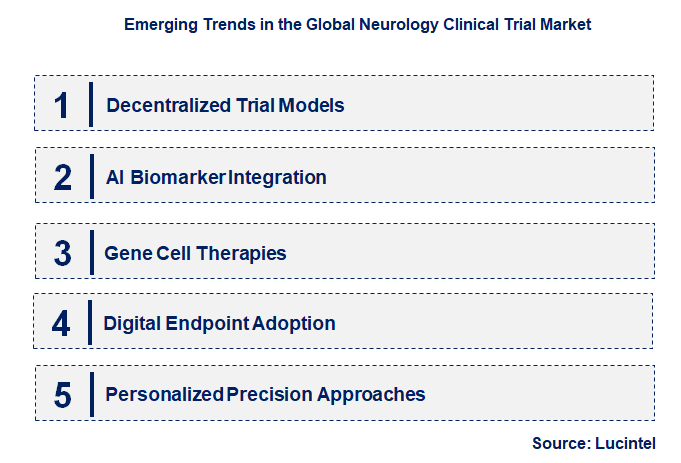
Emerging Trends in the Neurology Clinical Trial Market
Emerging trends in neurology clinical trial market revolutionize execution through technology fusion, patient-centric designs, and precision targeting. These shifts address longstanding hurdles in recruitment, endpoints, and efficacy, paving ways for breakthrough approvals in complex brain disorders.• Decentralized Trial Models: Hybrid and virtual platforms expand reach using wearables for real-time data, slashing site dependencies. Impacts include boosted enrollment in rare neurology cases, reduced dropouts, and inclusive participation from remote areas, transforming trial speed and diversity.
• AI Biomarker Integration: Artificial intelligence analyzes imaging and fluids for predictive endpoints in Alzheimer‘s progression. Revolutionizes patient stratification, minimizes failures, and enables adaptive designs, accelerating personalized interventions with higher success probabilities.
• Gene Cell Therapies: Viral vectors and stem cells target Parkinson‘s and epilepsy roots, showing durable effects. Shifts paradigms from symptom relief to cures, spurring investments and regulatory fast-tracks for monogenic disorders.
• Digital Endpoint Adoption: Wearables capture motor and cognitive metrics objectively in MS trials. Enhances sensitivity over scales, supports home monitoring, and validates novel therapies faster for regulatory nods.
• Personalized Precision Approaches: Biomarker-driven selections tailor interventions for stroke recovery. Improves outcomes, cuts heterogeneity, and fuels combo therapies, redefining neurology as stratified medicine. These trends forge efficient, inclusive trials, diminishing traditional barriers and unlocking disease-modifying pipelines. Neurology evolves toward proactive, tech-empowered ecosystems, hastening therapies that redefine brain health management globally.
Recent Development in the Neurology Clinical Trial Market
Pivotal developments in neurology clinical trial market spotlight therapeutic breakthroughs, platform innovations, and collaborative accelerations fortifying pipelines against escalating disease burdens.• Alzheimer‘s Pipeline Surge: Expansive late-stage evaluations of anti-amyloid and tau agents yield promising cognitive stabilizations. Catalyzes shifts to early interventions, expands treatment arsenals, and invigorates stakeholder confidence in modifiable pathologies.
• Epilepsy Gene Therapy: Stem cell implants demonstrate seizure reductions in focal onset cases. Pioneers curative paradigms, bypasses pharmacoresistance, and opens avenues for broader neurogenetic applications.
• Parkinson‘s Ambroxol Testing: Repurposed agent shows motor slowing in early disease via GBA enhancement. Bridges gaps in progression modifiers, spurs biomarker validations, and diversifies neuroprotective strategies.
• Brain-Computer Interfaces: Implantable devices restore functions in paralysis trials from China. Transforms rehabilitation, integrates AI for intent decoding, and heralds neuroprosthetics era.
• Myasthenia Gravis Biologic: Fusion protein sustains improvements in Phase 3, targeting autoimmunity. Bolsters B-cell depletion options, eases burdens, and exemplifies cross-neurology immune modulations. These milestones propel market vitality by validating innovative modalities, streamlining approvals, and embedding advanced tools, ultimately bridging research to clinical impact in neurology.
Strategic Growth Opportunities in the Neurology Clinical Trial Market
The neurology clinical trial market growth thrives across applications harnessing tech synergies and unmet needs in neurodegeneration, neuroimmunology, and recovery, unlocking expansive therapeutic frontiers.• Alzheimer‘s Disease Dominance: Anti-amyloid and neuroprotective agents flood pipelines for early detection. Drives massive enrollments, validates blood biomarkers, and pioneers preventives reshaping dementia trajectories.
• Parkinson‘s Progression Modifiers: Gene therapies and alpha-synuclein clearers target disease halt. Expands adaptive trials, incorporates digital motor metrics, and accelerates approvals for transformative care.
• Stroke Recovery Innovations: Stem cells and neuroprotectants enhance functional outcomes. Leverages large cohorts in Asia, refines endpoints, and boosts regenerative medicine adoption.
• Multiple Sclerosis Remyelination: Oligodendrocyte therapies repair myelin in progressive forms. Diversifies beyond relapsing, integrates MRI biomarkers, and elevates trial efficiencies.
• Epilepsy Precision Targeting: CRISPR and ASOs silence mutations for refractory seizures. Fuels orphan designations, rare disease incentives, and curative breakthroughs. Application-centric pursuits diversify portfolios, amplify efficiencies via tech, and capture premium segments, cementing neurology trials as innovation powerhouses worldwide.
Neurology Clinical Trial Market Driver and Challenges
Major drivers and challenges in neurology clinical trial market span technological breakthroughs, surging disorder incidences, outsourcing efficiencies, regulatory evolutions, tempered by recruitment complexities, endpoint validations, and cost escalations. The factors responsible for driving the neurology clinical trial market include: 1. Rising Disorder Prevalence: Escalating Alzheimer‘s and Parkinson‘s incidences demand novel interventions. Propels trial volumes, secures funding, and prioritizes high-burden indications for rapid advancements. 2. Technological Enablers: AI, biomarkers, and digital tools refine designs and predictions. Streamlines operations, boosts success rates, and attracts tech-savvy partnerships. 3. Decentralized Platforms: Virtual models enhance accessibility and retention. Mitigates geographic barriers, incorporates diverse cohorts, and cuts logistical overheads. 4. CRO Outsourcing Boom: Specialists manage complexities efficiently. Accelerates timelines, leverages expertise, and optimizes resource allocation globally. 5. Regulatory Fast-Tracks: Adaptive approvals for breakthroughs expedite market entry. Encourages risky innovations, balances safety, and fosters competition. Challenges in the neurology clinical trial market are: 1. Recruitment Difficulties: Heterogeneous symptoms hinder eligible sourcing. Delays timelines, inflates costs, and necessitates innovative outreach strategies. 2. Endpoint Validation Gaps: Subjective measures limit objectivity. Challenges efficacy proofs, demands digital surrogates, and slows regulatory hurdles. 3. High Development Costs: Complex protocols strain budgets. Restricts smaller players, prompts consolidations, and underscores efficiency imperatives. Potent drivers eclipse challenges, fueling exponential trial evolutions and therapy pipelines. Strategic adaptations ensure neurology clinical research sustains momentum toward curative horizons.List of Neurology Clinical Trial Companies
Companies in the market compete on the basis of product quality offered. Major players in this market focus on expanding their manufacturing facilities, R&D investments, infrastructural development, and leverage integration opportunities across the value chain. With these strategies neurology clinical trial companies cater increasing demand, ensure competitive effectiveness, develop innovative products & technologies, reduce production costs, and expand their customer base. Some of the neurology clinical trial companies profiled in this report include-• BrainStorm Cell Therapeutics
• Opexa Therapeutics
• Caladrius Biosciences
• U.S. Stem Cell
• Lonza
• Bristol Myers Squibb
• Corning Incorporated
• Vericel Corporation
• Catalent
• Lineage Cell Therapeutics
Neurology Clinical Trial Market by Segment
The study includes a forecast for the global neurology clinical trial market by type, application, and region.Neurology Clinical Trial Market by Type [Value from 2019 to 2031]:
• Bone Marrow
• Epidermis
• Mesenchymal Stem Cells
• Haematopoietic Stem Cells
• Chondrocytes
Neurology Clinical Trial Market by Application [Value from 2019 to 2031]:
• Neurodegenerative Disorders
• Cardiovascular Disorders
• Orthopedics
• Wound Healing
• Others
Neurology Clinical Trial Market by Region [Value from 2019 to 2031]:
• North America
• Europe
• Asia Pacific
• The Rest of the World
Country Wise Outlook for the Neurology Clinical Trial Market
The neurology clinical trial market surges amid rising neurodegenerative burdens, propelled by innovative therapies targeting Alzheimer‘s, Parkinson‘s, and stroke. Advanced trial designs, regulatory accelerations, and regional investments enhance patient recruitment, speed up approvals, and expand global access to transformative neurological treatments across key nations.• United States: United States dominates with expansive Alzheimer‘s pipelines, featuring anti-amyloid and gene therapies advancing to late stages. Robust infrastructure supports decentralized models and AI-driven endpoints, accelerating readouts for disease-modifying agents while optimizing recruitment through community networks for faster therapy delivery.
• China: China accelerates via brain-computer interfaces entering clinical translation and robust Alzheimer‘s research frameworks. Streamlined regulations boost local trials for ALS and myasthenia gravis, leveraging vast patient pools to pioneer neuromodulation and biologics, strengthening domestic innovation in neurodegenerative care.
• Germany: Germany excels in European collaborations unveiling novel genes and mechanisms for multiple sclerosis and epilepsy. Precision medicine trials integrate biomarkers, fostering adaptive designs that enhance efficacy signals and regulatory pathways for next-generation neuromodulators across hospital networks.
• India: India thrives on cost efficiencies and diverse demographics fueling stroke and Parkinson‘s studies. Government incentives expand decentralized platforms, enabling large-scale enrollments and hybrid models that democratize access to advanced therapies for underserved neurological populations.
• Japan: Japan prioritizes Parkinson‘s and dementia amid demographics, swiftly approving biologics and digital tools. Universal coverage supports home-based endpoints, driving efficient trials that refine neuromodulation for chronic management and elevate quality of life in aging societies.

Features of the Global Neurology Clinical Trial Market
Market Size Estimates: Neurology clinical trial market size estimation in terms of value ($B). Trend and Forecast Analysis: Market trends (2019 to 2024) and forecast (2025 to 2031) by various segments and regions. Segmentation Analysis: Neurology clinical trial market size by type, application, and region in terms of value ($B). Regional Analysis: Neurology clinical trial market breakdown by North America, Europe, Asia Pacific, and Rest of the World. Growth Opportunities: Analysis of growth opportunities in different types, applications, and regions for the neurology clinical trial market. Strategic Analysis: This includes M&A, new product development, and competitive landscape of the neurology clinical trial market. Analysis of competitive intensity of the industry based on Porter’s Five Forces model.
FAQ
Q1. What is the growth forecast for neurology clinical trial market? Answer: The global neurology clinical trial market is expected to grow with a CAGR of 9.1% from 2025 to 2031. Q2. What are the major drivers influencing the growth of the neurology clinical trial market? Answer: The major drivers for this market are the increasing prevalence of neurological disorder cases, the rising investment in neuroscience drug development, and the growing demand for advanced clinical research studies. Q3. What are the major segments for neurology clinical trial market? Answer: The future of the neurology clinical trial market looks promising with opportunities in the neurodegenerative disorder, cardiovascular disorder, orthopedics, and wound healing markets. Q4. Who are the key neurology clinical trial market companies? Answer: Some of the key neurology clinical trial companies are as follows:• BrainStorm Cell Therapeutics
• Opexa Therapeutics
• Caladrius Biosciences
• U.S. Stem Cell
• Lonza
• Bristol Myers Squibb
• Corning Incorporated
• Vericel Corporation
• Catalent
• Lineage Cell Therapeutics Q5. Which neurology clinical trial market segment will be the largest in future? Answer: Lucintel forecasts that, within the type category, mesenchymal stem cell is expected to witness the highest growth over the forecast period. Q6. In neurology clinical trial market, which region is expected to be the largest in next 5 years? Answer: In terms of region, APAC is expected to witness the highest growth over the forecast period. Q7. Do we receive customization in this report? Answer: Yes, Lucintel provides 10% customization without any additional cost.
Table of Contents
List of Figures
List of Tables
Methodology
- In-depth interviews of the major players in this market
- Detailed secondary research from competitors’ financial statements and published data
- Extensive searches of published works, market, and database information pertaining to industry news, company press releases, and customer intentions
- A compilation of the experiences, judgments, and insights of Lucintel’s professionals, who have analyzed and tracked this market over the years.


Buy Now
Choose a license that fits your team. Instant PDF delivery.
Prices exclude taxes. Instant delivery. Custom licensing available on request.
Key Questions
- • What are some of the most promising, high-growth opportunities for the neurology clinical trial market by type (bone marrow, epidermis, mesenchymal stem cells, haematopoietic stem cells, and chondrocytes), application (neurodegenerative disorders, cardiovascular disorders, orthopedics, wound healing, and others), and region (North America, Europe, Asia Pacific, and the Rest of the World)?
- • Which segments will grow at a faster pace and why?
- • Which region will grow at a faster pace and why?
- • What are the key factors affecting market dynamics? What are the key challenges and business risks in this market?
- • What are the business risks and competitive threats in this market?
- • What are the emerging trends in this market and the reasons behind them?
- • What are some of the changing demands of customers in the market?
- • What are the new developments in the market? Which companies are leading these developments?
- • Who are the major players in this market? What strategic initiatives are key players pursuing for business growth?
- • What are some of the competing products in this market and how big of a threat do they pose for loss of market share by material or product substitution?
- • What M&A activity has occurred in the last 5 years and what has its impact been on the industry? For any questions related to Neurology Clinical Trial Market, Neurology Clinical Trial Market Size, Neurology Clinical Trial Market Growth, Neurology Clinical Trial Market Analysis, Neurology Clinical Trial Market Report, Neurology Clinical Trial Market Share, Neurology Clinical Trial Market Trends, Neurology Clinical Trial Market Forecast, Neurology Clinical Trial Companies, write Lucintel analyst at email: helpdesk@lucintel.com. We will be glad to get back to you soon.


