
Report Feature
Nerve Repair and Regenerative Market Trends and Forecast
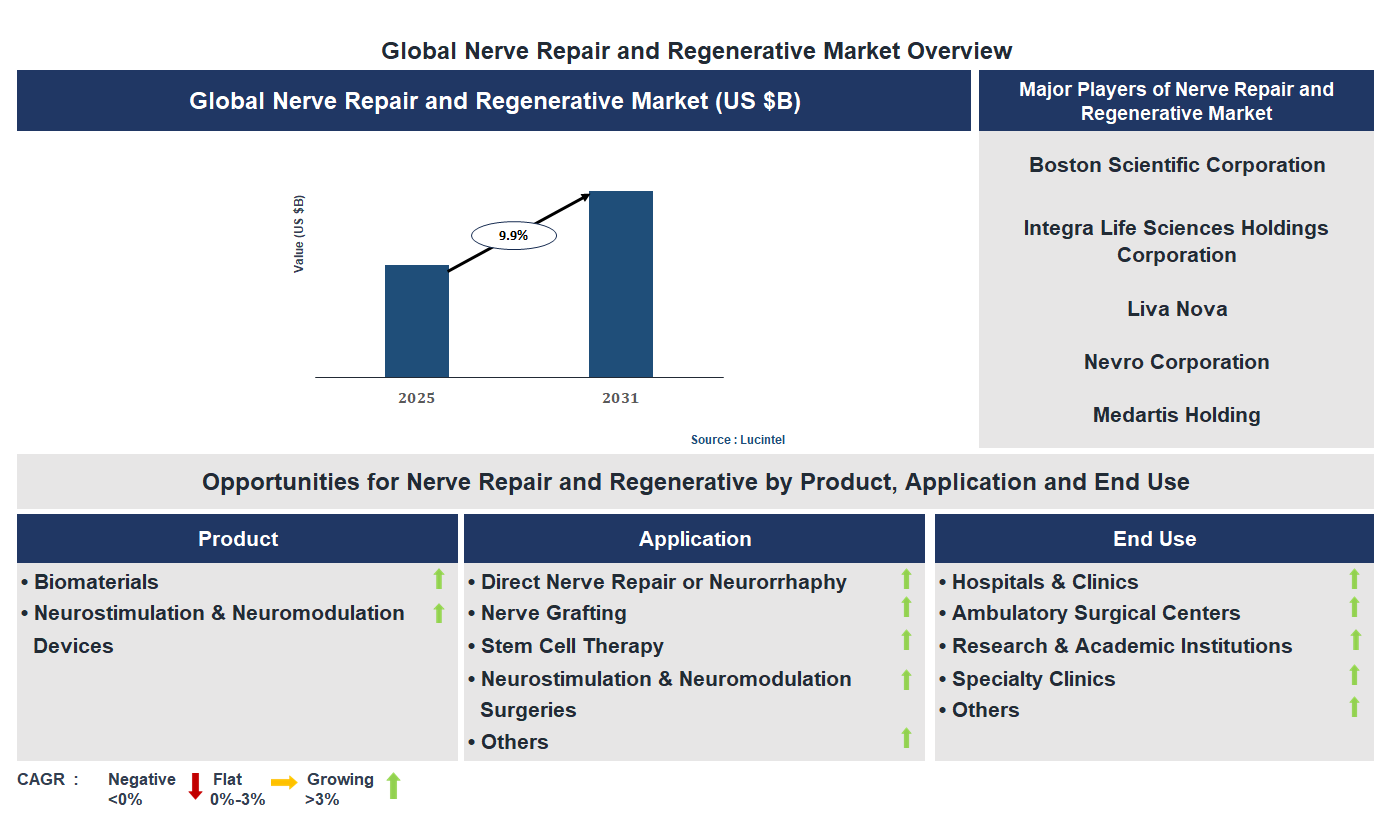
The future of the global nerve repair and regenerative market looks promising with opportunities in the hospitals & clinic, ambulatory surgical center, research & academic institution, and specialty clinic markets. The global nerve repair and regenerative market is expected to grow with a CAGR of 9.9% from 2025 to 2031. The major drivers for this market are the increasing incidence of nerve injuries, the rising demand for regenerative therapies, and the growing advancements in biomaterial technologies.• Lucintel forecasts that, within the product category, neurostimulation & neuromodulation device is expected to witness higher growth over the forecast period.
• Within the end use category, hospitals & clinic is expected to witness the highest growth.
• In terms of region, APAC is expected to witness the highest growth over the forecast period. Gain valuable insights for your business decisions with our comprehensive 150+ page report. Sample figures with some insights are shown below.
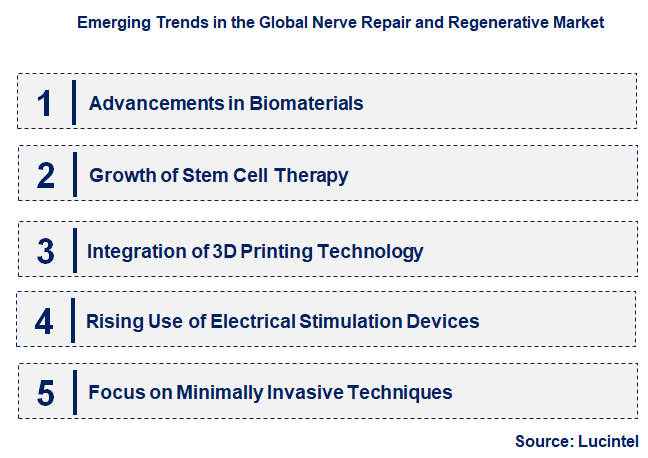
Emerging Trends in the Nerve Repair and Regenerative Market
The nerve repair and regenerative market is experiencing rapid evolution driven by technological advancements, increasing patient awareness, and a growing prevalence of nerve injuries due to accidents and chronic conditions. As research progresses, new materials, techniques, and therapies are emerging to improve patient outcomes and reduce recovery times. These developments are not only transforming clinical practices but also expanding market opportunities globally. Stakeholders must stay informed about these trends to adapt strategies, invest in innovation, and meet the rising demand for effective nerve repair solutions. The following key trends highlight the current and future landscape of this dynamic market.• Advancements in Biomaterials: The development of biocompatible, biodegradable scaffolds and nerve conduits is revolutionizing nerve repair. These materials facilitate nerve regeneration by providing structural support and promoting cell growth. Innovations such as nanofiber scaffolds and hydrogel-based conduits enhance integration with host tissue, reduce immune response, and improve functional recovery. This trend is expanding treatment options, especially for complex nerve injuries, and is expected to drive market growth by offering more effective and customizable solutions.
• Growth of Stem Cell Therapy: Stem cell-based approaches are gaining prominence for their potential to regenerate damaged nerves. Mesenchymal stem cells and induced pluripotent stem cells are being explored for their ability to differentiate into nerve cells and secrete neurotrophic factors. These therapies can accelerate nerve regeneration, reduce scarring, and improve functional outcomes. As clinical trials demonstrate safety and efficacy, stem cell therapies are poised to become a cornerstone in nerve repair, attracting significant investment and expanding the market.
• Integration of 3D Printing Technology: 3D printing is increasingly used to create personalized nerve guides and scaffolds tailored to individual patient anatomy. This technology allows precise fabrication of complex structures with controlled porosity and mechanical properties. Customizable solutions improve the accuracy of nerve regeneration and reduce surgical time. The ability to rapidly produce patient-specific implants is transforming surgical planning and outcomes, making 3D printing a key driver of innovation in the nerve repair market.
• Rising Use of Electrical Stimulation Devices: Electrical stimulation (ES) devices are being integrated into nerve repair procedures to enhance regeneration. ES promotes axonal growth, reduces scar formation, and accelerates functional recovery. Portable and implantable devices are being developed for postoperative use, enabling continuous therapy. The increasing adoption of ES technology is improving clinical outcomes and expanding the scope of nerve repair treatments, thereby contributing to market expansion and technological diversification.
• Focus on Minimally Invasive Techniques: The shift toward minimally invasive procedures is reducing patient recovery times and surgical risks. Techniques such as endoscopic nerve repair and percutaneous interventions are gaining popularity. These approaches require specialized tools and training but offer benefits like less pain, smaller scars, and quicker return to daily activities. The emphasis on minimally invasive methods is reshaping surgical protocols, broadening patient access, and driving demand for innovative devices and training programs in the nerve repair market. In summary, these emerging trends are collectively transforming the nerve repair and regenerative market by fostering innovation, improving patient outcomes, and expanding treatment options. The integration of advanced biomaterials, regenerative therapies, personalized manufacturing, and minimally invasive techniques is creating a more dynamic, efficient, and patient-centric landscape. As these trends continue to evolve, they will likely lead to more effective therapies, increased market competition, and broader global adoption, ultimately enhancing the quality of nerve injury management worldwide.
Recent Development in the Nerve Repair and Regenerative Market
The nerve repair and regenerative market has experienced significant advancements driven by technological innovations, increasing prevalence of nerve injuries, and a growing focus on regenerative medicine. These developments aim to improve patient outcomes, reduce recovery times, and expand treatment options. As research progresses, new materials, techniques, and therapies are emerging, transforming the landscape of nerve repair. The market is also witnessing increased investments from biotech firms and collaborations between academia and industry. These factors collectively contribute to a dynamic environment focused on enhancing nerve regeneration capabilities and addressing unmet clinical needs.• Technological Innovations: Development of advanced biomaterials and nerve conduits has improved repair success rates. These materials promote better nerve regeneration, reduce scarring, and enhance functional recovery, leading to more effective treatments and broader application possibilities.
• Stem Cell Therapy Advancements: The use of stem cells in nerve regeneration has gained momentum, offering potential for more natural and efficient nerve repair. This approach has shown promising results in preclinical and clinical studies, potentially revolutionizing treatment protocols.
• 3D Printing and Customization: 3D printing technology enables the creation of personalized nerve scaffolds tailored to individual patient needs. This customization improves integration and functional outcomes, reducing complications and recovery times.
• Regulatory Approvals and Funding: Increased regulatory approvals for innovative nerve repair devices and therapies have accelerated market entry. Additionally, rising funding from government and private sectors supports ongoing research and commercialization efforts.
• Growing Clinical Adoption: Surgeons and healthcare providers are increasingly adopting new nerve repair techniques and devices, driven by positive clinical outcomes. This trend enhances market growth and broadens access to advanced nerve regeneration solutions. In summary, these recent developments are significantly transforming the nerve repair and regenerative market by improving treatment efficacy, expanding options, and fostering innovation. The market is poised for continued growth as technological and clinical advancements address unmet needs and improve patient quality of life.
Strategic Growth Opportunities in the Nerve Repair and Regenerative Market
The nerve repair and regenerative market is experiencing rapid growth driven by technological advancements, increasing prevalence of nerve injuries, and a rising focus on regenerative medicine. As healthcare providers seek innovative solutions to improve patient outcomes, key applications are emerging as significant growth drivers. These opportunities are transforming treatment paradigms, expanding market reach, and fostering new research and development initiatives. Understanding these growth opportunities is essential for stakeholders aiming to capitalize on the evolving landscape and address unmet medical needs effectively.• Peripheral Nerve Repair Devices: Expansion in surgical repair tools and conduits is improving nerve regeneration outcomes. These devices facilitate faster recovery and reduce complications, making them highly sought after in clinical settings. The demand for minimally invasive procedures further boosts this segment‘s growth, impacting the market by increasing adoption rates and broadening treatment options.
• Stem Cell Therapy: The use of stem cells for nerve regeneration offers promising results in restoring nerve function. Advances in stem cell technology are enabling more effective and targeted therapies, attracting investments and research interest. This growth opportunity enhances the market by providing innovative, less invasive treatment options and expanding patient access to regenerative solutions.
• Bioengineered Nerve Grafts: Development of synthetic and biologically derived nerve grafts is revolutionizing nerve repair. These grafts offer alternatives to autografts, reducing donor site morbidity and improving integration. Their increasing adoption is impacting the market by providing durable, customizable solutions that cater to complex nerve injuries.
• Neurostimulation Devices: Neurostimulation techniques are gaining traction for nerve regeneration and pain management. These devices promote nerve growth and functional recovery, especially in chronic cases. The rising use of neurostimulation is influencing the market by offering adjunct therapies that enhance overall treatment efficacy.
• Regenerative Pharmacology: The development of drugs that promote nerve regeneration is a significant growth area. These pharmacological agents can be used alone or with other therapies to accelerate healing. Their emergence impacts the market by providing non-invasive treatment options and expanding the scope of regenerative medicine. In summary, these key growth opportunities are significantly impacting the nerve repair and regenerative market by introducing innovative therapies, improving patient outcomes, and expanding the range of treatment options. As technological advancements continue, the market is poised for sustained growth, driven by increasing demand for effective nerve repair solutions across diverse applications.
Nerve Repair and Regenerative Market Driver and Challenges
The nerve repair and regenerative market is influenced by a complex interplay of technological advancements, economic factors, and regulatory frameworks. Innovations in biomaterials, stem cell therapies, and minimally invasive procedures are driving growth by offering improved outcomes and reduced recovery times. Economic considerations such as increasing healthcare expenditure and rising prevalence of nerve injuries further propel market expansion. Conversely, regulatory hurdles, high costs of advanced therapies, and ethical concerns pose significant challenges. Understanding these drivers and challenges is essential for stakeholders aiming to capitalize on emerging opportunities while navigating potential obstacles in this dynamic sector. The factors responsible for driving the nerve repair and regenerative market include:-• Technological Innovations: The development of advanced biomaterials, such as nerve conduits and scaffolds, has revolutionized nerve repair procedures. These innovations enable more effective regeneration, reduce recovery times, and improve functional outcomes. Stem cell therapies and gene editing techniques are also emerging, offering promising regenerative solutions. As research progresses, these technologies are becoming more accessible and cost-effective, fueling market growth. The integration of nanotechnology and bioengineering further enhances the precision and efficacy of nerve repair strategies, attracting investments and expanding clinical applications.
• Rising Prevalence of Nerve Injuries: An increase in traumatic injuries, surgical complications, and chronic conditions like diabetic neuropathy has led to a higher demand for nerve repair solutions. Factors such as road accidents, sports injuries, and industrial accidents contribute significantly to nerve damage cases worldwide. The aging population is also more susceptible to nerve degeneration, amplifying the need for effective regenerative therapies. This growing patient base drives demand for innovative treatments, fostering market expansion and encouraging research and development efforts.
• Increasing Healthcare Expenditure: Governments and private sectors are investing heavily in healthcare infrastructure and advanced treatment options. This financial support facilitates the adoption of cutting-edge nerve repair technologies in hospitals and clinics. Reimbursement policies and insurance coverage for regenerative procedures are improving, making these treatments more accessible to patients. Additionally, the rising affordability of advanced therapies due to technological advancements reduces costs, encouraging widespread adoption. This economic momentum supports market growth by enabling broader implementation of innovative nerve repair solutions.
• Regulatory Approvals and Support: Favorable regulatory environments and accelerated approval pathways for regenerative therapies are boosting market confidence. Regulatory agencies are establishing clear guidelines for the approval of stem cell-based and biomaterial products, reducing time-to-market. Government initiatives and funding programs aimed at regenerative medicine further support research and commercialization. These regulatory supports ensure safety and efficacy, encouraging industry players to invest in new product development, thereby expanding the market and fostering innovation.
• Growing Awareness and Adoption: Increasing awareness among healthcare professionals and patients about the benefits of regenerative nerve therapies is driving adoption. Educational campaigns, clinical trials, and success stories are highlighting the potential of advanced treatments. Surgeons and clinicians are more frequently incorporating regenerative techniques into their practice, leading to higher demand. Patient acceptance is also rising due to the minimally invasive nature and improved outcomes of these therapies. This trend enhances market penetration and encourages ongoing research and development efforts. The challenges facing the nerve repair and regenerative market include:-
• High Cost of Advanced Therapies: Despite technological progress, regenerative nerve treatments remain expensive due to complex manufacturing processes, specialized materials, and skilled personnel requirements. These costs limit accessibility, especially in developing regions, and pose reimbursement challenges for healthcare providers. The high price point can deter patients from opting for innovative therapies, thereby restraining market growth. Additionally, the lack of standardized pricing models complicates market expansion and insurance coverage negotiations, impacting overall adoption rates.
• Regulatory and Ethical Concerns: The approval process for stem cell and gene therapies is often lengthy and complex, delaying market entry. Ethical issues surrounding stem cell sourcing and genetic modifications raise concerns among regulators and the public, potentially leading to restrictions or bans. Variability in regulatory standards across countries complicates international market expansion. These factors create uncertainty for investors and developers, hindering innovation and slowing the commercialization of promising regenerative solutions.
• Limited Clinical Evidence and Standardization: Many regenerative therapies are still in experimental or early clinical stages, with limited long-term data on safety and efficacy. The lack of standardized protocols and outcome measures hampers widespread acceptance among clinicians. Variability in treatment approaches and patient responses complicates regulatory approval and insurance reimbursement. This uncertainty reduces confidence among healthcare providers and patients, slowing market growth and necessitating further research to establish robust clinical evidence. In summary, the nerve repair and regenerative market is driven by technological innovations, increasing nerve injury cases, supportive economic and regulatory environments, and rising awareness. However, high costs, regulatory hurdles, and limited clinical data pose significant challenges. These factors collectively shape the market landscape, requiring stakeholders to balance innovation with strategic navigation of obstacles. Continued advancements and supportive policies are essential for sustainable growth, ultimately improving patient outcomes and expanding access to regenerative nerve therapies.
List of Nerve Repair and Regenerative Companies
Companies in the market compete on the basis of product quality offered. Major players in this market focus on expanding their manufacturing facilities, R&D investments, infrastructural development, and leverage integration opportunities across the value chain. With these strategies nerve repair and regenerative companies cater increasing demand, ensure competitive effectiveness, develop innovative products & technologies, reduce production costs, and expand their customer base. Some of the nerve repair and regenerative companies profiled in this report include-• Boston Scientific Corporation
• Integra Life Sciences Holdings Corporation
• Liva Nova
• Nevro Corporation
• Medartis Holding
• AxoGen
• Neuro Pace
• Bio Wave Corporation
• Soterix Medical
• Checkpoint Surgical
Nerve Repair and Regenerative Market by Segment
The study includes a forecast for the global nerve repair and regenerative market by product, application, end use, and region.Nerve Repair and Regenerative Market by Product [Value from 2019 to 2031]:
• Biomaterials
• Neurostimulation & Neuromodulation Devices
Nerve Repair and Regenerative Market by Application [Value from 2019 to 2031]:
• Direct Nerve Repair or Neurorrhaphy
• Nerve Grafting
• Stem Cell Therapy
• Neurostimulation & Neuromodulation Surgeries
• Others
Nerve Repair and Regenerative Market by End Use [Value from 2019 to 2031]:
• Hospitals & Clinics
• Ambulatory Surgical Centers
• Research & Academic Institutions
• Specialty Clinics
• Others
Nerve Repair and Regenerative Market by Region [Value from 2019 to 2031]:
• North America
• Europe
• Asia Pacific
• The Rest of the World
Country Wise Outlook for the Nerve Repair and Regenerative Market
The nerve repair and regenerative market has experienced significant advancements driven by technological innovations, increasing demand for effective treatments, and growing awareness of nerve injury management. As healthcare systems evolve, countries are investing in research and development to improve patient outcomes. The market‘s growth is also fueled by an aging population and rising incidences of nerve injuries due to accidents and surgeries. Each country’s unique healthcare policies, technological capabilities, and research initiatives influence the pace and direction of developments in this sector. These factors collectively shape the landscape of nerve repair and regenerative therapies across the globe.• United States: The US has seen rapid growth in nerve regeneration research, with significant investments in stem cell therapies and bioengineered nerve conduits. Leading biotech firms and academic institutions are developing innovative solutions, and regulatory agencies are streamlining approval processes for advanced therapies. Telemedicine and personalized medicine are also enhancing patient access and treatment outcomes.
• China: China is rapidly advancing in nerve repair technologies, focusing on stem cell research and tissue engineering. Government initiatives support innovation, and collaborations between academia and industry are increasing. The country is also investing in developing affordable, scalable solutions to address the large patient population with nerve injuries.
• Germany: Germany emphasizes clinical research and the integration of regenerative medicine into standard care. The country is known for its high-quality medical devices and biomaterials used in nerve repair. Innovative approaches such as nerve guidance conduits and bioactive scaffolds are gaining traction, supported by strong healthcare infrastructure.
• India: India is witnessing growing demand for cost-effective nerve repair solutions due to a high incidence of nerve injuries from accidents. The market is driven by local manufacturing of nerve conduits and regenerative products, along with increasing awareness and government initiatives to improve healthcare access. Research collaborations are also emerging to develop affordable therapies.
• Japan: Japan focuses on advanced biomaterials and minimally invasive techniques for nerve regeneration. The country’s strong biotech sector and aging population are propelling innovations in stem cell therapies and bioengineered nerve grafts. Regulatory support and government funding are fostering the development of next-generation regenerative solutions.

Features of the Global Nerve Repair and Regenerative Market
Market Size Estimates: Nerve repair and regenerative market size estimation in terms of value ($B). Trend and Forecast Analysis: Market trends (2019 to 2024) and forecast (2025 to 2031) by various segments and regions. Segmentation Analysis: Nerve repair and regenerative market size by product, application, end use, and region in terms of value ($B). Regional Analysis: Nerve repair and regenerative market breakdown by North America, Europe, Asia Pacific, and Rest of the World. Growth Opportunities: Analysis of growth opportunities in different products, applications, end uses, and regions for the nerve repair and regenerative market. Strategic Analysis: This includes M&A, new product development, and competitive landscape of the nerve repair and regenerative market. Analysis of competitive intensity of the industry based on Porter’s Five Forces model.
FAQ
Q1. What is the growth forecast for nerve repair and regenerative market? Answer: The global nerve repair and regenerative market is expected to grow with a CAGR of 9.9% from 2025 to 2031. Q2. What are the major drivers influencing the growth of the nerve repair and regenerative market? Answer: The major drivers for this market are the increasing incidence of nerve injuries, the rising demand for regenerative therapies, and the growing advancements in biomaterial technologies. Q3. What are the major segments for nerve repair and regenerative market? Answer: The future of the nerve repair and regenerative market looks promising with opportunities in the hospitals & clinic, ambulatory surgical center, research & academic institution, and specialty clinic markets. Q4. Who are the key nerve repair and regenerative market companies? Answer: Some of the key nerve repair and regenerative companies are as follows:• Boston Scientific Corporation
• Integra Life Sciences Holdings Corporation
• Liva Nova
• Nevro Corporation
• Medartis Holding
• AxoGen
• Neuro Pace
• Bio Wave Corporation
• Soterix Medical
• Checkpoint Surgical Q5. Which nerve repair and regenerative market segment will be the largest in future? Answer: Lucintel forecasts that, within the product category, neurostimulation & neuromodulation device is expected to witness higher growth over the forecast period. Q6. In nerve repair and regenerative market, which region is expected to be the largest in next 5 years? Answer: In terms of region, APAC is expected to witness the highest growth over the forecast period. Q7. Do we receive customization in this report? Answer: Yes, Lucintel provides 10% customization without any additional cost.
Table of Contents
List of Figures
List of Tables
Methodology
- In-depth interviews of the major players in this market
- Detailed secondary research from competitors’ financial statements and published data
- Extensive searches of published works, market, and database information pertaining to industry news, company press releases, and customer intentions
- A compilation of the experiences, judgments, and insights of Lucintel’s professionals, who have analyzed and tracked this market over the years.


Buy Now
Choose a license that fits your team. Instant PDF delivery.
Prices exclude taxes. Instant delivery. Custom licensing available on request.
Key Questions
- • What are some of the most promising, high-growth opportunities for the nerve repair and regenerative market by product (biomaterials and neurostimulation & neuromodulation devices), application (direct nerve repair or neurorrhaphy, nerve grafting, stem cell therapy, neurostimulation & neuromodulation surgeries, and others), end use (hospitals & clinics, ambulatory surgical centers, research & academic institutions, specialty clinics, and others), and region (North America, Europe, Asia Pacific, and the Rest of the World)?
- • Which segments will grow at a faster pace and why?
- • Which region will grow at a faster pace and why?
- • What are the key factors affecting market dynamics? What are the key challenges and business risks in this market?
- • What are the business risks and competitive threats in this market?
- • What are the emerging trends in this market and the reasons behind them?
- • What are some of the changing demands of customers in the market?
- • What are the new developments in the market? Which companies are leading these developments?
- • Who are the major players in this market? What strategic initiatives are key players pursuing for business growth?
- • What are some of the competing products in this market and how big of a threat do they pose for loss of market share by material or product substitution?
- • What M&A activity has occurred in the last 5 years and what has its impact been on the industry? For any questions related to Nerve Repair and Regenerative Market, Nerve Repair and Regenerative Market Size, Nerve Repair and Regenerative Market Growth, Nerve Repair and Regenerative Market Analysis, Nerve Repair and Regenerative Market Report, Nerve Repair and Regenerative Market Share, Nerve Repair and Regenerative Market Trends, Nerve Repair and Regenerative Market Forecast, Nerve Repair and Regenerative Companies, write Lucintel analyst at email: helpdesk@lucintel.com. We will be glad to get back to you soon.


