
Market Report · July 29, 2026

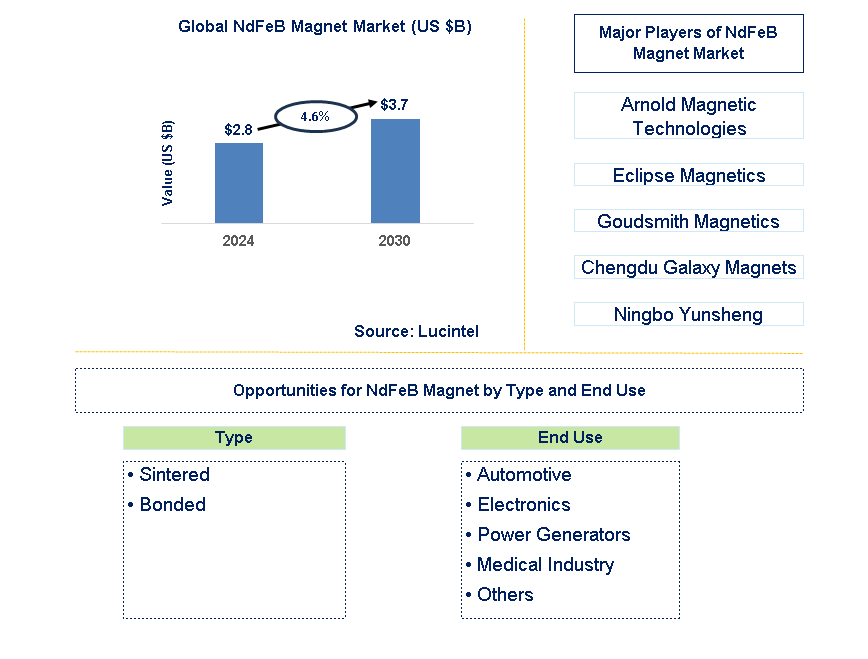
Key data points: The market size in 2031 = $3.9 billion, growth forecast = 4.6% annually for the next 7 years. Scroll below to get more insights. This market report covers trends, opportunities, and forecasts in the global NdFeB magnet market to 2031 by type (sintered and bonded), end use (automotive, electronics, power generators, medical industry, and others), and region (North America, Europe, Asia Pacific, and the Rest of the World)
We'll send your sample report shortly.
• Lucintel forecasts that, within the type category, sintered will remain the a larger segment due to significant use in electric vehicles, electronics, power plants, medical devices, and other applications, as well as, enhancing the performance of electric motors to extend driving ranges and reduce energy consumption.
• In terms of regions, APAC will remain the largest region due to the increasing need for high-performance magnets in various industrial sectors, including automotive, electronics, energy, and healthcare applications in this region. Gain valuable insights for your business decisions with our comprehensive 150+ page report.
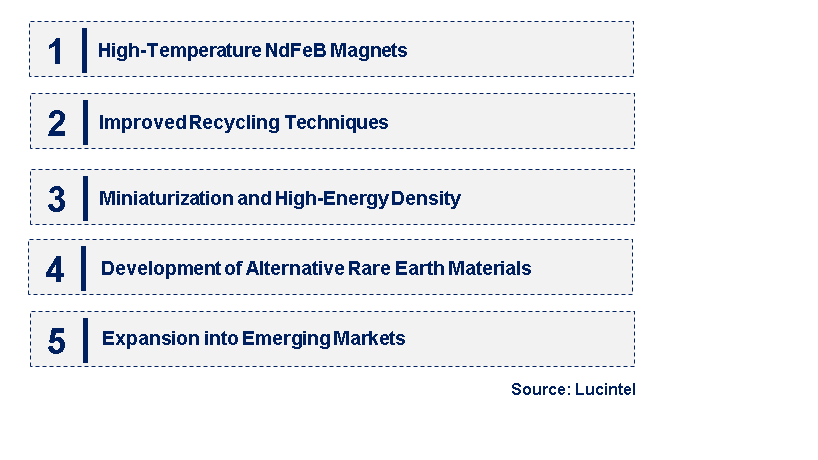
• High-Temperature NdFeB Magnets: Developments in high-temperature NdFeB magnets allow their use in more demanding environments. These magnets can operate effectively at elevated temperatures, making them suitable for applications in the automotive and aerospace industries where temperature stability is crucial.
• Improved Recycling Techniques: Advancements in recycling techniques for NdFeB magnets address environmental concerns and resource scarcity. Enhanced recycling processes increase the recovery rates of rare earth elements, reduce waste, and lessen reliance on new raw materials.
• Miniaturization and High-Energy Density: There is a trend toward miniaturization and achieving higher energy density in NdFeB magnets. This trend is driven by the need for more compact and powerful magnets in electronics, medical devices, and other high-tech applications where space and weight are critical factors.
• Development of Alternative Rare Earth Materials: Research into alternative rare earth materials and compositions is underway to reduce dependence on traditional NdFeB magnets. These alternatives aim to provide similar or improved magnetic properties while minimizing the use of scarce or expensive materials.
• Expansion into Emerging Markets: Emerging markets are experiencing growth in NdFeB magnet applications due to increasing industrialization and technological advancements. Countries like India and Brazil are expanding their use of high-performance magnets in the automotive, renewable energy, and consumer electronics sectors. These emerging trends reshape the NdFeB magnet market by driving technological innovation, improving sustainability, and expanding application areas. They reflect the industry’s adaptation to changing demands and highlight opportunities for growth and development.
• Advancements in Production Technologies: Recent advancements in production technologies for NdFeB magnets have improved performance and cost-effectiveness. Innovations such as enhanced sintering techniques and more precise manufacturing processes lead to higher-quality magnets with better magnetic properties.
• Increased Investment in R&D: There has been a notable increase in investment in research and development for NdFeB magnets. Companies focus on developing new magnet formulations and improving production techniques to meet the growing demand for high-performance magnets in various industries.
• Strengthened Supply Chains: Efforts to strengthen supply chains for rare earth materials impact the NdFeB magnet market. Enhanced supply chain management and diversification of sources address concerns about material shortages and ensure a more stable supply of critical raw materials.
• Expansion of Production Capacity: The expansion of production capacity is a key development in the NdFeB magnet market. New manufacturing facilities are being established in various regions, including Chinese and American locations, to meet the increasing global demand for high-performance magnets.
• Regulatory and Environmental Initiatives: Regulatory and environmental initiatives influence the NdFeB magnet market. Efforts to reduce the environmental impact of magnet production and improve recycling practices align with global sustainability goals and drive changes in industry practices. These recent developments significantly impact the NdFeB magnet market by enhancing production capabilities, driving innovation, and addressing environmental concerns. They reflect the industry’s adaptation to evolving demands and regulatory requirements.
• Electric Vehicles: The electric vehicle market presents significant growth opportunities for NdFeB magnets due to their use in electric motors and drivetrains. High-performance magnets are essential for improving the efficiency and power density of electric vehicles, driving demand in this rapidly growing sector.
• Renewable Energy: In the renewable energy sector, NdFeB magnets are used in wind turbines and other energy generation systems. The trend toward increasing the efficiency and capacity of renewable energy systems drives demand for high-performance magnets that enhance energy production and reduce system size.
• Consumer Electronics: The consumer electronics industry is a key growth area for NdFeB magnets, particularly in applications such as hard drives, speakers, and sensors. The need for miniaturized and high-performance components drives demand for advanced magnets in this sector.
• Aerospace and Defense: Aerospace and defense applications require high-performance magnets for various systems, including actuators, sensors, and propulsion systems. The trend toward more advanced and reliable technologies creates growth opportunities for NdFeB magnets in these critical sectors.
• Medical Devices: The medical device industry increasingly utilizes NdFeB magnets in imaging systems, implants, and other medical technologies. The demand for precise and reliable magnets in medical applications drives growth opportunities in this sector. These strategic growth opportunities shape the NdFeB magnet market by expanding application areas and driving demand across various industries. They highlight the market’s potential for innovation and growth in response to evolving technological and sector-specific needs.
• Technological Advancements: Technological advancements in magnet manufacturing and material science drive market growth. Innovations such as improved production techniques and new magnet formulations enhance performance and expand application areas, contributing to increased demand.
• Rising Demand for High-Performance Magnets: The growing demand for high-performance magnets in industries such as automotive, renewable energy, and consumer electronics is a major driver of market growth. NdFeB magnets offer superior magnetic properties, making them essential for these advanced applications.
• Government Support and Policies: Government support and policies promoting technological innovation and sustainable practices influence the NdFeB magnet market. Initiatives aimed at reducing environmental impact and encouraging domestic production shape market dynamics and investment opportunities.
• Expansion of Industrial and Consumer Electronics Sectors: The expansion of industrial and consumer electronics sectors drives demand for NdFeB magnets. As these sectors grow, the need for high-performance components in various applications increases, boosting market growth.
• Increasing Investment in Research and Development: Investment in research and development is a key driver for the NdFeB magnet market. Companies invest in new technologies and materials to improve magnet performance and reduce costs, driving innovation and market growth. Challenges in the NdFeB magnet market include:
• Supply Chain Disruptions: Supply chain disruptions, particularly related to rare earth materials, pose a challenge for the NdFeB magnet market. Ensuring a stable supply of critical raw materials is crucial for maintaining production and meeting market demand.
• Environmental and Regulatory Compliance: Meeting environmental and regulatory requirements can be challenging for manufacturers. Compliance with strict regulations on emissions and resource use requires ongoing investment and adaptation, impacting production processes and costs.
• High Production Costs: High production costs for NdFeB magnets, driven by raw material expenses and complex manufacturing processes, can affect market competitiveness. Finding ways to reduce costs while maintaining quality is a key challenge for market players. The major drivers and challenges impacting the NdFeB magnet market highlight the dynamic nature of the industry. Technological advancements and rising demand drive growth, while supply chain issues, regulatory compliance, and production costs present ongoing challenges.
• Arnold Magnetic Technologies
• Eclipse Magnetics
• Goudsmith Magnetics
• Chengdu Galaxy Magnets
• Ningbo Yunsheng
• Tengam Engineering
• Bunting Magnetic Products
• Electron Energy Corporation
• TDK Corporation
• Hitachi Metals
• Sintered
• Bonded
• Automotive
• Electronics
• Power Generators
• Medical Industry
• Others
• North America
• Europe
• Asia Pacific
• The Rest of the World
• United States: In the United States, recent developments in the NdFeB magnet market include increased investment in research and development for higher-performance magnets. Advances in manufacturing technologies enhance the efficiency and durability of NdFeB magnets, making them more suitable for use in electric vehicles and renewable energy systems. The U.S. is also focusing on reducing dependence on rare earth imports by developing domestic production capabilities.
• China: China continues to dominate the global NdFeB magnet market with substantial advancements in production capacity and technology. The country invests heavily in developing high-performance magnets and expanding its production facilities. Recent policy support for high-tech industries and efforts to enhance the supply chain have further solidified the Chinese position as a leading player in the NdFeB magnet market.
• Germany: Germany focuses on integrating NdFeB magnets into advanced manufacturing and automotive applications. The country has made strides in improving the efficiency and sustainability of magnet production processes. Innovations in recycling and reducing rare earth material usage align with Germany’s broader goals of sustainability and environmental responsibility in industrial practices.
• India: India witnesses growth in the NdFeB magnet market due to increased industrial activity and investment in high-tech sectors. Recent developments include the establishment of new manufacturing facilities and partnerships aimed at enhancing local production capabilities. The government’s focus on boosting the electronics and automotive industries drives demand for high-performance magnets.
• Japan: Japan continues to advance in the NdFeB magnet market with a focus on high-tech applications such as robotics and consumer electronics. Recent developments include innovations in magnet composition and manufacturing techniques to improve performance and reduce costs. Japan’s strong emphasis on technological innovation helps maintain its competitive edge in the global market.


• Arnold Magnetic Technologies
• Eclipse Magnetics
• Goudsmith Magnetics
• Chengdu Galaxy Magnets
• Ningbo Yunsheng
• Tengam Engineering
• Bunting Magnetic Products
• Electron Energy Corporation
• TDK Corporation
• Hitachi Metals Q6. Which NdFeB magnet market segment will be the largest in future? Answer: Lucintel forecasts that sintered will remain the larger segment due to significant use in electric vehicles, electronics, power plants, medical devices, and other applications, as well as, enhancing the performance of electric motors to extend driving ranges and reduce energy consumption. Q7. In NdFeB magnet market, which region is expected to be the largest in next 5 years? Answer: APAC will remain the largest region due to the increasing need for high-performance magnets in various industrial sectors, including automotive, electronics, energy, and healthcare applications in this region. Q.8 Do we receive customization in this report? Answer: Yes, Lucintel provides 10% customization without any additional cost.


Choose a license that fits your team. Instant PDF delivery.
Prices exclude taxes. Instant delivery. Custom licensing available on request.
Market Report · July 29, 2026
Market Report · July 15, 2026
Market Report · July 13, 2026
Trusted partner for strategic intelligence and business growth


Receive a complimentary market analysis tailored to your industry. Our analysts will identify key growth opportunities and competitive dynamics specific to your business.

Market size, growth rate, and key trend analysis for your specific sector.

Top competitor positioning and market share analysis.

Strategic recommendations backed by data-driven insights.
Get curated market intelligence and competitive moves straight to your inbox.
By subscribing, you agree to receive our monthly insights. Unsubscribe anytime.
Receive a complimentary market analysis tailored to your industry. Our analysts will identify key growth opportunities and competitive dynamics specific to your business.
Market size, growth rate, and key trend analysis for your specific sector.
Top competitor positioning and market share analysis.
Strategic recommendations backed by data-driven insights.
Get curated market intelligence, emerging trends, and competitive moves straight to your inbox each month.
By subscribing, you agree to receive our monthly insights. Unsubscribe anytime.
We'll send your sample report shortly.