Close Lucintel Chat
Didn't Find What You're Looking for?
Call us at +1972 636 5056 or write at helpdesk@Lucintel.com
Ask an Expert Provide Custom Requirements Download Sample Report Search Available Reports
  • helpdesk@Lucintel.com
  • |
  • Call Lucintel +1 972 636 5056
  • |
  • Login
  • |
  • Register
  • |
  • Search
  • |
'
...

The Impact of COVID-19 is included in Natural Language Processing for Healthcare & Life Science Market Report. Buy it today to get an advantage.

Request the impact of COVID-19 on your product or industry


Natural Language Processing for Healthcare & Life Science Trends and Forecast

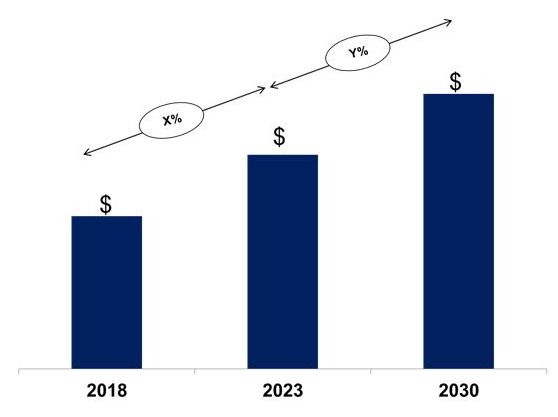
The future of the global natural language processing for healthcare & life science market looks promising with opportunities in the solution and service markets. The global natural language processing for healthcare & life science market is expected to reach an estimated $10.01 billion by 2030 with a CAGR of 25.0% from 2024 to 2030. The major drivers for this market are high need for advanced data analysis and information extraction from vast amounts of unstructured healthcare and life sciences data, development of new drugs and treatments by identifying patterns in large datasets, and growing need to improve the efficiency and effectiveness of healthcare delivery.
Lucintel forecasts that statistical is expected to witness the highest growth over the forecast period because of growing usage in a variety of applications, including machine translation, speech recognition, and text summarization.
North America is expected to witness the highest growth over the forecast period due to the adaption of artificial intelligence technologies in the region.

A more than 150-page report is developed to help in your business decisions.
Natural Language Processing for Healthcare & Life Science Trends and Forecast

Natural Language Processing for Healthcare & Life Science by Segment

Emerging Trends in the Natural Language Processing for Healthcare & Life Science Market

The domain of NLP for health care and life sciences is quite dynamic and is experiencing several influences that are quite essential for the future. These spheres of growth emphasize that more advanced technologies are being integrated and how they help in enhancing patient care and the efficiency of research.
• Linkage with EHR Systems: There is a growing trend of linking NLP technologies with EHR systems for the purpose of extracting and mining semi-structured information. Such integration improves the functionality of EHRs since effective data entry, complete clinical notes, and better policies are possible. NLP also contributes to the enhancement of clinical processes and the quality of patient care by transforming non-structured texts into formats that are easier to work with.
• Increased Fear of Disease Prediction: There has been a growing interest in achieving substantial inroads into developing advanced data analysis techniques through NLP for the analysis of patient medical history and information in seeking prospective diseases and treatment approaches. Situation then identifies opportunities through huge volumes of data and patterns in the patients’ medical records using NLP to generate models that help care providers’ present-day patients anticipate and center care decisions on individual objectives that are likely to be more certain.
• Chatbots and Virtual Assistants: Artificial agents are changing how patients interact and participate by employing chatbots and virtual assistants based on NLP technology. One could think of these AI-driven tools as capable of answering routine questions, making appointments, providing medical information. This can make patients more accessible and lessen the load of administration on healthcare workers. In addition, they provide support in real time and improve the experience of patients.
• Improvement of Clinical Trials: The utilization of NLP in clinical trials is becoming more advanced with the assistance of natural language processing technologies to pull out information required from resources and documents that are relevant to these trials. This has enabled quicker recruitment of patients, better trial designs, superior prospectus and accurate trial data efficiently enhancing the pace of innovation of drugs and biological therapies.
• Multilingualism and cross-linguism: The creation of systems in the area of NLP which are multilingual and cross-language is promoting international cooperation in the field of health care. Such systems improve the translation of medical content in different languages and the communication of that content to the population, hence effective service provision.
All these and many more emerging trends enhance current implementations of NLP in healthcare and life sciences in terms of data, engagement with patients and efficiency of research. New perspectives open up due to the healing progression of NLP technologies in order to improve clinical practice, make the working processes more effective, and diversify delivery of healthcare services.
Emerging Trends in the Natural Language Processing for Healthcare & Life Science Market

Recent Developments in the Natural Language Processing for Healthcare & Life Science Market

Increasing advancements of NLP for healthcare and life sciences demonstrate the willingness for the use of advanced technologies in the improvement of patient care as well as in research. These include enhancements that demonstrate the application of NLP on the different healthcare delivery facades as well as the management of healthcare.
• Improved Clinical documentation: There is a growing need to enhance clinical documentation using NLP tools that assist in converting free-text notes into standardized data. This is meant to decrease the transcription burden, which results in fewer mistakes in the documentation of the patientsÄX%$%X medical history, increasing the quality of medical records, and improving the understanding of data for use during clinical decision-making.
• Diagnostic Support: There are ongoing improvements of diagnosis support systems through the use of the AI-NLP technology integration. The systems utilize patient records and related literature to assist clinicians in identifying likely conditions and suggesting appropriate management leading to accurate and timely disease management.
• Patient Interaction: Tools perform administrative functions and give medical information and services as well as assist patients which lightens the burden of healthcare workers and increases the optimization of patients.
• Clinical Trial Data Analysis: By facilitating the extraction and interpretation of clinical trial information, NLP is simplifying the analytical work related to clinical trial data. This achievement improves the speed of the process of clinical research, helps in the faster extraction of research insights, and results in better design and conduct of trials.
• Medical Translation Services: A hostage situation or an abusive partner in case of siege is developing. gyd. It focuses on persuasion, improving the situation when the medical translation is inaccurate or not done at all. It improves access to healthcare services on an international scale, especially for the patients without knowledge of a particular language or nonnative patients.
These developments are very important as they show how we can put NLP in action areas of health care and life science including but not limited to better documentation, better diagnosis, and improved patient contact and clinical trials. The gradual transitions happening within the NLP technology help in improving the practice of health care as well as enhancing the scope of medical research.

Strategic Growth Opportunities for Natural Language Processing for Healthcare & Life Science Market

In terms of healthcare and life sciences industries, the domain covers several strategic growth opportunities that are going to be dictated by emerging technologies and the high rate of demand for effective data management and patient care solutions. These opportunities should be discovered and addressed to propel progress in the industry.
• Merging with Healthcare Systems: Adding NLP to the already established systems in healthcare like EHRs and clinical decision support systems creates an opportunity for growth. This type of enhancement creates greater value from these systems because it allows automated extraction, analysis, and presentation of information for decision making which increases efficiency and quality of care.
• Creation of Predictive Analytics Tools: Building predictive analytics tools based on natural language processing helps to promote early disease prediction and personalize treatment. As these tools make it possible to work with large amounts of data and detect certain trends, healthcare providers will be able to better address the patients by predicting their needs and optimizing the treatment provided.
• Widening the Scope of Telemedicine Solutions: With enabling automated patient support and interaction, NLP technologies boost telemedicine platforms. Such a shift in the use of NLP in telemedicine can improve availability, make interactions efficient, and ensure that even treated patients are provided with appropriate medical information in due time.
• Improved Management of Clinical Trials: The application of NLP in clinical trial management offers growth potential as it automates the processes of extracting data, designing clinical trials, and recruiting patients. This way, the pace of research increases, the efficiency of the trial process improves, and new drugs and treatments are created.
• Global Healthcare Collaboration: The creation of multilingual NLP systems facilitates the cooperation of health professionals by providing relevant and high-quality accurate medical content translation. This growth opportunity improves communication as well as accessibility among different people in other parts of the world enhancing international relationships and enhancing patient care.
These strategic growth opportunities give an insight of how beneficial NLP can be in advancing healthcare and life sciences using system integration for telemedicine, predictive analytics, clinical trials, and international collaboration. Gaining these specific opportunities would provide great clinical benefits regarding the enhancement of patient care, research activities, and healthcare services.

Natural Language Processing for Healthcare & Life Science Market Driver and Challenges

The natural language processing (NLP) sector for healthcare and life sciences is equally driven by many technical, economic, and political influences. Knowing these factors is important in shaping the future and taking advantage of the NLP opportunities.
The factors responsible for driving the natural language processing for healthcare & life science market include:
1. Technological Advancements: NLP algorithms and artificial intelligence development is fast growing in health care due to the rapid technological growth. The development of deep learning, machine learning, and advanced natural language processing is aiding in the collection, management, and analysis of health data more precisely and efficiently. These improvements lead to advanced diagnostic systems, better documentation in the clinics, and even better interactions with patients which drive the application of NLP in healthcare.
2. Improving data collection efforts are influencing demand for the system: The growing need for data-driven insights in healthcare translates even further the use of NLP technologies within the industry. Healthcare providers are increasingly employing Natural Language Processing (NLP) techniques to analyze unstructured data such as clinical notes, research papers etc. in a bid to make better decisions and enhance patient care.
3. Demand for Effective Cost Control: The pressure to curtail costs in the area of health care is fueling the uptake of some of the advanced NLP technologies aimed at improving processes. When staff is not able to or not willing to, perform such administrative tasks as filling out paperwork or when data management can be improved, NLP emerges as a powerful tool in the automation of administrative functions. It also improves clinical processes, which reduces the load on healthcare employees and enables lowering costs.
Challenges in the natural language processing for healthcare & life science market are:
1. Adherence to Legal Norms and Privacy: Legal and privacy issues form one of the biggest challenges in the use of NLP approaches. There are various laws which aim at data protection such as the health insurance portability and accountability act and the general data protection regulation. Compliance with these requirements and maintaining security and privacy of sensitive information is extremely important. These challenges can limit the creation and utilization of NLP solutions, thus requiring strict compliance with certain factors in relation to law and ethics.
2. Challenge of Integrating with Already Established Systems: The other area of concern to artificial intelligence works particularly to NLP tools is the incorporation of these tools into the healthcare systems already in use. Enhancing compatibility with electronic health records and other technologies in health care poses interoperability challenges making it imperative to modify NLP tools to fit different system environments.
Determinants such as the drivers of the technological advancement, the increase in demand for data analytics, and the quest to cut on costs are pushing the adoption of NLP technologies in healthcare. However, other barriers such as regulations, privacy and integration of these systems should be taken into consideration as well. Effecting such measures is important to let full use be made of the application of NLP technologies in healthcare and life sciences.

List of Natural Language Processing for Healthcare & Life Science Companies

Companies in the market compete on the basis of product quality offered. Major players in this market focus on expanding their manufacturing facilities, R&D investments, infrastructural development, and leverage integration opportunities across the value chain. With these strategies natural language processing for healthcare & life science companies cater increasing demand, ensure competitive effectiveness, develop innovative products & technologies, reduce production costs, and expand their customer base. Some of the natural language processing for healthcare & life science companies profiled in this report include-
• IBM
• Google
• Microsoft
• Amazon Web Services (AWS)
• Nuance
• SAS Institute
• Cerner

Natural Language Processing for Healthcare & Life Science by Segment

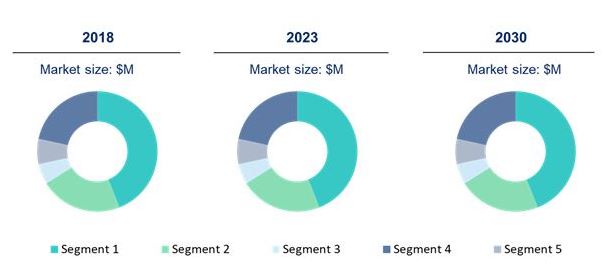
The study includes a forecast for the global natural language processing for healthcare & life science by component, NLP type, application, end use, and region.

Natural Language Processing for Healthcare & Life Science Market by Component [Analysis by Value from 2018 to 2030]:


• Solutions
• Services

Natural Language Processing for Healthcare & Life Science Market by NLP Type [Analysis by Value from 2018 to 2030]:


• Statistical
• Hybrid

Natural Language Processing for Healthcare & Life Science Market by Application [Analysis by Value from 2018 to 2030]:


• Clinical Trail Matching
• Drug Discovery
• Others

Natural Language Processing for Healthcare & Life Science Market by End Use [Analysis by Value from 2018 to 2030]:


• Public Health & Government Agencies
• Medical Devices
• Healthcare Insurance
• Pharmaceuticals
• Others

Natural Language Processing for Healthcare & Life Science Market by Region [Analysis by Value from 2018 to 2030]:


• North America
• Europe
• Asia Pacific
• The Rest of the World

Country Wise Outlook for the Natural Language Processing for Healthcare & Life Science Market

With the advancement of technology, natural language processing (NLP) is redefining healthcare and life science by enhancing data analytics, fostering greater patient engagement and provision of care, and facilitating administration processes. The annals of this research field are characterized by the embracing of a whirlwind of AI sphere developments that aim at optimising clinical processes, bolstering research and delivering precision treatment. The use of these NLP technologies is very clear in various countries depending on the volume and the degree of effectiveness and therefore indicates many ways emerging on how to use language processing technology in health science.
• United States: Specialization in NLP in the U.S. is enabling the generation of new market opportunities for electronic health records (EHRs) and clinical decision support tools. For example, IBM Watson Health is using NLP technology to make sense of large amounts of clinical data that are not in structured databases in order to help with treatment and evaluation decisions. In addition, through assistive tools such as chatbots and virtual assistants, patients are also made more active through the use of NLP.
• China: A strong ideology within China’s NLP growth timeline focuses on the use of AI technologies in research activities as well as in the management of patients. For instance, iFLYTEK produces high-end and intelligent deep learning based natural language processing systems for effective management of medical records and diagnostic aids. Moreover, NLP is also aimed at reducing the amount of time it takes to collect and process patients information as well as eliminating language barriers between patients and doctors through the use of converting services.
• Germany: Germany leads in the use of NLP for improving medical research and clinical trials on the level of countries. They have development such as NLP applications for clinical trial data analysis or mining of medical literature. German organizations are also making use of the language processing technologies harnessed with machine learning to come up with systems that help in diagnosing and planning for treatment for diseases, thus making health delivery systems more accurate and efficient.
• India: In India, there is an active exploration of the application of NLP for increasing the efficiency of healthcare services and administrative processes. Startups are employing the power of AI and NLP on medical transcription and patient record management, in order to improve efficiency and minimize errors. Telemedicine has employed such tools with the application of text-based tools to bridge the gap between clients and caregivers even in distant areas where health practitioners are scarce.
• Japan: In Japan, the advancement of NLP for healthcare applications is made possible with the partnership of IT companies with clinical institutions. NLP has also been used in health monitoring by analyzing patient and health reports to enable early diagnosis of diseases. There are new developments in Japan towards the use of language processing combined with robotic process automation to ease healthcare and research based administrative work in institutions enhancing efficiency and effectiveness.

Features of the Global Natural Language Processing for Healthcare & Life Science Market

Market Size Estimates: Natural language processing for healthcare & life science market size estimation in terms of value ($B).
Trend and Forecast Analysis: Market trends (2018 to 2023) and forecast (2024 to 2030) by various segments and regions.
Segmentation Analysis: Natural language processing for healthcare & life science market size by various segments, such as by component, NLP type, application, end use, and region in terms of ($B).
Regional Analysis: Natural language processing for healthcare & life science market breakdown by North America, Europe, Asia Pacific, and Rest of the World.
Growth Opportunities: Analysis of growth opportunities in different component, NLP type, application, end use, and regions for the natural language processing for healthcare & life science market.
Strategic Analysis: This includes M&A, new product development, and competitive landscape of the natural language processing for healthcare & life science market.
Analysis of competitive intensity of the industry based on Porter’s Five Forces model.

If you are looking to expand your business in this or adjacent markets, then contact us. We have done hundreds of strategic consulting projects in market entry, opportunity screening, due diligence, supply chain analysis, M & A, and more.

FAQ

Q.1 What is the natural language processing for healthcare & life science market size?
Answer: The global natural language processing for healthcare & life science market is expected to reach an estimated $10.01 billion by 2030.
Q.2 What is the growth forecast for natural language processing for healthcare & life science market?
Answer: The global natural language processing for healthcare & life science market is expected to grow with a CAGR of 25.0% from 2024 to 2030.
Q.3 What are the major drivers influencing the growth of the natural language processing for healthcare & life science market?
Answer: The major drivers for this market are high need for advanced data analysis and information extraction from vast amounts of unstructured healthcare and life sciences data, development of new drugs and treatments by identifying patterns in large datasets, and growing need to improve the efficiency and effectiveness of healthcare delivery.
Q4. What are the major segments for natural language processing for healthcare & life science market?
Answer: The future of the global natural language processing for healthcare & life science market looks promising with opportunities in the solution and service markets.
Q5. Who are the key natural language processing for healthcare & life science market companies?
Answer: Some of the key natural language processing for healthcare & life science companies are as follows:
• IBM
• Google
• Microsoft
• Amazon Web Services (AWS)
• Nuance
• SAS Institute
• Cerner
Q6. Which natural language processing for healthcare & life science market segment will be the largest in future?
Answer: Lucintel forecasts that statistical is expected to witness the highest growth over the forecast period because of growing usage in a variety of applications, including machine translation, speech recognition, and text summarization.
Q7. In natural language processing for healthcare & life science market, which region is expected to be the largest in next 5 years?
Answer: North America is expected to witness the highest growth over the forecast period due to the adaption of artificial intelligence technologies in the region.
Q.8 Do we receive customization in this report?
Answer: Yes, Lucintel provides 10% customization without any additional cost.

This report answers following 11 key questions:

Q.1. What are some of the most promising, high-growth opportunities for the natural language processing for healthcare & life science market by component (solutions and services), NLP type (statistical and hybrid), application (clinical trail matching, drug discovery, and others), end use (public health & government agencies, medical devices, healthcare insurance, pharmaceuticals, and others), and region (North America, Europe, Asia Pacific, and the Rest of the World)?
Q.2. Which segments will grow at a faster pace and why?
Q.3. Which region will grow at a faster pace and why?
Q.4. What are the key factors affecting market dynamics? What are the key challenges and business risks in this market?
Q.5. What are the business risks and competitive threats in this market?
Q.6. What are the emerging trends in this market and the reasons behind them?
Q.7. What are some of the changing demands of customers in the market?
Q.8. What are the new developments in the market? Which companies are leading these developments?
Q.9. Who are the major players in this market? What strategic initiatives are key players pursuing for business growth?
Q.10. What are some of the competing products in this market and how big of a threat do they pose for loss of market share by material or product substitution?
Q.11. What M&A activity has occurred in the last 5 years and what has its impact been on the industry?
For any questions related to Natural Language Processing for Healthcare & Life Science Market, Natural Language Processing for Healthcare & Life Science Market Size, Natural Language Processing for Healthcare & Life Science Market Growth, Natural Language Processing for Healthcare & Life Science Market Analysis, Natural Language Processing for Healthcare & Life Science Market Report, Natural Language Processing for Healthcare & Life Science Market Share, Natural Language Processing for Healthcare & Life Science Market Trends, Natural Language Processing for Healthcare & Life Science Market Forecast, Natural Language Processing for Healthcare & Life Science Companies, write Lucintel analyst at email: helpdesk@lucintel.com. We will be glad to get back to you soon.

Table of Contents

1. Executive Summary

2. Global Natural Language Processing for Healthcare & Life Science Market : Market Dynamics
2.1: Introduction, Background, and Classifications
2.2: Supply Chain
2.3: Industry Drivers and Challenges 

3. Market Trends and Forecast Analysis from 2018 to 2030
3.1. Macroeconomic Trends (2018-2023) and Forecast (2024-2030)
3.2. Global Natural Language Processing for Healthcare & Life Science Market Trends (2018-2023) and Forecast (2024-2030)

3.3: Global Natural Language Processing for Healthcare & Life Science Market by Component
3.3.1: Solutions
3.3.2: Services


3.4: Global Natural Language Processing for Healthcare & Life Science Market by NLP Type
3.4.1: Statistical
3.4.2: Hybrid


3.5: Global Natural Language Processing for Healthcare & Life Science Market by Application
3.5.1: Clinical Trail Matching
3.5.2: Drug Discovery
3.5.3: Others


3.6: Global Natural Language Processing for Healthcare & Life Science Market by End Use
3.6.1: Public Health & Government Agencies
3.6.2: Medical Devices
3.6.3: Healthcare Insurance
3.6.4: Pharmaceuticals
3.6.5: Others


4. Market Trends and Forecast Analysis by Region from 2018 to 2030
4.1: Global Natural Language Processing for Healthcare & Life Science Market by Region
4.2: North American Natural Language Processing for Healthcare & Life Science Market
4.2.1: North American Natural Language Processing for Healthcare & Life Science Market by Component: Solutions and Services
4.2.2: North American Natural Language Processing for Healthcare & Life Science Market by NLP Type: Statistical and Hybrid


4.3: European Natural Language Processing for Healthcare & Life Science Market
4.3.1: European Natural Language Processing for Healthcare & Life Science Market by Component: Solutions and Services
4.3.2: European Natural Language Processing for Healthcare & Life Science Market by NLP Type: Statistical and Hybrid


4.4: APAC Natural Language Processing for Healthcare & Life Science Market
4.4.1: APAC Natural Language Processing for Healthcare & Life Science Market by Component: Solutions and Services
4.4.2: APAC Natural Language Processing for Healthcare & Life Science Market by NLP Type: Statistical and Hybrid


4.5: ROW Natural Language Processing for Healthcare & Life Science Market
4.5.1: ROW Natural Language Processing for Healthcare & Life Science Market by Component: Solutions and Services
4.5.2: ROW Natural Language Processing for Healthcare & Life Science Market by NLP Type: Statistical and Hybrid


5. Competitor Analysis
5.1: Product Portfolio Analysis
5.2: Operational Integration
5.3: Porter’s Five Forces Analysis

6. Growth Opportunities and Strategic Analysis
6.1: Growth Opportunity Analysis
6.1.1: Growth Opportunities for the Global Natural Language Processing for Healthcare & Life Science Market by Component
6.1.2: Growth Opportunities for the Global Natural Language Processing for Healthcare & Life Science Market by NLP Type
6.1.3: Growth Opportunities for the Global Natural Language Processing for Healthcare & Life Science Market by Application
6.1.4: Growth Opportunities for the Global Natural Language Processing for Healthcare & Life Science Market by End Use
6.1.5: Growth Opportunities for the Global Natural Language Processing for Healthcare & Life Science Market by Region

6.2: Emerging Trends in the Global Natural Language Processing for Healthcare & Life Science Market

6.3: Strategic Analysis
6.3.1: New Product Development
6.3.2: Capacity Expansion of the Global Natural Language Processing for Healthcare & Life Science Market
6.3.3: Mergers, Acquisitions, and Joint Ventures in the Global Natural Language Processing for Healthcare & Life Science Market
6.3.4: Certification and Licensing

7. Company Profiles of Leading Players
7.1: IBM
7.2: Google
7.3: Microsoft
7.4: Amazon Web Services (AWS)
7.5: Nuance
7.6: SAS Institute
7.7: Cerner


.

Buy full report or by chapter as follows

Limited Time Offer

Price by License Type:
[-] Hide Chapter Details
[Chapter Number] [Chapter Name] [Chapter Number Of Pages] [Chapter Price]
Title/Chapter Name Pages Price
Full Report: Natural Language Processing for Healthcare & Life Science Market Report: Trends, Forecast and Competitive Analysis to 2030 Full Report $ 2,990
A 150 Page Report
Lucintel has been in the business of market research and management consulting since 2000 and has published over 1000 market intelligence reports in various markets / applications and served over 1,000 clients worldwide. This study is a culmination of four months of full-time effort performed by Lucintel's analyst team. The analysts used the following sources for the creation and completion of this valuable report:
  • In-depth interviews of the major players in this market
  • Detailed secondary research from competitors’ financial statements and published data 
  • Extensive searches of published works, market, and database information pertaining to industry news, company press releases, and customer intentions
  • A compilation of the experiences, judgments, and insights of Lucintel’s professionals, who have analyzed and tracked this market over the years.
Extensive research and interviews are conducted across the supply chain of this market to estimate market share, market size, trends, drivers, challenges, and forecasts. Below is a brief summary of the primary interviews that were conducted by job function for this report.
 
Thus, Lucintel compiles vast amounts of data from numerous sources, validates the integrity of that data, and performs a comprehensive analysis. Lucintel then organizes the data, its findings, and insights into a concise report designed to support the strategic decision-making process. The figure below is a graphical representation of Lucintel’s research process. 
 

Please sign in below to get report brochure - Natural Language Processing for Healthcare & Life Science Market Report.

At Lucintel, we respect your privacy and maintain the confidentiality of information / data provided by you
(Please enter your corporate email. * These fields are mandatory )

Follow us on