
Report Feature
NATO Ammunition Market Trends and Forecast
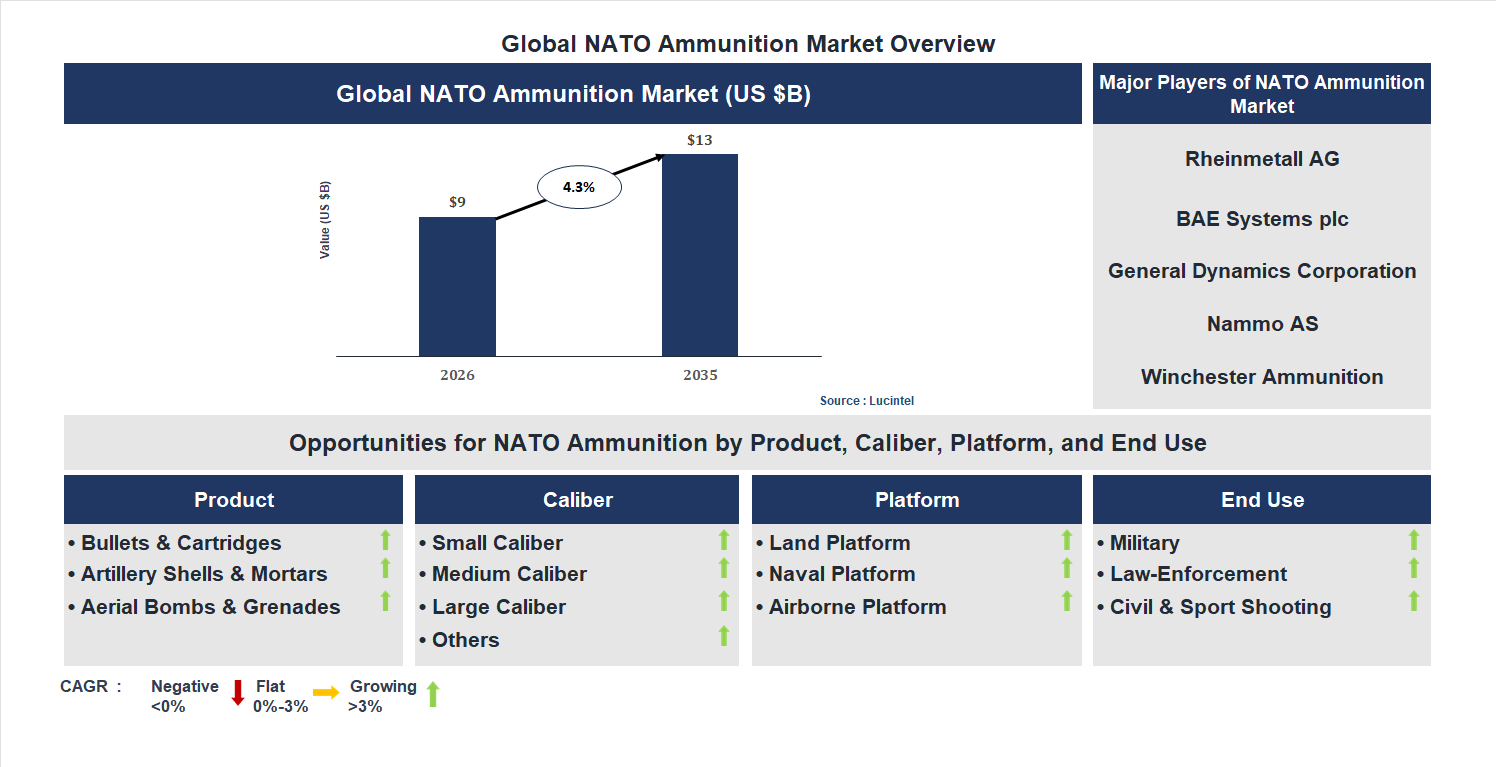
The future of the global NATO ammunition market looks promising with opportunities in the military, law-enforcement, and civil & sport shooting markets. The global NATO ammunition market is expected to reach an estimated $13 billion by 2035 with a CAGR of 4.3% from 2026 to 2035. The major drivers for this market are the increasing demand for standardized ammunition calibers, the rising defense spending among NATO members, and the growing need for stockpile replenishment.• Lucintel forecasts that, within the product category, artillery shell & mortar is expected to witness the highest growth over the forecast period.
• Within the end use category, military is expected to witness the highest growth.
• In terms of region, APAC is expected to witness the highest growth over the forecast period. Gain valuable insights for your business decisions with our comprehensive 150+ page report. Sample figures with some insights are shown below.
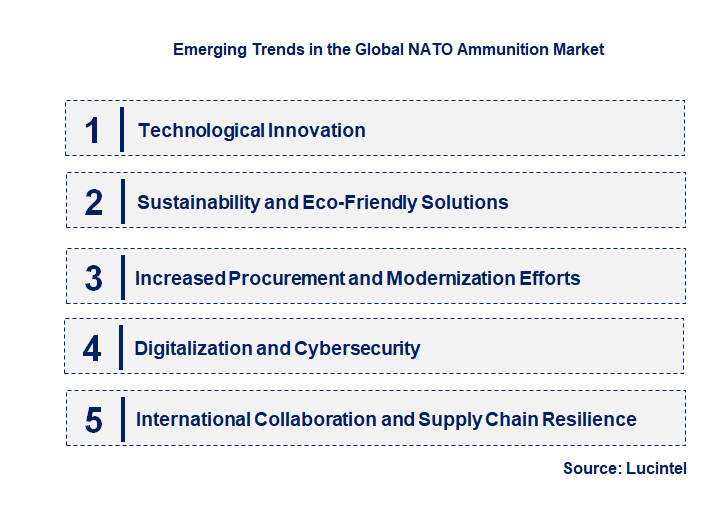
Emerging Trends in the NATO Ammunition Market
The NATO ammunition market is experiencing significant transformation driven by geopolitical shifts, technological advancements, and evolving defense strategies. As nations prioritize modernization and strategic readiness, the market is witnessing innovative product development, increased procurement activities, and a focus on sustainability. These developments are reshaping supply chains, fostering international collaborations, and emphasizing the importance of cybersecurity in defense logistics. Understanding these emerging trends is crucial for stakeholders aiming to capitalize on new opportunities and adapt to the dynamic defense landscape. The following key trends highlight the major directions shaping the future of the NATO ammunition market.• Technological Innovation: Advancements in Precision and Smart Ammunition : The market is increasingly adopting smart and precision-guided munitions that enhance accuracy and reduce collateral damage. These innovations improve operational effectiveness and safety, leading to higher demand from NATO countries. The integration of AI and IoT in ammunition systems allows for real-time targeting adjustments, boosting battlefield efficiency. This trend encourages manufacturers to invest in R&D, fostering a competitive environment focused on cutting-edge technology. As a result, the market is shifting toward more sophisticated, reliable, and environmentally friendly ammunition options.
• Sustainability and Eco-Friendly Solutions: Green Ammunition and Environmental Regulations : Environmental concerns are prompting NATO nations to seek sustainable ammunition options that minimize ecological impact. Eco-friendly propellants, biodegradable casings, and lead-free projectiles are gaining prominence. Stricter environmental regulations are compelling manufacturers to innovate and adopt greener practices. This trend not only aligns with NATO’s sustainability goals but also reduces long-term disposal costs and environmental liabilities. The market is witnessing a rise in eco-conscious product development, which is reshaping procurement policies and encouraging eco-friendly supply chain practices.
• Increased Procurement and Modernization Efforts: NATO’s Focus on Readiness and Modern Equipment : NATO countries are ramping up ammunition procurement to modernize their armed forces amid rising geopolitical tensions. This includes investing in high-capacity stockpiles and advanced munitions to ensure rapid deployment capabilities. Modernization efforts involve upgrading existing arsenals with more versatile and longer-range ammunition. The increased procurement activity boosts market growth and encourages collaboration among defense contractors. It also emphasizes the importance of supply chain resilience and strategic stockpiling, ensuring NATO’s preparedness for future conflicts.
• Digitalization and Cybersecurity: Securing Ammunition Supply Chains and Data : As ammunition systems become more integrated with digital technologies, cybersecurity has become a critical concern. Protecting supply chains, manufacturing data, and operational information from cyber threats is paramount. NATO is investing in secure digital platforms and encrypted communication channels to safeguard sensitive data. Digitalization enhances inventory management, predictive maintenance, and real-time tracking, improving overall efficiency. This trend underscores the importance of cybersecurity in defense logistics, prompting market players to develop robust security solutions and integrate them into ammunition systems.
• International Collaboration and Supply Chain Resilience: Strengthening Alliances and Reducing Dependence : NATO nations are fostering greater collaboration to diversify supply sources and reduce reliance on single suppliers. Joint procurement programs and shared manufacturing facilities are emerging to enhance resilience and cost-efficiency. This trend promotes technology transfer, standardization, and interoperability among member countries. Strengthening supply chains ensures rapid response capabilities and mitigates risks associated with geopolitical disruptions. It also encourages innovation through shared research initiatives, ultimately creating a more robust and flexible ammunition market aligned with NATO’s strategic objectives. These emerging trends are collectively transforming the NATO ammunition market by fostering technological innovation, emphasizing sustainability, increasing procurement activities, enhancing cybersecurity, and promoting international cooperation. These developments are not only improving operational capabilities but also ensuring the market’s resilience and adaptability in a rapidly changing geopolitical landscape.
Recent Development in the NATO Ammunition Market
The NATO ammunition market is experiencing significant growth driven by increasing defense budgets, modernization efforts, and geopolitical tensions. Advances in technology and the need for enhanced security measures are fueling demand across various regions. Countries are investing heavily in upgrading their arsenals, leading to innovations in manufacturing and logistics. This evolving landscape presents numerous opportunities for manufacturers, suppliers, and technology providers to expand their market share and develop advanced, reliable ammunition solutions tailored to modern military needs.• Growing Defense Budgets and Modernization: Increased government spending on defense and modernization programs are boosting demand for NATO-standard ammunition, encouraging innovation and expanding production capacities. Countries aim to enhance their military readiness, leading to higher procurement volumes and long-term contracts, which positively impact market stability and growth prospects.
• Technological Advancements in Ammunition: Innovations such as precision-guided munitions, improved ballistic performance, and environmentally friendly materials are transforming the market. These advancements improve accuracy, reduce collateral damage, and meet stricter safety standards, making NATO ammunition more effective and appealing to military forces seeking cutting-edge solutions.
• Geopolitical Tensions and Security Concerns: Rising regional conflicts and global tensions are prompting NATO countries to stockpile and modernize their ammunition supplies. This increased demand for reliable, high-performance ammunition enhances military preparedness and influences procurement strategies, thereby expanding the market and encouraging innovation in manufacturing processes.
• Expansion of Manufacturing Capabilities: Investments in new production facilities and modernization of existing plants are increasing supply chain resilience. Enhanced manufacturing capabilities enable faster delivery, higher quality standards, and cost efficiencies, which are critical for meeting the growing demand and maintaining NATO standards across member countries.
• Strategic Partnerships and Supply Chain Optimization: Collaborations between defense contractors and governments are streamlining procurement and logistics. These partnerships facilitate technology transfer, joint development, and bulk purchasing, reducing costs and ensuring a steady supply of ammunition, thus strengthening the overall market ecosystem and fostering innovation. The overall impact of these developments is a robust, technologically advanced NATO ammunition market characterized by increased production, innovation, and strategic collaborations. This growth enhances military readiness, supports geopolitical stability, and drives competitive advantages for industry players, ensuring the market remains dynamic and responsive to evolving security needs.
Strategic Growth Opportunities in the NATO Ammunition Market
The NATO ammunition market is experiencing significant growth driven by increasing defense budgets, modernization initiatives, and geopolitical tensions. Countries are investing heavily in advanced ammunition to enhance their military capabilities, leading to a surge in demand for various types of ammunition, including small arms, artillery, and missile systems. Technological advancements and strategic alliances further propel market expansion, creating lucrative opportunities for manufacturers and suppliers worldwide. This evolving landscape demands a comprehensive understanding of key growth areas to capitalize on emerging trends and secure a competitive edge.• Small Arms Ammunition: Increasing procurement of small arms ammunition for infantry and special forces enhances operational readiness. Countries focus on lightweight, high-precision rounds, including 5.56mm and 7.62mm calibers, to improve accuracy and reduce logistical burdens. The demand for training ammunition also rises, supporting military preparedness. Innovations in caseless and polymer-based rounds are expected to further boost this segment’s growth, driven by modernization programs and tactical requirements.
• Artillery Ammunition: The modernization of artillery systems and the need for longer-range, more accurate shells drive growth in this segment. Advanced guided shells, such as GPS and laser-guided projectiles, are increasingly adopted for precision strikes. Countries are investing in multi-purpose artillery rounds capable of countering various threats, including anti-armor and anti-personnel. The development of rocket-assisted projectiles and extended-range munitions further enhances the segment’s expansion prospects.
• Missile and Rocket Ammunition: The rising demand for missile systems with enhanced range, accuracy, and lethality fuels this segment. Countries are deploying surface-to-air, anti-ship, and tactical missile systems, requiring a variety of specialized ammunition. Innovations in hypersonic and stealth missile technology are creating new opportunities. The integration of smart guidance systems and multi-mode warheads is expected to improve effectiveness, supporting the growth of missile and rocket ammunition markets.
• Tank and Anti-Armor Ammunition: The modernization of armored vehicles and anti-armor weaponry boosts this segment. Development of tandem-charge and programmable ammunition enhances penetration capabilities against modern tanks. The demand for reactive and composite armor-piercing rounds increases as threats evolve. Countries are also investing in guided anti-tank missiles, such as Javelin and Spike, which require specialized ammunition to improve battlefield survivability and operational efficiency.
• Naval Ammunition: The expansion of naval forces and the need for maritime security drive growth in naval ammunition. This includes torpedoes, naval guns, and missile systems for ships and submarines. Advanced anti-ship and anti-submarine weapons with longer ranges and higher precision are in demand. The development of stealthy, multi-role naval munitions and integrated combat systems further supports market growth, ensuring dominance in modern naval warfare and maritime defense strategies. These growth opportunities collectively shape the NATO ammunition market’s trajectory, driven by technological innovation, strategic military upgrades, and geopolitical dynamics. Embracing these segments will enable defense stakeholders to enhance operational capabilities, ensure strategic superiority, and meet evolving security challenges effectively. The market’s expansion will foster innovation, competition, and global defense cooperation, ultimately strengthening NATO’s collective security framework.
NATO Ammunition Market Driver and Challenges
The NATO ammunition market is influenced by a complex interplay of technological advancements, economic factors, and regulatory frameworks. As geopolitical tensions rise and defense budgets fluctuate, the demand for advanced and reliable ammunition increases. Technological innovations such as precision-guided munitions and automation are transforming procurement and manufacturing processes. Economic considerations, including government spending and international trade policies, significantly impact market growth. Additionally, regulatory standards related to safety, environmental concerns, and international treaties shape the development and distribution of ammunition. These drivers and challenges collectively determine the markets trajectory, requiring stakeholders to adapt swiftly to changing conditions to maintain competitiveness and compliance. The factors responsible for driving the NATO ammunition market include:• Technological Innovation: The continuous development of advanced ammunition, such as precision-guided munitions and smart weapons, enhances operational effectiveness. NATO countries prioritize modernization to ensure their armed forces maintain strategic superiority. These innovations lead to increased demand for sophisticated ammunition, fostering growth in manufacturing and R&D activities. The integration of automation and digital technologies further streamlines production, reduces costs, and improves quality control, making the market more efficient and responsive to evolving military needs.
• Defense Budget Allocations: Increased defense spending by NATO member countries directly boosts ammunition procurement. Governments recognize the importance of maintaining a robust military capability, especially amid rising geopolitical tensions. Budget allocations for modernization programs and military exercises drive demand for various types of ammunition, from small arms to large-caliber artillery. Stable or growing defense budgets enable long-term planning and investment, supporting sustained growth in the ammunition market across the region.
• Geopolitical Tensions and Security Threats: Rising regional conflicts and international security concerns compel NATO nations to enhance their military arsenals. The need for rapid deployment and high-quality ammunition becomes critical in maintaining strategic deterrence. These tensions lead to increased procurement of both conventional and specialized ammunition, encouraging manufacturers to innovate and expand production capacities. The ongoing threat environment ensures a steady demand, influencing procurement policies and strategic stockpiling efforts.
• Regulatory and Environmental Standards: Stringent regulations related to safety, environmental impact, and international treaties influence ammunition manufacturing and distribution. NATO countries enforce strict compliance to ensure personnel safety and environmental protection, which can increase production costs and complexity. However, these standards also promote innovation in eco-friendly and safer ammunition types, opening new market segments. Adapting to evolving regulations is essential for manufacturers to remain competitive and compliant in the global market.
• International Collaboration and Procurement: NATOs collaborative defense initiatives and joint procurement programs facilitate economies of scale and resource sharing. These collaborations enable member countries to access advanced ammunition technologies and reduce costs. Standardization efforts streamline logistics and maintenance, enhancing operational efficiency. Such cooperation fosters a resilient supply chain and encourages innovation through shared research and development, ultimately strengthening the overall market position of NATO ammunition suppliers. The challenges facing the NATO ammunition market are:
• Supply Chain Disruptions: Global supply chain disruptions, caused by geopolitical conflicts, pandemics, or trade restrictions, pose significant risks to ammunition production and distribution. Shortages of raw materials, such as metals and chemicals, can delay manufacturing and increase costs. Logistic challenges affect timely delivery to military units, impacting readiness and operational planning. Manufacturers must diversify supply sources and build resilient logistics networks to mitigate these risks, which can require substantial investment and strategic planning.
• Regulatory Compliance and Environmental Concerns: While regulations ensure safety and environmental protection, they also impose stringent requirements that can hinder innovation and increase costs. Compliance with international treaties like the Chemical Weapons Convention and local environmental laws demands significant adjustments in manufacturing processes. These challenges may lead to delays in product development and higher operational expenses, potentially reducing profit margins and market competitiveness for ammunition producers.
• Budget Constraints and Political Will: Despite increasing security threats, some NATO countries face budget limitations and shifting political priorities that restrict defense spending. Economic downturns or austerity measures can lead to reduced procurement budgets, delaying or canceling ammunition orders. Political debates over military expenditure also influence procurement strategies, creating uncertainty in the market. Manufacturers must adapt to fluctuating demand and seek alternative markets or product lines to sustain growth amid financial constraints. The NATO ammunition market is shaped by rapid technological advancements, strategic defense investments, and geopolitical dynamics. While these drivers promote growth and innovation, challenges such as supply chain vulnerabilities, regulatory hurdles, and budget limitations pose risks to market stability. Stakeholders must navigate these factors carefully, leveraging collaboration and innovation to sustain competitiveness. The overall impact is a market characterized by resilience and adaptability, with opportunities for technological leadership and strategic partnerships amid evolving security landscapes.
List of NATO Ammunition Companies
Companies in the market compete on the basis of product quality offered. Major players in this market focus on expanding their manufacturing facilities, R&D investments, infrastructural development, and leverage integration opportunities across the value chain. With these strategies NATO ammunition companies cater increasing demand, ensure competitive effectiveness, develop innovative products & technologies, reduce production costs, and expand their customer base. Some of the NATO ammunition companies profiled in this report include-• Rheinmetall AG
• BAE Systems plc
• General Dynamics Corporation
• Nammo AS
• Winchester Ammunition
• CBC Global Ammunition
• MESKO S.A.
• KNDS N.V.
• Northrop Grumman Corporation
• Global Ordnance LLC
NATO Ammunition Market by Segment
The study includes a forecast for the global NATO ammunition market by product, caliber, platform, end use, and region.NATO Ammunition Market by Product [Value from 2019 to 2035]:
• Bullets & Cartridges
• Artillery Shells & Mortars
• Aerial Bombs & Grenades
NATO Ammunition Market by Caliber [Value from 2019 to 2035]:
• Small Caliber
• Medium Caliber
• Large Caliber
• Others
NATO Ammunition Market by Platform [Value from 2019 to 2035]:
• Land Platform
• Naval Platform
• Airborne Platform
NATO Ammunition Market by End Use [Value from 2019 to 2035]:
• Military
• Law-Enforcement
• Civil & Sport Shooting
NATO Ammunition Market by Region [Value from 2019 to 2035]:
• North America
• Europe
• Asia Pacific
• The Rest of the World
Country Wise Outlook for the NATO Ammunition Market
The NATO ammunition market has experienced significant shifts driven by geopolitical tensions, technological advancements, and increased defense budgets among member countries. These developments reflect efforts to modernize arsenals, enhance supply chain resilience, and adapt to emerging threats. Countries are investing in innovative manufacturing processes, expanding production capacities, and fostering international collaborations to ensure strategic readiness. The evolving landscape underscores the importance of maintaining a robust and responsive ammunition supply chain within NATO, emphasizing both technological innovation and strategic partnerships to meet future security challenges.• United States: The U.S. has increased its defense budget, focusing on modernizing its ammunition stockpiles with advanced, precision-guided munitions. There has been a surge in domestic manufacturing capacity, including investments in new production facilities and automation technologies. The U.S. also emphasizes interoperability with NATO allies through joint procurement programs and shared research initiatives, ensuring rapid deployment and supply chain resilience.
• China: China continues to expand its defense capabilities, including the development of domestically produced ammunition to reduce reliance on imports. The country has invested heavily in indigenous manufacturing technologies and increased its production capacity for various calibers and types of munitions. Strategic stockpiling and modernization efforts are aligned with its broader military modernization goals, aiming to enhance regional influence and deterrence.
• Germany: Germany has prioritized the modernization of its ammunition stockpiles, focusing on high-precision and environmentally friendly munitions. The country has increased collaboration with NATO partners to standardize ammunition types and improve interoperability. Investments in sustainable manufacturing practices and digitalization of supply chains are key trends, ensuring readiness and compliance with international standards.
• India: India is actively expanding its ammunition production capabilities to meet growing defense needs amid regional tensions. The country has launched several indigenous manufacturing initiatives, including the development of advanced small arms and artillery munitions. Strengthening domestic supply chains and reducing dependency on foreign imports are central to India’s strategic defense policy, with increased focus on self-reliance and technological innovation.
• Japan: Japan is enhancing its ammunition stockpiles as part of its broader defense strategy, emphasizing modernization and technological advancement. The country is investing in precision-guided munitions and improving its manufacturing infrastructure. Japan also collaborates with NATO allies and other partners to share technology and best practices, aiming to bolster its regional security posture and ensure supply chain resilience.

Features of the Global NATO Ammunition Market
Market Size Estimates: NATO ammunition market size estimation in terms of value ($B). Trend and Forecast Analysis: Market trends (2019 to 2025) and forecast (2026 to 2035) by various segments and regions. Segmentation Analysis: NATO ammunition market size by various segments, such as by product, caliber, platform, end use, and region in terms of value ($B). Regional Analysis: NATO ammunition market breakdown by North America, Europe, Asia Pacific, and Rest of the World. Growth Opportunities: Analysis of growth opportunities in different products, caliber, platforms, end uses, and regions for the NATO ammunition market. Strategic Analysis: This includes M&A, new product development, and competitive landscape of the NATO ammunition market. Analysis of competitive intensity of the industry based on Porter’s Five Forces model.
FAQ
Q1. What is the NATO ammunition market size? Answer: The global NATO ammunition market is expected to reach an estimated $13 billion by 2035. Q2. What is the growth forecast for NATO ammunition market? Answer: The global NATO ammunition market is expected to grow with a CAGR of 4.3% from 2026 to 2035. Q3. What are the major drivers influencing the growth of the NATO ammunition market? Answer: The major drivers for this market are the increasing demand for standardized ammunition calibers, the rising defense spending among NATO members, and the growing need for stockpile replenishment. Q4. What are the major segments for NATO ammunition market? Answer: The future of the NATO ammunition market looks promising with opportunities in the military, law-enforcement, and civil & sport shooting markets. Q5. Who are the key NATO ammunition market companies? Answer: Some of the key NATO ammunition companies are as follows:• Rheinmetall AG
• BAE Systems plc
• General Dynamics Corporation
• Nammo AS
• Winchester Ammunition
• CBC Global Ammunition
• MESKO S.A.
• KNDS N.V.
• Northrop Grumman Corporation
• Global Ordnance LLC Q6. Which NATO ammunition market segment will be the largest in future? Answer: Lucintel forecasts that, within the product category, artillery shell & mortar is expected to witness the highest growth over the forecast period. Q7. In NATO ammunition market, which region is expected to be the largest in next 8 years? Answer: In terms of region, APAC is expected to witness the highest growth over the forecast period. Q8. Do we receive customization in this report? Answer: Yes, Lucintel provides 10% customization without any additional cost.
Table of Contents
List of Figures
List of Tables
Methodology
- In-depth interviews of the major players in this market
- Detailed secondary research from competitors’ financial statements and published data
- Extensive searches of published works, market, and database information pertaining to industry news, company press releases, and customer intentions
- A compilation of the experiences, judgments, and insights of Lucintel’s professionals, who have analyzed and tracked this market over the years.


Buy Now
Choose a license that fits your team. Instant PDF delivery.
Prices exclude taxes. Instant delivery. Custom licensing available on request.
Key Questions
- • What are some of the most promising, high-growth opportunities for the NATO ammunition market by product (bullets & cartridges, artillery shells & mortars, and aerial bombs & grenades), caliber (small caliber, medium caliber, large caliber, and others), platform (land platform, naval platform, and airborne platform), end use (military, law-enforcement, and civil & sport shooting), and region (North America, Europe, Asia Pacific, and the Rest of the World)?
- • Which segments will grow at a faster pace and why?
- • Which region will grow at a faster pace and why?
- • What are the key factors affecting market dynamics? What are the key challenges and business risks in this market?
- • What are the business risks and competitive threats in this market?
- • What are the emerging trends in this market and the reasons behind them?
- • What are some of the changing demands of customers in the market?
- • What are the new developments in the market? Which companies are leading these developments?
- • Who are the major players in this market? What strategic initiatives are key players pursuing for business growth?
- • What are some of the competing products in this market and how big of a threat do they pose for loss of market share by material or product substitution?
- • What M&A activity has occurred in the last 5 years and what has its impact been on the industry? For any questions related to NATO Ammunition Market, NATO Ammunition Market Size, NATO Ammunition Market Growth, NATO Ammunition Market Analysis, NATO Ammunition Market Report, NATO Ammunition Market Share, NATO Ammunition Market Trends, NATO Ammunition Market Forecast, NATO Ammunition Companies, write Lucintel analyst at email: helpdesk@lucintel.com. We will be glad to get back to you soon.


