
Market Report · July 24, 2026

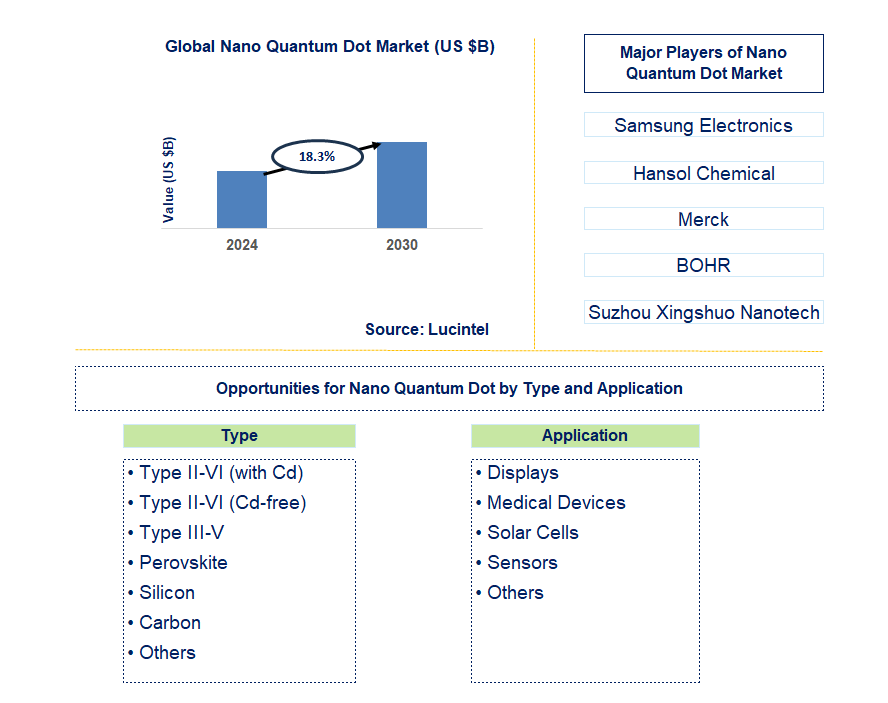
Key data points: The growth forecast = 18.3% annually for the next 6 years. Scroll below to get more insights. This market report covers trends, opportunities, and forecasts in the global nano quantum dot market to 2030 by type (type II-VI (with cd), type II-VI (cd-free), type III-V, perovskite, silicon, carbon, and others), application (displays, medical devices, solar cells, sensors, and others), and region (North America, Europe, Asia Pacific, and the Rest of the World)
We'll send your sample report shortly.
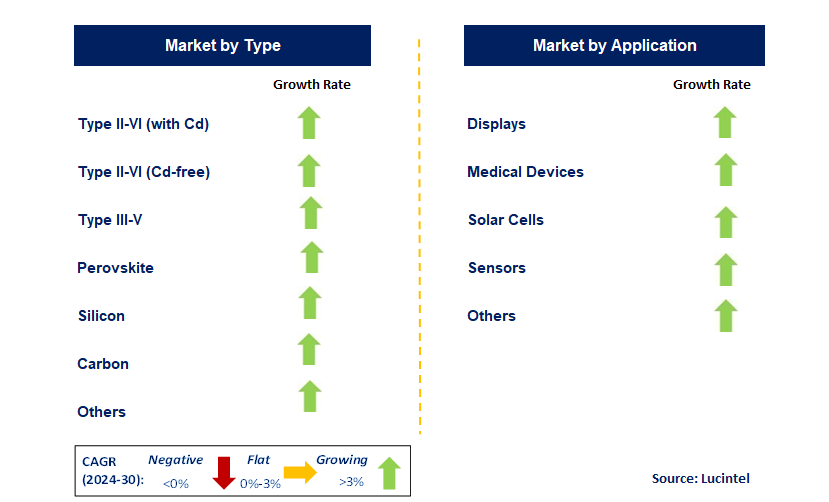
• Lucintel forecasts that, within the type category, type II-VI (with cd) is expected to witness higher growth over the forecast period.
• Within this application category, the display is expected to witness the highest growth.
• In terms of region, APAC is expected to witness the highest growth over the forecast period. A more than 150-page report is developed to help in your business decisions.
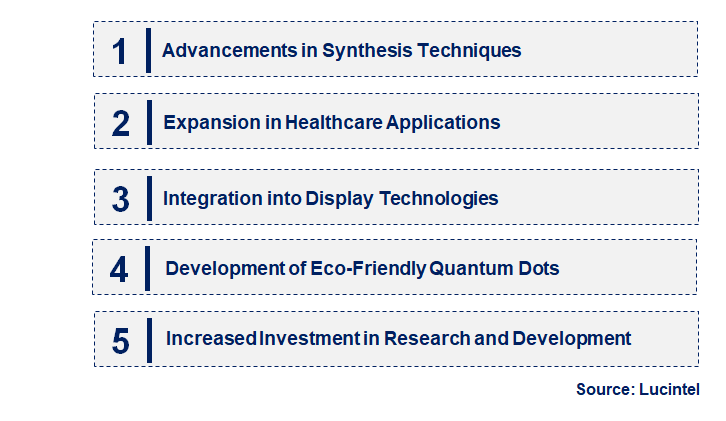
• Advancements in Synthesis Techniques: Innovations in synthesis methods, such as colloidal synthesis and chemical vapor deposition, are improving the quality and uniformity of quantum dots. These advancements enable the production of quantum dots with better optical properties and reduced environmental impact, driving broader adoption in electronics and healthcare.
• Expansion in Healthcare Applications: Quantum dots are increasingly used in medical diagnostics and imaging due to their high resolution and sensitivity. Their potential for early disease detection and targeted therapy is expanding, positioning them as vital tools in personalized medicine and enhancing diagnostic accuracy.
• Integration into Display Technologies: The use of quantum dots in high-definition and OLED displays is growing, thanks to their ability to provide vibrant colors and high resolution. This trend enhances visual experiences in consumer electronics and drives innovations in display technology.
• Development of Eco-Friendly Quantum Dots: There is a growing focus on developing environmentally friendly quantum dots, such as those made from less toxic materials or through green synthesis methods. This trend addresses regulatory concerns and aligns with global sustainability goals, influencing market dynamics.
• Increased Investment in Research and Development: Significant investments in research and development are driving innovation in quantum dot technology. This includes exploring new materials, improving production techniques, and expanding applications, which are crucial for maintaining competitive advantage and advancing market growth. The nano quantum dot market is poised for significant expansion, fueled by technological advancements and a growing range of applications. The unique properties of quantum dots make them invaluable in enhancing display technologies, improving energy efficiency in solar cells, and advancing biomedical imaging and diagnostics. As industries increasingly recognize the potential of these materials, investment in research and development will likely drive further innovations. By capitalizing on emerging trends and addressing evolving consumer demands, companies can position themselves at the forefront of this dynamic market, ensuring a pivotal role for nano quantum dots in future technological advancements.
• Improved Synthesis Methods: Recent developments include advancements in synthesis techniques that enhance the quality and stability of quantum dots. Techniques such as ligand exchange and improved colloidal synthesis are leading to higher quantum yields and better performance in applications like displays and medical imaging.
• Regulatory Approvals for New Applications: New regulations and approvals are facilitating the integration of quantum dots into consumer products and medical devices. This includes advancements in regulatory pathways for safer and more efficient use of quantum dots in various sectors.
• Expansion in Display Technologies: Significant progress has been made in incorporating quantum dots into high-resolution displays and OLED technologies. Innovations in this area are improving color accuracy and display performance, driving the adoption of quantum dots in next-generation consumer electronics.
• Sustainability Initiatives: There is an increasing emphasis on developing environmentally friendly quantum dots, including those made from non-toxic materials or through green synthesis methods. These initiatives address environmental concerns and align with global sustainability goals.
• Advancements in Medical Applications: Developments in medical applications of quantum dots include enhanced imaging techniques and targeted drug delivery systems. These advancements expand the use of quantum dots in diagnostics and therapeutics, offering new opportunities in personalized medicine. Recent developments in the nano quantum dot market are advancing synthesis techniques, expanding applications, and addressing environmental and regulatory concerns. These innovations drive growth and enhance the technological capabilities of quantum dots across various industries.
• Healthcare Applications: Nano quantum dots are making significant strides in healthcare, particularly in imaging and targeted drug delivery. Their high resolution and sensitivity allow for improved diagnostic capabilities and more precise therapeutic interventions. Innovations in biomedicine, such as enhanced imaging agents and drug delivery systems, expand the potential applications of quantum dots in personalized medicine and diagnostics. This presents substantial growth opportunities for companies developing advanced medical technologies.
• Display Technologies: The integration of quantum dots into display technologies, including high-definition and OLED displays, is a major growth area. Quantum dots enhance color accuracy, brightness, and energy efficiency, driving the development of next-generation displays for consumer electronics. As demand for better visual experiences continues to rise, there is significant opportunity for innovation and market expansion in the display sector.
• Environmental Monitoring: Quantum dots are increasingly used in environmental monitoring and sensing applications due to their ability to detect and quantify pollutants with high precision. This includes applications in water quality testing, air pollution monitoring, and soil analysis. The growing focus on environmental sustainability and regulatory requirements presents a strategic opportunity for quantum dot technologies to contribute to cleaner and safer environments.
• Solar Energy: In the renewable energy sector, quantum dots are being explored for their potential in enhancing photovoltaic cells. Their unique optical properties can improve the efficiency of solar energy conversion, making solar technology more effective and cost-efficient. As the global push for renewable energy sources intensifies, there is significant potential for quantum dots to play a crucial role in advancing solar energy technologies.
• Consumer Electronics: The use of quantum dots in consumer electronics extends beyond displays to include applications in sensors, wearables, and smart devices. Their ability to provide enhanced functionality and performance in compact formats opens up opportunities for innovation in various consumer tech products. Companies focusing on integrating quantum dots into new consumer electronics applications can capitalize on growing market demand and technological advancements. The nano quantum dot market presents strategic growth opportunities across healthcare, display technologies, environmental monitoring, solar energy, and consumer electronics. By leveraging advancements in quantum dot technology and addressing evolving market demands, companies can position themselves for success and drive innovation in these high-potential areas.
• Technological Advancements: Innovations in synthesis techniques and material science are pivotal in enhancing the performance of quantum dots. Advances such as improved quantum yield, size control, and stability contribute to their wider application in electronics, healthcare, and environmental monitoring. These technological improvements make quantum dots more efficient and versatile, driving their adoption across diverse sectors.
• Growing Demand in Healthcare: The increasing use of quantum dots in medical diagnostics and targeted drug delivery systems is a significant growth driver. Quantum dots offer high-resolution imaging and precise targeting capabilities, which are crucial for advancing personalized medicine and improving diagnostic accuracy. This growing demand in healthcare is expanding market opportunities and fueling research and development efforts.
• Expansion in Display Technologies: Quantum dots are becoming integral to next-generation display technologies, including high-definition and OLED screens. Their ability to enhance color accuracy, brightness, and energy efficiency drives the adoption of quantum dots in consumer electronics. This trend supports innovation in display technology and increases the market demand for quantum dots.
• Focus on Environmental Monitoring: The application of quantum dots in environmental monitoring and sensing is growing due to their high sensitivity and precision. Quantum dots are used for detecting pollutants and contaminants in air, water, and soil, supporting environmental protection and regulatory compliance. The emphasis on environmental sustainability drives demand for quantum dot-based monitoring solutions.
• Investment in Research and Development: Substantial investment in R&D is fostering innovation in quantum dot technology. Research into new materials, improved synthesis methods, and novel applications expands the potential uses of quantum dots and drives market growth. Investment in R&D helps companies stay competitive and advance their quantum dot technologies. Challenges in the nano quantum dot market are:
• Regulatory Hurdles: Stringent regulatory requirements, particularly in healthcare and environmental applications, pose a challenge for market entry and product development. Navigating these regulations can delay the commercialization of quantum dot technologies and increase development costs.
• Environmental and Safety Concerns: The use of toxic materials in some quantum dots raises environmental and safety issues. Addressing these concerns through the development of non-toxic alternatives and ensuring compliance with environmental regulations is essential for market sustainability and acceptance. The nano quantum dot market is driven by technological advancements, growing healthcare demand, expansion in display technologies, environmental monitoring needs, and substantial R&D investment. However, challenges like regulatory hurdles and environmental concerns must be addressed. Balancing these drivers and challenges is crucial for stakeholders to capitalize on market opportunities and foster continued growth.
• Samsung Electronics
• Hansol Chemical
• Merck
• BOHR
• Suzhou Xingshuo Nanotech
• Nanosys
• American Elements
• Xingzi New Material
• Najing Tech
• Nantong Veeyeei
• Type II-VI (with Cd)
• Type II-VI (Cd-free)
• Type III-V
• Perovskite
• Silicon
• Carbon
• Others
• Displays
• Medical Devices
• Solar Cells
• Sensors
• Others
• North America
• Europe
• Asia Pacific
• The Rest of the World
• United States: Recent advancements in the U.S. focus on enhancing the stability and performance of quantum dots for use in displays and medical imaging. Innovations include the development of new materials and improved synthesis techniques that offer better quantum yield and longer operational lifetimes. These breakthroughs are driving adoption in consumer electronics and healthcare applications.
• China: China has made strides in scaling up production capabilities and reducing costs for quantum dots. Significant investments in research have led to advancements in manufacturing techniques that enhance the quality and consistency of quantum dots. These developments are positioning China as a major player in the global market, particularly in the electronics and photovoltaic sectors.
• Germany: In Germany, research is centered on developing eco-friendly quantum dots and optimizing their use in environmental monitoring and energy applications. German institutions are focusing on reducing the environmental impact of quantum dot production while improving their efficiency in sensors and solar cells, thus contributing to sustainable technological progress.
• India: India is emerging as a key player in the nano quantum dot market, with a focus on cost-effective synthesis methods and applications in agriculture and healthcare. Indian research is exploring the use of quantum dots in biosensing and targeted drug delivery, aiming to leverage low-cost production for high-impact applications.
• Japan: Japan continues to lead in advanced applications of quantum dots, particularly in high-resolution displays and advanced lighting technologies. Japanese companies are investing in cutting-edge research to improve the optical properties of quantum dots and integrate them into new product lines, reinforcing their position in the global tech market.


• Samsung Electronics
• Hansol Chemical
• Merck
• BOHR
• Suzhou Xingshuo Nanotech
• Nanosys
• American Elements
• Xingzi New Material
• Najing Tech
• Nantong Veeyeei Q5. Which nano quantum dot market segment will be the largest in future? Answer: Lucintel forecasts that type II-VI (with cd) is expected to witness higher growth over the forecast period. Q6. In nano quantum dot market, which region is expected to be the largest in next 5 years? Answer: APAC is expected to witness the highest growth over the forecast period. Q.7 Do we receive customization in this report? Answer: Yes, Lucintel provides 10% customization without any additional cost.


Choose a license that fits your team. Instant PDF delivery.
Prices exclude taxes. Instant delivery. Custom licensing available on request.
Market Report · July 24, 2026
Market Report · July 20, 2026
Market Report · July 20, 2026
Trusted partner for strategic intelligence and business growth


Receive a complimentary market analysis tailored to your industry. Our analysts will identify key growth opportunities and competitive dynamics specific to your business.

Market size, growth rate, and key trend analysis for your specific sector.

Top competitor positioning and market share analysis.

Strategic recommendations backed by data-driven insights.
Get curated market intelligence and competitive moves straight to your inbox.
By subscribing, you agree to receive our monthly insights. Unsubscribe anytime.
Receive a complimentary market analysis tailored to your industry. Our analysts will identify key growth opportunities and competitive dynamics specific to your business.
Market size, growth rate, and key trend analysis for your specific sector.
Top competitor positioning and market share analysis.
Strategic recommendations backed by data-driven insights.
Get curated market intelligence, emerging trends, and competitive moves straight to your inbox each month.
By subscribing, you agree to receive our monthly insights. Unsubscribe anytime.
We'll send your sample report shortly.