
Market Report · July 16, 2026

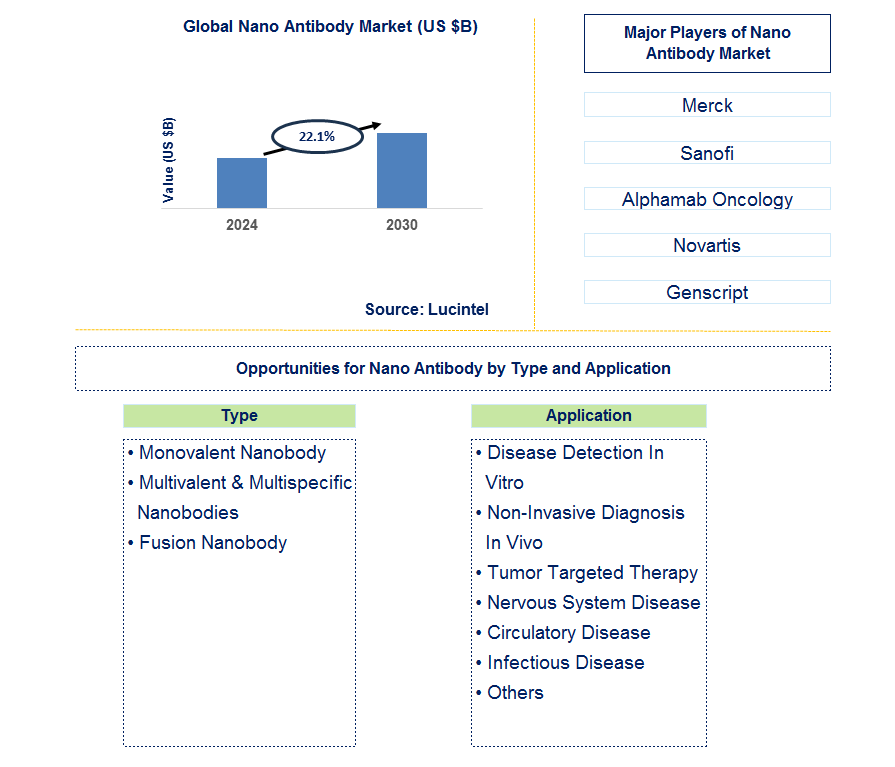
Key data points: The growth forecast = 22.1% annually for the next 6 years. Scroll below to get more insights. This market report covers trends, opportunities, and forecasts in the global nano antibodies market to 2030 by type (monovalent nanobody, multivalent & multispecific nanobodies, and fusion nanobody), application (disease detection in vitro, non-invasive diagnosis in vivo, tumor targeted therapy, nervous system disease, circulatory disease, infectious disease, and others), and region (North America, Europe, Asia Pacific, and the Rest of the World)
We'll send your sample report shortly.
• United States: The U.S. is a leader in nano antibody research, with recent breakthroughs focusing on their use in targeted drug delivery and cancer therapy. Companies are developing nano antibody-based therapeutics that show promise in treating various cancers with minimal side effects. Collaborations between biotech firms and academic institutions are accelerating innovation, while regulatory bodies are streamlining approval processes for nano antibody products.
• China: China is rapidly expanding its nano antibodies market, driven by government support for biotechnology innovations. Recent advancements include the development of nano antibodies for infectious disease diagnostics and treatments, particularly in response to public health needs. Increased investments in R&D are fostering new applications and enhancing production capabilities, making nano antibodies more accessible in healthcare settings.
• Germany: Germany is focusing on integrating nano antibodies into diagnostic platforms, enhancing the sensitivity and specificity of tests. Recent developments include partnerships between research institutions and industry to create rapid diagnostic kits that utilize nano antibodies for early disease detection. This emphasis on innovation aligns with Germany's commitment to improving healthcare outcomes through advanced technology.
• India: India's nano antibodies market is gaining traction, particularly in diagnostics and agricultural applications. Recent innovations include the development of nano antibodies for detecting pathogens in crops, addressing food security concerns. Government initiatives promoting biotech research are facilitating advancements, while collaborations with global firms are enhancing local capabilities in nano antibody production.
• Japan: Japan is leveraging its technological expertise to advance nano antibodies for therapeutic applications. Recent developments include nano antibody-based therapies targeting autoimmune diseases and chronic conditions. The focus on precision medicine is driving investment in research, with Japanese firms exploring novel delivery systems that enhance the efficacy of nano antibodies.
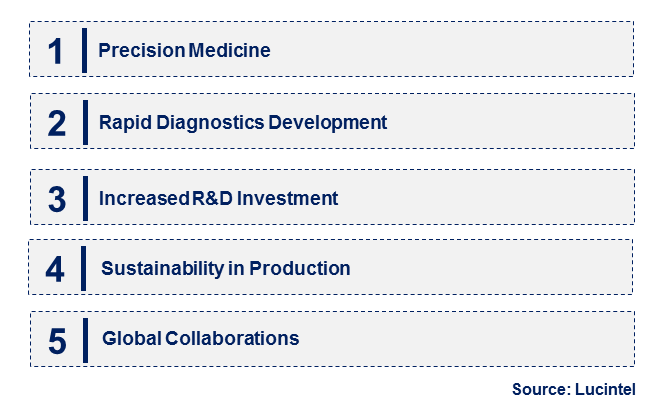
• Precision Medicine: The shift towards precision medicine is a significant trend in the nano antibodies market. nano antibodies offer high specificity, enabling targeted therapies that minimize side effects. This trend is transforming how diseases are treated, leading to more personalized treatment plans for patients.
• Rapid Diagnostics Development: The demand for quick and accurate diagnostic solutions is driving the development of nano antibody-based tests. These tests provide rapid results with high sensitivity, making them essential for early disease detection and management, particularly in infectious diseases.
• Increased R&D Investment: Growing investments in research and development are fostering innovation in nano antibody technologies. Both public and private sectors are funding projects aimed at discovering new applications and enhancing existing technologies, which is crucial for market growth.
• Sustainability in Production: The nano antibodies market is witnessing a trend towards sustainable production methods. Companies are exploring eco-friendly practices in the manufacturing process, ensuring that the production of nano antibodies aligns with global sustainability goals.
• Global Collaborations: Collaborations between countries, industries, and research institutions are on the rise, facilitating knowledge exchange and technological advancements. These partnerships enhance R&D capabilities and accelerate the commercialization of nano antibody products globally. These emerging trends are reshaping the nano antibodies market by enhancing precision in medicine, improving diagnostic capabilities, and fostering sustainable practices. Companies that adapt to these trends will be better positioned to capture market opportunities and meet the evolving demands of the healthcare sector.
• Enhanced Production Techniques: Innovations in production methods, such as recombinant DNA technology, are improving the yield and purity of nano antibodies. These advancements lower costs and enhance the quality of nano antibodies, making them more viable for commercial applications.
• Targeted Therapeutics: Recent developments focus on utilizing nano antibodies for targeted therapies in oncology and autoimmune diseases. These applications leverage the specificity of nano antibodies to deliver drugs directly to affected cells, reducing off-target effects and improving patient outcomes.
• Rapid Diagnostic Kits: The introduction of rapid diagnostic kits utilizing nano antibodies is revolutionizing disease detection. These kits provide quick results with high accuracy, facilitating timely interventions and improving healthcare efficiency, particularly during disease outbreaks.
• Collaborative Research Projects: Collaborations between academic institutions and biotech firms are driving innovation in nano antibodies. These partnerships are focused on developing new applications and enhancing the understanding of nano antibody interactions, accelerating the pace of research and product development.
• Regulatory Advancements: Regulatory bodies are streamlining approval processes for nano antibody products, encouraging market entry for innovative therapies and diagnostics. This support is crucial for fostering an environment conducive to innovation and ensuring patient access to advanced medical solutions. These key developments are significantly impacting the nano antibodies market by improving production methods, expanding applications, and fostering collaborations. Companies that leverage these advancements will enhance their competitive edge and drive growth in this dynamic market.
• Oncology Applications: The use of nano antibodies in targeted cancer therapies offers substantial growth potential. Their ability to specifically target tumor cells while sparing healthy tissue makes them an attractive option for improving cancer treatment efficacy and minimizing side effects.
• Infectious Disease Diagnostics: nano antibodies are increasingly utilized in diagnostic tests for infectious diseases, particularly in rapid testing scenarios. The growing need for quick and accurate diagnostics, especially post-pandemic, creates a significant opportunity for development in this area.
• Autoimmune Disease Treatment: The application of nano antibodies in treating autoimmune diseases presents a promising growth avenue. By targeting specific immune responses, nano antibodies can provide tailored therapies that improve patient outcomes and reduce adverse effects.
• Agricultural Biotechnology: nano antibodies are being explored for use in agricultural applications, particularly in detecting pathogens and improving crop resilience. This emerging market represents a unique opportunity for nano antibody development beyond human health applications.
• Personalized Medicine Solutions: The trend towards personalized medicine is creating demand for nano antibodies that can be tailored to individual patient needs. Companies that develop customizable nano antibody solutions will be well-positioned to capture this growing market segment. These strategic growth opportunities highlight the versatility and potential of nano antibodies across multiple sectors. Companies that capitalize on these opportunities will enhance their market positioning and drive sustainable growth in the nano antibodies landscape.
• Increased Healthcare Demand: Growing global healthcare needs, particularly in diagnostics and therapeutics, are driving demand for innovative solutions like nano antibodies. Their specificity and versatility make them ideal for addressing complex medical challenges.
• Advancements in Biotechnology: Rapid advancements in biotechnology are enhancing the production and application of nano antibodies. Improved techniques allow for higher purity and effectiveness, making nano antibodies more attractive for various uses.
• Rising Prevalence of Chronic Diseases: The increasing prevalence of chronic diseases creates a need for targeted treatments. nano antibodies offer precise therapeutic options, catering to the growing demand for effective healthcare solutions.
• Government Support and Funding: Government initiatives promoting biotechnology research and development are facilitating the growth of the nano antibodies market. Funding for innovative projects encourages advancements and commercialization.
• Growing Awareness of Precision Medicine: As the healthcare industry shifts toward precision medicine, the demand for specific, targeted therapies increases. nano antibodies are well-positioned to meet this need, driving market growth. Challenges in the nano antibodies market are:
• Regulatory Hurdles: Navigating regulatory processes can be complex and time-consuming for nano antibody products. Stringent regulations may delay market entry, posing challenges for manufacturers seeking to introduce new therapies.
• Production Costs: The costs associated with producing nano antibodies can be high, impacting profitability. Companies must optimize their production processes to ensure competitive pricing while maintaining quality.
• Market Competition: The nano antibodies market is becoming increasingly competitive, with many players entering the space. Companies must differentiate their products and innovate continuously to maintain market share. The interplay of these drivers and challenges significantly impacts the nano antibodies market, shaping strategic decisions and influencing overall growth potential. Companies that effectively navigate these factors will be better positioned to succeed in this evolving landscape.
• Merck
• Sanofi
• Alphamab Oncology
• Novartis
• Genscript
• Taisho Pharmaceutical Holdings
• Sensei Biotherapeutics
• Cusabio Technology
• ChromoTek
• Beroni Group
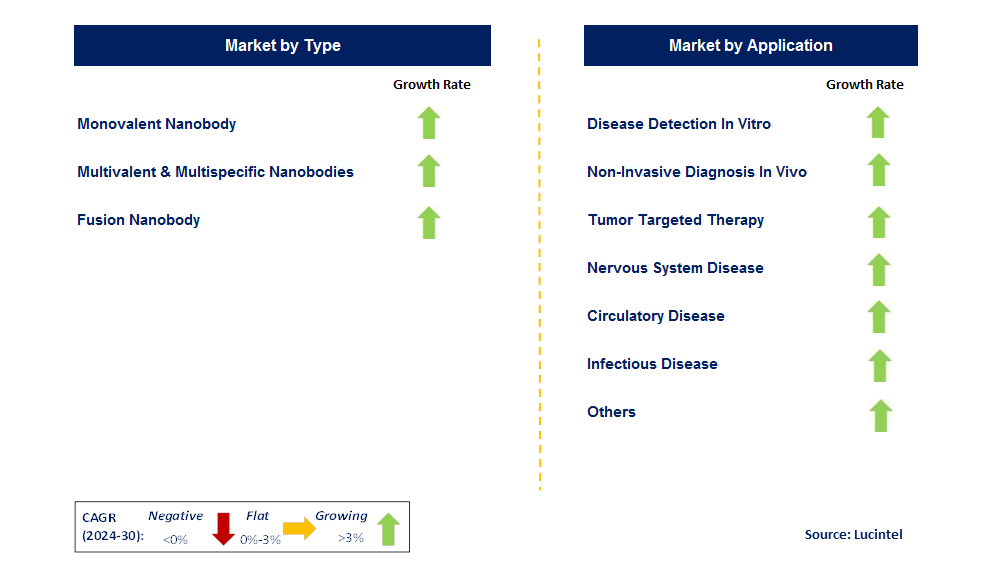
• Monovalent Nanobody
• Multivalent & Multispecific Nanobodies
• Fusion Nanobody
• Disease Detection In Vitro
• Non-Invasive Diagnosis In Vivo
• Tumor Targeted Therapy
• Nervous System Disease
• Circulatory Disease
• Infectious Disease
• Others
• North America
• Europe
• Asia Pacific
• The Rest of the World
• Lucintel forecasts that, within the type category, monovalent nanobody is expected to witness the highest growth over the forecast period.
• Within the application category, disease detection in vitro is expected to witness the highest growth.
• In terms of regions, APAC is expected to witness the highest growth over the forecast period.


• Merck
• Sanofi
• Alphamab Oncology
• Novartis
• Genscript
• Taisho Pharmaceutical Holdings
• Sensei Biotherapeutics
• Cusabio Technology
• ChromoTek
• Beroni Group Q5. Which nano antibodies market segment will be the largest in future? Answer: Lucintel forecasts that monovalent nanobody is expected to witness the highest growth over the forecast period. Q6. In nano antibodies market, which region is expected to be the largest in next 5 years? Answer: APAC is expected to witness the highest growth over the forecast period. Q.7 Do we receive customization in this report? Answer: Yes, Lucintel provides 10% customization without any additional cost.


Choose a license that fits your team. Instant PDF delivery.
Prices exclude taxes. Instant delivery. Custom licensing available on request.
Market Report · July 16, 2026
Market Report · July 15, 2026
Market Report · July 15, 2026
Trusted partner for strategic intelligence and business growth


Receive a complimentary market analysis tailored to your industry. Our analysts will identify key growth opportunities and competitive dynamics specific to your business.

Market size, growth rate, and key trend analysis for your specific sector.

Top competitor positioning and market share analysis.

Strategic recommendations backed by data-driven insights.
Get curated market intelligence and competitive moves straight to your inbox.
By subscribing, you agree to receive our monthly insights. Unsubscribe anytime.
Receive a complimentary market analysis tailored to your industry. Our analysts will identify key growth opportunities and competitive dynamics specific to your business.
Market size, growth rate, and key trend analysis for your specific sector.
Top competitor positioning and market share analysis.
Strategic recommendations backed by data-driven insights.
Get curated market intelligence, emerging trends, and competitive moves straight to your inbox each month.
By subscribing, you agree to receive our monthly insights. Unsubscribe anytime.
We'll send your sample report shortly.