
Market Report · July 22, 2026

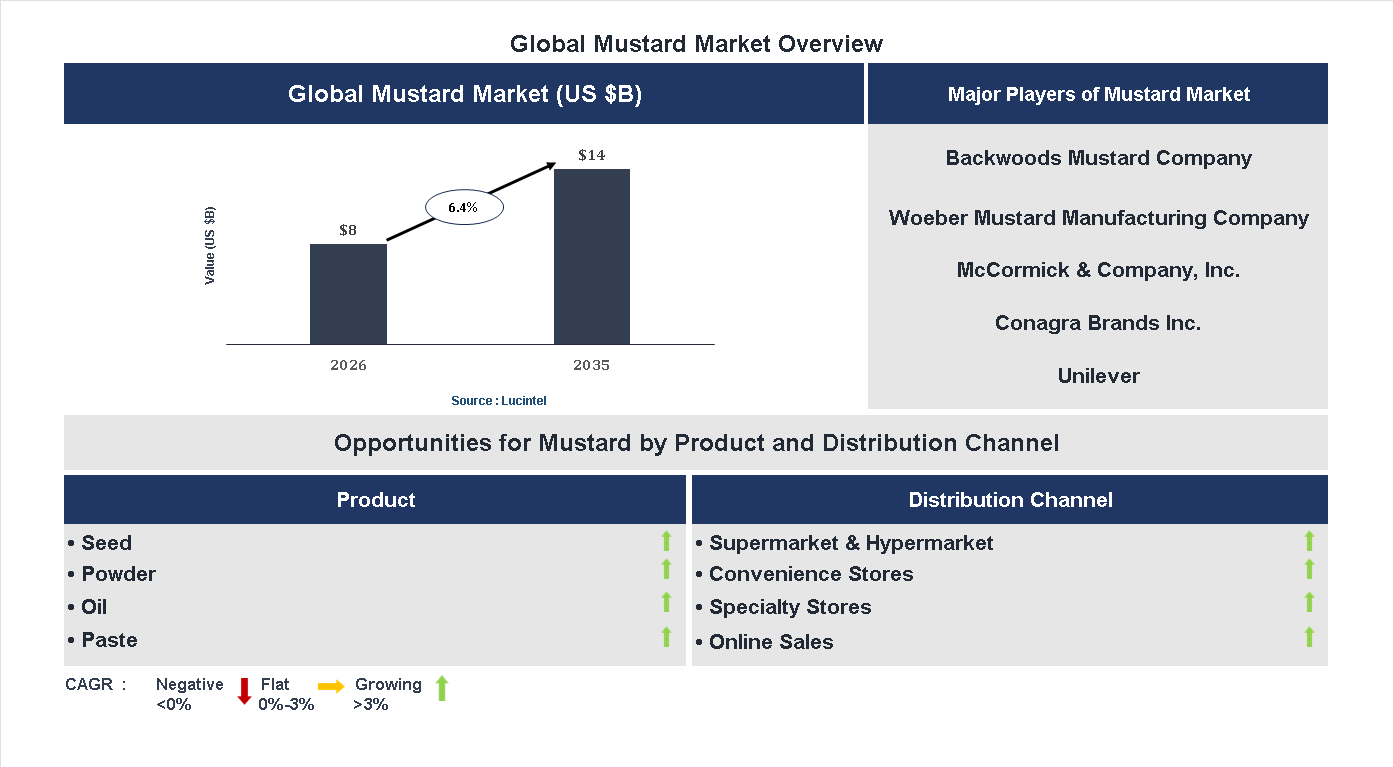
Key data points: The market size in 2035 = $14 billion, growth forecast = 6.4% annually for the next 8 years. Scroll below to get more insights. This market report covers trends, opportunities and forecasts in mustard market to 2035 by product (seed, powder, oil, and paste), distribution channel (supermarket & hypermarket, convenience stores, specialty stores, and online sales), and region (North America, Europe, Asia Pacific, and the Rest of the World)
We'll send your sample report shortly.
• Lucintel forecasts that, within the distribution channel category, online sale is expected to witness the highest growth over the forecast period.
• Within the product category, seed is expected to witness the highest growth.
• In terms of region, APAC is expected to witness the highest growth over the forecast period. Gain valuable insights for your business decisions with our comprehensive 150+ page report. Sample figures with some insights are shown below.
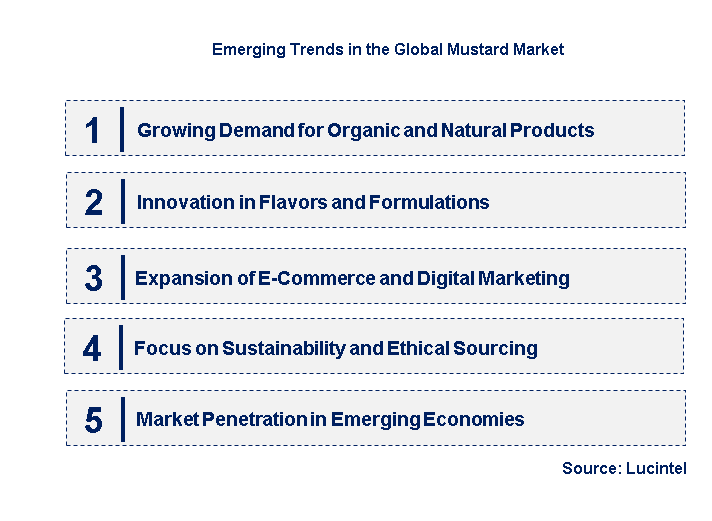
• Growing Demand for Organic and Natural Products: Consumers are increasingly prioritizing health and wellness, leading to a surge in organic and natural mustard options. This trend encourages producers to adopt organic farming practices and transparent labeling, which enhances brand trust and appeals to health-conscious buyers. The demand for clean-label products is also driving innovation in ingredient sourcing and product formulation, ultimately expanding market share for organic mustard varieties and encouraging sustainable agricultural practices.
• Innovation in Flavors and Formulations: The market is witnessing a rise in diverse flavors and innovative formulations to cater to evolving consumer tastes. Companies are experimenting with spicy, sweet, and exotic flavor profiles, as well as combining mustard with other ingredients like herbs and spices. This trend enhances product differentiation and appeals to a broader audience, including gourmet and ethnic food markets. It also opens new avenues for product development, boosting sales and market penetration across different regions.
• Expansion of E-commerce and Digital Marketing: Digital platforms are transforming how mustard products are marketed and purchased. E-commerce channels provide consumers with easy access to a wide range of products, including niche and artisanal varieties. Digital marketing strategies, such as social media campaigns and influencer collaborations, are increasing brand visibility and consumer engagement. This trend enables companies to reach global markets efficiently, gather consumer insights, and respond swiftly to market demands, thereby accelerating growth and innovation.
• Focus on Sustainability and Ethical Sourcing: Sustainability practices are becoming central to market strategies, with companies emphasizing eco-friendly packaging, responsible sourcing, and reduced carbon footprints. Ethical sourcing of mustard seeds and sustainable farming practices are gaining importance among consumers who value environmental responsibility. This trend not only enhances brand reputation but also aligns with regulatory requirements and global sustainability goals, fostering long-term growth and resilience in the market.
• Market Penetration in Emerging Economies: As disposable incomes rise and urbanization accelerates, emerging economies present significant growth opportunities for mustard products. Companies are tailoring products to local tastes and preferences, establishing distribution networks, and investing in marketing campaigns to capture these markets. This expansion diversifies revenue streams and reduces dependence on mature markets, positioning the mustard industry for sustained global growth and increased competitiveness. These trends are collectively reshaping the mustard market by fostering innovation, expanding consumer choices, and emphasizing sustainability. They are driving market growth, enhancing competitiveness, and opening new opportunities for stakeholders across the supply chain. As these developments continue, the mustard industry is poised for dynamic evolution, aligning with broader food industry trends and consumer expectations.
• Growing Demand for Organic Mustard: Increasing consumer awareness about health and wellness has driven demand for organic mustard products. Consumers prefer natural, chemical-free options, prompting producers to adopt organic farming practices. This shift enhances product credibility and market share, especially in health-conscious markets. Organic mustard's rising popularity is also encouraging farmers to adopt sustainable practices, which benefits the environment. Overall, this trend is expanding market size and encouraging innovation in organic product lines.
• Innovation in Flavored Mustard Varieties: The market is witnessing a surge in flavored mustard options, including honey, garlic, and spicy blends. These innovations cater to diverse consumer tastes and culinary preferences, boosting product appeal. Foodservice sectors are adopting these flavors for gourmet dishes, increasing demand. Companies investing in flavor innovation are gaining competitive advantage, leading to increased sales and market penetration. This trend is also encouraging product differentiation and expanding consumer base across various regions.
• Expansion of E-commerce and Digital Platforms: Online retail channels are becoming crucial for mustard sales, offering convenience and wider reach. E-commerce platforms enable brands to target niche markets and provide detailed product information, enhancing consumer engagement. Digital marketing strategies are boosting brand visibility and consumer loyalty. The growth of online grocery shopping is accelerating market penetration, especially in urban areas. This development is facilitating faster product launches and expanding access to international markets, thereby increasing overall market growth.
• Focus on Sustainable and Ethical Sourcing: Consumers are increasingly demanding ethically sourced and environmentally friendly mustard products. Companies are adopting sustainable farming practices, reducing carbon footprints, and ensuring fair trade. This focus enhances brand reputation and appeals to eco-conscious consumers. Sustainable sourcing also ensures product quality and supply chain transparency. As a result, market players are gaining competitive advantage, and the industry is moving toward more responsible production practices, which positively impact long-term growth prospects.
• Rising Demand in Emerging Markets: Developing regions are experiencing increased mustard consumption due to urbanization, changing dietary habits, and expanding retail infrastructure. These markets offer significant growth opportunities for global and local brands. Investments in marketing and distribution are driving market penetration. The rising middle class and increasing disposable incomes further support demand. This trend is diversifying the market landscape, creating new revenue streams, and fostering innovation tailored to regional tastes and preferences. The recent developments in the mustard market are significantly expanding its scope, increasing consumer options, and enhancing sustainability practices. These factors are driving market growth, fostering innovation, and opening new regional opportunities. As a result, the market is becoming more competitive, diverse, and aligned with consumer values, ensuring sustained growth and resilience in the evolving global food industry.
• Product Innovation and Flavor Diversification: Developing new mustard varieties with unique flavors, organic ingredients, and health-focused formulations can attract a broader consumer base. Incorporating regional flavors and functional ingredients enhances product appeal, catering to evolving taste preferences and dietary needs. This approach allows brands to differentiate themselves in a competitive market, increase shelf space, and meet the rising demand for premium and specialty mustard products.
• Expansion in Foodservice and Institutional Markets: Growing demand for mustard in restaurants, catering, and institutional foodservice presents a significant growth avenue. Customizable packaging, bulk supply options, and tailored flavor profiles can meet the needs of chefs and foodservice providers. Strengthening distribution channels and establishing partnerships with key foodservice players will enable market players to increase their footprint and capitalize on the expanding culinary applications of mustard.
• Rising Demand for Organic and Natural Mustard Products: Consumers are increasingly seeking organic, non-GMO, and clean-label products, driving growth in natural mustard segments. Certification and transparent sourcing practices are critical to building trust and brand loyalty. Investing in organic production facilities and marketing campaigns emphasizing health benefits will help companies capture the health-conscious segment and differentiate their offerings in a crowded marketplace.
• Strategic Mergers, Acquisitions, and Partnerships: Collaborations between established players and startups can foster innovation, expand product portfolios, and access new markets. Mergers and acquisitions facilitate resource sharing, technological advancements, and increased market reach. Strategic partnerships with distributors and retailers can enhance brand visibility and accelerate growth, enabling companies to adapt quickly to changing consumer preferences and competitive pressures.
• Adoption of E-commerce and Digital Marketing Channels: Leveraging online platforms and digital marketing strategies can significantly boost sales and brand awareness. E-commerce enables direct-to-consumer sales, personalized marketing, and access to niche markets. Utilizing social media, influencer collaborations, and targeted advertising can increase consumer engagement, expand reach, and drive growth in both domestic and international markets, especially among younger, digitally-savvy consumers. The overall impact of these growth opportunities will likely lead to increased market size, diversification of product offerings, and enhanced competitiveness. Companies that strategically invest in innovation, distribution, and digital channels will be well-positioned to capitalize on emerging trends. This dynamic environment promises sustained growth, increased consumer engagement, and expanded global presence for the mustard market.
• Increasing consumer demand for natural and healthy food products: Consumers are increasingly seeking natural, organic, and health-beneficial ingredients, which boosts mustard's popularity as a healthy condiment and ingredient. This trend encourages product innovation and expansion into new markets, supporting sustained growth.
• Technological advancements in agriculture and processing: Innovations such as improved seed varieties, precision farming, and advanced extraction techniques enhance mustard yield, quality, and flavor profiles. These technological improvements reduce costs and enable manufacturers to meet rising demand efficiently.
• Growing popularity of ethnic and regional cuisines: The globalization of food culture has increased the incorporation of mustard in diverse culinary traditions, expanding its application beyond traditional uses. This cultural integration broadens market reach and stimulates product diversification.
• Expansion of retail and e-commerce channels: The proliferation of supermarkets, hypermarkets, and online platforms facilitates wider distribution and accessibility of mustard products. E-commerce, in particular, allows brands to reach niche markets and consumers seeking specialty or organic options. The challenges in the mustard market are:
• Fluctuations in raw material prices: Variability in mustard seed prices due to weather conditions, crop yields, and global supply-demand dynamics can impact profit margins. Price volatility complicates cost management and pricing strategies for manufacturers.
• Stringent regulatory standards: Food safety, labeling, and quality regulations vary across regions and can pose barriers to market entry or expansion. Compliance costs and delays may hinder product launches and limit market growth.
• Competition from alternative condiments and spreads: The presence of numerous substitutes such as mayonnaise, ketchup, and other sauces intensifies competition. Differentiating products and maintaining market share require continuous innovation and marketing efforts. The mustard market is driven by rising health consciousness, technological progress, cultural diversification, and expanding distribution channels. However, it faces challenges like raw material price volatility, regulatory hurdles, and intense competition. These factors collectively influence market stability and growth prospects. Stakeholders must strategically navigate these dynamics to capitalize on opportunities while mitigating risks, ensuring sustainable development in the evolving mustard industry landscape.
• Backwoods Mustard Company
• Woeber Mustard Manufacturing Company
• McCormick & Company, Inc.
• Conagra Brands Inc.
• Unilever
• H.J. Heinz Company
• Cargill
• French’s
• Mustard and Co.
• Sun Impex
• Seed
• Powder
• Oil
• Paste
• Supermarket & Hypermarket
• Convenience Stores
• Specialty Stores
• Online Sales
• North America
• Europe
• Asia Pacific
• The Rest of the World
• United States: The U.S. mustard market has seen increased demand for organic and specialty varieties, driven by health-conscious consumers. Innovations in packaging and flavor profiles, such as spicy and gourmet options, have expanded market appeal. Domestic production has grown, supported by favorable weather conditions and investment in sustainable farming practices. E-commerce sales of mustard products have surged, reflecting broader retail trends. Additionally, collaborations with foodservice providers have boosted visibility and consumption across restaurants and fast-food chains.
• China: China’s mustard market is rapidly expanding, fueled by rising urbanization and changing dietary habits. Local production has increased, with a focus on integrating mustard into traditional and modern cuisine. Government initiatives promote sustainable agriculture, improving yield quality. The market also benefits from imports of high-quality mustard seeds and processed products to meet domestic demand. E-commerce platforms have become vital distribution channels, facilitating access to a broader consumer base. Moreover, innovative product formulations, including spicy and flavored mustard, are gaining popularity among younger consumers.
• Germany: Germany remains a key player in the European mustard market, emphasizing organic and regional products. Consumer preferences favor natural ingredients and traditional recipes, prompting producers to focus on high-quality, artisanal offerings. The market has seen growth in plant-based and gluten-free mustard options, aligning with health trends. Sustainability practices, such as eco-friendly packaging and local sourcing, are increasingly adopted. The retail sector is witnessing a shift toward premium products, with specialty stores and online platforms expanding their assortments. Export opportunities to neighboring countries are also strengthening, driven by demand for authentic European mustard varieties.
• India: The mustard market in India is experiencing robust growth, driven by its staple status in Indian cuisine and increasing export opportunities. Farmers are adopting modern cultivation techniques to improve yield and quality. The government’s support through subsidies and research initiatives enhances production capacity. The market is witnessing diversification with the introduction of flavored and processed mustard products. Urban consumers are increasingly seeking convenience foods, boosting demand for mustard-based condiments. Export markets, especially in the Middle East and Southeast Asia, are expanding, supported by quality improvements and competitive pricing. Local brands are gaining prominence alongside traditional players.
• Japan: Japan’s mustard market is characterized by a focus on health and premium quality products. Consumers prefer organic and locally sourced mustard varieties, with a growing interest in gourmet and artisanal options. Innovative flavors, such as wasabi-infused mustard, are popular among food enthusiasts. The market benefits from a strong foodservice sector, including restaurants and convenience stores, promoting mustard usage. Sustainability and eco-friendly packaging are increasingly prioritized by manufacturers. The domestic market also sees a rise in imported specialty mustards, catering to niche tastes. Overall, Japan’s market emphasizes quality, health benefits, and culinary innovation.


• Backwoods Mustard Company
• Woeber Mustard Manufacturing Company
• McCormick & Company, Inc.
• Conagra Brands Inc.
• Unilever
• H.J. Heinz Company
• Cargill
• French’s
• Mustard and Co.
• Sun Impex Q6. Which mustard market segment will be the largest in future? Answer: Lucintel forecasts that, within the distribution channel category, online sale is expected to witness the highest growth over the forecast period. Q7. In mustard market, which region is expected to be the largest in next 5 years? Answer: In terms of region, APAC is expected to witness the highest growth over the forecast period. Q8. Do we receive customization in this report? Answer: Yes, Lucintel provides 10% customization without any additional cost.


Choose a license that fits your team. Instant PDF delivery.
Prices exclude taxes. Instant delivery. Custom licensing available on request.
Market Report · July 22, 2026
Market Report · July 22, 2026
Market Report · July 22, 2026
Trusted partner for strategic intelligence and business growth


Receive a complimentary market analysis tailored to your industry. Our analysts will identify key growth opportunities and competitive dynamics specific to your business.

Market size, growth rate, and key trend analysis for your specific sector.

Top competitor positioning and market share analysis.

Strategic recommendations backed by data-driven insights.
Get curated market intelligence and competitive moves straight to your inbox.
By subscribing, you agree to receive our monthly insights. Unsubscribe anytime.
Receive a complimentary market analysis tailored to your industry. Our analysts will identify key growth opportunities and competitive dynamics specific to your business.
Market size, growth rate, and key trend analysis for your specific sector.
Top competitor positioning and market share analysis.
Strategic recommendations backed by data-driven insights.
Get curated market intelligence, emerging trends, and competitive moves straight to your inbox each month.
By subscribing, you agree to receive our monthly insights. Unsubscribe anytime.
We'll send your sample report shortly.