
Market Report · September 3, 2026

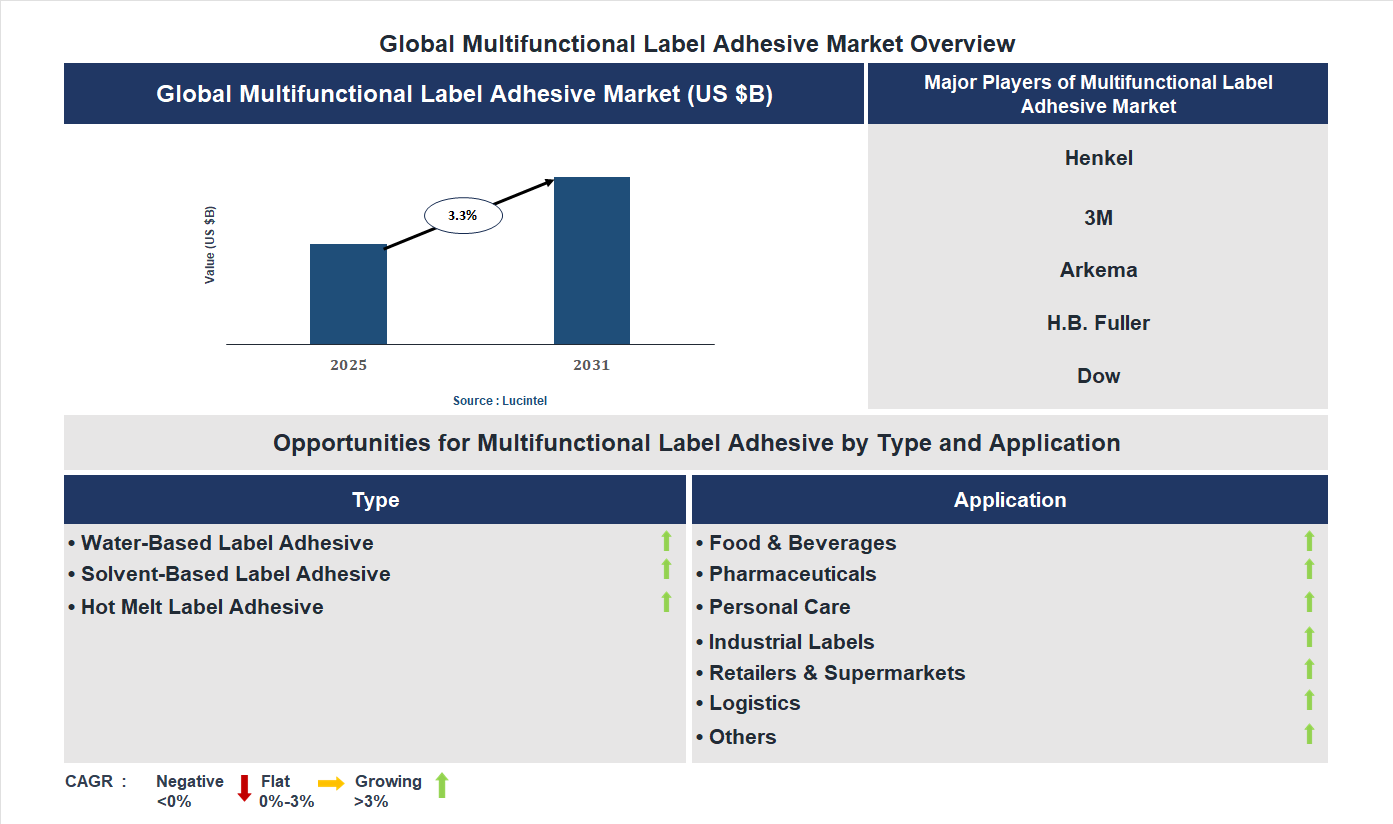
Key data points: The growth forecast = 3.3% annually for the next 7 years. Scroll below to get more insights. This market report covers trends, opportunities and forecasts in multifunctional label adhesive market to 2031 by type (water-based label adhesive, solvent-based label adhesive, and hot melt label adhesive), application (food & beverages, pharmaceuticals, personal care, industrial labels, retailers & supermarkets, logistics, and others), and region (North America, Europe, Asia Pacific, and the Rest of the World)
We'll send your sample report shortly.
• Lucintel forecasts that, within the type category, hot melt label adhesive is expected to witness the highest growth over the forecast period.
• Within the application category, food & beverage is expected to witness the highest growth.
• In terms of region, APAC is expected to witness the highest growth over the forecast period. Gain valuable insights for your business decisions with our comprehensive 150+ page report. Sample figures with some insights are shown below.
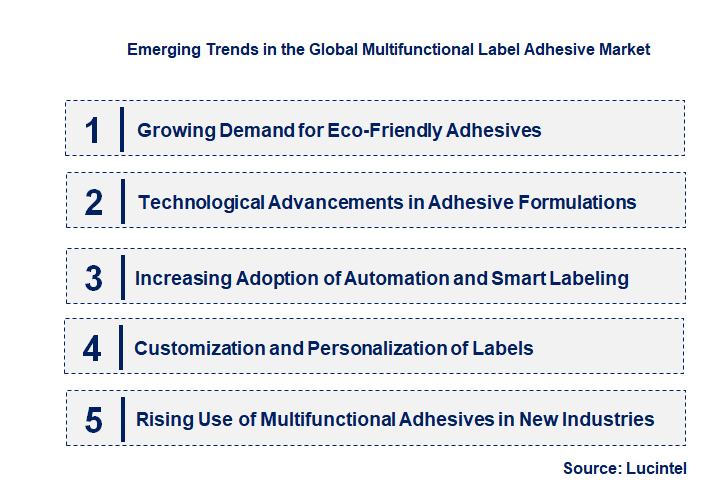
• Growing Demand for Eco-Friendly Adhesives: The market is witnessing a shift towards environmentally sustainable adhesives due to increasing environmental regulations and consumer awareness. Biodegradable and water-based adhesives are gaining popularity as companies aim to reduce their carbon footprint. This trend encourages innovation in formulation and packaging, leading to products that are both effective and eco-conscious. The impact is a broader acceptance of green adhesives across industries such as food, pharmaceuticals, and retail, fostering sustainable growth and aligning with global environmental goals.
• Technological Advancements in Adhesive Formulations: Innovations in adhesive chemistry, including the development of high-performance, temperature-resistant, and moisture-proof adhesives, are transforming the market. These advancements enable labels to withstand harsh conditions, such as extreme temperatures and exposure to chemicals, expanding their application scope. The impact includes improved product durability, reduced waste, and enhanced customer satisfaction. Companies investing in R&D are gaining competitive advantages by offering more reliable and versatile adhesive solutions tailored to specific industry needs.
• Increasing Adoption of Automation and Smart Labeling: Automation technologies, including robotic application and smart labeling systems, are becoming integral to manufacturing processes. These systems improve precision, efficiency, and speed, reducing labor costs and errors. Smart labels with embedded sensors or RFID tags are also gaining traction, providing real-time data and tracking capabilities. The impact is a significant boost in productivity, enhanced supply chain transparency, and improved consumer engagement. This trend is driving the market towards more intelligent, connected labeling solutions that meet the demands of Industry 4.0.
• Customization and Personalization of Labels: The demand for customized and personalized labels is rising, driven by brands seeking to differentiate their products. Multifunctional adhesives that support variable data printing and flexible label designs are essential for this trend. The impact includes increased brand visibility, consumer engagement, and the ability to quickly adapt to market trends. This trend encourages adhesive manufacturers to develop adaptable formulations that support diverse printing techniques and label materials, fostering innovation and catering to niche markets.
• Rising Use of Multifunctional Adhesives in New Industries: Emerging sectors such as electronics, renewable energy, and healthcare are increasingly adopting multifunctional adhesives for labeling applications. These adhesives offer benefits like strong bonding, chemical resistance, and flexibility, suitable for complex and demanding environments. The impact is a diversification of market applications, opening new revenue streams for manufacturers. As these industries grow, the demand for specialized adhesives will accelerate, prompting further innovation and expansion of product portfolios to meet diverse industry requirements. In summary, these trends are collectively reshaping the multifunctional label adhesive market by promoting sustainability, technological innovation, automation, customization, and industry diversification. They are driving market growth, enhancing product performance, and enabling manufacturers to meet evolving customer needs in a competitive landscape.
• Adoption of Eco-Friendly Adhesives: The market is witnessing a shift towards biodegradable and water-based adhesives, reducing environmental impact. This development aligns with global sustainability goals and regulatory pressures, appealing to eco-conscious consumers. It enhances brand reputation and compliance, fostering market expansion. The adoption of eco-friendly adhesives is also driving innovation in adhesive formulations, leading to improved performance and durability.
• Technological Advancements in Adhesive Formulations: Innovations such as heat-activated, UV-curable, and pressure-sensitive adhesives are improving label functionality. These advancements offer better adhesion on diverse surfaces, resistance to environmental factors, and ease of application. They enable multifunctional labels to serve more complex purposes, such as tamper-evidence and high-temperature resistance, broadening application scope and increasing market competitiveness.
• Integration of Smart Labels: The development of adhesives compatible with smart labels incorporating RFID, QR codes, and NFC technology is a key trend. These adhesives facilitate the integration of digital tracking and data collection, enhancing supply chain transparency and consumer engagement. The growth of smart labels is transforming logistics, retail, and healthcare sectors, creating new revenue streams and market opportunities.
• Expansion into New Industries: The multifunctional label adhesive market is expanding beyond traditional sectors into emerging fields like pharmaceuticals, electronics, and automotive. This diversification is driven by the need for specialized adhesives that can withstand unique conditions such as sterilization, high temperatures, or chemical exposure. It opens new avenues for growth and innovation, increasing overall market size and competitiveness.
• Focus on Cost Efficiency and Customization: Manufacturers are developing cost-effective adhesives with customizable properties to meet specific client needs. This trend allows for tailored solutions that improve product performance and reduce overall costs. It also enables rapid adaptation to changing market demands, fostering stronger customer relationships and expanding market share. In summary, these recent developments are significantly transforming the multifunctional label adhesive market by promoting sustainability, technological innovation, and industry diversification. They are enhancing product performance, expanding application areas, and aligning with regulatory and consumer expectations. As a result, the market is experiencing accelerated growth, increased competitiveness, and a broader scope of applications, positioning it for continued evolution and success.
• Food and Beverage Industry: The demand for multifunctional adhesives that are food-safe, moisture-resistant, and capable of adhering to diverse packaging materials is rising. These adhesives improve label durability and shelf appeal, reducing product waste and enhancing consumer trust. The growth in organic and packaged foods further fuels this demand, creating opportunities for specialized adhesives that meet strict safety standards.
• Pharmaceutical Sector: In pharmaceuticals, labels must withstand rigorous conditions such as moisture, temperature changes, and handling. The development of adhesives with high adhesion strength, chemical resistance, and biocompatibility is critical. These adhesives ensure label integrity during transportation and storage, supporting regulatory compliance and patient safety, thus expanding market potential.
• Logistics and Supply Chain: The logistics industry requires adhesives that can endure harsh environmental conditions, such as humidity, temperature fluctuations, and rough handling. Multifunctional adhesives that provide strong adhesion and easy removal without residue are essential for efficient inventory management and tracking. This growth opportunity enhances supply chain transparency and reduces operational costs.
• Retail and Consumer Goods: Retailers demand labels that are visually appealing, durable, and easy to apply across various surfaces. Multifunctional adhesives that support quick application, removability, and resistance to wear and tear are vital. These solutions help brands improve shelf impact, reduce labor costs, and facilitate product rebranding or recycling efforts.
• Industrial Manufacturing: In industrial applications, adhesives must withstand extreme conditions like chemicals, heat, and mechanical stress. The development of high-performance adhesives tailored for industrial labels supports equipment identification, safety warnings, and asset tracking. This growth opportunity enhances operational efficiency and safety compliance. In summary, these growth opportunities across key applications are significantly impacting the Multifunctional Label Adhesive Market by driving innovation, expanding application scopes, and meeting industry-specific demands. As companies develop more specialized, durable, and environmentally friendly adhesives, the market is poised for sustained growth, offering enhanced value to end-users and strengthening competitive positioning.
• Technological Innovation: The development of advanced adhesive formulations enhances product performance, durability, and versatility. Innovations such as eco-friendly, heat-resistant, and moisture-resistant adhesives meet diverse industry needs, expanding application scope. Continuous R&D investments enable manufacturers to introduce multifunctional adhesives that adhere to various surfaces and withstand environmental stresses, thus driving market growth. The ability to customize adhesives for specific applications offers a competitive edge, attracting new customers and increasing market penetration.
• Growing Demand Across Industries: The expanding food, beverage, pharmaceutical, and logistics sectors significantly contribute to market growth. The need for durable, tamper-evident, and aesthetically appealing labels drives demand for multifunctional adhesives. E-commerce growth necessitates reliable labeling solutions for shipping and tracking, further boosting sales. The increasing focus on branding and product differentiation also encourages companies to adopt advanced labeling adhesives that improve product shelf life and consumer appeal, thereby fueling market expansion.
• Environmental Regulations and Sustainability Trends: Stricter environmental standards and consumer preferences for eco-friendly products influence adhesive formulations. Manufacturers are developing biodegradable, solvent-free, and recyclable adhesives to comply with regulations and meet market expectations. These sustainable solutions reduce environmental impact and align with corporate social responsibility goals, creating new opportunities. The shift towards greener adhesives not only enhances brand image but also opens avenues for innovation and market differentiation, supporting long-term growth.
• Rising E-commerce and Logistics Activities: The surge in online shopping and global logistics operations necessitates efficient labeling solutions. Multifunctional adhesives provide strong adhesion, resistance to environmental factors, and easy application, making them ideal for shipping labels, product identification, and tracking. The need for quick, reliable, and durable labeling in high-volume distribution centers drives demand. As logistics networks expand worldwide, the market benefits from increased adoption of advanced adhesives that improve operational efficiency and reduce product loss or damage.
• Product Customization and Versatility: The ability to tailor adhesives for specific applications enhances their utility across various sectors. Manufacturers are offering customizable solutions that adhere to different surfaces, withstand temperature variations, and resist chemicals. This versatility allows companies to meet unique client requirements, foster innovation, and expand application areas. The trend towards personalized and multifunctional labels encourages the adoption of adaptable adhesives, thereby stimulating market growth and competitiveness. The challenges facing this multifunctional label adhesive market include:-
• Raw Material Price Fluctuations: The cost of key raw materials such as polymers, resins, and solvents is highly volatile due to geopolitical tensions, supply chain disruptions, and fluctuating oil prices. These fluctuations increase manufacturing costs, potentially leading to higher product prices and reduced profit margins. Companies may face difficulties in maintaining consistent pricing strategies, which can impact competitiveness and market share. Additionally, reliance on imported raw materials exposes the market to currency risks and trade restrictions, complicating procurement and planning.
• Regulatory Compliance Complexities: The adhesive industry is subject to stringent regulations concerning safety, environmental impact, and recyclability. Navigating diverse regional standards requires significant investment in R&D and compliance processes. Non-compliance can result in legal penalties, product recalls, and damage to brand reputation. The evolving regulatory landscape demands continuous adaptation, which can be resource-intensive for manufacturers, especially smaller players, potentially hindering innovation and market entry.
• Technological Limitations and Compatibility Issues: Developing adhesives that perform consistently across various substrates and environmental conditions remains challenging. Compatibility issues with different materials can limit application scope and reliability. Technological constraints may delay product development and innovation, affecting competitiveness. Additionally, integrating new adhesive technologies into existing manufacturing processes requires significant investment and expertise, posing barriers for some companies and slowing overall market growth. In summary, the multifunctional label adhesive market is driven by technological advancements, industry demand, sustainability trends, and customization capabilities. However, it faces challenges related to raw material costs, regulatory complexities, and technological limitations. These factors collectively influence market dynamics, requiring stakeholders to innovate continuously and adapt strategies to sustain growth. The markets future will depend on balancing these drivers and overcoming challenges through innovation, regulatory compliance, and supply chain resilience, ultimately shaping a competitive and sustainable industry landscape.
• Henkel
• 3M
• Arkema
• H.B. Fuller
• Dow
• Soken
• UPM Adhesive Materials
• Nitto Denko
• Avery Dennison
• tesa SE
• Water-Based Label Adhesive
• Solvent-Based Label Adhesive
• Hot Melt Label Adhesive
• Food & Beverages
• Pharmaceuticals
• Personal Care
• Industrial Labels
• Retailers & Supermarkets
• Logistics
• Others
• North America
• Europe
• Asia Pacific
• The Rest of the World
• United States: The U.S. market has seen rapid adoption of eco-friendly adhesives, driven by stringent environmental regulations and consumer preferences for sustainable products. Technological advancements in pressure-sensitive adhesives and water-based formulations have enhanced product performance. The growth of e-commerce and retail sectors has increased demand for durable, multifunctional labels, prompting innovations in adhesive formulations. Major players are investing in R&D to develop adhesives that offer better adhesion on diverse surfaces and improved resistance to environmental factors. The U.S. market remains highly competitive, with a focus on customization and high-performance solutions.
• China: China’s market is characterized by rapid industrialization and expanding manufacturing sectors, fueling demand for multifunctional label adhesives. The country is witnessing increased adoption of water-based and hot-melt adhesives due to cost-effectiveness and environmental considerations. The growth of the packaging industry, especially in food and beverage, has driven innovations in adhesive formulations that provide strong adhesion and flexibility. Local manufacturers are expanding their product portfolios to meet domestic and export demands. Government policies promoting sustainable manufacturing practices are also influencing the development of eco-friendly adhesives. The market is expected to grow steadily with technological advancements and increased export activities.
• Germany: Germany’s market is marked by a focus on high-quality, durable adhesives suitable for industrial applications, including automotive, electronics, and packaging. The emphasis on sustainability has led to increased use of biodegradable and solvent-free adhesives. Germany’s strong emphasis on innovation and R&D has resulted in advanced adhesive solutions with enhanced temperature resistance and adhesion strength. The country’s strict regulatory environment encourages the adoption of environmentally friendly products. Collaborations between research institutions and industry players are fostering new developments. The market is also benefiting from the European Union’s sustainability initiatives, promoting eco-conscious manufacturing practices.
• India: The Indian market is experiencing rapid growth due to expanding packaging, logistics, and retail sectors. Cost-effective water-based and hot-melt adhesives are preferred for their affordability and performance. Increasing urbanization and e-commerce penetration are driving demand for multifunctional labels that can withstand diverse environmental conditions. Local manufacturers are focusing on developing adhesives that cater to regional needs, including moisture resistance and strong adhesion on various substrates. Government initiatives promoting Make in India and sustainable manufacturing are encouraging the adoption of eco-friendly adhesives. The market is poised for substantial growth, supported by infrastructural development and rising consumer awareness.
• Japan: Japan’s market emphasizes high-performance adhesives with excellent durability and environmental safety. The country’s focus on technological innovation has led to the development of adhesives with superior adhesion, temperature resistance, and flexibility. Japan’s stringent environmental regulations are pushing manufacturers toward eco-friendly formulations, including solvent-free and biodegradable options. The automotive and electronics sectors are significant consumers, demanding adhesives that meet high standards of reliability and safety. Collaboration between industry and academia is fostering cutting-edge research. The market continues to evolve with a strong emphasis on sustainability, quality, and advanced technological solutions.


• Henkel
• 3M
• Arkema
• H.B. Fuller
• Dow
• Soken
• UPM Adhesive Materials
• Nitto Denko
• Avery Dennison
• tesa SE Q5. Which multifunctional label adhesive market segment will be the largest in future? Answer: Lucintel forecasts that, within the type category, hot melt label adhesive is expected to witness the highest growth over the forecast period. Q6. In multifunctional label adhesive market, which region is expected to be the largest in next 5 years? Answer: In terms of region, APAC is expected to witness the highest growth over the forecast period. Q7. Do we receive customization in this report? Answer: Yes, Lucintel provides 10% customization without any additional cost.


Choose a license that fits your team. Instant PDF delivery.
Prices exclude taxes. Instant delivery. Custom licensing available on request.
Market Report · September 3, 2026
Market Report · July 22, 2026
Market Report · July 22, 2026
Trusted partner for strategic intelligence and business growth


Receive a complimentary market analysis tailored to your industry. Our analysts will identify key growth opportunities and competitive dynamics specific to your business.

Market size, growth rate, and key trend analysis for your specific sector.

Top competitor positioning and market share analysis.

Strategic recommendations backed by data-driven insights.
Get curated market intelligence and competitive moves straight to your inbox.
By subscribing, you agree to receive our monthly insights. Unsubscribe anytime.
Receive a complimentary market analysis tailored to your industry. Our analysts will identify key growth opportunities and competitive dynamics specific to your business.
Market size, growth rate, and key trend analysis for your specific sector.
Top competitor positioning and market share analysis.
Strategic recommendations backed by data-driven insights.
Get curated market intelligence, emerging trends, and competitive moves straight to your inbox each month.
By subscribing, you agree to receive our monthly insights. Unsubscribe anytime.
We'll send your sample report shortly.