
Report Feature
Multi-Dose Eye Dropper Market Trends and Forecast
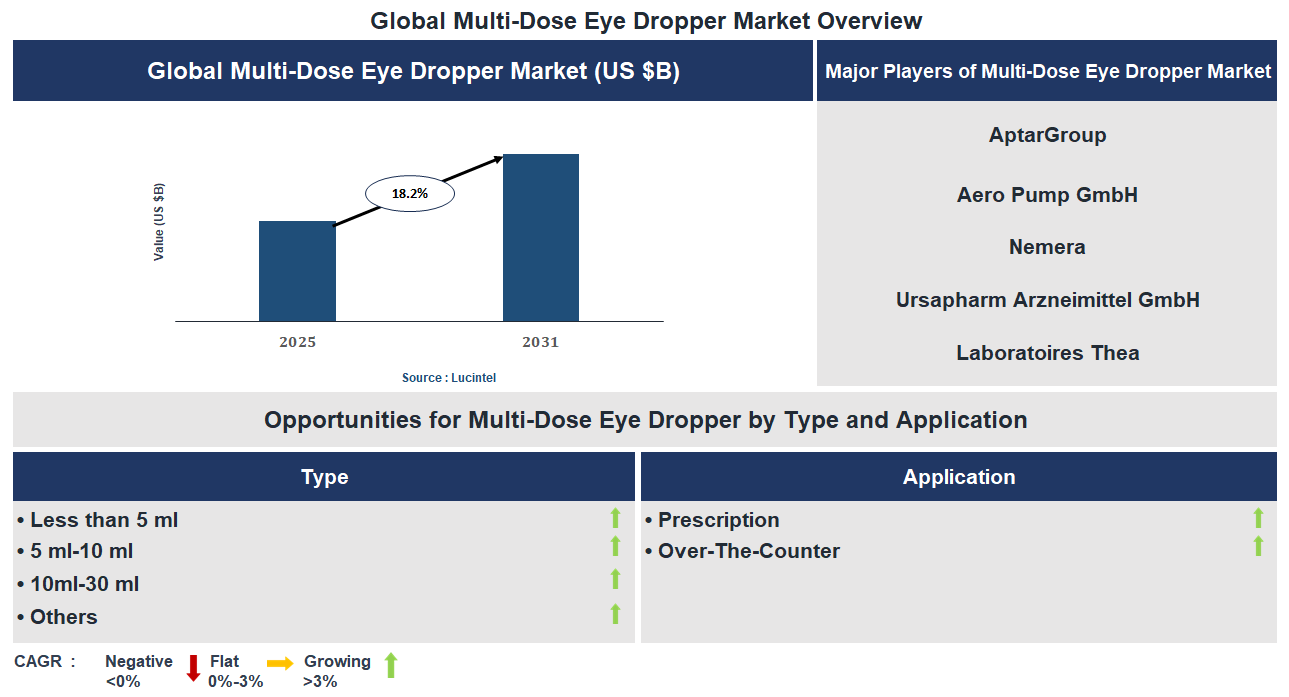
The future of the global multi-dose eye dropper market looks promising with opportunities in the prescription and over-the-counter markets. The global multi-dose eye dropper market is expected to grow with a CAGR of 18.2% from 2025 to 2031. The major drivers for this market are the increasing prevalence of eye disorders, the rising demand for convenient drug delivery, and the growing focus on patient compliance solutions.• Lucintel forecasts that, within the type category, 5 ml-10 ml is expected to witness the highest growth over the forecast period.
• Within the application category, over-the-counter is expected to witness higher growth.
• In terms of region, APAC is expected to witness the highest growth over the forecast period. Gain valuable insights for your business decisions with our comprehensive 150+ page report. Sample figures with some insights are shown below.
Emerging Trends in the Multi-Dose Eye Dropper Market
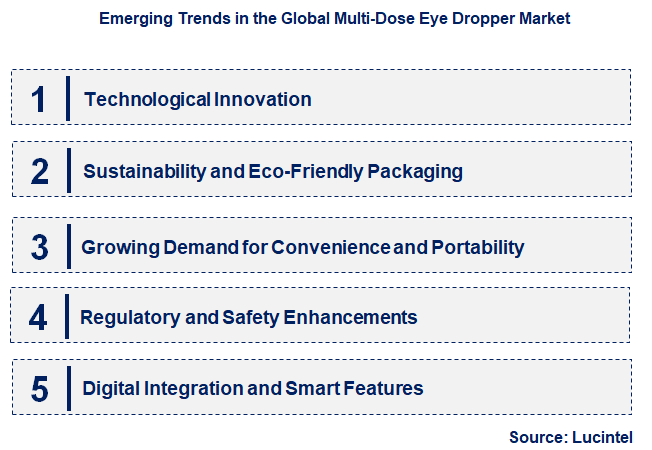
The multi-dose eye dropper market is experiencing rapid growth driven by technological advancements, increasing consumer awareness, and a shift towards more sustainable and user-friendly packaging solutions. As eye care becomes a priority for a broader demographic, manufacturers are innovating to meet evolving needs. The market is also influenced by regulatory changes and a rising focus on convenience and safety. These developments are transforming how eye care products are designed, marketed, and used, leading to more personalized and efficient solutions. Understanding these trends is essential for stakeholders aiming to capitalize on emerging opportunities and stay competitive in this dynamic landscape.• Technological Innovation: Advancements in dropper design and materials are improving precision, ease of use, and safety. New multi-dose droppers incorporate features like leak-proof mechanisms, dose counters, and ergonomic designs, enhancing user experience. These innovations reduce waste, prevent contamination, and improve dosing accuracy, which is crucial for sensitive eye medications. As technology progresses, expect further integration of smart features, such as digital dose tracking, to meet consumer demand for convenience and safety.
• Sustainability and Eco-Friendly Packaging: Consumers and regulators are increasingly emphasizing environmentally friendly packaging options. Manufacturers are shifting towards biodegradable, recyclable, and reusable materials for multi-dose eye droppers. This trend not only reduces environmental impact but also appeals to eco-conscious consumers. Companies investing in sustainable solutions are gaining a competitive edge, and regulatory pressures are encouraging industry-wide adoption of greener practices, ultimately reshaping packaging standards and consumer expectations.
• Growing Demand for Convenience and Portability: The market is witnessing a surge in demand for easy-to-use, portable eye drop solutions. Multi-dose eye droppers that are compact, leak-proof, and easy to carry are preferred by consumers, especially those with active lifestyles or travel needs. This trend is driving innovation in design, with features like secure caps and lightweight materials. The focus on convenience enhances adherence to treatment regimens and improves overall user satisfaction, influencing product development strategies across the industry.
• Regulatory and Safety Enhancements: Stricter regulations regarding eye medication safety and contamination prevention are shaping product development. Manufacturers are adopting tamper-evident seals, child-resistant features, and sterilization techniques to ensure safety. These regulatory changes increase consumer confidence and reduce liability risks for companies. As safety standards evolve, compliance becomes a key differentiator, prompting ongoing innovation to meet or exceed regulatory requirements and protect consumer health.
• Digital Integration and Smart Features: The integration of digital technology into eye dropper packaging is an emerging trend. Features like dose tracking, reminders, and usage monitoring via smartphone apps are enhancing user engagement and adherence. Smart droppers can provide real-time feedback, improve medication management, and facilitate remote healthcare monitoring. This trend aligns with the broader digital health movement, offering personalized solutions and data-driven insights, which are transforming traditional eye care routines and creating new opportunities for market expansion. In summary, these trends are collectively reshaping the multi-dose eye dropper market by emphasizing innovation, sustainability, safety, convenience, and digital integration. They are driving product differentiation, enhancing user experience, and aligning with evolving consumer preferences and regulatory standards. As a result, the market is becoming more competitive, sustainable, and technologically advanced, offering significant growth opportunities for industry players.
Recent Development in the Multi-Dose Eye Dropper Market
The multi-dose eye dropper market has experienced significant growth driven by advancements in ophthalmic treatments, increasing prevalence of eye conditions, and technological innovations. As consumers demand more convenient and efficient delivery systems for eye medications, manufacturers are focusing on developing multi-dose options that enhance usability, safety, and shelf life. Recent developments reflect a shift towards more sophisticated, user-friendly, and cost-effective solutions, which are reshaping the competitive landscape. These innovations are not only improving patient compliance but also expanding market reach across various regions. The following key developments highlight the current trajectory and future potential of this dynamic market.• Technological Innovations in Dropper Design: Improved precision and ease of use have been achieved through ergonomic designs and advanced materials, leading to better patient adherence and reduced medication wastage.
• Introduction of Anti-Microbial Coatings: The incorporation of anti-microbial coatings on droppers enhances safety by preventing contamination, thereby increasing consumer confidence and extending product shelf life.
• Development of Refillable Multi-Dose Systems: Refillable options offer cost savings and environmental benefits, encouraging adoption among healthcare providers and consumers seeking sustainable solutions.
• Regulatory Approvals for New Formulations: Recent approvals of innovative formulations, such as preservative-free and preservative-reduced eye drops, have expanded treatment options and improved safety profiles.
• Expansion into Emerging Markets: Companies are increasingly targeting emerging economies with affordable, easy-to-use multi-dose eye dropper solutions, broadening market access and driving growth. These developments collectively are transforming the multi-dose eye dropper market by enhancing product safety, usability, and accessibility. They are fostering increased consumer confidence, reducing healthcare costs, and enabling broader distribution, which ultimately accelerates market expansion and innovation.
Strategic Growth Opportunities in the Multi-Dose Eye Dropper Market
The multi-dose eye dropper market is experiencing rapid growth driven by the increasing prevalence of eye conditions, technological advancements, and rising awareness about eye health. As consumers seek more convenient and hygienic solutions, key applications are expanding, creating significant opportunities for market players. These developments are shaping the future landscape of eye care, emphasizing innovation, safety, and user convenience. Understanding these growth opportunities across various applications is essential for stakeholders aiming to capitalize on emerging trends and enhance their market positioning.• Ophthalmic Clinics and Hospitals: Expansion of multi-dose eye droppers improves patient compliance and reduces infection risk, leading to better treatment outcomes. The demand for efficient, sterile dispensing solutions in clinical settings is driving innovation, fostering partnerships with healthcare providers, and increasing adoption rates. This growth enhances overall eye care quality and supports the shift toward more advanced, user-friendly dispensing systems.
• Retail Pharmacies: The convenience of multi-dose eye droppers appeals to consumers seeking easy-to-use, portable solutions for daily eye care. Retail pharmacies are increasingly stocking these products, boosting sales and market penetration. This opportunity encourages manufacturers to develop cost-effective, accessible options, broadening consumer reach and fostering brand loyalty.
• E-commerce Platforms: Online sales channels facilitate wider distribution of multi-dose eye droppers, especially in remote or underserved areas. The ease of purchasing and home delivery options enhances consumer accessibility and convenience. This growth avenue enables brands to expand their customer base rapidly, leveraging digital marketing and direct-to-consumer strategies to increase market share.
• Personal Use and Over-the-Counter (OTC) Market: Rising awareness about eye health and self-care drives demand for OTC multi-dose eye droppers. These products offer a safe, hygienic, and convenient solution for daily eye care routines. The market benefits from product innovations that focus on safety features and ease of use, encouraging consumers to manage minor eye issues independently.
• Veterinary Applications: The use of multi-dose eye droppers in veterinary medicine is gaining traction for treating animal eye conditions. This application offers precise dosing and reduces stress for animals and pet owners. The growth in this segment opens new revenue streams for manufacturers and supports the broader adoption of advanced eye care solutions in veterinary practices. In summary, these growth opportunities across applications are significantly impacting the multi-dose eye dropper market by expanding its reach, enhancing product innovation, and improving user convenience. As these trends continue, the market is poised for sustained growth, driven by technological advancements and increasing consumer awareness.
Multi-Dose Eye Dropper Market Driver and Challenges
The multi-dose eye dropper market is influenced by a variety of technological, economic, and regulatory factors that shape its growth trajectory. Advances in pharmaceutical formulations and packaging technologies have enhanced product safety and convenience, encouraging consumer adoption. Economic factors such as increasing healthcare expenditure and rising prevalence of eye-related disorders further propel market expansion. Regulatory frameworks ensure product quality and safety, fostering consumer trust and industry innovation. However, challenges like stringent regulations, competition from alternative delivery methods, and manufacturing complexities pose hurdles. Understanding these drivers and challenges is essential for stakeholders aiming to capitalize on market opportunities and navigate potential risks effectively. The factors responsible for driving the multi-dose eye dropper market include:• Technological Innovations: The development of advanced dispensing mechanisms and preservative-free formulations has significantly improved product safety, shelf life, and user convenience. Innovations such as tamper-evident packaging and precise dosing systems enhance consumer confidence and compliance. These technological advancements enable manufacturers to differentiate their products in a competitive market, fostering growth. Additionally, improvements in manufacturing processes reduce costs and improve scalability, further supporting market expansion.
• Rising Prevalence of Eye Disorders: Increasing incidences of dry eye syndrome, glaucoma, allergies, and other ocular conditions globally are driving demand for effective treatment options. As awareness about eye health grows, consumers seek reliable and easy-to-use eye care products. The aging population is particularly susceptible to eye diseases, contributing to sustained market growth. This trend encourages pharmaceutical companies to innovate and expand their product portfolios to meet the rising demand.
• Growing Healthcare Expenditure: An increase in healthcare spending across emerging and developed economies supports the adoption of advanced eye care solutions. Patients are more willing to invest in effective treatments, including multi-dose eye drops, which offer convenience and cost-effectiveness. Insurance coverage and government healthcare initiatives further facilitate access to these products, boosting sales and market penetration.
• Regulatory Support and Approvals: Stringent regulatory standards ensure the safety, efficacy, and quality of multi-dose eye drop products. Regulatory approvals from agencies like the FDA and EMA build consumer trust and enable market entry. Compliance with these standards encourages innovation and ensures that products meet high safety benchmarks, fostering a stable environment for market growth.
• Growing Awareness and Self-Medication Trends: Increased awareness about eye health and the availability of over-the-counter products have led to a rise in self-medication. Consumers prefer multi-dose eye drops for their convenience and ease of use, reducing the need for frequent doctor visits. This trend supports market expansion, especially in regions with limited healthcare access, by empowering consumers to manage minor eye conditions independently. The challenges facing this multi-dose eye dropper market include:
• Stringent Regulatory Frameworks: While regulations ensure product safety, they also pose significant barriers to market entry and product development. Lengthy approval processes, strict quality standards, and evolving regulatory requirements increase costs and time-to-market for new products. Small and emerging companies may find it difficult to navigate these complexities, limiting innovation and competition within the market.
• Competition from Alternative Delivery Methods: The rise of alternative ocular drug delivery systems, such as gels, ointments, and sustained-release implants, presents a challenge to multi-dose eye drops. These alternatives often offer longer-lasting effects and improved patient compliance, potentially reducing the demand for traditional eye drop formulations. Market players must innovate continuously to maintain their share amid these competitive pressures.
• Manufacturing and Storage Challenges: Producing multi-dose eye drops involves complex manufacturing processes that require strict quality control to prevent contamination and ensure preservative efficacy. Additionally, maintaining product stability during storage and transportation, especially in regions with limited cold chain infrastructure, poses logistical challenges. These factors can increase costs and impact product availability, hindering market growth. In summary, the multi-dose eye dropper market is driven by technological advancements, increasing eye health issues, rising healthcare investments, regulatory support, and consumer awareness. However, it faces challenges such as regulatory hurdles, competition from alternative treatments, and manufacturing complexities. These factors collectively influence market dynamics, requiring stakeholders to innovate and adapt strategically. Overall, the markets growth potential remains significant, provided companies effectively address these challenges and leverage emerging opportunities.
List of Multi-Dose Eye Dropper Companies
Companies in the market compete on the basis of product quality offered. Major players in this market focus on expanding their manufacturing facilities, R&D investments, infrastructural development, and leverage integration opportunities across the value chain. With these strategies multi-dose eye dropper companies cater increasing demand, ensure competitive effectiveness, develop innovative products & technologies, reduce production costs, and expand their customer base. Some of the multi-dose eye dropper companies profiled in this report include-• AptarGroup
• Aero Pump GmbH
• Nemera
• Ursapharm Arzneimittel GmbH
• Laboratoires Thea
• Silgan Dispensing Systems
• Gaplast GmbH
Multi-Dose Eye Dropper Market by Segment
The study includes a forecast for the global multi-dose eye dropper market by type, application, and region.Multi-Dose Eye Dropper Market by Type [Value from 2019 to 2031]:
• Less than 5 ml
• 5 ml-10 ml
• 10ml-30 ml
• Others
Multi-Dose Eye Dropper Market by Application [Value from 2019 to 2031]:
• Prescription
• Over-The-Counter
Multi-Dose Eye Dropper Market by Region [Value from 2019 to 2031]:
• North America
• Europe
• Asia Pacific
• The Rest of the World
Country Wise Outlook for the Multi-Dose Eye Dropper Market
The multi-dose eye dropper market has experienced significant growth driven by increasing demand for convenient, safe, and effective ophthalmic delivery systems worldwide. Technological innovations, regulatory approvals, and rising awareness about eye health have contributed to market expansion across major economies. Countries are focusing on developing advanced multi-dose eye dropper solutions to improve user experience, reduce waste, and ensure medication stability. The markets evolution reflects broader trends in healthcare, emphasizing patient-centric products and sustainable packaging. As the global population ages and eye health awareness increases, these developments are expected to accelerate, shaping the future landscape of ophthalmic delivery systems.• United States: The U.S. market has seen rapid adoption of innovative multi-dose eye droppers, driven by technological advancements and regulatory approvals. Companies are focusing on safety features like leak-proof designs and preservative-free formulations. The rise in eye-related disorders and increased healthcare spending support market growth. Additionally, the adoption of smart eye dropper devices with dose tracking is gaining popularity, enhancing patient compliance and convenience.
• China: China’s market is expanding due to a large population base and increasing awareness of eye health. Local manufacturers are investing in R&D to develop cost-effective, user-friendly multi-dose eye droppers. Government initiatives to improve healthcare infrastructure and eye care services are further boosting market growth. The rising prevalence of myopia and other eye conditions has also contributed to increased demand for ophthalmic delivery systems.
• Germany: Germany’s market is characterized by high-quality standards and stringent regulations, leading to the development of premium multi-dose eye droppers with advanced safety features. The focus on sustainable packaging and eco-friendly materials aligns with the country’s environmental policies. The aging population and rising prevalence of eye diseases like glaucoma and cataracts are driving demand for innovative ophthalmic solutions.
• India: India’s market is witnessing rapid growth due to increasing awareness about eye health and a large patient base. Local companies are launching affordable, easy-to-use multi-dose eye droppers to cater to rural and urban populations. Government programs aimed at reducing preventable blindness and improving eye care infrastructure are also contributing to market expansion. The rising incidence of diabetic retinopathy and other eye conditions further fuels demand.
• Japan: Japan’s market is driven by an aging population and high prevalence of eye diseases such as dry eye syndrome and glaucoma. Companies are focusing on developing advanced, preservative-free multi-dose eye droppers with enhanced safety and comfort features. The integration of digital technology for dose monitoring and improved user experience is gaining traction, aligning with Japan’s technological innovation landscape.

Features of the Global Multi-Dose Eye Dropper Market
Market Size Estimates: Multi-dose eye dropper market size estimation in terms of value ($B). Trend and Forecast Analysis: Market trends (2019 to 2024) and forecast (2025 to 2031) by various segments and regions. Segmentation Analysis: Multi-dose eye dropper market size by type, application, and region in terms of value ($B). Regional Analysis: Multi-dose eye dropper market breakdown by North America, Europe, Asia Pacific, and Rest of the World. Growth Opportunities: Analysis of growth opportunities in different types, applications, and regions for the multi-dose eye dropper market. Strategic Analysis: This includes M&A, new product development, and competitive landscape of the multi-dose eye dropper market. Analysis of competitive intensity of the industry based on Porter’s Five Forces model.
FAQ
Q1. What is the growth forecast for multi-dose eye dropper market? Answer: The global multi-dose eye dropper market is expected to grow with a CAGR of 18.2% from 2025 to 2031. Q2. What are the major drivers influencing the growth of the multi-dose eye dropper market? Answer: The major drivers for this market are the increasing prevalence of eye disorders, the rising demand for convenient drug delivery, and the growing focus on patient compliance solutions. Q3. What are the major segments for multi-dose eye dropper market? Answer: The future of the multi-dose eye dropper market looks promising with opportunities in the prescription and over-the-counter markets. Q4. Who are the key multi-dose eye dropper market companies? Answer: Some of the key multi-dose eye dropper companies are as follows:• AptarGroup
• Aero Pump GmbH
• Nemera
• Ursapharm Arzneimittel GmbH
• Laboratoires Thea
• Silgan Dispensing Systems
• Gaplast GmbH Q5. Which multi-dose eye dropper market segment will be the largest in future? Answer: Lucintel forecasts that, within the type category, 5 ml-10 ml is expected to witness the highest growth over the forecast period. Q6. In multi-dose eye dropper market, which region is expected to be the largest in next 5 years? Answer: In terms of region, APAC is expected to witness the highest growth over the forecast period. Q7. Do we receive customization in this report? Answer: Yes, Lucintel provides 10% customization without any additional cost.
Table of Contents
List of Figures
List of Tables
Methodology
- In-depth interviews of the major players in this market
- Detailed secondary research from competitors’ financial statements and published data
- Extensive searches of published works, market, and database information pertaining to industry news, company press releases, and customer intentions
- A compilation of the experiences, judgments, and insights of Lucintel’s professionals, who have analyzed and tracked this market over the years.


Buy Now
Choose a license that fits your team. Instant PDF delivery.
Prices exclude taxes. Instant delivery. Custom licensing available on request.
Key Questions
- • What are some of the most promising, high-growth opportunities for the multi-dose eye dropper market by type (less than 5 ml, 5 ml-10 ml, 10ml-30 ml, and others), application (prescription and over-the-counter), and region (North America, Europe, Asia Pacific, and the Rest of the World)?
- • Which segments will grow at a faster pace and why?
- • Which region will grow at a faster pace and why?
- • What are the key factors affecting market dynamics? What are the key challenges and business risks in this market?
- • What are the business risks and competitive threats in this market?
- • What are the emerging trends in this market and the reasons behind them?
- • What are some of the changing demands of customers in the market?
- • What are the new developments in the market? Which companies are leading these developments?
- • Who are the major players in this market? What strategic initiatives are key players pursuing for business growth?
- • What are some of the competing products in this market and how big of a threat do they pose for loss of market share by material or product substitution?
- • What M&A activity has occurred in the last 5 years and what has its impact been on the industry? For any questions related to Multi-Dose Eye Dropper Market, Multi-Dose Eye Dropper Market Size, Multi-Dose Eye Dropper Market Growth, Multi-Dose Eye Dropper Market Analysis, Multi-Dose Eye Dropper Market Report, Multi-Dose Eye Dropper Market Share, Multi-Dose Eye Dropper Market Trends, Multi-Dose Eye Dropper Market Forecast, Multi-Dose Eye Dropper Companies, write Lucintel analyst at email: helpdesk@lucintel.com. We will be glad to get back to you soon.


