
Report Feature
Movie And Entertainment Market Trends and Forecast
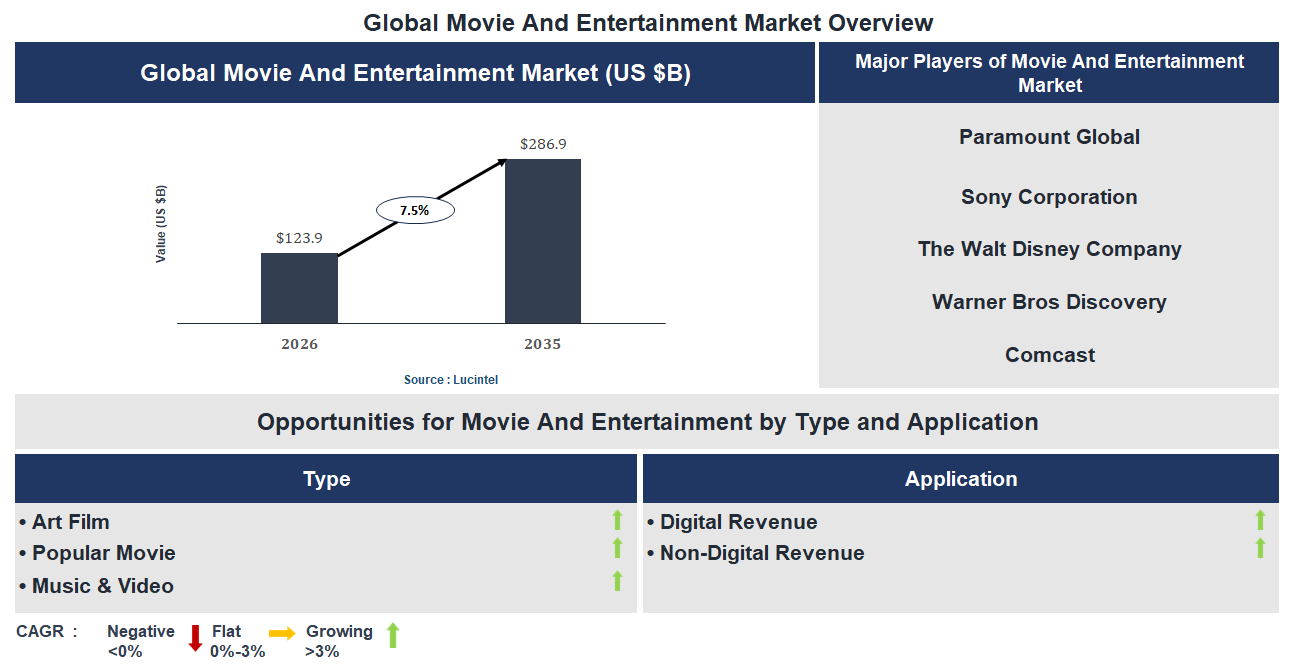
The future of the global movie and entertainment market looks promising with opportunities in the digital revenue and non-digital revenue markets. The global movie and entertainment market is expected to reach an estimated $286.9 billion by 2035 with a CAGR of 9.5% from 2026 to 2035. The major drivers for this market are the increasing demand for digital streaming services, the rising popularity of immersive viewing experiences, and the growing investment in content creation technologies.• Lucintel forecasts that, within the type category, popular movie is expected to witness the highest growth over the forecast period.
• Within the application category, digital revenue is expected to witness higher growth.
• In terms of region, APAC is expected to witness the highest growth over the forecast period. Gain valuable insights for your business decisions with our comprehensive 150+ page report. Sample figures with some insights are shown below.
Emerging Trends in the Movie and Entertainment Market
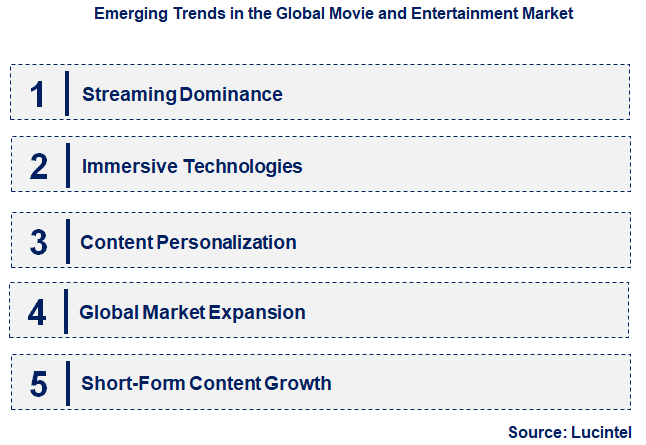
The movie and entertainment market is experiencing rapid transformation driven by technological advancements, changing consumer preferences, and new distribution channels. As audiences seek more personalized, immersive, and accessible content, industry players are adapting to these shifts to stay competitive. The emergence of innovative formats, digital platforms, and evolving business models is reshaping how movies and entertainment are produced, distributed, and consumed. These trends are not only influencing market dynamics but also redefining audience engagement and revenue streams, creating a more diverse and dynamic entertainment landscape.• Streaming Dominance: The rise of streaming platforms like Netflix, Disney+, and Amazon Prime has revolutionized content consumption. Consumers now prefer on-demand access to a vast library of movies and shows, leading to a decline in traditional cinema attendance and cable TV subscriptions. This shift has prompted studios to prioritize digital releases and invest heavily in original content for streaming services, fundamentally changing distribution strategies and revenue models.
• Immersive Technologies: Virtual Reality (VR), Augmented Reality (AR), and 360-degree videos are gaining traction, offering audiences immersive experiences. These technologies enhance storytelling by creating interactive and engaging content, especially in gaming and experiential entertainment. Their adoption is expanding the scope of entertainment beyond traditional formats, influencing production techniques and opening new revenue streams through experiential marketing and virtual events.
• Content Personalization: Advanced data analytics and AI enable platforms to tailor content recommendations to individual preferences. This personalization increases viewer engagement and satisfaction, encouraging longer viewing times and loyalty. It also influences content creation, with studios developing niche genres and targeted content to meet specific audience segments, thereby diversifying the market and optimizing marketing efforts.
• Global Market Expansion: The entertainment industry is increasingly targeting international audiences, driven by localization, subtitles, and culturally relevant content. Streaming platforms facilitate global reach, allowing movies and shows to gain popularity across diverse regions. This expansion boosts revenue opportunities, encourages cross-cultural collaborations, and diversifies content offerings, making the market more inclusive and globally interconnected.
• Short-Form Content Growth: Platforms like TikTok, YouTube Shorts, and Instagram Reels have popularized short-form videos, appealing to audiences seeking quick, easily digestible entertainment. This trend influences content creation, with creators focusing on concise, engaging clips that can go viral. It also impacts advertising strategies, as brands leverage short-form content for targeted marketing, reshaping how entertainment is produced and monetized in the digital age. These emerging trends are collectively reshaping the movie and entertainment market by fostering innovation, expanding audience reach, and creating new revenue opportunities. They are driving a more personalized, immersive, and globally connected entertainment ecosystem that caters to evolving consumer demands and technological possibilities.
Recent Development in the Movie and Entertainment Market
The movie and entertainment market is experiencing rapid transformation driven by technological advancements, changing consumer preferences, and new distribution channels. These developments are reshaping how content is created, distributed, and consumed, creating new opportunities for growth and innovation. Stakeholders are adapting to these shifts to stay competitive and meet evolving audience demands. The following key developments highlight the current landscape and future potential of this dynamic industry.• Streaming Services Expansion: The proliferation of streaming platforms has revolutionized content delivery, offering consumers instant access to vast libraries of movies and shows. This growth has increased competition among providers, leading to original content investments and global reach. As a result, traditional cinemas face challenges, but new revenue streams emerge for content creators. The market is becoming more fragmented yet more accessible, fostering innovation and diverse content production.
• Technological Innovations in Production: Advances in CGI, virtual reality, and AI-driven editing are transforming content creation processes. These technologies enable filmmakers to produce high-quality visuals more efficiently and creatively. They also open opportunities for immersive experiences, attracting new audiences. This evolution reduces production costs and enhances storytelling, making content more engaging. Consequently, the industry sees increased investment in tech-driven projects, boosting overall market growth and competitiveness.
• Rise of Original Content: Streaming platforms are prioritizing original productions to differentiate themselves and attract subscribers. This trend encourages creative risk-taking and diverse storytelling, catering to niche audiences. Original content often garners critical acclaim and awards, elevating platform prestige. It also provides exclusive material that boosts subscriber loyalty. The focus on original programming is reshaping content pipelines, increasing production budgets, and fostering a competitive environment that benefits both creators and consumers.
• Global Market Penetration: Emerging markets are becoming significant growth areas due to rising internet access and disposable incomes. Local content production is expanding, catering to regional tastes and cultures. International collaborations and distribution agreements are increasing, broadening audience reach. This globalization enhances revenue opportunities and diversifies content offerings. It also encourages cultural exchange and innovation, positioning the industry for sustained growth as new markets mature and consumer preferences evolve.
• Changing Consumer Preferences: Audience tastes are shifting towards on-demand, short-form, and interactive content. Social media influences viewing habits, with platforms like TikTok and YouTube shaping trends. Consumers seek personalized experiences and multi-platform engagement. This shift prompts content creators to adapt formats and storytelling techniques. It also drives investment in interactive and transmedia projects. These changes foster a more dynamic, responsive market that prioritizes consumer-centric content, fueling innovation and expanding market reach. These developments are significantly impacting the movie and entertainment market by fostering innovation, expanding global reach, and diversifying content. Streaming services and technological advancements are reshaping production and distribution, while changing consumer preferences drive new content formats. The industry’s adaptability to these opportunities ensures sustained growth, increased competition, and a more vibrant, inclusive entertainment landscape. Overall, these trends are positioning the market for continued evolution and success.
Strategic Growth Opportunities in the Movie and Entertainment Market
The movie and entertainment market is experiencing rapid transformation driven by technological advancements, changing consumer preferences, and new distribution channels. These factors create significant opportunities for growth across various applications, including streaming, content creation, and immersive experiences. Companies that leverage innovative strategies and adapt to evolving trends can capitalize on expanding audiences and increasing demand for diverse entertainment options. Strategic investments and collaborations will be crucial in capturing market share and enhancing viewer engagement in this dynamic landscape.• Streaming Services Extension: The rise of on-demand streaming platforms offers vast growth potential by providing consumers with instant access to a wide array of movies and shows. Investing in original content, improving user interfaces, and expanding global reach can attract new subscribers and retain existing ones. As internet penetration increases, streaming services are poised to dominate traditional media, creating opportunities for revenue growth and market share expansion.
• Content Creation and Production Innovation: Developing high-quality, diverse, and original content remains a key growth driver. Advances in technology, such as AI and virtual production, enable faster, cost-effective content creation. Collaborations with creators and leveraging data analytics to understand audience preferences can enhance content relevance. This approach helps studios and production companies differentiate themselves, attract larger audiences, and generate higher revenues through licensing, syndication, and merchandise.
• Immersive and Virtual Reality Experiences: The integration of VR and AR technologies into entertainment offers immersive experiences that captivate audiences. These innovations open new revenue streams through virtual concerts, interactive movies, and gaming. As hardware costs decrease and content quality improves, consumer adoption is expected to rise. Companies investing in immersive content and technology partnerships can position themselves as leaders in next-generation entertainment experiences.
• Global Market Penetration and Localization: Expanding into emerging markets presents significant growth opportunities due to increasing disposable incomes and digital infrastructure development. Localization of content, including language adaptation and culturally relevant themes, enhances audience engagement. Strategic partnerships with regional distributors and tailored marketing efforts can accelerate market entry, diversify revenue sources, and establish a strong presence in untapped regions.
• Integration of Artificial Intelligence and Data Analytics: Utilizing AI and data analytics enables personalized content recommendations, targeted marketing, and audience insights. These tools improve viewer engagement and retention, optimize content development, and streamline distribution strategies. Companies that harness these technologies can better predict trends, reduce costs, and enhance user experiences, ultimately driving revenue growth and competitive advantage in a rapidly evolving entertainment landscape. The overall impact of these growth opportunities will significantly shape the future of the movie and entertainment market, fostering innovation, expanding audiences, and increasing revenue streams. Embracing technological advancements and global expansion strategies will be essential for industry players aiming to sustain competitive advantage and capitalize on emerging trends. This dynamic environment promises continued growth and diversification, benefiting consumers and stakeholders alike.
Movie and Entertainment Market Driver and Challenges
The movie and entertainment market is influenced by a complex interplay of technological advancements, economic shifts, and regulatory changes. Rapid innovations such as streaming platforms, high-quality content production, and immersive technologies have transformed how audiences access and consume entertainment. Economic factors like disposable income levels and global market expansion drive growth, while regulatory policies regarding content censorship and intellectual property rights shape industry operations. These drivers and challenges collectively determine the market’s trajectory, requiring stakeholders to adapt swiftly to maintain competitiveness and capitalize on emerging opportunities. The factors responsible for driving the movie and entertainment market include:-• Technological Innovation: The advent of streaming services, 4K and 8K resolution, virtual reality, and augmented reality has revolutionized content delivery. These technologies enable on-demand access, immersive experiences, and global reach, significantly expanding audience engagement. Content creators and distributors benefit from reduced distribution costs and increased personalization, fostering rapid market growth. As technology continues to evolve, the industry is poised for further transformation, attracting investments and new entrants eager to capitalize on these innovations.
• Increasing Consumer Demand: Growing global middle-class populations and rising disposable incomes have led to increased spending on entertainment. The demand for diverse content, including international films, web series, and interactive media, is surging. Additionally, changing consumer preferences favoring digital and mobile entertainment have accelerated market expansion. This demand encourages content creators to produce varied and high-quality offerings, fueling industry growth and diversification.
• Digital Transformation and Streaming Platforms: The shift from traditional cinema and cable TV to digital streaming platforms like Netflix, Amazon Prime, and Disney+ has disrupted the industry. These platforms offer vast libraries, personalized recommendations, and flexible viewing options, attracting millions of subscribers worldwide. The ease of access and affordability have made streaming the preferred mode of entertainment, prompting traditional players to innovate or partner with digital services, thereby reshaping revenue models and competitive dynamics.
• Content Production and Localization: The focus on producing high-quality, original content tailored to regional markets has become a key driver. Localization strategies, including dubbing and subtitles, enable global reach while catering to local tastes. This approach enhances audience engagement and opens new revenue streams. Investment in diverse content genres and formats also attracts a broader demographic, supporting sustained industry growth amid competitive pressures. The challenges in the movie and entertainment market are:
• Regulatory and Censorship Constraints: Governments worldwide impose content restrictions, censorship, and licensing regulations that can hinder creative freedom and delay releases. Navigating these complex legal frameworks increases compliance costs and limits market entry in certain regions. Additionally, evolving data privacy laws impact digital distribution and targeted advertising, complicating operations for streaming platforms and content providers.
• Piracy and Intellectual Property Theft: Unauthorized distribution and piracy remain significant threats, undermining revenue streams and discouraging investment in original content. Despite technological safeguards, piracy persists due to weak enforcement and digital vulnerabilities. Protecting intellectual property rights across multiple jurisdictions is challenging, requiring substantial resources and international cooperation to combat illegal activities effectively.
• Market Saturation and Intense Competition: The proliferation of content providers and platforms has led to market saturation, making it difficult for new entrants to gain visibility. Established players dominate market share, and consumer attention is fragmented across numerous options. This intense competition pressures pricing strategies, reduces profit margins, and necessitates continuous innovation to retain audience interest and sustain growth. In summary, the movie and entertainment market is driven by technological innovations, rising consumer demand, digital transformation, and localized content strategies. However, regulatory hurdles, piracy issues, and market saturation pose significant challenges. These factors collectively influence the industry’s evolution, requiring stakeholders to adapt proactively. While growth opportunities are substantial, navigating these drivers and challenges effectively will determine long-term success and market stability.
List of Movie And Entertainment Companies
Companies in the market compete on the basis of product quality offered. Major players in this market focus on expanding their manufacturing facilities, R&D investments, infrastructural development, and leverage integration opportunities across the value chain. With these strategies movie and entertainment companies cater increasing demand, ensure competitive effectiveness, develop innovative products & technologies, reduce production costs, and expand their customer base. Some of the movie and entertainment companies profiled in this report include-• Paramount Global
• Sony Corporation
• The Walt Disney Company
• Warner Bros Discovery
• Comcast
• Huayi Brothers Media Corporation
• China Film Group Corporation
• Bona Film Group
• Shanghai Film Group Corporation
• Beijing Enlight Pictures
Movie And Entertainment Market by Segment
The study includes a forecast for the global movie and entertainment market by type, application, and region.Movie And Entertainment Market by Type [Value from 2019 to 2035]:
• Art Film
• Popular Movie
• Music & Video
Movie And Entertainment Market by Application [Value from 2019 to 2035]:
• Digital Revenue
• Non-Digital Revenue
Movie And Entertainment Market by Region [Value from 2019 to 2035]:
• North America
• Europe
• Asia Pacific
• The Rest of the World
Country Wise Outlook for the Movie and Entertainment Market
The movie and entertainment market has experienced rapid evolution driven by technological advancements, changing consumer preferences, and shifts in distribution channels. The United States, China, Germany, India, and Japan are key players, each contributing unique developments that shape the industry landscape. These countries are investing heavily in digital platforms, original content, and innovative technologies such as virtual reality and streaming services. The pandemic accelerated digital transformation, prompting traditional studios and new entrants to adapt swiftly. As the market continues to evolve, understanding regional trends is crucial for stakeholders aiming to capitalize on emerging opportunities and navigate challenges effectively.• United States: The US entertainment industry has seen a surge in streaming services like Netflix, Disney+, and HBO Max, leading to a decline in traditional cinema attendance. Major studios are investing in original content and high-budget productions to attract global audiences. Virtual production techniques and AI-driven content creation are gaining traction, enhancing storytelling capabilities. The rise of short-form content on platforms like TikTok and YouTube Shorts is reshaping consumer engagement. Additionally, there is increased focus on diversity and inclusion initiatives, influencing content themes and casting decisions. The US market remains a leader in technological innovation and global distribution.
• China: Chinas entertainment market has experienced rapid growth, driven by a large domestic audience and government support. Streaming platforms such as Iriye, Tencent Video, and Youku dominate, offering a mix of original series, films, and variety shows. The government regulates content heavily, emphasizing cultural values and censorship, which influences production choices. Co-productions with international studios are increasing, expanding global reach. Virtual reality and augmented reality are being integrated into entertainment experiences. The market also sees a rise in local talent and investment in blockbuster films, with Chinese productions gaining international recognition. E-commerce integration with entertainment content is also expanding.
• Germany: The German entertainment market is characterized by a strong tradition of film and television production, with a growing emphasis on digital distribution. Streaming services like Netflix, Amazon Prime, and local platforms such as Madame are expanding their offerings. There is a focus on regional content that reflects local culture and history, appealing to national audiences. The industry is investing in innovative storytelling formats, including interactive and immersive experiences. Co-productions with other European countries are common, fostering cross-border collaborations. The government supports the industry through funding and grants, encouraging the development of high-quality content. Germany is also exploring virtual reality and augmented reality applications in entertainment.
• India: The Indian entertainment market is booming, driven by a large, young population and increasing internet penetration. Bollywood remains a dominant force, but regional cinema is also growing rapidly. Streaming platforms like Hotstar, Amazon Prime, and Netflix are investing heavily in original content tailored to diverse linguistic audiences. The industry is embracing digital distribution, with direct-to-digital releases becoming common. Innovations include the use of AI for content personalization and virtual production techniques. The market is also witnessing a rise in web series and short-form content. Government initiatives to promote local content and film festivals are further supporting industry growth. The sector is poised for continued expansion domestically and internationally.
• Japan: Japans entertainment industry continues to evolve with a focus on anime, gaming, and manga, which have a significant global following. Streaming services such as Netflix Japan and local platforms are expanding their anime catalogs. The industry is integrating augmented reality and virtual reality into gaming and entertainment experiences. There is a growing trend of cross-media franchises, combining movies, TV, and merchandise. The domestic market remains strong, with a focus on high-quality animation and innovative storytelling. International collaborations and licensing deals are increasing, boosting global reach. The government supports the industry through funding and international promotion efforts, ensuring Japan remains a key player in global entertainment.

Features of the Global Movie And Entertainment Market
Market Size Estimates: Movie and entertainment market size estimation in terms of value ($B). Trend and Forecast Analysis: Market trends (2019 to 2025) and forecast (2026 to 2035) by various segments and regions. Segmentation Analysis: Movie and entertainment market size by type, application, and region in terms of value ($B). Regional Analysis: Movie and entertainment market breakdown by North America, Europe, Asia Pacific, and Rest of the World. Growth Opportunities: Analysis of growth opportunities in different types, applications, and regions for the movie and entertainment market. Strategic Analysis: This includes M&A, new product development, and competitive landscape of the movie and entertainment market. Analysis of competitive intensity of the industry based on Porter’s Five Forces model.
FAQ
Q1. What is the movie and entertainment market size? Answer: The global movie and entertainment market is expected to reach an estimated $286.9 billion by 2035. Q2. What is the growth forecast for movie and entertainment market? Answer: The global movie and entertainment market is expected to grow with a CAGR of 9.5% from 2026 to 2035. Q3. What are the major drivers influencing the growth of the movie and entertainment market? Answer: The major drivers for this market are the increasing demand for digital streaming services, the rising popularity of immersive viewing experiences, and the growing investment in content creation technologies. Q4. What are the major segments for movie and entertainment market? Answer: The future of the movie and entertainment market looks promising with opportunities in the digital revenue and non-digital revenue markets. Q5. Who are the key movie and entertainment market companies? Answer: Some of the key movie and entertainment companies are as follows:• Paramount Global
• Sony Corporation
• The Walt Disney Company
• Warner Bros Discovery
• Comcast
• Huayi Brothers Media Corporation
• China Film Group Corporation
• Bona Film Group
• Shanghai Film Group Corporation
• Beijing Enlight Pictures Q6. Which movie and entertainment market segment will be the largest in future? Answer: Lucintel forecasts that, within the type category, popular movie is expected to witness the highest growth over the forecast period. Q7. In movie and entertainment market, which region is expected to be the largest in next 5 years? Answer: In terms of region, APAC is expected to witness the highest growth over the forecast period. Q8. Do we receive customization in this report? Answer: Yes, Lucintel provides 10% customization without any additional cost.
Table of Contents
List of Figures
List of Tables
Methodology
- In-depth interviews of the major players in this market
- Detailed secondary research from competitors’ financial statements and published data
- Extensive searches of published works, market, and database information pertaining to industry news, company press releases, and customer intentions
- A compilation of the experiences, judgments, and insights of Lucintel’s professionals, who have analyzed and tracked this market over the years.


Key Questions
- • What are some of the most promising, high-growth opportunities for the movie and entertainment market by type (art film, popular movie, and music & video), application (digital revenue and non-digital revenue), and region (North America, Europe, Asia Pacific, and the Rest of the World)?
- • Which segments will grow at a faster pace and why?
- • Which region will grow at a faster pace and why?
- • What are the key factors affecting market dynamics? What are the key challenges and business risks in this market?
- • What are the business risks and competitive threats in this market?
- • What are the emerging trends in this market and the reasons behind them?
- • What are some of the changing demands of customers in the market?
- • What are the new developments in the market? Which companies are leading these developments?
- • Who are the major players in this market? What strategic initiatives are key players pursuing for business growth?
- • What are some of the competing products in this market and how big of a threat do they pose for loss of market share by material or product substitution?
- • What M&A activity has occurred in the last 7 years and what has its impact been on the industry? For any questions related to Movie And Entertainment Market, Movie And Entertainment Market Size, Movie And Entertainment Market Growth, Movie And Entertainment Market Analysis, Movie And Entertainment Market Report, Movie And Entertainment Market Share, Movie And Entertainment Market Trends, Movie And Entertainment Market Forecast, Movie And Entertainment Companies, write Lucintel analyst at email: helpdesk@lucintel.com. We will be glad to get back to you soon.


