
Report Feature
Mouth Freshener Market Trends and Forecast
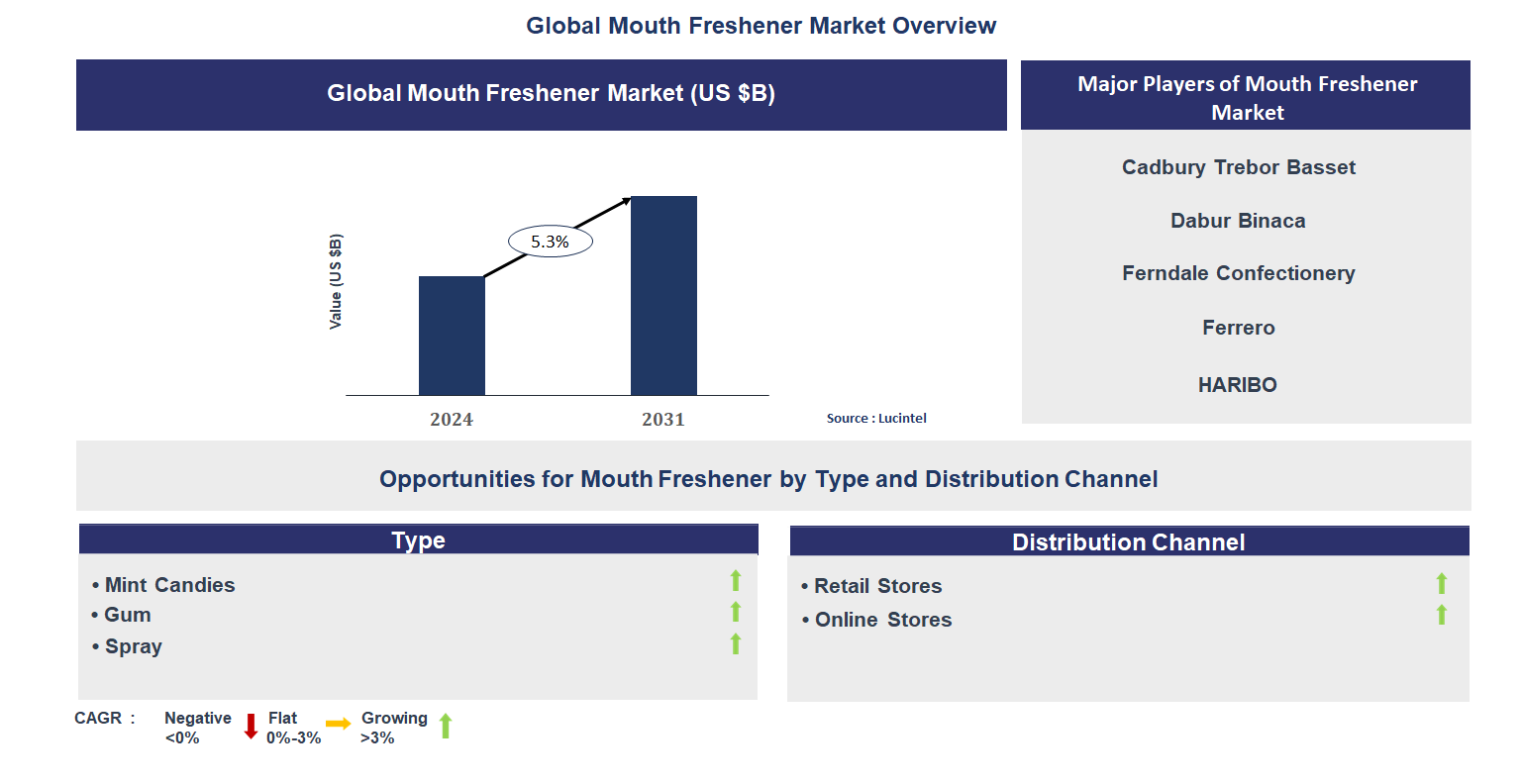
The future of the global mouth freshener market looks promising with opportunities in the retail store and online store markets. The global mouth freshener market is expected to grow with a CAGR of 5.3% from 2025 to 2031. The major drivers for this market are the increasing consumer preference for fresh breath solutions, the rising awareness about oral hygiene & health, and the growing demand for sugar-free mouth fresheners.• Lucintel forecasts that, within the type category, mint candy is expected to witness the highest growth over the forecast period.
• Within the distribution channel category, online store is expected to witness higher growth.
• In terms of region, APAC is expected to witness the highest growth over the forecast period. Gain valuable insights for your business decisions with our comprehensive 150+ page report. Sample figures with some insights are shown below.
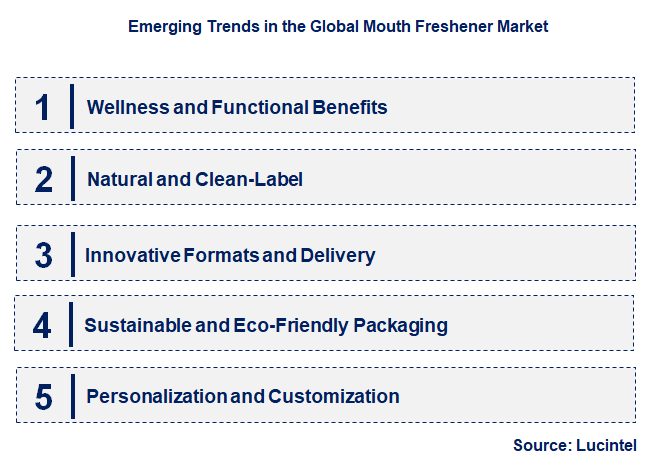
Emerging Trends in the Mouth Freshener Market
The mouth freshener market is being reshaped by several key trends that are transforming consumer habits and product development. These shifts reflect a collective consciousness towards sustainability, health, and personalization, moving beyond traditional forms to embrace a new era of responsible and innovative oral care solutions. This evolution is making hygiene a lifestyle choice rather than a necessity.• Wellness and Functional Benefits: This trend involves infusing mouth fresheners with ingredients that offer health benefits beyond fresh breath, such as probiotics for a healthy oral microbiome or vitamins. The impact is a product that addresses a holistic approach to wellness. This innovation elevates the product from a simple breath mint to a daily supplement for oral health.
• Natural and Clean-Label: The market is moving towards natural, clean-label ingredients and the elimination of artificial colors, flavors, and sugar. Consumers are seeking products that are free from harsh chemicals. The impact is a more appealing product for health-conscious and ingredient-aware consumers, which builds greater trust and brand loyalty.
• Innovative Formats and Delivery: This trend is driving the development of new product formats that are more convenient and discreet, such as thin dissolvable strips, chewable tablets, and concentrated liquid sprays. The impact is a more versatile product that can be used easily in various social and professional settings, appealing to a wider range of consumers.
• Sustainable and Eco-Friendly Packaging: This trend is driven by consumers who are increasingly concerned about plastic waste from traditional packaging. Brands are responding with products in recyclable metal tins, glass bottles, or biodegradable pouches. The impact is a more environmentally responsible industry that aligns with the values of eco-conscious consumers, which in turn builds a positive brand image.
• Personalization and Customization: The market is moving beyond traditional mint flavors, with brands offering a wide variety of unique and exotic flavors like cardamom and fennel. Some companies even offer customizable flavor blends. The impact is a more personalized and enjoyable experience, which helps attract new consumers and retain existing ones by making oral care a more engaging routine. These emerging trends are fundamentally reshaping the mouth freshener market by pushing it towards greater sustainability, personalization, and health-focused innovation. The industry is moving from a utilitarian product to a lifestyle choice that reflects consumer values. This transformation is crucial for securing a competitive advantage and driving long-term market growth.
Recent Development in the Mouth Freshener Market
The mouth freshener market has witnessed several significant developments that are collectively modernizing the oral care industry. These changes reflect a growing consumer demand for advanced, effective, and convenient solutions, compelling businesses to innovate their product offerings and distribution channels. The market is evolving from a niche product to a mainstream oral care staple.• Entry of Major Players: A major development is the entry of large consumer goods corporations into the mouth freshener market. This has a significant impact by bringing mainstream visibility and legitimacy to the product category. It also signals a shift in the industry, with major players acknowledging the growing demand for convenient and specialized oral care products.
• Rise of B2B Applications: The market has seen a strong development in the B2B segment, with hotels, restaurants, and corporate offices offering mouth fresheners to their clients and employees. This impacts the market by creating a new, high-volume sales channel. It also elevates the products status from a personal item to an essential part of hospitality and professional etiquette.
• Functional Ingredients: A key development is the incorporation of functional ingredients like xylitol, which has anti-cavity properties, and activated charcoal for whitening. This impacts the market by elevating mouth fresheners from a simple breath mask to a product that provides tangible oral health benefits. It appeals to a more health-conscious consumer base.
• E-commerce and Subscription Models: The dominance of online retail and the rise of subscription-based models for mouth fresheners are significant developments. This has a major impact by providing consumers with easy access to a wide variety of brands and products. It also allows smaller, independent brands to compete with larger manufacturers and builds brand loyalty through recurring purchases.
• Advanced Packaging: There is a recent development in advanced packaging, including sleek, pocket-sized containers and single-use, biodegradable wrappers. This has an impact by making the product more convenient and discreet for on-the-go use. It also helps brands differentiate themselves and appeal to consumers who value aesthetics and practicality. These recent developments are impacting the mouth freshener market by making it more accessible, scientifically advanced, and consumer-centric. The industry is responding to a more informed and demanding clientele by offering a seamless blend of convenience, high-quality products, and specialized benefits. This evolution is vital for growth and long-term relevance.
Strategic Growth Opportunities in the Mouth Freshener Market
The mouth freshener market presents a wealth of strategic growth opportunities, driven by a rising consumer demand for effective and personalized solutions. These opportunities lie in a variety of key applications, from professional-grade solutions to travel-friendly products. Tapping into these will be essential for businesses looking to expand their market share and build a competitive advantage.• Premium and Luxury Products: A prime growth opportunity lies in developing premium-grade mouth fresheners with high-end, natural ingredients and sophisticated packaging. This allows brands to target a high-end consumer segment willing to pay a premium for a product that is both effective and a statement of personal style. The impact is a more profitable market segment with higher margins.
• Strategic Partnerships: A key opportunity is to partner with restaurants, coffee shops, and travel companies to offer customized mouth fresheners. This provides a new, high-value B2B sales channel. The impact is a powerful marketing tool that introduces the product to a large and diverse audience who may not have otherwise encountered it, establishing the brand in a high-profile setting.
• Oral Health Care Integration: There is a significant growth opportunity in developing mouth fresheners that can be integrated into a daily oral care routine, such as a post-meal or pre-bedtime product. The impact is a more comprehensive approach to oral hygiene. This also provides an opportunity to cross-sell with other dental care products like toothbrushes and mouthwash.
• Global Market Expansion: The global mouth freshener market is still in its nascent stages in many regions. A strategic opportunity lies in expanding into new geographical markets, particularly in developing economies where there is a growing interest in personal hygiene and convenience. The impact is a first-mover advantage and the ability to capture a new consumer base.
• Childrens Mouth Fresheners: The market is seeing a strategic opportunity in developing childrens mouth fresheners with fun flavors, appealing characters, and child-safe formulations. This impacts the market by introducing a new consumer segment and fostering healthy oral habits from a young age. It also creates a new, family-oriented sales channel. These strategic opportunities are impacting the mouth freshener market by pushing it towards a more specialized and consumer-centric model. By focusing on premium products, professional partnerships, and niche applications, businesses can differentiate themselves and build a loyal client base. The future of the market lies in innovation that enhances both efficacy and convenience.
Mouth Freshener Market Driver and Challenges
The mouth freshener market is propelled by a combination of powerful drivers, including a growing culture of personal hygiene and a desire for convenient products. However, it also faces significant challenges related to regulation, consumer adoption, and the competitive landscape. These factors create a dynamic environment that requires brands to be agile and responsive. The factors responsible for driving the mouth freshener market include: 1. Increasing Oral Hygiene Awareness: The primary driver is the heightened global awareness of oral hygiene and the importance of fresh breath in social and professional settings. This encourages consumers to seek products that provide a quick fix. The impact is a consistent, long-term demand for products, which creates a stable market for manufacturers. 2. Convenience and Portability: The compact, travel-friendly nature of mouth fresheners is a major driver. Their ease of use makes them an ideal solution for on-the-go lifestyles. This appeals to a modern consumer base that values practicality and efficiency. The impact is a new sales driver that expands the market beyond the initial demand. 3. E-commerce and Social Media: The rise of e-commerce platforms and social media campaigns is a key driver. They make mouth fresheners more accessible and allow brands to directly market their unique benefits and formulations. The impact is a more competitive market with a greater variety of products available to consumers. 4. Changing Lifestyles: The trend of urbanization and busy, on-the-go lifestyles has created a demand for convenient oral care products. This driver fuels the need for quick and effective breath freshening solutions. The impact is a market that aligns with modern consumer habits, which are likely to continue to drive growth. 5. Product Diversification: The expansion of product offerings beyond basic mints to include a wide range of flavors, formats, and functional ingredients is a major driver. This appeals to a wider consumer base and can be positioned as a personal care item. The impact is a product that is more versatile and can be used for various occasions. Challenges in the mouth freshener market are: 1. Perceived Efficacy and Quality: A major challenge is consumer skepticism about the effectiveness of different mouth freshener brands. Many consumers view them as a temporary solution rather than a substitute for proper oral hygiene. This requires brands to provide strong scientific evidence and transparent labeling to build trust and change consumer perception. 2. Intense Market Competition: The market is highly saturated with numerous brands, from established giants to small startups. This intense competition makes it challenging for any single brand to stand out. It requires constant innovation in product formulation, packaging, and marketing to differentiate from competitors. 3. Regulatory Scrutiny: The lack of standardized global regulatory frameworks for mouth freshener ingredients and health claims is a significant challenge. Regulations vary widely by country. This can create compliance hurdles for manufacturers and can lead to a fragmented market with varying safety and quality standards. The mouth freshener market is driven by powerful forces like heightened hygiene awareness and consumer demand for convenience. However, it must contend with significant challenges, including consumer skepticism and intense competition. Successfully navigating these forces requires businesses to leverage strong branding, transparent communication, and innovative product development to build trust and ensure long-term growth.List of Mouth Freshener Companies
Companies in the market compete on the basis of product quality offered. Major players in this market focus on expanding their manufacturing facilities, R&D investments, infrastructural development, and leverage integration opportunities across the value chain. With these strategies mouth freshener companies cater increasing demand, ensure competitive effectiveness, develop innovative products & technologies, reduce production costs, and expand their customer base. Some of the mouth freshener companies profiled in this report include-• Cadbury Trebor Basset
• Dabur Binaca
• Ferndale Confectionery
• Ferrero
• HARIBO
• Johnson & Johnson
• Kraft Foods
• Leaf Holland
• Lotte
• Mars Incorporated
Mouth Freshener Market by Segment
The study includes a forecast for the global mouth freshener market by type, distribution channel, and region.Mouth Freshener Market by Type [Value from 2019 to 2031]:
• Mint Candies
• Gum
• Spray
Mouth Freshener Market by Distribution Channel [Value from 2019 to 2031]:
• Retail Stores
• Online Stores
Mouth Freshener Market by Region [Value from 2019 to 2031]:
• North America
• Europe
• Asia Pacific
• The Rest of the World
Country Wise Outlook for the Mouth Freshener Market
The mouth freshener market is undergoing a significant transformation, moving beyond traditional forms to embrace a new era of convenience, sustainability, and health-focused formulations. This evolution is being driven by a growing awareness of oral hygiene, a shift towards a more fast-paced lifestyle, and a strong consumer demand for products that are both effective and socially conscious.• United States: The U.S. market is a key driver of innovation, with a strong focus on premium, specialized products. Recent developments include a surge in demand for sugar-free and natural ingredient-based products, such as those with xylitol. The market is also seeing a rise in aesthetically pleasing, discreet packaging to appeal to a younger, more design-conscious demographic.
• China: China’s market is growing rapidly, propelled by a young, urban population with a strong interest in convenience and personal grooming. E-commerce platforms are crucial for sales and product discovery. Recent advancements include a notable trend for unique and exotic flavors that cater to diverse tastes. Brands are also leveraging social media influencers to drive consumer awareness.
• Germany: In Germany, the market is mature and highly quality-driven. Consumers prioritize products with strong scientific evidence and a high level of transparency. Recent developments include a growing demand for products that are both effective and environmentally friendly, with a focus on sustainable packaging and natural ingredients. The market also has a strong B2B segment.
• India: Indias market is a blend of traditional and modern, with a strong preference for natural, herbal, and Ayurvedic-inspired products. The market is seeing a surge in local brands that incorporate ingredients like cardamom and fennel. The growing availability of both traditional and modern products in online and offline retail channels is driving market expansion.
• Japan: The Japanese market is characterized by a high-tech approach and a demand for precision and quality. Recent developments include the introduction of new product formats, such as highly effective, fast-dissolving strips and compact sprays. The market is also seeing an increasing interest in products that combine breath freshening with other oral care benefits, such as plaque reduction.

Features of the Global Mouth Freshener Market
Market Size Estimates: Mouth freshener market size estimation in terms of value ($B). Trend and Forecast Analysis: Market trends (2019 to 2024) and forecast (2025 to 2031) by various segments and regions. Segmentation Analysis: Mouth freshener market size by type, distribution channel, and region in terms of value ($B). Regional Analysis: Mouth freshener market breakdown by North America, Europe, Asia Pacific, and Rest of the World. Growth Opportunities: Analysis of growth opportunities in different types, distribution channels, and regions for the mouth freshener market. Strategic Analysis: This includes M&A, new product development, and competitive landscape of the mouth freshener market. Analysis of competitive intensity of the industry based on Porter’s Five Forces model.
FAQ
Q1. What is the growth forecast for mouth freshener market? Answer: The global mouth freshener market is expected to grow with a CAGR of 5.3% from 2025 to 2031. Q2. What are the major drivers influencing the growth of the mouth freshener market? Answer: The major drivers for this market are the increasing consumer preference for fresh breath solutions, the rising awareness about oral hygiene & health, and the growing demand for sugar-free mouth fresheners. Q3. What are the major segments for mouth freshener market? Answer: The future of the mouth freshener market looks promising with opportunities in the retail store and online store markets. Q4. Who are the key mouth freshener market companies? Answer: Some of the key mouth freshener companies are as follows:• Cadbury Trebor Basset
• Dabur Binaca
• Ferndale Confectionery
• Ferrero
• HARIBO
• Johnson & Johnson
• Kraft Foods
• Leaf Holland
• Lotte
• Mars Incorporated Q5. Which mouth freshener market segment will be the largest in future? Answer: Lucintel forecasts that, within the type category, mint candy is expected to witness the highest growth over the forecast period. Q6. In mouth freshener market, which region is expected to be the largest in next 5 years? Answer: In terms of region, APAC is expected to witness the highest growth over the forecast period. Q7. Do we receive customization in this report? Answer: Yes, Lucintel provides 10% customization without any additional cost.
Table of Contents
List of Figures
List of Tables
Methodology
- In-depth interviews of the major players in this market
- Detailed secondary research from competitors’ financial statements and published data
- Extensive searches of published works, market, and database information pertaining to industry news, company press releases, and customer intentions
- A compilation of the experiences, judgments, and insights of Lucintel’s professionals, who have analyzed and tracked this market over the years.


Buy Now
Choose a license that fits your team. Instant PDF delivery.
Prices exclude taxes. Instant delivery. Custom licensing available on request.
Key Questions
- • What are some of the most promising, high-growth opportunities for the mouth freshener market by type (mint candies, gum, and spray), distribution channel (retail stores and online stores), and region (North America, Europe, Asia Pacific, and the Rest of the World)?
- • Which segments will grow at a faster pace and why?
- • Which region will grow at a faster pace and why?
- • What are the key factors affecting market dynamics? What are the key challenges and business risks in this market?
- • What are the business risks and competitive threats in this market?
- • What are the emerging trends in this market and the reasons behind them?
- • What are some of the changing demands of customers in the market?
- • What are the new developments in the market? Which companies are leading these developments?
- • Who are the major players in this market? What strategic initiatives are key players pursuing for business growth?
- • What are some of the competing products in this market and how big of a threat do they pose for loss of market share by material or product substitution?
- • What M&A activity has occurred in the last 5 years and what has its impact been on the industry? For any questions related to Mouth Freshener Market, Mouth Freshener Market Size, Mouth Freshener Market Growth, Mouth Freshener Market Analysis, Mouth Freshener Market Report, Mouth Freshener Market Share, Mouth Freshener Market Trends, Mouth Freshener Market Forecast, Mouth Freshener Companies, write Lucintel analyst at email: helpdesk@lucintel.com. We will be glad to get back to you soon.


