
Market Report · July 31, 2026

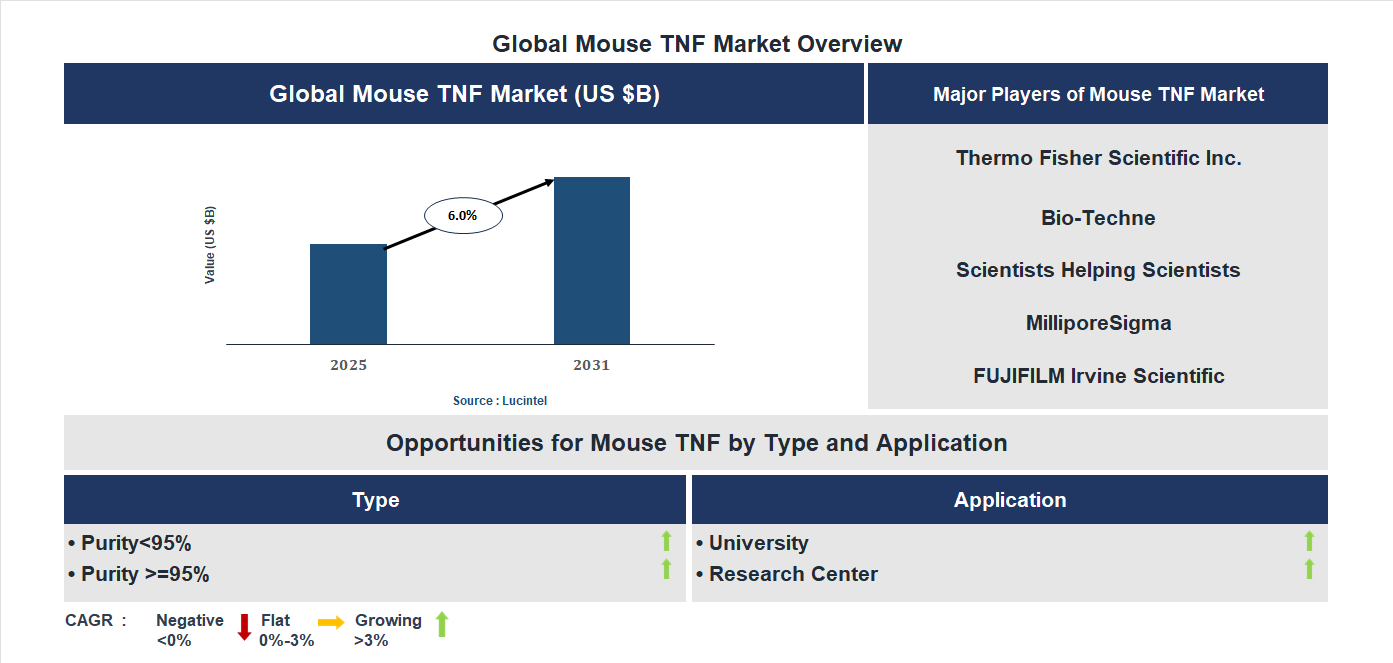
Key data points: The growth forecast = 6.0% annually for the next 7 years. Scroll below to get more insights. This market report covers trends, opportunities and forecasts in mouse TNF market to 2031 by type (purity<95% and purity >=95%), application (university and research center), and region (North America, Europe, Asia Pacific, and the Rest of the World)
We'll send your sample report shortly.
• Lucintel forecasts that, within the type category, purity >=95% is expected to witness higher growth over the forecast period.
• Within the application category, university is expected to witness higher growth.
• In terms of region, APAC is expected to witness the highest growth over the forecast period. Gain valuable insights for your business decisions with our comprehensive 150+ page report. Sample figures with some insights are shown below.
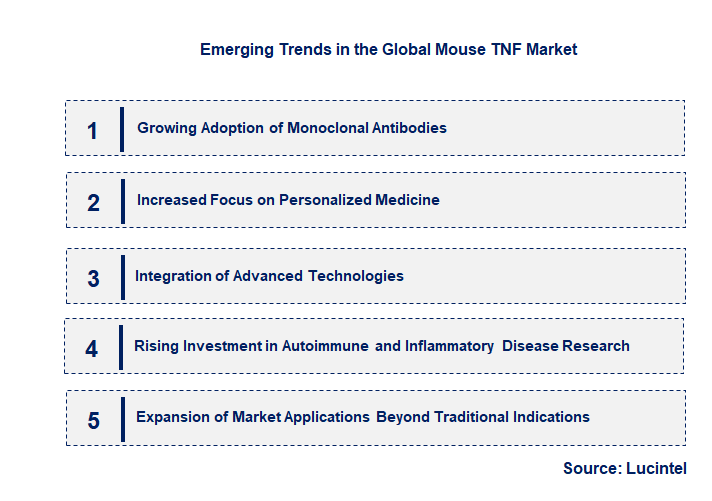
• Growing Adoption of Monoclonal Antibodies: The use of monoclonal antibodies targeting TNF has become increasingly prevalent due to their high specificity and effectiveness in treating autoimmune diseases. Advances in antibody engineering have improved their stability and reduced immunogenicity, making them more suitable for preclinical and clinical research. This trend is driving demand for mouse models that can accurately evaluate these biologics, ultimately accelerating drug development and approval processes.
• Increased Focus on Personalized Medicine: The market is witnessing a shift towards personalized approaches, where mouse models are tailored to reflect specific genetic and molecular profiles of diseases. This enables researchers to better understand individual responses to TNF-targeted therapies, leading to more effective and customized treatment options. The development of genetically modified mice with precise TNF pathway alterations is central to this trend, enhancing the predictive power of preclinical studies.
• Integration of Advanced Technologies: Incorporating technologies such as CRISPR gene editing, single-cell sequencing, and high-throughput screening is transforming the Mouse TNF market. These tools allow for precise manipulation of TNF-related genes and detailed analysis of immune responses at the cellular level. This integration accelerates the discovery of novel therapeutic targets and improves the accuracy of disease models, thereby streamlining research workflows and reducing time-to-market for new drugs.
• Rising Investment in Autoimmune and Inflammatory Disease Research: Increased funding from government agencies, private investors, and pharmaceutical companies is fueling research into autoimmune and inflammatory diseases involving TNF pathways. This investment is leading to the development of more sophisticated mouse models that mimic human disease conditions more closely. As a result, there is a surge in the development of innovative therapies, expanding the market scope and fostering collaborations across academia and industry.
• Expansion of Market Applications Beyond Traditional Indications: The scope of Mouse TNF models is broadening beyond conventional autoimmune diseases like rheumatoid arthritis and Crohn’s disease to include conditions such as neuroinflammatory disorders, cancer, and metabolic diseases. This diversification is driven by a deeper understanding of TNF’s role in various pathologies. Consequently, the market is witnessing increased demand for specialized models, which opens new avenues for research and therapeutic development, ultimately broadening the market landscape. In summary, these emerging trends are significantly reshaping the Mouse TNF market by enhancing research capabilities, fostering innovation, and expanding therapeutic applications. The integration of advanced technologies, personalized approaches, and broader disease focus is creating a more dynamic and competitive environment. As these trends continue to evolve, they will likely lead to more effective treatments, faster drug development cycles, and a deeper understanding of TNF-related diseases, ultimately benefiting patients and the healthcare industry.
• Technological Advancements: The integration of gene editing tools like CRISPR has improved the development of genetically modified mouse models, enhancing the precision of TNF-related studies. This has led to more accurate disease modeling, accelerating drug discovery processes and reducing time-to-market for new therapies.
• Increased R&D Investments: Pharmaceutical and biotech companies are increasing their investments in R&D for inflammatory and autoimmune diseases, fueling demand for specialized Mouse TNF models. This trend supports the development of targeted therapies and expands market opportunities.
• Strategic Collaborations: Partnerships between academic institutions, biotech firms, and pharmaceutical companies are fostering innovation in Mouse TNF research. These collaborations facilitate resource sharing, knowledge exchange, and the development of novel models, boosting market growth.
• Regulatory and Ethical Developments: Evolving regulations around animal testing and ethical considerations are prompting the industry to adopt alternative methods and improve existing models. This shift influences market dynamics by encouraging innovation and compliance with global standards.
• Market Expansion in Emerging Regions: Growing healthcare infrastructure and increased research activities in Asia-Pacific and Latin America are expanding the market footprint. Local investments and government initiatives are supporting the adoption of Mouse TNF models in these regions. In summary, these recent developments are making the mouse TNF market more innovative, competitive, and globally integrated. Technological progress, increased investments, strategic collaborations, regulatory changes, and regional expansion are collectively driving growth, improving research quality, and opening new avenues for therapeutic advancements.
• Drug Development: Expanding use of Mouse TNF in preclinical testing and therapeutic research is accelerating drug discovery efforts. This growth enhances the development of anti-TNF therapies, leading to more effective treatments for autoimmune diseases like rheumatoid arthritis and Crohn’s disease. The increased demand for reliable animal models boosts market revenue and fosters innovation in biologic drug development.
• Diagnostics: The integration of Mouse TNF in diagnostic assays improves disease detection and monitoring. Enhanced sensitivity and specificity in detecting inflammatory markers enable early diagnosis and personalized treatment plans. This application supports better patient management and drives market growth through increased adoption of advanced diagnostic tools.
• Personalized Medicine: Mouse TNF research facilitates the development of tailored therapies based on individual inflammatory profiles. By understanding specific cytokine responses, clinicians can customize treatments, improving efficacy and reducing side effects. This approach is transforming treatment paradigms and expanding market opportunities in precision medicine.
• Biologics Manufacturing: The demand for Mouse TNF in the production of biologic drugs is rising, especially for monoclonal antibodies and biosimilars. Efficient manufacturing processes and quality control are critical, fueling investments in bioprocessing technologies. This growth supports the broader biologics market and enhances supply chain capabilities.
• Research Tools and Platforms: The use of Mouse TNF in research tools, such as assays and experimental models, is vital for understanding disease mechanisms. These tools enable scientists to explore new therapeutic targets and validate drug candidates. The expanding research infrastructure accelerates innovation and sustains market expansion. In summary, these key growth opportunities are significantly impacting the Mouse TNF market by fostering innovation, improving diagnostic and therapeutic options, and supporting personalized medicine. As these applications evolve, they are driving increased market demand, attracting investments, and shaping the future landscape of inflammatory disease management.
• Technological Advancements: The development of sophisticated biotechnological tools and assays has enhanced the ability to study TNF (Tumor Necrosis Factor) in mice, leading to more precise research outcomes. Innovations such as monoclonal antibody production, gene editing techniques like CRISPR, and advanced imaging technologies have improved the understanding of TNFs role in inflammatory and autoimmune diseases. These technological improvements have increased demand for specialized mouse models and reagents, fueling market growth. As research becomes more refined, pharmaceutical companies and research institutions are investing heavily in these technologies, further propelling the market forward.
• Rising Prevalence of Chronic Diseases: The increasing incidence of autoimmune, inflammatory, and infectious diseases worldwide has heightened the need for effective research tools and therapies targeting TNF pathways. Conditions such as rheumatoid arthritis, Crohns disease, and psoriasis are directly linked to TNF activity. This rising disease burden has prompted increased investment in preclinical research using mouse models, thereby expanding the market. Pharmaceutical companies are focusing on developing TNF inhibitors and related biologics, which require extensive preclinical testing, thus driving demand for mouse TNF research tools and reagents.
• Growing Research and Development Activities: The surge in R&D activities within the pharmaceutical and biotechnology sectors is a major driver. Companies are investing in the discovery of novel therapeutics targeting TNF pathways, necessitating advanced mouse models and reagents for validation. Academic institutions and research organizations are also expanding their research initiatives, contributing to market growth. Increased funding from government agencies and private investors supports the development of innovative research tools, fostering a competitive environment that accelerates market expansion and technological innovation.
• Regulatory Support and Funding: Favorable regulatory policies and increased funding for biomedical research have created a conducive environment for market growth. Governments and international agencies are prioritizing research on inflammatory and autoimmune diseases, providing grants and subsidies that enable extensive preclinical studies. Regulatory agencies are also streamlining approval processes for new therapeutics, encouraging more investment in TNF-related research. This supportive regulatory landscape reduces barriers for market players and accelerates the development and commercialization of TNF-targeted therapies, thereby boosting the market.
• Strategic Collaborations and Partnerships: Collaborations between biotech firms, pharmaceutical companies, and academic institutions are fostering innovation and expanding market reach. These partnerships facilitate the sharing of technology, expertise, and resources, leading to the development of advanced mouse models and reagents. Joint ventures and licensing agreements also enable faster commercialization of new products. Such strategic alliances are crucial for overcoming technical challenges and expanding product portfolios, ultimately driving market growth through increased innovation and market penetration. The challenges facing this mouse TNF market include:
• High Cost of Research and Development: R&D activities in the mouse TNF market require significant investment in technology, skilled personnel, and infrastructure. Developing and validating new mouse models and reagents is costly and time-consuming, which can limit participation from smaller players and slow overall market growth. Additionally, the high costs associated with clinical trials and regulatory compliance further strain resources. This financial barrier can hinder innovation and delay the introduction of new therapies, impacting the overall expansion of the market.
• Stringent Regulatory Environment: While regulatory support exists, the complex and evolving regulatory landscape poses challenges. Approval processes for new research tools and therapeutics are often lengthy and require extensive data to demonstrate safety and efficacy. Variability in regulations across regions can complicate market entry and expansion strategies. Compliance costs and delays can discourage investment and slow product development, ultimately affecting market growth and the availability of innovative solutions.
• Ethical and Animal Welfare Concerns: The use of mice in biomedical research raises ethical issues and animal welfare concerns, leading to increased scrutiny and regulatory restrictions. These concerns can limit the scope of research activities and increase the costs associated with ethical approvals and compliance. Public and regulatory pressure to reduce animal testing may also drive the adoption of alternative methods, potentially reducing demand for traditional mouse models and reagents, thereby challenging market sustainability. In summary, the mouse TNF market is driven by technological innovations, rising disease prevalence, increased R&D activities, supportive regulatory policies, and strategic collaborations. However, high R&D costs, regulatory complexities, and ethical concerns pose significant challenges. These factors collectively influence the markets trajectory, requiring stakeholders to navigate a complex landscape to capitalize on growth opportunities. Overall, the markets future will depend on balancing innovation with regulatory and ethical considerations, ensuring sustainable growth and the development of effective therapies.
• Thermo Fisher Scientific Inc.
• Bio-Techne
• Scientists Helping Scientists
• MilliporeSigma
• FUJIFILM Irvine Scientific
• BD Biosciences
• Sino Biological,Inc.
• BPS Bioscience, Inc.
• Elabscience
• Yisheng Biotechnology Co., Ltd.
• Purity<95%
• Purity >=95%
• University
• Research Center
• North America
• Europe
• Asia Pacific
• The Rest of the World
• United States: The US continues to lead in mouse TNF market innovation, with increased investments in biotech startups and academic research. Major pharmaceutical companies are expanding their preclinical testing capabilities, focusing on inflammatory and autoimmune disease models. Regulatory agencies are streamlining approval processes, encouraging faster product development. Advances in gene editing technologies like CRISPR have enhanced the creation of more precise TNF models, boosting research efficiency. Collaborations between academia and industry are fostering novel therapeutic discoveries, solidifying the USs position as a market leader.
• China: China has rapidly expanded its mouse TNF market, driven by government initiatives supporting biotech innovation and increasing domestic demand for research tools. Local companies are investing in advanced mouse model development, including transgenic and knockout models. The country is also focusing on reducing reliance on imported products by establishing local manufacturing capabilities. Collaborations with international firms are growing, facilitating technology transfer and knowledge exchange. The Chinese government’s strategic focus on healthcare and biotech innovation is expected to sustain growth in this sector.
• Germany: Germany remains a key player in the mouse TNF market within Europe, emphasizing high-quality, reliable research models. The country’s strong biotech and pharmaceutical sectors are adopting advanced TNF models for drug development and disease research. German research institutions are pioneering in the development of humanized mouse models, enhancing translational research. Regulatory standards are stringent, ensuring product safety and efficacy, which boosts international confidence. Germany’s focus on sustainable and ethical research practices is also shaping market trends, with increased investments in alternative models and refinement techniques.
• India: India’s mouse TNF market is witnessing rapid growth, fueled by expanding research infrastructure and increasing investments from both government and private sectors. The country is focusing on developing cost-effective, high-quality mouse models to support local pharmaceutical and biotech companies. There is a rising trend of collaborations with global firms to access advanced technologies. Indian research institutions are increasingly adopting transgenic and knockout models for inflammatory and autoimmune disease studies. The government’s initiatives to promote innovation and research are expected to further accelerate market growth in the coming years.
• Japan: Japan maintains a strong presence in the mouse TNF market, with a focus on precision medicine and advanced disease modeling. Japanese biotech firms are investing in cutting-edge genetic engineering techniques to develop sophisticated TNF models. The country emphasizes regulatory compliance and product quality, which enhances its export potential. Japan’s research institutions are actively involved in developing humanized mouse models to facilitate translational research. The government’s support for innovation and collaboration with international partners continues to drive advancements, positioning Japan as a significant contributor to global market developments.


• Thermo Fisher Scientific Inc.
• Bio-Techne
• Scientists Helping Scientists
• MilliporeSigma
• FUJIFILM Irvine Scientific
• BD Biosciences
• Sino Biological,Inc.
• BPS Bioscience, Inc.
• Elabscience
• Yisheng Biotechnology Co., Ltd. Q5. Which mouse TNF market segment will be the largest in future? Answer: Lucintel forecasts that, within the type category, purity >=95% is expected to witness higher growth over the forecast period. Q6. In mouse TNF market, which region is expected to be the largest in next 5 years? Answer: In terms of region, APAC is expected to witness the highest growth over the forecast period. Q7. Do we receive customization in this report? Answer: Yes, Lucintel provides 10% customization without any additional cost.


Choose a license that fits your team. Instant PDF delivery.
Prices exclude taxes. Instant delivery. Custom licensing available on request.
Market Report · July 31, 2026
Market Report · July 31, 2026
Market Report · July 31, 2026
Trusted partner for strategic intelligence and business growth


Receive a complimentary market analysis tailored to your industry. Our analysts will identify key growth opportunities and competitive dynamics specific to your business.

Market size, growth rate, and key trend analysis for your specific sector.

Top competitor positioning and market share analysis.

Strategic recommendations backed by data-driven insights.
Get curated market intelligence and competitive moves straight to your inbox.
By subscribing, you agree to receive our monthly insights. Unsubscribe anytime.
Receive a complimentary market analysis tailored to your industry. Our analysts will identify key growth opportunities and competitive dynamics specific to your business.
Market size, growth rate, and key trend analysis for your specific sector.
Top competitor positioning and market share analysis.
Strategic recommendations backed by data-driven insights.
Get curated market intelligence, emerging trends, and competitive moves straight to your inbox each month.
By subscribing, you agree to receive our monthly insights. Unsubscribe anytime.
We'll send your sample report shortly.