
Market Report · July 31, 2026

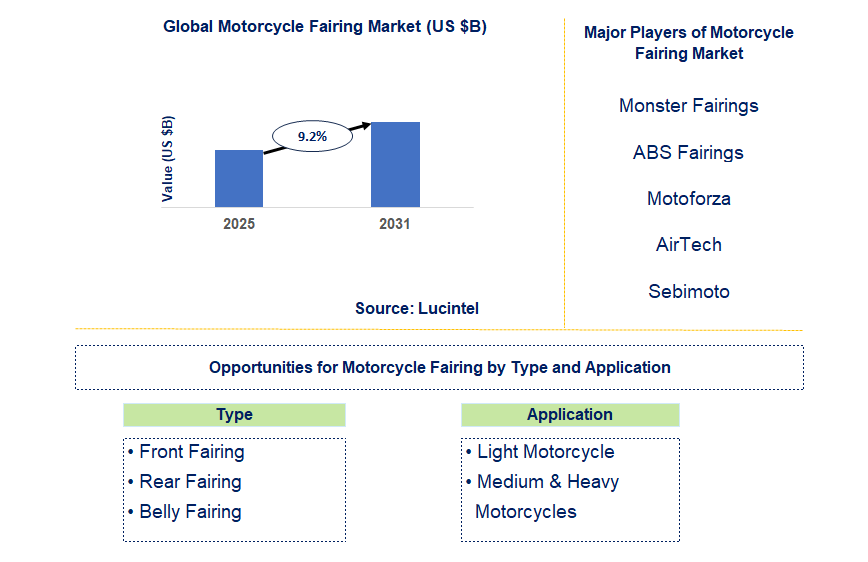
Key data points: The growth forecast = 9.2% annually for the next 7 years. Scroll below to get more insights. This market report covers trends, opportunities and forecasts in motorcycle fairing market to 2031 by type (front fairing, rear fairing, and belly fairing), application (light motorcycle and medium & heavy motorcycles), and region (North America, Europe, Asia Pacific, and the Rest of the World)
We'll send your sample report shortly.
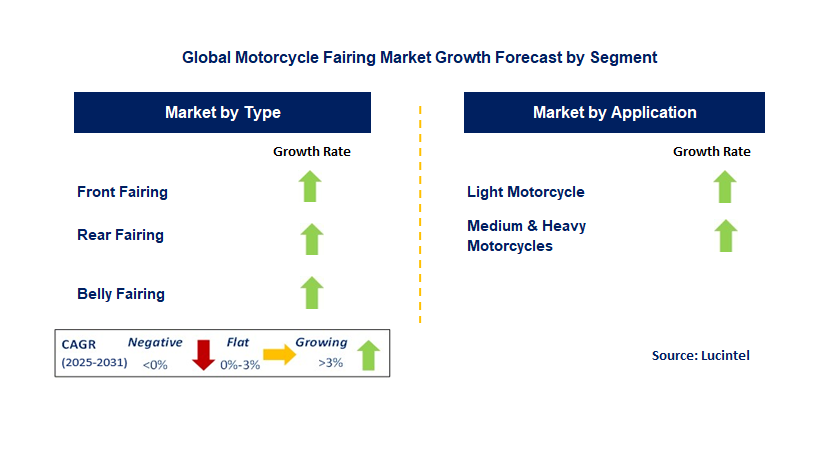
• Lucintel forecasts that, within the type category, front fairing is expected to witness the highest growth over the forecast period.
• Within the application category, medium & heavy motorcycle is expected to witness higher growth.
• In terms of region, APAC is expected to witness the highest growth over the forecast period. Gain valuable insights for your business decisions with our comprehensive 150+ page report. Sample figures with some insights are shown below.
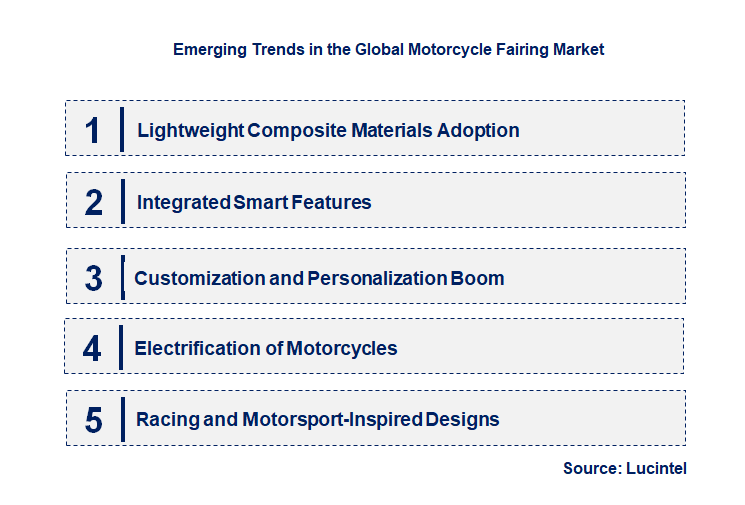
• Lightweight Composite Materials Adoption: Fairings made from carbon fiber, fiberglass-reinforced plastics, and other composites are replacing traditional materials due to their strength-to-weight ratio. This trend helps improve fuel efficiency, maneuverability, and speed, especially in performance bikes. It also supports sustainability goals through recyclable and long-lasting materials.
• Integrated Smart Features: Modern fairings are being designed with integrated features such as LED lighting, GPS modules, sensors for crash alerts, and even camera mounts. These smart fairings not only enhance rider safety and convenience but also support the integration of connected mobility ecosystems.
• Customization and Personalization Boom: Riders increasingly demand personalized fairing designs reflecting their style or functional needs. This trend is encouraging the growth of aftermarket and modular fairing systems that allow easy modifications. 3D printing and online configurators are also enabling mass customization.
• Electrification of Motorcycles: Electric motorcycles require redesigned fairings for thermal management, noise reduction, and battery aerodynamics. This trend is spurring innovation in both OEM and aftermarket fairing designs tailored specifically for electric powertrains.
• Racing and Motorsport-Inspired Designs: Fairing designs are increasingly inspired by track racing, with sharper lines, aggressive styling, and aerodynamic optimization. This trend caters to both amateur racers and everyday consumers who seek high-performance aesthetics and functional speed benefits. These emerging trends are redefining the motorcycle fairing market by making it more innovative, sustainable, and consumer-centric. As electric mobility, safety technology, and personalization grow in prominence, fairings will play a pivotal role in shaping motorcycle design and performance in the coming years.
• Development of Active Aerodynamic Fairings: Manufacturers like Ducati and BMW are pioneering active fairing systems that automatically adjust based on speed and wind resistance. These systems help optimize performance and stability, especially at high speeds, and are now being introduced in road-legal bikes beyond racing.
• Growth of 3D Printing in Fairing Manufacturing: 3D printing is revolutionizing how fairings are designed and produced, particularly for customization and small-batch production. Startups and aftermarket firms are offering fully customizable fairings with reduced lead times and cost-effective prototyping, allowing consumers to design unique aesthetics.
• Expansion of Fairing Options in Electric Motorcycles: With the rise of electric bikes, OEMs are designing fairings that manage battery heat and minimize drag to extend range. Brands like Zero and Ultraviolet are leading this space, offering integrated fairings that cater to electric-specific design constraints.
• Integration of Safety and Visibility Features: Recent developments include the integration of safety features such as built-in LED indicators, reflective strips, and crash sensors within fairing designs. These improvements are especially valuable for night riders and urban commuters, enhancing visibility and protection.
• Modular Fairing Kits for Easy Replacement: Modular and Snap-On fairing kits are gaining popularity in both OEM and aftermarket markets. These systems allow riders to easily replace or upgrade specific sections without overhauling the entire fairing, improving affordability and convenience. These developments are making motorcycle fairings more adaptable, safe, and technologically advanced. With innovation driven by both functional demands and consumer preferences, the market is set for robust growth and diversification in the years ahead.
• Racing and Sports Bikes: High-speed motorcycles require aerodynamic fairings to minimize drag and ensure stability. This segment is a hotbed for innovation, with demand for lightweight, wind-tunnel-tested fairings that improve speed and performance. Partnerships with motorsport teams are also fostering R&D.
• Touring and Cruiser Motorcycles: Long-distance touring bikes benefit from large fairings that offer wind protection, storage integration, and comfort. OEMs are enhancing these designs with infotainment systems, navigation screens, and adjustable shields, appealing to both luxury and functionality seekers.
• Electric Motorcycles: Electric motorcycles are a rising segment where fairings are essential for battery cooling and noise insulation. As battery technology evolves, fairing designs are adapting to meet new airflow and thermal regulation requirements, offering immense growth potential.
• Urban Commuter Bikes: With growing traffic congestion, commuter bikes with sleek, aerodynamic fairings are becoming popular. These fairings improve fuel efficiency and maneuverability. The focus is on affordability and utility, making it a volume-driven opportunity in developing markets like India and Southeast Asia.
• Adventure and Off-Road Motorcycles: Adventure and dual-sport bikes require rugged fairings that protect against debris, weather, and impact. Innovations in durable thermoplastics and modular assemblies are opening up opportunities in the growing adventure tourism and sport market. These application-based growth opportunities allow manufacturers to address specific rider needs across various segments. By customizing fairing designs for performance, utility, and comfort, companies can tap into both niche and mass-market demand, driving sustained growth.
• Monster Fairings
• ABS Fairings
• Motoforza
• AirTech
• Sebimoto
• Kingsmotorcyclefairings
• FairingMaster
• NiceCycle
• Skidmarx
• Summitfairings
• Front Fairing
• Rear Fairing
• Belly Fairing
• Light Motorcycle
• Medium & Heavy Motorcycles
• North America
• Europe
• Asia Pacific
• The Rest of the World
• United States: In the United States, there is a growing demand for custom fairings driven by the rising popularity of cruiser and touring bikes. Manufacturers are adopting lightweight composite materials such as carbon fiber and polycarbonate to improve fuel efficiency and ride quality. Recent developments include Harley-Davidson and Indian Motorcycle expanding their premium fairing options with integrated infotainment systems and advanced aerodynamics. Additionally, aftermarket providers are focusing on modular fairing systems that allow easy personalization. The push toward electric motorcycles has also encouraged new fairing designs to accommodate battery cooling and aerodynamic optimization.
• China: China is witnessing increased adoption of fairings in both electric and combustion-engine motorcycles due to rising demand in urban transportation and delivery services. Domestic manufacturers like Couto and NIU are incorporating compact, aerodynamic fairings in mid-range and entry-level bikes to improve performance and reduce drag. Government incentives supporting electric vehicles are further encouraging the integration of fairings for enhanced battery efficiency. The rising popularity of motorsport and custom bike culture in urban centers has also led to an uptick in aftermarket fairing accessories, including 3D-printed and smart-connected components.
• Germany: Germany’s motorcycle fairing market is heavily influenced by its engineering precision and racing heritage. Brands like BMW Motored are investing in advanced aerodynamics for touring and sport models, integrating wind tunnel-tested fairings for improved high-speed stability and rider protection. Recent developments include smart fairing systems with built-in sensors for collision warnings and dynamic airflow control. With environmental regulations tightening, there is a push for lightweight, recyclable materials like thermoplastics. The country's focus on road safety has also led to innovative fairing structures designed to minimize rider injury during impact.
• India: India’s motorcycle market is shifting toward aerodynamic and fuel-efficient designs, especially in the commuter and mid-range segments. Manufacturers like Hero MotoCorp and Bajaj are upgrading fairing systems in their new models to enhance aesthetic appeal and airflow management. Recent developments include semi-faired sport commuter bikes targeting young urban riders. With rising fuel prices and pollution concerns, fairings are increasingly used to reduce drag and improve mileage. There is also a growing aftermarket for custom fairings among enthusiasts, particularly in metro cities, driven by the rise in bike modification trends and motorsport influence.
• Japan: Japan continues to lead in compact, technologically advanced motorcycles, and its fairing market reflects a blend of innovation and tradition. Yamaha, Honda, and Suzuki are developing smart fairing designs that integrate LED lighting, adaptive aerodynamics, and onboard displays. Recent developments include automatic adjustable fairings for touring bikes that change angle based on speed. Japan’s growing focus on electric motorcycles has led to new fairing innovations to manage battery heat and enhance range. Moreover, the customization culture remains strong, with aftermarket vendors offering advanced fairing kits compatible with both legacy and new-generation models.


• Monster Fairings
• ABS Fairings
• Motoforza
• AirTech
• Sebimoto
• Kingsmotorcyclefairings
• FairingMaster
• NiceCycle
• Skidmarx
• Summitfairings Q5. Which motorcycle fairing market segment will be the largest in future? Answer: Lucintel forecasts that, within the type category, front fairing is expected to witness the highest growth over the forecast period. Q6. In motorcycle fairing market, which region is expected to be the largest in next 5 years? Answer: In terms of region, APAC is expected to witness the highest growth over the forecast period. Q7. Do we receive customization in this report? Answer: Yes, Lucintel provides 10% customization without any additional cost.


Choose a license that fits your team. Instant PDF delivery.
Prices exclude taxes. Instant delivery. Custom licensing available on request.
Market Report · July 31, 2026
Market Report · July 17, 2026
Market Report · May 18, 2026
Trusted partner for strategic intelligence and business growth


Receive a complimentary market analysis tailored to your industry. Our analysts will identify key growth opportunities and competitive dynamics specific to your business.

Market size, growth rate, and key trend analysis for your specific sector.

Top competitor positioning and market share analysis.

Strategic recommendations backed by data-driven insights.
Get curated market intelligence and competitive moves straight to your inbox.
By subscribing, you agree to receive our monthly insights. Unsubscribe anytime.
Receive a complimentary market analysis tailored to your industry. Our analysts will identify key growth opportunities and competitive dynamics specific to your business.
Market size, growth rate, and key trend analysis for your specific sector.
Top competitor positioning and market share analysis.
Strategic recommendations backed by data-driven insights.
Get curated market intelligence, emerging trends, and competitive moves straight to your inbox each month.
By subscribing, you agree to receive our monthly insights. Unsubscribe anytime.
We'll send your sample report shortly.