
Market Report · May 18, 2026

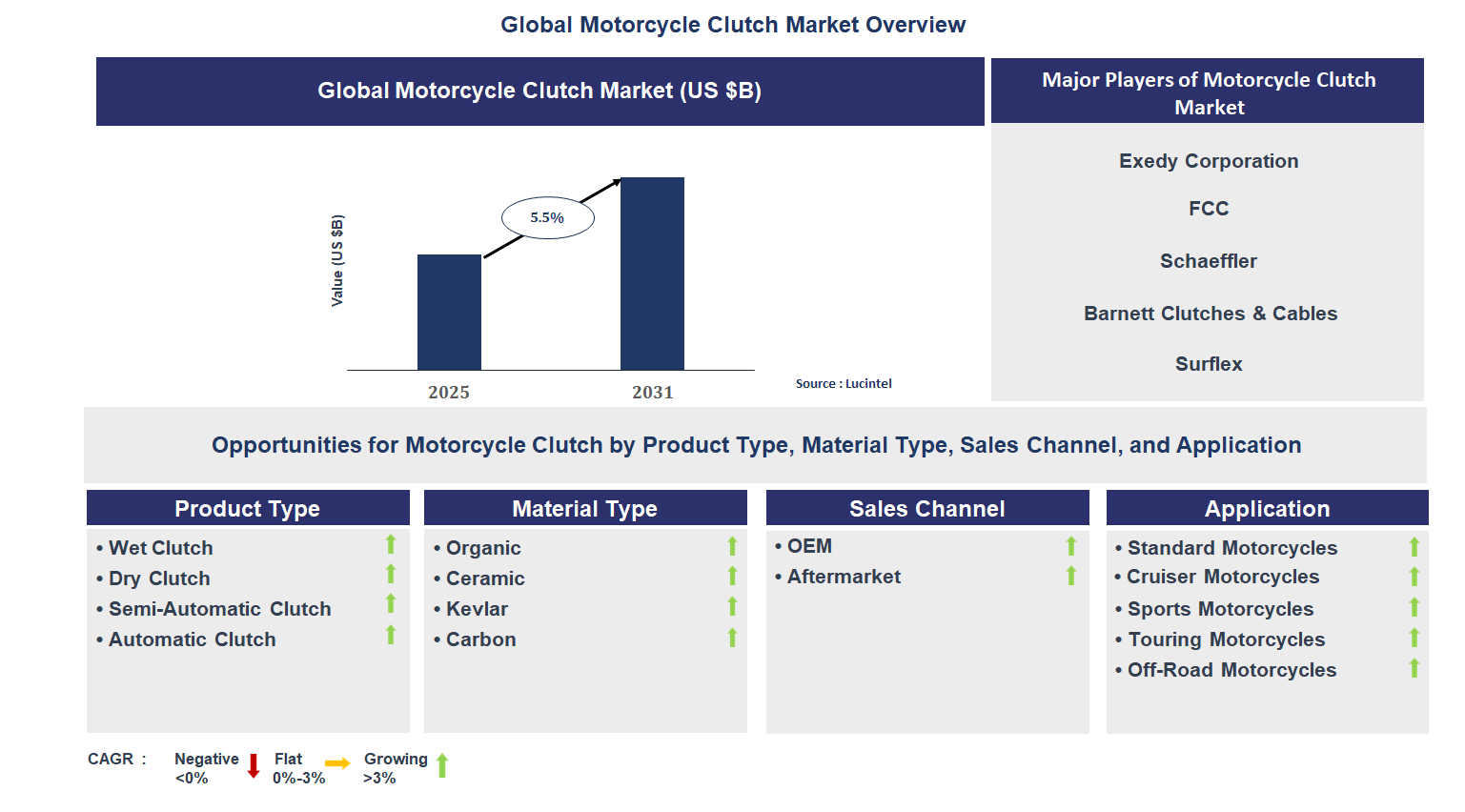
Key data points: The growth forecast = 5.5% annually for the next 7 years. Scroll below to get more insights. This market report covers trends, opportunities and forecasts in motorcycle clutch market to 2031 by product type (wet clutch, dry clutch, semi-automatic clutch, and automatic clutch), material type (organic, ceramic, kevlar, and carbon), sales channel (OEM and aftermarket), application (standard motorcycles, cruiser motorcycles, sports motorcycles, touring motorcycles, and off-road motorcycles), and region (North America, Europe, Asia Pacific, and the Rest of the World)
We'll send your sample report shortly.
• Lucintel forecasts that, within the product type category, wet clutch is expected to witness the highest growth over the forecast period.
• Within the application category, standard motorcycle is expected to witness the highest growth.
• In terms of region, APAC is expected to witness the highest growth over the forecast period. Gain valuable insights for your business decisions with our comprehensive 150+ page report. Sample figures with some insights are shown below.
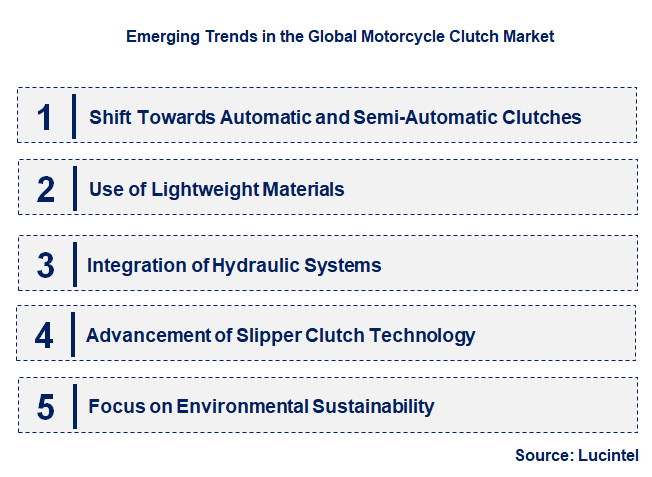
• Shift Towards Automatic and Semi-Automatic Clutches: There is a growing preference for automatic and semi-automatic clutch systems in both premium and entry-level motorcycles. These systems offer easier handling, especially in heavy traffic, by eliminating the need for manual gear shifting. This trend is expected to gain momentum as riders increasingly demand convenience and comfort, leading to wider adoption.
• Use of Lightweight Materials: Manufacturers are adopting lightweight materials such as carbon fiber, aluminum, and composite alloys in clutch systems. These materials reduce the overall weight of the motorcycle, which improves fuel efficiency, handling, and performance. The trend towards lighter motorcycles is pushing manufacturers to develop clutches that balance strength and weight, contributing to enhanced riding experiences.
• Integration of Hydraulic Systems: Hydraulic clutch systems are becoming more common, offering smoother operation and reduced maintenance. Unlike traditional cable-operated clutches, hydraulic systems provide a more consistent feel and greater precision in clutch engagement. This trend is gaining popularity due to its convenience and reliability, especially in motorcycles used for longer rides or in more demanding conditions.
• Advancement of Slipper Clutch Technology: Slipper clutches, which prevent rear-wheel lockup during aggressive downshifting, are becoming increasingly popular, especially in high-performance and racing motorcycles. This technology enhances rider control and reduces the risk of accidents, making it a must-have feature for sports bikes. As demand for performance motorcycles increases, slipper clutch technology is expected to see wider adoption.
• Focus on Environmental Sustainability: With the rise of eco-conscious consumers, there is a growing demand for environmentally sustainable clutch systems. Manufacturers are working on reducing the environmental footprint of clutch production by using eco-friendly materials and energy-efficient manufacturing processes. This trend is gaining importance as the motorcycle industry moves toward electric and hybrid vehicles, where traditional clutch systems may need to be adapted. The emerging trends in the motorcycle clutch market are reshaping the industry by focusing on convenience, performance, and sustainability. The shift towards automatic and semi-automatic clutches, lightweight materials, hydraulic systems, slipper clutches, and eco-friendly designs is transforming the market. These innovations are helping to meet consumer expectations for more comfortable, high-performance, and environmentally friendly motorcycles.
• Introduction of Automatic and Semi-Automatic Clutches: Manufacturers are increasingly introducing automatic and semi-automatic clutch systems in motorcycles. These systems remove the need for manual shifting, making riding easier, particularly for beginners or commuters. The introduction of these systems into both mid-range and high-end motorcycles is a key development in the market, enhancing the overall riding experience.
• Adoption of Slipper Clutch Technology: Slipper clutches, which provide smoother downshifting and prevent rear-wheel lockup, are becoming a standard feature in performance and racing motorcycles. This technology enhances safety and control, particularly in high-speed situations. As more consumers seek performance motorcycles, slipper clutches are being incorporated into a broader range of bikes.
• Use of Carbon Fiber and Lightweight Materials: The use of carbon fiber and other lightweight materials in clutch components is gaining traction in the market. These materials not only reduce weight but also improve the durability and performance of clutches. Lightweight clutches are crucial for performance motorcycles, where every kilogram matters for speed, handling, and fuel efficiency.
• Hydraulic Clutch Systems: Hydraulic clutch systems are being widely adopted in modern motorcycles. Unlike traditional cable-operated systems, hydraulic clutches offer smoother engagement, reducing rider fatigue. This development has been particularly popular in touring and commuter motorcycles, where ease of use and reduced maintenance are valued features.
• Electric Motorcycle Clutch Systems: With the rise of electric motorcycles, there is an increasing need to adapt clutch systems for electric powertrains. Manufacturers are exploring solutions to either eliminate the clutch system altogether or integrate new technologies to meet the needs of electric motorcycles. This shift is still in the early stages but is a significant development in the evolving motorcycle market. Recent developments in the motorcycle clutch market are focused on improving performance, comfort, and safety. Innovations such as automatic clutches, slipper clutches, lightweight materials, hydraulic systems, and electric motorcycle clutch technologies are reshaping the market. These developments are responding to evolving consumer preferences for more user-friendly and high-performance motorcycles, paving the way for future growth.
• Automatic and Semi-Automatic Clutch Systems for Beginners: There is a growing market for automatic and semi-automatic clutches in entry-level motorcycles, catering to new riders and commuters. These systems simplify gear shifting, making them attractive to beginner riders. With more people taking up motorcycle riding, particularly in urban areas, this market segment presents significant growth potential.
• Performance Clutches for Sports Bikes: Performance motorcycles are gaining popularity, and manufacturers are focusing on providing advanced clutches, such as slipper clutches, to improve bike control and safety. As racing and sport motorcycles become more accessible, demand for high-performance clutches that offer smoother downshifting and better rider control is expected to rise, creating significant growth opportunities.
• Integration of Hydraulic Clutch Systems in Mass-Market Motorcycles: Hydraulic clutch systems are becoming more common in motorcycles, even in the mass-market segment. Their smooth operation and reduced maintenance make them a desirable feature in commuter and touring motorcycles. The widespread adoption of hydraulic clutch systems in this segment is a key growth opportunity for manufacturers aiming to improve user experience.
• Development of Clutch Systems for Electric Motorcycles: As electric motorcycles gain traction, manufacturers are exploring new clutch systems designed specifically for electric powertrains. These systems may eliminate the traditional clutch or integrate new technologies that address the unique requirements of electric motorcycles. This area presents a growth opportunity for manufacturers to innovate and capture a new market.
• Aftermarket Clutch Parts and Upgrades: The aftermarket motorcycle parts sector is booming, with riders looking to upgrade their clutch systems for enhanced performance or style. Offering high-quality, customizable clutch components can create opportunities for growth in the aftermarket sector, catering to both casual riders and performance enthusiasts. The motorcycle clutch market offers multiple growth opportunities, including the development of automatic clutches for beginners, performance clutches for sports bikes, hydraulic clutch systems for mass-market motorcycles, and specialized clutch solutions for electric motorcycles. These opportunities, along with the growing demand for aftermarket parts, provide a wide range of avenues for manufacturers to expand their market presence.
• Exedy Corporation
• FCC
• Schaeffler
• Barnett Clutches & Cables
• Surflex
• Hinson Racing
• Rekluse Motor Sports
• EBC Brakes
• STM Italy
• Suter Racing Products
• Wet Clutch
• Dry Clutch
• Semi-Automatic Clutch
• Automatic Clutch
• Organic
• Ceramic
• Kevlar
• Carbon
• OEM
• Aftermarket
• Standard Motorcycles
• Cruiser Motorcycles
• Sports Motorcycles
• Touring Motorcycles
• Off-Road Motorcycles
• North America
• Europe
• Asia Pacific
• The Rest of the World
• United States: In the U.S., the motorcycle clutch market is evolving with a focus on high-performance clutches for both sport and cruiser motorcycles. The increasing demand for automatic clutches and more refined systems like slipper clutches is notable. Manufacturers are also integrating advanced materials like carbon fiber and aluminum alloys to enhance durability and reduce weight, aligning with the growing trend for lightweight, high-performance motorcycles.
• China: China’s motorcycle clutch market is expanding rapidly with the rise of electric motorcycles and scooters. Clutch systems in these vehicles are being designed for smoother, more efficient power transmission. Furthermore, Chinese manufacturers are increasingly adopting international standards for clutch systems, aiming to boost the quality and reliability of domestic motorcycles, enhancing their competitiveness in both domestic and export markets.
• Germany: Germany is leading in the innovation of motorcycle clutch systems, particularly in the premium segment. The market is seeing an uptick in demand for advanced clutches, such as hydraulic and anti-hopping clutches, which enhance rider control and safety. German manufacturers are focusing on integrating automation in clutch systems to reduce manual labor, making the riding experience smoother and more comfortable, especially for commuters.
• India: India’s motorcycle clutch market is driven by the increasing sales of entry-level motorcycles and scooters. Manufacturers are focusing on producing cost-effective yet durable clutch systems for the mass market. The growing interest in performance motorcycles is also pushing for the adoption of advanced clutch technologies like slipper clutches. As India becomes a major motorcycle manufacturing hub, local production of clutches is on the rise.
• Japan: Japan’s motorcycle clutch market continues to thrive, with major players offering cutting-edge clutches designed for both street and racing motorcycles. The emphasis is on precision engineering and lightweight materials. Japanese manufacturers are leading the development of multi-plate clutches and hydraulic clutch systems, providing smoother engagement and better heat resistance. The push toward electric motorcycles is also sparking innovation in clutch designs for EV applications.


• Exedy Corporation
• FCC
• Schaeffler
• Barnett Clutches & Cables
• Surflex
• Hinson Racing
• Rekluse Motor Sports
• EBC Brakes
• STM Italy
• Suter Racing Products Q5. Which motorcycle clutch market segment will be the largest in future? Answer: Lucintel forecasts that, within the product type category, wet clutch is expected to witness the highest growth over the forecast period. Q6. In motorcycle clutch market, which region is expected to be the largest in next 5 years? Answer: In terms of region, APAC is expected to witness the highest growth over the forecast period. Q7. Do we receive customization in this report? Answer: Yes, Lucintel provides 10% customization without any additional cost.


Choose a license that fits your team. Instant PDF delivery.
Prices exclude taxes. Instant delivery. Custom licensing available on request.
Market Report · May 18, 2026
Market Report · May 18, 2026
Market Report · May 18, 2026
Trusted partner for strategic intelligence and business growth


Receive a complimentary market analysis tailored to your industry. Our analysts will identify key growth opportunities and competitive dynamics specific to your business.

Market size, growth rate, and key trend analysis for your specific sector.

Top competitor positioning and market share analysis.

Strategic recommendations backed by data-driven insights.
Get curated market intelligence and competitive moves straight to your inbox.
By subscribing, you agree to receive our monthly insights. Unsubscribe anytime.
Receive a complimentary market analysis tailored to your industry. Our analysts will identify key growth opportunities and competitive dynamics specific to your business.
Market size, growth rate, and key trend analysis for your specific sector.
Top competitor positioning and market share analysis.
Strategic recommendations backed by data-driven insights.
Get curated market intelligence, emerging trends, and competitive moves straight to your inbox each month.
By subscribing, you agree to receive our monthly insights. Unsubscribe anytime.
We'll send your sample report shortly.