
Market Report · July 16, 2026

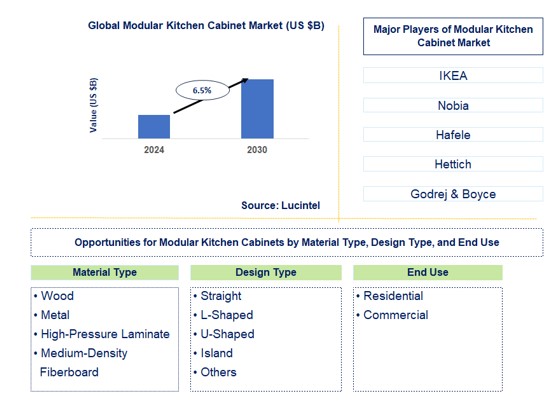
Key data points: The growth forecast = 6.5% annually for the next 6 years. Scroll below to get more insights. This market report covers trends, opportunities, and forecasts in the global modular kitchen cabinet market to 2030 by material type (wood, metal, high-pressure laminate, and medium-density fiberboard), design type (straight, I-shaped, U-shaped, island, and others), end use (residential and commercial), and region (North America, Europe, Asia Pacific, and the Rest of the World)
We'll send your sample report shortly.
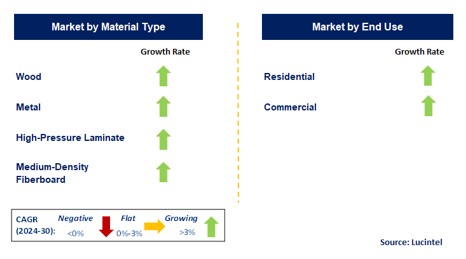
• Lucintel forecasts that, within the material type category, medium-density fiberboard is expected to witness the highest growth over the forecast period.
• Within the end use category, residential will remain the larger segment.
• In terms of regions, APAC will remain the largest region over the forecast period. Gain valuable insights for your business decisions with our comprehensive 150+ page report
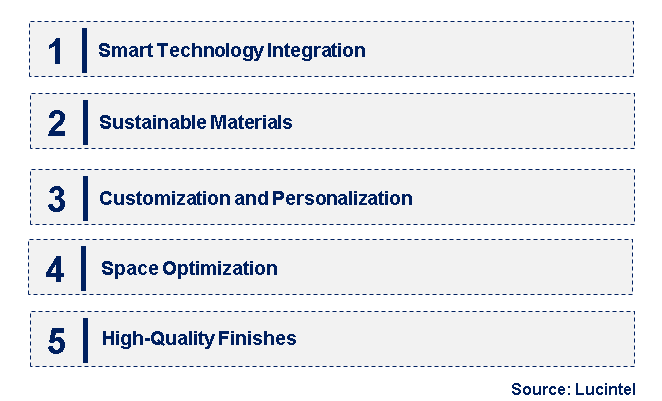
• Smart Technology Integration: Modular kitchen cabinets now feature smart technology, including conventional IoT features, automated lighting, and sensors for enhanced convenience and energy savings. These technologies improve the overall functioning of the kitchen for modern users who appreciate technological advancements.
• Sustainable Materials: There is more emphasis on the types of materials used in making modular kitchen cabinets, which are eco-friendly. Consumers are increasingly concerned about the changing environment, necessitating manufacturers to use recycled wood, bamboo, and other low-VOC finishes. This trend is not only environmentally friendly but also aligns with the demands of an eco-conscious society.
• Customization and Personalization: The need for customization is becoming crucial and appealing, especially to customers who want their modular kitchen cabinets to be stylish and functional. This includes partitioning and rearranging furnishings, customizing color and finish, and assembling pieces according to individual needs and wants. Such adaptability enhances user satisfaction and caters to the rising demand for practical yet exceptional household solutions.
• Space Optimization: As people live in smaller spaces, there is increasing emphasis on space optimization in the design of modular kitchens. This trend includes the creation of multi-functional cabinets, pull-out storage systems, and compact designs that utilize available space effectively. Space-saving designs are crucial for maximizing small kitchen areas.
• High-Quality Finishes: The trend toward high-quality finishes is expected to grow, as customers seek nothing less than artfully crafted cabinets. Materials such as high-gloss laminate, veneer wood, and metal trim are popular. High-quality finishes enhance the aesthetics of modular kitchen cabinets and prolong their lifespan, providing a high-end touch to the kitchen. The possibilities within the modular kitchen cabinet market are rapidly evolving due to new emerging trends. A blend of smart technology and customization is making modular kitchens more functional and appealing to consumers seeking ease and individuality. The market for U-shaped kitchens is also growing as more clients demand sustainability and eco-friendly materials.
• Integration of Smart Technology: Recent developments include the integration of smart technology into modular kitchen cabinets, encompassing embedded sensors and lights as well as connections to home automation systems. These enhancements align with the demand for functionality and modernity in kitchen spaces.
• Adoption of Eco-Friendly Materials: Many manufacturers are seeking sustainable ways to produce kitchen cabinets, especially modular kitchen cabinets. They are increasingly using greener materials, such as recycled timber or bamboo. This shift not only protects the environment but also meets customer expectations for green and sustainable products.
• User-Friendly Design Features: There is an increasing number of design features in kitchen cabinets that enable customers to choose units based on their needs. This includes modifications to all-in-one designs, options for standard styles, and adding more shelves than standard structures allow. This trend caters to the market for sophisticated and flexible kitchen designs.
• Improvement in Production Processes: Advances in manufacturing processes are key to growth in the modular kitchen cabinet industry. Technologies like CNC machining and 3D printing enable the creation of more intricate and unique designs. These technological advancements allow for the production of kitchen cabinets that are both elaborate and effective.
• Heightened Attention to Space Utilization: Shrinking housing spaces result in greater emphasis on space efficiency in modular kitchen design. There is more diversity in cabinet designs, with new construction techniques enhancing effectiveness in limited spaces. This development is particularly relevant for consumers with small living areas in urban settings. Market analysis of the modular kitchen cabinet sector reveals a contemporary period marked by development and innovation. Technological advancements, such as smart integration and customizable design features, are improving performance and usability. High demand for green materials and practices reflects a broader shift toward sustainable products. Furthermore, trends in emerging markets and customization present new opportunities for market players. The transformation toward more intricate, individual-oriented, and environmentally friendly kitchen solutions is evident.
• Urban Residential Projects: Urban residential projects offer tremendous growth opportunities due to increased urbanization and smaller home sizes. There is a demand for modern modular kitchen designs that occupy minimal space, targeting city dwellers seeking effective and space-efficient solutions.
• Luxury and High-End Segments: Growth is also occurring in the luxury and high-end segments, where consumers seek premium kitchen solutions. There is a demand for gourmet functional accessories, hardware, and finishes. This is an opportunity for manufacturers of high-end modular kitchen cabinets to capture this market.
• Use of Green Materials: The growing consciousness regarding ecological concerns creates avenues for profit in the green modular kitchen cabinet market. Products that use renewable and sustainable materials, along with eco-friendly manufacturing techniques, are increasingly preferred. This trend aligns with the rising demand for greener products and offers competitive advantages in the market.
• Integration of Smart Devices: There is a growing demand for modular kitchen cabinets with smart features due to consumer interest in connectivity. This aligns with the trend of smart home appliances and increasing desires for IoT capabilities in kitchen designs.
• Offering Customization Services: Providing customization and personalization services is expected to enhance growth in the modular kitchen cabinet industry. Meeting the increasing levels of individualization among consumers will require flexibility in offering ways to customize designs and colors, thus appealing to those seeking unique kitchen aesthetics. The analysis of the modular kitchen cabinet market indicates the presence of strategic growth opportunities. This trend shows the potential for development and innovation that aligns with the movement toward personalization and multifunctional kitchen systems. The shift toward green materials reflects a commitment to environmental conservation and regulatory compliance, enhancing the image of companies as environmentally responsible.
• Technological Advancements: Technological advancements drive the modular kitchen cabinet market, with innovations in smart technology, production processes, and new materials enhancing usability and attractiveness. These improvements aim to meet the needs of modern consumers seeking efficient and versatile kitchen systems, thus pushing market growth.
• Rising Disposable Incomes: Increased disposable incomes contribute to the growth of the modular kitchen cabinet market. As consumers' incomes rise, they have greater purchasing power and are willing to invest in more expensive, customized kitchen systems. This trend fuels revenue growth as consumers are more inclined to upgrade their homes with high-quality offerings.
• Urbanization: The rise in urbanization further accelerates the demand for modular kitchen cabinets, especially in city centers. In urban areas, there is an increasing need for effective and space-saving kitchen designs, as living spaces become smaller. Designers are responding to this urban demand by streamlining convenience into limited areas. Challenges in the modular kitchen cabinet market include:
• High Production Costs: High production costs pose a challenge in the modular kitchen cabinet market. The premium treatment of components and intricate fabrication technologies can raise prices, impacting pricing strategies and profitability. Competitors must balance expenses with product quality.
• Supply Chain Disruptions: Supply chain challenges, including labor shortages, raw material shortages, and transportation issues, may affect the modular kitchen cabinet market. Such disruptions can lead to increased lead times and costs. Resolving supply chain issues is essential for market stability and meeting consumer needs.
• Compliance with Regulations: Adhering to construction regulations and industry standards presents challenges for the modular kitchen cabinet industry. Regulations concerning materials, safety, and environmental impact affect design and production processes. Providers must address these issues to ensure compliance and maintain product legality. Technological advancements, rising incomes, and environmental concerns contribute to the growth of the modular kitchen cabinet market. These factors provide a basis for market participants to exploit opportunities and tackle barriers effectively.
• IKEA
• Nobia
• Hafele
• Hettich
• Godrej & Boyce
• Home depot
• Boston Cabinets
• Wood
• Metal
• High-Pressure Laminate
• Medium-Density Fiberboard
• Straight
• L-Shaped
• U-Shaped
• Island
• Others
• Residential
• Commercial
• North America
• Europe
• Asia Pacific
• The Rest of the World
• United States: The U.S. has seen significant adoption of smart kitchen solutions. Manufacturers are integrating advanced technology into cabinet designs, creating appliances with built-in sensors and a variety of IoT-enabled devices. This strategy addresses consumer demands for convenience and energy efficiency while also focusing on health and safety by adopting sustainable materials and practices.
• China: Urbanization and rising disposable incomes are increasing the demand for modular kitchens in China. This shift involves using durable materials and innovative designs that cater to a variety of client needs, with a strong emphasis on space efficiency in many cities.
• Germany: Germany aims to create well-made furniture with a clean, sleek appearance. The country excels in merging beauty with purpose through the use of high-quality materials like wood and steel. There is also a focus on energy efficiency in kitchens, aligning with Germany’s green objectives.
• India: In India, the marketing of modular kitchens is driven by the growth of the construction industry and an expanding middle class. Manufacturers focus on selling their products to households while also innovating with new materials and textures to meet the diverse market needs.
• Japan: Japan prefers compact and smart design products suitable for small living spaces. There is increasing acceptance of technological developments like automatic cabinets and intelligent storage solutions. Japanese consumers prioritize functionality and space efficiency, creating a potential market for innovative modular systems that enhance kitchen utility.


• IKEA
• Nobia
• Hafele
• Hettich
• Godrej & Boyce
• Home depot
• Boston Cabinets Q5. Which modular kitchen cabinet market segment will be the largest in future? Answer: Lucintel forecasts that medium-density fiberboard is expected to witness the highest growth over the forecast period. Q6. In modular kitchen cabinet market, which region is expected to be the largest in next 5 years? Answer: APAC will remain the largest region over the forecast period. Q.7 Do we receive customization in this report? Answer: Yes, Lucintel provides 10% customization without any additional cost.


Choose a license that fits your team. Instant PDF delivery.
Prices exclude taxes. Instant delivery. Custom licensing available on request.
Market Report · July 16, 2026
Market Report · July 15, 2026
Market Report · July 10, 2026
Trusted partner for strategic intelligence and business growth


Receive a complimentary market analysis tailored to your industry. Our analysts will identify key growth opportunities and competitive dynamics specific to your business.

Market size, growth rate, and key trend analysis for your specific sector.

Top competitor positioning and market share analysis.

Strategic recommendations backed by data-driven insights.
Get curated market intelligence and competitive moves straight to your inbox.
By subscribing, you agree to receive our monthly insights. Unsubscribe anytime.
Receive a complimentary market analysis tailored to your industry. Our analysts will identify key growth opportunities and competitive dynamics specific to your business.
Market size, growth rate, and key trend analysis for your specific sector.
Top competitor positioning and market share analysis.
Strategic recommendations backed by data-driven insights.
Get curated market intelligence, emerging trends, and competitive moves straight to your inbox each month.
By subscribing, you agree to receive our monthly insights. Unsubscribe anytime.
We'll send your sample report shortly.