
Market Report · July 24, 2026

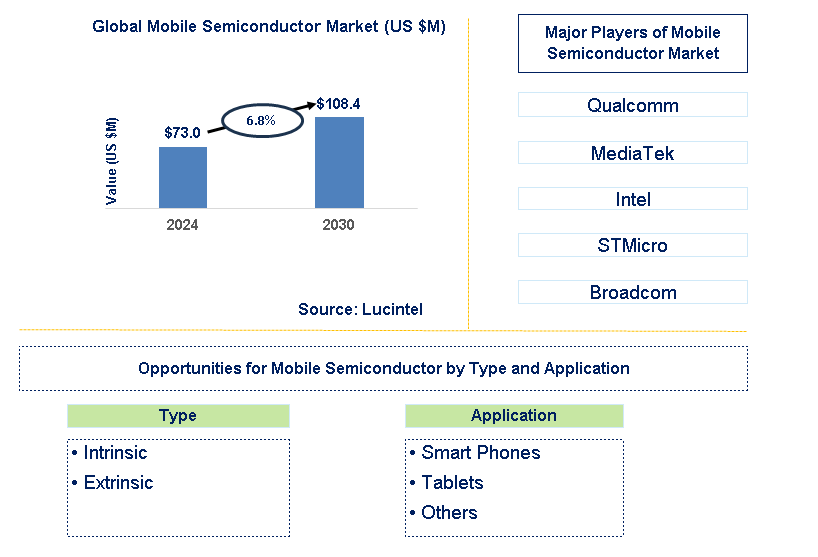
Key data points: The market size in 2030 = $108.4 million, growth forecast = 6.8% annually for the next 6 years. Scroll below to get more insights. This market report covers trends, opportunities, and forecastss in the global mobile semiconductor market to 2030 by type (intrinsic and extrinsic), application (smart phones, tablets, and others), and region (North America, Europe, Asia Pacific, and the Rest of the World)
We'll send your sample report shortly.
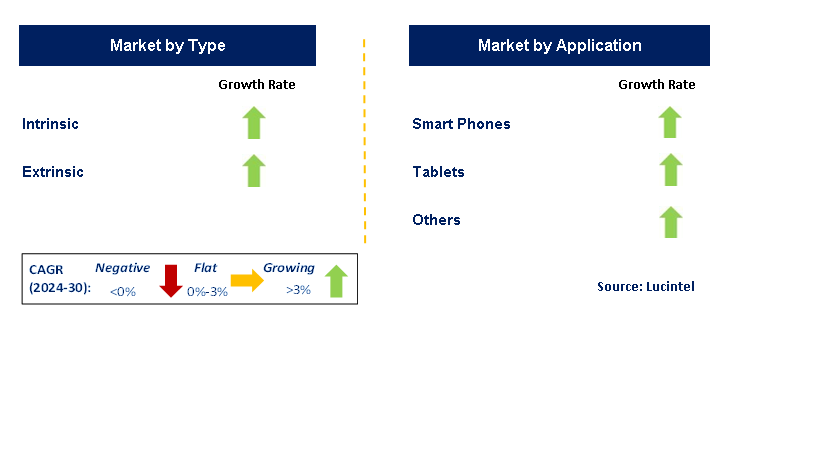
• Lucintel forecasts that, within the type category, extrinsic is expected to witness the highest growth over the forecast period.
• Within the application category, tablet is expected to witness the higher growth.
• In terms of regions, APAC is expected to witness highest growth over the forecast period due to the presence of major semiconductor manufacturing and electronics production hubs in the region. Gain valuable insights for your business decisions with our comprehensive 150+ page report.
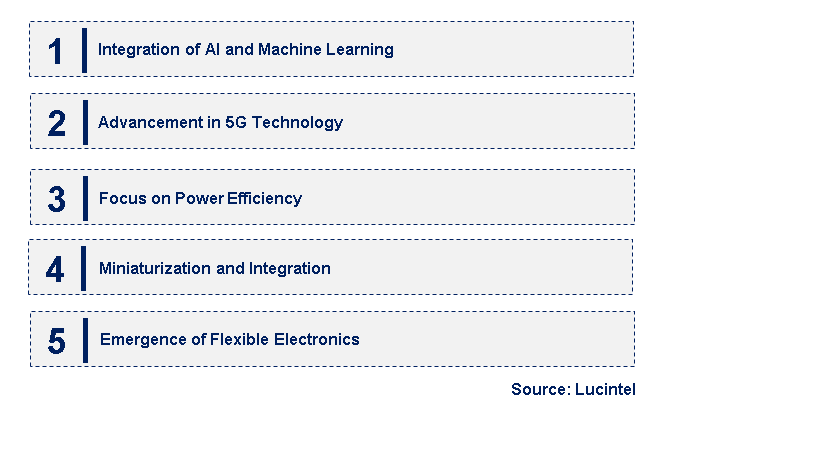
• Integration of AI and Machine Learning: Artificial intelligence and machine learning strategies are among the current trends gaining traction in the incorporation of chips into mobile semiconductors. This allows mobile devices to be utilized more effectively through intelligent processing and advanced functionalities, including accurate camera systems and instant translation. Consumer-based chips within mobile devices now enhance the user experience by managing resources more efficiently.
• Advancement in 5G Technology: Advancements in 5G technology have increased the complexity of mobile semiconductor architecture. These improvements enable faster data transfer rates, reduced latency, and better interconnectivity in mobile devices. This shift also results in the integration of high-end processors capable of handling larger data requirements, ensuring relevance in the emerging telecommunications sectors.
• Focus on Power Efficiency: There are growing trends aimed at enhancing power efficiency in mobile semiconductors. As mobile phones and other devices become more sophisticated, designers need power-efficient chips to increase battery life. Advances in power management and low-power design are critical for improving performance and ergonomics in mobile devices.
• Miniaturization and Integration: Miniaturization and integration are prominent trends in the mobile semiconductor market. As devices become smaller and more compact, there is an emphasis on incorporating various functionalities into a single chip to save space and enhance efficiency. This also encourages the production of more compact and functionally enriched mobile gadgets.
• Emergence of Flexible Electronics: The emergence of flexible electronics is driving significant changes in mobile semiconductor design. Wearable devices and foldable smartphones are possible due to flexible and stretchable semiconductors. This broadens the scope of mobile device designs and functions, creating new market opportunities. Within the mobile semiconductor market, emerging themes include the rise of AI, 5G, and power efficiency. Emerging technologies, such as miniaturization, integration, and further development of flexible electronics, are affecting the market’s performance and preparing the ground for new geographical and technological developments.
• Development of 5G Chipsets: At the forefront of recent developments is the research and creation of new 5G chipsets. These chipsets accommodate higher data rates and enhanced connection stability, improving mobile communication quality. The growing adoption of mobile devices equipped with 5G functionality is driving the demand for high-performance systems-on-chip that support larger data volumes.
• Advancements in AI-Integrated Processors: Among the significant developments is the integration of artificial intelligence into mobile processors. These processors enable AI-driven device applications, such as image processing and voice recognition, improving the user experience. This progression fosters innovation in mobile semiconductor architecture.
• Introduction of Energy-Efficient Semiconductors: The launch of energy-efficient semiconductors addresses the demand for longer battery life in mobile devices. New technologies in power efficiency design and power management are minimizing energy consumption and heat output, increasing the effectiveness and usability of mobile devices.
• Development of High-Performance Materials: Recent progress in high-performance semiconductor materials aims to improve mobile chip performance. Materials like gallium nitride (GaN) and silicon carbide (SiC) enable lower thermal resistance and higher efficiency, leading to the creation of more efficient and reliable mobile devices.
• Expansion of Semiconductor Manufacturing Capacity: The expansion of semiconductor manufacturing capacity aligns with the growing demand for mobile chips. Investments in new fabs and technologies are providing higher production capacity and improved efficiency. This development complements the expanding mobile semiconductor market and meets the demand for enhanced mobile devices. Within the mobile semiconductor market, recent developments—such as 5G chipsets, AI-integrated processors, and low-power consuming chips—are fueling innovation and enhancing mobile device performance. The emergence of new high-performance materials and increased production capacities are driving the market's growth and satisfying future semiconductor technology needs.
• Growth in 5G Infrastructure: The enhancement of 5G infrastructure presents substantial opportunities for mobile semiconductors. The demand for next-generation chipsets, including 5G and related technologies, is driving market development. This is an opportunity for companies to manufacture high-performance 5G devices and infrastructure through effective chip design.
• Advancements in Wearable Technology: As wearable technology, including smart and fitness bands, continues to grow, the demand for mobile semiconductors is increasing. Semiconductors for wearables must provide small form factors, consume less power, and offer enhanced features. This opportunity promotes improvements in chip design and material technology for wearable devices.
• Expansion of IoT Devices: The rise of IoT devices is fueling demand for mobile semiconductors that enable interconnectivity and data processing. Efficient data management and connectivity are integral to IoT devices, so their semiconductors must be highly efficient and dependable. This opportunity is driving the development of chips tailored for various IoT products.
• Growth in Augmented Reality (AR) and Virtual Reality (VR): The expansion of augmented reality and virtual reality technologies is increasing demand for mobile semiconductors with higher graphics and processing capabilities. AR and VR systems require advanced computing hardware to manage data and graphics-intensive tasks. This opportunity has spurred advancements in electronics technologies powering mobile AR and VR applications.
• Increased Demand for Energy-Efficient Solutions: The growing demand for energy-efficient solutions presents a significant growth opportunity in the mobile semiconductor market. There is a global push to create semiconductors that run on lower power and extend battery life. This demand is driving the development of low-power, heat-efficient, and energy-efficient chip technologies. Opportunities for strategic growth in the mobile semiconductor market include expanding 5G infrastructure, enhancing wearable devices and IoT applications, and developing energy-efficient solutions. These opportunities are shaping the future of the mobile semiconductor market and accelerating its expansion.
• Technological Advancements: Innovations in technologies like 5G, AI, and new materials are key contributors to the mobile semiconductor market. These advancements have promoted market growth and improved mobile device performance. New generations of semiconductor solutions are in high demand to meet the needs of evolving technologies.
• Increasing Demand for Mobile Devices: The growing adoption of smartphones, tablets, and wearables has boosted the mobile semiconductor market. As users seek more advanced features and diverse functionality, the demand for complex semiconductor solutions continues to grow, driving innovation and market expansion.
• Focus on Power Efficiency: The emergence of energy-saving semiconductors is a response to the growing demand for power efficiency. There is a need for chips that enhance battery life and reduce energy consumption as mobile devices become more sophisticated. This focus on power efficiency influences semiconductor design and manufacturing processes.
• Expansion of 5G Networks: The rollout of 5G networks is a major driver of the mobile semiconductor market. The development and implementation of 5G technology require advanced chipsets and connectivity features. Companies are seeking innovative semiconductor solutions to meet the heavy data requirements of expanding 5G networks.
• Investment in R&D: Investment in research and development is crucial for fostering innovation in the mobile semiconductor market. Companies spend on R&D to develop new technologies, enhance chip performance, and reduce costs. This investment is vital for maintaining competitiveness in the market. Challenges in the mobile semiconductor market include:
• High Production Costs: Production costs in the mobile semiconductor market are high due to the complex processes involved in manufacturing semiconductors and the advanced materials required. These costs may limit market entry for some companies and impact profit margins.
• Regulatory and Trade Issues: Regulatory and trade challenges can create barriers for the mobile semiconductor market. Each country has its own regulations regarding semiconductor materials, safety standards, and environmental impact. Additionally, tariff barriers and economic obstacles can affect global trade dynamics and market strategies.
• Supply Chain Disruptions: Disruptions in the supply chain, caused by political conflicts or natural disasters, can affect the availability of semiconductor materials and components. Such disruptions can lead to longer lead times and increased costs, which can hinder the mobile semiconductor industry’s performance and reliability. The mobile semiconductor market is experiencing growth as multipurpose system-on-chips become more compact, energy-efficient, and capable of supporting technologies like 5G. However, challenges such as high production costs, regulatory issues, and supply chain disruptions must be addressed to fully capitalize on market opportunities.
• Qualcomm
• MediaTek
• Intel
• STMicro
• Broadcom
• Samsung
• TI
• RFMD
• Skyworks
• Renasas
• Intrinsic
• Extrinsic
• Smart Phones
• Tablets
• Others
• In terms of regions, North America
• In terms of regions, Europe
• Asia Pacific
• The Rest of the World
• United States: In the United States, recent changes in the mobile semiconductor market include new sophisticated 5G chipsets and AI-integrated processors. Companies are focused on enhancing mobile performance with high-end semiconductor designs that support faster data speeds and smarter devices. Power-switching technology also offers cutting-edge configurations, improving size and energy efficiency.
• China: China is achieving remarkable success in the mobile semiconductor industry, focusing on enhancing its technological and production capabilities. Chinese companies are investing in advanced 5G chipsets and AI-based processors. The goal is to reduce reliance on foreign technology by increasing local R&D and manufacturing, improving China’s standing in the international market.
• Germany: Germany is making significant strides in mobile semiconductor manufacturing, particularly in energy-efficient, high-performance chip solutions. Recent research highlights advancements in IoT fusion technology with semiconductors. German businesses are focusing on environmentally friendly development processes and chip solutions for trends such as self-driving vehicles and factory automation.
• India: In India, the mobile semiconductor market is growing due to increasing local demand and the establishment of advanced semiconductor facilities. Indian manufacturers are focusing on producing affordable, efficient chips for smartphones, while also recognizing competition from Chinese OEMs. India is forming alliances and joint ventures to develop semiconductor capabilities and attract international investors.
• Japan: Japan is advancing in mobile semiconductor technology, with new fast and highly efficient chips. Developments include dielectric and semiconductor materials, as well as mobile processors integrated with 5G and edge computing. Japanese companies are working on improving the reliability and efficiency of mobile chips for consumer electronics and telecommunications.


• Qualcomm
• MediaTek
• Intel
• STMicro
• Broadcom
• Samsung
• TI
• RFMD
• Skyworks
• Renasas Q6. Which mobile semiconductor market segment will be the largest in future? Answer: Lucintel forecasts that extrinsic is expected to witness the highest growth over the forecast period. Q7. In mobile semiconductor market, which region is expected to be the largest in next 5 years? Answer: APAC is expected to witness highest growth over the forecast period due to the presence of major semiconductor manufacturing and electronics production hubs in the region. Q.8 Do we receive customization in this report? Answer: Yes, Lucintel provides 10% customization without any additional cost.


Choose a license that fits your team. Instant PDF delivery.
Prices exclude taxes. Instant delivery. Custom licensing available on request.
Market Report · July 24, 2026
Market Report · July 20, 2026
Market Report · July 20, 2026
Trusted partner for strategic intelligence and business growth


Receive a complimentary market analysis tailored to your industry. Our analysts will identify key growth opportunities and competitive dynamics specific to your business.

Market size, growth rate, and key trend analysis for your specific sector.

Top competitor positioning and market share analysis.

Strategic recommendations backed by data-driven insights.
Get curated market intelligence and competitive moves straight to your inbox.
By subscribing, you agree to receive our monthly insights. Unsubscribe anytime.
Receive a complimentary market analysis tailored to your industry. Our analysts will identify key growth opportunities and competitive dynamics specific to your business.
Market size, growth rate, and key trend analysis for your specific sector.
Top competitor positioning and market share analysis.
Strategic recommendations backed by data-driven insights.
Get curated market intelligence, emerging trends, and competitive moves straight to your inbox each month.
By subscribing, you agree to receive our monthly insights. Unsubscribe anytime.
We'll send your sample report shortly.