
Market Report · July 22, 2026

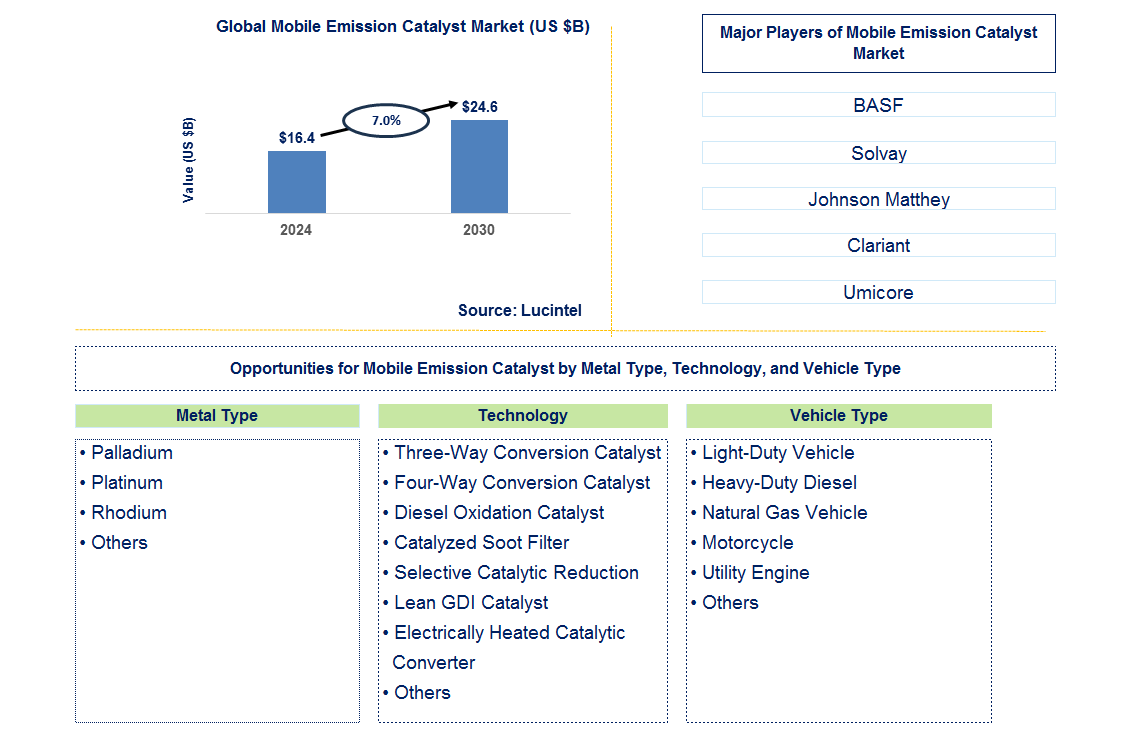
Key data points: The market size in 2030 = $24.6 billion, growth forecast = 7.0% annually for the next 6 years. Scroll below to get more insights. This market report covers trends, opportunities, and forecasts in the global mobile emission catalyst market to 2030 by metal type (palladium, platinum, rhodium, and others), technology (three-way conversion catalyst, four-way conversion catalyst, diesel oxidation catalyst, catalyzed soot filter, selective catalytic reduction, lean GDI catalyst, electrically heated catalytic converter, and others), vehicle type (light-duty vehicle, heavy-duty diesel, natural gas vehicle, motorcycle, utility engine, and others), and region (North America, Europe, Asia Pacific, and the Rest of the World)
We'll send your sample report shortly.
• United States: Recent regulatory changes aimed at reducing vehicle emissions have spurred innovations in catalyst formulations. Companies are focusing on developing more efficient catalysts that require lower quantities of precious metals, thereby reducing costs while meeting stringent emission standards set by the Environmental Protection Agency (EPA).
• Chinese: As part of its commitment to combat air pollution, China is investing heavily in research to enhance mobile emission catalysts. Innovations include the development of novel catalyst materials and improved manufacturing processes, allowing for greater efficiency and durability in high-emission environments.
• Germany: Home to many leading automotive manufacturers, Germany is advancing catalyst technology through collaboration between industry and research institutions. Recent developments include the introduction of advanced washcoat materials that enhance catalytic performance and the integration of smart sensors for real-time emissions monitoring in vehicles.
• Indian: India is rapidly adopting stricter emission norms under the Bharat Stage VI (BS-VI) regulations. This has led to an increased demand for high-performance catalysts, prompting local manufacturers to innovate and collaborate with international firms to enhance their product offerings and meet regulatory standards.
• Japan: Japan is focusing on developing advanced catalytic converters that improve fuel efficiency while reducing harmful emissions. Innovations include hybrid catalysts that combine traditional precious metals with alternative materials to enhance performance and sustainability in line with the government’s green initiatives.
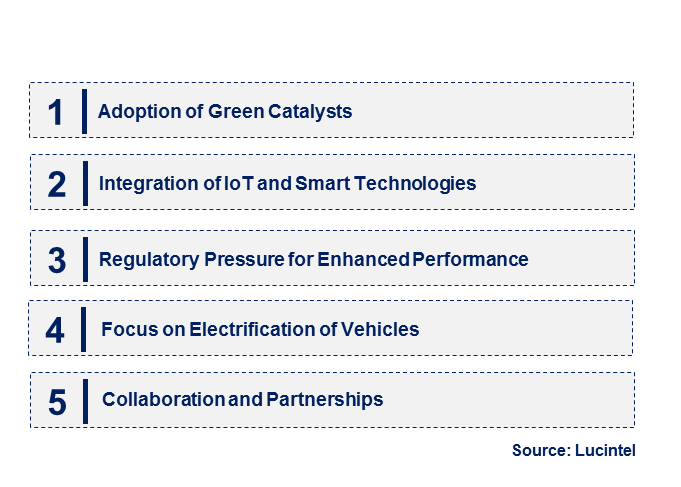
• Adoption of Green Catalysts: There is a growing demand for eco-friendly catalyst materials that minimize environmental impact. Manufacturers are exploring alternatives to traditional precious metals, such as iron and manganese, which offer comparable efficiency while being more sustainable and cost-effective.
• Integration of IoT and Smart Technologies: The incorporation of Internet of Things (IoT) technology allows for real-time monitoring of emissions, enhancing the efficiency of mobile emission systems. This trend not only improves compliance with regulations but also enables proactive maintenance, reducing downtime and costs.
• Regulatory Pressure for Enhanced Performance: Stricter emission regulations worldwide are pushing manufacturers to innovate continually. This trend drives research into higher-efficiency catalysts capable of achieving lower emissions without compromising vehicle performance, thereby influencing design and manufacturing processes.
• Focus on Electrification of Vehicles: As electric vehicles (EVs) gain traction, there is an increased focus on developing catalysts tailored for hybrid and EV applications. These advancements support the transition to greener technologies while addressing the challenges posed by the integration of traditional combustion systems.
• Collaboration and Partnerships: Collaborative efforts between automotive manufacturers, catalyst producers, and research institutions are becoming more common. These partnerships facilitate knowledge sharing, accelerate the development of innovative solutions, and enhance the overall effectiveness of mobile emission catalysts. In conclusion, these emerging trends are reshaping the mobile emission catalyst market, driving innovation and sustainability in response to regulatory pressures and environmental concerns. As manufacturers adapt to these trends, the market is poised for significant transformation, enhancing both vehicle performance and compliance.
• Advanced Catalyst Formulations: Recent innovations in catalyst formulations have resulted in improved performance metrics, including higher conversion rates and greater durability. This development helps manufacturers meet increasingly strict emission regulations while maintaining cost efficiency in production.
• Innovations in Manufacturing Processes: The implementation of advanced manufacturing technologies such as 3D printing and automation has significantly enhanced production efficiency. These methods allow for greater design flexibility, reduced waste, and faster turnaround times, contributing to overall cost savings.
• Increased Investment in R&D: Significant investments in research and development by key players have led to breakthroughs in catalyst technology. Focus areas include enhancing the catalytic efficiency of existing materials and developing novel catalysts that utilize abundant and less expensive materials.
• Collaboration for Enhanced Solutions: Industry partnerships are emerging to address the challenges of mobile emissions. Collaborations between automotive companies and catalyst manufacturers facilitate knowledge sharing and innovation, resulting in more effective solutions tailored to meet regulatory demands.
• Shift towards Recycling of Catalyst Materials: The growing trend of recycling precious metals from spent catalysts is gaining traction. This development not only addresses resource scarcity but also reduces the environmental impact associated with mining new materials, aligning with sustainability goals. In summary, these recent developments are driving significant changes in the mobile emission catalyst market, pushing manufacturers to innovate and adapt to evolving regulatory standards while enhancing overall efficiency and sustainability.
• Passenger Vehicle Applications: As consumer awareness of environmental issues grows, the demand for low-emission passenger vehicles is increasing. Manufacturers are focusing on developing catalysts that enhance fuel efficiency and reduce emissions, aligning with evolving consumer preferences and regulatory standards.
• Commercial Vehicle Solutions: With stricter regulations governing commercial fleets, there is a significant opportunity for the development of high-performance catalysts tailored for heavy-duty vehicles. Innovations in this area can lead to improved compliance and operational efficiency for fleet operators.
• Aftermarket Solutions: The aftermarket segment for mobile emission catalysts is expanding as vehicle owners seek to enhance performance and comply with emissions standards. This presents an opportunity for manufacturers to develop tailored products and services that address specific consumer needs.
• Emerging Markets: Countries with developing automotive industries, particularly in Asia and Africa, offer significant growth potential for mobile emission catalysts. As these markets adopt stricter emission standards, manufacturers can enter with innovative solutions that meet local regulatory requirements.
• Hybrid and Electric Vehicle Applications: The rise of hybrid and electric vehicles creates opportunities for the development of specialized catalysts designed for these applications. Innovations in this space can help manufacturers leverage the shift towards cleaner transportation technologies. In conclusion, these strategic growth opportunities across key applications highlight the dynamic nature of the mobile emission catalyst market. As stakeholders capitalize on these opportunities, they will contribute to a more sustainable and efficient automotive industry.
• Stringent Regulatory Standards: Increasingly strict emissions regulations worldwide drive the demand for high-performance catalysts. Compliance with these regulations necessitates continual innovation in catalyst technologies, prompting manufacturers to invest in research and development.
• Rising Environmental Concerns: Growing awareness of air quality issues and environmental sustainability pushes both consumers and manufacturers towards greener technologies. This trend encourages the adoption of mobile emission catalysts that reduce harmful emissions from vehicles.
• Advancements in Catalyst Technology: Continuous improvements in catalyst formulations and manufacturing processes enhance the performance and efficiency of mobile emission systems. These technological advancements drive market growth as manufacturers seek to improve their product offerings.
• Automotive Industry Transition: The shift towards electrification and hybridization in the automotive sector creates new demand for specialized catalysts. Manufacturers are innovating to develop solutions tailored to these evolving vehicle technologies.
• Increased Investment in R&D: Ongoing investments in research and development within the automotive and catalyst industries foster innovation, leading to more effective and efficient mobile emission catalysts that meet regulatory requirements. Challenges in the mobile emission catalyst market are:
• Cost of Precious Metals: The volatility in the prices of precious metals used in catalysts poses a significant challenge for manufacturers. Fluctuating costs can impact production budgets and profitability, prompting a search for alternative materials.
• Technological Complexity: The advanced technologies required for developing high-performance catalysts can be complex and expensive to implement. Manufacturers must navigate these challenges to remain competitive while ensuring product efficacy.
• Supply Chain Disruptions: Global supply chain issues, exacerbated by geopolitical tensions and the COVID-19 pandemic, can affect the availability of raw materials needed for catalyst production. Such disruptions can hinder production timelines and increase costs.
• Changing Regulatory Landscapes: Frequent changes in emission regulations across different countries can create uncertainty for manufacturers. Adapting to these evolving standards requires flexibility and ongoing investment in compliance technologies.
• Market Competition: The mobile emission catalyst market is highly competitive, with numerous players vying for market share. This competition can lead to price pressures, necessitating differentiation through innovation and product quality. In conclusion, the interplay of these drivers and challenges shapes the mobile emission catalyst market's trajectory. Stakeholders must strategically address these factors to seize opportunities and mitigate risks, ultimately contributing to a more sustainable automotive industry.
• BASF
• Solvay
• Johnson Matthey
• Clariant
• Umicore
• Cataler
• Corning
• Heraeus Holding
• E. CHEMCAT
• Zeolyst International
• Palladium
• Platinum
• Rhodium
• Others
• Three-Way Conversion Catalyst
• Four-Way Conversion Catalyst
• Diesel Oxidation Catalyst
• Catalyzed Soot Filter
• Selective Catalytic Reduction
• Lean GDI Catalyst
• Electrically Heated Catalytic Converter
• Others
• Light-Duty Vehicle
• Heavy-Duty Diesel
• Natural Gas Vehicle
• Motorcycle
• Utility Engine
• Others
• North America
• Europe
• Asia Pacific
• The Rest of the World
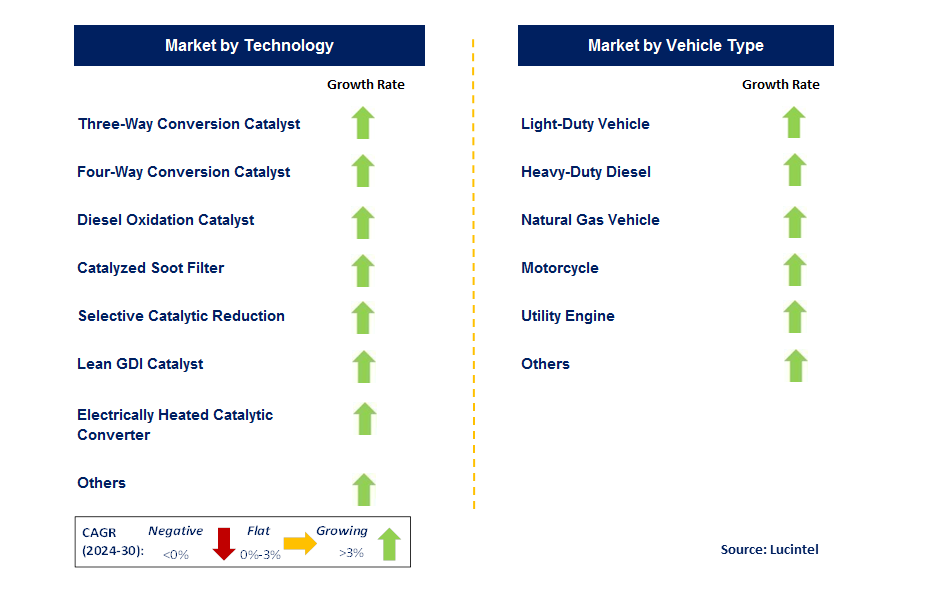
• Lucintel forecasts that, within the technology category, selective catalytic reduction is expected to witness the highest growth over the forecast period due to growing usage across several industries and its affordability.
• Within the vehicle type category, light-duty vehicle is expected to witness the highest growth due to growing demand in many areas for light-duty vehicles.
• In terms of regions, North America will remain the largest region over the forecast period due to heightened consciousness of the harmful effects of air pollution on human health.


• BASF
• Solvay
• Johnson Matthey
• Clariant
• Umicore
• Cataler
• Corning
• Heraeus Holding
• E. CHEMCAT
• Zeolyst International Q6. Which mobile emission catalyst market segment will be the largest in future? Answer: Lucintel forecasts that selective catalytic reduction is expected to witness the highest growth over the forecast period due to growing usage across several industries and its affordability. Q7. In mobile emission catalyst market, which region is expected to be the largest in next 5 years? Answer: North America will remain the largest region over the forecast period due to heightened consciousness of the harmful effects of air pollution on human health. Q.8 Do we receive customization in this report? Answer: Yes, Lucintel provides 10% customization without any additional cost.


Choose a license that fits your team. Instant PDF delivery.
Prices exclude taxes. Instant delivery. Custom licensing available on request.
Market Report · July 22, 2026
Market Report · July 22, 2026
Market Report · July 22, 2026
Trusted partner for strategic intelligence and business growth


Receive a complimentary market analysis tailored to your industry. Our analysts will identify key growth opportunities and competitive dynamics specific to your business.

Market size, growth rate, and key trend analysis for your specific sector.

Top competitor positioning and market share analysis.

Strategic recommendations backed by data-driven insights.
Get curated market intelligence and competitive moves straight to your inbox.
By subscribing, you agree to receive our monthly insights. Unsubscribe anytime.
Receive a complimentary market analysis tailored to your industry. Our analysts will identify key growth opportunities and competitive dynamics specific to your business.
Market size, growth rate, and key trend analysis for your specific sector.
Top competitor positioning and market share analysis.
Strategic recommendations backed by data-driven insights.
Get curated market intelligence, emerging trends, and competitive moves straight to your inbox each month.
By subscribing, you agree to receive our monthly insights. Unsubscribe anytime.
We'll send your sample report shortly.