
Market Report · July 24, 2026

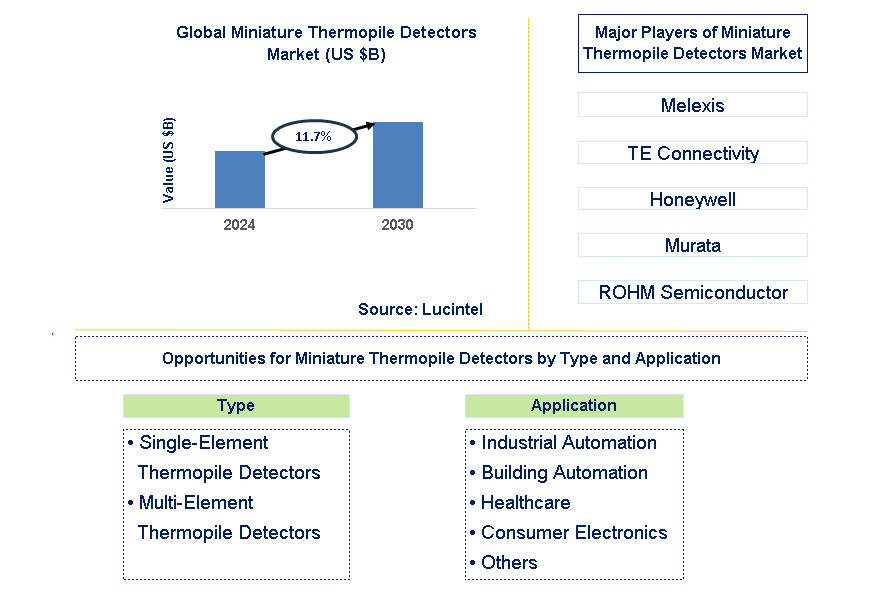
Key data points: The growth forecast = 11.7% annually for the next 6 years. Scroll below to get more insights. This market report covers trends, opportunities, and forecasts in the global miniature thermopile detectors market to 2030 by type (single-element thermopile detectors and multi-element thermopile detectors), application (industrial automation, building automation, healthcare, consumer electronics, and others), and region (North America, Europe, Asia Pacific, and the Rest of the World)
We'll send your sample report shortly.
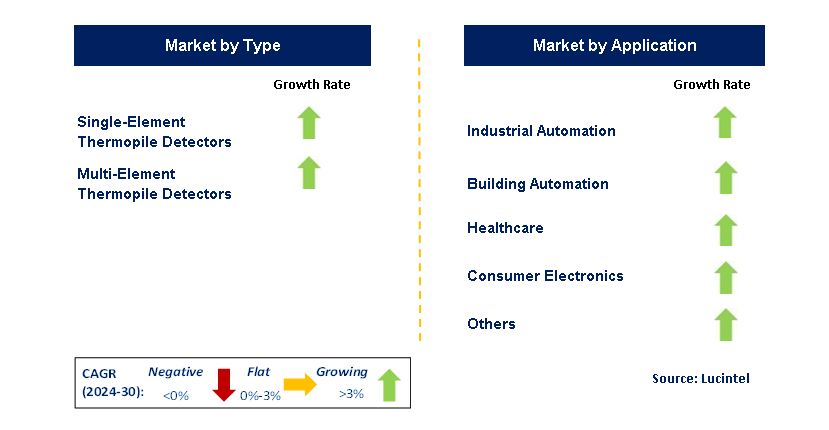
• Lucintel forecasts that, within the type category, single-element thermopile detectors is expected to witness a higher growth over the forecast period due to low cost, smaller size, and easier to manufacture.
• Within the application category, industrial will remain the largest segment due to growing adoption of industry 4.0 and high demand for predictive maintenance.
• In terms of regions, APAC is expected to witness the highest growth over the forecast period due to high demand for miniature thermopile detectors in the industrial automation and consumer electronics sectors in this region. Gain valuable insights for your business decisions with our comprehensive 150+ page report.
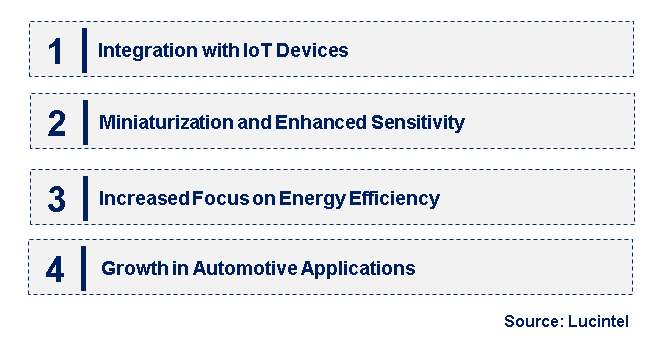
• Integration with IoT Devices: One notable trend in the miniature thermopile detectors market is their integration with Internet of Things (IoT) devices. With the rise of IoT applications in many industries, the demand for thermal sensing technologies that can easily blend with smart devices is increasing. These detectors are utilized in smart home systems, wearables, and manufacturing automation, where they provide real-time temperature monitoring and control. The incorporation of the ability to link with IoT platforms enhances thermopile detector functionalities beyond their intended use.
• Miniaturization and Enhanced Sensitivity: Continuous progress in MEMS technology has resulted in the reduction of cartridges, making thermopile detectors not only smaller but also cost-efficient and low-powered. Additionally, sensor sensitivity enhancement techniques are enabling these sensors to measure temperature more reliably in challenging conditions. This trend is especially pronounced in cases where there are space constraints, such as in electronic gadgets and portable medical instruments. The design of smaller and more efficient thermopile detectors is creating opportunities for bi-directional deployment in areas including, but not limited to, consumer electronics, automotive applications, industrial systems, and healthcare.
• Increased Focus on Energy Efficiency: Concerns regarding the miniaturization of miniature thermopile detectors relate to energy efficiency, as production houses strive to minimize power requirements while improving design performance. This trend responds to the growing prevalence of wire-free devices, such as health monitoring wearables and remote monitoring sensors, where energy efficiency is essential for enhancing battery life. Materials and design improvements are addressing the specificity of low-power thermopile detectors that maintain accuracy and sensitivity levels. Such energy efficiency makes these detectors better suited for low-power applications.
• Growth in Automotive Applications: Global insights into the trends in the adoption of Advanced Driver Assistance Systems (ADAS) and climate control systems are making the automotive sector an attractive application area for miniature thermopile detectors. These detectors assess cabin temperature, monitor occupancy, assist in thermal imaging, and enhance ADAS performance. The movement toward self-driving cars is further opening avenues for thermopiles, as these systems require monitoring to ensure compliance with safety limits. This growth in automotive applications is anticipated to be a major driver of the miniature thermopile detectors market in the coming years. Novel developments in the miniature thermopile detectors market are reshaping forecasts by introducing new applications and promoting innovation. These include the integration with IoT devices, advances in miniaturization and sensitivity, improvements in energy efficiency, growth in automotive applications, and advancements in healthcare, which are all altering the market landscape. With the emergence of such trends, the miniature thermopile detectors market has significant growth potential, prompting manufacturers and stakeholders to seek new opportunities.
• Retention in Miniature Thermopile Detectors: One important advancement has been the integration of miniature thermopile detectors into IoT devices. This development allows for remote temperature readouts in smart home systems, motion detection systems, industrial controls, and wearable technologies. The ability of these detectors to interact with IoT networks increases their utility, as operations and management processes can be manipulated effectively. Thermopile detectors, which are ideal for device connectivity purposes, remain highly sought after due to the rapid adoption of IoT technologies.
• Advancements in MEMS Technology: Recent developments in MEMS (Microelectromechanical Systems) technology have greatly boosted the miniature thermopile detectors market. These advancements enable the production of miniaturized, low-power, and highly sensitive thermopile detectors. The dimensions of these detectors have shrunk, allowing for incorporation into more device categories, such as wearables and mobile electronics. The performance enhancement and low power consumption of MEMS detectors are driving their acceptance across various markets, enhancing geographical growth.
• Growth in Automotive Applications: The automotive industry is emerging as an important application area for miniature thermopile detectors. More detectors are being utilized in Advanced Driver Assistance Systems (ADAS), climate control devices, and other safety-oriented features. Accurate and precise temperature measurement enhances vehicle safety and comfort. The increase in electric and autonomous vehicles further intensifies the demand for advanced thermal sensing solutions, positioning the automotive industry as a key contributor to the growth of the thermopile detectors market.
• Expansion Within the Healthcare Sector: The healthcare industry is experiencing a surge in the popularity of miniature thermopile detectors, particularly for non-contact temperature measurement applications. The demand for reliable and accurate temperature screening during the COVID-19 pandemic has driven interest in these detectors. Additionally, thermopile detectors are being embedded in wearables and other medical devices that monitor temperature over time. This expansion within healthcare applications is generating significant revenue in the market, with growth predicted to continue as healthcare technology advances. The latest trends in the miniature thermopile detectors market demonstrate the adaptability of thermal sensing technology. Connectivity with IoT devices, advancements in MEMS, increased demand in automotive and healthcare sectors, and initiatives toward energy conservation are contributing to market growth. These advancements promote progress and new opportunities, making the miniature thermopile detectors market poised for further expansion in the coming years.
• Healthcare Uses: There are significant opportunities for the miniature thermopile detectors market to grow within the healthcare sector. The rising use of non-contact temperature measurement devices, such as forehead thermometers and wearable health monitors, is driving the demand for thermopile detectors. These devices provide the temperature data necessary for patient monitoring and screening. As healthcare technologies advance, thermopile sensors in medical equipment will continue to gain momentum, thereby increasing market development opportunities.
• The Automotive Industry: The automotive sector is witnessing a growing use of miniature thermopile detectors, particularly in advanced driver assistance systems (ADAS) and climate management systems. These thermal imaging devices accurately detect cabin temperature and monitor the presence of occupants, enhancing vehicle safety. The rise of electric and autonomous vehicles further necessitates sophisticated thermal sensors, making the automotive industry a key contributor to market growth.
• Consumer Electronics: Consumer electronics represent another vital application area that offers growth opportunities for the miniature thermopile detectors market. With the proliferation of smart devices, including mobile phones, tablets, and wearables, the demand for small and efficient thermal sensors is increasing. These devices are increasingly incorporating thermopile detectors to enhance temperature measurement and control, improving device functionalities and user experiences. The continuous development in consumer electronics is expected to generate greater usage of thermopile detectors, thus facilitating market growth.
• Industrial Automation: Industrial automation presents substantial market opportunities for miniature thermopile detectors. With the adoption of Industry 4.0 and the establishment of smart factories, there is a growing demand for effective thermal sensing devices. Thermopile detectors are being applied in various industrial processes to assess temperature, food safety, and operational efficiency. As automation and digitalization trends continue, the use of thermopile detectors is anticipated to rise, presenting further growth prospects for the industry. The miniature thermopile detectors market remains favorable in terms of opportunities and momentum due to the increased use of these detectors in essential systems and targeted industries. The market is expanding in healthcare, automotive, consumer electronics, industrial automation, and smart home systems. As technological advancements enhance the efficacy and versatility of thermopile detectors, prospects for market growth in the near future are promising.
• Technological Advancements: Technological development, particularly in MEMS technology, is a major driver of the miniature thermopile detectors sector. Such advancements have enabled the production of smaller, more sensitive, and low-power-consuming detectors suitable for various applications. The enhancement of existing sensors and the creation of novel materials further bolster market growth.
• Rise in Demand for Remote Temperature Measurement: The interest in the miniature thermopile detectors market is driven by the growing significance of non-contact temperature measurement devices, especially in healthcare and industry. There is an increasing need for these sensors in medical devices, process control, and consumer electronics, where non-invasive temperature readings are required. The heightened focus on health and safety following the COVID-19 pandemic has also contributed to the rising demand for thermopile detectors.
• Growth of IoT Applications: The growth of the miniature thermopile detectors market is closely tied to the increasing use of IoT (Internet of Things) applications. In smart thermostats, wearable technology, and industrial sensors, these detectors are integrated into IoT devices to facilitate temperature monitoring and control. Their connection to IoT networks enhances their functionality, driving market growth. Challenges in the miniature thermopile detectors market include:
• High Competition: A significant challenge in the miniature thermopile detectors market is the intense competition among manufacturers. The large number of dominant companies increases competitive rivalry related to pricing, quality, and new product development, making it challenging for new players and smaller companies to establish a unique proposition.
• Regulatory Constraints: Regulatory constraints concerning product quality, operational norms, and ecological factors pose challenges in the miniature thermopile detectors market. Manufacturers often face lengthy and complex procedures that require substantial investment, which can hinder the timely release of new products and overall market growth.
• Technological Limitations: Technological limitations also impede the growth of the miniature thermopile detectors market. While advancements have improved sensor capabilities, some applications still require extreme detection conditions, necessitating faster operation and enhanced sensitivity. Addressing these barriers is essential for the effective utilization of thermopile detectors in more demanding environments. The miniature thermopile detectors market is characterized by a combination of driving forces and challenges that impact its expansion. Opportunities such as technological advancements, growing demand for non-invasive temperature assessment, expansion of IoT applications, increased activity in the automotive industry, and heightened focus on energy efficiency are paving the way for market growth. However, challenges such as fierce competition, regulatory constraints, and technological limitations need to be addressed to fully realize the market's potential. As of now, the market is evolving, yet some of these factors must be tackled to leverage its potential and mitigate existing hurdles.
• Melexis
• TE Connectivity
• Honeywell
• Murata
• ROHM Semiconductor
• Sensirion
• Texas Instruments
• Single-Element Thermopile Detectors
• Multi-Element Thermopile Detectors
• Industrial Automation
• Building Automation
• Healthcare
• Consumer Electronics
• Others
• North America
• Europe
• Asia Pacific
• The Rest of the World
• United States: The miniature thermopile detectors market in the United States has shown notable improvement, particularly in the areas of smart homes and healthcare services. There is a growing trend toward purchasing non-contact temperature measuring instruments, driven by the increased adoption of smart thermostats and wearable health monitors. Furthermore, robust research and development activities are translating into advancements in MEMS technology, enabling the development of more precise and energy-efficient thermopile detectors, which are essential for accurate temperature applications.
• China: The miniature thermopile detectors market in China is experiencing vigorous growth due to the booming consumer electronics and automotive sectors. The push toward smart infrastructure and the use of electric vehicles has resulted in a rising demand for sophisticated thermal sensing systems. Efforts are underway in Chinese industries to enhance the sensitivity and miniaturization of thermopile detectors, making them suitable for a wider range of devices. The government is encouraging technological innovation and industry upgrades, contributing to market expansion in China.
• Germany: Germany's miniature thermopile detectors market is strongly aligned with industrial automation and the automotive sector. The focus on Industry 4.0 and the establishment of smart factories have increased the application of thermopile detectors for temperature measurement and control in various industries. German companies are also among the leaders in developing sensors for the integration of ADAS systems. Ongoing advancements in sensor technology, coupled with increased energy-saving policies, are driving the growth of the market in Germany.
• India: The miniature thermopile detectors market in India is experiencing growth due to rising demand in consumer electronics and healthcare equipment. Increased incentives toward digitalization and a rapidly growing middle class are leading to greater use of advanced home devices and mobile medical equipment that rely on thermopile sensors for contactless temperature measurement. Additionally, the development of the electronics industry in India, supported by government initiatives like ‘Make in India,’ is providing a favorable environment for the expansion of the miniature thermopile detectors market.
• Japan: The miniature thermopile detectors market in Japan is gaining traction, driven by the country’s leadership in technological advancement and innovation in automotive and consumer electronics. Japanese companies are focused on developing superior-quality thermopile detectors that are more sensitive and responsive. These detectors are also being integrated into applications such as automotive air conditioning systems and sophisticated home automation systems. Japan's commitment to technological innovation and design excellence positions it as a key player in the growth of the miniature thermopile detectors market.


• Melexis
• TE Connectivity
• Honeywell
• Murata
• ROHM Semiconductor
• Sensirion
• Texas Instruments Q5. Which miniature thermopile detectors market segment will be the largest in future? Answer: Lucintel forecasts that single-element thermopile detectors is expected to witness higher growth over the forecast period due to low cost, smaller size, and easier to manufacture. Q6. In miniature thermopile detectors market, which region is expected to be the largest in next 5 years? Answer: APAC is expected to witness highest growth over the forecast period due to high demand for miniature thermopile detectors in the industrial automation and consumer electronics sectors in this region. Q.7 Do we receive customization in this report? Answer: Yes, Lucintel provides 10% customization without any additional cost.


Choose a license that fits your team. Instant PDF delivery.
Prices exclude taxes. Instant delivery. Custom licensing available on request.
Market Report · July 24, 2026
Market Report · July 20, 2026
Market Report · July 20, 2026
Trusted partner for strategic intelligence and business growth


Receive a complimentary market analysis tailored to your industry. Our analysts will identify key growth opportunities and competitive dynamics specific to your business.

Market size, growth rate, and key trend analysis for your specific sector.

Top competitor positioning and market share analysis.

Strategic recommendations backed by data-driven insights.
Get curated market intelligence and competitive moves straight to your inbox.
By subscribing, you agree to receive our monthly insights. Unsubscribe anytime.
Receive a complimentary market analysis tailored to your industry. Our analysts will identify key growth opportunities and competitive dynamics specific to your business.
Market size, growth rate, and key trend analysis for your specific sector.
Top competitor positioning and market share analysis.
Strategic recommendations backed by data-driven insights.
Get curated market intelligence, emerging trends, and competitive moves straight to your inbox each month.
By subscribing, you agree to receive our monthly insights. Unsubscribe anytime.
We'll send your sample report shortly.