
Report Feature
Mini LED Display Market Trends and Forecast
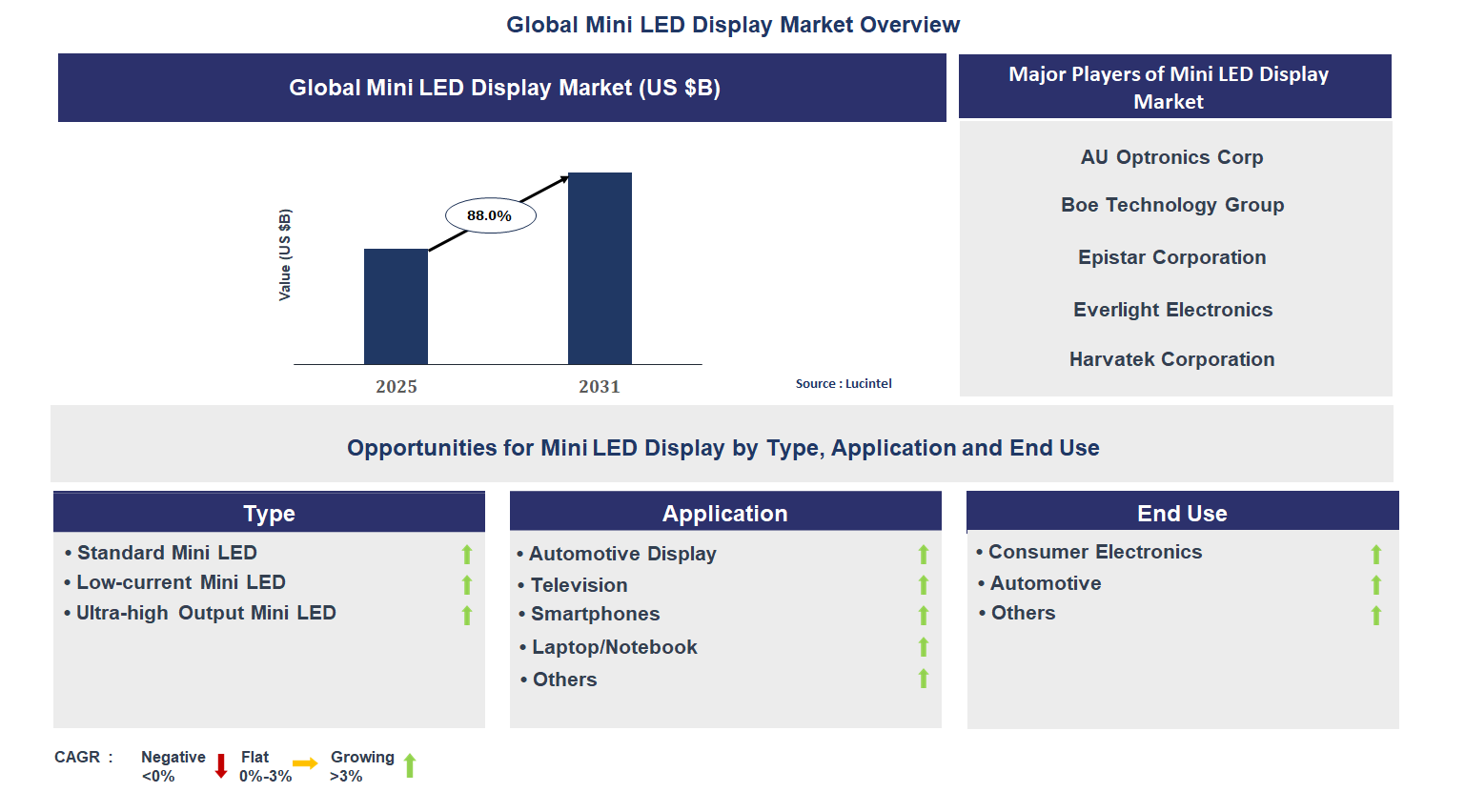
The future of the global mini LED display market looks promising with opportunities in the consumer electronics and automotive markets. The global mini LED display market is expected to grow with a CAGR of 88% from 2025 to 2031. The major drivers for this market are the increasing demand for high-resolution display technology, the rising adoption of mini LED in electronics, and the growing preference for energy-efficient display solutions.• Lucintel forecasts that, within the type category, ultra-high output mini LED is expected to witness the highest growth over the forecast period.
• Within the end use category, consumer electronics is expected to witness higher growth.
• In terms of region, APAC is expected to witness the highest growth over the forecast period. Gain valuable insights for your business decisions with our comprehensive 150+ page report. Sample figures with some insights are shown below.
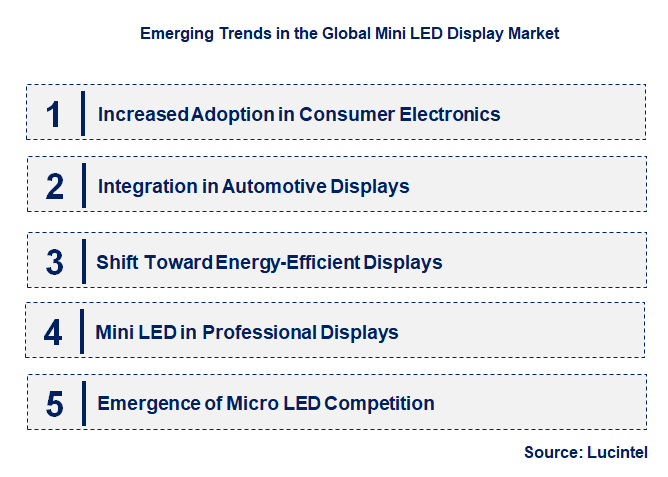
Emerging Trends in the Mini LED Display Market
The mini LED display market is evolving rapidly, with several emerging trends shaping its future. These trends reflect growing consumer demand for enhanced visual experiences, energy-efficient technologies, and innovative applications across industries. As the market diversifies, these trends are not only transforming the technology but also creating new opportunities in both consumer and professional sectors.• Increased Adoption in Consumer Electronics: Mini LEDs are increasingly being used in premium consumer electronics like TVs, laptops, and smartphones due to their superior color accuracy, high brightness, and improved contrast ratios. Companies like Apple and Samsung are leading the way, integrating mini LEDs into their high-end devices. This adoption is expected to rise as more consumers demand better display quality.
• Integration in Automotive Displays: The automotive industry is increasingly incorporating mini LED technology in dashboard displays, infotainment systems, and head-up displays. Mini LEDs offer improved visibility and energy efficiency, even in challenging lighting conditions. Their application in autonomous and electric vehicles is expected to grow, making driving safer and more enjoyable with high-quality visual feedback.
• Shift Toward Energy-Efficient Displays: As consumers and industries prioritize sustainability, mini LEDs offer a solution with lower power consumption compared to traditional LEDs and OLED displays. Energy efficiency, combined with longer lifespans, has made mini LEDs a more attractive option for both consumers and businesses aiming to reduce their carbon footprint and operational costs.
• Mini LED in Professional Displays: The use of mini LEDs in professional displays, including digital signage, corporate monitors, and healthcare devices, is growing. Their ability to deliver high-quality, consistent images is driving demand in sectors where visual precision is critical. Professional applications benefit from mini LEDs superior contrast ratios and brightness, making them ideal for demanding environments.
• Emergence of Micro LED Competition: Mini LED displays are facing competition from emerging Micro LED technology, which offers even better resolution and brightness without the need for backlighting. As the technology matures, it could potentially offer a direct challenge to mini LEDs in the high-end market, particularly in TVs and large displays. The competition is expected to accelerate innovation in both technologies. These emerging trends underscore a dynamic shift in the mini LED display market, with advancements in energy efficiency, consumer electronics, automotive displays, and professional applications. As these trends continue to evolve, they are setting the stage for mini LED technology to become a dominant player in the display industry, driving further innovation and market growth.
Recent Development in the Mini LED Display Market
The mini LED display market is marked by a series of groundbreaking developments, with companies around the world striving to push the limits of visual technology. These developments span a variety of industries, from consumer electronics to automotive, offering improved image quality, enhanced energy efficiency, and broader applications. The following outlines key recent advancements.• Introduction of Mini LED TVs by Major Brands: Several major TV manufacturers, such as Samsung, LG, and TCL, have launched mini LED TVs with improved picture quality, higher contrast ratios, and enhanced color accuracy. These displays offer superior backlighting, making them an attractive alternative to OLED TVs at a lower price point. The mini LED TV segment is expected to grow rapidly as consumers seek affordable, high-performance options.
• Technological Advances in Backlighting Systems: Technological improvements in mini LED backlighting systems, including precision dimming and local dimming zones, have dramatically enhanced picture quality. These innovations allow for greater contrast ratios and improved HDR performance, making mini LEDs highly competitive in both consumer and professional displays. Companies like TCL and Samsung have integrated these features into their products, setting new standards for the industry.
• Cost Reductions and Scalability: The cost of mini LED production has decreased significantly, making the technology more accessible to a wider range of consumers and businesses. Advancements in manufacturing processes, along with economies of scale, have enabled manufacturers to lower production costs, which is expected to drive further adoption across multiple sectors. This shift will also enable smaller companies to enter the market.
• Integration in Mobile Devices: Mini LED technology has been increasingly integrated into mobile devices, especially high-end smartphones and tablets. Apple’s iPad Pro and the latest MacBook Pro models have adopted mini LEDs, offering better screen quality and energy efficiency. The move to mini LED in portable devices is helping to elevate the user experience in terms of display brightness, color accuracy, and overall performance.
• Growing Adoption in Gaming Monitors: The gaming industry is adopting mini LED displays for their high refresh rates and superior image quality, which are crucial for gaming applications. Monitors featuring mini LED technology are capable of delivering ultra-high definition visuals with deeper blacks and vibrant colors. This has made them a preferred choice for gamers, and the demand is expected to rise as gaming technologies advance. These key developments illustrate the significant strides being made in the mini LED display market, particularly in the areas of cost reduction, consumer electronics, and professional applications. With enhanced performance and widespread adoption, mini LEDs are poised to take a more prominent role in shaping the future of display technology.
Strategic Growth Opportunities in the Mini LED Display Market
The mini LED display market offers numerous growth opportunities, driven by technological innovations and increasing demand for higher-quality displays in various applications. Industries ranging from consumer electronics to automotive and professional sectors are discovering new ways to leverage mini-LEDs, opening the door to fresh avenues for market expansion. Here are five key growth opportunities.• Consumer Electronics Expansion: Mini LEDs are poised to revolutionize consumer electronics, especially in the TV, smartphone, and laptop markets. Companies can capture new market share by offering high-quality, energy-efficient displays at more affordable prices. The growing popularity of 4K and 8K content further strengthens this opportunity, as mini LEDs provide the necessary resolution and brightness for optimal viewing experiences.
• Automotive Display Growth: Mini LED technology is finding significant applications in the automotive sector, particularly for in-car displays, dashboard screens, and head-up displays. As vehicles become smarter and more connected, the demand for high-resolution, durable, and energy-efficient displays will drive growth in mini-LEDs. The shift toward electric and autonomous vehicles further increases demand for advanced displays.
• Professional and Commercial Displays: The adoption of mini LEDs in commercial spaces, such as digital signage, conference rooms, and healthcare facilities, presents a growth opportunity. These applications require high-quality, large-format displays with precise color accuracy and high brightness, which mini LEDs provide. Their superior image quality and energy efficiency make them ideal for environments where visual precision is paramount.
• Gaming and Entertainment: The gaming industry is a growing market for mini LED displays, especially in gaming monitors and TVs. With gamers seeking higher refresh rates, improved response times, and richer visuals, mini LEDs meet these needs with better performance than traditional LEDs. As gaming technology continues to evolve, the demand for mini LED displays in gaming will continue to rise.
• Healthcare and Medical Applications: Mini LEDs present a promising growth opportunity in the healthcare sector, particularly for medical imaging, diagnostic displays, and surgical monitors. These displays offer high brightness, color accuracy, and consistency, making them ideal for critical environments where visual precision is essential. The healthcare sectors increasing demand for advanced technology and better imaging systems will fuel growth in this application. These strategic growth opportunities highlight the vast potential for mini LED displays across various industries, from consumer electronics to healthcare. As technology advances and adoption increases, mini LEDs will continue to drive innovation, opening new avenues for manufacturers and creating valuable growth opportunities in key markets.
Mini LED Display Market Driver and Challenges
The mini LED display market is influenced by several drivers and challenges, ranging from technological advancements to market demands and regulatory factors. These elements impact the growth potential and future prospects of the industry. Understanding these drivers and challenges helps stakeholders navigate the dynamic landscape of the mini LED market. The factors responsible for driving the mini led display market include: 1. Advances in Display Technology: Continuous improvements in mini LED technology, such as better color accuracy, contrast, and brightness, are driving market growth. This enhanced performance makes mini LEDs an attractive option for a wide range of applications, including consumer electronics, automotive, and industrial displays. 2. Increasing Demand for Energy-Efficient Solutions: The shift towards energy-efficient displays is a major driver of mini LED adoption. As energy costs rise and environmental concerns grow, mini LED technology offers lower power consumption without compromising display quality, appealing to eco-conscious consumers and businesses. 3. Consumer Preference for High-Quality Displays: Rising consumer expectations for better visual experiences in TVs, smartphones, and other electronics is driving the demand for mini LED displays. The demand for high-resolution, HDR-capable displays is increasing, particularly in premium consumer electronics segments. 4. Growth of the Automotive Sector: Mini LED technology is gaining traction in the automotive sector due to its ability to deliver high-quality displays for dashboards, infotainment systems, and head-up displays. The growing adoption of smart vehicle technologies is fueling this demand. 5. Cost Reduction and Mass Production: As manufacturing processes for mini LED displays improve, production costs are decreasing, making mini LEDs more accessible. This reduction in cost, coupled with economies of scale, is helping drive adoption across a wide range of industries. Challenges in the mini led display market are: 1. High Production Costs: Despite advances in manufacturing, mini LED displays remain relatively expensive compared to traditional LED displays. High production costs can limit adoption, particularly in low-cost consumer electronics and developing markets. 2. Competition from OLED Technology: OLED displays offer comparable or superior visual performance, including better contrast and faster response times. The competition between mini LEDs and OLEDs is a challenge, particularly in premium applications like high-end TVs and smartphones. 3. Technical Challenges in Mass Production: Scaling mini LED production to meet growing demand presents challenges in terms of uniformity, quality control, and supply chain logistics. Ensuring consistency across large production runs while maintaining high quality is a key challenge for manufacturers. The mini LED display market is being shaped by technological advancements, increasing demand for energy-efficient solutions, and consumer preferences for superior display quality. However, challenges such as high production costs and competition from OLED displays continue to impact the markets growth. These drivers and challenges will define the future trajectory of mini LED adoption across various industries.List of Mini LED Display Companies
Companies in the market compete on the basis of product quality offered. Major players in this market focus on expanding their manufacturing facilities, R&D investments, infrastructural development, and leverage integration opportunities across the value chain. With these strategies mini LED display companies cater increasing demand, ensure competitive effectiveness, develop innovative products & technologies, reduce production costs, and expand their customer base. Some of the mini LED display companies profiled in this report include-• AU Optronics Corp
• Boe Technology Group
• Epistar Corporation
• Everlight Electronics
• Harvatek Corporation
• Innolux Corporation
• Japan Display
Mini LED Display Market by Segment
The study includes a forecast for the global mini LED display market by type, application, end use, and region.Mini LED Display Market by Type [Value from 2019 to 2031]:
• Standard Mini LED
• Low-current Mini LED
• Ultra-high Output Mini LED
Mini LED Display Market by Application [Value from 2019 to 2031]:
• Automotive Display
• Television
• Smartphones
• Laptop/Notebook
• Others
Mini LED Display Market by End Use [Value from 2019 to 2031]:
• Consumer Electronics
• Automotive
• Others
Mini LED Display Market by Region [Value from 2019 to 2031]:
• North America
• Europe
• Asia Pacific
• The Rest of the World
Country Wise Outlook for the Mini LED Display Market
The mini LED display market has witnessed rapid advancements in recent years, driven by demand for high-quality displays across various industries, including consumer electronics, automotive, and commercial applications. Key players in the market have been investing in R&D to improve display performance, energy efficiency, and cost-effectiveness, resulting in notable developments across key regions such as the U.S., China, Germany, India, and Japan.• United States: The U.S. mini LED display market has been propelled by the increasing adoption of mini LEDs in consumer electronics like TVs, laptops, and smartphones. Tech giants like Apple, Samsung, and LG have incorporated mini LED technology into their flagship products, offering brighter, more energy-efficient displays with better contrast ratios. This has helped push forward the mass-market appeal of mini LEDs.
• China: China remains a global leader in mini LED production, with major manufacturers like TCL, BOE Technology, and Hisense making strides in the development of mini LED technology. The country’s focus on expanding display production capabilities, coupled with the governments initiatives to foster innovation in electronics, has positioned China at the forefront of mini LED technology in both the consumer and industrial sectors.
• Germany: Germany’s mini LED market has seen growth in sectors such as automotive and industrial displays, with key players like Osram and Infineon Technologies working on innovations. The emphasis on quality and sustainability has led to increasing integration of mini LEDs in high-end vehicles, industrial automation, and medical technology, where superior visual performance is critical.
• India: In India, the mini LED market is gradually gaining traction, mainly due to growing consumer interest in affordable yet high-performance displays for smartphones and TVs. As local manufacturers such as Micromax and Lava enter the market, theres a push toward increasing local production capacity to meet demand while keeping prices competitive for a price-sensitive market.
• Japan: Japan, known for its advanced electronics industry, has seen significant progress in mini LED technology, particularly in televisions and gaming monitors. Companies like Sony and Panasonic are enhancing their display products by incorporating mini LEDs, focusing on improved color accuracy, brightness, and energy efficiency. Japan’s innovation in this space continues to drive global competition in the high-end display sector.

Features of the Global Mini LED Display Market
Market Size Estimates: Mini LED display market size estimation in terms of value ($B). Trend and Forecast Analysis: Market trends (2019 to 2024) and forecast (2025 to 2031) by various segments and regions. Segmentation Analysis: Mini LED display market size by type, application, end use, and region in terms of value ($B). Regional Analysis: Mini LED display market breakdown by North America, Europe, Asia Pacific, and Rest of the World. Growth Opportunities: Analysis of growth opportunities in different types, applications, end uses, and regions for the mini LED display market. Strategic Analysis: This includes M&A, new product development, and competitive landscape of the mini LED display market. Analysis of competitive intensity of the industry based on Porter’s Five Forces model.
FAQ
Q1. What is the growth forecast for mini LED display market? Answer: The global mini LED display market is expected to grow with a CAGR of 88% from 2025 to 2031. Q2. What are the major drivers influencing the growth of the mini LED display market? Answer: The major drivers for this market are the increasing demand for high-resolution display technology, the rising adoption of mini led in electronics, and the growing preference for energy-efficient display solutions. Q3. What are the major segments for mini LED display market? Answer: The future of the mini LED display market looks promising with opportunities in the consumer electronics and automotive markets. Q4. Who are the key mini LED display market companies? Answer: Some of the key mini LED display companies are as follows:• AU Optronics Corp
• Boe Technology Group
• Epistar Corporation
• Everlight Electronics
• Harvatek Corporation
• Innolux Corporation
• Japan Display Q5. Which mini LED display market segment will be the largest in future? Answer: Lucintel forecasts that, within the type category, ultra-high output mini LED is expected to witness the highest growth over the forecast period. Q6. In mini LED display market, which region is expected to be the largest in next 5 years? Answer: In terms of region, APAC is expected to witness the highest growth over the forecast period. Q7. Do we receive customization in this report? Answer: Yes, Lucintel provides 10% customization without any additional cost.
Table of Contents
List of Figures
List of Tables
Methodology
- In-depth interviews of the major players in this market
- Detailed secondary research from competitors’ financial statements and published data
- Extensive searches of published works, market, and database information pertaining to industry news, company press releases, and customer intentions
- A compilation of the experiences, judgments, and insights of Lucintel’s professionals, who have analyzed and tracked this market over the years.


Buy Now
Choose a license that fits your team. Instant PDF delivery.
Prices exclude taxes. Instant delivery. Custom licensing available on request.
Key Questions
- • What are some of the most promising, high-growth opportunities for the mini LED display market by type (standard mini LED, low-current mini LED, and ultra-high output mini LED), application (automotive display, television, smartphones, laptop/notebook, and others), end use (consumer electronics, automotive, and others), and region (North America, Europe, Asia Pacific, and the Rest of the World)?
- • Which segments will grow at a faster pace and why?
- • Which region will grow at a faster pace and why?
- • What are the key factors affecting market dynamics? What are the key challenges and business risks in this market?
- • What are the business risks and competitive threats in this market?
- • What are the emerging trends in this market and the reasons behind them?
- • What are some of the changing demands of customers in the market?
- • What are the new developments in the market? Which companies are leading these developments?
- • Who are the major players in this market? What strategic initiatives are key players pursuing for business growth?
- • What are some of the competing products in this market and how big of a threat do they pose for loss of market share by material or product substitution?
- • What M&A activity has occurred in the last 5 years and what has its impact been on the industry? For any questions related to Mini LED Display Market, Mini LED Display Market Size, Mini LED Display Market Growth, Mini LED Display Market Analysis, Mini LED Display Market Report, Mini LED Display Market Share, Mini LED Display Market Trends, Mini LED Display Market Forecast, Mini LED Display Companies, write Lucintel analyst at email: helpdesk@lucintel.com. We will be glad to get back to you soon.


