
Report Feature
Mineral Sunscreen Market Trends and Forecast
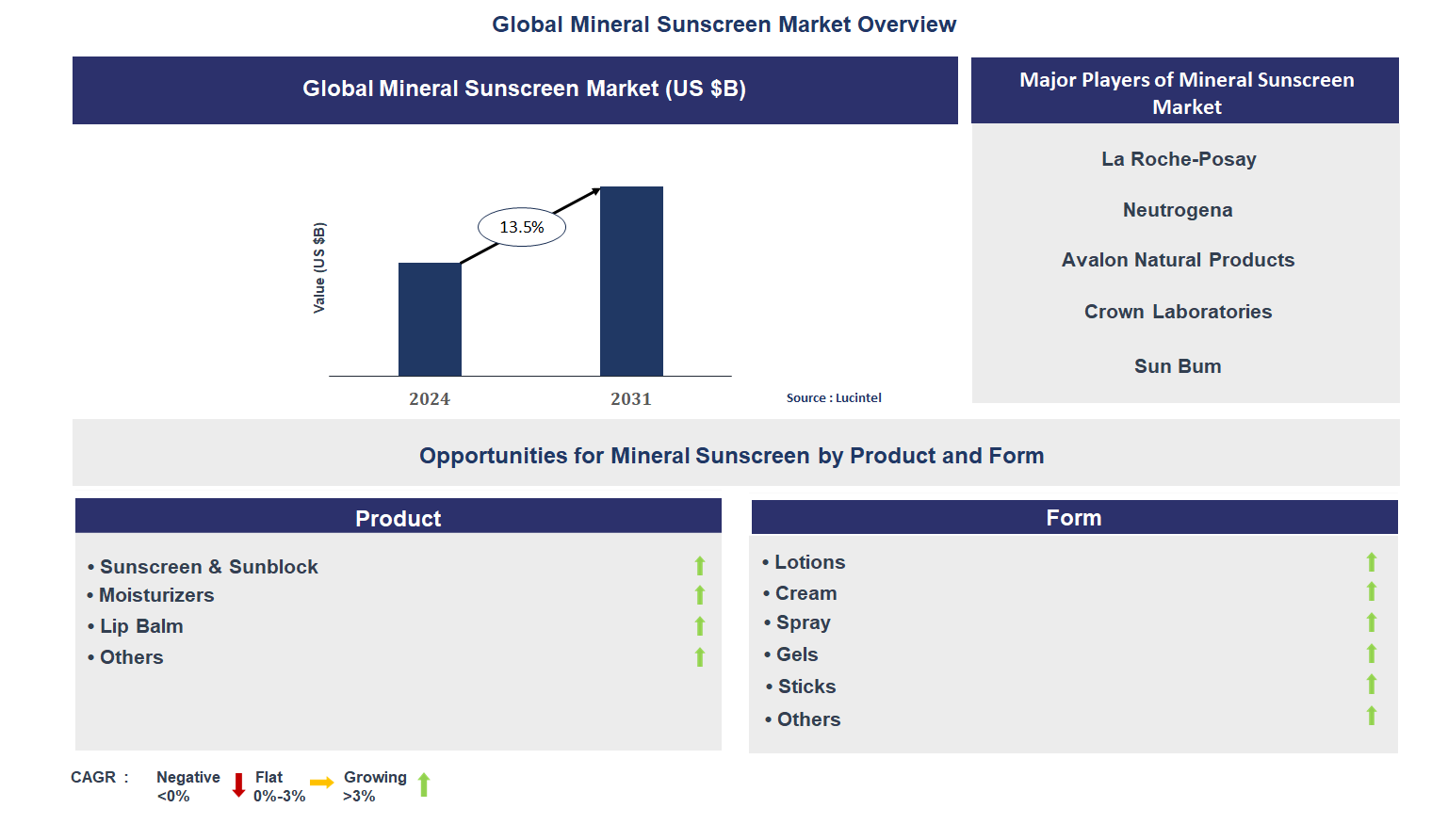
The future of the global mineral sunscreen market looks promising with opportunities in the lotion, cream, spray, gel, and stick markets. The global mineral sunscreen market is expected to grow with a CAGR of 13.5% from 2025 to 2031. The major drivers for this market are the increasing consumer preference for natural skincare, the rising awareness about harmful chemical sunscreens, and the growing demand for eco-friendly sun protection products.• Lucintel forecasts that, within the product category, sunscreen & sunblock is expected to witness the highest growth over the forecast period.
• Within the form category, lotion is expected to witness the highest growth.
• In terms of region, APAC is expected to witness the highest growth over the forecast period. Gain valuable insights for your business decisions with our comprehensive 150+ page report. Sample figures with some insights are shown below.
Emerging Trends in the Mineral Sunscreen Market
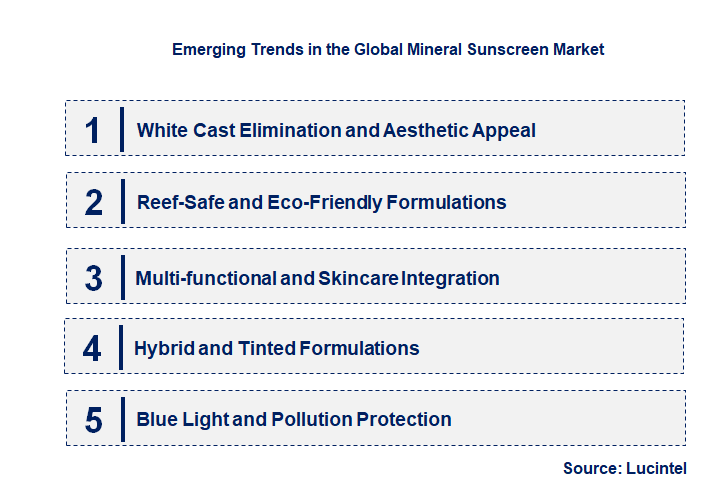
The mineral sunscreen market is being reshaped by a confluence of evolving consumer preferences, technological advancements, and a heightened focus on sustainability. These trends are moving beyond the basic function of sun protection, transforming mineral sunscreens into multi-functional skincare essentials. From ethical sourcing to innovative product formats, these developments reflect a market that is increasingly sophisticated and responsive to modern consumer values.• White Cast Elimination and Aesthetic Appeal: The long-standing challenge of the "white cast" is being addressed through advancements in nanotechnology and micronization of zinc oxide and titanium dioxide. New formulations are achieving a sheer, transparent finish that is cosmetically elegant and suitable for a wider range of skin tones. This trend is broadening the consumer base and increasing daily use.
• Reef-Safe and Eco-Friendly Formulations: There is a powerful trend towards sunscreens that are safe for marine ecosystems. Driven by environmental consciousness and regulations in popular tourist destinations, brands are developing products free from chemical filters known to harm coral reefs. This trend not only aligns with consumer values but also creates a significant competitive advantage in the market.
• Multi-functional and Skincare Integration: Mineral sunscreens are being integrated with other skincare benefits, transforming them into multi-functional products. Formulations now include ingredients like hyaluronic acid for hydration, vitamin C for antioxidants, and niacinamide for skin-calming properties. This trend appeals to consumers who seek convenience and desire a simplified skincare routine with added benefits.
• Hybrid and Tinted Formulations: The market is seeing a rise in hybrid and tinted mineral sunscreens. Hybrid products combine mineral filters with new-generation chemical filters for a lighter feel, while tinted versions offer a cosmetic benefit, replacing a foundation or primer. This innovation addresses both the aesthetic drawbacks of traditional mineral sunscreens and the desire for multi-tasking products.
• Blue Light and Pollution Protection: As consumers become more aware of the damaging effects of digital screens and urban pollution, a key trend is the inclusion of ingredients that protect against blue light (HEV) and environmental stressors. This positions mineral sunscreens as essential for daily use, not just for sun exposure, appealing to a broad segment of the population. These emerging trends are fundamentally reshaping the mineral sunscreen market, shifting it from a niche segment to a mainstream force. The emphasis on aesthetic appeal, sustainability, and multi-functional benefits reflects a modern consumer who demands products that are not only effective but also ethical, transparent, and aligned with their personal values. The markets future lies in its ability to continue innovating and responding to these evolving demands.
Recent Development in the Mineral Sunscreen Market
The mineral sunscreen market has seen rapid evolution, driven by consumer preference for natural ingredients and a greater focus on sustainability. New formulations and product categories are expanding, while innovative business models and marketing strategies are reshaping the industry landscape. This shift reflects a move toward more conscious consumption and an increased awareness of the benefits associated with mineral filters as a powerful and versatile ingredient in personal care.• Micro- and Nanoparticle Technology: A key development is the advancement of technology to create ultra-fine mineral particles. This has allowed manufacturers to produce formulations that are more transparent and spreadable, effectively minimizing the chalky residue. This innovation has been crucial in overcoming a major barrier to consumer adoption, making mineral sunscreens more appealing to a wider demographic.
• Formulation Diversification: The market has moved beyond traditional lotions and creams. Recent developments include the widespread availability of new forms such as mineral sunscreen sticks, sprays, and powders. These formats offer convenience and ease of application for different scenarios, from quick touch-ups to on-the-go use, expanding the products utility and consumer base.
• Rise of Reef-Safe Certification: There has been a significant increase in products with explicit "reef-safe" or ocean-safe certifications. This development is a direct response to rising environmental concerns and regulatory bans on certain chemical filters. This not only builds consumer trust but also establishes a clear differentiator in the market, appealing to eco-conscious consumers.
• Dermatological and Clinical Focus: There is a growing emphasis on scientific backing and clinical trials to validate product claims. Brands are collaborating with dermatologists and providing data to prove the efficacy and non-irritating nature of their mineral-based products. This approach builds consumer trust and positions the products as safe and effective, particularly for sensitive skin.
• E-commerce and Social Media Disruption: The proliferation of D2C (Direct-to-Consumer) brands has disrupted traditional retail. These brands leverage social media and e-commerce platforms to build strong community ties, offering transparent sourcing stories and a direct line of communication with customers. This model allows for greater personalization and brand loyalty, bypassing the need for extensive physical retail presence. The recent developments in the mineral sunscreen market highlight a shift towards a more sophisticated and responsible industry. The focus on advanced technology, product diversification, eco-friendly certifications, clinical validation, and D2C models demonstrates a market that is not only growing but also maturing to meet the evolving demands of a modern, values-driven consumer base.
Strategic Growth Opportunities in the Mineral Sunscreen Market
The mineral sunscreen market presents numerous strategic growth opportunities across key applications, driven by increasing consumer awareness and a shift towards natural ingredients. By focusing on specific product segments and innovative marketing, companies can capitalize on rising demand and differentiate themselves. These opportunities are rooted in consumer needs for effective, sustainable, and specialized personal care solutions, offering pathways for market expansion and brand loyalty.• Targeted Formulations for Specific Skin Types: There is a significant opportunity in developing mineral sunscreens tailored for specific skin concerns, such as acne-prone, oily, or hyper-sensitive skin. By creating specialized, non-comedogenic or soothing formulas, brands can appeal to a more discerning consumer base. This niche focus allows for premium pricing and positions the brand as an expert in a particular skincare area.
• Expansion into Childrens and Baby Products: The market for childrens and baby mineral sunscreens is a major growth area. Parents are increasingly seeking safe, gentle, and chemical-free options for their children. By developing product lines specifically for this demographic, with hypoallergenic and tear-free formulas, brands can tap into a highly loyal and growing market segment.
• Multi-Application Products: A strategic opportunity lies in creating multi-use products that combine sun protection with other functions, such as tinted moisturizers, primers, or color correctors. These all-in-one products appeal to busy consumers who value convenience and seek to simplify their daily routines, reducing the number of products they need to apply.
• Leveraging Digital Marketing and Influencer Collaborations: Strategic growth can be achieved by investing in targeted digital marketing and partnering with social media influencers, particularly those with a focus on clean beauty or dermatology. These collaborations can effectively educate consumers on the benefits of mineral sunscreens and showcase how new, sheer formulations look on different skin tones, building trust and demand.
• Geographical Expansion into Emerging Markets: There is a significant opportunity for expansion into emerging markets where awareness of sun protection is increasing. By adapting products to local preferences, such as lighter, more climate-appropriate textures and culturally relevant marketing, brands can capture new consumer bases and establish a global presence. This is particularly true in regions with high UV exposure and growing disposable incomes. Strategic growth in the mineral sunscreen market lies in specializing product applications, tapping into underserved demographics like children and babies, and leveraging direct-to-consumer channels. By prioritizing innovation and sustainability, brands can build a strong market presence and create lasting value, ensuring their relevance in an increasingly competitive landscape.
Mineral Sunscreen Market Driver and Challenges
The mineral sunscreen markets evolution is shaped by a complex interplay of major drivers and challenges. These factors include various technological, economic, and regulatory influences that impact product development, consumer adoption, and market growth. Understanding these dynamics is essential for navigating the industry, as they determine the strategic direction for both established players and new entrants in this evolving sector. The factors responsible for driving the mineral sunscreen market include: 1. Growing Consumer Demand for Clean Beauty: A primary driver is the increasing consumer preference for natural and chemical-free skincare products. Fueled by concerns about the potential health risks of chemical filters, consumers are actively seeking mineral sunscreens, which are perceived as a safer, gentler alternative. This shift is a powerful force propelling market growth. 2. Environmental and Reef-Safe Concerns: The rising awareness of the negative impact of chemical sunscreens on marine ecosystems, particularly coral reefs, is a significant driver. Bans and regulations in places like Hawaii and Palau have made "reef-safe" a major marketing claim, leading to a surge in demand for mineral sunscreens as a more eco-friendly option. 3. Innovation in Formulation Technology: Advancements in technology have addressed the traditional drawbacks of mineral sunscreens, such as the thick, white residue. Innovations in micronization and non-nano particle technology have resulted in lightweight, sheer, and more cosmetically elegant formulas, broadening their appeal and encouraging daily use. 4. Dermatologist Recommendations and Trust: Mineral sunscreens are often recommended by dermatologists for sensitive, reactive, or acne-prone skin due to their non-irritating nature. This expert endorsement builds significant consumer trust and drives demand, positioning mineral products as a go-to for effective and gentle sun protection. 5. Digital Marketing and Influencer Education: The power of social media and e-commerce platforms has been crucial. Brands are using these channels to educate consumers on the benefits of mineral sunscreens, showcasing new formulations and building brand communities. This digital-first approach accelerates consumer awareness and facilitates direct-to-consumer sales. Challenges in the mineral sunscreen market are: 1. White Cast and Texture Issues: Despite technological advancements, the white cast and thick, sometimes greasy, texture remain a significant challenge. For many consumers, especially those with darker skin tones, these aesthetic drawbacks can be a deal-breaker, limiting widespread adoption and hindering market penetration in certain segments. 2. Higher Production and Retail Costs: Mineral sunscreens, particularly those with advanced formulations and natural ingredients, can be more expensive to produce and purchase compared to their chemical counterparts. This higher price point can be a barrier for price-sensitive consumers, making them less accessible and impacting their competitiveness in mass-market retail. 3. Market Saturation and Intense Competition: The market has become crowded with a large number of new entrants, from both indie and established brands. This intense competition makes it challenging for brands to differentiate themselves. To stand out, companies must invest heavily in unique formulations, compelling marketing, and effective distribution channels. The mineral sunscreen market is propelled by strong drivers like consumer demand for clean beauty, environmental concerns, and technological innovation. However, it faces notable challenges, including persistent formulation issues, higher costs, and intense competition. Navigating this landscape requires a strategic approach that addresses these challenges while capitalizing on the prevailing drivers, ultimately shaping the industrys future trajectory.List of Mineral Sunscreen Companies
Companies in the market compete on the basis of product quality offered. Major players in this market focus on expanding their manufacturing facilities, R&D investments, infrastructural development, and leverage integration opportunities across the value chain. With these strategies mineral sunscreen companies cater increasing demand, ensure competitive effectiveness, develop innovative products & technologies, reduce production costs, and expand their customer base. Some of the mineral sunscreen companies profiled in this report include-• La Roche-Posay
• Neutrogena
• Avalon Natural Products
• Crown Laboratories
• Sun Bum
• Australian Gold
• Goddess Garden
• W. S. Badger Company
• EltaMD
• Coola
Mineral Sunscreen Market by Segment
The study includes a forecast for the global mineral sunscreen market by product, form, and region.Mineral Sunscreen Market by Product [Value from 2019 to 2031]:
• Sunscreen & Sunblock
• Moisturizers
• Lip Balm
• Others
Mineral Sunscreen Market by Form [Value from 2019 to 2031]:
• Lotions
• Cream
• Spray
• Gels
• Sticks
• Others
Mineral Sunscreen Market by Region [Value from 2019 to 2031]:
• North America
• Europe
• Asia Pacific
• The Rest of the World
Country Wise Outlook for the Mineral Sunscreen Market
The global mineral sunscreen market is experiencing robust growth, driven by increasing consumer demand for natural, eco-friendly, and skin-friendly sun protection. Concerns about the environmental impact and potential health risks of chemical sunscreens are fueling this shift. This has led to significant innovation, with companies focusing on improving formulations to reduce the common white cast and enhance user experience, catering to a global audience.• United States: The U.S. market is highly developed, with a strong emphasis on dermatologist-recommended, broad-spectrum formulas. Recent developments include the launch of new product lines by major brands, which focus on ultra-sheer, non-greasy textures and waterproof formulations. The market is also seeing a rise in products that offer additional skincare benefits like anti-aging and moisturization.
• China: China’s market is rapidly expanding, driven by a burgeoning middle class and increasing skin health awareness. Recent developments include the widespread adoption of mineral sunscreens that offer protection against not just UV rays, but also blue light and pollution. Brands are leveraging e-commerce and social media to educate consumers and promote products with a "clean beauty" narrative.
• Germany: The German market is characterized by a strong consumer preference for natural, organic, and certified products. Recent developments include a focus on sustainable and ethically sourced ingredients. Brands are innovating with lightweight, aesthetically pleasing formulations that are free from nanoparticles and harmful chemicals, aligning with strict European Union regulations and consumer values.
• India: The Indian market is witnessing significant growth, fueled by rising disposable incomes and a growing awareness of sun protection. Recent developments include an increased demand for mineral sunscreens that are lightweight, non-comedogenic, and specifically formulated for diverse skin types and climates. The market is also seeing a rise in products that offer multi-functional benefits, such as a moisturizer with SPF.
• Japan: The Japanese market is distinguished by a demand for elegant, high-performance, and non-greasy formulations. Recent developments include a strong focus on products that offer both UV protection and a seamless, almost invisible finish. Brands are innovating with stick and gel formats that are easy to apply and reapply, catering to a culture that prioritizes a flawless complexion.

Features of the Global Mineral Sunscreen Market
Market Size Estimates: Mineral sunscreen market size estimation in terms of value ($B). Trend and Forecast Analysis: Market trends (2019 to 2024) and forecast (2025 to 2031) by various segments and regions. Segmentation Analysis: Mineral sunscreen market size by product, form, and region in terms of value ($B). Regional Analysis: Mineral sunscreen market breakdown by North America, Europe, Asia Pacific, and Rest of the World. Growth Opportunities: Analysis of growth opportunities in different products, forms, and regions for the mineral sunscreen market. Strategic Analysis: This includes M&A, new product development, and competitive landscape of the mineral sunscreen market. Analysis of competitive intensity of the industry based on Porter’s Five Forces model.
FAQ
Q1. What is the growth forecast for mineral sunscreen market? Answer: The global mineral sunscreen market is expected to grow with a CAGR of 13.5% from 2025 to 2031. Q2. What are the major drivers influencing the growth of the mineral sunscreen market? Answer: The major drivers for this market are the increasing consumer preference for natural skincare, the rising awareness about harmful chemical sunscreens, and the growing demand for eco-friendly sun protection products. Q3. What are the major segments for mineral sunscreen market? Answer: The future of the mineral sunscreen market looks promising with opportunities in the lotion, cream, spray, gel, and stick markets. Q4. Who are the key mineral sunscreen market companies? Answer: Some of the key mineral sunscreen companies are as follows:• La Roche-Posay
• Neutrogena
• Avalon Natural Products
• Crown Laboratories
• Sun Bum
• Australian Gold
• Goddess Garden
• W. S. Badger Company
• EltaMD
• Coola Q5. Which mineral sunscreen market segment will be the largest in future? Answer: Lucintel forecasts that, within the product category, sunscreen & sunblock is expected to witness the highest growth over the forecast period. Q6. In mineral sunscreen market, which region is expected to be the largest in next 5 years? Answer: In terms of region, APAC is expected to witness the highest growth over the forecast period. Q7. Do we receive customization in this report? Answer: Yes, Lucintel provides 10% customization without any additional cost.
Table of Contents
List of Figures
List of Tables
Methodology
- In-depth interviews of the major players in this market
- Detailed secondary research from competitors’ financial statements and published data
- Extensive searches of published works, market, and database information pertaining to industry news, company press releases, and customer intentions
- A compilation of the experiences, judgments, and insights of Lucintel’s professionals, who have analyzed and tracked this market over the years.


Buy Now
Choose a license that fits your team. Instant PDF delivery.
Prices exclude taxes. Instant delivery. Custom licensing available on request.
Key Questions
- • What are some of the most promising, high-growth opportunities for the mineral sunscreen market by product (sunscreen & sunblock, moisturizers, lip balm, and others), form (lotions, cream, spray, gels, sticks, and others), and region (North America, Europe, Asia Pacific, and the Rest of the World)?
- • Which segments will grow at a faster pace and why?
- • Which region will grow at a faster pace and why?
- • What are the key factors affecting market dynamics? What are the key challenges and business risks in this market?
- • What are the business risks and competitive threats in this market?
- • What are the emerging trends in this market and the reasons behind them?
- • What are some of the changing demands of customers in the market?
- • What are the new developments in the market? Which companies are leading these developments?
- • Who are the major players in this market? What strategic initiatives are key players pursuing for business growth?
- • What are some of the competing products in this market and how big of a threat do they pose for loss of market share by material or product substitution?
- • What M&A activity has occurred in the last 5 years and what has its impact been on the industry? For any questions related to Mineral Sunscreen Market, Mineral Sunscreen Market Size, Mineral Sunscreen Market Growth, Mineral Sunscreen Market Analysis, Mineral Sunscreen Market Report, Mineral Sunscreen Market Share, Mineral Sunscreen Market Trends, Mineral Sunscreen Market Forecast, Mineral Sunscreen Companies, write Lucintel analyst at email: helpdesk@lucintel.com. We will be glad to get back to you soon.


