
Report Feature
Milkfish Market Trends and Forecast
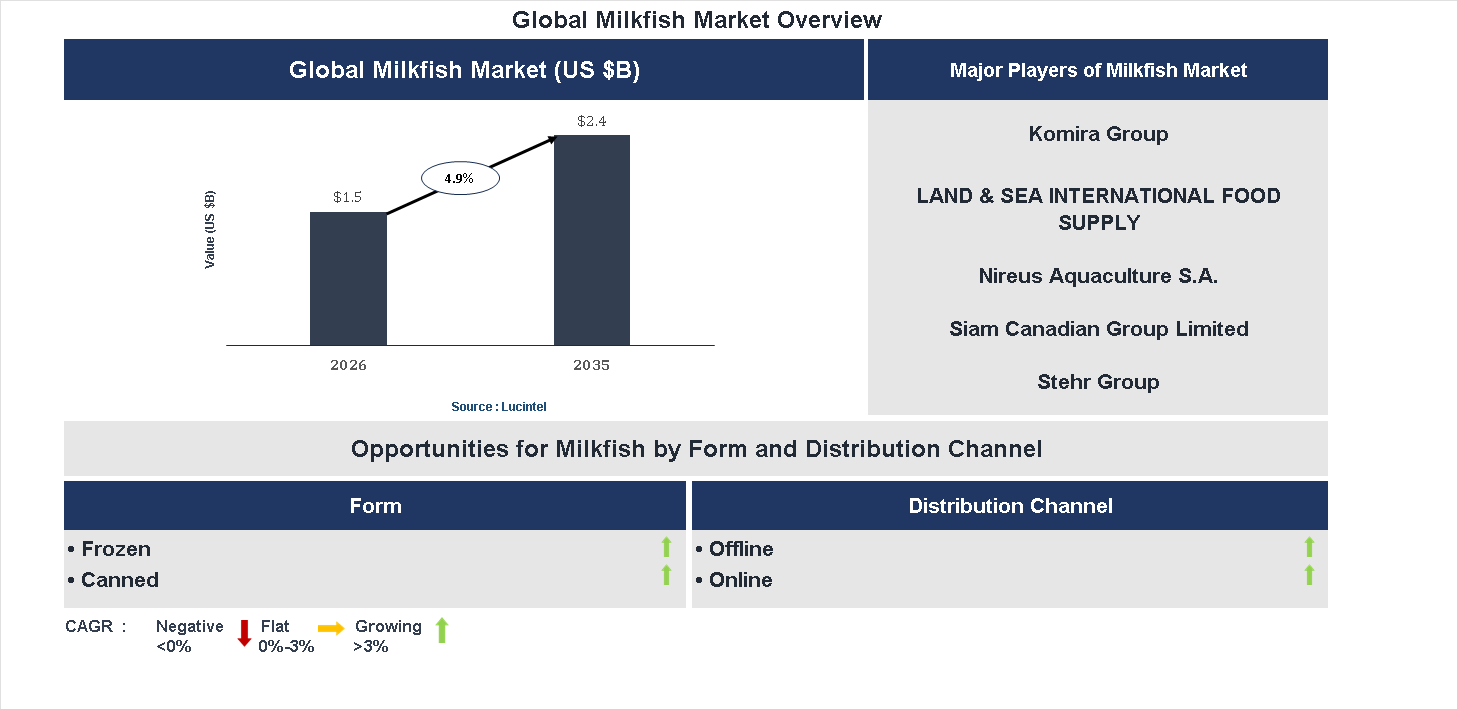
The future of the global milkfish market looks promising with opportunities in the offline and online markets. The global milkfish market is expected to reach an estimated $2.4 billion by 2035 with a CAGR of 4.9% from 2026 to 2035. The major drivers for this market are the increasing demand for sustainable seafood options, the rising popularity of healthy protein sources, and the growing awareness of milkfish nutritional benefits.• Lucintel forecasts that, within the form category, frozen is expected to witness higher growth over the forecast period.
• Within the distribution channel category, offline will remain a larger segment.
• In terms of region, APAC will remain the largest region over the forecast period. Gain valuable insights for your business decisions with our comprehensive 150+ page report. Sample figures with some insights are shown below.
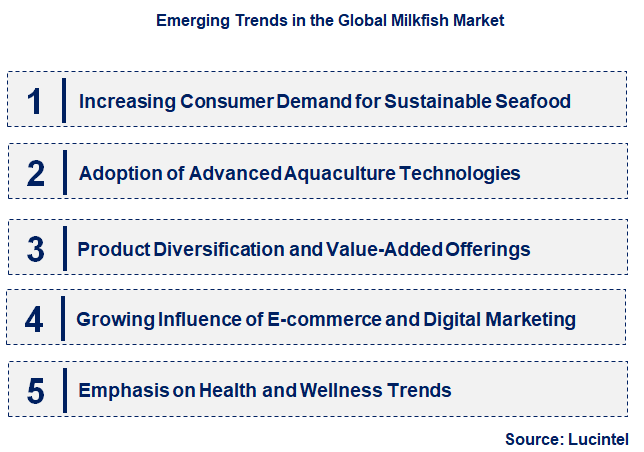
Emerging Trends in the Milkfish Market
The milkfish market is experiencing a significant transformation driven by changing consumer preferences, technological advancements, and sustainability concerns. As global demand for seafood grows, producers and retailers are adopting innovative strategies to meet evolving expectations. These developments are not only expanding market size but also influencing product quality, sourcing practices, and consumer engagement. Understanding these emerging trends is crucial for stakeholders aiming to capitalize on opportunities and navigate challenges effectively. The following five key trends highlight the dynamic nature of the milkfish market and its trajectory toward a more sustainable, innovative, and consumer-centric future.• Increasing Consumer Demand for Sustainable Seafood: Growing awareness of environmental issues is driving consumers to seek sustainably sourced milkfish. This trend encourages producers to adopt eco-friendly farming practices, obtain certifications, and improve transparency. As a result, the market is shifting toward more responsible sourcing, which enhances brand reputation and meets regulatory standards. Sustainable practices also help mitigate environmental impacts, ensuring long-term availability of milkfish and aligning with global sustainability goals.
• Adoption of Advanced Aquaculture Technologies: Technological innovations such as recirculating aquaculture systems (RAS), automated feeding, and water quality monitoring are revolutionizing milkfish farming. These advancements improve efficiency, reduce resource consumption, and enhance fish health. The impact includes higher yields, better product quality, and reduced environmental footprint. Technology adoption also enables farmers to operate more sustainably and respond swiftly to market demands, fostering a more resilient and competitive industry.
• Product Diversification and Value-Added Offerings: Market players are expanding their product portfolios by introducing processed, frozen, and ready-to-cook milkfish products. This diversification caters to changing consumer lifestyles and preferences for convenience. Value-added products increase market reach, enable premium pricing, and reduce waste. Additionally, innovative packaging and flavoring options attract a broader customer base, boosting sales and market penetration across different regions.
• Growing Influence of E-commerce and Digital Marketing: The rise of online platforms and digital marketing strategies is transforming how milkfish products are marketed and sold. E-commerce provides access to a wider audience, facilitates direct-to-consumer sales, and enables real-time engagement. Digital marketing enhances brand visibility and educates consumers about product benefits, sustainability, and recipes. This trend accelerates market growth, especially among younger consumers, and fosters greater transparency and trust in the supply chain.
• Emphasis on Health and Wellness Trends: Consumers are increasingly prioritizing health, nutrition, and wellness, influencing demand for milkfish as a healthy protein source. Market trends include promoting omega-3 fatty acids, low-fat content, and natural farming methods. This focus encourages producers to highlight nutritional benefits and develop health-oriented products. The impact is a shift toward premium, health-conscious offerings that appeal to fitness enthusiasts, families, and health-conscious demographics, thereby expanding the market and encouraging innovation. In summary, these trends are reshaping the milkfish market by fostering sustainability, technological innovation, product diversity, digital engagement, and health consciousness. Together, they are driving growth, improving product quality, and ensuring the industry’s resilience in a competitive global landscape.
Recent Development in the Milkfish Market
The milkfish market is experiencing significant growth driven by increasing consumer demand for sustainable and nutritious seafood options. Innovations in aquaculture, expanding export markets, and rising health consciousness are shaping the industry’s trajectory. Technological advancements and government initiatives further support market expansion. These developments are creating new opportunities for producers and investors, while also addressing environmental concerns. As the market evolves, stakeholders are adapting strategies to capitalize on emerging trends, ensuring sustainable growth and competitive advantage in the global seafood industry.• Growing Demand for Sustainable Seafood: Increasing consumer awareness about environmental impact is boosting demand for sustainably farmed milkfish, encouraging eco-friendly practices and certifications that enhance market credibility and appeal to eco-conscious buyers.
• Expansion of Aquaculture Technologies: Adoption of advanced aquaculture techniques, such as recirculating systems and selective breeding, improves yield, quality, and disease resistance, leading to increased production efficiency and meeting rising global demand.
• Rising Export Opportunities: Countries like the Philippines and Indonesia are expanding export channels to markets in North America, Europe, and Asia, driven by trade agreements and improved logistics, which significantly boost revenue and global market presence.
• Health and Nutrition Trends: Growing consumer focus on health benefits of omega-3 fatty acids and lean protein sources is increasing milkfish consumption, prompting producers to emphasize nutritional value and develop value-added products.
• Government Support and Policy Initiatives: Governments are implementing policies to promote sustainable aquaculture, provide subsidies, and improve infrastructure, which facilitate industry growth, attract investments, and ensure environmental compliance. These developments are collectively transforming the milkfish market by enhancing production efficiency, expanding global reach, and aligning with consumer health and sustainability preferences. Increased technological adoption, export growth, and supportive policies are driving market expansion, creating new opportunities for stakeholders. As these trends continue, the industry is poised for sustainable growth, improved competitiveness, and greater contribution to global seafood supply chains.
Strategic Growth Opportunities in the Milkfish Market
The milkfish market is experiencing significant growth driven by increasing consumer demand for sustainable seafood options and health-conscious products. Innovations in aquaculture and expanding distribution channels are further fueling market expansion. As consumers seek nutritious, affordable, and environmentally friendly seafood, opportunities arise for market players to capitalize on emerging trends. Strategic investments and technological advancements are essential to meet rising global demand and enhance product quality, positioning the milkfish market for sustained growth in diverse applications and regions.• Growing Demand for Sustainable Seafood Options: Increasing awareness of environmental impacts is driving consumers toward sustainably farmed milkfish, encouraging producers to adopt eco-friendly practices. Certification programs and sustainable aquaculture initiatives enhance market credibility and appeal. This trend supports market expansion by attracting environmentally conscious buyers and opening new distribution channels, including premium and organic segments. As sustainability becomes a key purchasing factor, the market is poised for long-term growth driven by responsible production and consumer preferences.
• Expansion of Aquaculture Technologies and Practices: Advances in aquaculture technology, such as recirculating systems and selective breeding, improve milkfish yield, quality, and disease resistance. These innovations reduce production costs and environmental impact, making milkfish more accessible and affordable. Enhanced farming practices enable producers to meet rising global demand efficiently. Investment in research and development further supports sustainable growth, allowing the industry to scale operations while maintaining product standards and minimizing ecological footprints.
• Increasing Demand in Emerging Markets: Rapid urbanization and rising disposable incomes in developing regions boost demand for affordable, nutritious seafood like milkfish. Countries in Southeast Asia, Africa, and Latin America present significant growth opportunities due to their large populations and growing seafood consumption. Market expansion in these areas is facilitated by improved infrastructure, local aquaculture development, and government support. Tapping into these emerging markets can diversify revenue streams and accelerate global market penetration for milkfish producers.
• Diversification of Product Offerings and Applications: The market is witnessing a shift toward value-added milkfish products, including fillets, smoked, canned, and ready-to-eat options. These innovations cater to convenience-seeking consumers and expand application scopes in the foodservice and retail sectors. Additionally, milkfish is increasingly used in processed foods, snacks, and health supplements due to its nutritional profile. Diversification enhances market resilience, attracts new customer segments, and creates opportunities for premium pricing and brand differentiation.
• Strategic Collaborations and Market Penetration Initiatives: Partnerships between producers, distributors, and retailers facilitate wider product availability and brand recognition. Collaborations with research institutions support product innovation and quality assurance. Market penetration strategies, including targeted marketing campaigns and participation in trade shows, boost consumer awareness. These initiatives help establish a strong market presence, foster trust, and accelerate growth across various regions and applications, ensuring competitive advantage in a dynamic industry landscape. The overall impact of these opportunities is a robust, sustainable growth trajectory for the milkfish market. By leveraging technological advancements, expanding into emerging markets, and emphasizing sustainability and product innovation, industry stakeholders can capitalize on increasing global demand. Strategic collaborations and diversified offerings will further strengthen market position, ensuring long-term profitability and resilience amid evolving consumer preferences and environmental considerations.
Milkfish Market Driver and Challenges
The milkfish market is influenced by a variety of technological, economic, and regulatory factors that shape its growth and sustainability. Advances in aquaculture technology, changing consumer preferences, and government policies play significant roles in determining market dynamics. Additionally, environmental concerns and international trade regulations impact supply chains and market access. As the demand for healthy, sustainable seafood increases, stakeholders must navigate these complex drivers and challenges to capitalize on opportunities and mitigate risks. Understanding these factors is essential for strategic planning and ensuring the markets long-term viability amid evolving global conditions. The factors responsible for driving the milkfish market include:-• Technological Advancements: The adoption of innovative aquaculture techniques, such as recirculating aquaculture systems and selective breeding, enhances productivity and fish quality. These technologies reduce environmental impact, improve yield consistency, and lower operational costs, making milkfish farming more sustainable and profitable. As technology continues to evolve, producers can meet rising demand efficiently, expanding market reach and competitiveness.
• Growing Consumer Demand for Healthy Seafood: Increasing awareness of health benefits associated with omega-3 fatty acids found in milkfish drives consumer preference. The shift towards nutritious, low-fat, and sustainable seafood options boosts market growth. Retailers and foodservice providers are expanding their offerings to include milkfish, further fueling demand across regions, especially in health-conscious markets.
• Expansion of Aquaculture Infrastructure: Investments in aquaculture infrastructure, including hatcheries, processing facilities, and distribution networks, facilitate larger-scale production and improved supply chain efficiency. Governments and private players are supporting infrastructure development to meet rising global demand, reduce reliance on wild catch, and promote sustainable practices, thereby strengthening market stability.
• Favorable Regulatory Environment: Supportive policies, subsidies, and regulations aimed at promoting sustainable aquaculture practices encourage industry growth. Governments are implementing standards for environmental protection, food safety, and traceability, which enhance consumer confidence and open export opportunities. Such regulatory frameworks create a conducive environment for market expansion and innovation. The challenges in the milkfish market are:
• Environmental Concerns and Sustainability Issues: Overfishing, habitat destruction, and water pollution pose significant threats to milkfish aquaculture sustainability. Unsustainable practices can lead to ecological imbalance, disease outbreaks, and reduced productivity. Addressing these concerns requires strict environmental management and adoption of eco-friendly practices, which can increase operational costs and complicate compliance.
• Disease Outbreaks and Biosecurity Risks: Milkfish farms are vulnerable to diseases such as bacterial infections and parasitic infestations, which can cause mass mortality and economic losses. Maintaining biosecurity measures is essential but often costly and complex. Disease outbreaks can disrupt supply chains, diminish consumer confidence, and hinder market growth.
• Market Price Volatility and Competition: Fluctuations in market prices driven by supply-demand imbalances, import-export policies, and global economic conditions create uncertainty for producers and investors. Intense competition from other seafood products and alternative protein sources further pressures prices and profit margins, challenging market stability and growth prospects. In summary, the milkfish market is shaped by technological innovations, increasing health consciousness, infrastructure development, and supportive regulations, which collectively promote growth. However, environmental sustainability issues, disease risks, and market volatility pose significant challenges that could hinder progress. Balancing these drivers and challenges is crucial for sustainable expansion, requiring strategic investments, regulatory compliance, and environmental stewardship. Overall, the markets future depends on how effectively stakeholders can leverage opportunities while mitigating risks to ensure long-term resilience and competitiveness.
List of Milkfish Companies
Companies in the market compete on the basis of product quality offered. Major players in this market focus on expanding their manufacturing facilities, R&D investments, infrastructural development, and leverage integration opportunities across the value chain. With these strategies milkfish companies cater increasing demand, ensure competitive effectiveness, develop innovative products & technologies, reduce production costs, and expand their customer base. Some of the milkfish companies profiled in this report include-• Komira Group
• LAND & SEA INTERNATIONAL FOOD SUPPLY
• Nireus Aquaculture S.A.
• Siam Canadian Group Limited
• Stehr Group
• Kaysaint International Co. Ltd
• PT. Fishnesia Mitra Bersama
Milkfish Market by Segment
The study includes a forecast for the global milkfish market by form, distribution channel, and region.Milkfish Market by Form [Value from 2019 to 2035]:
• Frozen
• Canned
Milkfish Market by Distribution Channel [Value from 2019 to 2035]:
• Offline
• Online
Milkfish Market by Region [Value from 2019 to 2035]:
• North America
• Europe
• Asia Pacific
• The Rest of the World
Country Wise Outlook for the Milkfish Market
The milkfish market has experienced notable shifts driven by technological advancements, changing consumer preferences, and regional economic developments. As demand for sustainable and nutritious seafood grows, countries are adopting innovative farming techniques and expanding production capacities. Regulatory policies and environmental concerns also influence market dynamics, prompting industry stakeholders to focus on sustainable practices. The following summaries highlight recent developments in the United States, China, Germany, India, and Japan, reflecting their unique contributions and challenges within the milkfish market.• United States: The U.S. market has seen increased interest in sustainable aquaculture practices, with investments in eco-friendly farming methods. Consumer awareness about health benefits has boosted demand for milkfish, leading to the development of specialized farms and improved supply chains. Regulatory agencies are promoting sustainable standards, encouraging industry growth while minimizing environmental impact. Additionally, technological innovations such as recirculating aquaculture systems (RAS) are being adopted to enhance production efficiency and reduce water usage.
• China: China remains the largest producer and consumer of milkfish, with rapid expansion driven by rising domestic demand. The country has invested heavily in modern aquaculture infrastructure, including integrated farming systems that improve yield and sustainability. Government policies support aquaculture development, focusing on reducing environmental impacts and increasing export potential. Recent advancements include the adoption of selective breeding techniques and disease management practices, which have improved fish quality and production stability.
• Germany: The German market is characterized by a focus on high-quality, sustainably farmed milkfish, catering to health-conscious consumers. Innovations in aquaculture technology, such as bio floc systems, are being implemented to improve water quality and reduce environmental footprint. The country emphasizes organic and eco-label certifications, which have gained popularity among consumers. Importation from Asia remains significant, but local farms are increasingly adopting sustainable practices to meet domestic demand.
• India: India is witnessing rapid growth in milkfish farming, driven by increasing demand in both domestic and export markets. Small-scale farmers are adopting integrated aquaculture systems, combining milkfish with other species to optimize resource use. Government schemes and subsidies support the expansion of aquaculture infrastructure, along with training programs to improve farming techniques. Recent developments include the use of biosecurity measures and improved feed formulations to enhance fish health and productivity.
• Japan: Japans milkfish market is evolving with a focus on premium quality and sustainability. The country is investing in research to develop disease-resistant strains and environmentally friendly farming practices. Consumer preferences favor organic and locally farmed milkfish, prompting producers to adopt eco-labeling and traceability systems. Technological innovations such as automated feeding and water quality monitoring are being integrated to improve efficiency and product quality, aligning with Japan’s high standards for seafood safety and sustainability.

Features of the Global Milkfish Market
Market Size Estimates: Milkfish market size estimation in terms of value ($B). Trend and Forecast Analysis: Market trends (2019 to 2025) and forecast (2026 to 2035) by various segments and regions. Segmentation Analysis: Milkfish market size by form, distribution channel, and region in terms of value ($B). Regional Analysis: Milkfish market breakdown by North America, Europe, Asia Pacific, and Rest of the World. Growth Opportunities: Analysis of growth opportunities in different forms, distribution channels, and regions for the milkfish market. Strategic Analysis: This includes M&A, new product development, and competitive landscape of the milkfish market. Analysis of competitive intensity of the industry based on Porter’s Five Forces model.
FAQ
Q1. What is the milkfish market size? Answer: The global milkfish market is expected to reach an estimated $2.4 billion by 2035. Q2. What is the growth forecast for milkfish market? Answer: The global milkfish market is expected to grow with a CAGR of 4.9% from 2026 to 2035. Q3. What are the major drivers influencing the growth of the milkfish market? Answer: The major drivers for this market are the increasing demand for sustainable seafood options, the rising popularity of healthy protein sources, and the growing awareness of milkfish nutritional benefits. Q4. What are the major segments for milkfish market? Answer: The future of the milkfish market looks promising with opportunities in the offline and online markets. Q5. Who are the key milkfish market companies? Answer: Some of the key milkfish companies are as follows:• Komira Group
• LAND & SEA INTERNATIONAL FOOD SUPPLY
• Nireus Aquaculture S.A.
• Siam Canadian Group Limited
• Stehr Group
• Kaysaint International Co. Ltd
• PT. Fishnesia Mitra Bersama Q6. Which milkfish market segment will be the largest in future? Answer: Lucintel forecasts that, within the form category, frozen is expected to witness higher growth over the forecast period. Q7. In milkfish market, which region is expected to be the largest in next 5 years? Answer: In terms of region, APAC will remain the largest region over the forecast period. Q8. Do we receive customization in this report? Answer: Yes, Lucintel provides 10% customization without any additional cost.
Table of Contents
List of Figures
List of Tables
Methodology
- In-depth interviews of the major players in this market
- Detailed secondary research from competitors’ financial statements and published data
- Extensive searches of published works, market, and database information pertaining to industry news, company press releases, and customer intentions
- A compilation of the experiences, judgments, and insights of Lucintel’s professionals, who have analyzed and tracked this market over the years.


Buy Now
Choose a license that fits your team. Instant PDF delivery.
Prices exclude taxes. Instant delivery. Custom licensing available on request.
Key Questions
- • What are some of the most promising, high-growth opportunities for the milkfish market by form (frozen and canned), distribution channel (offline and online), and region (North America, Europe, Asia Pacific, and the Rest of the World)?
- • Which segments will grow at a faster pace and why?
- • Which region will grow at a faster pace and why?
- • What are the key factors affecting market dynamics? What are the key challenges and business risks in this market?
- • What are the business risks and competitive threats in this market?
- • What are the emerging trends in this market and the reasons behind them?
- • What are some of the changing demands of customers in the market?
- • What are the new developments in the market? Which companies are leading these developments?
- • Who are the major players in this market? What strategic initiatives are key players pursuing for business growth?
- • What are some of the competing products in this market and how big of a threat do they pose for loss of market share by material or product substitution?
- • What M&A activity has occurred in the last 7 years and what has its impact been on the industry? For any questions related to Milkfish Market, Milkfish Market Size, Milkfish Market Growth, Milkfish Market Analysis, Milkfish Market Report, Milkfish Market Share, Milkfish Market Trends, Milkfish Market Forecast, Milkfish Companies, write Lucintel analyst at email: helpdesk@lucintel.com. We will be glad to get back to you soon.


