
Market Report · July 31, 2026

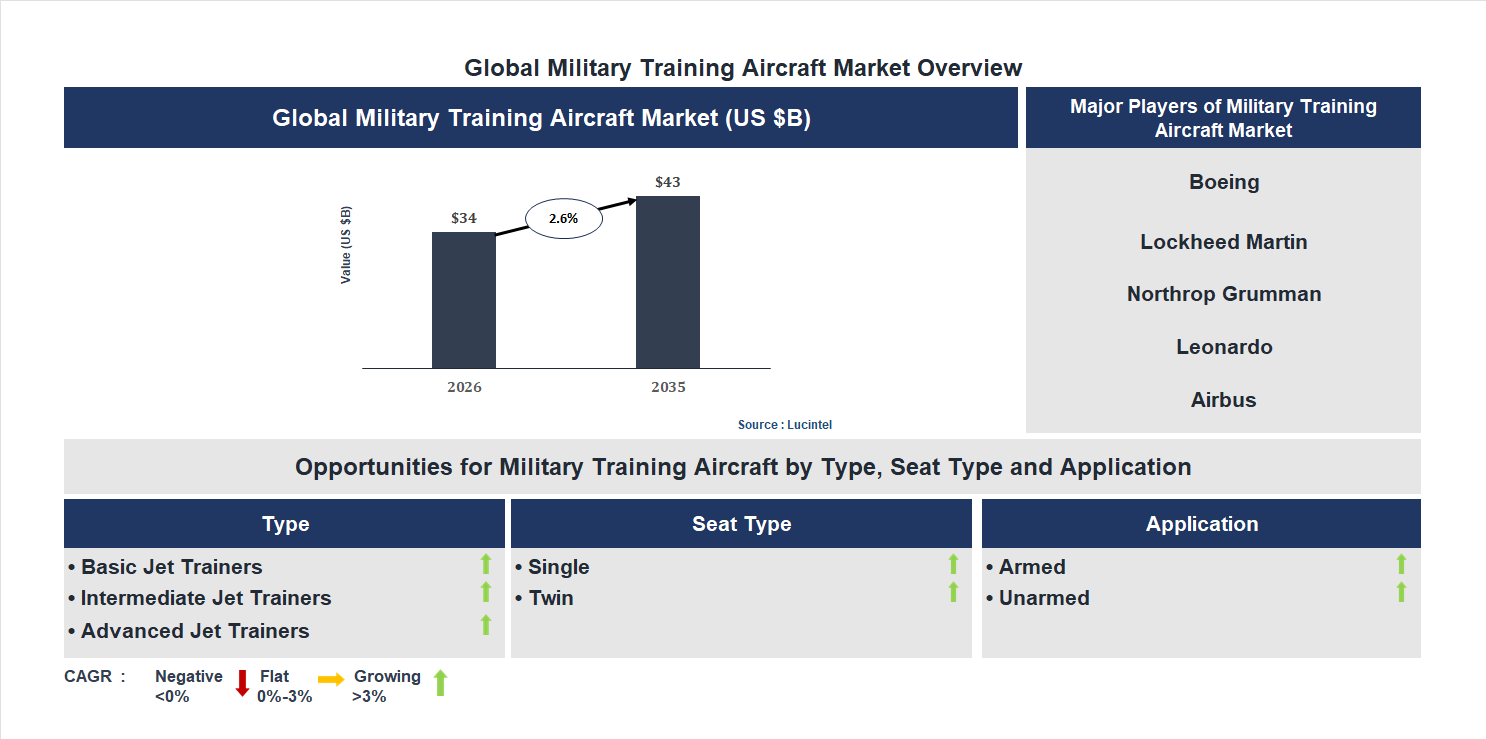
Key data points: The market size in 2035 = $43 billion, growth forecast = 2.6% annually for the next 8 years. Scroll below to get more insights. This market report covers trends, opportunities and forecasts in military training aircraft market to 2035 by type (basic jet trainers, intermediate jet trainers, and advanced jet trainers), seat type (single and twin), application (armed and unarmed), and region (North America, Europe, Asia Pacific, and the Rest of the World)
We'll send your sample report shortly.
• Lucintel forecasts that, within the type category, basic jet trainer is expected to witness the highest growth over the forecast period.
• Within the application category, armed is expected to witness higher growth.
• In terms of region, APAC is expected to witness the highest growth over the forecast period. Gain valuable insights for your business decisions with our comprehensive 150+ page report. Sample figures with some insights are shown below.
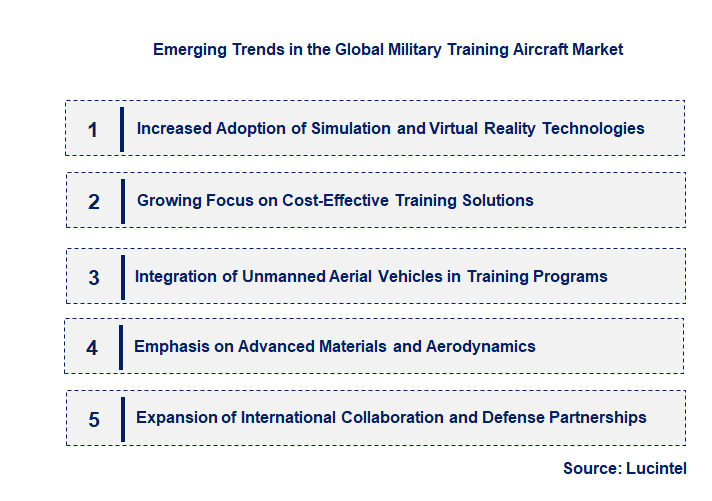
• Increased Adoption of Simulation and Virtual Reality Technologies: The integration of advanced simulation and VR technologies is revolutionizing training methods. These tools provide realistic, immersive environments that reduce the need for live flying hours, lowering costs and risks. They enable trainees to experience complex scenarios safely and repeatedly, improving skill acquisition and decision-making. This trend is driven by technological advancements and the need for cost-efficient, scalable training solutions, especially in the context of budget constraints and safety concerns.
• Growing Focus on Cost-Effective Training Solutions: Budget limitations and the high costs associated with traditional training aircraft are prompting a shift toward more economical options. Manufacturers are developing lightweight, modular aircraft and hybrid training systems that combine live flying with simulation. This approach reduces operational costs while maintaining training quality. Governments and defense agencies are increasingly prioritizing cost-efficiency to maximize training outcomes within constrained budgets, influencing procurement and development strategies.
• Integration of Unmanned Aerial Vehicles (UAVs) in Training Programs: UAVs are becoming integral to military training, offering versatile, low-cost platforms for reconnaissance, target practice, and mission simulation. They enable realistic training scenarios without risking human pilots and can be deployed in diverse environments. The use of UAVs enhances tactical training and provides valuable data for analysis. This trend reflects the broader shift toward unmanned systems in defense, emphasizing flexibility, safety, and cost savings in training operations.
• Emphasis on Advanced Materials and Aerodynamics: Innovations in materials science are leading to lighter, more durable aircraft with improved aerodynamics. These advancements enhance aircraft performance, fuel efficiency, and safety. The adoption of composite materials and innovative manufacturing techniques reduces weight and maintenance costs. Such improvements allow for more sophisticated training aircraft that can simulate modern combat aircraft more accurately, thereby elevating the quality of training and operational readiness.
• Expansion of International Collaboration and Defense Partnerships: Countries are increasingly engaging in joint training programs and sharing military aircraft technology. This collaboration fosters interoperability, enhances strategic alliances, and reduces costs through shared resources. International partnerships also facilitate technology transfer and joint development projects, accelerating innovation. As geopolitical dynamics evolve, such collaborations are vital for maintaining a competitive edge and ensuring comprehensive training capabilities across allied forces. These trends are collectively reshaping the military training aircraft market by emphasizing technological innovation, cost efficiency, safety, and international cooperation. They are enabling more realistic, flexible, and effective training solutions, which are crucial for modern defense preparedness. As these developments continue, the market is poised for significant growth and transformation, aligning with the evolving needs of global military forces.
• Growing Demand for Advanced Training Aircraft: The need for modern, efficient, and technologically advanced aircraft is expanding as militaries seek to improve pilot proficiency and safety. Enhanced simulation capabilities and realistic training environments are driving procurement of next-generation aircraft, including jet trainers and turboprop models. This growth is supported by increased defense budgets and strategic modernization initiatives worldwide, creating a robust market for innovative training solutions.
• Technological Innovations in Simulation and Virtual Training: The integration of virtual reality (VR), augmented reality (AR), and high-fidelity simulators is revolutionizing pilot training. These technologies reduce costs, improve training effectiveness, and allow for safer, more flexible training environments. Military organizations are investing in these innovations to supplement traditional flight training, leading to a shift toward hybrid training models that enhance readiness and reduce aircraft wear and tear.
• Regional Market Expansion in Asia-Pacific and Middle East: The Asia-Pacific and Middle East regions are witnessing significant investments in military aviation modernization. Countries like India, China, and Saudi Arabia are expanding their fleets and upgrading existing training infrastructure. This regional growth is driven by geopolitical tensions and strategic alliances, creating lucrative opportunities for aircraft manufacturers and service providers to establish a strong market presence and develop localized training solutions.
• Increasing Focus on Cost-Effective and Multi-Role Aircraft: Budget constraints and operational versatility are prompting militaries to prefer multi-role training aircraft that can perform various functions. These aircraft offer cost savings and operational flexibility, making them attractive options for countries seeking to maximize their defense investments. The development of lightweight, modular, and adaptable aircraft is expected to further boost market growth, especially in emerging economies.
• Impact of International Defense Collaborations and Procurement Policies: International partnerships and joint ventures are facilitating technology transfer and co-development of training aircraft. Procurement policies favoring competitive bidding and interoperability are shaping market dynamics. These collaborations enable access to advanced technologies, reduce costs, and foster innovation, thereby accelerating market growth and expanding the global footprint of key players in the military training aircraft sector. These developments are significantly transforming the military training aircraft market by enhancing technological capabilities, expanding regional markets, and promoting cost-effective solutions. The market is poised for sustained growth driven by strategic modernization efforts, technological integration, and international collaborations, ultimately improving military readiness and operational efficiency worldwide.
• Increasing Defense Budgets Drive Market Expansion: Rising defense spending globally, especially in Asia-Pacific and the Middle East, is fueling demand for military training aircraft. Governments prioritize modernizing their air forces, leading to investments in advanced trainer aircraft and simulation systems. This financial commitment supports the development of next-generation training solutions, enhances pilot proficiency, and ensures strategic superiority, thereby expanding the market scope across various regions and military branches.
• Technological Advancements Enhance Training Effectiveness: The integration of advanced simulation, virtual reality, and augmented reality technologies into training aircraft is revolutionizing pilot training. These innovations reduce costs, improve safety, and provide realistic scenarios for pilots. Manufacturers are focusing on developing hybrid training platforms combining real aircraft with simulators, which attract military clients seeking efficient and effective training solutions, thus creating new growth avenues within the market.
• Development of Cost-Effective and Multi-Role Aircraft: The demand for versatile, affordable training aircraft capable of performing multiple roles is increasing. These aircraft can be used for basic training, weapons training, and tactical exercises, offering cost savings and operational flexibility. Companies are designing lightweight, modular aircraft with advanced avionics, appealing to countries with budget constraints but high training needs, thereby broadening market opportunities across different military segments.
• Growing Focus on Pilot Training in Emerging Markets: Emerging economies in Asia, Africa, and Latin America are investing heavily in their air forces, creating a substantial demand for training aircraft. These countries seek modern, reliable, and easy-to-maintain aircraft to develop their pilot training infrastructure. International collaborations and transfer of technology are facilitating market entry, enabling manufacturers to tap into these expanding markets and diversify their customer base.
• Increasing Adoption of Unmanned and Remote Training Solutions: The rise of unmanned aerial vehicles (UAVs) and remote training systems is opening new market segments. These solutions allow for cost-effective, scalable, and safe pilot training, especially in high-risk scenarios. Military forces are adopting drone-based training modules and remote simulators to supplement traditional aircraft training, which enhances operational readiness and creates innovative growth opportunities within the military training aircraft market. These growth opportunities collectively are transforming the military training aircraft market by fostering innovation, expanding regional reach, and enhancing training efficiency. Increased defense investments, technological progress, and the adoption of versatile and remote training solutions are expected to drive sustained market growth. Stakeholders who capitalize on these opportunities will be well-positioned to meet evolving military training demands and secure competitive advantages in this dynamic industry.
• Technological Innovation: The rapid development of advanced avionics, simulation systems, and lightweight materials enhances training effectiveness. Modern aircraft incorporate virtual reality and AI-driven systems, providing realistic scenarios that improve pilot readiness while reducing costs. This technological evolution attracts military organizations seeking cutting-edge training solutions, thereby expanding market opportunities. Continuous innovation ensures that training aircraft meet evolving combat and safety standards, making them indispensable for modern armed forces.
• Increasing Defense Budgets: Many countries are increasing their defense spending to modernize their military capabilities amid rising geopolitical tensions. Higher budgets enable procurement of sophisticated training aircraft, supporting comprehensive pilot training programs. Governments recognize the importance of well-trained personnel for national security, leading to sustained demand. This financial commitment also encourages research and development, fostering innovation in training aircraft design and functionality, which further propels market growth.
• Geopolitical Tensions and Security Concerns: Rising regional conflicts and global security threats compel nations to enhance their military preparedness. Investment in advanced training aircraft becomes a strategic priority to ensure pilots are well-prepared for modern combat scenarios. This heightened focus on national security drives procurement and upgrades of existing training fleets, stimulating market expansion. Additionally, international collaborations and arms deals often include training aircraft, broadening market reach and technological exchange.
• Focus on Pilot Safety and Cost Efficiency: Modern training aircraft are designed to prioritize pilot safety through enhanced safety features and reliable systems. They also offer cost-effective solutions by reducing the need for live-fire exercises and utilizing simulation-based training. This focus appeals to defense agencies aiming to optimize training budgets while maintaining high safety standards. The integration of cost-efficient and safe training platforms encourages continued investment, supporting market stability and growth.
• Export Opportunities and International Collaborations: Countries with advanced aerospace industries seek to export military training aircraft to allied nations, creating new revenue streams. International collaborations facilitate technology transfer and joint development projects, expanding market reach. These partnerships often lead to standardized training platforms across allied forces, enhancing interoperability. Export opportunities driven by geopolitical alliances and strategic partnerships significantly contribute to the global expansion of the military training aircraft market. The challenges facing the military training aircraft market include:
• High Development and Procurement Costs: Developing advanced military training aircraft involves significant investment in research, technology, and manufacturing. Procurement costs are also high due to the need for specialized components and systems. These financial barriers can limit adoption, especially for countries with constrained defense budgets. The lengthy development cycles and maintenance expenses further complicate market growth, requiring sustained funding and strategic planning.
• Regulatory and Certification Hurdles: Stringent safety, environmental, and export regulations pose challenges to the deployment of new training aircraft. Compliance with international standards and obtaining necessary certifications can delay product launches and increase costs. Variations in regulatory frameworks across countries complicate international sales and collaborations. Navigating these complex regulatory landscapes requires significant expertise and resources, potentially hindering market expansion.
• Rapid Technological Obsolescence: The fast pace of technological change in aerospace and defense sectors can render training aircraft obsolete quickly. Continuous upgrades and modernization are necessary to keep pace with evolving combat requirements, leading to increased costs. This rapid obsolescence risk discourages long-term investments and can result in a cycle of frequent replacements, impacting market stability. Companies must innovate continuously to stay competitive, which can be resource-intensive. The military training aircraft market is shaped by technological advancements, increased defense spending, geopolitical tensions, safety and cost considerations, and international collaborations. However, high development costs, regulatory challenges, and rapid technological obsolescence pose significant hurdles. These drivers and challenges collectively influence market growth, pushing industry players toward innovation and strategic partnerships while navigating financial and regulatory complexities. Overall, the markets future depends on balancing technological progress with effective management of costs and compliance, ensuring sustained development and global competitiveness.
• Boeing
• Lockheed Martin
• Northrop Grumman
• Leonardo
• Airbus
• Textron
• KAI
• Basic Jet Trainers
• Intermediate Jet Trainers
• Advanced Jet Trainers
• Single
• Twin
• Armed
• Unarmed
• North America
• Europe
• Asia Pacific
• The Rest of the World
• United States: The US military is investing heavily in next-generation training aircraft, including the development of advanced jet trainers with integrated simulation systems. The Air Force is modernizing its fleet with aircraft like the T-7A Red Hawk, emphasizing technological innovation and pilot safety. Additionally, there is a focus on incorporating artificial intelligence and virtual reality into training programs to improve efficiency and realism. The US also collaborates with international partners to share technology and enhance training capabilities.
• China: China is rapidly expanding its military training aircraft fleet, focusing on domestically produced models such as the Hongdu L-15. The country is emphasizing indigenous technology development to reduce reliance on foreign suppliers. China is also investing in advanced simulation and virtual training systems to complement traditional aircraft training, aiming to improve pilot skills and operational readiness. The government’s increased defense budget supports these initiatives, reflecting China’s strategic emphasis on modernizing its air force.
• Germany: Germany is upgrading its military training aircraft fleet with modernized versions of existing models and exploring new platforms. The German Air Force is integrating advanced avionics and simulation technologies into its training programs to enhance pilot preparedness. Germany also participates in joint European defense initiatives, sharing resources and expertise to develop more efficient training solutions. The focus remains on cost-effective modernization while maintaining high standards of pilot training.
• India: India is actively procuring new training aircraft, including the Pilatus PC-21 and Hawk jets, to bolster its air force capabilities. The country is also investing in simulation-based training to supplement traditional flight training, aiming to reduce costs and improve pilot proficiency. India’s defense modernization efforts are driven by regional security concerns and the need to enhance operational readiness. The government’s focus on indigenous aircraft development, such as the HAL Tejas trainer variants, is also a key aspect of its strategy.
• Japan: Japan is modernizing its military training aircraft fleet with a focus on advanced technology integration. The Japan Air Self-Defense Force is adopting new trainer aircraft equipped with cutting-edge avionics and simulation systems to improve pilot training efficiency. Japan emphasizes the development of domestically produced aircraft to ensure self-reliance and technological sovereignty. The country also collaborates with allies to incorporate best practices and innovative training methodologies, ensuring its air force remains prepared for evolving security challenges.


• Boeing
• Lockheed Martin
• Northrop Grumman
• Leonardo
• Airbus
• Textron
• KAI Q6. Which military training aircraft market segment will be the largest in future? Answer: Lucintel forecasts that, within the type category, basic jet trainer is expected to witness the highest growth over the forecast period. Q7. In military training aircraft market, which region is expected to be the largest in next 8 years? Answer: In terms of region, APAC is expected to witness the highest growth over the forecast period. Q8. Do we receive customization in this report? Answer: Yes, Lucintel provides 10% customization without any additional cost.


Choose a license that fits your team. Instant PDF delivery.
Prices exclude taxes. Instant delivery. Custom licensing available on request.
Market Report · July 31, 2026
Market Report · July 31, 2026
Market Report · July 22, 2026
Trusted partner for strategic intelligence and business growth


Receive a complimentary market analysis tailored to your industry. Our analysts will identify key growth opportunities and competitive dynamics specific to your business.

Market size, growth rate, and key trend analysis for your specific sector.

Top competitor positioning and market share analysis.

Strategic recommendations backed by data-driven insights.
Get curated market intelligence and competitive moves straight to your inbox.
By subscribing, you agree to receive our monthly insights. Unsubscribe anytime.
Receive a complimentary market analysis tailored to your industry. Our analysts will identify key growth opportunities and competitive dynamics specific to your business.
Market size, growth rate, and key trend analysis for your specific sector.
Top competitor positioning and market share analysis.
Strategic recommendations backed by data-driven insights.
Get curated market intelligence, emerging trends, and competitive moves straight to your inbox each month.
By subscribing, you agree to receive our monthly insights. Unsubscribe anytime.
We'll send your sample report shortly.