
Market Report · July 31, 2026

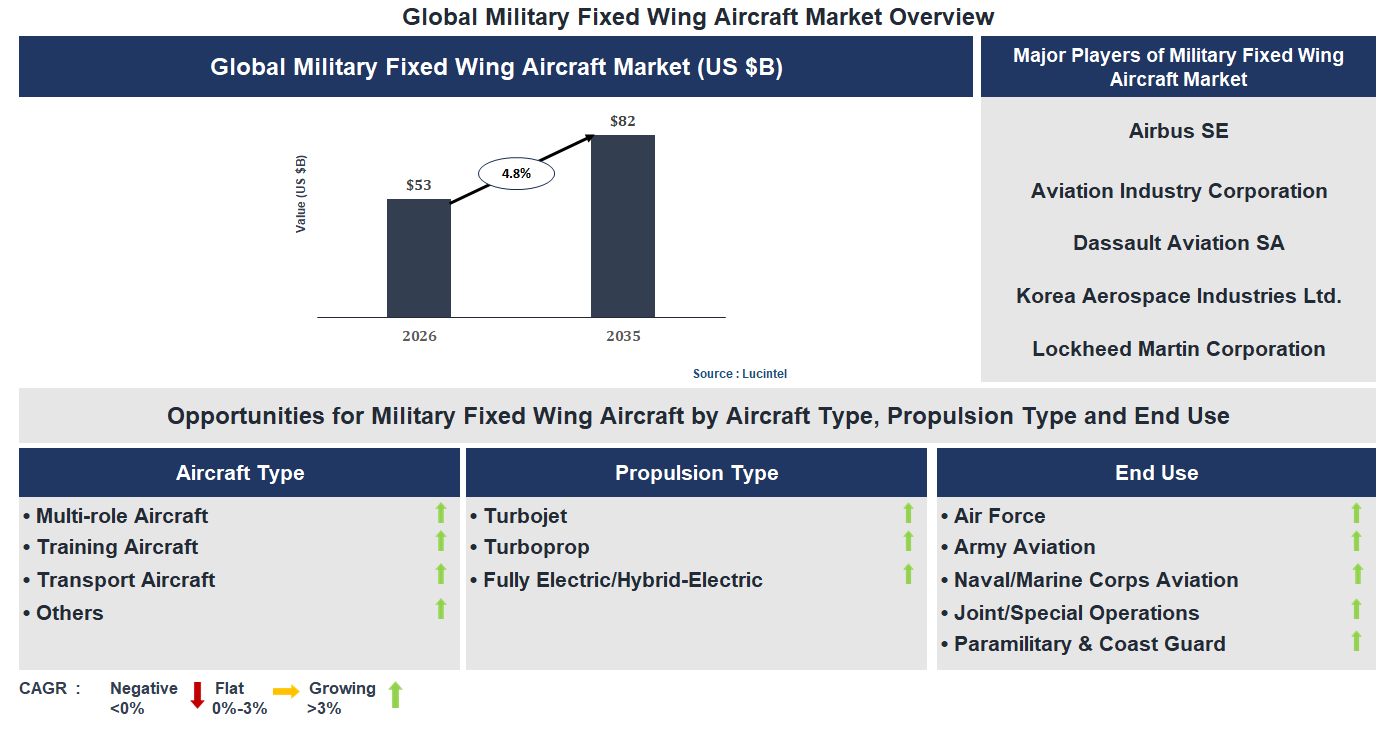
Key data points: The market size in 2035 = $82 billion, growth forecast = 4.8% annually for the next 8 years. Scroll below to get more insights. This market report covers trends, opportunities and forecasts in military fixed wing aircraft market to 2035 by aircraft type (multi-role aircraft, training aircraft, transport aircraft, and others), propulsion type (turbojet, turboprop, and fully electric/hybrid-electric), end use (air force, army aviation, naval/marine corps aviation, joint/special operations, and paramilitary & coast guard), and region (North America, Europe, Asia Pacific, and the Rest of the World)
We'll send your sample report shortly.
• Lucintel forecasts that, within the aircraft type category, multi-role aircraft is expected to witness the highest growth over the forecast period.
• Within the end use category, air force is expected to witness the highest growth.
• In terms of region, North America is expected to witness the highest growth over the forecast period. Gain valuable insights for your business decisions with our comprehensive 150+ page report. Sample figures with some insights are shown below.
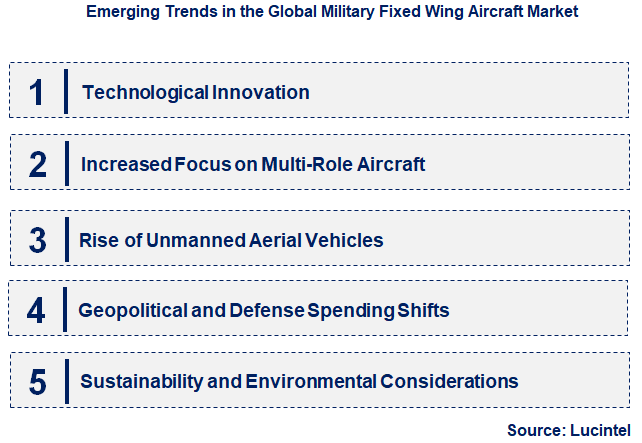
• Technological Innovation: The market is witnessing significant advancements in aircraft technology, including stealth capabilities, improved aerodynamics, and advanced avionics. These innovations enhance operational effectiveness, survivability, and mission versatility. Stealth technology reduces radar cross-section, allowing aircraft to evade detection, while modern avionics improve navigation, communication, and combat efficiency. The integration of artificial intelligence and automation is also increasing, enabling more autonomous operations. These technological strides are driving the development of next-generation aircraft, making them more effective in complex combat scenarios and extending their operational lifespan.
• Increased Focus on Multi-Role Aircraft: Countries are prioritizing multi-role aircraft capable of performing various missions such as air superiority, ground attack, and reconnaissance. This trend reduces the need for multiple specialized aircraft, optimizing defense budgets and logistical support. Multi-role platforms like the F-35 and Eurofighter Typhoon offer flexibility and cost-efficiency, allowing armed forces to adapt quickly to evolving threats. The emphasis on multi-role capabilities is also fostering innovation in aircraft design, payload management, and mission systems, ultimately leading to more versatile and adaptable fleets that can address diverse operational requirements.
• Rise of Unmanned Aerial Vehicles: The integration of unmanned systems into military aviation is transforming the market. UAVs provide reconnaissance, surveillance, and combat capabilities without risking human lives. They offer cost-effective, persistent surveillance and can operate in high-risk environments. Advances in drone technology, including increased endurance, payload capacity, and autonomous operation, are expanding their roles in military strategies. The deployment of UAVs is also influencing the design of manned aircraft, with hybrid systems and drone swarms becoming more prevalent, thereby enhancing battlefield intelligence and operational flexibility.
• Geopolitical and Defense Spending Shifts: Geopolitical tensions and regional conflicts are prompting countries to increase defense budgets and modernize their air forces. Emerging markets in Asia, the Middle East, and Africa are investing heavily in fixed wing aircraft to bolster national security. This shift is driving demand for both domestically produced and imported aircraft, fostering international collaborations and defense partnerships. Additionally, countries are focusing on acquiring advanced aircraft with cutting-edge technology to maintain strategic superiority. These spending patterns are reshaping the competitive landscape, encouraging innovation, and accelerating procurement cycles in the military fixed wing aircraft market.
• Sustainability and Environmental Considerations: Environmental concerns and sustainability are increasingly influencing military aircraft development. Efforts are underway to reduce carbon emissions, improve fuel efficiency, and incorporate alternative fuels. Innovations such as hybrid-electric propulsion systems and lightweight materials are being explored to minimize environmental impact. These trends are driven by both regulatory pressures and the militarys desire for operational efficiency. Incorporating sustainability into aircraft design not only reduces costs but also aligns with broader national security goals of resilience and self-sufficiency. This focus on eco-friendly technologies is expected to shape future aircraft development and procurement strategies. These emerging trends are fundamentally reshaping the military fixed wing aircraft market by fostering technological innovation, enhancing operational versatility, expanding the role of unmanned systems, responding to geopolitical shifts, and emphasizing sustainability. Together, they are driving a new era of advanced, adaptable, and environmentally conscious military aviation, positioning nations to better address future security challenges.
• Technological Innovations in Stealth and Avionics: The integration of stealth technology and advanced avionics systems is transforming military fixed wing aircraft. These innovations enhance survivability, situational awareness, and combat effectiveness, enabling aircraft to operate effectively in contested environments. Manufacturers are investing heavily in radar-evading designs and cutting-edge sensor suites, which are setting new standards for modern air forces. This evolution is expected to lead to more capable, durable, and adaptable aircraft, significantly impacting military operational capabilities worldwide.
• Increased Focus on Unmanned and Autonomous Systems: The rise of unmanned and autonomous fixed wing aircraft is revolutionizing military operations. These systems offer strategic advantages such as reduced risk to personnel, extended operational endurance, and cost efficiency. Countries are investing in drone technology for surveillance, reconnaissance, and combat roles, integrating them into existing fleets. The development of autonomous systems is also fostering new tactics and doctrines, ultimately expanding the scope and scale of military air operations, and creating a more flexible, responsive force structure.
• Growing Demand for Multi-Role and Versatile Aircraft: Modern militaries are prioritizing multi-role aircraft capable of performing various missions, including air defense, ground attack, and intelligence gathering. This trend is driven by budget constraints and the need for operational flexibility. Manufacturers are designing aircraft with modular systems and adaptable configurations to meet diverse mission requirements. The proliferation of multi-role platforms is streamlining procurement processes and enhancing operational readiness, thereby increasing the overall efficiency and effectiveness of air forces globally.
• Expansion of Regional Markets and Defense Spending: Emerging markets in Asia, the Middle East, and Africa are significantly increasing their defense budgets, fueling demand for military fixed wing aircraft. Countries are modernizing their air fleets to address regional security challenges and strengthen alliances. This expansion is attracting major defense contractors and fostering regional manufacturing hubs. The increased spending is also encouraging technology transfer and joint development initiatives, which are shaping a more competitive and diverse global market landscape.
• Emphasis on Sustainability and Green Technologies: Environmental concerns and operational cost reductions are prompting the adoption of sustainable technologies in military aviation. Innovations include the development of more fuel-efficient engines, alternative fuels, and lightweight materials. These advancements aim to reduce carbon footprints and operational costs while maintaining high performance standards. The push for greener aircraft is influencing procurement decisions and encouraging research into next-generation propulsion systems, ultimately contributing to a more sustainable and resilient military aviation sector. The overall impact of these developments is a more advanced, flexible, and globally interconnected military fixed wing aircraft market. Enhanced technological capabilities, expanding regional markets, and a focus on sustainability are driving innovation and competition. These trends are enabling air forces to operate more effectively in complex environments, ensuring strategic superiority and fostering long-term growth within the industry.
• Increasing Demand for Stealth and Advanced Technology Aircraft: The need for stealth capabilities and cutting-edge technology in military fixed wing aircraft is rising to counter evolving threats. Countries seek aircraft with reduced radar cross-sections, enhanced electronic warfare systems, and superior sensors. This drives innovation and procurement of next-generation fighters and bombers, creating opportunities for defense contractors to develop and supply highly sophisticated aircraft. The focus on survivability and mission effectiveness is fueling investments in stealth and electronic warfare capabilities.
• Growing Modernization Programs and Fleet Upgrades: Many nations are undertaking extensive modernization initiatives to replace aging aircraft fleets with newer, more capable models. These programs include upgrading existing aircraft with advanced avionics, weapon systems, and propulsion technologies. The demand for retrofit kits and upgrade services is increasing, providing opportunities for manufacturers to extend the lifespan and enhance the performance of current aircraft. Modernization efforts are crucial for maintaining operational superiority and meeting evolving strategic requirements.
• Rising Defense Budgets and Government Investments: Increased defense spending by governments worldwide is a key driver for market growth. Countries are allocating substantial budgets to acquire new fixed wing aircraft and upgrade existing fleets. This financial commitment supports research, development, and procurement activities, fostering a competitive environment. The steady flow of government funding enables manufacturers to innovate and expand their product offerings, ensuring they meet the diverse needs of modern air forces.
• Expansion of International Defense Collaborations and Exports: Countries are forming strategic alliances and joint ventures to develop and procure military aircraft, boosting market opportunities. Exporting nations are also expanding their reach by offering aircraft to allied nations, creating a lucrative export market. These collaborations facilitate technology transfer, cost-sharing, and access to new markets. The global demand for military aircraft is thus amplified through international partnerships, fostering growth and innovation in the industry.
• Integration of Unmanned Systems and Autonomous Technologies: The incorporation of unmanned aerial vehicles (UAVs) and autonomous systems into fixed wing platforms is transforming military aviation. These technologies enhance surveillance, reconnaissance, and combat capabilities while reducing risk to personnel. The development of hybrid manned-unmanned systems opens new operational paradigms. Manufacturers investing in autonomous technology integration are positioned to meet future combat needs, creating opportunities for innovation, new product lines, and increased market share in a rapidly evolving defense landscape. The overall impact of these opportunities is a robust growth trajectory for the military fixed wing aircraft market, driven by technological innovation, strategic modernization, and international cooperation. Stakeholders who capitalize on these trends will strengthen their market positions and contribute to enhanced global security capabilities. Continuous advancements and investments will ensure the industry remains dynamic and competitive in the coming years.
• Technological Innovation: The continuous development of advanced materials, stealth technology, and avionics systems enhances aircraft performance, survivability, and operational efficiency. Governments prioritize modernization programs to maintain strategic superiority, fueling demand for next-generation fixed-wing aircraft. Innovations like unmanned systems and integrated weaponry are expanding capabilities, making military aircraft more versatile and effective in complex combat scenarios. This technological evolution attracts investments from defense agencies worldwide, ensuring the market remains competitive and forward-looking.
• Increasing Defense Budgets: Many countries are boosting their defense spending to counter emerging threats and modernize their armed forces. This financial commitment directly impacts procurement of new fixed-wing aircraft, upgrades of existing fleets, and development of indigenous aerospace technologies. As nations recognize the importance of air superiority, defense budgets are allocated to acquire advanced aircraft, fostering market growth. The trend is particularly prominent among emerging economies seeking strategic independence and technological self-sufficiency, thereby expanding the market scope.
• Geopolitical Tensions and Security Concerns: Rising geopolitical conflicts and regional tensions drive nations to enhance their aerial defense capabilities. The need for rapid deployment, surveillance, and strategic deterrence prompts increased procurement of military fixed-wing aircraft. Countries are investing in versatile platforms capable of multi-role operations to address diverse security challenges. This heightened demand sustains market growth, encouraging innovation and international collaborations to develop more sophisticated aircraft suited for modern warfare.
• Strategic Military Modernization Programs: Governments worldwide are implementing comprehensive modernization initiatives to upgrade their air forces. These programs include replacing aging fleets with advanced aircraft, integrating cutting-edge technology, and expanding operational capabilities. Such initiatives are often driven by long-term defense strategies aimed at maintaining regional dominance and fulfilling alliance commitments. The modernization efforts stimulate market activity, creating opportunities for manufacturers to develop tailored solutions that meet specific military requirements.
• International Defense Collaborations and Contracts: Strategic alliances and joint ventures among countries facilitate technology transfer, co-development, and procurement of military aircraft. International contracts boost market revenues and enable access to advanced technologies. Collaborative efforts also help distribute costs and risks associated with aircraft development and production. These partnerships foster innovation, expand market reach, and accelerate the deployment of next-generation fixed-wing aircraft, reinforcing the global competitiveness of the industry. The challenges facing the military fixed wing aircraft market include:
• High Procurement and Maintenance Costs: Developing, procuring, and maintaining advanced military fixed-wing aircraft require substantial financial investment. The high costs associated with cutting-edge technology, specialized manufacturing, and extensive training can strain defense budgets, especially for emerging economies. Additionally, ongoing maintenance and upgrades add to the total lifecycle expenses, potentially limiting procurement and operational readiness. These financial barriers can slow market growth and restrict the deployment of new aircraft, impacting overall defense capabilities.
• Regulatory and Export Restrictions: Stringent international regulations, export controls, and compliance standards pose significant hurdles for market players. Restrictions on technology transfer and cross-border sales limit the ability of manufacturers to expand globally. Regulatory delays in certification processes can also hinder timely deployment of new aircraft. Navigating complex legal frameworks requires significant resources and strategic planning, which can impede market expansion and technological collaboration, ultimately affecting innovation and competitiveness.
• Rapid Technological Obsolescence: The fast pace of technological advancements in aerospace and defense sectors can render existing aircraft obsolete quickly. Manufacturers face pressure to continuously innovate, leading to shorter product life cycles and increased R&D costs. This rapid obsolescence challenges long-term planning and investment, as military forces seek to upgrade or replace aircraft more frequently. The risk of investing in outdated technology can deter procurement and impact the overall growth trajectory of the market. The military fixed wing aircraft market is driven by technological progress, increased defense spending, geopolitical tensions, modernization initiatives, and international collaborations. However, high costs, regulatory barriers, and rapid technological obsolescence present significant challenges. These factors collectively influence market dynamics, requiring stakeholders to balance innovation with strategic planning. The markets future growth hinges on overcoming these hurdles through technological innovation, cost management, and international cooperation, ensuring that military air capabilities remain robust and adaptable to evolving security landscapes.
• Airbus SE
• Aviation Industry Corporation
• Dassault Aviation SA
• Korea Aerospace Industries Ltd.
• Lockheed Martin Corporation
• Pilatus Aircraft Ltd.
• The Boeing Company
• Turkish Aerospace Industries, Inc.
• United Aircraft Corporation
• Saab AB
• Multi-role Aircraft
• Training Aircraft
• Transport Aircraft
• Others
• Turbojet
• Turboprop
• Fully Electric/Hybrid-Electric
• Air Force
• Army Aviation
• Naval/Marine Corps Aviation
• Joint/Special Operations
• Paramilitary & Coast Guard
• North America
• Europe
• Asia Pacific
• The Rest of the World
• United States: The US military has advanced its fleet with the introduction of the F-35 Lightning II, emphasizing stealth and multi-role capabilities. The development of the B-21 Raider strategic bomber is underway, aiming to enhance long-range strike capabilities. The US is also investing in unmanned aerial vehicles (UAVs) and electronic warfare aircraft to maintain technological dominance. Recent budget allocations prioritize modernization, with a focus on interoperability and next-generation aircraft development. These efforts aim to sustain the USs air superiority and technological edge in global military operations.
• China: China has made significant progress in developing its military fixed-wing aircraft, including the J-20 stealth fighter, which enhances its strategic air capabilities. The country is also expanding its fleet with the domestically produced H-6 bombers and new variants of the J-10 and J-16 fighters. China emphasizes indigenous technology and has increased defense spending to modernize its air force. Recent advancements include the integration of advanced radar and weapon systems, aiming to challenge US dominance in the Indo-Pacific region. The focus remains on expanding operational range and stealth features to bolster regional influence.
• Germany: Germany continues to modernize its Eurofighter Typhoon fleet, incorporating new avionics, weapon systems, and electronic warfare capabilities. The country is also investing in the development of the Future Combat Air System (FCAS) in collaboration with France and Spain, aiming for a next-generation stealth fighter. Germanys defense strategy emphasizes interoperability within NATO and European defense initiatives. Recent developments include upgrades to existing aircraft and increased procurement of advanced missile systems. These efforts reflect Germanys commitment to maintaining a technologically advanced and integrated air force within the European defense framework.
• India: India is actively expanding and modernizing its air force with the acquisition of the Rafale fighters from France and the indigenous development of the Tejas light combat aircraft. The country is also working on the Advanced Medium Combat Aircraft (AMCA) project to develop a fifth-generation fighter. India emphasizes self-reliance through its Make in India initiative, boosting domestic aerospace manufacturing. Recent developments include the deployment of new aircraft in strategic regions and upgrades to existing fleets with modern avionics and weapon systems. These initiatives aim to strengthen Indias regional security and strategic autonomy.
• Japan: Japan is focusing on enhancing its air defense capabilities amid regional tensions, acquiring F-35 stealth fighters to replace aging aircraft. The country is also investing in next-generation technologies, including advanced radar and electronic warfare systems. Japans defense strategy prioritizes interoperability with US forces and regional allies. Recent developments include the expansion of air bases and increased procurement of missile defense systems integrated with aircraft operations. Japan aims to bolster its deterrence posture and ensure regional stability through technological upgrades and strategic partnerships in military aviation.


• Airbus SE
• Aviation Industry Corporation
• Dassault Aviation SA
• Korea Aerospace Industries Ltd.
• Lockheed Martin Corporation
• Pilatus Aircraft Ltd.
• The Boeing Company
• Turkish Aerospace Industries, Inc.
• United Aircraft Corporation
• Saab AB Q6. Which military fixed wing aircraft market segment will be the largest in future? Answer: Lucintel forecasts that, within the aircraft type category, multi-role aircraft is expected to witness the highest growth over the forecast period. Q7. In military fixed wing aircraft market, which region is expected to be the largest in next 8 years? Answer: In terms of region, North America is expected to witness the highest growth over the forecast period. Q8. Do we receive customization in this report? Answer: Yes, Lucintel provides 10% customization without any additional cost.


Choose a license that fits your team. Instant PDF delivery.
Prices exclude taxes. Instant delivery. Custom licensing available on request.
Market Report · July 31, 2026
Market Report · July 31, 2026
Market Report · July 22, 2026
Trusted partner for strategic intelligence and business growth


Receive a complimentary market analysis tailored to your industry. Our analysts will identify key growth opportunities and competitive dynamics specific to your business.

Market size, growth rate, and key trend analysis for your specific sector.

Top competitor positioning and market share analysis.

Strategic recommendations backed by data-driven insights.
Get curated market intelligence and competitive moves straight to your inbox.
By subscribing, you agree to receive our monthly insights. Unsubscribe anytime.
Receive a complimentary market analysis tailored to your industry. Our analysts will identify key growth opportunities and competitive dynamics specific to your business.
Market size, growth rate, and key trend analysis for your specific sector.
Top competitor positioning and market share analysis.
Strategic recommendations backed by data-driven insights.
Get curated market intelligence, emerging trends, and competitive moves straight to your inbox each month.
By subscribing, you agree to receive our monthly insights. Unsubscribe anytime.
We'll send your sample report shortly.