
Market Report · July 31, 2026

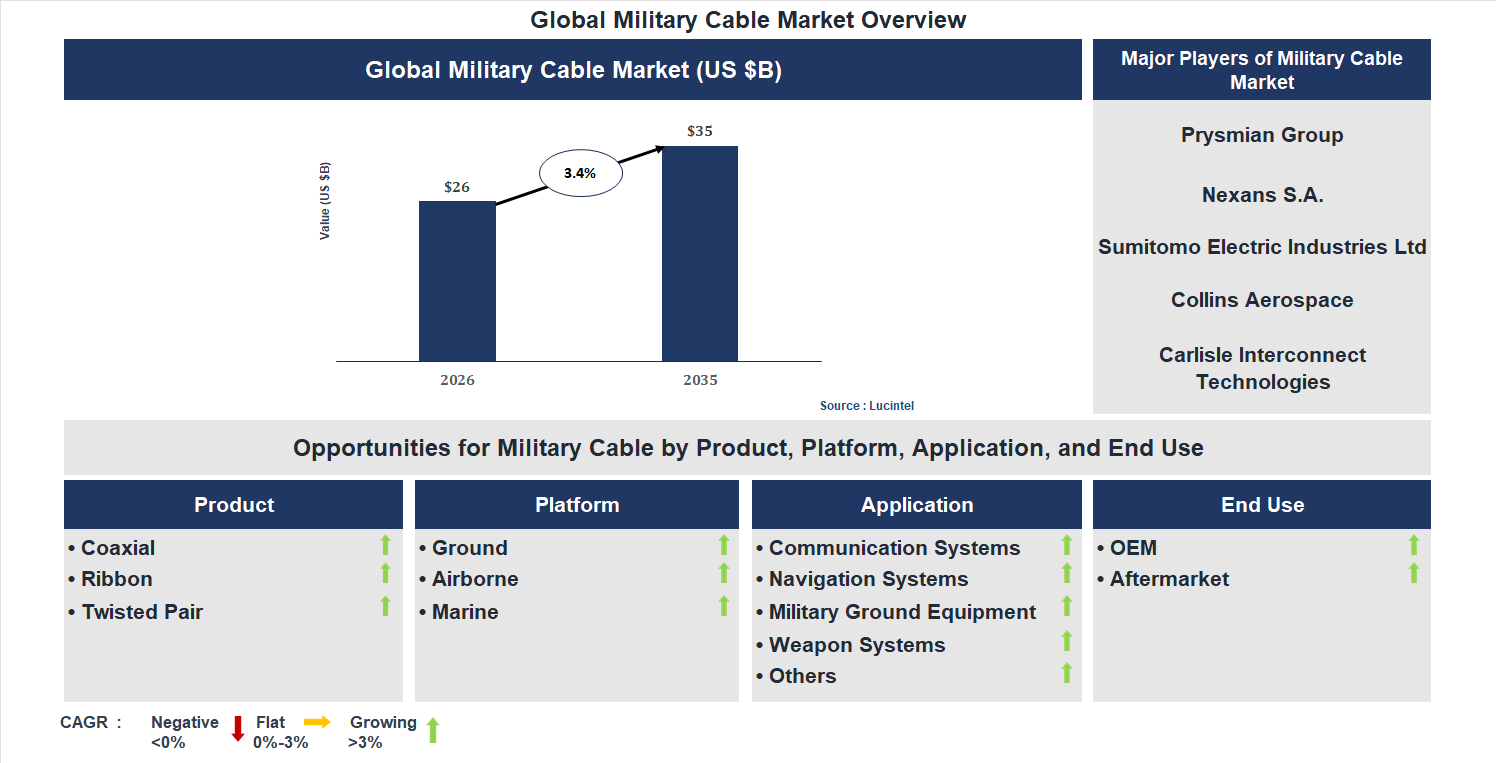
Key data points: The market size in 2035 = $35 billion, growth forecast = 3.4% annually for the next 8 years. Scroll below to get more insights. This market report covers trends, opportunities and forecasts in military cable market to 2035 by product (coaxial, ribbon, and twisted pair), platform (ground, airborne, and marine), application (communication systems, navigation systems, military ground equipment, weapon systems, and others), end use (OEM and aftermarket), and region (North America, Europe, Asia Pacific, and the Rest of the World)
We'll send your sample report shortly.
• Lucintel forecasts that, within the product category, coaxial is expected to witness the highest growth over the forecast period.
• Within the application category, communication system is expected to witness the highest growth.
• In terms of region, APAC is expected to witness the highest growth over the forecast period. Gain valuable insights for your business decisions with our comprehensive 150+ page report. Sample figures with some insights are shown below.
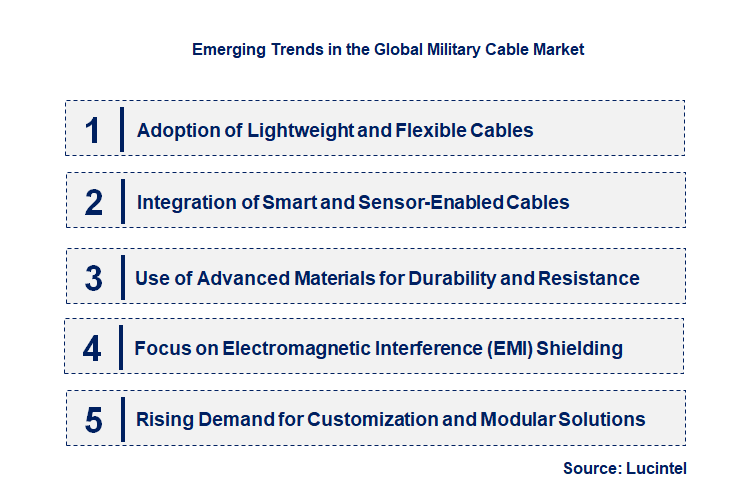
• Adoption of Lightweight and Flexible Cables: The demand for lightweight, flexible cables is increasing to reduce the load on military personnel and vehicles. These cables are made from advanced materials like high-performance polymers and composites, which offer durability without adding weight. This trend enhances mobility, reduces fatigue, and improves overall operational efficiency. Additionally, lightweight cables facilitate easier installation and maintenance in complex military systems, making them ideal for modern, fast-paced combat scenarios. As military operations become more dynamic, the need for such adaptable cables continues to grow significantly.
• Integration of Smart and Sensor-Enabled Cables: Smart cables embedded with sensors are transforming military communication and power systems. These cables can monitor parameters such as temperature, strain, and electrical performance in real-time, enabling predictive maintenance and reducing downtime. This integration enhances system reliability and safety, especially in critical applications like aircraft, submarines, and battlefield communications. The ability to gather data continuously allows military forces to optimize performance and quickly address potential issues, leading to increased operational readiness and reduced costs over the lifecycle of equipment.
• Use of Advanced Materials for Durability and Resistance: The market is witnessing a shift towards cables made from advanced materials that offer superior resistance to environmental stressors such as extreme temperatures, moisture, chemicals, and mechanical wear. Materials like Teflon, silicone, and specialized rubber compounds are increasingly used to ensure longevity and reliability in harsh conditions. These durable cables are essential for military applications in diverse environments, including deserts, arctic regions, and underwater operations. The adoption of such materials minimizes maintenance needs and extends the lifespan of military systems, providing a strategic advantage in prolonged missions.
• Focus on Electromagnetic Interference (EMI) Shielding: As military systems become more sophisticated and densely packed, the risk of electromagnetic interference increases. To counter this, there is a growing emphasis on cables with enhanced EMI shielding capabilities. These cables prevent signal degradation and ensure secure, interference-free communication and data transfer. Improved shielding techniques, such as braided shields and foil wraps, are being integrated into cable designs. This trend is critical for maintaining operational security and effectiveness, especially in electronic warfare environments where signal integrity is paramount.
• Rising Demand for Customization and Modular Solutions: Military requirements are highly specific, prompting a shift towards customizable and modular cable solutions. These allow for easier upgrades, repairs, and system integration, reducing overall lifecycle costs. Modular cables can be quickly adapted to different platforms and mission needs, providing flexibility in rapidly changing operational scenarios. Customization also ensures compatibility with various military standards and specifications, enhancing interoperability across different branches and allied forces. This trend supports the evolving nature of modern warfare, where adaptability and rapid deployment are crucial. These emerging trends are fundamentally reshaping the military cable market by emphasizing lightweight, smart, durable, interference-resistant, and customizable solutions. These developments are enabling military forces to operate more efficiently, reliably, and securely in increasingly complex and demanding environments, ultimately driving innovation and growth within the industry.
• Integration of Fiber Optic Cables: The shift towards fiber optic technology enhances data transmission speed and security, enabling real-time communication in battlefield scenarios. This development improves operational efficiency and reduces vulnerability to electronic warfare. The adoption of fiber optics is also driven by the need for lightweight, flexible cables that withstand harsh environments, making them essential for modern military applications. Overall, this integration is transforming military communication infrastructure.
• Adoption of Ruggedized Cables: Ruggedized cables are designed to endure extreme conditions such as high temperatures, moisture, and mechanical stress. Their increased adoption ensures reliable performance in combat zones and challenging environments. These cables are crucial for power supply, communication, and sensor systems, reducing maintenance costs and downtime. The development of advanced materials and protective coatings has further enhanced their durability, making them indispensable for military operations worldwide.
• Development of Wireless Power Transmission: Wireless power transmission technology is emerging as a solution to reduce cable clutter and improve operational flexibility. This innovation allows military equipment to be powered remotely, minimizing the risk of cable damage and simplifying logistics. It also supports the deployment of autonomous systems and drones. As this technology matures, it is expected to revolutionize power management in military settings, offering safer and more efficient energy solutions.
• Focus on Miniaturization and Flexibility: The demand for smaller, more flexible cables is increasing to accommodate compact and portable military devices. Advances in materials and design enable cables to be lightweight without compromising strength or performance. This development supports the integration of advanced electronics, wearable systems, and unmanned vehicles. Miniaturized cables improve operational agility and reduce logistical burdens, making them vital for modern, technology-driven military forces.
• Emphasis on Cybersecurity-Resistant Cables: With rising cyber threats, military cables are being developed with enhanced security features to prevent electronic eavesdropping and hacking. These cables incorporate encryption and shielding technologies to safeguard sensitive data and communication channels. The focus on cybersecurity-resistant cables is critical for maintaining operational integrity and national security. This development underscores the importance of secure communication infrastructure in modern warfare. These recent developments are collectively transforming the military cable market by enhancing performance, durability, and security. They enable armed forces to operate more efficiently and safely in complex environments. As these innovations continue to evolve, the market is expected to see sustained growth, driven by increasing defense investments and technological demands. Overall, these advancements are setting new standards for military communication and power systems worldwide.
• Expansion into Emerging Markets Offers New Growth Avenues: As developing countries increase their defense spending, there is a rising demand for military cables to support modernization efforts. Countries in Asia-Pacific, the Middle East, and Africa are investing heavily in defense infrastructure, creating opportunities for market players to establish a foothold. Local manufacturing, customized solutions, and strategic collaborations can help capitalize on these expanding markets, driving overall industry growth.
• Integration of Advanced Materials Enhances Cable Durability and Performance: The development of new materials such as high-performance polymers, composites, and nanomaterials is revolutionizing military cables. These innovations improve resistance to extreme temperatures, moisture, electromagnetic interference, and physical stress. Enhanced durability ensures reliable communication and power transmission in combat zones and harsh environments, making advanced material integration a key growth driver for manufacturers seeking to meet stringent military standards
• Increasing Adoption of Fiber Optic Cables for Secure Communication: Fiber optic technology offers high bandwidth, immunity to electromagnetic interference, and enhanced security, making it ideal for military applications. The growing need for secure, high-speed data transmission in battlefield communications, surveillance, and command systems is fueling demand for fiber optic cables. As military operations become more digitized, the adoption of fiber optics is expected to accelerate, presenting substantial growth opportunities for suppliers and integrators.
• Development of Specialized Cables for Unmanned Systems and Robotics: The rise of unmanned aerial vehicles (UAVs), underwater drones, and ground robots necessitates specialized cables that are lightweight, flexible, and resistant to environmental factors. These cables must support high data transfer rates and withstand operational stresses. The increasing deployment of autonomous systems in defense missions is creating a niche market for tailored cable solutions, encouraging innovation and collaboration among manufacturers to meet these unique requirements.
• Focus on Lightweight, Compact Cables to Improve Operational Efficiency: Modern military operations demand portable, easy-to-install cables that do not compromise performance. Lightweight and compact cables reduce logistical burdens, improve mobility, and facilitate rapid deployment of military equipment. Advances in miniaturization and material science are enabling the production of such cables, which are increasingly preferred for tactical, naval, and airborne applications. This trend is expected to continue, boosting market growth through enhanced operational efficiency. These growth opportunities are poised to significantly influence the military cable market by fostering innovation, expanding geographic reach, and addressing evolving defense needs. Embracing advanced materials, emerging technologies, and strategic market entry will enable industry players to capitalize on the increasing demand for reliable, high-performance military cables. Overall, these opportunities will drive sustained growth and technological advancement in the defense sector.
• Technological Innovation: The rapid development of advanced communication, surveillance, and weapon systems necessitates high-performance military cables. Innovations such as fiber-optic technology, electromagnetic shielding, and ruggedized cables enhance operational efficiency and reliability in harsh environments. As military systems become more sophisticated, the demand for specialized cables that support high data transfer rates, durability, and security increases, fueling market growth. Continuous R&D investments by defense contractors and governments further accelerate technological progress, ensuring the market remains competitive and responsive to evolving military needs.
• Increasing Defense Budgets: Governments worldwide are allocating substantial funds toward modernizing their armed forces, which directly boosts demand for military cables. Enhanced defense budgets enable procurement of advanced communication networks, surveillance systems, and electronic warfare equipment, all of which rely heavily on specialized cabling solutions. This financial commitment reflects geopolitical tensions and the need for strategic superiority, driving manufacturers to innovate and expand their product offerings. As defense spending continues to rise, the market is poised for sustained growth, supported by long-term procurement contracts and infrastructure development projects.
• Growing Adoption of Fiber Optic Cables: Fiber optic technology offers significant advantages such as higher bandwidth, immunity to electromagnetic interference, and lightweight design, making it ideal for military applications. The shift from traditional copper cables to fiber optics is driven by the need for secure, high-speed data transmission in battlefield communications, naval operations, and aircraft systems. Military organizations are increasingly integrating fiber optic cables into their platforms to enhance operational capabilities and ensure secure communication channels. This trend is expected to persist, further expanding the market for fiber optic military cables and encouraging innovation in related technologies.
• Geopolitical Tensions and Conflicts: Rising geopolitical tensions and regional conflicts compel nations to upgrade their military infrastructure, including communication and electronic warfare systems. These scenarios create a heightened demand for reliable, durable, and secure military cables capable of withstanding extreme conditions and potential threats. Countries are investing in modernizing their armed forces to maintain strategic advantages, which directly impacts the market by increasing procurement activities. The ongoing geopolitical landscape ensures a steady demand for military cables, especially in regions experiencing instability, thereby supporting market expansion and technological development.
• Focus on Modernization and Network-centric Warfare: The shift toward network-centric warfare emphasizes integrated, real-time communication across various military platforms. This modernization drive necessitates advanced cabling solutions capable of supporting high data loads and ensuring seamless connectivity. Military forces are investing in integrated communication networks, requiring specialized cables that can operate reliably in diverse environments. This trend promotes innovation in cable design, including enhanced shielding, flexibility, and durability, to meet the demands of modern warfare. As militaries prioritize network-centric capabilities, the market for sophisticated military cables is expected to grow significantly. The challenges facing this Market include:
• Regulatory and Compliance Issues: Strict regulatory standards related to safety, environmental impact, and security pose significant hurdles for market players. Compliance with international standards such as MIL-STD and environmental regulations requires substantial investment in testing, certification, and quality assurance processes. These regulations can delay product launches and increase costs, limiting agility and competitiveness. Additionally, evolving regulatory landscapes necessitate continuous adaptation, which can strain resources, especially for smaller manufacturers. Navigating these complex compliance requirements is crucial for market participants to avoid penalties and maintain market access.
• High Manufacturing Costs: The production of advanced military cables involves sophisticated materials, precision engineering, and rigorous testing, leading to high manufacturing costs. These expenses are compounded by the need for specialized facilities and skilled labor, which can limit profit margins and pricing flexibility. Cost pressures may restrict the ability of manufacturers to innovate or expand their product lines, especially in competitive markets. Moreover, fluctuations in raw material prices, such as copper and fiber optics, can further impact profitability, posing a significant challenge to sustainable growth.
• Rapid Technological Obsolescence: The fast-paced nature of technological innovation in defense systems results in frequent product obsolescence. Military cables must continually evolve to support new communication protocols, higher data rates, and enhanced security features. This rapid obsolescence pressures manufacturers to invest heavily in R&D and frequently update their product offerings, increasing costs and operational risks. Companies must balance innovation with cost management to remain competitive, while military clients seek long-term, reliable solutions, creating a complex landscape of technological and market uncertainties. The military cable market is shaped by technological advancements, increased defense spending, and geopolitical factors that drive growth. However, regulatory complexities, high manufacturing costs, and rapid technological changes pose significant challenges. These drivers and challenges collectively influence market dynamics, requiring stakeholders to innovate continuously while managing costs and compliance. The overall impact is a market characterized by robust growth potential, tempered by the need for strategic adaptation to evolving technological and regulatory environments. Success in this market hinges on balancing innovation with cost-efficiency and regulatory adherence to capitalize on emerging opportunities.
• Prysmian Group
• Nexans S.A.
• Sumitomo Electric Industries Ltd
• Collins Aerospace
• Carlisle Interconnect Technologies
• Coaxial
• Ribbon
• Twisted Pair
• Ground
• Airborne
• Marine
• Communication Systems
• Navigation Systems
• Military Ground Equipment
• Weapon Systems
• Others
• OEM
• Aftermarket
• North America
• Europe
• Asia Pacific
• The Rest of the World
• United States: The US military cable market has seen substantial growth due to increased defense spending and modernization efforts. Key advancements include the integration of fiber optic cables for high-speed data transmission and the development of ruggedized cables suitable for extreme environments. The US is also investing in stealth and secure communication cables to enhance battlefield security. Collaborations with private sector firms are driving innovation, especially in military-grade wireless and hybrid cable systems. The focus remains on upgrading existing infrastructure and developing next-generation solutions to maintain technological superiority.
• China: China’s military cable market is rapidly expanding as part of its broader military modernization program. The country is focusing on indigenous production of high-performance cables, including fiber optics and armored cables, to reduce reliance on imports. Significant investments are being made in developing cables capable of supporting advanced communication systems and electronic warfare. China is also emphasizing the integration of smart cables with embedded sensors for real-time monitoring and enhanced durability. The government’s strategic initiatives aim to bolster domestic manufacturing capabilities and achieve self-sufficiency in military electronics.
• Germany: Germany’s market developments are characterized by a focus on high-quality, reliable cables for NATO and European defense projects. The country is investing in the development of lightweight, flexible cables that offer high resistance to environmental stressors. Germany is also advancing in the field of secure communication cables, with an emphasis on encryption and anti-tampering features. The integration of digital technologies and automation in cable manufacturing processes is improving efficiency and product quality. Collaboration with European partners is strengthening supply chains and fostering innovation in military cable solutions.
• India: India’s military cable market is witnessing rapid growth driven by ongoing modernization and strategic defense initiatives. The country is prioritizing the development of indigenous cables, including fiber optics and armored cables, to support its expanding defense infrastructure. India is also focusing on upgrading its communication networks with advanced, secure cables capable of withstanding challenging terrains and hostile environments. The government’s “Make in India” initiative is encouraging local manufacturing and technology transfer. Additionally, collaborations with international firms are facilitating access to cutting-edge cable technologies to enhance national security.
• Japan: Japan’s market developments are centered around enhancing military communication systems with advanced, resilient cables. The country is investing in the development of cables that can operate reliably in extreme weather conditions and under electromagnetic interference. Japan is also emphasizing the integration of smart cables with embedded sensors for real-time monitoring and maintenance. The focus on secure, encrypted cables is critical for protecting sensitive military data. Japan’s technological innovation and strict quality standards are driving the adoption of high-performance cables to support its defense modernization efforts and regional security commitments.


• Prysmian Group
• Nexans S.A.
• Sumitomo Electric Industries Ltd
• Collins Aerospace
• Carlisle Interconnect Technologies Q6. Which military cable market segment will be the largest in future? Answer: Lucintel forecasts that, within the product category, coaxial is expected to witness the highest growth over the forecast period. Q7. In military cable market, which region is expected to be the largest in next 8 years? Answer: In terms of region, APAC is expected to witness the highest growth over the forecast period. Q8. Do we receive customization in this report? Answer: Yes, Lucintel provides 10% customization without any additional cost.


Choose a license that fits your team. Instant PDF delivery.
Prices exclude taxes. Instant delivery. Custom licensing available on request.
Market Report · July 31, 2026
Market Report · July 31, 2026
Market Report · July 31, 2026
Trusted partner for strategic intelligence and business growth


Receive a complimentary market analysis tailored to your industry. Our analysts will identify key growth opportunities and competitive dynamics specific to your business.

Market size, growth rate, and key trend analysis for your specific sector.

Top competitor positioning and market share analysis.

Strategic recommendations backed by data-driven insights.
Get curated market intelligence and competitive moves straight to your inbox.
By subscribing, you agree to receive our monthly insights. Unsubscribe anytime.
Receive a complimentary market analysis tailored to your industry. Our analysts will identify key growth opportunities and competitive dynamics specific to your business.
Market size, growth rate, and key trend analysis for your specific sector.
Top competitor positioning and market share analysis.
Strategic recommendations backed by data-driven insights.
Get curated market intelligence, emerging trends, and competitive moves straight to your inbox each month.
By subscribing, you agree to receive our monthly insights. Unsubscribe anytime.
We'll send your sample report shortly.