
Report Feature
Methyl Orthoformate Market Trends and Forecast
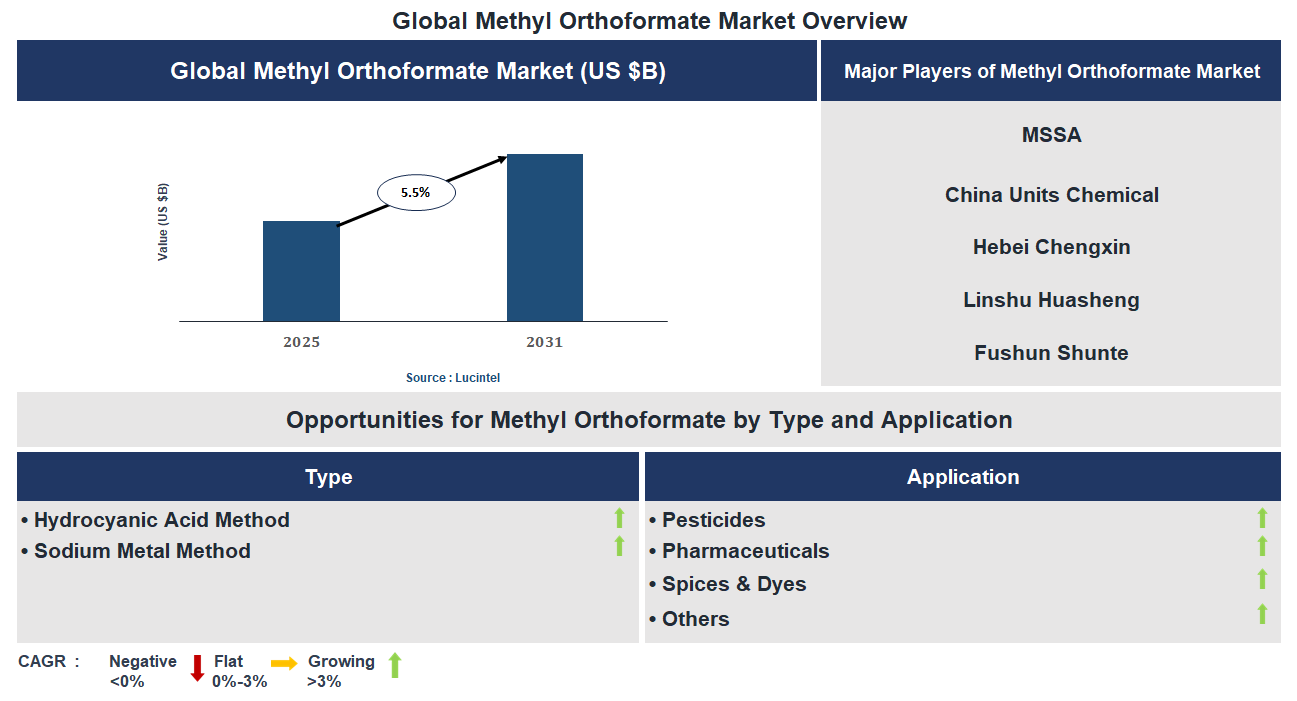
The future of the global methyl orthoformate market looks promising with opportunities in the pesticide, pharmaceutical, and spice & dye markets. The global methyl orthoformate market is expected to grow with a CAGR of 5.5% from 2025 to 2031. The major drivers for this market are the increasing demand for specialty chemicals, the rising usage in pharmaceutical applications, and the growing need for advanced agrochemical products.• Lucintel forecasts that, within the type category, hydrocyanic acid method is expected to witness higher growth over the forecast period.
• Within the application category, pharmaceutical is expected to witness the highest growth.
• In terms of region, APAC is expected to witness the highest growth over the forecast period. Gain valuable insights for your business decisions with our comprehensive 150+ page report. Sample figures with some insights are shown below.
Emerging Trends in the Methyl Orthoformate Market
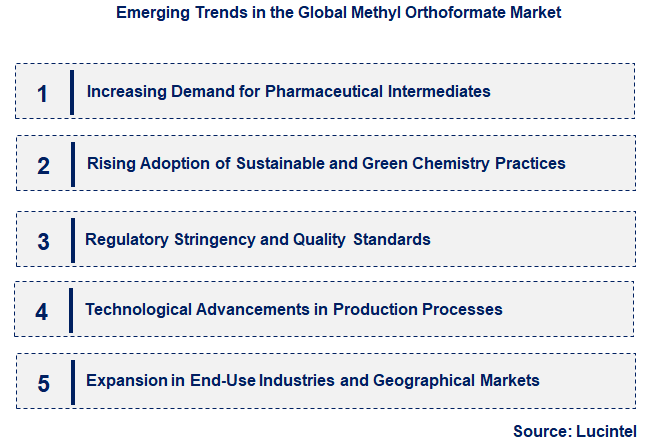
The methyl orthoformate market is experiencing a significant transformation driven by technological advancements, regulatory changes, and shifting industry demands. As industries such as pharmaceuticals, agrochemicals, and manufacturing seek more efficient and sustainable solutions, the market adapts to these needs through innovation and strategic shifts. Emerging trends are shaping the future landscape, influencing supply chains, product development, and market dynamics. Understanding these trends is crucial for stakeholders aiming to capitalize on opportunities and mitigate risks in this evolving environment. The following key trends highlight the major developments currently impacting the methyl orthoformate market.• Increasing Demand for Pharmaceutical Intermediates: The pharmaceutical industry’s growth is fueling demand for methyl orthoformate as a key intermediate in drug synthesis. Its role in producing active pharmaceutical ingredients (APIs) makes it essential for developing new medications. As global healthcare needs expand, especially in emerging markets, the demand for high-quality intermediates rises, prompting manufacturers to enhance production capacities and ensure compliance with stringent safety standards. This trend is expected to sustain market growth and encourage innovation in related chemical processes.
• Rising Adoption of Sustainable and Green Chemistry Practices: Environmental concerns and regulatory pressures are pushing industries toward greener alternatives. Companies are investing in sustainable manufacturing processes that reduce hazardous waste and energy consumption. Methyl orthoformate producers are exploring eco-friendly synthesis methods and improving process efficiencies. This shift not only minimizes environmental impact but also aligns with corporate social responsibility goals, attracting environmentally conscious clients. The trend is fostering innovation in production techniques and encouraging the development of safer, more sustainable chemical products.
• Regulatory Stringency and Quality Standards: Governments and international agencies are implementing stricter regulations regarding chemical safety, handling, and emissions. These regulations compel manufacturers to adopt higher quality standards and transparent supply chain practices. Compliance increases operational costs but ensures product safety and market access. Companies are investing in quality control, certification, and traceability systems to meet these standards. This trend enhances product reliability and market credibility, ultimately shaping the competitive landscape and encouraging industry-wide improvements in safety and quality.
• Technological Advancements in Production Processes: Innovations such as process automation, improved catalysts, and alternative synthesis routes are enhancing production efficiency and yield. These technological improvements reduce costs and minimize waste, making methyl orthoformate more accessible and affordable. Advanced analytical tools enable better quality control and process optimization. As technology evolves, manufacturers can respond more swiftly to market demands and customize products for specific applications. This trend is driving overall market competitiveness and supporting the development of new derivatives and formulations.
• Expansion in End-Use Industries and Geographical Markets: The growth of end-use sectors like agrochemicals, plastics, and specialty chemicals is broadening the application scope of methyl orthoformate. Additionally, emerging markets in the Asia-Pacific and Latin America are witnessing increased adoption due to industrialization and infrastructure development. This expansion creates new opportunities for suppliers and encourages regional manufacturing hubs. Market players are focusing on strategic partnerships and localized production to capitalize on regional growth. The trend is diversifying the market landscape and fostering global integration of supply chains. In summary, these trends are collectively reshaping the methyl orthoformate market by promoting sustainable practices, enhancing product quality, leveraging technological innovations, and expanding into new markets. They are driving growth, fostering innovation, and ensuring the industry adapts to evolving regulatory and environmental standards, ultimately creating a more resilient and dynamic market environment.
Recent Development in the Methyl Orthoformate Market
The methyl orthoformate market has experienced significant shifts driven by technological advancements, regulatory changes, and evolving industrial demands. As industries such as pharmaceuticals, agriculture, and chemical manufacturing seek more efficient and sustainable solutions, the market landscape is rapidly transforming. Recent developments reflect a focus on innovation, safety, and environmental considerations, which are shaping future growth trajectories. These changes are influencing supply chains, pricing strategies, and product applications, ultimately impacting market competitiveness and expansion opportunities. Understanding these key developments is essential for stakeholders aiming to navigate the dynamic environment effectively and capitalize on emerging trends.• Technological Innovations: Introduction of advanced synthesis methods has improved production efficiency and product purity, reducing costs and environmental impact. This development enhances supply stability and opens new application avenues, boosting market growth and competitiveness.
• Regulatory Changes: Stricter safety and environmental regulations have prompted manufacturers to adopt greener processes and improve product handling standards. These regulations ensure safer usage but may increase compliance costs, influencing market dynamics and pricing strategies.
• Growing Pharmaceutical Applications: Increased use of methyl orthoformate in drug synthesis and formulation has expanded market demand. This trend supports pharmaceutical innovation and offers new revenue streams, strengthening the market’s growth prospects.
• Expansion in Agricultural Use: The adoption of methyl orthoformate as a pesticide intermediate has risen, driven by the need for effective crop protection solutions. This expansion enhances market size and encourages R&D investments in related sectors.
• Supply Chain Optimization: Companies are investing in supply chain resilience through strategic partnerships and regional manufacturing hubs. This development reduces lead times and costs, ensuring consistent product availability and competitive advantage. In summary, these recent developments are collectively driving growth, improving safety standards, and fostering innovation within the methyl orthoformate market. They are enabling manufacturers to meet evolving industry demands while navigating regulatory landscapes, ultimately shaping a more sustainable and competitive market environment.
Strategic Growth Opportunities in the Methyl Orthoformate Market
The methyl orthoformate market is experiencing significant growth driven by expanding industrial applications and technological advancements. As industries such as pharmaceuticals, agriculture, and chemical manufacturing evolve, the demand for methyl orthoformate is increasing due to its versatile applications. Companies are exploring innovative uses and expanding production capacities to meet rising global demand. This dynamic environment presents several key growth opportunities across various applications, which are poised to shape the future landscape of the market. Understanding these opportunities is essential for stakeholders aiming to capitalize on emerging trends and maintain a competitive advantage in this evolving sector.• Expansion of Pharmaceutical Synthesis: Methyl orthoformate is crucial in synthesizing pharmaceuticals, especially in producing intermediates and active pharmaceutical ingredients (APIs). As the pharmaceutical sector grows, the demand for efficient, high-quality synthesis processes increases. Methyl orthoformate’s role in facilitating chemical reactions enhances production efficiency and purity, making it indispensable. Innovations in drug development and the need for cost-effective manufacturing are further boosting its use. This growth opportunity not only supports the pharmaceutical industrys expansion but also encourages research into new applications, ultimately driving market growth and diversification.
• Development of Crop Protection Products: The agricultural industry relies heavily on methyl orthoformate for synthesizing pesticides, herbicides, and fungicides. As global food demand rises, the need for effective crop protection solutions intensifies. Methyl orthoformate’s utility in creating active ingredients for agrochemicals positions it as a vital component. The push towards sustainable and environmentally friendly pesticides also opens avenues for developing new formulations. This opportunity enhances the market by aligning with agricultural productivity goals and environmental standards, fostering innovation in crop protection products, and expanding market reach.
• Production of Specialty Chemicals: Methyl orthoformate serves as a key precursor in manufacturing specialty chemicals used across various industries. The increasing demand for these chemicals in plastics, resins, and coatings drives growth. Advancements in chemical processing techniques improve yield and purity, enabling manufacturers to meet stringent quality standards. The ability to produce high-value specialty chemicals efficiently positions methyl orthoformate as a strategic raw material. This growth opportunity supports the chemical sector’s diversification and innovation, leading to increased market stability and expanded applications in emerging industries.
• Use in Fragrance and Formulation Development: The personal care industry leverages methyl orthoformate for developing fragrances and cosmetic formulations. As consumer preferences shift towards natural and innovative products, the demand for unique scents and formulations increases. Methyl orthoformate’s role in synthesizing aromatic compounds and enhancing product stability offers significant advantages. The trend towards premium and customized personal care products creates a lucrative opportunity for market players. This application not only broadens the market scope but also encourages R&D investments, fostering product differentiation and growth in the personal care segment.
• Innovation in Chemical Processes: The ongoing need for novel chemical processes and materials presents a substantial growth avenue. Methyl orthoformate is instrumental in developing new synthetic pathways and chemical derivatives. Investment in R&D by pharmaceutical, agrochemical, and chemical companies accelerates innovation, leading to new product launches and process improvements. This opportunity enhances the market by fostering technological advancements and expanding application horizons. Increased R&D activity also attracts collaborations and investments, positioning methyl orthoformate as a critical component in future chemical innovations and market expansion. In summary, these key growth opportunities across applications are significantly impacting the methyl orthoformate market by driving demand, fostering innovation, and expanding its application scope. As industries evolve and new needs emerge, methyl orthoformate’s versatility and strategic importance will continue to propel market growth and diversification.
Methyl Orthoformate Market Driver and Challenges
The methyl orthoformate market is influenced by a variety of technological, economic, and regulatory factors that shape its growth trajectory. Advances in chemical manufacturing processes, increasing demand from end-use industries such as pharmaceuticals, agriculture, and plastics, along with evolving regulatory standards for chemical safety and environmental impact, play significant roles. Market dynamics are also affected by fluctuations in raw material prices and global trade policies. These drivers and challenges collectively determine the markets expansion potential, operational risks, and compliance requirements, making it essential for stakeholders to understand these factors to strategize effectively and capitalize on emerging opportunities while mitigating potential threats. The factors responsible for driving the methyl orthoformate market include:-• Growing Demand from Pharmaceuticals: The pharmaceutical industry is a major consumer of methyl orthoformate, using it as a key intermediate in synthesizing various drugs and active pharmaceutical ingredients (APIs). The increasing prevalence of chronic diseases and the expansion of pharmaceutical manufacturing globally are fueling demand. Additionally, methyl orthoformates role in producing specialty chemicals and intermediates enhances its market prospects. The rise in research and development activities for new drug formulations further propels this demand, making it a critical component in pharmaceutical synthesis processes.
• Expansion in the Agriculture Sector: Methyl orthoformate is used as a pesticide and fumigant in agriculture, especially for controlling pests and preserving crops. The global push towards increased food production and the adoption of chemical-based pest control methods are driving demand. Moreover, the need for effective and fast-acting pesticides in developing regions contributes to market growth. Regulatory approvals for new agricultural chemicals containing methyl orthoformate also support this expansion, aligning with the growing emphasis on crop protection and food security.
• Technological Advancements in Chemical Manufacturing: Innovations in chemical synthesis and manufacturing processes have improved the efficiency, safety, and environmental footprint of methyl orthoformate production. The adoption of greener technologies and process optimization reduces costs and enhances product quality. These technological advancements enable manufacturers to meet stringent regulatory standards and expand their product portfolios, thereby increasing market competitiveness. Continuous R&D efforts also facilitate the development of derivatives and related chemicals, broadening the application scope of methyl orthoformate.
• Increasing Use in Plastic and Resin Industries: Methyl orthoformate serves as a precursor in the production of formaldehyde-based resins and plastics, which are extensively used in construction, automotive, and packaging industries. The rising demand for durable, lightweight, and cost-effective materials is boosting the need for methyl orthoformate. The growth of the construction sector in emerging economies and the expansion of automotive manufacturing are key drivers. This trend underscores the importance of methyl orthoformate in the manufacturing supply chain for plastics and resins.
• Rising Investment in Chemical Industry: Investments by major chemical companies in expanding production capacities and developing new applications are fueling market growth. Strategic collaborations, mergers, and acquisitions facilitate technology transfer and market penetration. Governments initiatives to promote chemical manufacturing and infrastructure development also contribute to a favorable investment climate. These investments enable scaling up production, reducing costs, and innovating product offerings, which collectively strengthen the market position of methyl orthoformate globally. The challenges facing this methyl orthoformate market include:-
• Stringent Regulatory Environment: The chemical industry faces strict regulations concerning safety, environmental impact, and handling procedures. Regulatory agencies such as REACH in Europe and EPA in the United States impose rigorous standards that can delay product approvals and increase compliance costs. These regulations necessitate continuous monitoring, testing, and documentation, which can hinder market growth and innovation. Non-compliance risks include hefty fines, product bans, and reputational damage, making regulatory adherence a critical challenge for market players.
• Fluctuating Raw Material Prices: The production of methyl orthoformate depends on raw materials such as formaldehyde and methanol, whose prices are highly volatile due to supply-demand imbalances, geopolitical tensions, and energy market fluctuations. These price swings impact manufacturing costs and profit margins, forcing companies to adjust pricing strategies or seek alternative sources. Unpredictable raw material costs can also disrupt supply chains and hinder long-term planning, posing a significant challenge to market stability and growth.
• Environmental and Safety Concerns: Methyl orthoformate is associated with toxicity and flammability risks, raising concerns over worker safety and environmental pollution. Handling and disposal require strict safety protocols, increasing operational costs. Environmental regulations aimed at reducing hazardous emissions and waste disposal further complicate manufacturing processes. Public awareness and activism regarding chemical safety also pressure companies to adopt cleaner, safer alternatives, which could limit market expansion if not managed properly. In summary, the methyl orthoformate market is shaped by robust demand from pharmaceuticals, agriculture, and plastics industries, driven by technological innovations and expanding end-use sectors. However, regulatory hurdles, raw material price volatility, and safety concerns pose significant challenges. These factors collectively influence market dynamics, requiring stakeholders to innovate, adapt, and comply to sustain growth. Overall, the markets future hinges on balancing these drivers and challenges through strategic planning, technological advancements, and regulatory compliance, ensuring long-term stability and expansion opportunities.
List of Methyl Orthoformate Companies
Companies in the market compete on the basis of product quality offered. Major players in this market focus on expanding their manufacturing facilities, R&D investments, infrastructural development, and leverage integration opportunities across the value chain. With these strategies methyl orthoformate companies cater increasing demand, ensure competitive effectiveness, develop innovative products & technologies, reduce production costs, and expand their customer base. Some of the methyl orthoformate companies profiled in this report include-• MSSA
• China Units Chemical
• Hebei Chengxin
• Linshu Huasheng
• Fushun Shunte
• Yingkou Cynovate Chemical
• Xinhua
Methyl Orthoformate Market by Segment
The study includes a forecast for the global methyl orthoformate market by type, application, and region.Methyl Orthoformate Market by Type [Value from 2019 to 2031]:
• Hydrocyanic Acid Method
• Sodium Metal Method
Methyl Orthoformate Market by Application [Value from 2019 to 2031]:
• Pesticides
• Pharmaceuticals
• Spices & Dyes
• Others
Methyl Orthoformate Market by Region [Value from 2019 to 2031]:
• North America
• Europe
• Asia Pacific
• The Rest of the World
Country Wise Outlook for the Methyl Orthoformate Market
The methyl orthoformate market has experienced notable shifts driven by technological advancements, regulatory changes, and evolving industrial demands across major economies. As industries such as pharmaceuticals, agrochemicals, and plastics expand, the demand for methyl orthoformate as a key intermediate has increased. Countries are focusing on sustainable production methods and stricter safety standards, influencing market dynamics. The following summaries highlight recent developments in the United States, China, Germany, India, and Japan, reflecting their unique contributions and challenges within this market.• United States: The US market has seen increased adoption of methyl orthoformate in pharmaceutical synthesis, driven by innovation in drug manufacturing. Regulatory agencies have implemented stricter safety protocols, encouraging companies to adopt greener production processes. Investment in R&D for alternative synthesis routes has also grown, aiming to reduce environmental impact. The demand from the agrochemical sectors remains steady, supported by a robust chemical industry. Overall, the US emphasizes sustainable practices and technological advancements to maintain market competitiveness.
• China: China continues to dominate the methyl orthoformate market with significant production capacity expansion. The country’s focus on chemical manufacturing for export has led to increased output, supported by government incentives. Recent developments include the adoption of cleaner production technologies and efforts to meet international safety standards. The domestic demand for pharmaceuticals and agrochemicals is rising, fueling further growth. However, environmental regulations are tightening, prompting manufacturers to innovate in waste management and emission controls. China remains a key player in global supply chains for methyl orthoformate.
• Germany: Germany’s market is characterized by high-quality production and strict adherence to environmental regulations. Recent developments include the integration of sustainable manufacturing practices and investment in eco-friendly catalysts. The country’s pharmaceutical and chemical sectors are leveraging advanced technologies to improve efficiency and reduce waste. Germany also focuses on research collaborations to develop safer and more sustainable methyl orthoformate synthesis methods. The market remains stable, with a strong emphasis on innovation and compliance with European Union standards.
• India: India’s methyl orthoformate market is witnessing rapid growth due to expanding pharmaceutical and agrochemical industries. Recent advancements include the adoption of cost-effective and environmentally friendly production techniques. The government’s push for chemical manufacturing self-sufficiency and export promotion has further boosted the sector. Investments in infrastructure and technology upgrades are ongoing to meet rising domestic and international demand. Challenges such as regulatory compliance and environmental concerns are being addressed through modernization efforts. Overall, India is emerging as a significant player in the global methyl orthoformate market.
• Japan: Japan’s market is characterized by high technological standards and a focus on sustainability. Recent developments include the adoption of innovative catalysts and process optimization to reduce environmental impact. The pharmaceutical industry’s demand for methyl orthoformate remains strong, supported by advanced R&D activities. Japan emphasizes eco-friendly production methods and strict safety standards, aligning with global sustainability goals. Collaborations between industry and academia are fostering new applications and improved synthesis techniques. The market is stable, with ongoing efforts to enhance efficiency and environmental compliance, maintaining Japan’s position as a leader in high-quality chemical manufacturing.

Features of the Global Methyl Orthoformate Market
Market Size Estimates: Methyl orthoformate market size estimation in terms of value ($B). Trend and Forecast Analysis: Market trends (2019 to 2024) and forecast (2025 to 2031) by various segments and regions. Segmentation Analysis: Methyl orthoformate market size by type, application, and region in terms of value ($B). Regional Analysis: Methyl orthoformate market breakdown by North America, Europe, Asia Pacific, and Rest of the World. Growth Opportunities: Analysis of growth opportunities in different types, applications, and regions for the methyl orthoformate market. Strategic Analysis: This includes M&A, new product development, and competitive landscape of the methyl orthoformate market. Analysis of competitive intensity of the industry based on Porter’s Five Forces model.
FAQ
Q1. What is the growth forecast for methyl orthoformate market? Answer: The global methyl orthoformate market is expected to grow with a CAGR of 5.5% from 2025 to 2031. Q2. What are the major drivers influencing the growth of the methyl orthoformate market? Answer: The major drivers for this market are the increasing demand for specialty chemicals, the rising usage in pharmaceutical applications, and the growing need for advanced agrochemical products. Q3. What are the major segments for methyl orthoformate market? Answer: The future of the methyl orthoformate market looks promising with opportunities in the pesticide, pharmaceutical, and spice & dye markets. Q4. Who are the key methyl orthoformate market companies? Answer: Some of the key methyl orthoformate companies are as follows:• MSSA
• China Units Chemical
• Hebei Chengxin
• Linshu Huasheng
• Fushun Shunte
• Yingkou Cynovate Chemical
• Xinhua Q5. Which methyl orthoformate market segment will be the largest in future? Answer: Lucintel forecasts that, within the type category, hydrocyanic acid method is expected to witness higher growth over the forecast period. Q6. In methyl orthoformate market, which region is expected to be the largest in next 5 years? Answer: In terms of region, APAC is expected to witness the highest growth over the forecast period. Q7. Do we receive customization in this report? Answer: Yes, Lucintel provides 10% customization without any additional cost.
Table of Contents
List of Figures
List of Tables
Methodology
- In-depth interviews of the major players in this market
- Detailed secondary research from competitors’ financial statements and published data
- Extensive searches of published works, market, and database information pertaining to industry news, company press releases, and customer intentions
- A compilation of the experiences, judgments, and insights of Lucintel’s professionals, who have analyzed and tracked this market over the years.


Buy Now
Choose a license that fits your team. Instant PDF delivery.
Prices exclude taxes. Instant delivery. Custom licensing available on request.
Key Questions
- • What are some of the most promising, high-growth opportunities for the methyl orthoformate market by type (hydrocyanic acid method and sodium metal method), application (pesticides, pharmaceuticals, spices & dyes, and others), and region (North America, Europe, Asia Pacific, and the Rest of the World)?
- • Which segments will grow at a faster pace and why?
- • Which region will grow at a faster pace and why?
- • What are the key factors affecting market dynamics? What are the key challenges and business risks in this market?
- • What are the business risks and competitive threats in this market?
- • What are the emerging trends in this market and the reasons behind them?
- • What are some of the changing demands of customers in the market?
- • What are the new developments in the market? Which companies are leading these developments?
- • Who are the major players in this market? What strategic initiatives are key players pursuing for business growth?
- • What are some of the competing products in this market and how big of a threat do they pose for loss of market share by material or product substitution?
- • What M&A activity has occurred in the last 5 years and what has its impact been on the industry? For any questions related to Methyl Orthoformate Market, Methyl Orthoformate Market Size, Methyl Orthoformate Market Growth, Methyl Orthoformate Market Analysis, Methyl Orthoformate Market Report, Methyl Orthoformate Market Share, Methyl Orthoformate Market Trends, Methyl Orthoformate Market Forecast, Methyl Orthoformate Companies, write Lucintel analyst at email: helpdesk@lucintel.com. We will be glad to get back to you soon.


