
Market Report · July 22, 2026

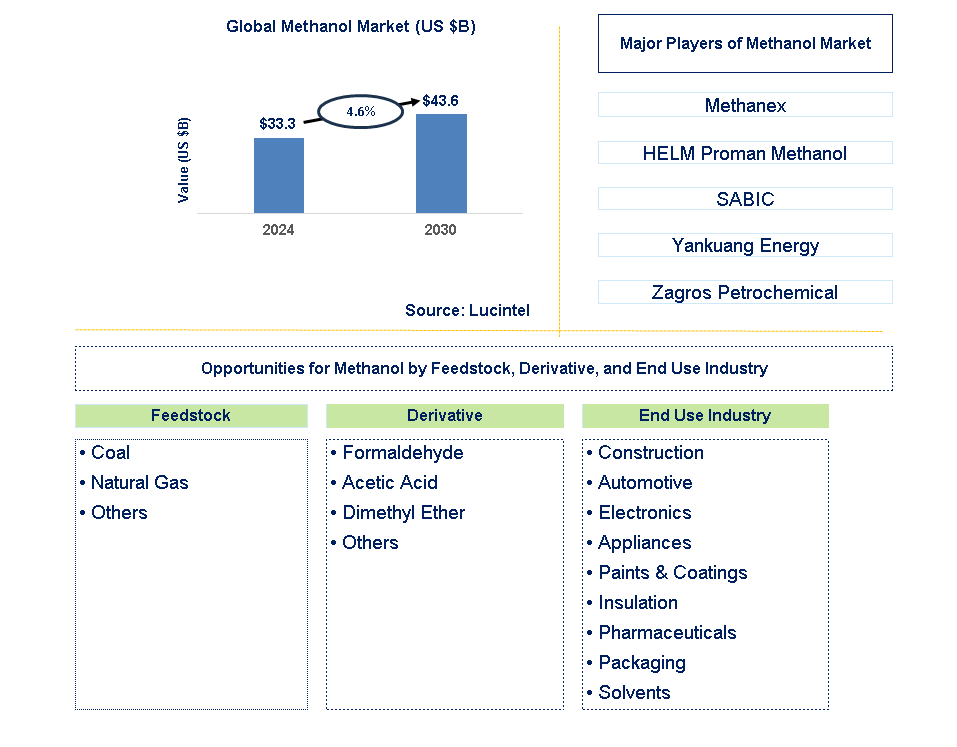
Key data points: The market size in 2030 = $43.6 billion, growth forecast = 4.6% annually for the next 6 years. Scroll below to get more insights. This market report covers trends, opportunities, and forecasts in the global methanol market to 2030 by feedstock (coal, natural gas, and others), derivative (formaldehyde, acetic acid, dimethyl ether, and others), end use industry (construction, automotive, electronics, appliances, paints & coatings, insulation, pharmaceuticals, packaging, solvents, and others), and region (North America, Europe, Asia Pacific, and the Rest of the World)
We'll send your sample report shortly.
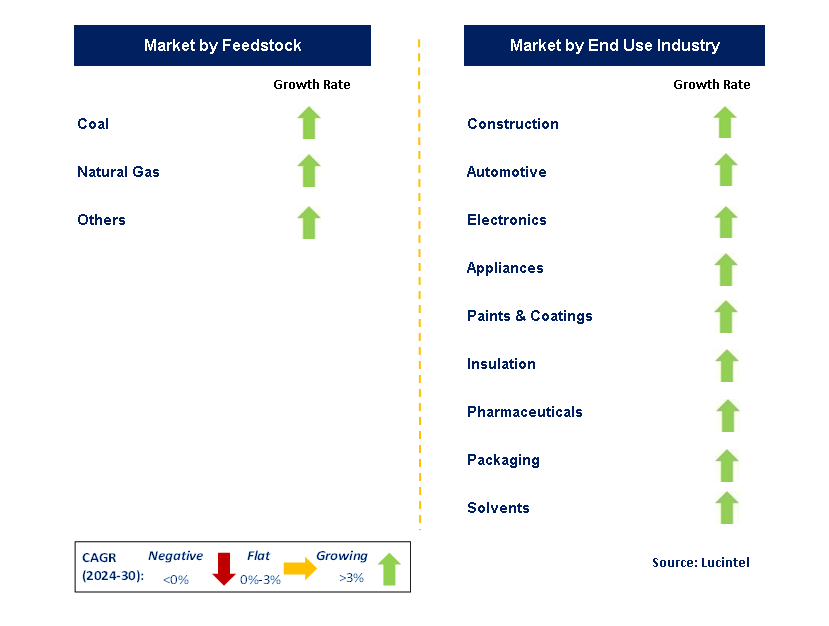
• Lucintel forecasts that, within the feedstock category, natural gas is expected to witness the highest growth over the forecast period.
• Within the end use industry category, construction will remain the largest segment over the forecast period.
• In terms of regions, APAC is expected to witness the highest growth over the forecast period. Gain valuable insights for your business decisions with our comprehensive 150+ page report.
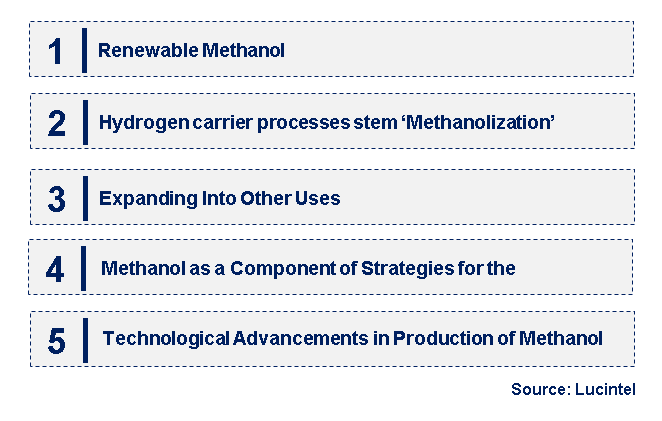
• Renewable Methanol: Biomass-based, waste-based, or CO2-based methanol—collectively called renewable methanol—is gradually becoming a highly sought-after replacement for conventional methanol. This trend indicates a broader shift towards reducing carbon emissions and protecting the environment. The development of technologies for producing renewable methanol is necessary for implementing environmental regulations and for the further expansion of the methanol market.
• Hydrogen Carrier Processes via Methanolization: Methanol is now regarded as a carrier of hydrogen due to its convenient storage and easier transportation compared to pure hydrogen. This trend is crucial for establishing hydrogen infrastructure development and cleaner energy concepts. The technology for methanol recovery, storage, and transportation in the hydrogen economy is well-supported, particularly relating to hydrogen-oriented development.
• Expanding into Other Uses: The industry is grappling with emerging and latent markets. Compared to its positioning in chemicals and fuel, the growing range of methanol's applications is adding value in non-conventional oil and advanced materials processing. Consequently, these developments are fueling demand and creating new markets for methanol producers and consumers.
• Methanol as a Component of Clean Energy Strategies: There is a growing trend of incorporating methanol into clean energy strategies, as it can serve as a low-carbon fuel and an energy carrier. For example, there is a resurgence in the use of methanol for storing renewable energy and as a less polluting energy source than fossil fuels. The emerging trends concerning the inclusion of methanol in energy systems focus on justice, equity, and sustainability.
• Technological Advancements in Methanol Production: Advances in technology for methanol production, particularly in catalysts and earlier processes, are influencing market growth. Such advancements improve productivity while reducing costs and promoting cleaner production of methanol. Technological development is essential for surviving competition and adapting to changes in market requirements. The methanol market is undergoing transformation with emerging trends in renewable methanol, hydrogen carrier applications, new energy uses, commercialization of clean energy, and improvements in production technology. These trends are poised to promote growth and development in the industry, changing business practices and expanding market scope.
• Growth of Renewable Methanol Projects: The development of renewable methanol projects is at a mid-stage. These projects involve the integration of biomass, waste, and CO2 to synthesize methanol, which is much more environmentally friendly than conventional methanol. The rise of these projects aligns with global initiatives aimed at addressing climate change and enhancing environmental integrity.
• Expansion of Methanol-to-Olefins (MTO) Technology: The continuous expansion of methanol-to-olefins (MTO) technology is a key factor fueling growth in the methanol market. MTO technologies enable the monetization of methanol, as it can be transformed into olefins, which are building blocks for the chemical industry. This development improves the methanol value chain and facilitates its adoption in multiple industrial applications.
• Widespread Utilization of Methanol in Transportation: There is increasing acceptance of methanol as a marine and automotive fuel, highlighting its role in transportation. This trend reflects the need for reducing emissions and improving fuel efficiency. However, the development of appropriate engines and the necessary infrastructure emphasizes the need for this fuel to be recognized as a greener alternative.
• Developments in Methanol Production: The modern world is characterized by advancements in production technologies for methanol, including highly efficient catalysts and processes. These innovations enhance production operations, minimize costs, and promote emission-free production. Emphasis must be placed on technology to meet market demands and maintain relevance.
• Joint Ventures and Collaborations: Strategic partnerships in the methanol industry are fostering expansion and innovation. The advancement of methanol technologies involves collaborative efforts from industries, research organizations, and governments that support the commercialization of new markets for methanol. These ventures aid in developing new markets and innovative methanol technologies. Recent trends are driving significant changes in the methanol market due to the development of renewable methanol projects, MTO technology and applications, and production innovations. Addressing market demands, technological advancements, and sustainability-focused developments will foster growth and development in the industry.
• Renewable Methanol Production: In renewable methanol production, investments show significant growth potential. Methanol production using biomass, waste, or CO2 aligns with sustainability requirements and the growing market for low-carbon alternatives. Focusing on renewable methanol allows companies to gain relative advantages while addressing climate change issues.
• Methanol as a Hydrogen Carrier: There is an opportunity to expand the application of methanol as a hydrogen economy carrier. Utilizing methanol for the transportation and storage of hydrogen could facilitate hydrogen distribution, supporting the establishment of hydrogen infrastructure and enhancing cleaner energy solutions.
• Expansion into Emerging Markets: Entering new markets, particularly in Asia and Africa, presents growth opportunities characterized by rapid industrialization and energy demands. Developing regional production and distribution capacity will open new markets for methanol and enhance its global growth.
• Application in Fuel Cells: The application of methanol in fuel cells represents an area of growth in the clean energy industry. Methanol fuel cells are compact and efficient energy systems ideal for portable and backup power applications. This opportunity aligns with sustainability agendas and fosters a wide range of energy solutions.
• Integration into Chemical Manufacturing: Opportunities also exist in incorporating methanol into chemical manufacturing processes, such as methanol-to-olefins (MTO). Methanol serves as a major feedstock in synthesizing valuable chemicals and polymers. Increasing the use of methanol in chemical production enhances its marketability and supports sector growth. Growth initiatives in the industry are driven by renewable hydrocarbons for carbon-free methanol, the role of methanol as a hydrogen carrier, expansion into new markets, the use of fuel cells, and the integration of methanol in chemical production. Companies can benefit from these opportunities while fostering innovation and promoting sustainability goals in an integrated market.
• Steady Technological Improvements: The development of relatively inexpensive catalysts and efficient processes for methanol production boosts the market. These innovations enhance production efficiency, reduce costs, and support the creation of lower-carbon methanol. Such improvements contribute to greater competitiveness and broader market coverage.
• Increasing Need for Renewable Energy Sources: The growing demand for renewable energy solutions makes methanol an appealing green energy source. Methanol, when used as a fuel or energy carrier, directly relates to global sustainability objectives and plays a crucial role in integrating renewable energy systems. This demand stimulates market growth and fosters innovation.
• Expanding Applications: The increasing range of methanol applications, including its use in fuel cells, energy storage, and chemical manufacturing, contributes to market growth. These developments increase the market value of methanol while creating new opportunities for producers and users. This trend strengthens the industry and promotes innovation. Challenges in the methanol market include:
• Instability of Raw Material Prices: Fluctuations in the prices of raw materials, such as coal and natural gas, affect methanol production costs and market stability. This variability necessitates effective cost restructuring and strategic positioning to generate revenue and maintain competitive advantages.
• Compliance with Environmental Regulations: Compliance with environmental laws and regulations poses significant challenges for methanol manufacturers. Increasing environmental obligations and legal requirements require substantial investments in new technologies and restructuring. Legislative adherence is crucial for maintaining market access.
• Competition from Alternative Fuels: The rise of alternative fuels, including biofuels and hydrogen, poses a significant challenge to the methanol sector. Addressing this competition requires innovation, cost reduction, and aggressive marketing strategies to retain customers in a rapidly changing market. The growth of the methanol market is driven by technological innovations, the demand for renewable energy, and expanding applications. However, challenges related to raw material prices, regulatory compliance, and competition from alternative fuels must also be addressed. It is essential to consider these factors while pursuing development opportunities to maximize potential and work effectively toward the future.
• Methanex
• HELM Proman Methanol
• SABIC
• Yankuang Energy
• Zagros Petrochemical
• Coal
• Natural Gas
• Others
• Formaldehyde
• Acetic Acid
• Dimethyl Ether
• Others
• Construction
• Automotive
• Electronics
• Appliances
• Paints & Coatings
• Insulation
• Pharmaceuticals
• Packaging (PET bottles)
• Solvents
• North America
• Europe
• Asia Pacific
• The Rest of the World
• United States: The United States has a favorable environment for investment in domestic methanol production and capacity expansion. Related activities include incorporating renewable methanol technologies and lowering carbon footprints. US companies recognize methanol’s potential as a zero-emission energy carrier, such as hydrogen, and are exploring its use and waste-free conversions with fuel cells. Additionally, innovative developments that support cleaner fuels and sustainable practices are increasing methanol’s application in new areas.
• China: The global methanol market in China has experienced substantial improvements in production technology and capacity. The country is focusing on new coal-to-methanol plants and is developing methanol-to-olefins processes to reshape its chemical industry. Given China’s commitment to reducing carbon emissions, numerous opportunities are emerging for methanol as a sustainable solution for clean energy challenges. Moreover, integrating methanol into various industries, such as automotive and energy, is driving demand and market growth.
• Germany: In the German market, methanol is subject to broad policy pressures that affect pricing and development. New trends include improving methanol production technology from renewable raw materials, particularly CO2, which has garnered increasing attention. Germany is also considering methanol for energy storage and as a transportation fuel. Other initiatives in the same regulatory environment have contributed to reducing the country’s carbon footprint through methanol’s role in the energy mix, while also stimulating investigations into low-emission production processes.
• India: In India, the growth of the methanol market is driven by increased industrial needs and government measures to incorporate cleaner energy solutions. Recent years have seen the establishment of new methanol production facilities and the implementation of methanol-based fuel technologies. There is a growing trend to address air pollution and reduce reliance on imported fuels, leading to increased use of methanol in propulsion, power, and other applications. Government policies and investments are facilitating the development of the methanol sector in the country.
• Japan: Japan is also making strides in developing its methanol market by enhancing production and usage variations. The government is investing primarily in research and development of methanol as a fuel for the shipping industry and automobiles. Japan’s targets for reducing greenhouse gas emissions and establishing clean energy systems are driving significant interest in methanol solutions. Recent trends include exploring methanol fuel cells and its role in hydrogen production, aligning with Japan’s ambitious energy transition and sustainability objectives.


• Methanex
• HELM Proman Methanol
• SABIC
• Yankuang Energy
• Zagros Petrochemical Q6. Which methanol market segment will be the largest in future? Answer: Lucintel forecasts that natural gas is expected to witness the highest growth over the forecast period. Q7. In methanol market, which region is expected to be the largest in next 5 years? Answer: APAC is expected to witness highest growth over the forecast period. Q.8 Do we receive customization in this report? Answer: Yes, Lucintel provides 10% customization without any additional cost.


Choose a license that fits your team. Instant PDF delivery.
Prices exclude taxes. Instant delivery. Custom licensing available on request.
Market Report · July 22, 2026
Market Report · July 22, 2026
Market Report · July 22, 2026
Trusted partner for strategic intelligence and business growth


Receive a complimentary market analysis tailored to your industry. Our analysts will identify key growth opportunities and competitive dynamics specific to your business.

Market size, growth rate, and key trend analysis for your specific sector.

Top competitor positioning and market share analysis.

Strategic recommendations backed by data-driven insights.
Get curated market intelligence and competitive moves straight to your inbox.
By subscribing, you agree to receive our monthly insights. Unsubscribe anytime.
Receive a complimentary market analysis tailored to your industry. Our analysts will identify key growth opportunities and competitive dynamics specific to your business.
Market size, growth rate, and key trend analysis for your specific sector.
Top competitor positioning and market share analysis.
Strategic recommendations backed by data-driven insights.
Get curated market intelligence, emerging trends, and competitive moves straight to your inbox each month.
By subscribing, you agree to receive our monthly insights. Unsubscribe anytime.
We'll send your sample report shortly.