
Market Report · July 22, 2026

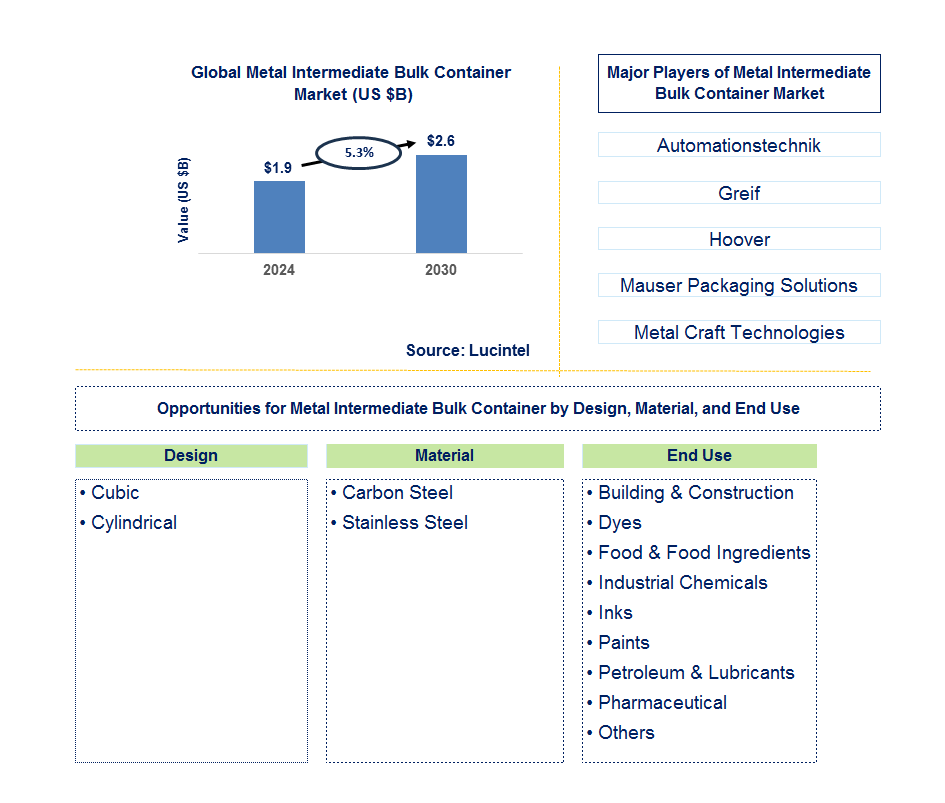
Key data points: The market size in 2030 = $2.6 billion, growth forecast = 5.3% annually for the next 6 years. Scroll below to get more insights. This market report covers trends, opportunities, and forecasts in the global metal intermediate bulk container market to 2030 by design (cubic and cylindrical), material (carbon steel and stainless steel), end use (building & construction, dyes, food & food ingredients, industrial chemicals, inks, paints, petroleum & lubricants, pharmaceutical, and others), and region (North America, Europe, Asia Pacific, and the Rest of the World)
We'll send your sample report shortly.
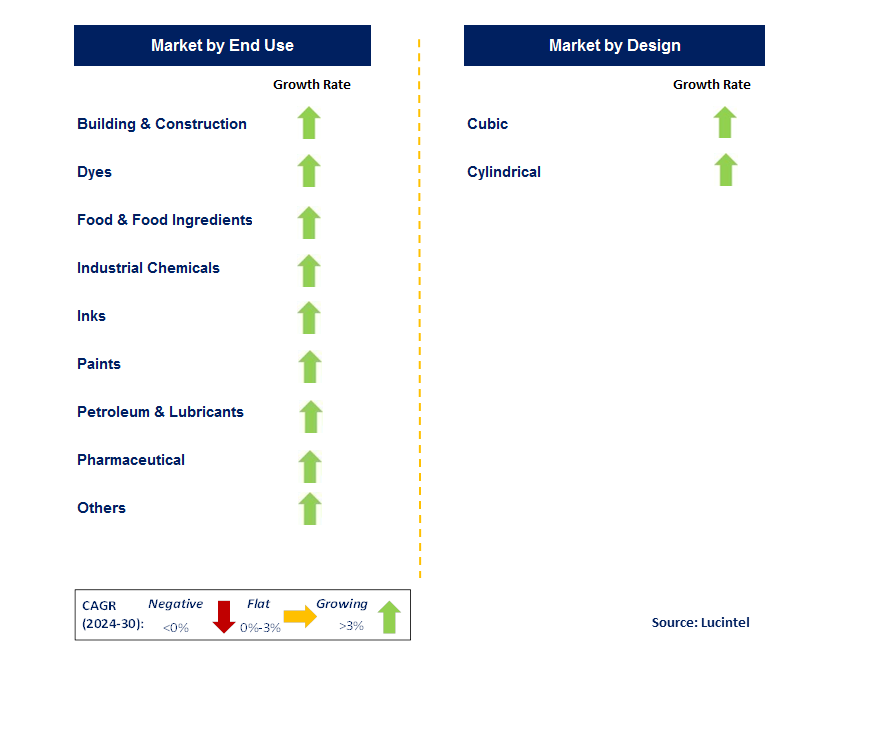
• Lucintel forecasts that, within the design category, cylindrical will remain a larger segment over the forecast period.
• In terms of region, APAC is expected to witness the highest growth over the forecast period due to increased spending capability, and growing rate of Foreign Direct Investment (FDI) in India. Gain valuable insights for your business decisions with our comprehensive 150+ page report.
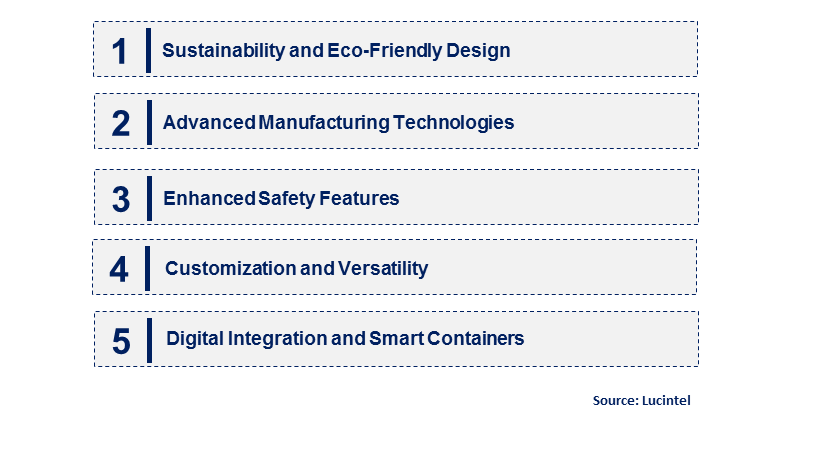
• Sustainability and Eco-Friendly Design: Metal IBC designs that are sustainable and eco-friendly are increasingly preferred as companies try to use recyclable materials, reduce carbon footprints, and increase container lifespans. These developments are influenced by rising environmental regulations and the increasing demand for greener options among consumers.
• Advanced Manufacturing Technologies: Quality enhancement and efficiency in metal IBC production are further facilitated by innovations in manufacturing technologies such as automated welding and precision molding. Due to these advancements, durability, safety, and cost-effectiveness are improved, thereby contributing to market growth.
• Enhanced Safety Features: The market for metal IBCs has received increased focus on safety features. Improvements include leak-proof designs, better locking mechanisms, and advanced pressure relief systems, which conform to stringent safety regulations, ensuring safe handling and transportation of hazardous substances.
• Customization and Versatility: Customizable and flexible metal intermediate bulk containers (IBCs) that meet industry-specific needs are currently in high demand. Different companies have developed various sizes, shapes, and configurations of these containers for applications ranging from chemicals to foodstuffs and drugs.
• Digital Integration and Smart Containers: The incorporation of digital technology into metal IBCs is becoming increasingly popular. For instance, IoT sensors can track the movement of goods, enhancing inventory management, reducing losses in transit due to theft or spillages, and increasing operational efficiencies. Sustainability has become a significant feature in the metal IBC market, marked by advanced manufacturing technologies, enhanced safety features, customization, and digital integration. These trends indicate how industries react to changing guidelines posed by authorities, advancements in technology, and customer dynamics, leading to growth and transformation.
• Innovative Coating Technologies: Metal IBCs are becoming more durable and resistant to corrosion due to recent developments in coating technologies. With these coatings, containers last longer and perform better, especially when used in severe environments or with corrosive substances; therefore, they can be used for extended periods and do not require constant maintenance.
• Enhanced Safety Features: New safety features, such as advanced pressure relief valves and leak-proof designs, have been introduced to address the growing concern about the safe handling of hazardous materials. These innovations help companies observe stricter safety regulations and reduce the risks of spillage or accidents.
• Integration of Reusable Solutions: The trend toward reusable metal IBC solutions is gaining popularity for sustainability purposes and cost advantages. For instance, companies are developing designs that enable easy cleaning, refilling, and recycling, thus conforming to global trends aimed at reducing waste while enhancing environmental friendliness.
• Technological Advancements in Manufacturing: Technological advancements, such as automation and precision engineering, are being adopted during manufacturing, improving the efficiency and quality of metal IBC production. Such improvements contribute to lower costs and increased production capacity for more tailored solutions.
• Regulatory Compliance and Standards: The market is being shaped by new regulatory standards and compliance requirements. To ensure access to the market and maintain a competitive edge, manufacturing firms find it necessary to meet these regulations, which include strict safety rules and environmental standards. The innovative coating technologies, enhanced safety features, rise of reusable packaging solutions, technological advances in manufacturing processes, and evolving regulatory standards are among the key changes taking place within the Metal IBC industry today. These developments improve product performance not only in terms of durability but also regarding ecological compatibility.
• Applications in the Pharmaceutical Industry: The flourishing pharmaceutical industry provides great prospects for metal IBCs that can be used to safely store and transport drugs that need to be controlled. The demand from this sector is driving an increase in the sales of high-quality compliant containers.
• Food and Beverage Industry: As a result of expanding food and beverage operations, there are business potentials for metal IBCs for large storage and transportation. Players are managing their supply chains by introducing new types of IBCs that meet food safety standards.
• Chemical Industry: The chemical sector remains one of the main users of metal IBCs due to their capability to handle hazardous substances safely. This area has responded with container design improvements and safety equipment developments focusing on its unique needs and regulatory conditions.
• Emerging Markets: Metal IBC manufacturers have opportunities to expand their presence through the increasing growth in emerging markets. Creating durable bulk containers that support efficient supply chain systems is prompted by industrialization gains associated with countries in the Asia-Pacific region.
• Sustainable Development Initiatives: A shift towards sustainability and environmental friendliness has created room for metal IBCs embracing eco-friendly designs and materials. Corporations are striving to ensure they provide solutions that can be reused, hence they have invested in reusable or recyclable options as part of their efforts aimed at achieving global sustainability goals. Major drivers behind strategic growth opportunities include applications such as pharmaceuticals, food and beverage, chemicals, and expansion into emerging markets, as well as sustainability initiatives within the metal IBC market. These avenues will not only drive market growth but also enable the development of innovative, compliant, and environmentally friendly products.
• Technological Innovations: Advances in manufacturing techniques, such as automation and precision engineering, are making the production of metal IBCs more efficient and effective. This has been a major driver of market growth since it improves product performance and reduces costs.
• Increased Demand for Safe and Strong Containers: The increasing need for safe and strong containers that can be used to transport hazardous materials has resulted in growing demand for metal IBCs. Industry requirements are being addressed through better safety features found in corrosion-resistant materials, which support an increase in sales volumes.
• Rapid Industrialization: Expanding industries, such as chemicals, pharmaceuticals, and food and beverages, are fueling the demand for metal IBCs. Bulk storage and transportation solutions required by industrial players are driving business expansion.
• Regulatory Compliance: Companies have adopted metallic IBCs because they comply with stringent laws requiring that only certain types of metallic IBCs meet safety standards. These regulations have compelled firms to innovate their products, thus boosting market growth.
• Trends in Sustainability: There is an emphasis on using reusable metals among these materials, encouraging eco-friendly designs to reduce waste from resource use and promote recycling within metal intermediate bulk containers. Global sustainability goals have driven companies toward designs aligned with these principles, which may be implemented locally. Challenges in the metal intermediate bulk container market include:
• High Cost of Production: The manufacturing costs associated with metal IBCs, which involve raw material expenses and high-end technologies, can be substantial. Maintaining product quality while managing production costs is another challenge that players grapple with in this industry.
• Complexity of Regulatory Requirements: Navigating complex regulations on safety, environmental impact, and quality standards may be challenging. Failure to comply with these complex regulatory requirements can lead to penalties and loss of market access.
• Competition from Other Forms of Packaging: The presence of alternative container options, such as plastic IBCs, leads to increased competition in the market. To remain competitive, metal IBC manufacturers must distinguish their products and provide a competitive edge. Technological advancements, increased demand for safe packaging materials, industrialization, adherence to government regulations, and sustainability initiatives are among the key drivers shaping the metal IBC market. However, obstacles such as high manufacturing costs, complicated legislation, and rivalry from other packaging options must be surmounted to foster continuous growth and success in the market.
• Automationstechnik
• Greif
• Hoover
• Mauser Packaging Solutions
• Metal Craft Technologies
• Metano IBC Services
• Pensteel
• Cubic
• Cylindrical
• Carbon Steel
• Stainless Steel
• Building & Construction
• Dyes
• Food & Food Ingredients
• Industrial Chemicals
• Inks
• Paints
• Pharmaceutical
• Others
• North America
• Europe
• Asia Pacific
• The Rest of the World
• United States: In the US, metal IBCs have seen improvements in manufacturing methods that enhance container endurance and safety. Some strategies employed by manufacturers include designing corrosion-resistant coatings and ensuring containers meet stringent safety regulations. The rising use of these containers in the chemical and food industries is leading to increased demand to satisfy FDA and DOT requirements. Moreover, efforts toward sustainability have resulted in more reusable containers being used in this market.
• China: Due to rapid industrialization coupled with expanding manufacturing capacities, China’s metal IBC market is growing quickly. For example, there have been recent developments in container production technologies, such as automated welding and quality control systems. Additionally, stricter quality and safety guidelines have increased the utilization of metal IBCs in the pharmaceutical industry and other sectors, such as food processing, where more robust packaging materials are needed. Furthermore, it is clear that China aims to lower carbon emissions by moving toward more sustainable and efficient packaging solutions.
• Germany: Germany has made significant progress in container design technology, including material improvements, making it one of the most innovative countries in the steel intermediate bulk containers industry. These advancements involve using stronger steel to create long-lasting units and adding advanced coatings to improve resistance against corrosion. In addition, strict environmental regulations in Germany result in greener practices, including recycling and reducing the environmental impacts of container production. Germany also seeks to meet EU standards related to safety and quality.
• India: Industrial growth and demand from the chemical and food sectors are driving the Indian metal IBC market upward. Recent trends include low-cost manufacturing techniques for producing and enhancing containers to comply with the local regulatory framework. Metal IBCs in India have been improved, particularly regarding safety, by some companies, while others are expanding globally due to available opportunities. This is shaping the market landscape, with more emphasis on adherence to safety and quality standards.
• Japan: The Japanese metal IBC market is characterized by highly integrated technological advancements and a high degree of accuracy in quality control and assembly of final products that are leak-proof. Additionally, advanced manufacturing techniques and features like durability have led to new types of metal IBCs. Moreover, a demand for high-quality and environmentally sound packaging options has spurred various innovations in Japan, as many customers prefer eco-friendly solutions that contribute to saving the planet. These products are increasingly finding applications in the electronics and automobile industries, highlighting their versatility within the Japanese market.


• Automationstechnik
• Greif
• Hoover
• Mauser Packaging Solutions
• Metal Craft Technologies
• Metano IBC Services
• Pensteel Q6. Which metal intermediate bulk container market segment will be the largest in future? Answer: Lucintel forecasts that cylindrical will remain the larger segment over the forecast period. Q7. In metal intermediate bulk container market, which region is expected to be the largest in next 5 years? Answer: APAC is expected to witness highest growth over the forecast period due to increased spending capability, and growing rate of Foreign Direct Investment (FDI) in India. Q.8 Do we receive customization in this report? Answer: Yes, Lucintel provides 10% customization without any additional cost.


Choose a license that fits your team. Instant PDF delivery.
Prices exclude taxes. Instant delivery. Custom licensing available on request.
Market Report · July 22, 2026
Market Report · July 22, 2026
Market Report · July 22, 2026
Trusted partner for strategic intelligence and business growth


Receive a complimentary market analysis tailored to your industry. Our analysts will identify key growth opportunities and competitive dynamics specific to your business.

Market size, growth rate, and key trend analysis for your specific sector.

Top competitor positioning and market share analysis.

Strategic recommendations backed by data-driven insights.
Get curated market intelligence and competitive moves straight to your inbox.
By subscribing, you agree to receive our monthly insights. Unsubscribe anytime.
Receive a complimentary market analysis tailored to your industry. Our analysts will identify key growth opportunities and competitive dynamics specific to your business.
Market size, growth rate, and key trend analysis for your specific sector.
Top competitor positioning and market share analysis.
Strategic recommendations backed by data-driven insights.
Get curated market intelligence, emerging trends, and competitive moves straight to your inbox each month.
By subscribing, you agree to receive our monthly insights. Unsubscribe anytime.
We'll send your sample report shortly.