
Report Feature
Metal Furniture Market Trends and Forecast
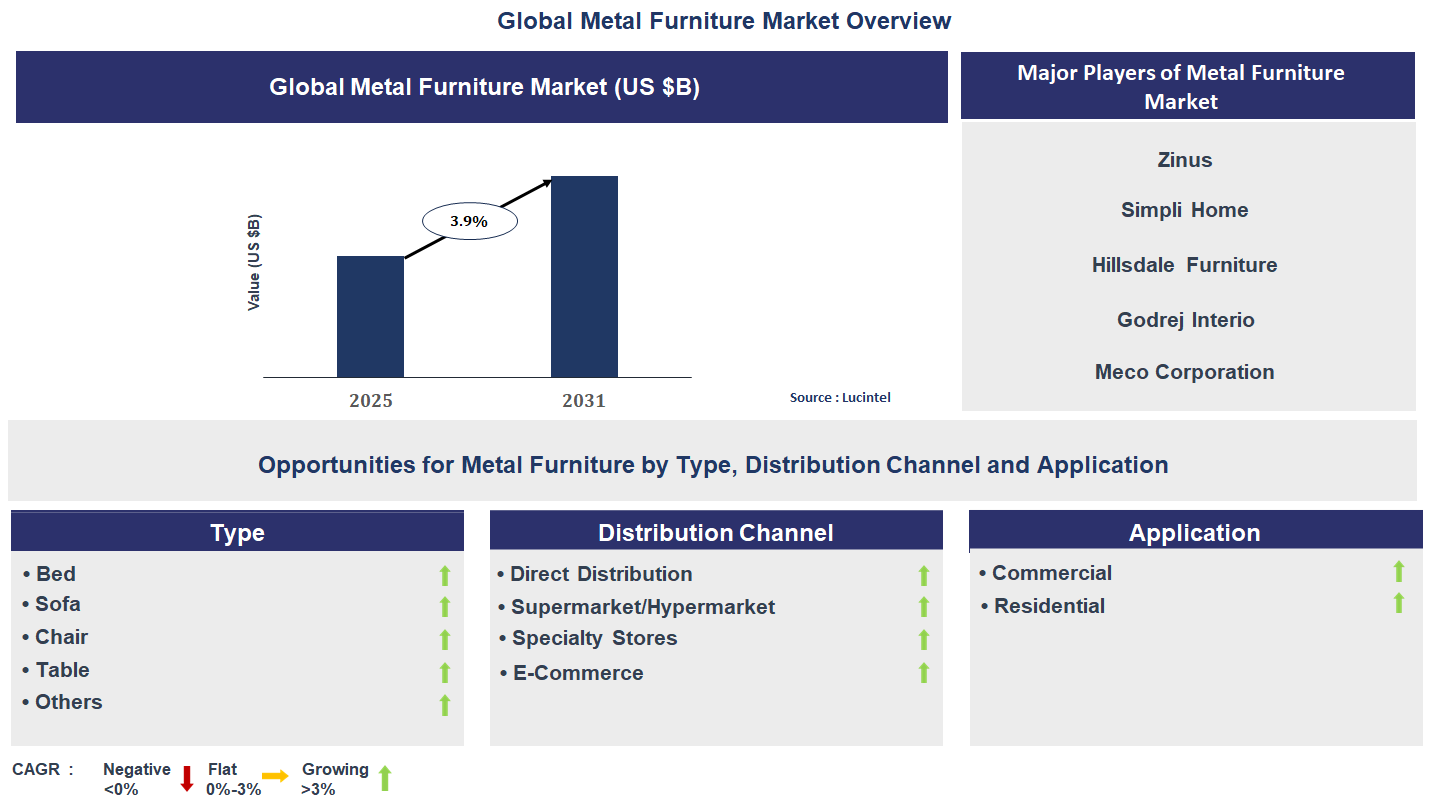
The future of the global metal furniture market looks promising with opportunities in the commercial and residential markets. The global metal furniture market is expected to grow with a CAGR of 3.9% from 2025 to 2031. The major drivers for this market are the increasing demand for durable furniture solutions, the rising popularity of modern industrial designs, and the growing preference for low-maintenance materials.• Lucintel forecasts that, within the type category, table is expected to witness the highest growth over the forecast period.
• Within the application category, commercial is expected to witness higher growth.
• In terms of region, North America is expected to witness the highest growth over the forecast period. Gain valuable insights for your business decisions with our comprehensive 150+ page report. Sample figures with some insights are shown below.
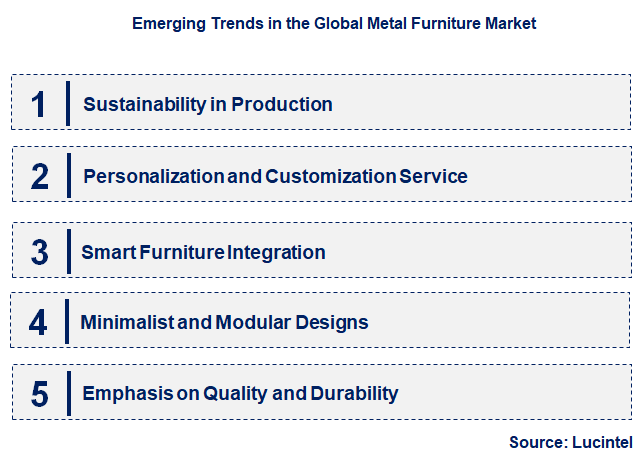
Emerging Trends in the Metal Furniture Market
The metal furniture industry is undergoing dynamic shifts based on several factors such as technology, sustainability, and consumer choice. Trends unfolding in the industry reflect the changing nature of consumer needs and the demand for more innovative and sustainable products.• Sustainability in Production: With growing environmental issues, consumers and producers alike are becoming more concerned with sustainability. These involve the use of recycled metals, carbon emissions reduction, and non-toxic finishes and coatings. Not only do these meet consumer needs for environmentally friendly products, but they also comply with international regulatory requirements to lower waste and protect resources.
• Personalization and Customization Service: Contemporary consumers are looking for more personalized furniture items, and companies are reacting by providing customization possibilities. Developments in digital technology enable consumers to create their own furniture online, modifying features such as size, color, and finish. This trend is especially prevalent in markets such as the U.S. and Europe, where customization is emerging as a main differentiator.
• Smart Furniture Integration: Metal furniture incorporation of smart technologies is becoming increasingly popular. From charging ports integrated into products to height adjustment desks with memory functions, customers are increasingly looking for their furniture to become a multipurpose tool. This trend particularly stands out in the workplace and home office markets, where functionality and comfort are key.
• Minimalist and Modular Designs: There is an emerging trend towards minimalist designs, particularly in urban markets where there is limited space. Modular furniture that can be easily taken apart and reassembled is also popular, providing consumers with flexibility in their homes. The attraction of sleek, clean lines and simplicity coupled with functionality is impacting product design in markets in the U.S., Japan, and Europe.
• Emphasis on Quality and Durability: The emphasis is on durability and quality when consumers are buying metal furniture. With the growing maturity of the metal furniture industry, companies are focusing more on investing in good materials and workmanship to produce durable products. This trend is particularly evident in countries such as Germany, where customers expect products that have both longevity and top-notch design. These trends are transforming the metal furniture industry worldwide, compelling firms to develop new products and use new technology, as well as meet customers and environmental needs.
Recent Development in the Metal Furniture Market
The metal furniture industry has been experiencing major developments based on advancements in technology, alterations in consumer attitudes, and realignments of global economic trends. Major trends like sustainability, growth in online sales, and the use of multifunctional designs are defining the industrys future. This changing market environment can especially be seen in major markets like the United States, China, Germany, India, and Japan, with differences in consumer requirements and production capabilities.• Online Sales Growth: Perhaps the most notable recent trend in the metal furniture industry is the move to online sales. Online channels of sales have become vital for producers, allowing them to access a global customer base and provide more convenient shopping options. The emergence of e-commerce sites has also promoted competition, reducing prices and improving variety for customers.
• Sustainability Initiatives: More companies are embracing sustainable production practices. These include the utilization of recycled metals, energy-saving manufacturing processes, and environmentally friendly packaging. Sustainability is increasingly emerging as a market differentiator, particularly in markets such as Europe and North America, where green-conscious consumers are pushing for more environmentally friendly options.
• Design Integration Technology: Design technology innovation, including 3D printing and CAD, enables manufacturers to make more detailed and customized metal furniture items. This has the biggest influence on commercial and office furniture, where uniqueness and customization are increasingly required.
• Growth in Emerging Markets: The metal furniture industry is growing at a fast rate into emerging markets, mostly in Asia and Africa. With urbanization, the demand for cheap but long-lasting furniture is on the rise. Companies are catering to this by providing affordable solutions along with attention to local tastes and design patterns.
• Growth of Multi-functional Furniture: With compact living spaces gaining prominence, particularly in the case of urban dwellings, multi-functional metal furniture has seen increased popularity. Fold-up desks, expandable tables, and modular seating systems are helping address space challenges, fueling both residential and commercial demand. Recent trends in the metal furniture industry capture increased emphasis on sustainability, online customization, and e-commerce. Companies are responding to these trends by providing more customized, environmentally friendly, and functional products. With worldwide demand for long-lasting and multi-use furniture remaining on the increase, the trends are contributing to the shaping of the industrys future direction, with special focus on innovation and efficiency.
Strategic Growth Opportunities in the Metal Furniture Market
There are a number of growth opportunities in the metal furniture market, particularly when considering major applications like residential, office, and commercial segments. Such opportunities can be capitalized on by companies to meet changing consumer demands as well as increase their market presence.• Home Spaces: Urbanization is on the increase, and hence the need for space-saving and trendy furniture is on the rise. Furniture made of metal, being robust and contemporary, is gaining acceptance as a favorite for city residents who wish to optimize their living spaces. Companies can ride this wave by providing customized designs appropriate for small apartments and contemporary interior spaces.
• Office Furniture: The trend towards work-from-home and hybrid work patterns has created growing demand for space-saving and ergonomic office furniture. Metal storage, chairs, and desks are especially favored because of their durability and minimalist design. There are opportunities for manufacturers in designing multi-functional, adjustable, and customizable office furniture pieces.
• Outdoor Furniture: With consumers looking for tough and low-maintenance outdoor furniture, the metal furniture industry is experiencing growth in this area. Items such as metal patio furniture, outdoor dining sets, and lounge chairs are getting popular with their weather-resistant nature and durability. Businesses can tap into this growth potential by providing unique designs and finishes that are perfect for use outside.
• Healthcare and Institutional Uses: The medical sector is now widely utilizing metal furniture due to its strength, cleanliness, and infection control capabilities. Hospitals, clinics, and schools are investing in good-quality metal furniture in order to ensure functionality and longevity. The trend can be harnessed by the manufacturers by catering to specialized solutions for these industries.
• Markets for Sustainability: There is a fast-growing focus on sustainability in consumer consumption. There is an opportunity for manufacturers to differentiate themselves by making environmentally friendly, recycled metal furniture that supports the increasing demand for sustainable items. This is particularly pertinent in markets such as Europe and North America, where consumers are becoming increasingly aware of the environmental cost of their purchases. The metal furniture industry presents various strategic opportunities for growth, especially in residential, office, and outdoor furniture markets. As urbanization intensifies and consumer preferences move toward sustainability and customization, companies can leverage these trends to increase reach. By emphasizing innovative design, green materials, and multi-functional products, businesses are well placed to meet changing consumer needs and enhance their market share.
Metal Furniture Market Driver and Challenges
The metal furniture industry is affected by different technological, economic, and regulatory drivers. These drivers and restraints have a considerable influence on market growth and development. The factors responsible for driving the metal furniture market include: 1. Technological Developments: Developments in manufacturing technologies, including automation and 3D printing, are enhancing production efficiency and facilitating the manufacture of more complex and customized designs. This enhances the attractiveness of metal furniture to customers and boosts manufacturing capacity, driving market growth. 2. Growing Urbanization: As greater numbers of people are transferring to cities, demand is rising for space-saving and efficient furniture. The adaptability, longevity, and contemporary look of metal furniture make it highly sought-after by urban residents, leading to demand in living spaces, workplaces, and business outlets. 3. Increasing Disposable Incomes: With increasing disposable incomes, especially in emerging economies such as India and China, consumers are increasingly eager to invest money in high-quality, durable furniture. Metal furnitures longevity and low maintenance make it a popular choice among these consumers. 4. Trends in Sustainability: Rising environmental consciousness among consumers has fueled the demand for sustainable and eco-friendly products. The incorporation of recycled metals and energy-efficient manufacturing processes is emerging as a major selling factor for metal furniture companies. 5. Personalization and Customization: Consumers are increasingly looking for personalized furniture that meets their unique needs and preferences. Advances in digital design platforms and manufacturing techniques are making it possible, driving the demand for customizable metal furniture products upward. Challenges in the metal furniture market are: 1. Raw Material Costs: Unstable raw material prices of materials such as steel and aluminum can affect the cost of metal furniture production. Producers need to control these costs tightly in order to compete effectively in the market, which might result in higher costs to consumers. 2. Supply Chain Disruptions: The worldwide supply chain has experienced unprecedented disruptions in the recent past, and this impacts the metal furniture sector. Problems including shortages of materials, shipping holdups, and shortages of labor can lead to delays in production, impacting both producers and buyers. 3. Intense Competition: The metal furniture market is highly competitive, with numerous local and international players vying for market share. To stay ahead, manufacturers must constantly innovate and improve product offerings, which can require significant investments in research and development. The metal furniture industry is being influenced by some of the most important trends, including sustainability, customization, and tech innovation. Though drivers like urbanization, increasing disposable incomes, and technology innovation continue to drive market expansion, threats like raw material price and supply chain interruption are still major obstacles. As the market continues to mature, firms embracing sustainability, focusing on quality, and responding to consumer desire for customization will be well placed to excel in a competitive market.List of Metal Furniture Companies
Companies in the market compete on the basis of product quality offered. Major players in this market focus on expanding their manufacturing facilities, R&D investments, infrastructural development, and leverage integration opportunities across the value chain. With these strategies metal furniture companies cater increasing demand, ensure competitive effectiveness, develop innovative products & technologies, reduce production costs, and expand their customer base. Some of the metal furniture companies profiled in this report include-• Zinus
• Simpli Home
• Hillsdale Furniture
• Godrej Interio
• Meco Corporation
• Chyuan Chern Furniture
• Oliver Metal Furniture
• Cymax Group
• DHP Furniture
• Inter IKEA Systems
Metal Furniture Market by Segment
The study includes a forecast for the global metal furniture market by type, distribution channel, application, and region.Metal Furniture Market by Type [Value from 2019 to 2031]:
• Bed
• Sofa
• Chair
• Table
• Others
Metal Furniture Market by Distribution Channel [Value from 2019 to 2031]:
• Direct Distribution
• Supermarket/Hypermarket
• Specialty Stores
• E-Commerce
Metal Furniture Market by Application [Value from 2019 to 2031]:
• Commercial
• Residential
Metal Furniture Market by Region [Value from 2019 to 2031]:
• North America
• Europe
• Asia Pacific
• The Rest of the World
Country Wise Outlook for the Metal Furniture Market
The metal furniture industry has witnessed robust growth during the past few years due to changing consumer trends, technological innovation, and altering economic environments worldwide. Nations such as the United States, China, Germany, India, and Japan are leading drivers of this markets trend. The consideration of sustainability, affordability, and design look has affected the creation of metal furniture products in these nations. This report calls attention to major recent developments in each of these nations and illuminates emerging trends in the worldwide market, highlighting strategic opportunities and challenges in the process.• United States: The US metal furniture market has seen a boost in demand due to urbanization, increasing disposable incomes, and an increased preference for modern styles. Some of the important developments include emphasis on sustainable materials, environmentally friendly production processes, and the use of smart technologies within furniture designs. Numerous US-based firms have also taken a customer-oriented approach by introducing greater customization opportunities for homes and workplaces. With e-commerce growing, online shopping channels are becoming a major growth driver for US manufacturers.
• China: The Chinese metal furniture market is expanding at a high pace owing to the flourishing real estate and construction markets. Metal furniture is gaining prominence with manufacturers from their use of lightweight, long-lasting, and cost-effective metal furniture. Additionally, Chinas massive industrial base makes it possible for low-cost production. There is also a move towards simplistic and functional designs in the market. China is also experiencing a boost in exports as demand for low-cost metal furniture in foreign markets rises. Chinese firms are also investing in technology and automation to boost production efficiency.
• Germany: Germanys metal furniture industry is dominated by a need for quality, long-lasting products where design innovation is highly prioritized. Sustainability is a strongly emerging trend, with increased demand for materials that can be recycled and production techniques that are environmentally friendly. German producers are incorporating innovative technology, such as digital customizing software, to meet consumers individual requirements. Furthermore, Germanys robust export market, especially in the European Union, is helping to drive its metal furniture sector.
• India: The metal furniture market in India is growing very fast, supported by a mix of urbanization, increasing income levels, and the growing trend towards modular living. Urban areas have a very high demand for metal furniture due to the need for space efficiency and affordability. Indian manufacturers are launching innovative designs and emphasizing affordable yet long-lasting products to suit the price-conscious market. There is increasingly awareness regarding sustainability, and Indian consumers are increasingly choosing eco-friendly and recyclable metal furniture options.
• Japan: Japans market for metal furniture continues to grow steadily, based on growing demand for multifunctional, compact, and space-saving furniture, especially in urban regions. Japanese consumers have a preference for high-quality, minimalist designs, and there is high demand for furniture that combines functionality with good looks. Consequently, manufacturers are embracing precision engineering and prioritizing the inclusion of smart technologies in their products. The growing age population in Japan is similarly propelling demand for specialized furniture that enhances comfort and ease of use.

Features of the Global Metal Furniture Market
Market Size Estimates: Metal furniture market size estimation in terms of value ($B). Trend and Forecast Analysis: Market trends (2019 to 2024) and forecast (2025 to 2031) by various segments and regions. Segmentation Analysis: Metal furniture market size by type, distribution channel, application, and region in terms of value ($B). Regional Analysis: Metal furniture market breakdown by North America, Europe, Asia Pacific, and Rest of the World. Growth Opportunities: Analysis of growth opportunities in different types, distribution channels, applications, and regions for the metal furniture market. Strategic Analysis: This includes M&A, new product development, and competitive landscape of the metal furniture market. Analysis of competitive intensity of the industry based on Porter’s Five Forces model.
FAQ
Q1. What is the growth forecast for metal furniture market? Answer: The global metal furniture market is expected to grow with a CAGR of 3.9% from 2025 to 2031. Q2. What are the major drivers influencing the growth of the metal furniture market? Answer: The major drivers for this market are the increasing demand for durable furniture solutions, the rising popularity of modern industrial designs, and the growing preference for low-maintenance materials. Q3. What are the major segments for metal furniture market? Answer: The future of the metal furniture market looks promising with opportunities in the commercial and residential markets. Q4. Who are the key metal furniture market companies? Answer: Some of the key metal furniture companies are as follows:• Zinus
• Simpli Home
• Hillsdale Furniture
• Godrej Interio
• Meco Corporation
• Chyuan Chern Furniture
• Oliver Metal Furniture
• Cymax Group
• DHP Furniture
• Inter IKEA Systems Q5. Which metal furniture market segment will be the largest in future? Answer: Lucintel forecasts that, within the type category, table is expected to witness the highest growth over the forecast period. Q6. In metal furniture market, which region is expected to be the largest in next 5 years? Answer: In terms of region, North America is expected to witness the highest growth over the forecast period. Q7. Do we receive customization in this report? Answer: Yes, Lucintel provides 10% customization without any additional cost.
Table of Contents
List of Figures
List of Tables
Methodology
- In-depth interviews of the major players in this market
- Detailed secondary research from competitors’ financial statements and published data
- Extensive searches of published works, market, and database information pertaining to industry news, company press releases, and customer intentions
- A compilation of the experiences, judgments, and insights of Lucintel’s professionals, who have analyzed and tracked this market over the years.


Buy Now
Choose a license that fits your team. Instant PDF delivery.
Prices exclude taxes. Instant delivery. Custom licensing available on request.
Key Questions
- • What are some of the most promising, high-growth opportunities for the metal furniture market by type (bed, sofa, chair, table, and others), distribution channel (direct distribution, supermarket/hypermarket, specialty stores, and E-commerce), application (commercial and residential), and region (North America, Europe, Asia Pacific, and the Rest of the World)?
- • Which segments will grow at a faster pace and why?
- • Which region will grow at a faster pace and why?
- • What are the key factors affecting market dynamics? What are the key challenges and business risks in this market?
- • What are the business risks and competitive threats in this market?
- • What are the emerging trends in this market and the reasons behind them?
- • What are some of the changing demands of customers in the market?
- • What are the new developments in the market? Which companies are leading these developments?
- • Who are the major players in this market? What strategic initiatives are key players pursuing for business growth?
- • What are some of the competing products in this market and how big of a threat do they pose for loss of market share by material or product substitution?
- • What M&A activity has occurred in the last 5 years and what has its impact been on the industry? For any questions related to Metal Furniture Market, Metal Furniture Market Size, Metal Furniture Market Growth, Metal Furniture Market Analysis, Metal Furniture Market Report, Metal Furniture Market Share, Metal Furniture Market Trends, Metal Furniture Market Forecast, Metal Furniture Companies, write Lucintel analyst at email: helpdesk@lucintel.com. We will be glad to get back to you soon.


