
Market Report · June 29, 2026

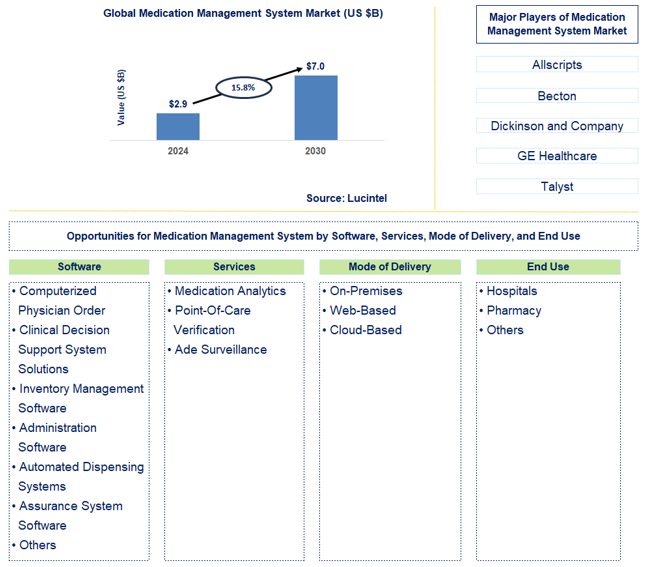
Key data points: The market size in 2030 = $7.0 billion, growth forecast = 15.8% annually for the next 6 years. Scroll below to get more insights. This market report covers trends, opportunities, and forecast in the global medication management system market to 2030 by software (computerized physician order, clinical decision support system solutions, inventory management software, administration software, automated dispensing systems, assurance system software, and others), services (medication analytics, point-of-care verification, and ADE surveillance), mode of delivery (on-premises, web-based, and cloud-based), end use (hospitals, pharmacy, and others), and region (North America, Europe, Asia Pacific, and the Rest of the World)
We'll send your sample report shortly.
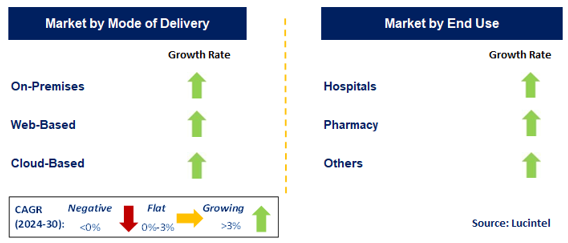
• Lucintel forecasts, within the mode of delivery category, that cloud-based solution will remain the largest segment over the forecast period because many companies are creating cloud-based deployment solutions to facilitate information exchange with stakeholders and clients, and easy access to information in remote locations using such solutions.
• In terms of regions, North America is expected to witness highest growth over the forecast period due to rising prevalence in the healthcare sector, technological progress, the rise of infections and chronic conditions, and the increase in prescriptions in the area. Gain valuable insight for your business decisions with our comprehensive 150+ page report
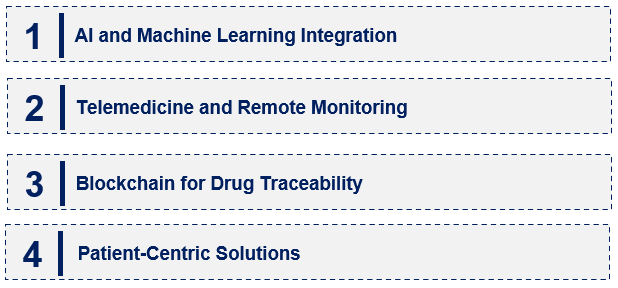
• AI and Machine Learning Integration: Artificial intelligence and machine learning are increasingly being incorporated into MMS for better predictive analytics, detection of medication errors, and personalized treatment plans. It is this kind of technology that leads to more accurate medication management processes and improved patient outcomes.
• Telemedicine and Remote Monitoring: MMS integration with telemedicine platforms has made it possible to monitor drug adherence remotely and patients health in general. This development arises from an increased demand for virtual health care services and the need for continuous engagement with patients.
• Blockchain for Drug Traceability: Blockchain technology holds promise in enhancing drug traceability by fighting counterfeit drugs. By improving the security of the medicine supply chain, this practice seeks to establish transparency.
• Patient-Centric Solutions: The focus is shifting towards developing MMS that emphasize patient engagement as well as adherence. These solutions include mobile apps and interactive interfaces through which patients can be empowered to manage their medications effectively. These trends are improving system capabilities, transforming patient engagement methods, and integrating new technologies into healthcare systems, thus improving healthcare and reshaping the medication management system market.
• AI-Driven Medication Management: The use of AI-powered tools for medicine management is on the rise, providing advanced analytics and error checking. With predictive insights and automated alerts, these systems improve medication adherence and patient safety.
• Regulatory Enhancements: Recent regulatory changes have centered on improving drug safety and effectiveness. Better monitoring and reporting mechanisms for drug-related issues have been established through such guidelines, thereby improving health care delivery as a whole.
• Integration with EHRs: The inclusion of MMS in electronic health records (EHRs) continues, allowing seamless data sharing and improved care coordination. This development aims at enhancing precision and speed as far as medication management is concerned.
• Telehealth Integration: As telehealth gains popularity, MMS has become integrated with remote monitoring tools. This enables virtual consultations and supports healthcare providers in observing drug compliance remotely. These are some of the developments that are pushing change in the medication management system market towards improved patient safety, system efficiencies, and better healthcare delivery overall.
• Chronic Disease Management: MMS solutions are expanding to include features aimed at improving medication adherence and patient monitoring. The demand for efficient management of chronic illnesses is being catered to in this application.
• Pharmacy Automation: MMS is increasingly being integrated with pharmacy automation systems to facilitate streamlined medication dispensing and inventory management. This is driven by the need for operational efficiency and reduced errors among pharmacies.
• EHR Integration: One of the main growth opportunities is enhancing the integration of MMS into electronic health records (EHRs). As such, data accuracy and care coordination between healthcare providers will be improved, leading to more holistic patient care.
• Mobile Health Apps: Currently, there has been an increasing development of mobile health apps that can be integrated with MMS. These apps have tools for patients that help them track their medications, provide reminders about taking these drugs, and contact their doctors when required, hence leading to better results. These opportunities for growth are influencing the Medication Management System market by making it more capable, improving clinical outcomes, and addressing shifting health needs.
• Technological Advancements: Better and more accurate MMS solutions are being driven by technological innovations like artificial intelligence as well as robotics. Such developments are enhancing medication management and patient safety.
• Growing Adoption of Digital Healthcare Solutions: The MMS market is expanding due to the move towards digital healthcare solutions. Medication management can be done more efficiently and effectively with the adoption of electronic health records as well as digital health platforms.
• Increasing Prevalence of Chronic Diseases: Advanced MMS solutions are in demand due to the increase in chronic diseases. Effective treatment of this condition requires effective medication management and improved patient outcomes.
• Government Initiatives and Funding Support: Governments support healthcare technology through funding initiatives for MMS. This boosts innovation, making superior advanced medication management systems available to everyone. Challenges in the medication management system market are:
• Regulatory Compliance: Adherence to different territorial regulations may become complex for manufacturers due to the costs involved. This inhibits product development and market entry, among other challenges facing players in this sector of the healthcare supply chain.
• High Implementation Costs: The cost of implementing and maintaining MMS solutions can be prohibitive, especially for smaller healthcare facilities. This affects the accessibility and affordability of advanced systems. These drivers and challenges collectively impact the Medication Management System market, influencing growth opportunities, market dynamics, and overall industry development.
• Allscripts
• Becton
• Dickinson and Company (CareFusion)
• GE Healthcare
• Talyst
• McKesson
• Cerner
• Computerized Physician Order
• Clinical Decision Support System Solutions
• Inventory Management Software
• Administration Software
• Automated Dispensing Systems
• Assurance System Software
• Others
• Medication Analytics
• Point-Of-Care Verification
• Ade Surveillance
• On-Premises
• Web-Based
• Cloud-Based
• Hospitals
• Pharmacy
• Others
• North America
• Europe
• Asia Pacific
• The Rest of the World
• United States: AI and machine learning have been quickly integrated into MMS in the United States for better medication tracking capabilities and predictive analytics. Healthcare digitization is driving electronic prescribing as well as real-time data access to improve treatment outcomes.
• China: In China, there is a significant push towards integrating MMS with national healthcare networks to enhance drug tracking and patient management. The government policies and subsidies facilitate advanced systems adoption, making it a more streamlined process for healthcare services while ensuring patient safety.
• Germany: Germany has focused on integrating MMS with electronic health records (EHRs) to enhance interoperability and ensure the accuracy of patient data. Notably, stringent regulations support the development of robust medication reconciliation systems, such as adherence tracking, that enhance quality care in line with recent improvements.
• India: More importantly, increasing investment in healthcare infrastructure coupled with digital transformation has led to growth in MMS adoption in India. Improving medication compliance becomes a main focus aligned with inventory management rationalization because of dealing with a large population of sick people, enhancing healthcare provision.
• Japan: Robotics and automation integration for medicine dispensing is one way Japan is improving its MMS capabilities. This aims at reducing errors related to medications and increasing efficiency within healthcare facilities, hence supporting the modernization drive from the government for medical technology initiatives.


• What is the medication management system market size? Answer: The global medication management system market is expected to reach an estimated $7.0 billion by 2030. Q2. What is the growth forecast for medication management system market? Answer: The global medication management system market is expected to grow with a CAGR of 15.8% from 2024 to 2030. Q3. What are the major drivers influencing the growth of the medication management system market? Answer: The major drivers for this market are increasing investment by hospitals to improve workflow, rapid development in medical technology, and growing focus on reducing medication errors. Q4. What are the major segments for medication management system market? Answer: The future of the global medication management system market looks promising with opportunities in the hospital and pharmacy markets. Q5. Who are the key medication management system market companies? Answer: Some of the key medication management system companies are as follows:
• Allscripts
• Becton
• Dickinson and Company (CareFusion)
• GE Healthcare
• Talyst
• McKesson
• Cerner Q6. Which medication management system market segment will be the largest in future? Answer: Lucintel forecasts that cloud-based solution will remain the largest segment over the forecast period because many companies are creating cloud-based deployment solutions to facilitate information exchange with stakeholders and clients, and easy access to information in remote locations using such solutions. Q7. In medication management system market, which region is expected to be the largest in next 5 years? Answer:
• In terms of regions, North America is expected to witness highest growth over the forecast period due to rising prevalence in the healthcare sector, technological progress, the rise of infections and chronic conditions, and the increase in prescriptions in the area. Q.8 Do we receive customization in this report? Answer: Yes, Lucintel provides 10% customization without any additional cost.


Choose a license that fits your team. Instant PDF delivery.
Prices exclude taxes. Instant delivery. Custom licensing available on request.
Market Report · June 29, 2026
Market Report · May 18, 2026
Trusted partner for strategic intelligence and business growth


Receive a complimentary market analysis tailored to your industry. Our analysts will identify key growth opportunities and competitive dynamics specific to your business.

Market size, growth rate, and key trend analysis for your specific sector.

Top competitor positioning and market share analysis.

Strategic recommendations backed by data-driven insights.
Get curated market intelligence and competitive moves straight to your inbox.
By subscribing, you agree to receive our monthly insights. Unsubscribe anytime.
Receive a complimentary market analysis tailored to your industry. Our analysts will identify key growth opportunities and competitive dynamics specific to your business.
Market size, growth rate, and key trend analysis for your specific sector.
Top competitor positioning and market share analysis.
Strategic recommendations backed by data-driven insights.
Get curated market intelligence, emerging trends, and competitive moves straight to your inbox each month.
By subscribing, you agree to receive our monthly insights. Unsubscribe anytime.
We'll send your sample report shortly.