
Report Feature
Medical Wearable Thermometer Market Trends and Forecast
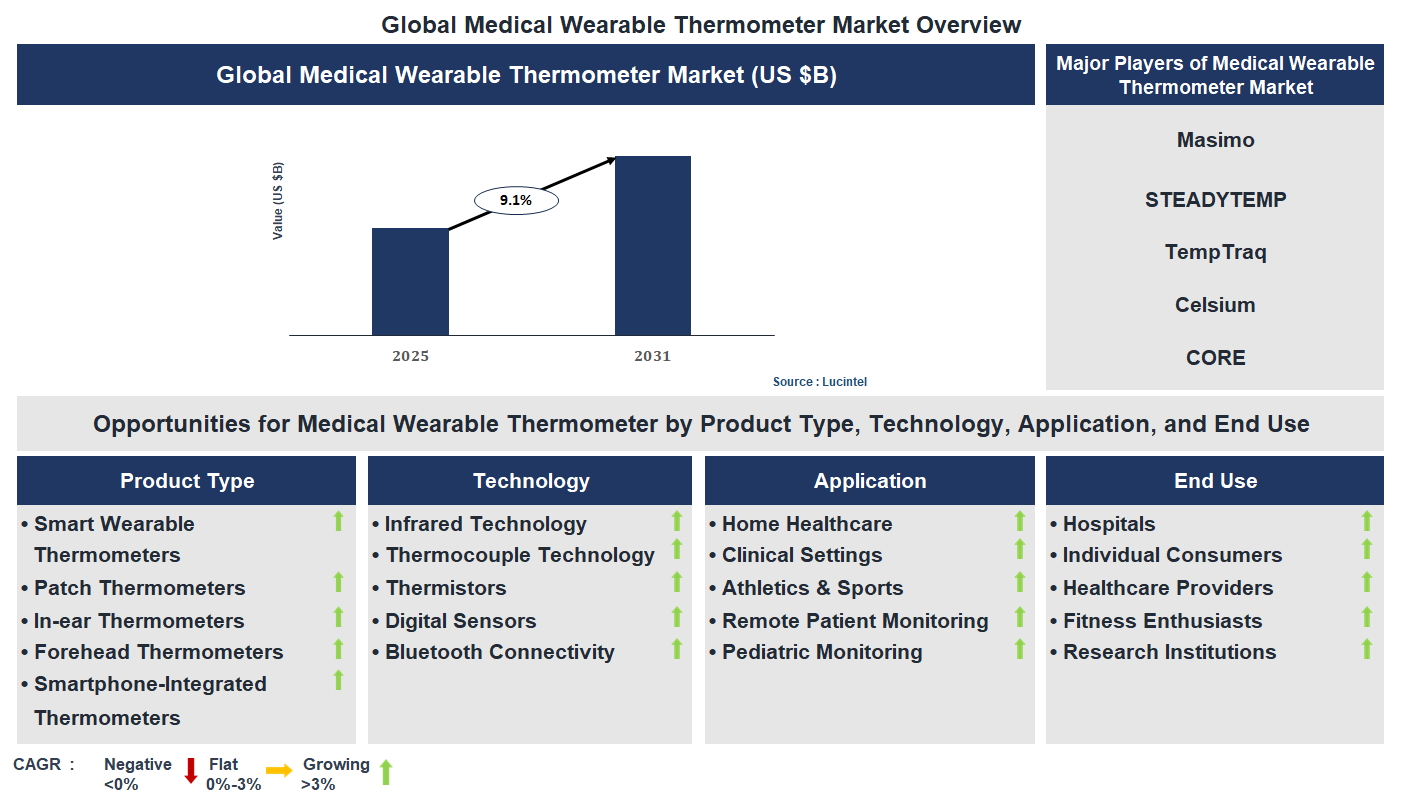
The future of the global medical wearable thermometer market looks promising with opportunities in the hospital, individual consumer, healthcare provider, fitness enthusiast, and research institution markets. The global medical wearable thermometer market is expected to grow with a CAGR of 9.1% from 2025 to 2031. The major drivers for this market are the increasing preference for remote health monitoring, the rising demand for non-invasive temperature measurement, and the growing adoption of wearable health devices.• Lucintel forecasts that, within the product type category, smart wearable thermometer is expected to witness the highest growth over the forecast period.
• Within the end use category, individual consumer is expected to witness the highest growth.
• In terms of region, APAC is expected to witness the highest growth over the forecast period. Gain valuable insights for your business decisions with our comprehensive 150+ page report. Sample figures with some insights are shown below.
Emerging Trends in the Medical Wearable Thermometer Market
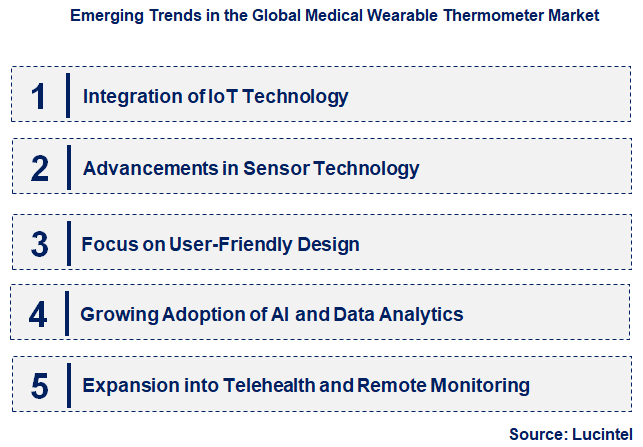
The medical wearable thermometer market is experiencing rapid growth driven by technological advancements, increasing health awareness, and the demand for real-time health monitoring. As consumers and healthcare providers seek more efficient, accurate, and user-friendly solutions, the market is evolving with innovative features and integration capabilities. These developments are transforming how health data is collected, analyzed, and utilized, leading to improved patient outcomes and personalized healthcare. The following key trends highlight the major shifts shaping this market, reflecting its dynamic nature and promising prospects.• Integration of IoT Technology: The incorporation of Internet of Things (IoT) capabilities allows wearable thermometers to connect seamlessly with smartphones and healthcare systems. This connectivity enables real-time data sharing, remote monitoring, and instant alerts, enhancing patient engagement and clinical decision-making. IoT integration also facilitates data analytics for personalized health insights, making these devices more valuable for both consumers and healthcare providers.
• Advancements in Sensor Technology: Innovations in sensor accuracy and miniaturization are significantly improving the precision and comfort of wearable thermometers. Enhanced sensors provide more reliable temperature readings, even in challenging conditions, and enable continuous monitoring. These advancements reduce measurement errors and increase user confidence, fostering wider adoption in clinical and home settings.
• Focus on User-Friendly Design: Market players are prioritizing ergonomic, lightweight, and easy-to-use designs to improve user compliance. Features such as touchless operation, quick response times, and clear digital displays make devices accessible to all age groups, including children and the elderly. User-centric design enhances adoption rates and encourages regular health monitoring, contributing to better health management.
• Growing Adoption of AI and Data Analytics: Artificial Intelligence (AI) and advanced data analytics are being integrated into wearable thermometers to interpret temperature trends and predict health issues. These technologies enable early detection of infections or fevers, providing actionable insights to users and healthcare professionals. AI-driven analytics also support personalized health recommendations, improving preventive care and treatment outcomes.
• Expansion into Telehealth and Remote Monitoring: The rise of telehealth services has accelerated the demand for wearable thermometers capable of remote health assessment. These devices facilitate continuous temperature tracking outside clinical settings, allowing healthcare providers to monitor patients remotely and intervene promptly if necessary. This trend enhances healthcare accessibility, reduces hospital visits, and supports chronic disease management. In summary, these emerging trends are collectively reshaping the medical wearable thermometer market by enhancing device functionality, accuracy, and user experience. They are fostering greater integration with digital health ecosystems, enabling proactive health management, and expanding access to healthcare services. As these innovations continue to evolve, the market is poised for sustained growth, driven by technological progress and increasing health consciousness worldwide.
Recent Development in the Medical Wearable Thermometer Market
The medical wearable thermometer market has experienced significant growth driven by technological advancements, increasing health awareness, and the rising prevalence of chronic diseases. As consumers seek more convenient and accurate health monitoring solutions, manufacturers are innovating to meet these demands. The markets evolution is also influenced by the integration of wearable technology with digital health platforms, enhancing data accessibility and patient engagement. Regulatory approvals and the adoption of IoT-enabled devices further propel market expansion. These developments collectively shape a dynamic landscape, offering improved healthcare outcomes and personalized monitoring options for users worldwide.• Technological Innovation: Development of non-invasive, continuous monitoring thermometers has improved accuracy and user comfort, leading to higher adoption rates and expanding market reach.
• Integration with Digital Health Platforms: Wearable thermometers now connect seamlessly with smartphones and health apps, enabling real-time data sharing with healthcare providers and empowering users to manage their health proactively.
• Regulatory Approvals and Standards: Increased regulatory clearances and adherence to safety standards have enhanced device credibility, encouraging consumer trust and facilitating market penetration.
• Rising Prevalence of Chronic Diseases: The growing incidence of conditions like fever, flu, and other infections has increased demand for reliable, real-time temperature monitoring devices, boosting market growth.
• Adoption of IoT and AI Technologies: Incorporating IoT and AI into wearable thermometers has enabled predictive analytics and personalized health insights, further driving innovation and consumer interest. In summary, these developments are significantly impacting the medical wearable thermometer market by enhancing device accuracy, connectivity, and user engagement. The integration of advanced technologies and regulatory support is fostering market expansion, improving healthcare delivery, and enabling personalized health management for consumers globally.
Strategic Growth Opportunities in the Medical Wearable Thermometer Market
The medical wearable thermometer market is experiencing rapid growth driven by technological advancements, increasing health awareness, and the rising prevalence of chronic diseases. As consumers and healthcare providers seek more efficient, real-time health monitoring solutions, the market is expanding across various applications. Key growth opportunities are emerging in areas such as remote patient monitoring, fitness and wellness, pediatric care, elderly care, and sports medicine. These opportunities are transforming healthcare delivery, improving patient outcomes, and fostering innovation. Companies that capitalize on these trends can gain competitive advantages and meet the evolving needs of consumers and healthcare providers alike.• Remote Patient Monitoring: This application enables continuous health tracking outside clinical settings, improving chronic disease management and reducing hospital readmissions. Wearable thermometers provide real-time temperature data, facilitating early intervention and personalized care, which enhances patient outcomes and reduces healthcare costs.
• Fitness and Wellness: Increasing health consciousness drives demand for wearable thermometers in fitness tracking. These devices help users monitor body temperature during workouts, prevent overheating, and optimize performance, thereby promoting healthier lifestyles and preventing heat-related illnesses.
• Pediatric Care: Wearable thermometers designed for children offer non-invasive, continuous temperature monitoring, reducing distress during illness. This application improves early detection of fever and infections, enabling timely medical intervention and enhancing pediatric healthcare quality.
• Elderly Care: The aging population benefits from wearable thermometers that provide continuous temperature monitoring, helping caregivers detect early signs of illness. This application supports independent living and reduces emergency hospital visits, improving elderly care management.
• Sports Medicine: Athletes use wearable thermometers to monitor body temperature during training and competitions, preventing heat exhaustion and heat stroke. This application enhances athletic performance, safety, and recovery, contributing to better sports health management. In summary, these growth opportunities are significantly impacting the medical wearable thermometer market by expanding its applications, improving healthcare delivery, and fostering innovation. They enable personalized, real-time health monitoring, which enhances patient outcomes, reduces healthcare costs, and meets the increasing demand for convenient, non-invasive health solutions. As these opportunities develop, the market is poised for sustained growth and technological advancement.
Medical Wearable Thermometer Market Driver and Challenges
The medical wearable thermometer market is influenced by a variety of technological, economic, and regulatory factors. Advances in sensor technology and data analytics have enhanced device accuracy and user experience. Growing health awareness and the increasing prevalence of chronic diseases drive demand for continuous health monitoring solutions. Economic factors such as rising healthcare costs and the need for cost-effective remote monitoring systems further propel market growth. Regulatory frameworks ensure safety and efficacy, fostering consumer confidence. However, challenges like data privacy concerns, high device costs, and regulatory hurdles can impede market expansion. Understanding these drivers and challenges is essential for stakeholders aiming to capitalize on emerging opportunities in this evolving landscape. The factors responsible for driving the medical wearable thermometer market include:• Technological Innovation: The integration of advanced sensors and IoT connectivity has significantly improved the accuracy, usability, and real-time data transmission of wearable thermometers. These innovations enable continuous health monitoring outside clinical settings, making them essential for remote patient management. Enhanced battery life, user-friendly interfaces, and integration with mobile health apps have increased adoption among consumers and healthcare providers. As technology continues to evolve, the market is expected to see further improvements, expanding its application scope and user base.
• Rising Prevalence of Chronic Diseases: The increasing incidence of chronic conditions such as cardiovascular diseases, diabetes, and respiratory illnesses necessitates regular temperature monitoring for early detection and management. Wearable thermometers offer a non-invasive, convenient way for patients to track their health status continuously. This trend is driven by aging populations and lifestyle-related health issues, creating a substantial demand for reliable, portable monitoring devices that can facilitate timely medical interventions and improve patient outcomes.
• Growing Health Awareness and Preventive Care: Consumers are becoming more proactive about their health, seeking tools that enable early detection and ongoing health management. Wearable thermometers fit into this paradigm by providing accessible, real-time temperature data, which can alert users to potential health issues before symptoms escalate. The shift towards preventive healthcare, coupled with increased health literacy, is fueling demand for wearable devices that empower individuals to monitor their health conveniently and accurately.
• Impact of COVID-19 Pandemic: The global health crisis underscored the importance of remote health monitoring and contactless temperature measurement. Wearable thermometers gained prominence as tools for early detection of fever, a common COVID-19 symptom, reducing the need for frequent hospital visits. The pandemic accelerated adoption, increased awareness, and prompted healthcare providers to integrate wearable health devices into telemedicine practices. This surge is expected to have a lasting impact, fostering innovation and expanding market opportunities. The challenges facing this medical wearable thermometer market include:
• Data Privacy and Security Concerns: The collection and transmission of sensitive health data through wearable devices raise significant privacy issues. Consumers and healthcare providers worry about data breaches, unauthorized access, and misuse of personal health information. Ensuring robust cybersecurity measures and compliance with data protection regulations is critical but can be complex and costly, potentially hindering market growth and consumer trust.
• High Device Costs and Limited Affordability: Despite technological advancements, wearable thermometers can be expensive, limiting accessibility for lower-income populations. High manufacturing costs, advanced sensor requirements, and ongoing maintenance contribute to elevated prices. This restricts widespread adoption, especially in developing regions, and hampers the markets potential to reach a broader consumer base.
• Regulatory and Certification Challenges: The medical device industry is heavily regulated to ensure safety and efficacy. Navigating complex approval processes across different regions can delay product launches and increase costs. Variations in regulatory standards and the need for extensive clinical validation pose significant hurdles for manufacturers, potentially slowing innovation and market expansion. In summary, the medical wearable thermometer market is driven by technological advancements, increasing health awareness, and the need for remote monitoring solutions, especially highlighted by the COVID-19 pandemic. However, challenges such as data security, affordability, and regulatory complexities pose significant barriers. Balancing innovation with regulatory compliance and addressing cost concerns will be crucial for sustained growth. Overall, these factors collectively shape a dynamic landscape with substantial opportunities for growth amid ongoing challenges.
List of Medical Wearable Thermometer Companies
Companies in the market compete on the basis of product quality offered. Major players in this market focus on expanding their manufacturing facilities, R&D investments, infrastructural development, and leverage integration opportunities across the value chain. With these strategies medical wearable thermometer companies cater increasing demand, ensure competitive effectiveness, develop innovative products & technologies, reduce production costs, and expand their customer base. Some of the medical wearable thermometer companies profiled in this report include-• Masimo
• STEADYTEMP
• TempTraq
• Celsium
• CORE
• Tucky
• VAVA
• ChoiceMMed
• Blue Spark Technologies
• Koogeek Inc.
Medical Wearable Thermometer Market by Segment
The study includes a forecast for the global medical wearable thermometer market by product type, technology, application, end use, and region.Medical Wearable Thermometer Market by Product Type [Value from 2019 to 2031]:
• Smart Wearable Thermometers
• Patch Thermometers
• In-ear Thermometers
• Forehead Thermometers
• Smartphone-Integrated Thermometers
Medical Wearable Thermometer Market by Technology [Value from 2019 to 2031]:
• Infrared Technology
• Thermocouple Technology
• Thermistors
• Digital Sensors
• Bluetooth Connectivity
Medical Wearable Thermometer Market by Application [Value from 2019 to 2031]:
• Home Healthcare
• Clinical Settings
• Athletics & Sports
• Remote Patient Monitoring
• Pediatric Monitoring
Medical Wearable Thermometer Market by End Use [Value from 2019 to 2031]:
• Hospitals
• Individual Consumers
• Healthcare Providers
• Fitness Enthusiasts
• Research Institutions
Medical Wearable Thermometer Market by Region [Value from 2019 to 2031]:
• North America
• Europe
• Asia Pacific
• The Rest of the World
Country Wise Outlook for the Medical Wearable Thermometer Market
The medical wearable thermometer market has experienced significant growth driven by technological advancements, increasing health awareness, and the demand for remote patient monitoring. The COVID-19 pandemic accelerated adoption, highlighting the importance of real-time health data. Countries are investing in innovative solutions to improve accuracy, connectivity, and user convenience. Regulatory support and rising healthcare expenditure further boost market expansion. As the market evolves, key players focus on integrating AI and IoT technologies to enhance device capabilities. The following summarizes recent developments in the United States, China, Germany, India, and Japan, reflecting regional trends and innovations.• United States: The US market has seen rapid adoption of smart wearable thermometers with advanced features like AI integration and cloud connectivity. Major companies are partnering with healthcare providers to develop FDA-approved devices for remote monitoring, especially in telehealth. Increased investment in R&D has led to more accurate and user-friendly products, with a focus on pediatric and elderly care. The government’s support for digital health initiatives further accelerates market growth, making the US a leader in innovation and deployment.
• China: China’s market is characterized by rapid technological adoption and a surge in local manufacturing. Companies are launching affordable, high-precision wearable thermometers tailored for mass consumption. The government’s emphasis on digital health infrastructure and smart healthcare systems has fostered innovation. Additionally, collaborations between tech giants and healthcare providers are expanding the use of wearable thermometers in urban and rural areas. The focus on integrating AI and big data analytics enhances device functionality and predictive health monitoring.
• Germany: Germany’s market emphasizes high-quality, reliable medical devices with strict regulatory standards. Recent developments include the integration of wearable thermometers with hospital systems for seamless data sharing. The country’s focus on elderly care and chronic disease management has driven demand for continuous temperature monitoring solutions. German companies are investing in R&D to improve device accuracy and interoperability, aligning with EU health regulations. The market also benefits from strong healthcare infrastructure and a growing trend toward personalized medicine.
• India: India’s market is rapidly expanding due to increasing healthcare awareness and the affordability of wearable devices. Local startups are developing cost-effective thermometers with essential features suitable for mass markets. The government’s initiatives to promote digital health and telemedicine are supporting market growth. There is a rising demand for wearable thermometers in rural areas, driven by the need for remote health monitoring. Innovations focus on battery life, ease of use, and integration with mobile apps, making these devices accessible to a broader population.
• Japan: Japan’s market is driven by an aging population and a focus on preventive healthcare. Recent developments include the integration of wearable thermometers with other health monitoring devices and platforms. Japanese companies are investing in miniaturization and enhanced sensor technology to improve comfort and accuracy. The government’s support for aging-in-place initiatives encourages the adoption of wearable health devices. Additionally, collaborations with tech firms are fostering innovations in data analytics and personalized health management, positioning Japan as a key player in the wearable thermometer market.

Features of the Global Medical Wearable Thermometer Market
Market Size Estimates: Medical wearable thermometer market size estimation in terms of value ($B). Trend and Forecast Analysis: Market trends (2019 to 2024) and forecast (2025 to 2031) by various segments and regions. Segmentation Analysis: Medical wearable thermometer market size by various segments, such as by product type, technology, application, end use, and region in terms of value ($B). Regional Analysis: Medical wearable thermometer market breakdown by North America, Europe, Asia Pacific, and Rest of the World. Growth Opportunities: Analysis of growth opportunities in different product types, technologies, applications, end uses, and regions for the medical wearable thermometer market. Strategic Analysis: This includes M&A, new product development, and competitive landscape of the medical wearable thermometer market. Analysis of competitive intensity of the industry based on Porter’s Five Forces model.
FAQ
Q1. What is the growth forecast for medical wearable thermometer market? Answer: The global medical wearable thermometer market is expected to grow with a CAGR of 9.1% from 2025 to 2031. Q2. What are the major drivers influencing the growth of the medical wearable thermometer market? Answer: The major drivers for this market are the increasing preference for remote health monitoring, the rising demand for non-invasive temperature measurement, and the growing adoption of wearable health devices. Q3. What are the major segments for medical wearable thermometer market? Answer: The future of the medical wearable thermometer market looks promising with opportunities in the hospital, individual consumer, healthcare provider, fitness enthusiast, and research institution markets. Q4. Who are the key medical wearable thermometer market companies? Answer: Some of the key medical wearable thermometer companies are as follows:• Masimo
• STEADYTEMP
• TempTraq
• Celsium
• CORE
• Tucky
• VAVA
• ChoiceMMed
• Blue Spark Technologies
• Koogeek Inc. Q5. Which medical wearable thermometer market segment will be the largest in future? Answer: Lucintel forecasts that, within the product type category, smart wearable thermometer is expected to witness the highest growth over the forecast period. Q6. In medical wearable thermometer market, which region is expected to be the largest in next 5 years? Answer: In terms of region, APAC is expected to witness the highest growth over the forecast period. Q7. Do we receive customization in this report? Answer: Yes, Lucintel provides 10% customization without any additional cost.
Table of Contents
List of Figures
List of Tables
Methodology
- In-depth interviews of the major players in this market
- Detailed secondary research from competitors’ financial statements and published data
- Extensive searches of published works, market, and database information pertaining to industry news, company press releases, and customer intentions
- A compilation of the experiences, judgments, and insights of Lucintel’s professionals, who have analyzed and tracked this market over the years.


Buy Now
Choose a license that fits your team. Instant PDF delivery.
Prices exclude taxes. Instant delivery. Custom licensing available on request.
Key Questions
- • What are some of the most promising, high-growth opportunities for the medical wearable thermometer market by product type (smart wearable thermometers, patch thermometers, in-ear thermometers, forehead thermometers, and smartphone-integrated thermometers), technology (infrared technology, thermocouple technology, thermistors, digital sensors, and bluetooth connectivity), application (home healthcare, clinical settings, athletics & sports, remote patient monitoring, and pediatric monitoring), end use (hospitals, individual consumers, healthcare providers, fitness enthusiasts, and research institutions), and region (North America, Europe, Asia Pacific, and the Rest of the World)?
- • Which segments will grow at a faster pace and why?
- • Which region will grow at a faster pace and why?
- • What are the key factors affecting market dynamics? What are the key challenges and business risks in this market?
- • What are the business risks and competitive threats in this market?
- • What are the emerging trends in this market and the reasons behind them?
- • What are some of the changing demands of customers in the market?
- • What are the new developments in the market? Which companies are leading these developments?
- • Who are the major players in this market? What strategic initiatives are key players pursuing for business growth?
- • What are some of the competing products in this market and how big of a threat do they pose for loss of market share by material or product substitution?
- • What M&A activity has occurred in the last 5 years and what has its impact been on the industry? For any questions related to Medical Wearable Thermometer Market, Medical Wearable Thermometer Market Size, Medical Wearable Thermometer Market Growth, Medical Wearable Thermometer Market Analysis, Medical Wearable Thermometer Market Report, Medical Wearable Thermometer Market Share, Medical Wearable Thermometer Market Trends, Medical Wearable Thermometer Market Forecast, Medical Wearable Thermometer Companies, write Lucintel analyst at email: helpdesk@lucintel.com. We will be glad to get back to you soon.


