
Report Feature
Medical Rubber Stopper Market Trends and Forecast
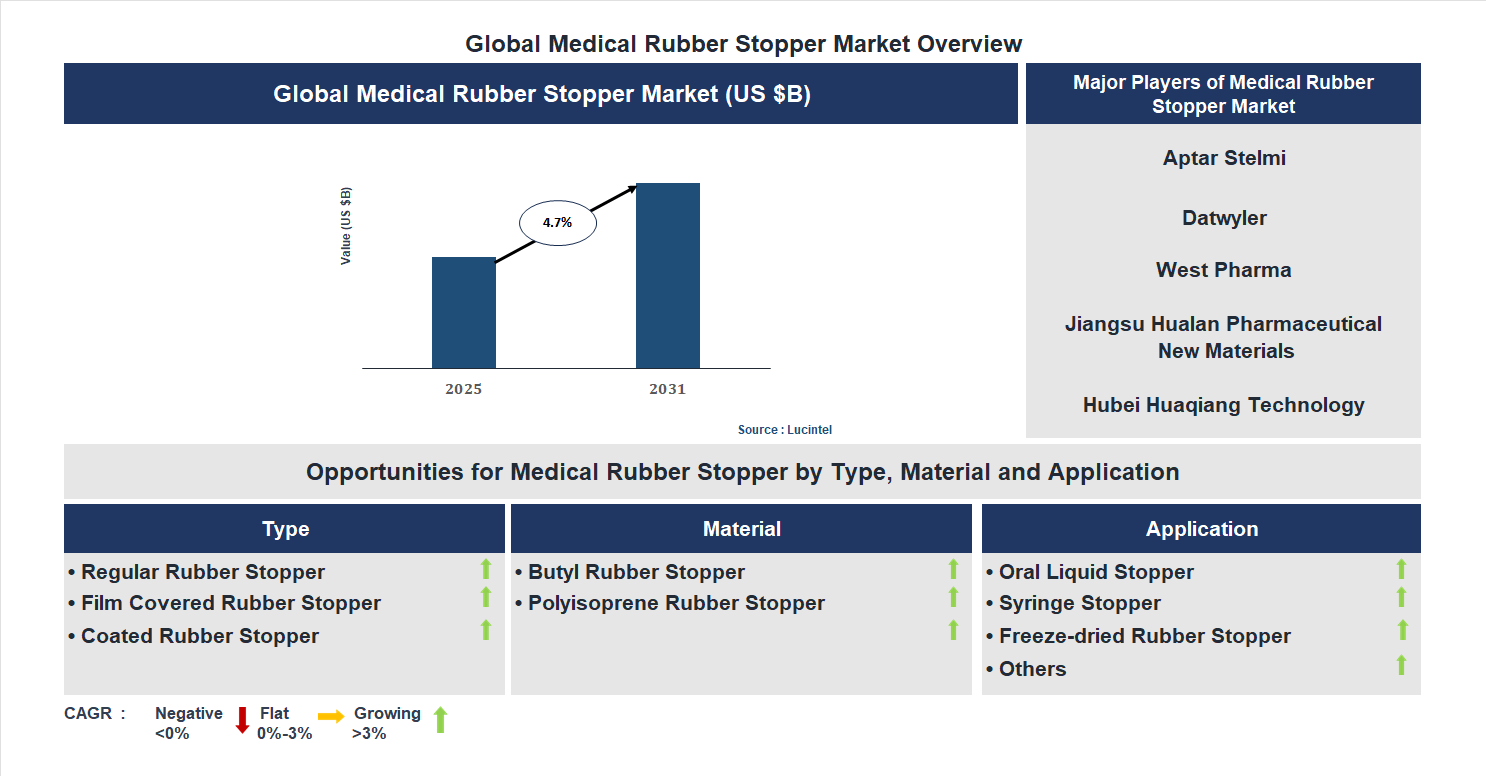
The future of the global medical rubber stopper market looks promising with opportunities in the oral liquid stopper, syringe stopper, and freeze-dried rubber stopper markets. The global medical rubber stopper market is expected to grow with a CAGR of 4.7% from 2025 to 2031. The major drivers for this market are the increasing demand for injectable drug packaging, the rising pharmaceutical manufacturing activities, and the growing adoption of biologics vaccines.• Lucintel forecasts that, within the type category, coated rubber stopper is expected to witness the highest growth over the forecast period.
• Within the application category, freeze-dried rubber stopper is expected to witness the highest growth.
• In terms of region, APAC is expected to witness the highest growth over the forecast period. Gain valuable insights for your business decisions with our comprehensive 150+ page report. Sample figures with some insights are shown below.
Emerging Trends in the Medical Rubber Stopper Market
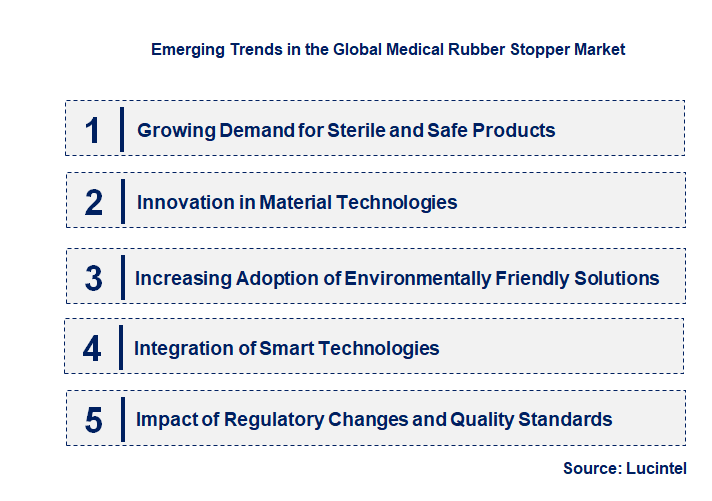
The medical rubber stopper market is experiencing rapid evolution driven by technological advancements, increasing healthcare demands, and stringent regulatory standards. As the healthcare industry seeks safer, more efficient, and environmentally friendly solutions, manufacturers are innovating to meet these needs. Emerging trends are shaping the market landscape, influencing product development, supply chain dynamics, and regulatory compliance. These developments are not only enhancing product performance but also addressing sustainability concerns and patient safety. Understanding these key trends is essential for stakeholders aiming to capitalize on market opportunities and navigate future challenges effectively.• Growing Demand for Sterile and Safe Products: The increasing emphasis on patient safety and infection control is driving demand for sterile rubber stoppers. Hospitals and pharmaceutical companies prioritize contamination-free packaging, prompting manufacturers to adopt advanced sterilization techniques and quality assurance protocols. This trend ensures product integrity, reduces infection risks, and complies with strict regulatory standards, ultimately boosting market growth and customer confidence.
• Innovation in Material Technologies: The market is witnessing a shift towards advanced materials such as silicone and thermoplastic elastomers, which offer superior chemical resistance, flexibility, and durability. These materials enhance the performance of rubber stoppers, especially in sensitive applications like vaccines and biologics. Innovations in material technology improve product lifespan, reduce contamination risks, and meet evolving regulatory requirements, thereby expanding application scope and market competitiveness.
• Increasing Adoption of Environmentally Friendly Solutions: Sustainability concerns are prompting manufacturers to develop eco-friendly rubber stoppers made from biodegradable or recyclable materials. This trend aligns with global environmental regulations and corporate social responsibility initiatives. Eco-conscious products appeal to healthcare providers seeking sustainable packaging options, fostering market differentiation and encouraging industry-wide shifts towards greener practices.
• Integration of Smart Technologies: The incorporation of smart features such as tamper-evident seals, RFID tags, and leak detection sensors is transforming the market. These innovations enhance traceability, security, and safety of pharmaceutical products. Smart rubber stoppers facilitate better inventory management, reduce counterfeiting, and ensure compliance with regulatory standards, thereby improving overall supply chain efficiency and patient safety.
• Impact of Regulatory Changes and Quality Standards: Stringent regulations from agencies like the FDA and EMA are shaping product development and manufacturing processes. Companies are investing in compliance and quality assurance to meet evolving standards, which influences material selection, sterilization methods, and testing protocols. This trend ensures higher product quality, safety, and efficacy, but also increases operational costs and complexity, prompting industry players to innovate within regulatory frameworks. In summary, these emerging trends are significantly reshaping the medical rubber stopper market by emphasizing safety, innovation, sustainability, and regulatory compliance. They are driving product improvements, expanding application areas, and fostering a more sustainable and technologically advanced industry landscape. Stakeholders who adapt to these trends will be better positioned to capitalize on future growth opportunities and address market challenges effectively.
Recent Development in the Medical Rubber Stopper Market
The medical rubber stopper market has experienced significant growth driven by advancements in healthcare, increased demand for pharmaceutical packaging, and innovations in materials. As the healthcare industry evolves, the need for reliable, sterile, and durable stoppers has become paramount. Recent developments reflect a focus on improving product safety, sustainability, and compatibility with various drugs. These changes are shaping the market landscape, influencing manufacturers strategies, and impacting global supply chains. The following key developments highlight the major trends and innovations currently shaping the medical rubber stopper market.• Technological Innovations: Adoption of advanced manufacturing techniques such as precision molding and silicone-based materials has enhanced stopper quality. These innovations improve sealing efficiency, reduce contamination risks, and extend shelf life of pharmaceuticals, thereby increasing market confidence and expanding application scope.
• Sustainability Initiatives: Growing environmental concerns have prompted manufacturers to develop eco-friendly rubber stoppers. Use of biodegradable materials and reduction of hazardous chemicals have minimized environmental impact, aligning the market with global sustainability goals and appealing to eco-conscious consumers.
• Regulatory Enhancements: Stricter regulations and quality standards from agencies like the FDA and EMA have driven manufacturers to improve product safety and compliance. Enhanced testing protocols and documentation ensure higher safety standards, boosting market credibility and facilitating international trade.
• Customization and Compatibility: Increasing demand for tailored solutions has led to the development of stoppers compatible with various drug formulations, including biologics and sensitive compounds. Customization improves drug stability and reduces contamination, expanding market opportunities across diverse pharmaceutical sectors.
• Market Expansion and Strategic Collaborations: Emerging markets in Asia-Pacific and Latin America are witnessing rapid growth due to expanding healthcare infrastructure. Strategic partnerships and collaborations among global players have facilitated technology transfer and market penetration, accelerating overall market growth. In summary, these recent developments are significantly impacting the medical rubber stopper market by enhancing product quality, ensuring regulatory compliance, promoting sustainability, and expanding market reach. These trends are fostering innovation, increasing competitiveness, and supporting the global growth of pharmaceutical packaging solutions.
Strategic Growth Opportunities in the Medical Rubber Stopper Market
The medical rubber stopper market is experiencing significant growth driven by increasing healthcare demands, advancements in medical device technology, and rising adoption of sterile packaging solutions. As hospitals, pharmaceutical companies, and research institutions seek reliable and safe sealing options, the market is poised for expansion across various applications. Key growth opportunities are emerging in response to evolving industry needs, technological innovations, and regulatory standards. These developments are shaping the future landscape of medical rubber stoppers, offering enhanced safety, functionality, and cost-effectiveness. Understanding these opportunities is crucial for stakeholders aiming to capitalize on market trends and drive sustainable growth.• Growing demand in pharmaceutical packaging: The need for sterile, reliable sealing solutions in drug vials is increasing, boosting demand for high-quality rubber stoppers that ensure drug integrity and patient safety.
• Expansion in biotechnology applications: As biotech research and production grow, specialized rubber stoppers designed for sensitive biological materials are gaining traction, supporting innovation and product stability.
• Adoption of eco-friendly materials: The shift towards sustainable practices is encouraging the development of biodegradable and environmentally friendly rubber stoppers, aligning with regulatory and consumer preferences.
• Technological advancements in stopper design: Innovations such as anti-leaching properties and enhanced sealing mechanisms improve safety and efficacy, attracting more pharmaceutical and medical device manufacturers.
• Rising demand in medical device manufacturing: The increasing use of rubber stoppers in medical devices like syringes and infusion systems is creating new growth avenues, driven by the need for sterile, durable components. In summary, these growth opportunities are significantly impacting the medical rubber stopper market by fostering innovation, enhancing product safety, and expanding application scope. They are enabling market players to meet evolving industry standards and customer expectations, ultimately driving market expansion and competitiveness.
Medical Rubber Stopper Market Driver and Challenges
The medical rubber stopper market is influenced by a variety of technological, economic, and regulatory factors that shape its growth and development. Advances in manufacturing technologies and material science have enabled the production of more reliable and sterile stoppers, while economic factors such as increasing healthcare expenditure and demand for pharmaceutical packaging drive market expansion. Regulatory standards for safety and quality assurance also play a crucial role in shaping product specifications and market entry. Additionally, innovations in drug delivery systems and the rising prevalence of chronic diseases further propel demand. However, the market faces challenges related to raw material costs, environmental concerns, and stringent regulatory compliance, which could impact growth trajectories. The factors responsible for driving the medical rubber stopper market include:• Technological Advancements: The development of new manufacturing processes and materials, such as synthetic rubber and silicone, has improved the quality, safety, and functionality of rubber stoppers. These innovations enable better sealing, sterilization, and compatibility with various pharmaceuticals, thereby increasing their adoption. Enhanced production techniques also reduce defects and contamination risks, ensuring compliance with strict regulatory standards. As pharmaceutical companies seek more reliable packaging solutions, technological progress continues to fuel market growth by offering superior products that meet evolving industry needs.
• Increasing Healthcare Expenditure: Rising global healthcare spending, especially in emerging economies, boosts demand for pharmaceutical packaging solutions, including rubber stoppers. As governments and private sectors invest more in healthcare infrastructure and medication access, the volume of injectable drugs and vaccines increases, necessitating high-quality stoppers. This economic trend supports market expansion by creating a larger customer base for manufacturers. Moreover, the growing prevalence of chronic diseases and aging populations further amplifies the need for safe, sterile packaging options, reinforcing the market’s upward trajectory driven by economic factors.
• Growing Pharmaceutical Industry: The expanding pharmaceutical sector, driven by innovation and increased drug development, directly impacts the demand for rubber stoppers. The rise in biologics, vaccines, and injectable medications requires specialized stoppers that ensure sterility and stability. As pharmaceutical companies focus on developing new therapies, the need for compatible packaging solutions intensifies. This growth in the pharmaceutical industry not only increases the volume of products requiring rubber stoppers but also encourages manufacturers to innovate and diversify their offerings, thereby propelling the market forward.
• Regulatory and Quality Standards: Stringent regulatory frameworks imposed by agencies such as the FDA, EMA, and other health authorities necessitate high-quality, sterile, and reliable rubber stoppers. Compliance with these standards ensures product safety and efficacy, which is critical for market acceptance. Manufacturers invest heavily in quality control, testing, and certification processes to meet these regulations, which can act as both a driver and a barrier. Nonetheless, adherence to regulatory standards ultimately enhances market credibility and consumer trust, fostering growth in regions with strict compliance requirements. The challenges in the medical rubber stopper market are:
• Raw Material Price Volatility: Fluctuations in the prices of raw materials like natural rubber, synthetic rubber, and silicone significantly impact manufacturing costs. Price volatility can result from supply chain disruptions, geopolitical tensions, or environmental factors affecting raw material production. Increased costs may lead to higher product prices, reducing competitiveness and profit margins for manufacturers. Managing these fluctuations requires strategic sourcing and inventory management, but persistent volatility remains a challenge that could hinder market growth and profitability.
• Environmental Concerns and Sustainability: The environmental impact of rubber production, including resource depletion and waste generation, poses challenges for the market. Increasing regulatory pressure and consumer awareness demand sustainable practices, pushing manufacturers to adopt eco-friendly materials and processes. However, transitioning to sustainable options can involve higher costs and technological hurdles. Failure to address environmental concerns may lead to regulatory penalties, reputational damage, and reduced market acceptance, making sustainability a critical challenge for industry players.
• Stringent Regulatory Compliance: Meeting diverse and evolving regulatory requirements across different regions can be complex and costly. Manufacturers must ensure their products comply with safety, sterilization, and biocompatibility standards, which involves extensive testing and certification. Non-compliance can result in product recalls, legal penalties, and loss of market access. Navigating these regulatory landscapes requires significant investment in quality assurance and regulatory expertise, posing a substantial challenge, especially for smaller players seeking to expand globally. In summary, the medical rubber stopper market is driven by technological innovations, economic growth, and increasing pharmaceutical demand, which collectively foster expansion. However, challenges such as raw material price fluctuations, environmental sustainability issues, and regulatory complexities pose significant hurdles. These factors collectively influence market dynamics, requiring industry players to innovate, adapt, and strategize effectively. Overall, the market’s future hinges on balancing growth opportunities with addressing these critical challenges to ensure sustainable development and competitiveness.
List of Medical Rubber Stopper Companies
Companies in the market compete on the basis of product quality offered. Major players in this market focus on expanding their manufacturing facilities, R&D investments, infrastructural development, and leverage integration opportunities across the value chain. With these strategies medical rubber stopper companies cater increasing demand, ensure competitive effectiveness, develop innovative products & technologies, reduce production costs, and expand their customer base. Some of the medical rubber stopper companies profiled in this report include-• Aptar Stelmi
• Datwyler
• West Pharma
• Jiangsu Hualan Pharmaceutical New Materials
• Hubei Huaqiang Technology
• Samsung Medical Rubber
• Daikyo Seiko
• Hebei Oak One
• Shandong Pharmaceutical Glass
• The Plasticoid Company
Medical Rubber Stopper Market by Segment
The study includes a forecast for the global medical rubber stopper market by type, material, application, and region.Medical Rubber Stopper Market by Type [Value from 2019 to 2031]:
• Regular Rubber Stopper
• Film Covered Rubber Stopper
• Coated Rubber Stopper
Medical Rubber Stopper Market by Material [Value from 2019 to 2031]:
• Butyl Rubber Stopper
• Polyisoprene Rubber Stopper
Medical Rubber Stopper Market by Application [Value from 2019 to 2031]:
• Oral Liquid Stopper
• Syringe Stopper
• Freeze-dried Rubber Stopper
• Others
Medical Rubber Stopper Market by Region [Value from 2019 to 2031]:
• North America
• Europe
• Asia Pacific
• The Rest of the World
Country Wise Outlook for the Medical Rubber Stopper Market
The medical rubber stopper market has experienced significant growth driven by increasing demand for sterile packaging solutions in healthcare, pharmaceuticals, and biotechnology sectors worldwide. Innovations in materials, sustainability efforts, and regulatory compliance are shaping the market landscape. Countries like the United States, China, Germany, India, and Japan are key players, each contributing unique developments based on their technological capabilities and healthcare needs. These nations are focusing on product quality, regulatory standards, and sustainable practices to meet rising global demand. The evolving landscape reflects a shift towards more advanced, eco-friendly, and cost-effective rubber stopper solutions, ensuring safety and efficacy in medical applications.• United States: The US market has seen advancements in high-performance rubber stoppers with enhanced sealing properties and compliance with stringent FDA regulations. Companies are investing in R&D to develop eco-friendly materials and reduce environmental impact. The adoption of automation in manufacturing processes has improved efficiency and product consistency. The demand for sterile, pre-filled syringes has driven innovation in rubber stopper design, ensuring compatibility with various drug formulations. Additionally, the US government’s focus on healthcare infrastructure and pharmaceutical safety has bolstered market growth, encouraging new product launches and technological innovations.
• China: China’s market is rapidly expanding due to its booming pharmaceutical industry and increasing exports of medical products. Local manufacturers are adopting advanced manufacturing techniques to produce high-quality rubber stoppers at competitive prices. The government’s support for healthcare infrastructure development and regulatory reforms has facilitated market growth. Chinese companies are also focusing on sustainable materials and environmentally friendly production processes to meet global standards. The rising demand for injectable drugs and vaccines has further fueled the need for reliable rubber stoppers, prompting innovation in material durability and sealing efficiency.
• Germany: Germany remains a leader in medical device innovation, including rubber stoppers, driven by strict EU regulations and high-quality standards. The focus is on developing sterile, biocompatible, and environmentally sustainable products. German firms are investing in research to improve the chemical resistance and sealing properties of rubber stoppers, ensuring compatibility with a wide range of pharmaceuticals. The emphasis on sustainability has led to the adoption of recyclable materials and eco-friendly manufacturing practices. The country’s strong pharmaceutical and biotech sectors continue to push the demand for advanced rubber stopper solutions, fostering innovation and maintaining Germany’s competitive edge in the market.
• India: India’s market is witnessing rapid growth due to increasing healthcare infrastructure and a rising pharmaceutical manufacturing sector. Local companies are expanding their product portfolios with innovative, cost-effective rubber stoppers that meet international quality standards. The government’s initiatives to promote domestic manufacturing and reduce reliance on imports have boosted market development. There is a growing focus on sustainable and biodegradable materials to align with global environmental standards. The rising demand for injectable medicines and vaccines in rural and urban areas is driving innovation in sealing technology, ensuring safety and efficacy in medical applications.
• Japan: Japan’s market is characterized by advanced technological integration and stringent quality standards. Japanese companies are developing high-performance rubber stoppers with enhanced sealing, chemical resistance, and biocompatibility. The focus on innovation is driven by the aging population and increasing demand for reliable medical supplies. Japan emphasizes eco-friendly manufacturing processes and sustainable materials to meet both domestic and international regulations. The integration of automation and smart manufacturing techniques has improved product consistency and reduced costs. The country’s strong pharmaceutical and healthcare sectors continue to foster innovation, ensuring Japan remains a key player in the global medical rubber stopper market.

Features of the Global Medical Rubber Stopper Market
Market Size Estimates: Medical rubber stopper market size estimation in terms of value ($B). Trend and Forecast Analysis: Market trends (2019 to 2024) and forecast (2025 to 2031) by various segments and regions. Segmentation Analysis: Medical rubber stopper market size by type, material, application, and region in terms of value ($B). Regional Analysis: Medical rubber stopper market breakdown by North America, Europe, Asia Pacific, and Rest of the World. Growth Opportunities: Analysis of growth opportunities in different types, materials, applications, and regions for the medical rubber stopper market. Strategic Analysis: This includes M&A, new product development, and competitive landscape of the medical rubber stopper market. Analysis of competitive intensity of the industry based on Porter’s Five Forces model.
FAQ
Q1. What is the growth forecast for medical rubber stopper market? Answer: The global medical rubber stopper market is expected to grow with a CAGR of 4.7% from 2025 to 2031. Q2. What are the major drivers influencing the growth of the medical rubber stopper market? Answer: The major drivers for this market are the increasing demand for injectable drug packaging, the rising pharmaceutical manufacturing activities, and the growing adoption of biologics vaccines. Q3. What are the major segments for medical rubber stopper market? Answer: The future of the medical rubber stopper market looks promising with opportunities in the oral liquid stopper, syringe stopper, and freeze-dried rubber stopper markets. Q4. Who are the key medical rubber stopper market companies? Answer: Some of the key medical rubber stopper companies are as follows:• Aptar Stelmi
• Datwyler
• West Pharma
• Jiangsu Hualan Pharmaceutical New Materials
• Hubei Huaqiang Technology
• Samsung Medical Rubber
• Daikyo Seiko
• Hebei Oak One
• Shandong Pharmaceutical Glass
• The Plasticoid Company Q5. Which medical rubber stopper market segment will be the largest in future? Answer: Lucintel forecasts that, within the type category, coated rubber stopper is expected to witness the highest growth over the forecast period. Q6. In medical rubber stopper market, which region is expected to be the largest in next 5 years? Answer: In terms of region, APAC is expected to witness the highest growth over the forecast period. Q7. Do we receive customization in this report? Answer: Yes, Lucintel provides 10% customization without any additional cost.
Table of Contents
List of Figures
List of Tables
Methodology
- In-depth interviews of the major players in this market
- Detailed secondary research from competitors’ financial statements and published data
- Extensive searches of published works, market, and database information pertaining to industry news, company press releases, and customer intentions
- A compilation of the experiences, judgments, and insights of Lucintel’s professionals, who have analyzed and tracked this market over the years.


Buy Now
Choose a license that fits your team. Instant PDF delivery.
Prices exclude taxes. Instant delivery. Custom licensing available on request.
Key Questions
- • What are some of the most promising, high-growth opportunities for the medical rubber stopper market by type (regular rubber stopper, film covered rubber stopper, and coated rubber stopper), material (butyl rubber stopper and polyisoprene rubber stopper), application (oral liquid stopper, syringe stopper, freeze-dried rubber stopper, and others), and region (North America, Europe, Asia Pacific, and the Rest of the World)?
- • Which segments will grow at a faster pace and why?
- • Which region will grow at a faster pace and why?
- • What are the key factors affecting market dynamics? What are the key challenges and business risks in this market?
- • What are the business risks and competitive threats in this market?
- • What are the emerging trends in this market and the reasons behind them?
- • What are some of the changing demands of customers in the market?
- • What are the new developments in the market? Which companies are leading these developments?
- • Who are the major players in this market? What strategic initiatives are key players pursuing for business growth?
- • What are some of the competing products in this market and how big of a threat do they pose for loss of market share by material or product substitution?
- • What M&A activity has occurred in the last 5 years and what has its impact been on the industry? For any questions related to Medical Rubber Stopper Market, Medical Rubber Stopper Market Size, Medical Rubber Stopper Market Growth, Medical Rubber Stopper Market Analysis, Medical Rubber Stopper Market Report, Medical Rubber Stopper Market Share, Medical Rubber Stopper Market Trends, Medical Rubber Stopper Market Forecast, Medical Rubber Stopper Companies, write Lucintel analyst at email: helpdesk@lucintel.com. We will be glad to get back to you soon.


