
Medical Lifting Sling Market Trends and Forecast
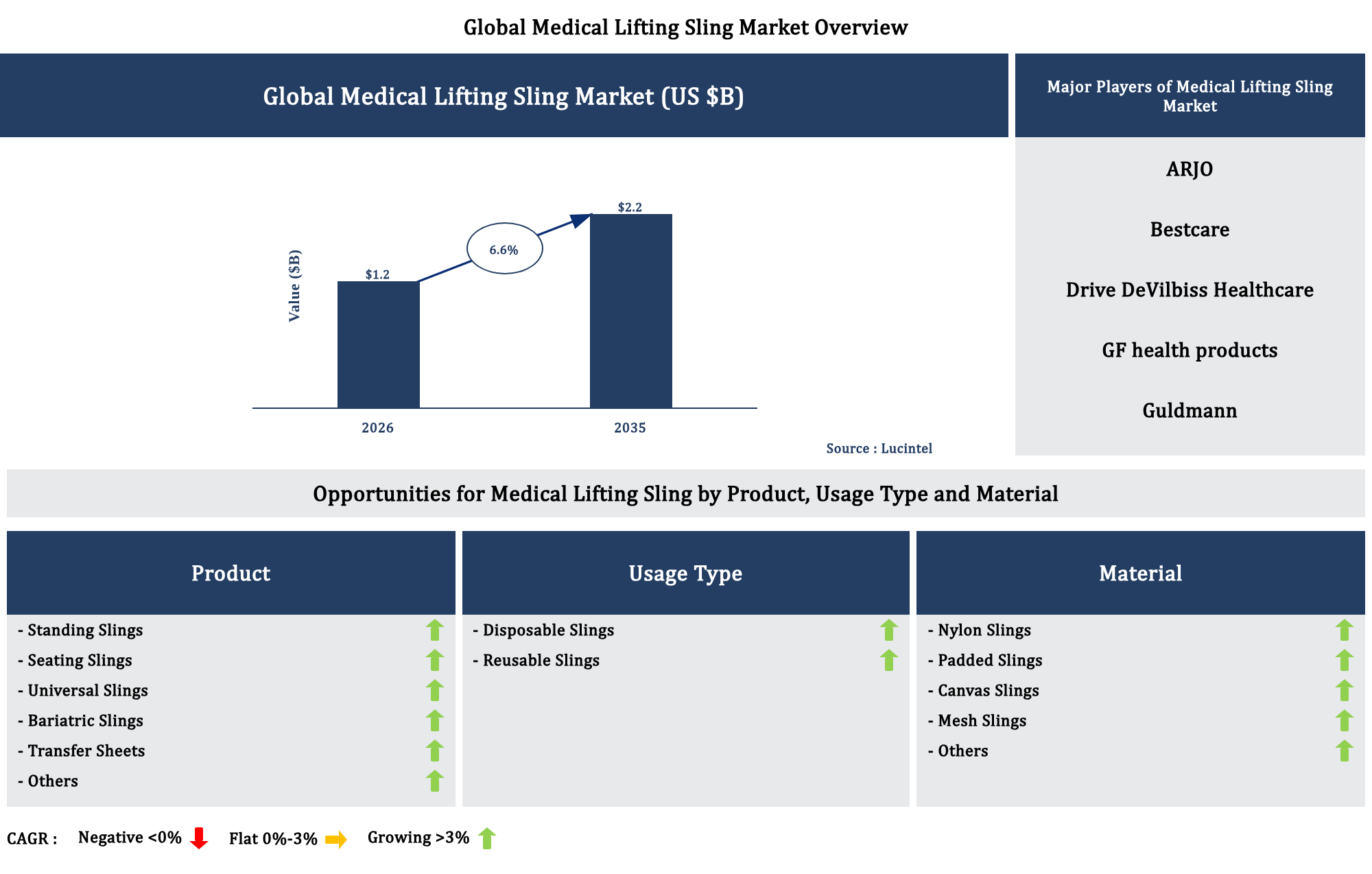
The future of the global medical lifting sling market looks promising with opportunities in the home care facility and hospital markets. The global medical lifting sling market is expected to reach an estimated $2,243 million by 2035 with a CAGR of 6.6% from 2026 to 2035. The major drivers for this market are the rising demand for home healthcare services, the growing adoption of advanced medical lifting equipment, and the increasing surgeries requiring patient lifting assistance.
• Lucintel forecasts that, within the product category, universal sling is expected to witness the highest growth over the forecast period.
• Within the end use category, hospital is expected to witness higher growth.
• In terms of region, APAC is expected to witness the highest growth over the forecast period.
Gain valuable insights for your business decisions with our comprehensive 150+ page report. Sample figures with some insights are shown below.
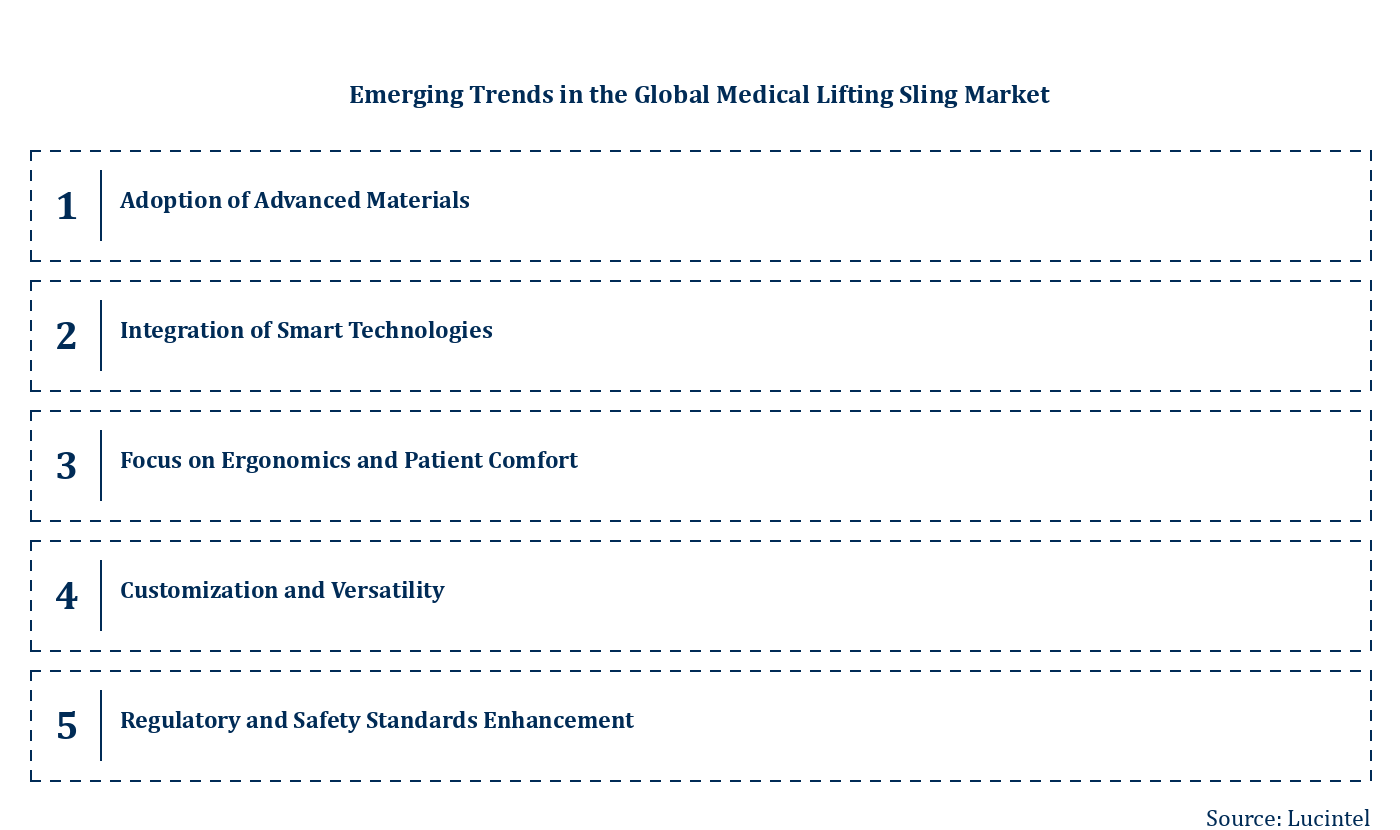
Emerging Trends in the Medical Lifting Sling Market
The medical lifting sling market is experiencing rapid evolution driven by technological advancements, increasing demand for patient safety, and a focus on comfort and efficiency in healthcare settings. As hospitals and care facilities seek innovative solutions to improve patient handling, several key trends are emerging that are shaping the future of this industry. These developments are not only enhancing the quality of care but also optimizing operational workflows and safety standards. Understanding these trends is essential for stakeholders aiming to stay competitive and meet the evolving needs of healthcare providers and patients alike.
• Adoption of Advanced Materials: The market is witnessing a shift towards the use of high-performance, durable, and hypoallergenic materials such as nylon, polyester, and mesh fabrics. These materials offer increased strength, flexibility, and comfort, reducing skin irritation and improving patient safety. The use of antimicrobial fabrics is also gaining popularity to prevent infections. This trend enhances the longevity and hygiene of lifting slings, leading to better patient outcomes and lower maintenance costs for healthcare providers.
• Integration of Smart Technologies: Smart lifting slings embedded with sensors and IoT connectivity are emerging to monitor load weight, usage patterns, and sling condition in real-time. These features enable healthcare staff to perform predictive maintenance, reduce the risk of sling failure, and ensure proper handling. The integration of smart technology improves operational efficiency, enhances patient safety, and provides valuable data for quality assurance and compliance with safety standards.
• Focus on Ergonomics and Patient Comfort: There is a growing emphasis on designing slings that prioritize patient comfort and ease of use for caregivers. Features such as padded supports, adjustable straps, and ergonomic shapes are being incorporated to minimize discomfort and facilitate easier handling. This trend improves patient experience, reduces caregiver strain, and promotes better clinical outcomes by ensuring proper positioning and support during transfers.
• Customization and Versatility: The market is moving towards customizable sling solutions tailored to specific patient needs, including bariatric, pediatric, and post-surgical cases. Versatile designs that can be used for various transfer techniques are also gaining traction. This trend allows healthcare providers to offer more personalized care, optimize resource utilization, and improve safety during patient handling, especially in complex or specialized cases.
• Regulatory and Safety Standards Enhancement: Increasing regulatory scrutiny and safety standards are driving the development of compliant and certified lifting slings. Manufacturers are focusing on meeting international standards such as ISO and FDA regulations, ensuring product safety, reliability, and traceability. This trend fosters trust among healthcare providers, reduces liability risks, and encourages innovation aligned with safety and quality benchmarks.
These trends are collectively transforming the medical lifting sling market by promoting safer, more efficient, and patient-centered solutions. The integration of advanced materials and smart technologies, along with a focus on ergonomics, customization, and regulatory compliance, is leading to innovative products that better meet the needs of modern healthcare environments. These developments are not only improving patient safety and comfort but also streamlining operational workflows, ultimately reshaping the landscape of patient handling and mobility solutions.
Recent Developments in the Medical Lifting Sling Market
The medical lifting sling market is experiencing rapid growth driven by technological advancements, increasing healthcare needs, and a focus on patient safety. Innovations in materials and design are enhancing comfort and durability. Rising awareness about fall prevention and mobility assistance is expanding market demand. Additionally, aging populations worldwide are fueling the need for effective lifting solutions. Regulatory approvals and healthcare policies are also supporting market expansion. These developments collectively are transforming the industry landscape, offering new opportunities for manufacturers and healthcare providers.
• Technological Innovations in Sling Materials: Advanced fabrics and ergonomic designs are improving patient comfort and safety. These innovations reduce skin irritation and enhance durability, leading to longer-lasting products. The adoption of breathable, antimicrobial, and lightweight materials is also increasing, making lifts safer and more comfortable. This progress is expanding market options and encouraging healthcare facilities to upgrade their equipment, ultimately improving patient outcomes and operational efficiency.
• Rising Adoption of Smart Lifting Devices: Integration of IoT and sensor technology in lifting slings is enabling real-time monitoring of patient safety and sling performance. These smart devices provide data on weight, positioning, and usage, reducing risks of injury. Hospitals and care homes are increasingly adopting these advanced solutions to enhance safety protocols. The impact includes improved patient care, reduced liability, and streamlined maintenance, positioning smart lifting devices as a key growth driver in the market.
• Growing Focus on Patient Safety and Comfort: Healthcare providers are prioritizing patient safety and comfort, leading to increased demand for ergonomic and supportive slings. Innovations such as padded, adjustable, and breathable slings are addressing these needs. This focus is reducing injury risks during transfers and improving patient satisfaction. As safety standards tighten, manufacturers are innovating to meet these demands, which is expanding the market and encouraging the development of specialized sling products.
• Expansion of Home Healthcare and Rehabilitation Services: The rise in home healthcare and outpatient rehabilitation is boosting demand for portable, easy-to-use lifting slings. These products facilitate safe patient transfers outside clinical settings, supporting aging-in-place initiatives. The market is witnessing increased sales of lightweight, versatile slings suitable for home use. This trend is opening new revenue streams for manufacturers and broadening the scope of the market beyond traditional healthcare facilities, fostering innovation and competition.
• Regulatory Approvals and Industry Standards: Enhanced regulatory frameworks and industry standards are ensuring product safety and quality. Compliance with these regulations is driving innovation in design and materials. Manufacturers are investing in R&D to meet evolving standards, which boosts consumer confidence and market credibility. This regulatory environment encourages the development of safer, more reliable lifting slings, ultimately fostering market growth and ensuring better patient outcomes.
The overall impact of these developments is a more innovative, safe, and expanding medical lifting sling market. Enhanced product features, safety standards, and technological integration are driving increased adoption across healthcare settings. The market is becoming more competitive, with opportunities for new entrants and existing players to innovate. These trends are ultimately improving patient care, operational efficiency, and market sustainability.
Strategic Growth Opportunities in the Medical Lifting Sling Market
The medical lifting sling market is experiencing significant growth driven by increasing demand for patient mobility solutions, aging populations, and advancements in healthcare technology. Rising awareness of patient safety and comfort, coupled with the need for efficient caregiving, is fueling market expansion. Key applications across hospitals, nursing homes, and home care settings present substantial opportunities for manufacturers to innovate and expand their product portfolios. Strategic investments and technological developments are expected to further accelerate market growth in the coming years.
• Growing Demand for Patient Mobility Solutions in Healthcare Settings: The increasing need to safely transfer and reposition patients is driving demand for medical lifting slings. Hospitals, clinics, and nursing homes seek reliable, comfortable, and easy-to-use slings to improve patient safety and caregiver efficiency. The rising prevalence of mobility impairments and chronic conditions necessitates advanced lifting solutions, creating opportunities for manufacturers to develop innovative, ergonomic, and customizable slings tailored to diverse patient needs.
• Aging Population Fueling Demand for Home Care and Assisted Living: As the global elderly population expands, there is a heightened need for home care and assisted living services. Medical lifting slings are essential for safe patient transfers in these settings, reducing caregiver strain and preventing injuries. This demographic shift encourages manufacturers to design lightweight, user-friendly slings suitable for non-professional caregivers, expanding market reach into residential and community-based care environments.
• Technological Innovations Enhancing Sling Safety and Comfort: Advances in materials, design, and automation are improving sling safety, durability, and comfort. Features such as breathable fabrics, ergonomic shapes, and quick-release mechanisms are gaining popularity. Integration of smart technology, like sensors for monitoring patient movement, offers added safety benefits. These innovations open avenues for premium product offerings, attracting healthcare providers seeking high-quality, reliable solutions that enhance patient experience and reduce injury risks.
• Increasing Adoption of Specialized Slings for Diverse Medical Conditions: The demand for tailored slings designed for specific medical needs—such as bariatric, pediatric, or post-surgical patients—is rising. Customizable options improve patient comfort and safety, while also addressing unique transfer challenges. Manufacturers are investing in developing specialized products that cater to these niche markets, thereby expanding their customer base and strengthening their market position through targeted solutions.
• Rising Focus on Infection Control and Hygiene Standards: The COVID-19 pandemic underscored the importance of infection prevention in healthcare environments. Medical slings made from antimicrobial and easy-to-clean materials are gaining prominence. The development of disposable or single-use slings further enhances hygiene standards. This focus on infection control drives innovation and adoption of safer, more hygienic sling options, creating growth opportunities for companies that prioritize safety and compliance with healthcare regulations.
These growth opportunities are poised to significantly influence the medical lifting sling market by fostering innovation, expanding application areas, and addressing evolving healthcare needs. Emphasizing safety, comfort, and specialized solutions will enable market players to capitalize on emerging trends and sustain long-term growth in this dynamic industry.
Medical Lifting Sling Market Driver and Challenges
The medical lifting sling market is influenced by a variety of technological, economic, and regulatory factors that shape its growth and development. Advances in medical technology and patient care standards drive demand for innovative lifting solutions. Economic factors such as healthcare expenditure and aging populations increase the need for efficient patient handling equipment. Regulatory frameworks ensure safety and quality standards, impacting product development and market entry. Additionally, technological innovations like smart materials and automation are transforming the market landscape. However, challenges such as high costs, regulatory hurdles, and safety concerns also pose significant barriers. Understanding these drivers and challenges is essential for stakeholders aiming to capitalize on market opportunities and address potential risks.
The factors responsible for driving the medical lifting sling market include:-
• Technological Innovation: The integration of advanced materials, such as breathable fabrics and durable polymers, enhances sling comfort, safety, and durability. Innovations like smart sensors and automation improve patient monitoring and handling efficiency. These technological advancements meet increasing healthcare demands for safer, more effective patient transfer solutions, thereby expanding market opportunities. Continuous R&D investments foster product differentiation and competitive advantage, attracting healthcare providers seeking reliable and innovative lifting solutions.
• Aging Population and Rising Chronic Diseases: The global increase in elderly populations and chronic health conditions significantly boosts demand for patient mobility aids, including lifting slings. As hospitals and care facilities seek to improve patient comfort and safety, the need for specialized slings tailored to various patient needs grows. This demographic shift results in sustained market growth, encouraging manufacturers to develop diverse product lines that cater to different patient profiles, ultimately expanding market reach.
• Healthcare Infrastructure Development: The expansion and modernization of healthcare facilities worldwide drive demand for advanced patient handling equipment. Governments and private sectors investing in hospital infrastructure seek reliable, compliant lifting solutions to improve patient care and staff safety. This infrastructure growth supports increased procurement of medical lifting slings, fostering market expansion and encouraging innovation in product design to meet evolving healthcare standards.
• Regulatory and Safety Standards: Stringent safety regulations and quality standards imposed by health authorities ensure the safety and efficacy of medical lifting slings. Compliance with these standards necessitates rigorous testing and certification, which can act as a barrier for new entrants but also assures end-users of product reliability. These regulations promote high-quality manufacturing practices, ultimately enhancing market credibility and consumer trust, which fuels market growth.
The challenges facing the medical lifting sling market include:-
• High Cost of Advanced Products: The adoption of technologically advanced lifting slings involves significant costs related to research, development, and manufacturing. These high prices can limit accessibility for smaller healthcare providers and in developing regions, restricting market penetration. Additionally, ongoing maintenance and replacement costs may deter widespread adoption, impacting overall market growth and profitability.
• Regulatory Hurdles and Certification Processes: Navigating complex regulatory landscapes across different regions can delay product launches and increase compliance costs. Lengthy certification procedures and evolving standards require continuous adaptation, which can hinder rapid market expansion. Smaller manufacturers may find these barriers particularly challenging, reducing market competitiveness and innovation pace.
• Safety and Liability Concerns: Ensuring patient safety remains paramount, and any product failure can lead to severe consequences, including legal liabilities and reputational damage. Manufacturers must adhere to strict safety protocols, which increases development costs and timeframes. Persistent safety concerns may also lead to hesitancy among healthcare providers, affecting market adoption rates and overall growth.
The medical lifting sling market is driven by technological advancements, demographic shifts, infrastructure development, and regulatory compliance, which collectively foster growth and innovation. However, high costs, regulatory complexities, and safety concerns pose significant challenges that could hinder market expansion. Balancing these drivers and challenges is crucial for stakeholders to capitalize on emerging opportunities while mitigating risks. Overall, the market‘s future depends on continued innovation, regulatory adaptation, and cost management to meet the evolving needs of healthcare providers and patients worldwide.
List of Medical Lifting Sling Companies
Companies in the market compete on the basis of product quality offered. Major players in this market focus on expanding their manufacturing facilities, R&D investments, infrastructural development, and leverage integration opportunities across the value chain. With these strategies medical lifting sling companies cater increasing demand, ensure competitive effectiveness, develop innovative products & technologies, reduce production costs, and expand their customer base. Some of the medical lifting sling companies profiled in this report include-
• ARJO
• Bestcare
• Drive DeVilbiss Healthcare
• GF health products
• Guldmann
• Hill-Rom Services
• Invacare
• Medline Industries
• Prism Medical
• Sunrise Medical
Medical Lifting Sling Market by Segment
The study includes a forecast for the global medical lifting sling market by product, usage type, material, end use, and region.
Medical Lifting Sling Market by Product [Value from 2019 to 2035]:
• Standing Slings
• Seating Slings
• Universal Slings
• Bariatric Slings
• Transfer Sheets
• Others
Medical Lifting Sling Market by Usage Type [Value from 2019 to 2035]:
• Disposable Slings
• Reusable Slings
Medical Lifting Sling Market by Material [Value from 2019 to 2035]:
• Nylon Slings
• Padded Slings
• Canvas Slings
• Mesh Slings
• Others
Medical Lifting Sling Market by End Use [Value from 2019 to 2035]:
• Home Care Facilities
• Hospitals
• Others
Medical Lifting Sling Market by Region [Value from 2019 to 2035]:
• North America
• Europe
• Asia Pacific
• The Rest of the World
Country Wise Outlook for the Medical Lifting Sling Market
The medical lifting sling market has experienced significant growth driven by aging populations, increasing healthcare infrastructure, and technological advancements in patient mobility solutions. Countries are focusing on improving patient safety, comfort, and caregiver efficiency through innovative sling designs and materials. Regulatory standards and healthcare policies also influence market trends, encouraging the adoption of advanced lifting solutions. As the demand for efficient patient handling increases globally, key markets are witnessing product innovations, strategic collaborations, and expanding distribution channels. These developments reflect a broader shift towards safer, more comfortable, and technologically integrated patient lifting systems across different regions.
• United States: The US market has seen rapid adoption of smart lifting slings with integrated sensors for real-time monitoring. Major healthcare providers are investing in ergonomic designs to reduce caregiver injuries. Regulatory bodies are emphasizing safety standards, prompting manufacturers to innovate. The rise of home healthcare services has also increased demand for portable, easy-to-use slings. Additionally, mergers and acquisitions among key players are expanding product portfolios and distribution networks. Telehealth integration and digital health records are further enhancing patient management, making the US a leader in technological advancements within this market.
• China: China’s market is experiencing robust growth driven by government initiatives to modernize healthcare infrastructure and an aging population. Local manufacturers are increasing their R&D efforts to develop cost-effective, durable slings suitable for diverse healthcare settings. The adoption of automated patient handling systems is rising, supported by increasing hospital investments. E-commerce platforms are facilitating wider distribution of medical lifting slings, especially in rural areas. The government’s focus on healthcare reforms and expanding insurance coverage is also boosting market demand. Strategic collaborations with international firms are helping Chinese companies improve product quality and innovation.
• Germany: Germany’s market is characterized by high-quality, safety-compliant lifting slings, driven by strict European Union regulations. The focus on patient safety and caregiver ergonomics has led to the development of advanced, lightweight, and durable slings. The country’s emphasis on sustainable and eco-friendly materials is influencing product design. Germany’s strong healthcare infrastructure and emphasis on research and development foster innovation in medical lifting solutions. The presence of several leading manufacturers and a well-established distribution network support steady market growth. Additionally, increasing adoption of digital health solutions is integrating with patient lifting systems for improved care management.
• India: India’s market is rapidly expanding due to increasing healthcare infrastructure, rising awareness, and a growing elderly population. Local manufacturers are focusing on affordable, durable, and easy-to-maintain slings to cater to a price-sensitive market. The government’s initiatives to improve healthcare access and the rise of private healthcare facilities are fueling demand. There is a growing trend toward portable and lightweight slings suitable for home care and small clinics. Import restrictions and local manufacturing incentives are encouraging domestic production. Strategic partnerships with international companies are facilitating technology transfer and product innovation, further boosting market growth.
• Japan: Japan’s market is driven by an aging population and a high prevalence of chronic conditions requiring patient mobility solutions. The focus is on developing technologically advanced slings with features like automated adjustment and enhanced comfort. Japan emphasizes safety standards and ergonomic design, leading to innovative, user-friendly products. The integration of IoT and digital health technologies is gaining traction, enabling remote monitoring and management. The country’s strong healthcare system and emphasis on quality control support the adoption of premium, high-performance lifting slings. Government policies promoting elderly care and technological innovation continue to propel market development in Japan.

Features of the Global Medical Lifting Sling Market
Market Size Estimates: Medical lifting sling market size estimation in terms of value ($M).
Trend and Forecast Analysis: Market trends (2019 to 2025) and forecast (2026 to 2035) by various segments and regions.
Segmentation Analysis: Medical lifting sling market size by various segments, such as by product, usage type, material, end use, and region in terms of value ($M).
Regional Analysis: Medical lifting sling market breakdown by North America, Europe, Asia Pacific, and Rest of the World.
Growth Opportunities: Analysis of growth opportunities in different product, usage type, material, end use, and regions for the medical lifting sling market.
Strategic Analysis: This includes M&A, new product development, and competitive landscape of the medical lifting sling market.
Analysis of competitive intensity of the industry based on Porter’s Five Forces model.
FAQ
Q1. What is the medical lifting sling market size?
Answer: The global medical lifting sling market is expected to reach an estimated $2,243 million by 2035.
Q2. What is the growth forecast for medical lifting sling market?
Answer: The global medical lifting sling market is expected to grow with a CAGR of 6.6% from 2026 to 2035.
Q3. What are the major drivers influencing the growth of the medical lifting sling market?
Answer: The major drivers for this market are the rising demand for home healthcare services, the growing adoption of advanced medical lifting equipment, and the increasing surgeries requiring patient lifting assistance.
Q4. What are the major segments for medical lifting sling market?
Answer: The future of the medical lifting sling market looks promising with opportunities in the home care facility and hospital markets.
Q5. Who are the key medical lifting sling market companies?
Answer: Some of the key medical lifting sling companies are as follows:
• ARJO
• Bestcare
• Drive DeVilbiss Healthcare
• GF health products
• Guldmann
• Hill-Rom Services
• Invacare
• Medline Industries
• Prism Medical
• Sunrise Medical
Q6. Which medical lifting sling market segment will be the largest in future?
Answer: Lucintel forecasts that, within the product category, universal sling is expected to witness the highest growth over the forecast period.
Q7. In medical lifting sling market, which region is expected to be the largest in next 8 years?
Answer: In terms of region, APAC is expected to witness the highest growth over the forecast period.
Q8. Do we receive customization in this report?
Answer: Yes, Lucintel provides 10% customization without any additional cost.
This report answers following 11 key questions:
Q.1. What are some of the most promising, high-growth opportunities for the medical lifting sling market by product (standing slings, seating slings, universal slings, bariatric slings, transfer sheets, and others), usage type (disposable slings and reusable slings), material (nylon slings, padded slings, canvas slings, mesh slings, and others), end use (home care facilities, hospitals, and others), and region (North America, Europe, Asia Pacific, and the Rest of the World)?
Q.2. Which segments will grow at a faster pace and why?
Q.3. Which region will grow at a faster pace and why?
Q.4. What are the key factors affecting market dynamics? What are the key challenges and business risks in this market?
Q.5. What are the business risks and competitive threats in this market?
Q.6. What are the emerging trends in this market and the reasons behind them?
Q.7. What are some of the changing demands of customers in the market?
Q.8. What are the new developments in the market? Which companies are leading these developments?
Q.9. Who are the major players in this market? What strategic initiatives are key players pursuing for business growth?
Q.10. What are some of the competing products in this market and how big of a threat do they pose for loss of market share by material or product substitution?
Q.11. What M&A activity has occurred in the last 5 years and what has its impact been on the industry?
For any questions related to Medical Lifting Sling Market, Medical Lifting Sling Market Size, Medical Lifting Sling Market Growth, Medical Lifting Sling Market Analysis, Medical Lifting Sling Market Report, Medical Lifting Sling Market Share, Medical Lifting Sling Market Trends, Medical Lifting Sling Market Forecast, Medical Lifting Sling Companies, write Lucintel analyst at email: helpdesk@lucintel.com. We will be glad to get back to you soon.
