
Report Feature
Meat Starter Culture Market Trends and Forecast
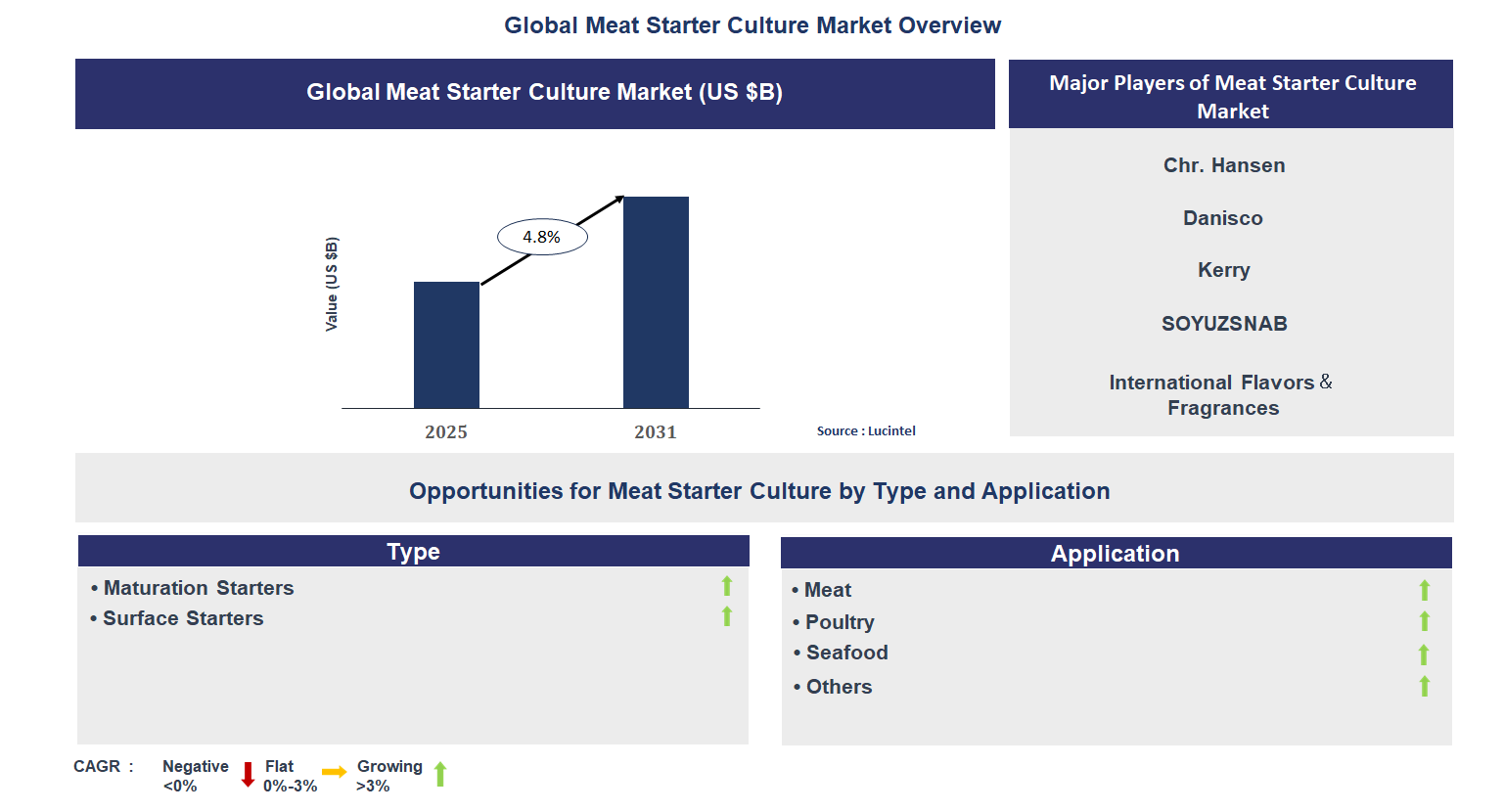
The future of the global meat starter culture market looks promising with opportunities in the meat, poultry, and seafood markets. The global meat starter culture market is expected to grow with a CAGR of 4.8% from 2025 to 2031. The major drivers for this market are the increasing demand for fermented meat products, the rising preference for clean label meat products, and the growing need for longer shelf life in meats.• Lucintel forecasts that, within the type category, maturation starter is expected to witness higher growth over the forecast period.
• Within the application category, poultry is expected to witness the highest growth.
• In terms of region, APAC is expected to witness the highest growth over the forecast period. Gain valuable insights for your business decisions with our comprehensive 150+ page report. Sample figures with some insights are shown below.
Emerging Trends in the Meat Starter Culture Market
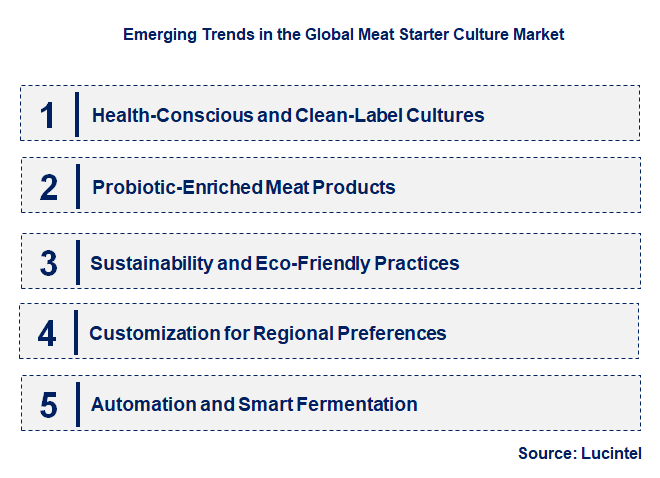
The meat starter culture market is evolving with trends influenced by consumer health demands, sustainability concerns, and technological advancements. These trends are reshaping the way meat products are produced, with a growing focus on health benefits, transparency, and sustainability. Manufacturers are innovating to stay ahead of changing consumer behaviors, leading to new opportunities and challenges.• Health-Conscious and Clean-Label Cultures: There is a growing demand for clean-label, natural meat starter cultures that are free from artificial additives and preservatives. Consumers are increasingly aware of the ingredients in their food, pushing companies to offer healthier options. This trend is prominent in markets like the U.S. and Germany, where consumers value transparency and wellness.
• Probiotic-Enriched Meat Products: The inclusion of probiotic cultures in meat products is gaining traction as consumers seek functional foods. Probiotic cultures are seen as a way to enhance the nutritional value of processed meats, supporting gut health. This trend is evident in Japan and Germany, where functional foods are becoming a major part of the health-conscious consumer market.
• Sustainability and Eco-Friendly Practices: Manufacturers are increasingly adopting sustainable production practices in response to environmental concerns. This includes using renewable energy, reducing waste, and sourcing raw materials more responsibly. Sustainability is particularly important in Europe, where consumers are highly attuned to environmental impacts and prefer eco-friendly products.
• Customization for Regional Preferences: As consumer preferences vary widely across regions, there is a growing demand for customized starter cultures. In markets like India and China, meat products are often tailored to local tastes and cultural preferences. Companies are offering specific starter cultures that provide the desired flavor and texture, catering to regional meat consumption trends.
• Automation and Smart Fermentation: The integration of automation and digitalization into meat culture production is streamlining operations and improving consistency. Advanced fermentation processes, supported by artificial intelligence and IoT technology, allow manufacturers to optimize fermentation time and quality control. This trend is especially prominent in technologically advanced countries like the U.S. and Japan. These trends—ranging from health-conscious preferences to sustainability and regional customization—are transforming the meat starter culture market. Companies are evolving their offerings to meet consumer demands for natural, functional, and environmentally friendly products while leveraging technology to improve production efficiency and product quality.
Recent Development in the Meat Starter Culture Market
The meat starter culture market has undergone several key developments, driven by innovations in fermentation technology, consumer trends, and regulatory changes. These developments are focused on improving product quality, extending shelf life, and meeting growing demands for healthier and more sustainable products. Here are five significant developments shaping the market’s future.• Advances in Probiotic Cultures: Probiotics are being increasingly incorporated into meat products to promote gut health and enhance nutritional profiles. This development allows manufacturers to produce meats that not only offer better taste and texture but also provide health benefits. Markets in Japan and Germany are at the forefront of this shift towards functional foods.
• Sustainability Initiatives: Companies in the meat starter culture market are adopting eco-friendly production methods, including reducing energy consumption, cutting waste, and sourcing materials sustainably. This development aligns with consumer demand for environmentally responsible products. Sustainability has become a key competitive advantage, especially in Europe and the U.S.
• Customization for Regional Markets: The demand for localized flavors and textures has led to the development of starter cultures tailored to specific regions. Companies in India and China are investing in customized cultures that cater to local meat products like sausages, salamis, and ready-to-eat meats. Customization enables businesses to meet unique regional tastes and preferences.
• Clean-Label and Transparent Ingredients: Clean-label starter cultures, free from artificial preservatives and additives, are becoming a major focus in the meat industry. Consumers are increasingly prioritizing natural ingredients, driving companies to adopt transparent sourcing and labeling practices. This shift is particularly strong in markets like the U.S., where demand for clean-label products is surging.
• Smart Fermentation and Digital Tools: The integration of automation and smart technologies is improving the efficiency and consistency of fermentation processes. Companies are using AI and IoT to monitor fermentation, optimize production, and ensure higher product quality. This technological advancement is reshaping the meat culture production process, especially in countries like Japan and the U.S. These key developments—advances in probiotics, sustainability efforts, regional customization, clean-label trends, and smart fermentation—are transforming the meat starter culture market. Manufacturers are innovating to meet consumer demand for healthier, more sustainable products while adopting new technologies to improve production processes and product quality.
Strategic Growth Opportunities in the Meat Starter Culture Market
The meat starter culture market offers significant growth opportunities, driven by consumer demand for healthier, more sustainable, and customizable products. Manufacturers are capitalizing on emerging trends to meet market demands for high-quality, functional meat products. These growth opportunities span various applications, providing avenues for innovation and expansion in different global markets.• Expansion of Probiotic Meat Products: The increasing demand for functional foods presents a growth opportunity for probiotic-enriched meat products. By incorporating probiotics into meats, manufacturers can offer health benefits such as improved digestion and gut health. This trend is especially prominent in countries like Japan and Germany, where functional foods are in high demand.
• Sustainability and Green Manufacturing: As consumers become more environmentally conscious, there is a growing opportunity for manufacturers to focus on sustainable production practices. This includes reducing carbon footprints, adopting renewable energy, and sourcing ingredients responsibly. Companies that prioritize sustainability will likely attract eco-conscious consumers, particularly in Europe and the U.S.
• Customized Starter Cultures for Diverse Markets: Customization is key to catering to diverse regional preferences. Manufacturers in emerging markets like India and China are capitalizing on this trend by creating starter cultures that meet local tastes and cultural requirements. Customization allows companies to differentiate their products and expand their market reach.
• Rise in Processed Meat Consumption: With the increasing demand for processed meats globally, there is a growing opportunity for meat starter cultures to enhance flavor, preservation, and safety. Markets in India and China, where urbanization and disposable income are rising, present significant opportunities for processed meat products like sausages and ready-to-eat meats.
• Digitalization and Automation in Production: The integration of digital tools and automation in meat culture production opens new growth avenues. Advanced fermentation technologies, along with AI and IoT integration, enhance production efficiency and product consistency. This opportunity is growing rapidly in technologically advanced regions like the U.S. and Japan, where innovation is key to competitiveness. The meat starter culture market is poised for growth, driven by demand for probiotics, sustainability, customization, and processed meats. By embracing these opportunities, companies can tap into emerging markets, align with consumer preferences for functional and eco-friendly products, and leverage technological advancements to improve production efficiency and product quality.
Meat Starter Culture Market Driver and Challenges
The meat starter culture market is influenced by various drivers such as technological advancements, consumer demand for healthier options, and changing regulatory environments. However, challenges remain, including high production costs, regulatory complexity, and competition from alternative preservation methods. Understanding these factors is critical to navigating the market and identifying strategic opportunities for growth. The factors responsible for driving the meat starter culture market include: 1. Technological Advancements: Innovations in fermentation processes, automation, and digital tools are driving the meat starter culture market. Advanced technologies enable greater efficiency, product consistency, and enhanced quality control, supporting the demand for premium meat products. Automation is especially impactful in regions like the U.S. and Japan, where production efficiency is crucial. 2. Health and Wellness Trends: Growing consumer awareness of health and wellness is a key driver for the meat starter culture market. There is increasing demand for probiotic-enriched and clean-label meat products, as consumers seek healthier, functional foods. This trend is particularly strong in markets like Germany and Japan, where functional food consumption is rising. 3. Sustainability Demands: Sustainability concerns are pushing manufacturers to adopt eco-friendly practices. Consumers are increasingly looking for products with minimal environmental impact, driving the adoption of green manufacturing processes and renewable energy sources. This is particularly evident in Europe and North America, where sustainability is a key market differentiator. 4. Processed Meat Consumption Growth: Rising disposable incomes, urbanization, and changing lifestyles are increasing demand for processed meat products globally. Starter cultures that enhance flavor, safety, and shelf-life are in high demand, particularly in emerging markets like India and China, where urbanization is fueling growth in the processed meat sector. 5. Regulatory Support for Innovation: Regulatory changes in various regions, particularly in Europe and North America, are encouraging the use of innovative meat starter cultures. Stringent food safety regulations and standards push manufacturers to adopt advanced cultures that enhance food safety and product quality. Challenges in the meat starter culture market are: 1. High Production Costs: The cost of developing and producing advanced starter cultures remains high. These costs can be a barrier for smaller producers or those in emerging markets, where price sensitivity is higher. Overcoming this challenge requires cost-effective production methods and efficient use of resources. 2. Regulatory Complexities: The regulatory landscape for meat starter cultures varies widely across regions, adding complexity to product development and marketing. Compliance with local food safety and labeling standards can be challenging for companies operating globally, requiring careful navigation of different regulations. 3. Competition from Alternatives: The meat starter culture market faces competition from alternative preservation and fermentation methods, such as plant-based and natural preservatives. As plant-based and alternative proteins gain popularity, traditional meat starter cultures may see reduced demand, especially among younger, health-conscious consumers. While the meat starter culture market is driven by technological advancements, health trends, sustainability, and regulatory support, challenges such as high production costs, regulatory complexity, and competition from alternatives remain. Navigating these factors will be crucial for companies aiming to stay competitive and meet the evolving needs of consumers.List of Meat Starter Culture Companies
Companies in the market compete on the basis of product quality offered. Major players in this market focus on expanding their manufacturing facilities, R&D investments, infrastructural development, and leverage integration opportunities across the value chain. With these strategies meat starter culture companies cater increasing demand, ensure competitive effectiveness, develop innovative products & technologies, reduce production costs, and expand their customer base. Some of the meat starter culture companies profiled in this report include-• Chr. Hansen
• Danisco
• Kerry
• SOYUZSNAB
• International Flavors&Fragrances
• Galactic
• PROQUIGA
• Sacco System
• Canada Compound
• Lallemand
Meat Starter Culture Market by Segment
The study includes a forecast for the global meat starter culture market by type, application, and region.Meat Starter Culture Market by Type [Value from 2019 to 2031]:
• Maturation Starters
• Surface Starters
Meat Starter Culture Market by Application [Value from 2019 to 2031]:
• Meat
• Poultry
• Seafood
• Others
Meat Starter Culture Market by Region [Value from 2019 to 2031]:
• North America
• Europe
• Asia Pacific
• The Rest of the World
Country Wise Outlook for the Meat Starter Culture Market
The meat starter culture market has witnessed significant developments across regions, driven by technological advancements, consumer preferences for healthier products, and growing demand for high-quality processed meats. Key markets like the United States, China, Germany, India, and Japan have seen innovations that enhance flavor, shelf-life, and safety of meat products. These developments reflect changing consumer behaviors and regulatory shifts.• United States: The U.S. meat starter culture market is shifting toward innovation in probiotics and cleaner labeling. Companies are focusing on offering cultures that enhance flavors, improve fermentation processes, and increase the shelf-life of products like sausages and deli meats. There is also a growing demand for natural, clean-label starter cultures, responding to consumer preferences for healthier, minimally processed foods.
• China: In China, demand for processed meat products continues to rise, driving the need for advanced meat starter cultures. The market is expanding with a focus on flavors, textures, and preservation. Chinese manufacturers are embracing modern starter cultures that improve the consistency of meats like sausages and salamis, while also addressing food safety concerns through advanced microbial cultures.
• Germany: Germany, a leader in meat starter culture innovation, has seen advancements in cultures that focus on flavor enhancement and microbial safety. The market is embracing sustainable practices, with a strong emphasis on clean-label products. Regulatory developments continue to shape the market, pushing for transparency and the adoption of cultures that meet the growing consumer demand for natural ingredients.
• India: The Indian meat starter culture market is growing as consumer preferences shift toward processed meats like sausages and ready-to-eat products. Manufacturers are adopting starter cultures that enhance meat preservation and flavor, particularly in chicken and mutton products. Rising disposable incomes and urbanization are fueling the demand for these products, and the market is also becoming more attuned to health-conscious trends.
• Japan: In Japan, the meat starter culture market is influenced by both traditional methods and new innovations. The Japanese consumer base values high-quality, safe, and flavorful meat products. Starter cultures in Japan focus on enhancing flavor and improving food safety, with particular attention to lower-sodium and probiotic options. Regulatory concerns around food safety and quality continue to shape the market.

Features of the Global Meat Starter Culture Market
Market Size Estimates: Meat starter culture market size estimation in terms of value ($B). Trend and Forecast Analysis: Market trends (2019 to 2024) and forecast (2025 to 2031) by various segments and regions. Segmentation Analysis: Meat starter culture market size by type, application, and region in terms of value ($B). Regional Analysis: Meat starter culture market breakdown by North America, Europe, Asia Pacific, and Rest of the World. Growth Opportunities: Analysis of growth opportunities in different types, applications, and regions for the meat starter culture market. Strategic Analysis: This includes M&A, new product development, and competitive landscape of the meat starter culture market. Analysis of competitive intensity of the industry based on Porter’s Five Forces model.
FAQ
Q1. What is the growth forecast for meat starter culture market? Answer: The global meat starter culture market is expected to grow with a CAGR of 4.8% from 2025 to 2031. Q2. What are the major drivers influencing the growth of the meat starter culture market? Answer: The major drivers for this market are the increasing demand for fermented meat products, the rising preference for clean label meat products, and the growing need for longer shelf life in meats. Q3. What are the major segments for meat starter culture market? Answer: The future of the meat starter culture market looks promising with opportunities in the meat, poultry, and seafood markets. Q4. Who are the key meat starter culture market companies? Answer: Some of the key meat starter culture companies are as follows:• Chr. Hansen
• Danisco
• Kerry
• SOYUZSNAB
• International Flavors&Fragrances
• Galactic
• PROQUIGA
• Sacco System
• Canada Compound
• Lallemand Q5. Which meat starter culture market segment will be the largest in future? Answer: Lucintel forecasts that, within the type category, maturation starter is expected to witness higher growth over the forecast period. Q6. In meat starter culture market, which region is expected to be the largest in next 5 years? Answer: In terms of region, APAC is expected to witness the highest growth over the forecast period. Q7. Do we receive customization in this report? Answer: Yes, Lucintel provides 10% customization without any additional cost.
Table of Contents
List of Figures
List of Tables
Methodology
- In-depth interviews of the major players in this market
- Detailed secondary research from competitors’ financial statements and published data
- Extensive searches of published works, market, and database information pertaining to industry news, company press releases, and customer intentions
- A compilation of the experiences, judgments, and insights of Lucintel’s professionals, who have analyzed and tracked this market over the years.


Buy Now
Choose a license that fits your team. Instant PDF delivery.
Prices exclude taxes. Instant delivery. Custom licensing available on request.
Key Questions
- • What are some of the most promising, high-growth opportunities for the meat starter culture market by type (maturation starters and surface starters), application (meat, poultry, seafood, and others), and region (North America, Europe, Asia Pacific, and the Rest of the World)?
- • Which segments will grow at a faster pace and why?
- • Which region will grow at a faster pace and why?
- • What are the key factors affecting market dynamics? What are the key challenges and business risks in this market?
- • What are the business risks and competitive threats in this market?
- • What are the emerging trends in this market and the reasons behind them?
- • What are some of the changing demands of customers in the market?
- • What are the new developments in the market? Which companies are leading these developments?
- • Who are the major players in this market? What strategic initiatives are key players pursuing for business growth?
- • What are some of the competing products in this market and how big of a threat do they pose for loss of market share by material or product substitution?
- • What M&A activity has occurred in the last 5 years and what has its impact been on the industry? For any questions related to Meat Starter Culture Market, Meat Starter Culture Market Size, Meat Starter Culture Market Growth, Meat Starter Culture Market Analysis, Meat Starter Culture Market Report, Meat Starter Culture Market Share, Meat Starter Culture Market Trends, Meat Starter Culture Market Forecast, Meat Starter Culture Companies, write Lucintel analyst at email: helpdesk@lucintel.com. We will be glad to get back to you soon.


