
Market Report · July 29, 2026

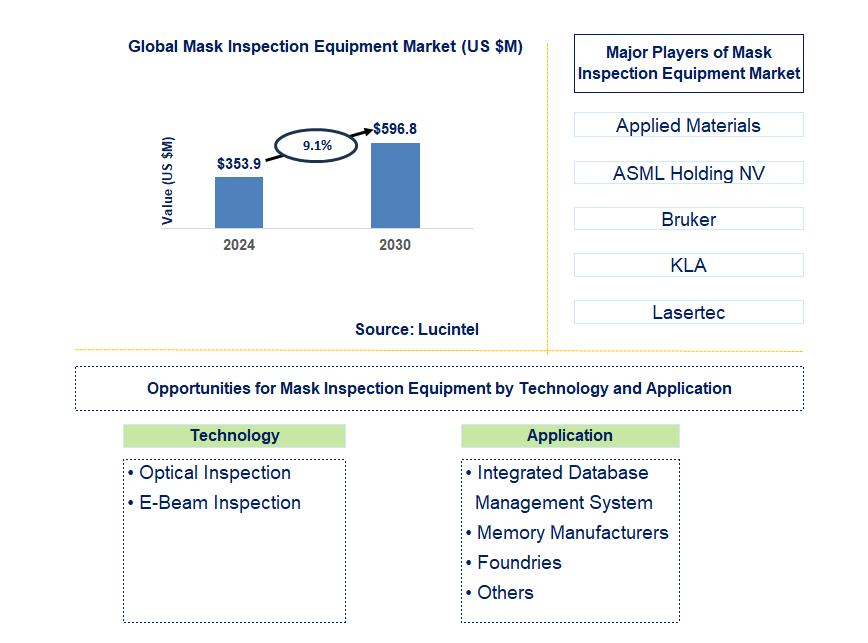
Key data points: The market size in 2030 = $596.8 million, growth forecast = 9.1% annually for the next 6 years. Scroll below to get more insights. This market report covers trends, opportunities, and forecasts in the global mask inspection equipment market to 2030 by technology (optical inspection and E-beam inspection), application (integrated database management system, memory manufacturers, foundries, and others), and region (North America, Europe, Asia Pacific, and the Rest of the World)
We'll send your sample report shortly.
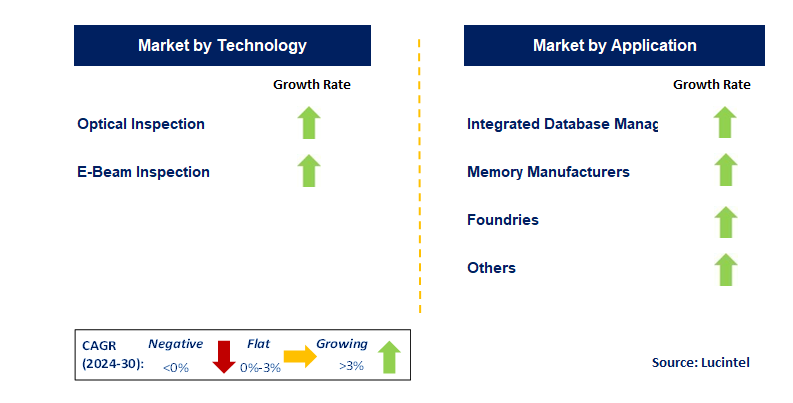
• Lucintel forecasts that, within the technology category, E-beam inspection is expected to witness the higher growth over the forecast period due to increasing complexity of semiconductor devices.
• In terms of region, APAC is expected to witness highest growth over the forecast period. Gain valuable insights for your business decisions with our comprehensive 150+ page report.
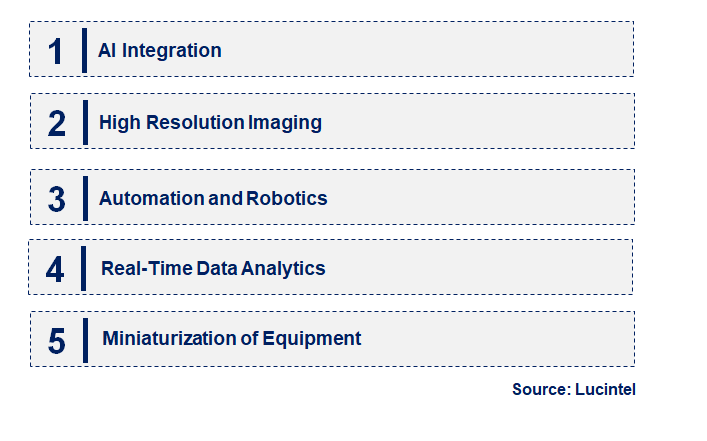
• AI Integration: The use of Artificial Intelligence and Machine Learning together with the Mask Inspection System improves defect detection and analysis. These technologies help decrease defect identification times and facilitate the optimization of inspection processes, thus improving the quality and efficiency of semiconductor production.
• High-Resolution Imaging: There is also improvement in system performance regarding imaging, which helps increase the resolution of the mask inspection systems. The use of high-resolution optical systems combined with high-resolution imaging detectors increases the chances of detecting smaller defects and finer details, thus improving quality control.
• Automation and Robotics: Mask inspection tasks have witnessed an increasing emphasis on the use of automation and robotics. Such systems enable more efficient inspection processes, reduce errors from operatives, and enhance throughput, making them essential in the high-volume production of semiconductors.
• Real-Time Data Analytics: The need for real-time data analytics in the mask inspection process is growing day by day. These tools can capture how each step in the inspection is performed and provide feedback that speeds up revisions and fine-tunes processes, thereby making the manufacturing process more efficient.
• Miniaturization of Equipment: There is a trend toward decreasing the size of mask inspection equipment so that it can be housed in smaller production facilities. More portable and high-efficiency systems are becoming widespread to meet the requirements of contemporary semiconductor fabs that have limited space. These trends are changing the mask inspection machines market, restructuring it in a way that promotes further development in technology while improving accuracy in the inspection process and efficiency in the manufacturing process. More advanced inspection methodologies for silicon factories have been developed.
• AI-Driven Inspection Systems: Recently developed AI inspection systems are enhancing the quality of defect identification and analysis. These systems are capable of automatic defect detection and classification with a higher degree of accuracy and are therefore helpful for quality control in semiconductor manufacturing.
• Advanced Imaging Technologies: The application of new advanced imaging technologies, including high-resolution optics and multi-beam inspection management systems, is enhancing the accuracy of mask inspections. These advanced systems facilitate the detection of even finer defects, thereby ensuring manufacturing quality.
• Automation Enhancements: New automation technologies are improving efficiency within the mask inspection systems. The use of such systems, which require less human intervention, increases production capacity while reducing errors, which in turn improves the processes.
• Real-Time Feedback Mechanisms: The newer systems that utilize real-time data analytics are providing immediate feedback on the inspection results. This allows for quicker decision-making, adjustments, and better control of the processes and manufacturing.
• Cost-Effective Solutions: More cost-effective mask inspection techniques are emerging in the market. Low-cost, high-performance systems are enabling the growth of the semiconductor industries in developing areas. These developments are promoting the mask inspection equipment market by offering more accurate inspections, greater automation, and high-quality solutions at lower prices. They are helping to bring innovations to the market and support the development of inspection systems for semiconductor manufacturing.
• Semiconductor Manufacturing: As semiconductor devices become more complex, so does the need for sophisticated mask inspection technologies. As the fabrication of semiconductor devices becomes more challenging, new devices for defect detection and resolution become increasingly important.
• Electronics Industry: The growth of the electronics industry is accompanied by the demand for high-performance mask inspection systems. To ensure quality in the manufacture of electronic components, equipment that is precise and reliable is critical.
• Research and Development: Research and development labs require advanced mask inspection equipment for prototyping and testing. There are prospects for establishing specialized systems suitable for the R&D setting that will facilitate the development of new semiconductor technologies.
• Automotive Industry: With the automotive industry's power designs heavily relying on semiconductor devices, there is growth in high-end mask inspection systems. There is a need for high-resolution and high-volume throughput solutions to enhance the reliability of automotive electronics.
• Medical Device Manufacturing: The expansion of the medical device industry opens avenues for the use of mask inspection equipment that adheres to the most demanding quality and reliability requirements. Inspection at the wafer level becomes vital for guaranteeing the performance and reliability of medical electronics. These growth opportunities are driving the development and adoption of advanced mask inspection technologies. They are expanding market reach, fostering innovation, and addressing the evolving needs of various industries.
• Technological Advancements: Innovations in imaging technology, AI, and automation are driving market growth. These advancements improve defect detection, increase efficiency, and enhance the capabilities of mask inspection systems.
• Growing Semiconductor Demand: Increasing demand for semiconductor devices across various industries fuels the need for advanced mask inspection equipment. High-quality inspection systems are essential for meeting the production and quality requirements of semiconductor manufacturing.
• Focus on Quality Within the Industry: In the production of semiconductors and electronics manufacturing, quality control processes are becoming more sophisticated. There are high requirements and expectations for defect detection and process control, which stimulate market enhancement.
• Expansion of Electronics Markets: The globalization of electronics markets is causing an increased requirement for both prevention and masking inspection systems. As the complexity of electronics increases, so does the need for effective and efficient inspection systems.
• Research and Development Investments: Advanced inspection technologies are gaining attention due to increased funding focused on R&D. It is possible to improve existing mask inspection systems through the use of new materials and the application of new techniques. Challenges in the mask inspection equipment market are:
• High Cost of Advanced Equipment: Advanced mask inspection systems are usually expensive, creating a high barrier to adoption, especially for small-scale manufacturers. These technologies must be made economically appealing to provide producers with broader access to a variety of customers.
• Complexity of Inspection Systems: The use of complex mask inspection systems can present challenges in operation and maintenance. Producers must ensure that the systems are user-friendly and that there is adequate training and support for customers.
• Regulatory Compliance: Regulations and standards within the industry may prove complex. Manufacturers must navigate different regulations and meet the required quality and safety standards for all engineering equipment. The mask inspection equipment market is characterized by growth and innovation, with drivers and challenges affecting its landscape. Learning to address these issues is essential to fully leverage the opportunities available in the market and to manage the challenges it presents.
• Applied Materials
• ASML Holding NV
• Bruker
• KLA
• Lasertec
• MueTec
• Nanometrics
• Optical Inspection
• E-Beam Inspection
• Integrated Database Management System
• Memory Manufacturers
• Foundries
• Others
• North America
• Europe
• Asia Pacific
• The Rest of the World
• United States: The US has reported significant improvements in mask inspection systems through the implementation of artificial intelligence and machine learning to enhance defect detection and the efficiency of the process. Greater use of manufacturing automation and advanced data analytics has also been utilized to improve semiconductor manufacturing steps.
• China: China is focusing on acquiring high-resolution mask inspection technologies to enhance its developments in the semiconductor industry. An emphasis has been placed on producing more sophisticated machines capable of addressing the complexities brought about by photomasks in chip making.
• Germany: Germany is at the forefront of ultra-precision mask inspection system advancements based on novel optics and imaging technology incorporated within the systems. This technology enhances defect detection and meets the high standards expected during semiconductor fabrication.
• India: The Indian market is maturing to become a critical market for mask inspection equipment due to its ability to provide solutions that are economical for local semiconductor firms. Designing cost-effective, high-performance inspection systems is helping to buoy the country’s electronics and semiconductor industry.
• Japan: Japan is making progress in mask inspection technologies through the improvement of optical inspection and electron beam inspection methods. These developments respond to the need for high throughput as well as high-resolution inspection technologies that are becoming critical in semiconductor fabrication.


• Applied Materials
• ASML Holding NV
• Bruker
• KLA
• Lasertec
• MueTec
• Nanometrics Q6. Which mask inspection equipment market segment will be the largest in future? Answer: Lucintel forecasts that E-beam inspection is expected to witness the higher growth over the forecast period due to increasing complexity of semiconductor devices. Q7. In mask inspection equipment market, which region is expected to be the largest in next 5 years? Answer: APAC is expected to witness highest growth over the forecast period. Q.8 Do we receive customization in this report? Answer: Yes, Lucintel provides 10% customization without any additional cost.


Choose a license that fits your team. Instant PDF delivery.
Prices exclude taxes. Instant delivery. Custom licensing available on request.
Market Report · July 29, 2026
Market Report · July 20, 2026
Market Report · July 20, 2026
Trusted partner for strategic intelligence and business growth


Receive a complimentary market analysis tailored to your industry. Our analysts will identify key growth opportunities and competitive dynamics specific to your business.

Market size, growth rate, and key trend analysis for your specific sector.

Top competitor positioning and market share analysis.

Strategic recommendations backed by data-driven insights.
Get curated market intelligence and competitive moves straight to your inbox.
By subscribing, you agree to receive our monthly insights. Unsubscribe anytime.
Receive a complimentary market analysis tailored to your industry. Our analysts will identify key growth opportunities and competitive dynamics specific to your business.
Market size, growth rate, and key trend analysis for your specific sector.
Top competitor positioning and market share analysis.
Strategic recommendations backed by data-driven insights.
Get curated market intelligence, emerging trends, and competitive moves straight to your inbox each month.
By subscribing, you agree to receive our monthly insights. Unsubscribe anytime.
We'll send your sample report shortly.