
Report Feature
Man-made Leather Market Trends and Forecast
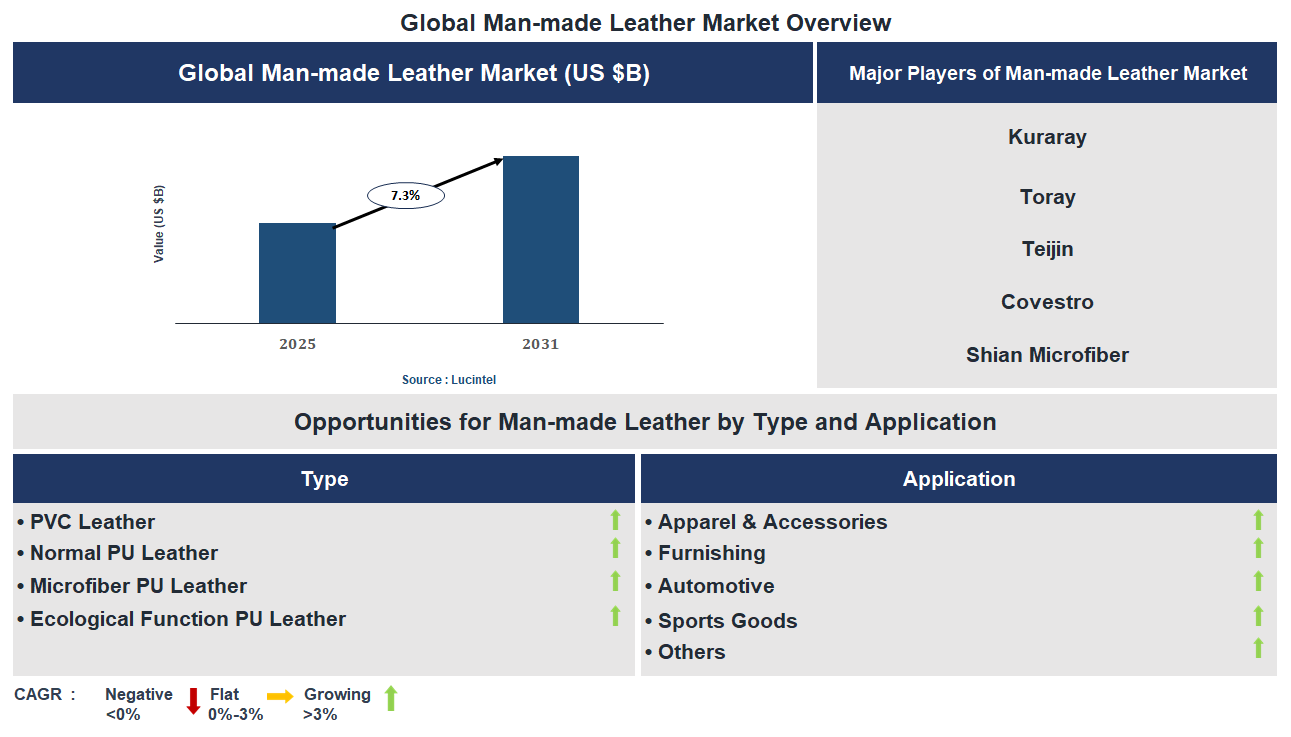
The future of the global man-made leather market looks promising with opportunities in the apparel & accessory, furnishing, automotive, and sport good markets. The global man-made leather market is expected to grow with a CAGR of 7.3% from 2025 to 2031. The major drivers for this market are the increasing demand for sustainable fashion products, the rising use in automotive interior applications, and the growing adoption in footwear.• Lucintel forecasts that, within the type category, microfiber PU leather is expected to witness the highest growth over the forecast period.
• Within the application category, apparel & accessory is expected to witness the highest growth.
• In terms of region, APAC is expected to witness the highest growth over the forecast period. Gain valuable insights for your business decisions with our comprehensive 150+ page report. Sample figures with some insights are shown below.
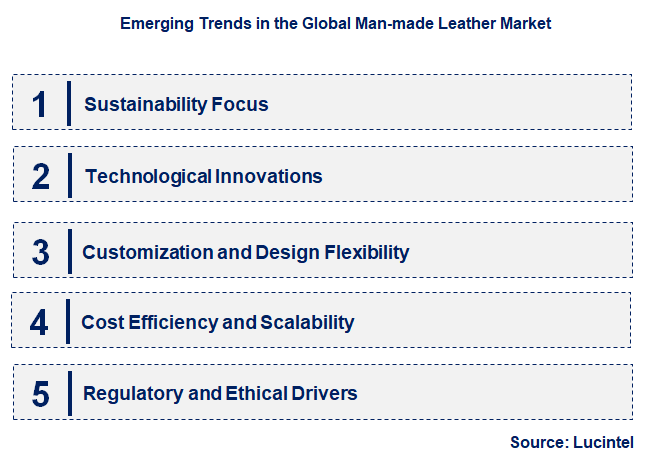
Emerging Trends in the Man-made Leather Market
The man-made leather market is experiencing rapid evolution driven by technological advancements, shifting consumer preferences, and increasing environmental concerns. As industries seek sustainable and cost-effective alternatives to traditional leather, innovative materials and production methods are gaining prominence. These developments are not only transforming product offerings but also influencing supply chains, regulatory frameworks, and consumer behavior. Understanding these emerging trends is crucial for stakeholders aiming to stay competitive and align with future market directions. The following five key trends highlight the significant shifts shaping the man-made leather industry today.• Sustainability Focus: Growing demand for eco-friendly products has propelled the development of sustainable man-made leathers. Manufacturers are adopting biodegradable materials, reducing chemical usage, and implementing eco-conscious production processes. This trend responds to consumer preferences for environmentally responsible products and stricter regulations on traditional leather tanning, positioning sustainable man-made leather as a preferred alternative. The market is witnessing increased innovation in plant-based and recycled materials, which enhances brand reputation and opens new market segments.
• Technological Innovations: Advances in material science and manufacturing technologies are driving the creation of high-quality, durable man-made leathers. Techniques such as biofabrication, nanotechnology, and 3D printing enable the production of materials that closely mimic natural leather in texture, strength, and appearance. These innovations improve product performance and expand application possibilities across fashion, automotive, and furniture industries. As technology progresses, costs decrease, making premium-quality man-made leather more accessible and appealing to a broader consumer base.
• Customization and Design Flexibility: The ability to tailor man-made leather to specific aesthetic and functional requirements is gaining importance. Manufacturers leverage digital printing, embossing, and surface treatments to offer customized textures, colors, and finishes. This trend allows brands to meet diverse consumer preferences and create unique, innovative products. Enhanced design flexibility also reduces waste and shortens development cycles, providing a competitive edge in fast-changing markets. As consumer demand for personalized products grows, customization becomes a key differentiator.
• Cost Efficiency and Scalability: Man-made leather offers significant cost advantages over traditional leather, especially as production processes become more scalable. Advances in manufacturing automation and material sourcing reduce production costs, enabling mass production without compromising quality. This affordability broadens market access, particularly in emerging economies, and supports the expansion of man-made leather into new sectors. Cost efficiency also encourages brands to adopt sustainable alternatives, aligning economic benefits with environmental goals, and fostering market growth.
• Regulatory and Ethical Drivers: Increasing regulations on animal welfare and environmental impact are accelerating the shift toward man-made leather. Governments and industry bodies are imposing stricter standards on traditional leather production, prompting brands to seek cruelty-free and sustainable options. Ethical considerations influence consumer choices, driving demand for transparent supply chains and eco-friendly materials. This regulatory landscape encourages innovation in man-made leather, positioning it as a responsible alternative that aligns with global sustainability commitments and ethical standards. In summary, these emerging trends are fundamentally reshaping the man-made leather market by emphasizing sustainability, technological advancement, customization, cost efficiency, and ethical considerations. Collectively, they are driving innovation, expanding application areas, and aligning the industry with global sustainability goals, ultimately transforming how man-made leather is produced, marketed, and consumed.
Recent Development in the Man-made Leather Market
The man-made leather market has experienced significant growth driven by technological advancements, increasing environmental concerns, and shifting consumer preferences. As industries seek sustainable alternatives to traditional leather, innovations in synthetic materials and manufacturing processes are reshaping the landscape. Market players are investing in eco-friendly solutions, while regulatory pressures are encouraging greener practices. Additionally, the rise of fashion and automotive sectors utilizing man-made leather is fueling demand. These developments reflect a broader shift towards sustainability and innovation, impacting supply chains, product offerings, and market dynamics. Understanding these key changes is essential for stakeholders aiming to capitalize on emerging opportunities and navigate challenges effectively.• Technological Innovations: New manufacturing techniques have improved the quality and durability of man-made leather, making it more comparable to genuine leather. This has expanded its application scope across fashion, automotive, and furniture industries, boosting market growth and consumer acceptance.
• Eco-friendly Materials: The development of biodegradable and recycled synthetic leathers has gained momentum, aligning with global sustainability goals. These eco-friendly options are attracting environmentally conscious consumers and companies, thereby increasing market demand and reducing environmental impact.
• Regulatory Changes: Governments worldwide are implementing stricter regulations on the use of animal-based leather and hazardous chemicals in manufacturing. These policies are encouraging manufacturers to adopt sustainable, man-made alternatives, accelerating market adoption and innovation.
• Rising Consumer Awareness: Consumers are increasingly aware of environmental issues and animal rights, favoring cruelty-free and sustainable products. This shift in consumer preference is driving brands to incorporate man-made leather into their product lines, expanding market reach.
• Industry Adoption in Automotive and Fashion: Major automotive and fashion brands are integrating man-made leather into their products to meet sustainability standards and consumer demand. This adoption is significantly boosting market growth and encouraging further innovation in synthetic materials. In summary, these developments are transforming the man-made leather market by enhancing product quality, promoting sustainability, and aligning with regulatory and consumer trends. The market is experiencing accelerated growth, driven by technological advancements and increased adoption across key industries, positioning it as a sustainable alternative to traditional leather.
Strategic Growth Opportunities in the Man-made Leather Market
The man-made leather market is experiencing rapid growth driven by increasing demand for sustainable and cost-effective alternatives to natural leather. Innovations in manufacturing processes, rising environmental awareness, and expanding applications across various industries are fueling this expansion. As consumers and businesses seek eco-friendly options, key growth opportunities are emerging across different applications. These opportunities are shaping the future landscape of the market, offering new avenues for innovation and expansion. Companies that capitalize on these trends can gain competitive advantages and meet evolving consumer preferences effectively.• Expansion of eco-friendly interiors : The automotive sector is increasingly adopting man-made leather for vehicle interiors due to its sustainability, durability, and cost-effectiveness, boosting demand for innovative materials that meet environmental standards.
• Rise in sustainable fashion : The fashion industry is shifting towards sustainable materials, with man-made leather gaining popularity for handbags, shoes, and apparel, driven by consumer preference for eco-conscious products.
• Growing demand for eco-friendly furnishings : The furniture industry is incorporating man-made leather for sofas, chairs, and other upholstery, emphasizing environmental benefits and durability, which enhances market penetration.
• Adoption of vegan and cruelty-free options : The footwear sector is increasingly opting for man-made leather as a cruelty-free alternative, aligning with ethical consumer trends and expanding product offerings.
• Use in sports equipment and accessories : The sports industry is utilizing man-made leather for equipment, gloves, and accessories, benefiting from its lightweight, durability, and eco-friendly properties. In summary, these growth opportunities across key applications are significantly impacting the man-made leather market by driving innovation, expanding market reach, and aligning with sustainability trends. This evolution is fostering a more environmentally conscious industry while offering diverse product solutions to meet consumer demands.
Man-made Leather Market Driver and Challenges
The man-made leather market is influenced by a variety of technological, economic, and regulatory factors that shape its growth and development. Advances in manufacturing technologies, shifting consumer preferences, and environmental regulations are among the key drivers and challenges impacting this industry. As sustainability becomes increasingly important, innovations in synthetic materials and eco-friendly production methods are gaining prominence. Conversely, regulatory pressures and fluctuating raw material costs pose significant hurdles. Understanding these factors is essential for stakeholders to navigate the evolving landscape effectively and capitalize on emerging opportunities while mitigating risks. The factors responsible for driving the man-made leather market include:-• Technological Innovation: The development of advanced manufacturing processes, such as eco-friendly synthetic leather production, has significantly enhanced product quality and sustainability. These innovations reduce reliance on traditional animal leather, appealing to environmentally conscious consumers and expanding market reach. Continuous R&D efforts are leading to more durable, flexible, and cost-effective materials, which further stimulate demand across industries like fashion, automotive, and furniture. As technology evolves, the market benefits from increased product diversity and improved environmental profiles, fostering growth and competitiveness.
• Rising Environmental Concerns: Growing awareness about animal welfare and environmental sustainability is driving consumers and manufacturers toward man-made leather alternatives. Synthetic leathers produce fewer greenhouse gases and reduce deforestation compared to traditional leather. Governments and regulatory bodies are implementing stricter environmental standards, encouraging industries to adopt eco-friendly materials. This shift not only aligns with global sustainability goals but also opens new market segments for manufacturers offering greener products, thereby fueling industry expansion and innovation.
• Cost-Effectiveness and Supply Stability: Man-made leather offers a more consistent and often more affordable alternative to natural leather, unaffected by seasonal or supply chain disruptions. The ability to produce synthetic leather in controlled environments ensures steady quality and supply, reducing dependency on animal agriculture and associated risks. This cost advantage appeals to manufacturers seeking to optimize margins and meet consumer demand for affordable luxury. Additionally, the scalability of synthetic leather production supports large-volume applications, further boosting market growth and enabling manufacturers to meet increasing global demand efficiently.
• Growing Fashion and Automotive Industries: The expanding fashion industry, driven by fast fashion trends and increasing consumer spending, significantly propels the demand for man-made leather. Similarly, the automotive sector favors synthetic leather for its durability, ease of maintenance, and cost benefits. As these industries grow, they generate substantial demand for high-quality, customizable, and sustainable materials. The versatility of man-made leather allows for innovative designs and applications, making it a preferred choice for brands aiming to combine style, functionality, and sustainability, thereby fueling market expansion.
• Regulatory Support and Incentives: Governments worldwide are implementing policies and incentives to promote sustainable manufacturing practices. Regulations aimed at reducing animal cruelty, lowering carbon emissions, and encouraging the use of eco-friendly materials are fostering a favorable environment for man-made leather. Subsidies, tax benefits, and stricter standards for natural leather production incentivize manufacturers to shift toward synthetic alternatives. These regulatory frameworks not only support industry growth but also enhance the credibility and acceptance of man-made leather products in global markets, encouraging further innovation and investment. The challenges facing this man-made leather market include:-
• Stringent Regulatory Environment: While regulations promote sustainability, they also impose strict standards that can increase production costs and complicate compliance for manufacturers. Evolving environmental and safety standards require continuous adaptation, which can be resource-intensive. Non-compliance risks legal penalties and damage to brand reputation. Additionally, regulatory differences across regions create complexities for global companies, necessitating tailored strategies to meet diverse requirements, potentially hindering rapid market expansion and increasing operational costs.
• Raw Material Price Volatility: The cost of raw materials used in synthetic leather production, such as polyurethane and PVC, is subject to fluctuations due to geopolitical tensions, supply chain disruptions, and raw material scarcity. Price volatility impacts profit margins and pricing strategies, making it challenging for manufacturers to maintain competitive pricing. Sudden increases in raw material costs can lead to higher product prices, potentially reducing demand. Managing supply chain risks and securing stable raw material sources are critical to sustaining profitability and market stability amid these uncertainties.
• Competition from Natural Leather and Alternative Materials: The market faces intense competition from traditional animal leather and emerging sustainable materials like plant-based leathers and recycled fabrics. Natural leather is often perceived as superior in quality and luxury appeal, while alternative materials are gaining traction due to their eco-friendly attributes. This competitive landscape pressures synthetic leather manufacturers to innovate continuously and differentiate their products. Failing to do so could result in loss of market share, especially as consumers become more discerning and environmentally conscious, demanding higher standards and transparency. In summary, the man-made leather market is shaped by technological advancements, environmental considerations, and supportive regulations, which collectively drive growth. However, challenges such as regulatory complexities, raw material price fluctuations, and stiff competition pose significant hurdles. The interplay of these factors influences market dynamics, requiring stakeholders to innovate, adapt, and strategize effectively. Overall, the markets future depends on balancing sustainable development with operational efficiency, ensuring long-term growth and resilience in a competitive landscape.
List of Man-made Leather Companies
Companies in the market compete on the basis of product quality offered. Major players in this market focus on expanding their manufacturing facilities, R&D investments, infrastructural development, and leverage integration opportunities across the value chain. With these strategies man-made leather companies cater increasing demand, ensure competitive effectiveness, develop innovative products & technologies, reduce production costs, and expand their customer base. Some of the man-made leather companies profiled in this report include-• Kuraray
• Toray
• Teijin
• Covestro
• Shian Microfiber
• Zhejiang Haobo
• Asahi Kasei
• Duksung
• Daewon Chemical
• Filwel
Man-made Leather Market by Segment
The study includes a forecast for the global man-made leather market by type, application, and region.Man-made Leather Market by Type [Value from 2019 to 2031]:
• PVC Leather
• Normal PU Leather
• Microfiber PU Leather
• Ecological Function PU Leather
Man-made Leather Market by Application [Value from 2019 to 2031]:
• Apparel & Accessories
• Furnishing
• Automotive
• Sports Goods
• Others
Man-made Leather Market by Region [Value from 2019 to 2031]:
• North America
• Europe
• Asia Pacific
• The Rest of the World
Country Wise Outlook for the Man-made Leather Market
The man-made leather market has experienced significant growth and innovation driven by increasing environmental concerns, technological advancements, and shifting consumer preferences. Countries worldwide are investing in sustainable alternatives and improving manufacturing processes to meet regulatory standards and market demand. The United States, China, Germany, India, and Japan are key players in this evolving landscape, each contributing unique developments that influence global trends. These nations are focusing on eco-friendly materials, expanding production capacities, and adopting innovative technologies to enhance product quality and sustainability.• United States: The U.S. market has seen a surge in eco-friendly man-made leather products, driven by consumer demand for sustainable fashion. Major brands are investing in plant-based and recycled materials, and there is increased research into biodegradable alternatives. Regulatory pressures are encouraging manufacturers to adopt greener processes, leading to innovations in waterless tanning and low-impact dyes. The U.S. also witnesses a rise in startups focusing on bio-based leathers, expanding the market’s scope and sustainability credentials.
• China: China remains the largest producer and consumer of man-made leather, with significant advancements in manufacturing efficiency and quality. The country is investing heavily in automation and AI-driven production techniques to reduce costs and improve product consistency. There is a growing emphasis on environmentally friendly processes, including water-saving technologies and non-toxic adhesives. Chinese companies are also expanding their export markets by developing high-quality, sustainable man-made leather products to meet global eco-conscious demands.
• Germany: Germany is at the forefront of technological innovation in the man-made leather industry, emphasizing high-quality, sustainable products. The country’s focus on research and development has led to breakthroughs in bio-based and recyclable materials. German manufacturers are adopting circular economy principles, ensuring products are designed for reuse and recycling. Additionally, Germany’s strict environmental regulations are pushing companies to innovate in eco-friendly manufacturing processes, positioning the country as a leader in sustainable man-made leather solutions.
• India: India’s man-made leather market is rapidly expanding, driven by domestic demand and export opportunities. The country is focusing on affordable, sustainable alternatives to traditional leather, with a growing number of manufacturers adopting eco-friendly materials like PU and PVC derived from recycled sources. Government initiatives promoting sustainable manufacturing and export incentives are boosting industry growth. Indian companies are also investing in skill development and technological upgrades to improve product quality and meet international standards, positioning India as a key player in the global eco-friendly leather market.
• Japan: Japan is emphasizing innovation in eco-friendly and high-performance man-made leather products. The country’s focus on sustainability is reflected in the development of advanced materials with enhanced durability and biodegradability. Japanese firms are integrating nanotechnology and other cutting-edge techniques to improve product features. There is also a strong emphasis on reducing environmental impact through energy-efficient manufacturing and waste reduction. Japan’s market is characterized by premium, technologically advanced products catering to high-end consumers and luxury brands seeking sustainable options.

Features of the Global Man-made Leather Market
Market Size Estimates: Man-made leather market size estimation in terms of value ($B). Trend and Forecast Analysis: Market trends (2019 to 2024) and forecast (2025 to 2031) by various segments and regions. Segmentation Analysis: Man-made leather market size by type, application, and region in terms of value ($B). Regional Analysis: Man-made leather market breakdown by North America, Europe, Asia Pacific, and Rest of the World. Growth Opportunities: Analysis of growth opportunities in different types, applications, and regions for the man-made leather market. Strategic Analysis: This includes M&A, new product development, and competitive landscape of the man-made leather market. Analysis of competitive intensity of the industry based on Porter’s Five Forces model.
FAQ
Q1. What is the growth forecast for man-made leather market? Answer: The global man-made leather market is expected to grow with a CAGR of 7.3% from 2025 to 2031. Q2. What are the major drivers influencing the growth of the man-made leather market? Answer: The major drivers for this market are the increasing demand for sustainable fashion products, the rising use in automotive interior applications, and the growing adoption in footwear. Q3. What are the major segments for man-made leather market? Answer: The future of the man-made leather market looks promising with opportunities in the apparel & accessory, furnishing, automotive, and sport good markets. Q4. Who are the key man-made leather market companies? Answer: Some of the key man-made leather companies are as follows:• Kuraray
• Toray
• Teijin
• Covestro
• Shian Microfiber
• Zhejiang Haobo
• Asahi Kasei
• Duksung
• Daewon Chemical
• Filwel Q5. Which man-made leather market segment will be the largest in future? Answer: Lucintel forecasts that, within the type category, microfiber PU leather is expected to witness the highest growth over the forecast period. Q6. In man-made leather market, which region is expected to be the largest in next 5 years? Answer: In terms of region, APAC is expected to witness the highest growth over the forecast period. Q7. Do we receive customization in this report? Answer: Yes, Lucintel provides 10% customization without any additional cost.
Table of Contents
List of Figures
List of Tables
Methodology
- In-depth interviews of the major players in this market
- Detailed secondary research from competitors’ financial statements and published data
- Extensive searches of published works, market, and database information pertaining to industry news, company press releases, and customer intentions
- A compilation of the experiences, judgments, and insights of Lucintel’s professionals, who have analyzed and tracked this market over the years.


Buy Now
Choose a license that fits your team. Instant PDF delivery.
Prices exclude taxes. Instant delivery. Custom licensing available on request.
Key Questions
- • What are some of the most promising, high-growth opportunities for the man-made leather market by type (PVC leather, normal PU leather, microfiber PU leather, and ecological function PU leather), application (apparel & accessories, furnishing, automotive, sports goods, and others), and region (North America, Europe, Asia Pacific, and the Rest of the World)?
- • Which segments will grow at a faster pace and why?
- • Which region will grow at a faster pace and why?
- • What are the key factors affecting market dynamics? What are the key challenges and business risks in this market?
- • What are the business risks and competitive threats in this market?
- • What are the emerging trends in this market and the reasons behind them?
- • What are some of the changing demands of customers in the market?
- • What are the new developments in the market? Which companies are leading these developments?
- • Who are the major players in this market? What strategic initiatives are key players pursuing for business growth?
- • What are some of the competing products in this market and how big of a threat do they pose for loss of market share by material or product substitution?
- • What M&A activity has occurred in the last 5 years and what has its impact been on the industry? For any questions related to Man-made Leather Market, Man-made Leather Market Size, Man-made Leather Market Growth, Man-made Leather Market Analysis, Man-made Leather Market Report, Man-made Leather Market Share, Man-made Leather Market Trends, Man-made Leather Market Forecast, Man-made Leather Companies, write Lucintel analyst at email: helpdesk@lucintel.com. We will be glad to get back to you soon.


