
Market Report · July 20, 2026

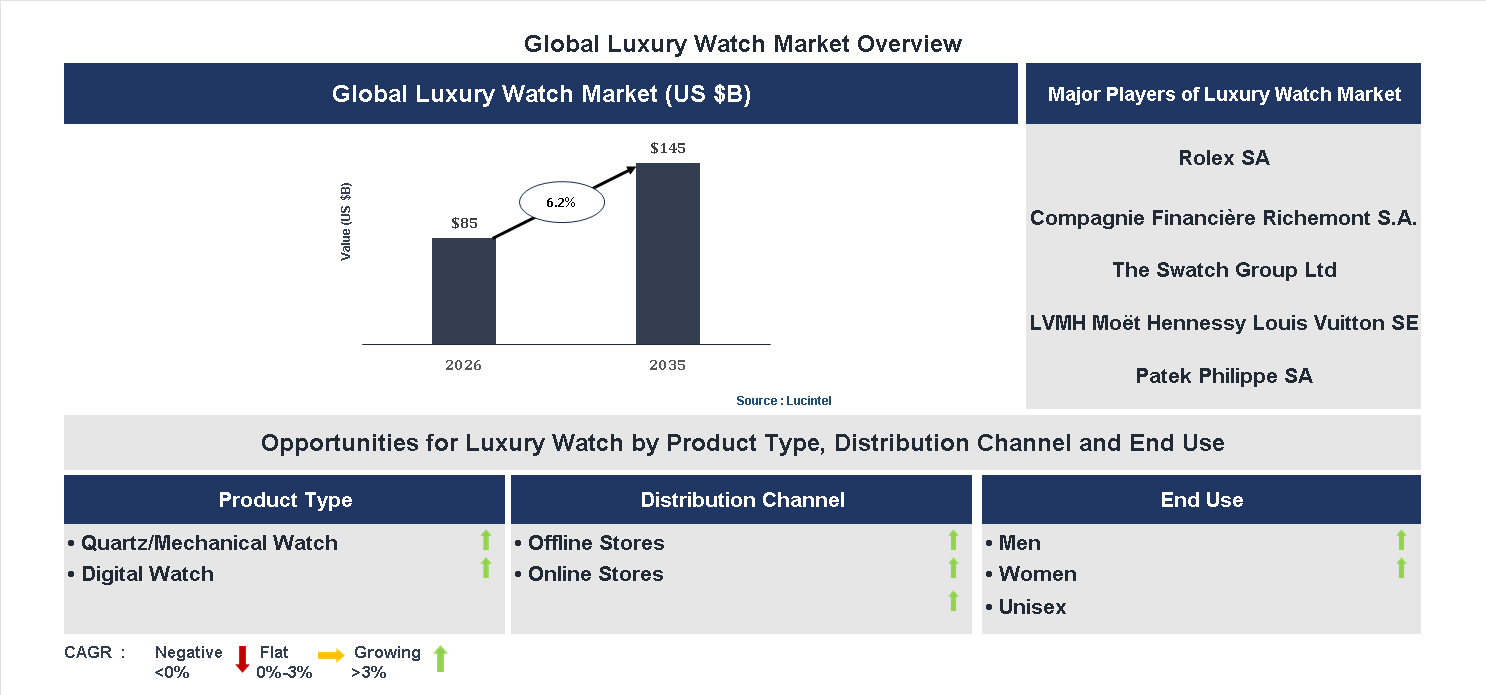
Key data points: The market size in 2035 = $145 billion, growth forecast = 6.2% annually for the next 8 years. Scroll below to get more insights. This market report covers trends, opportunities and forecasts in luxury watch market to 2035 by product type (quartz/mechanical watch and digital watch), distribution channel (offline stores and online stores), end use (men, women, and unisex), and region (North America, Europe, Asia Pacific, and the Rest of the World)
We'll send your sample report shortly.
• Lucintel forecasts that, within the product type category, quartz/mechanical watch is expected to witness higher growth over the forecast period.
• Within the distribution channel category, offline store is expected to witness higher growth.
• In terms of region, APAC is expected to witness the highest growth over the forecast period. Gain valuable insights for your business decisions with our comprehensive 150+ page report. Sample figures with some insights are shown below.
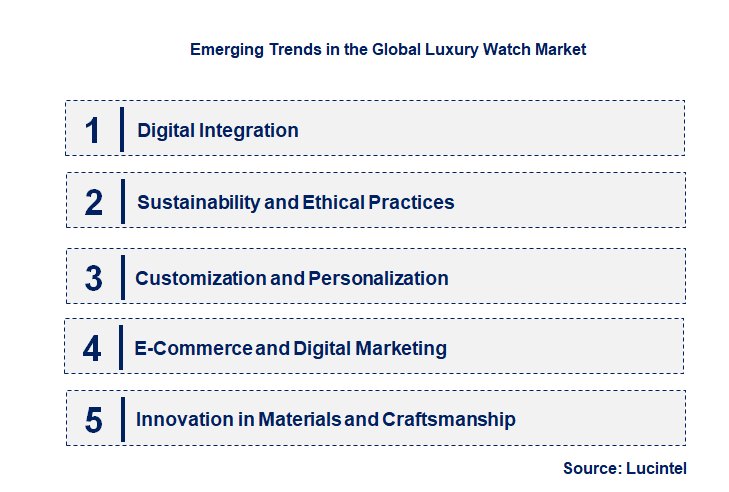
• Digital Integration: The rise of smartwatches and digital platforms is transforming traditional watchmaking. Consumers increasingly seek connected devices that combine luxury aesthetics with advanced functionalities such as health tracking and notifications. Brands are integrating digital features into their collections, creating hybrid models that appeal to tech-savvy buyers. This trend expands market reach, enhances user engagement, and offers new revenue streams. It also challenges traditional craftsmanship, prompting brands to balance innovation with heritage. Digital integration is thus redefining what constitutes a luxury watch, blending technology with timeless design.
• Sustainability and Ethical Practices: Consumers are prioritizing sustainability and ethical sourcing in their purchasing decisions. Luxury watch brands are adopting eco-friendly materials, reducing carbon footprints, and ensuring transparent supply chains. Initiatives include using recycled metals, ethically sourced gemstones, and environmentally responsible manufacturing processes. This trend enhances brand reputation and appeals to environmentally conscious consumers, especially younger demographics. It also encourages innovation in materials and production techniques. As sustainability becomes a key differentiator, brands that embrace ethical practices are gaining competitive advantage and fostering long-term customer loyalty.
• Customization and Personalization: The demand for personalized products is rising, with consumers seeking unique, bespoke watches that reflect their individual style. Brands are offering customization options such as engraved initials, bespoke dials, and tailored straps. Digital tools enable consumers to design their watches online, enhancing engagement and satisfaction. This trend allows brands to build deeper relationships with clients and command premium prices. Personalization also differentiates products in a crowded market, fostering exclusivity and emotional connection. As consumers increasingly value individuality, customization is becoming a central pillar of luxury watch marketing and sales strategies.
• E-commerce and Digital Marketing: The shift towards online sales channels is accelerating, driven by changing consumer behaviors and technological advancements. Luxury watch brands are investing heavily in e-commerce platforms, virtual showrooms, and digital marketing campaigns to reach a global audience. Social media influencers and online reviews play a significant role in shaping purchasing decisions. Digital marketing enables brands to target specific demographics, analyze consumer data, and personalize marketing efforts. E-commerce also offers convenience and accessibility, especially during global disruptions like the COVID-19 pandemic. This trend is fundamentally altering distribution models and expanding market reach beyond traditional retail outlets.
• Innovation in Materials and Craftsmanship: Advances in materials science are enabling the development of new, durable, and lightweight materials such as ceramics, titanium, and carbon composites. These innovations improve watch performance and aesthetics while reducing weight and enhancing comfort. Additionally, brands are exploring innovative craftsmanship techniques, including 3D printing and micro-engineering, to create intricate designs and complex movements. This trend pushes the boundaries of traditional watchmaking, attracting collectors and enthusiasts interested in technical excellence and exclusivity. It also allows brands to differentiate their products through unique features and cutting-edge technology, reinforcing their position as innovators in the luxury watch industry. These emerging trends—digital integration, sustainability, customization, e-commerce expansion, and material innovation—are collectively reshaping the luxury watch market. They are driving brands to innovate continuously, adapt to new consumer expectations, and leverage technology to stay competitive. As a result, the market is becoming more dynamic, personalized, and sustainable, offering exciting opportunities for growth and differentiation in a rapidly evolving landscape.
• Digital Integration: Enhancing Customer Engagement and Sales: The integration of digital platforms and e-commerce has revolutionized how luxury watch brands connect with consumers. Virtual try-ons, augmented reality, and online boutiques provide personalized experiences, expanding reach beyond traditional retail. This shift increases sales opportunities, especially among younger, tech-savvy buyers. Digital tools also enable brands to gather valuable data, improve customer service, and foster loyalty. Overall, digital integration is making luxury watches more accessible, convenient, and engaging, significantly impacting market growth and consumer interaction.
• Sustainability Initiatives: Aligning with Ethical Consumer Values: Sustainability has become a critical factor influencing purchasing decisions in the luxury watch industry. Brands are adopting eco-friendly materials, ethical sourcing, and transparent supply chains to appeal to environmentally conscious consumers. Initiatives like recycling programs and carbon-neutral manufacturing are gaining prominence. These efforts enhance brand reputation, attract new customer segments, and meet regulatory standards. Emphasizing sustainability not only benefits the environment but also strengthens brand loyalty, positioning companies as responsible leaders in a competitive market.
• Smartwatch Integration: Merging Tradition with Innovation: The incorporation of smartwatch technology into luxury timepieces is creating a new hybrid segment. Combining traditional craftsmanship with modern features like health tracking, notifications, and connectivity appeals to tech-savvy consumers seeking functionality without sacrificing elegance. This integration broadens the market, attracting younger demographics and expanding brand appeal. It also encourages innovation within the industry, prompting traditional brands to evolve while maintaining their heritage. The result is a dynamic market that balances innovation with tradition, driving growth and diversification.
• Customization and Personalization: Meeting Unique Consumer Preferences: Personalized watches are increasingly in demand as consumers seek unique, meaningful products. Brands are offering bespoke services, allowing customers to select materials, engravings, and design elements. This trend enhances customer satisfaction, fosters brand loyalty, and differentiates products in a competitive landscape. Customization also enables brands to command premium prices and build emotional connections with clients. As consumer desire for individuality grows, the market is shifting towards more tailored offerings, fueling growth and innovation in product development.
• Market Expansion in Emerging Economies: Tapping into New Consumer Bases: Emerging markets such as China, India, and Southeast Asia present significant growth opportunities for luxury watch brands. Rising disposable incomes, urbanization, and increasing brand awareness are driving demand. Companies are establishing local boutiques, partnering with regional retailers, and customizing marketing strategies to cater to these markets. Expanding into these regions diversifies revenue streams and reduces dependence on mature markets. As these economies continue to grow, the luxury watch market is poised for substantial expansion, driven by a burgeoning affluent middle class. These developments are significantly transforming the luxury watch market by enhancing consumer engagement, promoting sustainability, integrating technology, offering personalized products, and expanding geographically. Collectively, they are driving growth, increasing competitiveness, and broadening the industry’s appeal across diverse demographics. As brands adapt to these trends, the market is poised for sustained innovation and expansion, ensuring its relevance and vitality in a rapidly evolving global economy.
• Expanding Presence in Emerging Markets: Entering regions like Asia-Pacific and Africa offers significant growth potential due to rising wealth and luxury consumption. Tailoring marketing strategies to local preferences and establishing regional boutiques can boost brand visibility. Developing affordable luxury lines can attract a broader demographic, while leveraging e-commerce platforms enhances accessibility. This expansion not only increases sales volume but also diversifies revenue streams, positioning brands for sustained growth in rapidly developing economies.
• Leveraging Digital Channels and E-commerce Platforms: The shift towards online shopping provides an opportunity to reach a global audience efficiently. Enhancing digital marketing, virtual try-ons, and augmented reality experiences can improve customer engagement. Direct-to-consumer e-commerce channels reduce reliance on traditional retail outlets, increasing profit margins. Integrating social media and influencer collaborations amplifies brand awareness. A robust digital presence enables brands to gather valuable consumer data, personalize offerings, and adapt quickly to market trends, fostering long-term customer relationships.
• Innovating with Smart and Connected Watches: Incorporating advanced technology into luxury watches appeals to tech-savvy consumers seeking functionality alongside elegance. Features like health monitoring, notifications, and seamless connectivity enhance user experience. Developing hybrid models that blend traditional craftsmanship with modern tech can differentiate brands. This innovation attracts a new segment of consumers and extends the product lifecycle. Emphasizing exclusivity and craftsmanship in smart watch designs maintains luxury appeal while embracing technological evolution.
• Emphasizing Sustainability and Ethical Sourcing: Consumers increasingly prioritize brands committed to environmental and social responsibility. Implementing sustainable materials, ethical sourcing, and transparent supply chains enhances brand reputation. Eco-friendly packaging and responsible manufacturing practices appeal to conscious buyers. Promoting these initiatives through marketing campaigns can strengthen customer loyalty and attract new demographics. Sustainability efforts also align with regulatory trends, ensuring compliance and future-proofing the brand’s market position in a competitive landscape.
• Collaborating with Fashion and Lifestyle Brands: Strategic partnerships with renowned designers, celebrities, or lifestyle brands can elevate brand visibility and desirability. Limited-edition collections and co-branded products create buzz and exclusivity. These collaborations can attract diverse customer segments and generate media attention. Leveraging the partner’s audience and distribution channels expands market reach. Such alliances reinforce brand positioning as innovative and trendsetting, fostering a sense of prestige and desirability that drives sales and market share growth. The overall landscape of the luxury watch market is poised for substantial growth as brands capitalize on emerging opportunities. Expanding into new markets, embracing digital transformation, innovating with technology, prioritizing sustainability, and forming strategic collaborations will collectively enhance competitiveness. These opportunities enable brands to meet evolving consumer expectations, foster loyalty, and secure long-term success in a highly competitive environment.
• Technological Innovation: The integration of smart features, advanced materials, and precision engineering enhances product appeal. Innovations like connected watches and sustainable manufacturing methods attract tech-savvy and environmentally conscious consumers, expanding market reach. Continuous R&D investments enable brands to differentiate themselves through unique functionalities and designs, fostering brand loyalty and premium pricing.
• Rising Disposable Income: Increasing global wealth, especially in emerging markets, boosts consumer purchasing power. Affluent individuals seek luxury items, including watches, as symbols of status and success. This economic upliftment fuels demand for high-end timepieces, encouraging brands to expand their offerings and distribution channels to cater to a broader affluent demographic.
• Brand Heritage and Prestige: Established brands with rich histories and strong brand equity continue to dominate the market. Their reputation for craftsmanship, exclusivity, and heritage attracts collectors and enthusiasts. Maintaining brand prestige through limited editions and collaborations sustains consumer interest and justifies premium pricing, reinforcing market leadership.
• E-commerce and Digital Marketing: The rise of online platforms and social media has transformed how luxury watches are marketed and sold. Digital channels enable brands to reach a global audience, offer personalized experiences, and facilitate direct sales. E-commerce also provides convenience and transparency, appealing to younger, tech-savvy consumers, thereby expanding market penetration. The challenges in the luxury watch market are:
• Counterfeit Products and Intellectual Property Theft: The proliferation of counterfeit watches undermines brand value and revenue. Fake products often mimic high-end designs, deceiving consumers and diluting brand exclusivity. Protecting intellectual property rights across jurisdictions is complex and costly, requiring continuous legal and technological measures to combat infringement.
• Economic Uncertainty and Market Volatility: Fluctuations in global economic conditions, such as recessions or currency fluctuations, impact consumer spending on luxury items. During economic downturns, discretionary spending declines, leading to reduced demand. Additionally, geopolitical tensions and trade restrictions can disrupt supply chains and market access, posing risks to growth.
• Changing Consumer Preferences: Millennials and Generation Z prioritize sustainability, digital engagement, and authenticity. Traditional luxury watch brands face pressure to adapt to these evolving preferences by incorporating eco-friendly materials, transparent sourcing, and digital experiences. Failure to align with these trends may result in declining relevance and market share among younger consumers. In summary, the luxury watch market is shaped by technological innovations, economic growth, and brand prestige, which drive demand and differentiation. However, challenges such as counterfeiting, economic instability, and shifting consumer values pose significant risks. Navigating these factors requires strategic agility, investment in innovation, and robust brand protection. Overall, the markets future depends on how effectively brands can leverage opportunities while mitigating threats, ensuring sustained growth in a competitive landscape.
• Rolex SA
• Compagnie Financière Richemont S.A.
• The Swatch Group Ltd
• LVMH Moët Hennessy Louis Vuitton SE
• Patek Philippe SA
• Audemars Piguet Holding SA
• Kering S.A
• Seiko Group Corporation
• Breitling SA
• Richard Mille SA
• Quartz/Mechanical Watch
• Digital Watch
• Offline Stores
• Online Stores
• Men
• Women
• Unisex
• North America
• Europe
• Asia Pacific
• The Rest of the World
• United States: The US luxury watch market has seen increased demand for smartwatches combined with traditional high-end brands, emphasizing technological integration. Retailers are expanding online platforms to reach younger consumers, while brands focus on sustainability initiatives to appeal to eco-conscious buyers. The market also benefits from a strong resale segment, boosting overall sales. Major brands are collaborating with tech companies to develop innovative features, and luxury watch events are increasingly digital, broadening consumer engagement.
• China: China remains a dominant force in the luxury watch market, with rapid growth driven by rising affluence and a burgeoning middle class. Local consumers are increasingly favoring international brands, especially those with heritage and craftsmanship. E-commerce sales have surged, supported by live-streaming and social media marketing. Chinese brands are also gaining recognition, blending traditional craftsmanship with modern design. The government’s focus on luxury tourism and gifting continues to fuel demand, making China a key growth driver in the global market.
• Germany: Germany’s luxury watch industry is characterized by precision engineering and high-quality craftsmanship, with brands like A. Lange & Söhne and Glacette Original leading the way. The market is focusing on innovation, including the integration of advanced materials and sustainable practices. Germany is also investing in digital marketing and e-commerce to reach international customers. The country’s watchmakers are emphasizing heritage and exclusivity, appealing to collectors and connoisseurs worldwide. Additionally, collaborations with fashion brands are expanding their reach into new consumer segments.
• India: The Indian luxury watch market is experiencing rapid growth, fueled by increasing disposable incomes and a rising number of luxury consumers. Brands are tailoring their offerings to suit local tastes, with a focus on affordability and brand prestige. E-commerce platforms are playing a crucial role in expanding access, while offline retail stores are enhancing customer experience. The market is also witnessing a shift towards more sophisticated designs and limited editions, catering to a growing demand for exclusivity. Luxury watch brands are increasingly investing in marketing campaigns that resonate with Indian cultural values.
• Japan: Japan’s luxury watch market remains strong, with a focus on craftsmanship, innovation, and tradition. Domestic brands like Seiko and Grand Seiko continue to innovate with new mechanical movements and design aesthetics. The market is also seeing a rise in vintage and pre-owned luxury watches, driven by collectors. Japanese consumers value precision and durability, influencing product development. Digital marketing and online sales channels are expanding, while collaborations with fashion and entertainment sectors are boosting brand visibility. Sustainability and eco-friendly practices are gaining importance among Japanese consumers, aligning with global trends.


• Rolex SA
• Compagnie Financière Richemont S.A.
• The Swatch Group Ltd
• LVMH Moët Hennessy Louis Vuitton SE
• Patek Philippe SA
• Audemars Piguet Holding SA
• Kering S.A
• Seiko Group Corporation
• Breitling SA
• Richard Mille SA Q6. Which luxury watch market segment will be the largest in future? Answer: Lucintel forecasts that, within the product type category, quartz/mechanical watch is expected to witness higher growth over the forecast period. Q7. In luxury watch market, which region is expected to be the largest in next 5 years? Answer: In terms of region, APAC is expected to witness the highest growth over the forecast period. Q8. Do we receive customization in this report? Answer: Yes, Lucintel provides 10% customization without any additional cost.


Choose a license that fits your team. Instant PDF delivery.
Prices exclude taxes. Instant delivery. Custom licensing available on request.
Market Report · July 20, 2026
Market Report · July 15, 2026
Market Report · July 15, 2026
Trusted partner for strategic intelligence and business growth


Receive a complimentary market analysis tailored to your industry. Our analysts will identify key growth opportunities and competitive dynamics specific to your business.

Market size, growth rate, and key trend analysis for your specific sector.

Top competitor positioning and market share analysis.

Strategic recommendations backed by data-driven insights.
Get curated market intelligence and competitive moves straight to your inbox.
By subscribing, you agree to receive our monthly insights. Unsubscribe anytime.
Receive a complimentary market analysis tailored to your industry. Our analysts will identify key growth opportunities and competitive dynamics specific to your business.
Market size, growth rate, and key trend analysis for your specific sector.
Top competitor positioning and market share analysis.
Strategic recommendations backed by data-driven insights.
Get curated market intelligence, emerging trends, and competitive moves straight to your inbox each month.
By subscribing, you agree to receive our monthly insights. Unsubscribe anytime.
We'll send your sample report shortly.