
Market Report · July 31, 2026

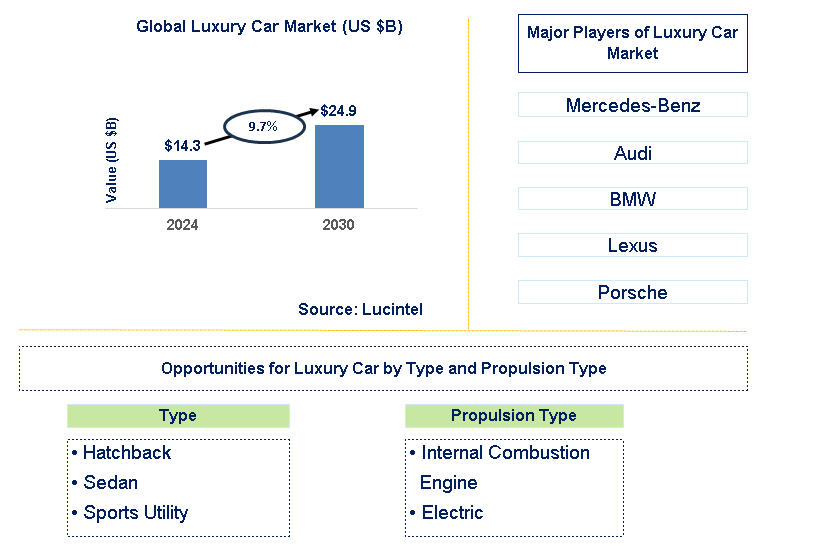
Key data points: The market size in 2030 = $24.9 billion, growth forecast = 9.7% annually for the next 6 years. Scroll below to get more insights. This market report covers trends, opportunities, and forecasts in the global luxury car market to 2030 by type (hatchback, sedan, and sports utility), propulsion type (internal combustion engine and electric), and region (North America, Europe, Asia Pacific, and the Rest of the World)
We'll send your sample report shortly.
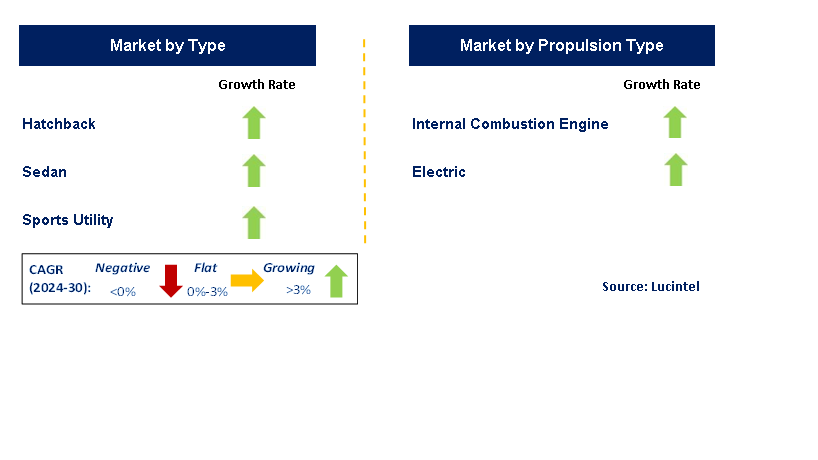
• Lucintel forecasts that, within the type category, sports utility will remain the largest segment over the forecast period due to increased consumer preference for sport utility vehicles owing to a number of elements, including practicality, perceived safety, style, and convenience.
• In terms of regions, Europe will remain the largest region over the forecast period due to developed auto industry, existence of multiple automakers, as well as, innovative automotive manufacturing sector and advantageous governmental regulations. Gain valuable insight for your business decisions with our comprehensive 150+ page report. The luxury car market is changing rapidly due to technological advancements, along with shifts in market and consumer attitudes. There are discernible growth patterns in electric vehicles, digital engagement, and sustainability. Key markets such as the United States, China, Germany, India, and Japan are also undergoing changes as manufacturers address the luxury car market in these countries.
• United States: In the United States, there is an increasing shift towards electric vehicles by luxury car manufacturers and advanced driver-assistance systems (ADAS). Brands are rolling out more electric vehicles and advanced multimedia systems for a high-tech audience. Green initiatives are also on the rise, with many firms seeking or developing green technologies in manufacturing processes and materials.
• China: China's luxury car market has been developing rapidly, with a clear focus on electric mobility. Both local and foreign companies are launching premium electric and hybrid vehicles to meet high demand. Supported by government policies and incentives for EVs, this is the direction the market is heading. The growing EV landscape also includes a rising interest in self-driving cars and smart connectivity.
• Germany: Particularly in luxury automobiles, Germany is known for its heritage in auto manufacturing, emerging as a pioneer in adopting technological advancements in luxury vehicles. German companies have been at the forefront of creating electric vehicles and enhancing in-car experiences. There is also a focus on green initiatives, such as investing in green technologies and reducing carbon emissions in manufacturing processes.
• India: In India, the luxury car market is becoming more competitive as the middle class explores options for higher earning capacities and high-end automobile features. Interest in luxury electric vehicles is growing, but the industry is still young compared to others. Manufacturers are focusing on producing high-value-added, increasingly sophisticated cars to meet the changing needs of the Indian market.
• Japan: Japanese luxury cars are distinctive, featuring strong hybrid technology and advanced safety features. Japan has been adding more hybrid cars to its range of products and incorporating new technologies to remain competitive. More attention is being given to the development of premium or super-premium vehicles, expected to be innovatively advanced and of high quality. Gain valuable insights for your business decisions with our 150+ page report.
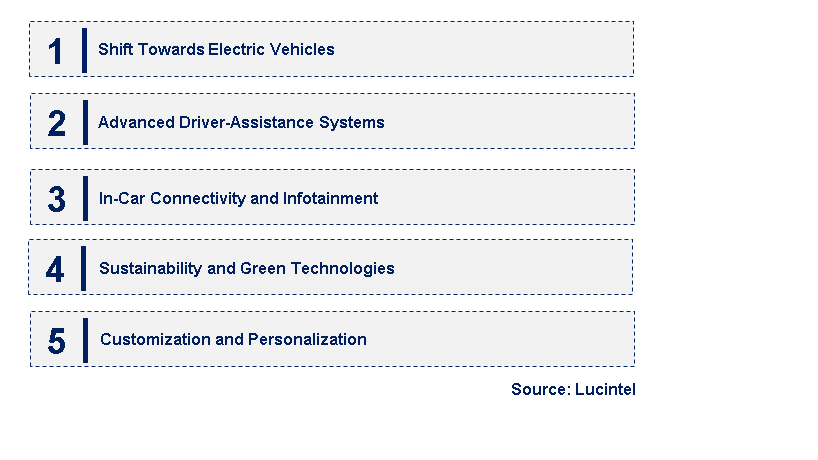
• Shift Towards Electric Vehicles: It is evident that the luxury car market population is now leaning towards electric vehicles. The car manufacturers are channeling all their resources into the economy to meet the ever-increasing need for green transport. This trend exists because most consumers prefer non-polluting alternatives and due to laws that require emission reduction.
• Advanced Driver-Assistance Systems: The advent of advanced driver-assistance systems is being increasingly adopted in high-class automobiles. There is advanced technology in the cars, such as adaptive cruise control, lane-keeping assist, and auto parking, among other ADAS, which enhance the safety and convenience of the vehicle, reflecting the industry’s focus on high-tech driving.
• In-Car Connectivity and Infotainment: Improved on-board communications and luxury features are regarded as superficial decor in every high-end automobile. Technologies like voice command, smartphone connectivity, and advanced navigation are no longer seen as unnecessary but are now taking advantage of consumer preferences for hands-free engagement in driving.
• Sustainability and Green Technologies: The concern with sustainable performance is increasing in the luxury car industry. Car manufacturers are incorporating green technologies, renewable materials, and developing energy-saving manufacturing facilities to stay in compliance with green norms and capture an eco-friendly market.
• Customization and Personalization: Trends in customization and personalization are also prevalent in the luxury car market. Customers do not want only special features for their automobiles but also interior design, performance characteristics, and exteriors that suit their needs and lifestyle. Customization is highly embraced by customers in the luxury car market. Trends such as the transition in the industry from combustion engine IPCs to electric vehicles, automation with the help of advanced driver-assistance systems, improved communication with users within vehicles, concern for the environment, and increasing customization are bringing dramatic changes to the luxury car sector. These trends are promoting creativity, fulfilling the new targets set by changing consumer behavior, and establishing new parameters for the sector.
• Mobilization of Electric Vehicle Lineups: The majority of premium car makers have extended their electric vehicle (EV) range. Brands have started offering more technologically advanced and high-performance new EV models to meet the high demand from clients and stricter emission regulations.
• Increased Vehicles’ Safety through the Use of Advanced Driver Assistance Systems: The number of luxury cars fitted with ADAS technologies is on the rise. Features like adaptive cruise control, automatic emergency braking, and lane-keeping assist are improving safety and ease for drivers.
• Development of Vehicle Connectivity and Voice Recognition and Control: Luxury car manufacturers are making new efforts to improve multimedia systems and in-car connectivity. Advances in features are expected to include voice commands, improved smartphone integration using in-car systems, and advanced, easy navigation systems, which will all enrich the driving experience by customizing it.
• Concentration on Pollution Prevention and Environmentally Friendly Manufacturing: The issue of sustainability is well-pressed in the luxury car manufacturing sector. Most manufacturers are embracing green manufacturing approaches by incorporating recyclable materials and equipment as well as opting for energy-efficient methods and technologies in their production to minimize adverse effects on the environment.
• Customization and Bespoke Options: There is a growing trend toward seeking customization and bespoke options. Many sectors, especially luxury brands, are incorporating a wide range of personalization, from the interiors to the performance of the cars, providing consumers with the opportunity to personalize their vehicles according to their preferences. Growth and innovation have been fueled by emerging trends in the luxury car market, which include the addition of new models in the EV lineup, installation of advanced driver-assistance systems (ADAS), improvements in connectivity, sustainability, and customized cars. These changes are addressing the changing needs of consumers and creating new trends in the market.
• Expansion of Electric Vehicle Offerings: It has been established that there is an opportunity to expand electric vehicle (EV) offerings. More consumers are demanding eco-friendly transport, and laws are being integrated that are favorable to manufacturers. Thus, they forecast more sales if they incorporate advanced EV technologies and increase their electric model offerings.
• Advancement in the Development of Advanced Driver-Assistance Systems: The advancement in the development and integration of advanced driver assistance systems (ADAS) helps in the growth of companies. Manufacturers that provide sophisticated safety and convenience features will remain competitive by appealing to customers who want confident and trustworthy cars with many innovative features.
• Improving In-Car Connectivity and Infotainment: One of the main growth strategies is related to investment in in-car connectivity and infotainment systems. With features like smartphone connectivity, voice-activated services, and live navigation, vehicles will appeal to the younger generation and increase sales.
• Invest in Green and Sustainable Technologies: Investing in sustainable and green bio-source technology is an identified avenue for growth. Practices such as using eco-friendly production methods and recyclable products will attract green consumers and satisfy rising laws and regulations.
• Customization and Personalization Options: A growing opportunity is the offering of customization with personalization options. Bespoke features and tailored solutions help manufacturers create ‘luxury’ products for individuals, increasing customer satisfaction, loyalty, and overall profitability. The luxury car market presents several strategic growth opportunities, such as the expansion of EV offerings, ADAS deployment, in-car connectivity, a focus on sustainability, and the availability of custom-made vehicles. These act as key accelerators for innovation and expansion. By harnessing these opportunities, manufacturers will be in a position to satisfy the ever-changing consumer needs and gain a competitive edge.
• Technological Advancements: Market growth is driven by technological advancements related to electric vehicles and other technologies such as advanced driver assistance systems (ADAS) and in-car connectivity. These technologies improve the performance, safety, and aesthetics of vehicles, making them more marketable and desirable to buyers of luxury cars.
• Increasing Need for Sustainability: The growing need for clean and sustainable vehicles is contributing to the market's growth. Some end users and regulators have developed a growing concern for environmental protection, prompting many manufacturers to adopt sustainable practices and green technologies.
• Rising Affluence and Consumer Spending: Increased affluence, coupled with higher consumer spending on luxury items, has created demand for high-end vehicles. Given the rise in disposable income, many people are drawn to purchasing premium, high-performance vehicles, thus expanding the luxury car market.
• Support for Electric Vehicles in Regulatory Framework: Regulations and policy measures that favor electric vehicles (EVs) have enhanced the growth of the EV market. Benefits such as government aid, tax relief, and stricter adherence to pollution control measures are good for the uptake of EVs, benefiting luxury automakers investing in electric technology.
• Innovation in Customization and Personalization: An emerging trend is the enhancement of “market pull,” which refers to trust in brand engagement, communication, and brand loyalty. The need to offer exclusive features and provisions makes manufacturers more responsive to customers' specific wants, thus improving sales. Challenges in the luxury car market are:
• High Production Costs: The sophisticated technologies and high-end materials required to produce luxury cars come with high production costs. These costs affect pricing and profitability, particularly in regions with high competition where consumers prefer more affordable options.
• Compliance with Regulatory and Emission Policies: Adhering to emission requirements can be daunting. While new orders can easily adapt, many manufacturers need newer technologies to comply with changing regulations, which often imply higher costs and increased operational complexity.
• Market Volatility and Economic Uncertainty: Luxury automobile sales can be impacted by market volatility and economic uncertainty. During times of economic decline or shifts in consumer confidence, demand for premium vehicles may collapse, affecting the growth and proliferation of the market. Some drivers of the luxury car market are technology, the desire to remain green, rising wealth levels, government incentives for EVs, and policies focused on individualization. Among the challenges are high operating costs, regulatory compliance, and market risks. To operate within the market and exploit growth prospects, understanding these factors is essential.
• Mercedes-Benz
• Audi
• BMW
• Lexus
• Porsche
• Jaguar Land Rover
• Cadillac
• Maserati
• Volvo
• Genesis
• Hatchback
• Sedan
• Sports Utility
• Internal Combustion Engine
• Electric
• North America
• Europe
• Asia Pacific
• The Rest of the World
• United States: In the United States, there is an increasing shift towards electric vehicles by luxury car manufacturers and advanced driver-assistance systems (ADAS). Brands are rolling out more electric vehicles and advanced multimedia systems for a high-tech audience. Green initiatives are also on the rise, with many firms seeking or developing green technologies in manufacturing processes and materials.
• China: China's luxury car market has been developing rapidly, with a clear focus on electric mobility. Both local and foreign companies are launching premium electric and hybrid vehicles to meet high demand. Supported by government policies and incentives for EVs, this is the direction the market is heading. The growing EV landscape also includes a rising interest in self-driving cars and smart connectivity.
• Germany: Particularly in luxury automobiles, Germany is known for its heritage in auto manufacturing, emerging as a pioneer in adopting technological advancements in luxury vehicles. German companies have been at the forefront of creating electric vehicles and enhancing in-car experiences. There is also a focus on green initiatives, such as investing in green technologies and reducing carbon emissions in manufacturing processes.
• India: In India, the luxury car market is becoming more competitive as the middle class explores options for higher earning capacities and high-end automobile features. Interest in luxury electric vehicles is growing, but the industry is still young compared to others. Manufacturers are focusing on producing high-value-added, increasingly sophisticated cars to meet the changing needs of the Indian market.
• Japan: Japanese luxury cars are distinctive, featuring strong hybrid technology and advanced safety features. Japan has been adding more hybrid cars to its range of products and incorporating new technologies to remain competitive. More attention is being given to the development of premium or super-premium vehicles, expected to be innovatively advanced and of high quality.


• Mercedes-Benz
• Audi
• BMW
• Lexus
• Porsche
• Jaguar Land Rover
• Cadillac
• Maserati
• Volvo
• Genesis Q6. Which luxury car market segment will be the largest in future? Answer: Lucintel forecasts that sports utility will remain the largest segment over the forecast period due to increased consumer preference for sport utility vehicles owing to a number of elements, including practicality, perceived safety, style, and convenience. Q7. In luxury car market, which region is expected to be the largest in next 5 years? Answer: Europe will remain the largest region over the forecast period due to developed auto industry, existence of multiple automakers, as well as, innovative automotive manufacturing sector and advantageous governmental regulations. Q.8 Do we receive customization in this report? Answer: Yes, Lucintel provides 10% customization without any additional cost.


Choose a license that fits your team. Instant PDF delivery.
Prices exclude taxes. Instant delivery. Custom licensing available on request.
Market Report · July 31, 2026
Market Report · July 17, 2026
Market Report · May 18, 2026
Trusted partner for strategic intelligence and business growth


Receive a complimentary market analysis tailored to your industry. Our analysts will identify key growth opportunities and competitive dynamics specific to your business.

Market size, growth rate, and key trend analysis for your specific sector.

Top competitor positioning and market share analysis.

Strategic recommendations backed by data-driven insights.
Get curated market intelligence and competitive moves straight to your inbox.
By subscribing, you agree to receive our monthly insights. Unsubscribe anytime.
Receive a complimentary market analysis tailored to your industry. Our analysts will identify key growth opportunities and competitive dynamics specific to your business.
Market size, growth rate, and key trend analysis for your specific sector.
Top competitor positioning and market share analysis.
Strategic recommendations backed by data-driven insights.
Get curated market intelligence, emerging trends, and competitive moves straight to your inbox each month.
By subscribing, you agree to receive our monthly insights. Unsubscribe anytime.
We'll send your sample report shortly.