
Market Report · July 29, 2026

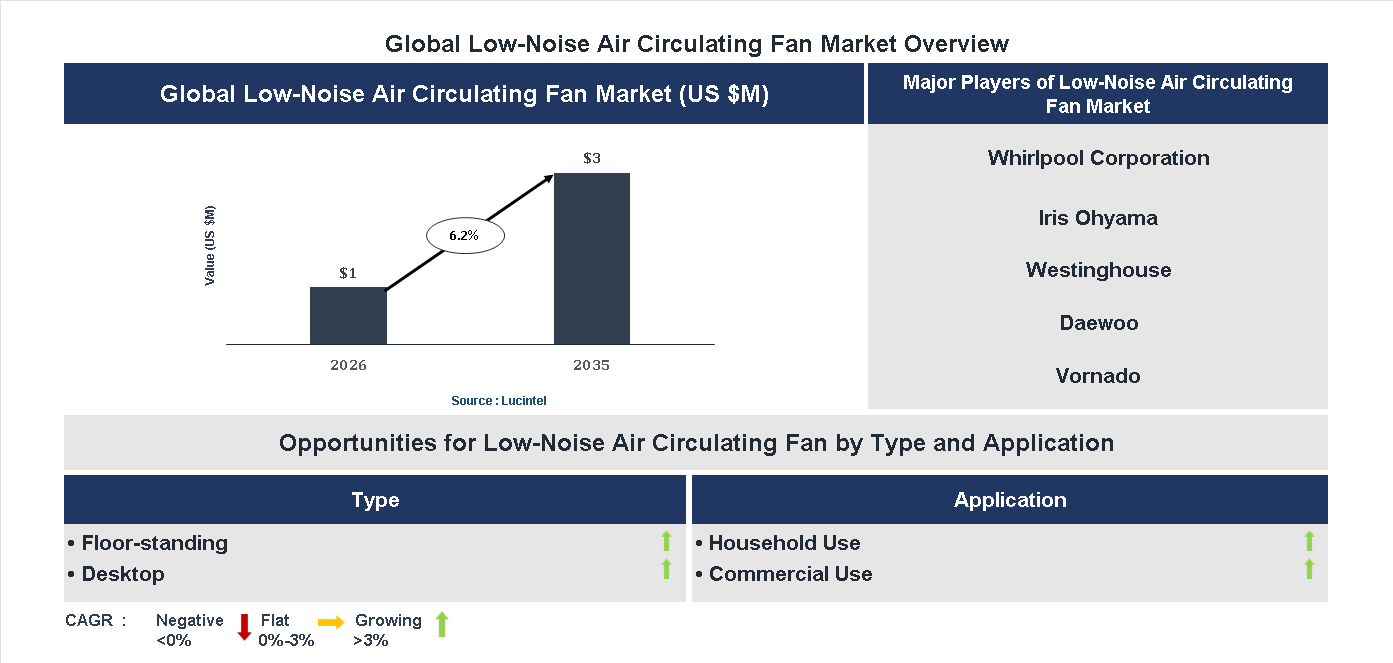
Key data points: The market size in 2035 = $3 billion, growth forecast = 6.2% annually for the next 8 years. Scroll below to get more insights. This market report covers trends, opportunities and forecasts in low-noise air circulating fan market to 2035 by type (floor-standing and desktop), application (household use and commercial use), and region (North America, Europe, Asia Pacific, and the Rest of the World)
We'll send your sample report shortly.
• Lucintel forecasts that, within the type category, floor-standing is expected to witness higher growth over the forecast period.
• Within the application category, household use is expected to witness higher growth.
• In terms of region, APAC is expected to witness the highest growth over the forecast period. Gain valuable insights for your business decisions with our comprehensive 150+ page report. Sample figures with some insights are shown below.
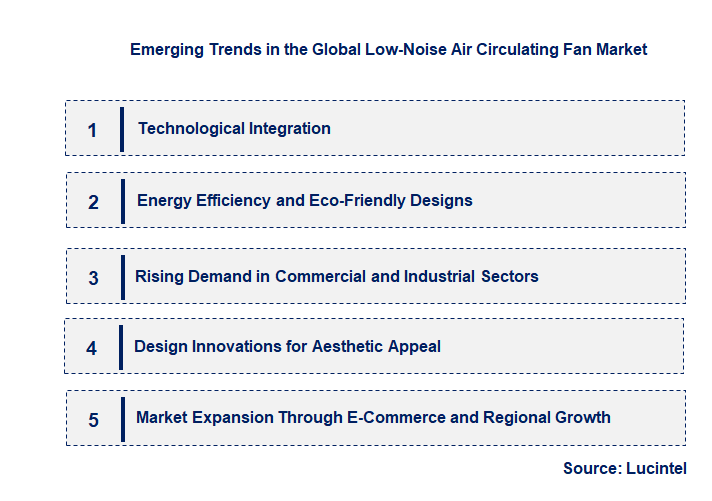
• Technological Integration: The integration of smart technology into low-noise fans is transforming user experience. Features such as Wi-Fi connectivity, remote control, and automation enable users to customize airflow, set schedules, and monitor performance via mobile apps. This trend enhances convenience, energy efficiency, and user engagement, making fans more adaptable to modern lifestyles. Manufacturers are investing in IoT-enabled products, which also facilitate data collection for further innovation. As smart home ecosystems expand, the demand for intelligent, low-noise fans is expected to grow significantly, driving market expansion.
• Energy Efficiency and Eco-Friendly Designs: Increasing environmental awareness is pushing manufacturers to develop energy-efficient fans with eco-friendly materials. Innovations include improved motor designs, aerodynamic blades, and variable speed controls that reduce power consumption while maintaining performance. These features not only lower operational costs but also align with global sustainability goals. Consumers are increasingly seeking products that minimize carbon footprints, prompting brands to emphasize green certifications and sustainable manufacturing practices. This trend is reshaping the market by prioritizing eco-conscious products that appeal to environmentally aware buyers.
• Rising Demand in Commercial and Industrial Sectors: The commercial and industrial sectors are driving demand for low-noise air circulating fans due to their need for quiet, efficient cooling solutions in workplaces, hospitals, and manufacturing facilities. These sectors require durable, high-capacity fans that operate quietly to maintain a comfortable environment without disrupting operations. The trend is encouraging manufacturers to develop specialized products with enhanced noise reduction features and robust construction. As urbanization and industrial activities expand, this segment is expected to be a significant growth driver, broadening the market scope beyond residential applications.
• Design Innovations for Aesthetic Appeal: Modern consumers favor fans that combine functionality with aesthetic appeal. Manufacturers are focusing on sleek, contemporary designs that complement interior decor, along with customizable options such as color and finish. Compact and portable designs are also gaining popularity for their convenience and versatility. These aesthetic innovations are making low-noise fans more attractive for residential and commercial spaces, encouraging wider adoption. The emphasis on design is reshaping the market by elevating product differentiation and catering to consumer preferences for stylish, unobtrusive cooling solutions.
• Market Expansion Through E-Commerce and Regional Growth: The proliferation of e-commerce platforms is facilitating easier access to a wide range of low-noise fans, expanding market reach globally. Online sales channels enable consumers to compare products, read reviews, and make informed decisions, accelerating adoption. Additionally, emerging markets in Asia-Pacific and Latin America are witnessing rapid growth due to urbanization, rising disposable incomes, and increasing awareness of energy-efficient cooling options. This regional expansion is diversifying the market landscape, creating new opportunities for manufacturers and suppliers to tap into underserved markets and meet diverse consumer needs. These emerging trends are collectively reshaping the low-noise air circulating fan market by fostering innovation, enhancing user experience, and expanding geographical reach. The focus on smart technology, sustainability, design, and market accessibility is driving growth and positioning the industry for a more sustainable and consumer-centric future.
• Growing Demand for Quiet Cooling Solutions: The increasing preference for low-noise fans in homes and offices is boosting market growth. Consumers seek products that provide effective air circulation without disturbing their environment, especially in work-from-home setups and quiet zones. This demand encourages manufacturers to innovate quieter motor and blade designs, leading to higher sales and market expansion. The focus on comfort and productivity is a key driver, making low-noise fans a preferred choice across various settings.
• Technological Innovations in Fan Design: Advances in motor technology, blade aerodynamics, and noise reduction materials are transforming the industry. These innovations improve efficiency and significantly lower operational noise levels. Smart features like remote control and automation are also being integrated, enhancing user experience. Such technological progress not only boosts product performance but also opens new avenues for market differentiation and competitive advantage, attracting tech-savvy consumers and expanding market reach.
• Rising Environmental Regulations and Eco-Friendly Products: Governments worldwide are implementing stricter environmental standards, pushing manufacturers to develop energy-efficient and eco-friendly fans. Use of sustainable materials and energy-saving motors reduces carbon footprint and operational costs. These regulations incentivize innovation and create a market for green products, appealing to environmentally conscious consumers. Compliance also helps companies avoid penalties and gain certifications, strengthening their market position and fostering sustainable growth.
• Expansion in Residential and Commercial Sectors: The increasing construction of residential complexes and commercial spaces drives demand for efficient air circulation solutions. Low-noise fans are preferred in offices, hospitals, hotels, and homes for their quiet operation and energy efficiency. Market expansion is further supported by urbanization and modernization trends, which require reliable cooling solutions. This growth in end-user sectors offers manufacturers opportunities to diversify product offerings and increase sales volume across multiple industries.
• Impact of Digital Marketing and E-Commerce: The rise of online retail platforms and digital marketing strategies is significantly influencing market dynamics. Consumers now have easier access to a wide range of low-noise fans, enabling better price comparison and product reviews. E-commerce facilitates faster distribution and wider reach, especially in remote areas. Digital campaigns also enhance brand visibility and consumer engagement. This shift is accelerating sales growth, fostering innovation, and enabling companies to adapt swiftly to changing consumer preferences. The overall impact of these developments is a dynamic, competitive market characterized by innovation, sustainability, and expanding consumer bases. Enhanced product features and eco-friendly solutions are driving growth, while technological advancements and digital channels are broadening market reach. These trends collectively foster a more efficient, environmentally conscious industry, promising sustained growth and increased market share for key players.
• Expanding Residential Cooling Solutions: The rising demand for quiet, energy-efficient fans in homes is a major growth driver. Consumers seek products that provide effective air circulation without noise disturbance, especially in bedrooms and living spaces. Manufacturers are focusing on developing innovative blade designs and motor technologies to enhance performance while minimizing sound levels. This trend is supported by increasing urbanization and the need for comfortable indoor environments, creating a lucrative market segment for low-noise fans.
• Growing Adoption in Healthcare Facilities: Healthcare environments require quiet, reliable ventilation systems to ensure patient comfort and safety. Low-noise air circulating fans are increasingly adopted in hospitals, clinics, and nursing homes to maintain optimal air quality without disrupting sensitive activities. The demand is driven by stringent regulatory standards and the need for energy-efficient solutions that reduce operational costs. Advancements in antimicrobial coatings and smart control systems further enhance the appeal of these fans in healthcare settings.
• Rising Use in Commercial and Office Spaces: Commercial buildings and office spaces prioritize noise reduction to improve employee productivity and comfort. Low-noise fans are being integrated into HVAC systems, ceiling fans, and air purifiers to meet these needs. The trend is supported by the shift toward sustainable building practices and energy-efficient infrastructure. Manufacturers are innovating with variable speed motors and sound-dampening materials to deliver high-performance fans that align with green building certifications and occupant expectations.
• Industrial Ventilation and Safety Applications: Industries require robust ventilation systems that operate quietly to ensure worker safety and environmental compliance. Low-noise fans are increasingly used in manufacturing plants, warehouses, and cleanrooms to control dust, fumes, and temperature without excessive noise pollution. The development of durable, high-capacity fans with noise-reduction features is critical to meet industrial standards. This growth is driven by stricter regulations and the need for sustainable, low-impact industrial operations.
• Technological Innovations and Smart Fan Integration: The integration of IoT and smart control systems is transforming the low-noise fan market. Connected fans offer remote operation, real-time monitoring, and adaptive noise management, enhancing user experience and energy efficiency. Innovations such as brushless DC motors and aerodynamic blade designs contribute to quieter operation. The adoption of smart technology enables customization and optimization in various applications, opening new avenues for growth and differentiation in the competitive landscape. These growth opportunities are poised to significantly influence the low-noise air circulating fan market by fostering innovation, expanding application areas, and meeting increasing consumer and regulatory demands. The market’s evolution toward smarter, more efficient, and quieter solutions will drive sustained growth and competitive advantage for industry players.
• Technological Innovation: The development of advanced motor technologies and noise-dampening materials has significantly reduced operational noise levels. These innovations enable manufacturers to produce fans that operate quietly without compromising performance, appealing to consumers in residential, commercial, and institutional settings. As technology continues to evolve, the market benefits from increased product differentiation and improved customer satisfaction, fueling demand and expanding market reach.
• Growing Urbanization and Population Density: Rapid urbanization leads to increased demand for efficient cooling solutions in densely populated areas. Consumers prioritize comfort and noise reduction, especially in urban apartments, offices, and public spaces. This trend drives manufacturers to develop low-noise fans that cater to these needs, thereby expanding market opportunities and encouraging product innovation tailored to urban environments.
• Rising Awareness of Energy Efficiency: Consumers and regulatory bodies are increasingly emphasizing energy-efficient appliances to reduce electricity consumption and carbon footprints. Low-noise fans often incorporate energy-saving features, making them more attractive. This shift encourages manufacturers to innovate with energy-efficient motors and designs, aligning with sustainability goals and boosting market growth.
• Regulatory Standards and Noise Pollution Control: Governments and environmental agencies impose strict regulations on noise levels and energy consumption for household and commercial appliances. Compliance with these standards compels manufacturers to develop quieter, more efficient fans. Meeting regulatory requirements not only ensures market access but also enhances brand reputation, fostering consumer trust and expanding market share.
• Expansion of Commercial and Institutional Sectors: The growth of commercial spaces, healthcare facilities, and educational institutions increases demand for low-noise fans that provide effective air circulation without disturbing occupants. This sector-specific demand encourages product customization and innovation, further propelling market growth and diversification. The challenges facing the low-noise air circulating fan market include:
• High Manufacturing Costs: Developing low-noise fans involves advanced materials, precision engineering, and sophisticated manufacturing processes, which increase production costs. These higher costs can lead to elevated retail prices, potentially limiting consumer adoption, especially in price-sensitive markets. Manufacturers must balance quality and affordability to remain competitive, which can be challenging amid fluctuating raw material prices.
• Stringent Regulatory Environment: While regulations promote product quality and environmental sustainability, they also pose compliance challenges. Manufacturers must invest in research and development to meet evolving standards, which can be resource-intensive. Non-compliance risks fines and market restrictions, creating barriers for new entrants and complicating product launches.
• Raw Material Price Fluctuations: The cost of essential raw materials such as metals and plastics can be volatile due to global supply chain disruptions, geopolitical tensions, and economic fluctuations. These price swings impact manufacturing costs and profit margins, forcing companies to adjust pricing strategies or seek alternative materials, which may affect product quality and performance. The low-noise air circulating fan market is shaped by technological advancements, urbanization, energy efficiency trends, regulatory standards, and sectoral growth. While these drivers foster innovation and expansion, challenges such as high costs, regulatory compliance, and raw material volatility pose significant hurdles. Overall, the market's future depends on how effectively stakeholders can leverage technological progress and navigate regulatory landscapes while managing costs and supply chain risks. This dynamic environment offers opportunities for growth but requires strategic planning and innovation to sustain competitive advantage.
• Whirlpool Corporation
• Iris Ohyama
• Westinghouse
• Daewoo
• Vornado
• MUJI
• Balmuda
• Airmate
• Panasonic
• SAMPO
• Floor-standing
• Desktop
• Household Use
• Commercial Use
• North America
• Europe
• Asia Pacific
• The Rest of the World
• United States: The US market has seen a surge in smart, energy-efficient fans with IoT connectivity, driven by consumer demand for convenience and sustainability. Major players are investing in R&D to develop quieter, more powerful models that comply with strict environmental regulations. Retail and online sales channels are expanding rapidly, and there is a growing trend toward eco-friendly materials and designs. The focus on indoor air quality has also increased the adoption of circulating fans in residential and commercial spaces, supported by government initiatives promoting energy conservation.
• China: China remains the largest market for low-noise circulating fans, with rapid industrial growth and urbanization fueling demand. Local manufacturers are innovating with advanced motor technologies and noise reduction features to compete globally. The government’s emphasis on energy efficiency and environmental standards has led to the development of more sustainable products. E-commerce platforms are playing a crucial role in expanding market reach, and there is a rising preference for smart fans integrated with home automation systems. The market is also witnessing increased exports to other regions.
• Germany: Germany’s market is characterized by high-quality, technologically advanced fans that emphasize energy efficiency and durability. Stringent EU regulations on noise and emissions are driving innovation in noise reduction and eco-friendly materials. Consumers prefer premium products with smart features, such as remote control and programmable settings. The focus on sustainable manufacturing practices and circular economy principles influences product development. Market growth is supported by increasing awareness of indoor air quality and energy conservation policies across residential and commercial sectors.
• India: The Indian market is experiencing rapid growth due to rising urbanization, increasing disposable incomes, and a growing awareness of indoor air quality. Affordable, low-noise fans are in high demand, especially in urban households and commercial spaces. Local manufacturers are expanding their product portfolios with energy-efficient and durable models to cater to price-sensitive consumers. E-commerce sales are booming, and government initiatives promoting energy conservation are encouraging the adoption of eco-friendly fans. The market is also witnessing a shift towards smart fans with remote control features.
• Japan: Japan’s market emphasizes innovation, with a focus on quiet operation, energy efficiency, and smart technology integration. Consumers prefer high-end models with advanced features such as air purification, remote control, and connectivity with home automation systems. Regulatory standards for noise and energy consumption are strict, prompting manufacturers to develop cutting-edge solutions. The trend towards sustainable and eco-friendly products is strong, supported by government policies and consumer awareness. The market continues to evolve with a focus on health, comfort, and technological sophistication in circulating fans.


• Whirlpool Corporation
• Iris Ohyama
• Westinghouse
• Daewoo
• Vornado
• MUJI
• Balmuda
• Airmate
• Panasonic
• SAMPO Q6. Which low-noise air circulating fan market segment will be the largest in future? Answer: Lucintel forecasts that, within the type category, floor-standing is expected to witness higher growth over the forecast period. Q7. In low-noise air circulating fan market, which region is expected to be the largest in next 5 years? Answer: In terms of region, APAC is expected to witness the highest growth over the forecast period. Q8. Do we receive customization in this report? Answer: Yes, Lucintel provides 10% customization without any additional cost.


Choose a license that fits your team. Instant PDF delivery.
Prices exclude taxes. Instant delivery. Custom licensing available on request.
Market Report · July 29, 2026
Market Report · July 15, 2026
Market Report · July 13, 2026
Trusted partner for strategic intelligence and business growth


Receive a complimentary market analysis tailored to your industry. Our analysts will identify key growth opportunities and competitive dynamics specific to your business.

Market size, growth rate, and key trend analysis for your specific sector.

Top competitor positioning and market share analysis.

Strategic recommendations backed by data-driven insights.
Get curated market intelligence and competitive moves straight to your inbox.
By subscribing, you agree to receive our monthly insights. Unsubscribe anytime.
Receive a complimentary market analysis tailored to your industry. Our analysts will identify key growth opportunities and competitive dynamics specific to your business.
Market size, growth rate, and key trend analysis for your specific sector.
Top competitor positioning and market share analysis.
Strategic recommendations backed by data-driven insights.
Get curated market intelligence, emerging trends, and competitive moves straight to your inbox each month.
By subscribing, you agree to receive our monthly insights. Unsubscribe anytime.
We'll send your sample report shortly.