
Market Report · May 18, 2026

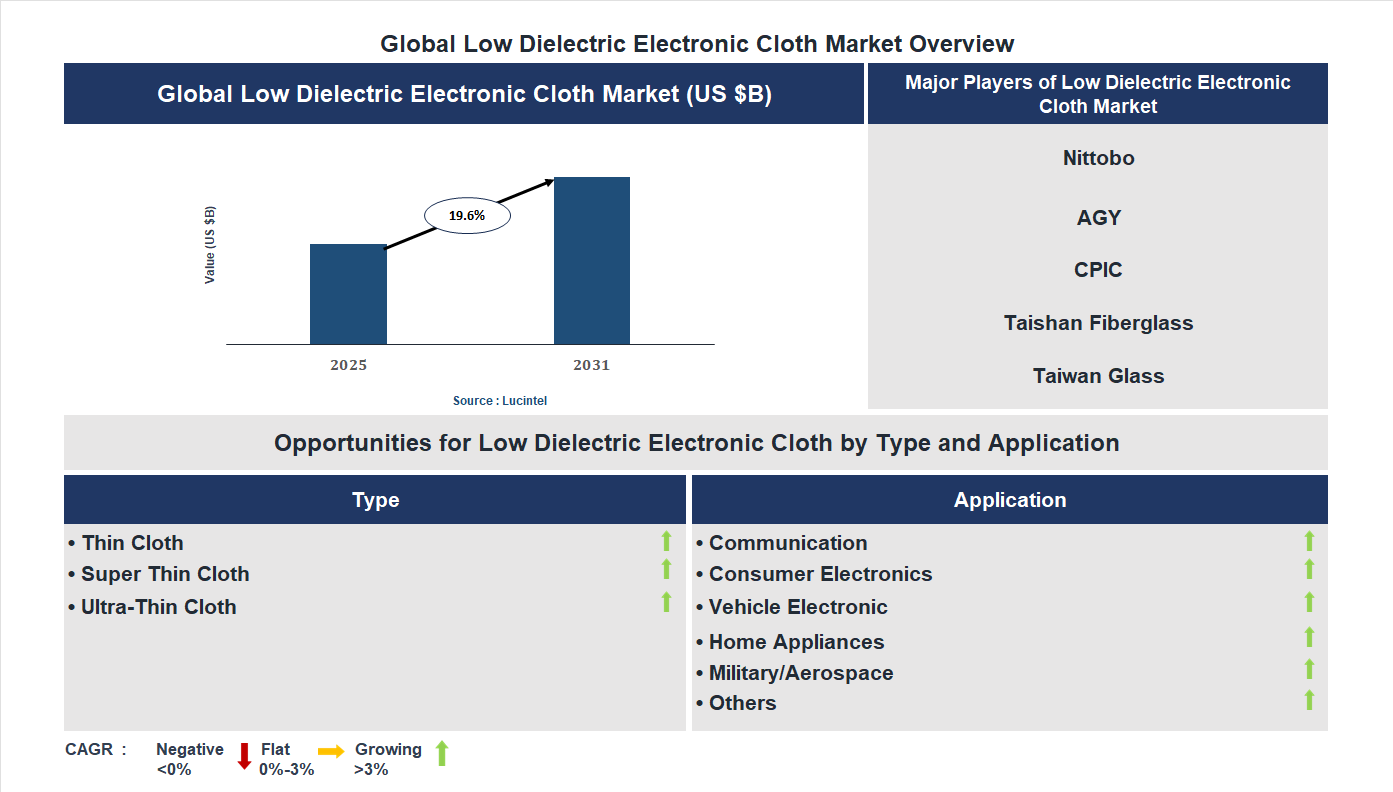
Key data points: The growth forecast = 19.6% annually for the next 7 years. Scroll below to get more insights. This market report covers trends, opportunities and forecasts in low dielectric electronic cloth market to 2031 by type (thin cloth, super thin cloth, and ultra-thin cloth), application (communication, consumer electronics, vehicle electronic, home appliances, military/aerospace, and others), and region (North America, Europe, Asia Pacific, and the Rest of the World)
We'll send your sample report shortly.
• Lucintel forecasts that, within the type category, ultra-thin cloth is expected to witness the highest growth over the forecast period.
• Within the application category, vehicle electronic is expected to witness the highest growth.
• In terms of region, APAC is expected to witness the highest growth over the forecast period. Gain valuable insights for your business decisions with our comprehensive 150+ page report. Sample figures with some insights are shown below.
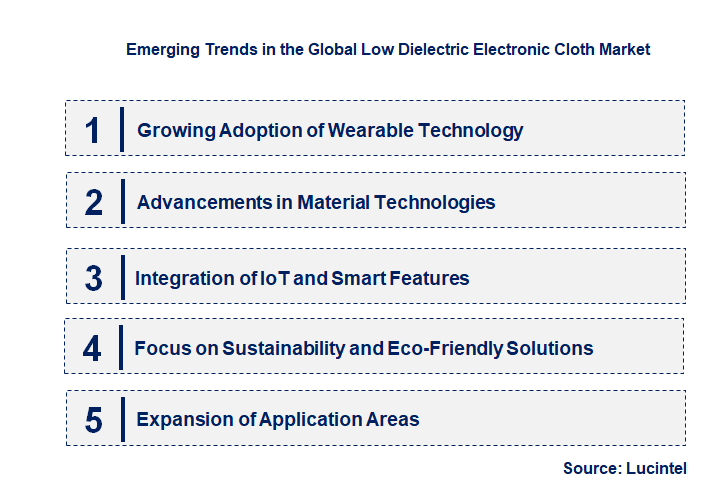
• Growing Adoption of Wearable Technology: The increasing popularity of wearable devices is driving demand for low dielectric electronic cloth. These textiles offer flexibility, comfort, and durability, making them ideal for smart clothing, health monitoring, and fitness devices. The trend is supported by advancements in conductive fibers and integration techniques, enabling seamless embedding of electronic components into fabrics. As consumer interest in health and fitness rises, manufacturers are focusing on developing innovative, lightweight, and washable electronic textiles, which significantly expand market opportunities and applications.
• Advancements in Material Technologies: Innovations in dielectric materials, such as high-performance polymers and nanomaterials, are enhancing the electrical and mechanical properties of electronic cloth. These advancements improve insulation, flexibility, and thermal stability, making textiles suitable for more demanding applications. The development of eco-friendly and sustainable materials is also gaining traction, aligning with global environmental goals. These material innovations are crucial for expanding the scope of electronic textiles into sectors like aerospace, automotive, and military, where performance and reliability are critical.
• Integration of IoT and Smart Features: The integration of Internet of Things (IoT) technology into electronic textiles is a key trend. Smart fabrics equipped with sensors, actuators, and communication modules enable real-time data collection and interaction. This trend is transforming applications in healthcare, sports, and industrial sectors by providing enhanced functionality, such as health monitoring, environmental sensing, and adaptive clothing. The seamless integration of electronics into textiles is fostering new product categories and driving demand for low dielectric materials that support complex electronic functionalities without compromising comfort.
• Focus on Sustainability and Eco-Friendly Solutions: Environmental concerns are prompting manufacturers to develop sustainable electronic textiles. This includes using biodegradable, recyclable, and non-toxic materials, as well as reducing energy consumption during production. The trend is driven by consumer awareness and regulatory pressures, encouraging companies to adopt greener practices. Sustainable electronic cloth not only minimizes environmental impact but also appeals to eco-conscious consumers, opening new market segments and fostering long-term growth in the industry.
• Expansion of Application Areas: Beyond traditional uses, electronic cloth is increasingly being adopted in innovative sectors such as aerospace, defense, and automotive industries. These applications require materials that are lightweight, durable, and capable of withstanding harsh conditions. The trend is supported by ongoing research and development efforts to tailor electronic textiles for specific environments. As a result, the market is diversifying, with new opportunities emerging in areas like electromagnetic shielding, flexible displays, and adaptive camouflage, thereby broadening the overall market scope and potential revenue streams. In summary, these trends are collectively reshaping the low dielectric electronic cloth market by fostering innovation, expanding application horizons, and emphasizing sustainability. They are enabling the development of smarter, more versatile, and environmentally friendly electronic textiles, which are poised to revolutionize multiple industries and meet evolving consumer and industrial demands.
• Technological Innovations in Material Composition: New low dielectric materials are being developed that offer enhanced flexibility, durability, and electrical performance, expanding their application scope in wearable tech and flexible circuits.
• Integration of Conductive Fibers: The incorporation of conductive fibers into fabrics has improved the electrical conductivity and signal integrity of electronic textiles, leading to more reliable and high-performance wearable devices.
• Advancements in Manufacturing Processes: Innovations such as printing and weaving techniques have increased production efficiency and reduced costs, making electronic cloth more commercially viable and accessible.
• Growing Adoption in Healthcare: Electronic textiles are increasingly used in medical monitoring and health tracking devices, providing non-invasive, comfortable solutions for continuous health monitoring.
• Expansion into Aerospace and Defense: The market is witnessing increased adoption of low dielectric electronic cloth in aerospace and defense applications, where lightweight, durable, and high-performance materials are critical. These developments are significantly impacting the low dielectric electronic cloth market by enhancing product performance, reducing costs, and broadening application areas. The market is becoming more competitive and innovative, with increased adoption across various sectors, ultimately driving growth and technological progress.
• Consumer Electronics: Expanding applications in smartphones, tablets, and wearable devices are driving demand for low dielectric electronic cloth, enhancing device performance and durability. This growth improves signal transmission and reduces electromagnetic interference, leading to more reliable and efficient consumer products.
• Aerospace & Defense: The need for lightweight, high-performance materials in aircraft and defense systems is boosting the adoption of low dielectric electronic cloth. It contributes to weight reduction, improved insulation, and enhanced electromagnetic compatibility, critical for advanced aerospace applications.
• Healthcare: Increasing use in medical devices and wearable health monitors is a significant growth driver. The materials flexibility and insulating properties enable safer, more reliable, and comfortable healthcare solutions, fostering innovation in medical technology.
• Automotive: The automotive industry is integrating low dielectric electronic cloth into electric vehicles and advanced driver-assistance systems. It offers improved electromagnetic shielding, reduced weight, and enhanced safety, supporting the shift toward smarter, more efficient vehicles.
• Telecommunications: The expansion of 5G infrastructure and high-speed data transmission systems is fueling demand for low dielectric materials. These cloths improve signal integrity and reduce interference, essential for reliable telecommunications networks. In summary, these growth opportunities are significantly impacting the low dielectric electronic cloth market by expanding its application scope, enhancing product performance, and fostering innovation across multiple industries. This evolution is expected to drive market growth, increase adoption, and stimulate technological advancements, positioning the market for sustained development in the coming years.
• Technological Innovation: The development of advanced low dielectric materials enhances the performance of electronic textiles, enabling better insulation, signal integrity, and flexibility. Innovations in nanotechnology and polymer composites have led to fabrics that are lightweight, durable, and suitable for high-frequency applications. These technological advancements open new avenues in wearable electronics, aerospace, and defense sectors, fueling market growth. Continuous R&D efforts are expected to further improve material properties, making electronic cloth more versatile and commercially viable.
• Growing Demand for Wearable Electronics: The increasing adoption of wearable devices such as smartwatches, fitness trackers, and medical sensors drives the need for flexible, lightweight, and high-performance electronic textiles. Consumers and healthcare providers seek comfortable, unobtrusive solutions, which electronic cloth can provide. This demand is supported by rising health awareness, fitness trends, and the integration of IoT in daily life, creating a significant market opportunity for low dielectric electronic fabrics.
• Expansion in Aerospace and Defense Industries: The aerospace and defense sectors require materials that can withstand extreme conditions while maintaining electrical performance. Low dielectric electronic cloth offers electromagnetic shielding, lightweight properties, and durability, making it ideal for applications such as aircraft wiring, stealth technology, and military gear. Increased defense budgets and technological modernization initiatives are expected to boost demand, positioning electronic cloth as a strategic material in these industries.
• Regulatory and Environmental Standards: Stringent regulations concerning electromagnetic interference (EMI), safety, and environmental sustainability influence market development. Governments and industry bodies are setting standards that require the use of compliant materials, encouraging manufacturers to innovate and adopt eco-friendly solutions. Compliance with these standards not only ensures market access but also enhances product credibility, fostering growth in regions with strict regulatory environments.
• Rising Investment in R&D: Increased funding from both public and private sectors for research and development accelerates the creation of new low dielectric materials and manufacturing processes. This investment leads to improved material performance, cost reduction, and scalability, making electronic cloth more accessible and attractive to various industries. R&D efforts also facilitate customization for specific applications, broadening the market scope and encouraging technological breakthroughs. The challenges facing this low dielectric electronic cloth market include:
• High Production Costs: Manufacturing low dielectric electronic cloth involves complex processes, specialized materials, and advanced equipment, resulting in high production costs. These expenses can limit large-scale adoption, especially in price-sensitive markets. Additionally, the need for quality control and consistency adds to manufacturing expenses, making it challenging for new entrants to compete and for existing players to maintain profitability while offering affordable products.
• Technological Limitations: Despite ongoing innovations, certain technical challenges persist, such as achieving optimal balance between dielectric properties and mechanical flexibility. Durability under repeated stress, washability, and long-term stability are also concerns. These limitations restrict the performance and lifespan of electronic textiles, hindering widespread adoption in demanding applications like aerospace and medical devices.
• Regulatory and Certification Barriers: Navigating complex regulatory landscapes and obtaining necessary certifications can be time-consuming and costly. Variations in standards across regions create additional hurdles for market expansion. Compliance with safety, electromagnetic compatibility, and environmental regulations requires significant effort, which can delay product launches and increase costs, ultimately impacting market growth and competitiveness. In summary, the low dielectric electronic cloth market is shaped by rapid technological advancements, increasing demand from wearable and aerospace sectors, and evolving regulatory standards. While these drivers present substantial growth opportunities, challenges such as high costs, technical limitations, and regulatory barriers pose significant hurdles. The markets future will depend on how effectively stakeholders innovate, adapt, and address these challenges to harness emerging opportunities and sustain growth in this dynamic landscape.
• Nittobo
• AGY
• CPIC
• Taishan Fiberglass
• Taiwan Glass
• Fulltech
• Henan Guangyuan New Material
• Thin Cloth
• Super Thin Cloth
• Ultra-Thin Cloth
• Communication
• Consumer Electronics
• Vehicle Electronic
• Home Appliances
• Military/Aerospace
• Others
• North America
• Europe
• Asia Pacific
• The Rest of the World
• United States: The US market is witnessing increased adoption of low dielectric electronic textiles in wearable health devices and smart clothing. Leading tech companies are investing heavily in R&D to develop more flexible, durable, and eco-friendly materials. Regulatory support and a strong innovation ecosystem are fostering new startups and collaborations, accelerating market growth. Additionally, advancements in nanotechnology are enhancing the performance and functionality of electronic textiles, making them more suitable for commercial applications.
• China: China remains a dominant player in the low dielectric electronic cloth market, driven by its robust manufacturing infrastructure and government initiatives supporting high-tech industries. The country is focusing on integrating electronic textiles into consumer electronics, sportswear, and military applications. Rapid urbanization and a large consumer base are fueling demand for innovative wearable products. Local companies are investing in research to improve material properties, such as flexibility and conductivity, to stay competitive globally.
• Germany: Germanys market is characterized by a focus on high-quality, sustainable electronic textiles for industrial and medical applications. The country emphasizes eco-friendly manufacturing processes and the integration of low dielectric materials into smart textiles for healthcare monitoring and industrial automation. German research institutions are collaborating with industry leaders to develop advanced prototypes, emphasizing durability and safety standards. The market is also benefiting from the European Unions funding programs aimed at sustainable innovation.
• India: India is emerging as a significant market for low dielectric electronic cloth, primarily driven by the growing healthcare and sports sectors. The government’s initiatives to promote smart textiles and wearable technology are encouraging local startups and manufacturers. There is a focus on affordable, lightweight, and durable electronic textiles suitable for rural and urban markets. Investments in R&D and collaborations with international firms are helping India develop indigenous solutions tailored to regional needs.
• Japan: Japan continues to lead in technological innovation within the low dielectric electronic cloth market, especially in robotics, healthcare, and consumer electronics. The country’s emphasis on precision engineering and material science is resulting in highly advanced, reliable electronic textiles. Japanese companies are exploring applications in assistive devices and smart clothing for elderly care. The integration of AI and IoT with electronic textiles is a key trend, supported by government initiatives promoting smart manufacturing and innovation ecosystems.


• Nittobo
• AGY
• CPIC
• Taishan Fiberglass
• Taiwan Glass
• Fulltech
• Henan Guangyuan New Material Q5. Which low dielectric electronic cloth market segment will be the largest in future? Answer: Lucintel forecasts that, within the type category, ultra-thin cloth is expected to witness the highest growth over the forecast period. Q6. In low dielectric electronic cloth market, which region is expected to be the largest in next 5 years? Answer: In terms of region, APAC is expected to witness the highest growth over the forecast period. Q7. Do we receive customization in this report? Answer: Yes, Lucintel provides 10% customization without any additional cost.


Choose a license that fits your team. Instant PDF delivery.
Prices exclude taxes. Instant delivery. Custom licensing available on request.
Market Report · May 18, 2026
Market Report · May 18, 2026
Market Report · May 18, 2026
Trusted partner for strategic intelligence and business growth


Receive a complimentary market analysis tailored to your industry. Our analysts will identify key growth opportunities and competitive dynamics specific to your business.

Market size, growth rate, and key trend analysis for your specific sector.

Top competitor positioning and market share analysis.

Strategic recommendations backed by data-driven insights.
Get curated market intelligence and competitive moves straight to your inbox.
By subscribing, you agree to receive our monthly insights. Unsubscribe anytime.
Receive a complimentary market analysis tailored to your industry. Our analysts will identify key growth opportunities and competitive dynamics specific to your business.
Market size, growth rate, and key trend analysis for your specific sector.
Top competitor positioning and market share analysis.
Strategic recommendations backed by data-driven insights.
Get curated market intelligence, emerging trends, and competitive moves straight to your inbox each month.
By subscribing, you agree to receive our monthly insights. Unsubscribe anytime.
We'll send your sample report shortly.