
Market Report · July 15, 2026

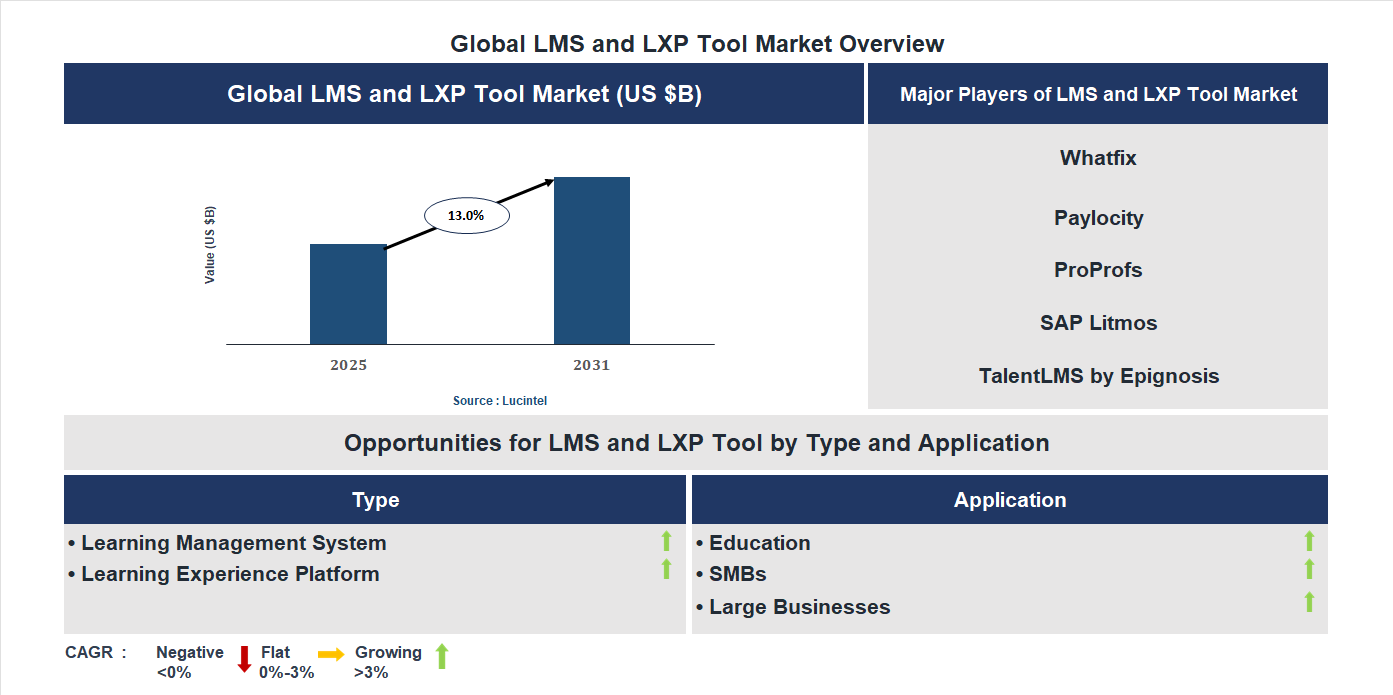
Key data points: The growth forecast = 13% annually for the next 7 years. Scroll below to get more insights. This market report covers trends, opportunities and forecasts in LMS and LXP tool market to 2031 by type (learning management system and learning experience platform), application (education, SMBs, and large businesses), and region (North America, Europe, Asia Pacific, and the Rest of the World)
We'll send your sample report shortly.
• Lucintel forecasts that, within the type category, learning experience platform is expected to witness higher growth over the forecast period.
• Within the application category, large business is expected to witness the highest growth.
• In terms of region, APAC is expected to witness the highest growth over the forecast period. Gain valuable insights for your business decisions with our comprehensive 150+ page report. Sample figures with some insights are shown below.
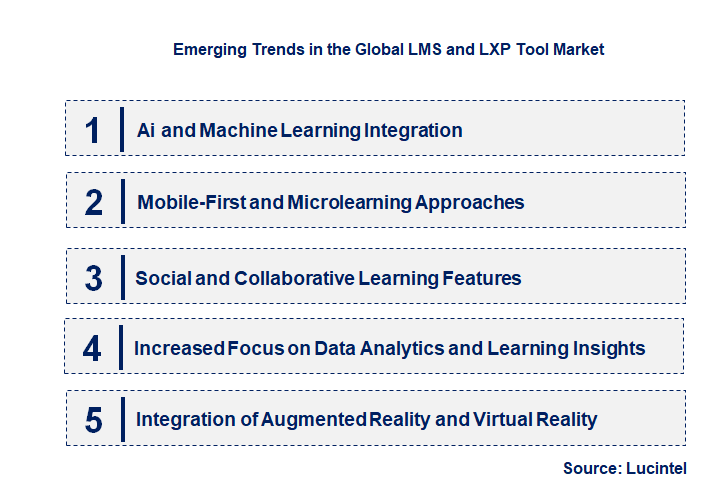
• AI and Machine Learning Integration: Enhancing Personalization and Engagement : AI and machine learning are being integrated into LMS and LXP platforms to deliver personalized learning paths, recommend relevant content, and adapt to individual learner needs. This technology enables platforms to analyze user behavior, preferences, and performance data to create tailored experiences, increasing engagement and retention. As a result, organizations can improve learning outcomes, reduce dropout rates, and optimize training efficiency. The adoption of AI-driven features is expected to accelerate, making learning more intuitive and responsive to user needs.
• Mobile-First and Microlearning Approaches: Facilitating Learning Anytime, Anywhere : The shift towards mobile-first design and microlearning is transforming how learners access content. Platforms are optimized for smartphones and tablets, allowing learners to engage with bite-sized modules on the go. This approach caters to busy schedules, enhances flexibility, and supports just-in-time learning. Microlearning also improves knowledge retention by breaking complex topics into manageable segments. As mobile device usage continues to rise, LMS and LXP providers are prioritizing mobile compatibility and microlearning features to meet evolving learner preferences and increase platform adoption.
• Social and Collaborative Learning Features: Fostering Community and Knowledge Sharing : Social learning features such as discussion forums, peer reviews, and collaborative projects are becoming integral to LMS and LXP platforms. These features promote community building, peer-to-peer knowledge sharing, and active engagement. They leverage social interaction to enhance motivation, deepen understanding, and facilitate informal learning. The integration of social tools is reshaping the learning experience by making it more interactive and community-driven, which is especially important in remote and hybrid work environments. This trend supports a more connected and participatory learning culture.
• Increased Focus on Data Analytics and Learning Insights: Driving Continuous Improvement : Advanced analytics capabilities are enabling organizations to track learner progress, engagement levels, and content effectiveness in real-time. Data-driven insights help identify skill gaps, personalize learning paths, and measure training ROI. This focus on analytics supports continuous improvement of learning programs, ensuring they align with organizational goals. Additionally, predictive analytics can forecast future learning needs, enabling proactive content development. The emphasis on data-driven decision-making is transforming LMS and LXP markets into strategic tools for talent development and organizational growth.
• Integration of Augmented Reality (AR) and Virtual Reality (VR): Creating Immersive Learning Experiences : AR and VR technologies are increasingly being incorporated into LMS and LXP platforms to deliver immersive, experiential learning. These technologies enable realistic simulations, virtual labs, and interactive scenarios that enhance engagement and understanding, especially in technical and hands-on training. The immersive nature of AR and VR helps improve retention, reduce training costs, and provide safe environments for practice. As hardware becomes more affordable and content creation tools advance, AR and VR are poised to become standard features, revolutionizing the way complex skills are taught and learned. In summary, these emerging trends are fundamentally reshaping the LMS and LXP markets by making learning more personalized, accessible, interactive, and data-driven. They are driving innovation, improving learner engagement, and enabling organizations to develop more agile and effective training ecosystems. As these trends continue to evolve, the market will see increased adoption of advanced technologies and new pedagogical approaches, ultimately transforming the future of corporate and educational learning environments.
• Integration of Artificial Intelligence: AI is increasingly integrated into LMS and LXP platforms to personalize learning experiences, automate administrative tasks, and provide real-time analytics. This enhances user engagement and learning outcomes, making platforms more adaptive and efficient. AI-driven features like chatbots and predictive analytics are transforming how organizations deliver training, leading to improved retention and learner satisfaction.
• Mobile-First and Microlearning Focus: The shift towards mobile-friendly platforms and microlearning modules caters to on-the-go learners. This development allows users to access content anytime and anywhere, increasing engagement and flexibility. Microlearning segments complex topics into bite-sized pieces, improving knowledge retention and catering to busy schedules, thus expanding market reach.
• Enhanced Data Security and Privacy Measures: With increasing data collection, platforms are prioritizing robust security protocols and compliance with regulations like GDPR. This focus builds user trust and ensures legal adherence, especially as organizations handle sensitive learner data. Improved security measures are critical for market growth, particularly in regulated industries.
• Expansion of Social and Collaborative Features: Modern LMS and LXP tools now incorporate social learning elements such as discussion forums, peer reviews, and collaborative projects. These features foster community engagement and peer-to-peer learning, enhancing the overall learning experience. The emphasis on social features aligns with the shift towards more interactive and engaging training environments.
• Adoption of Cloud-Based Solutions: Cloud deployment offers scalability, cost-effectiveness, and ease of access, driving widespread adoption. Cloud-based LMS and LXP platforms enable organizations to quickly implement updates and integrate with other systems. This development supports remote learning trends and reduces infrastructure costs, broadening market accessibility. In summary, these recent developments are significantly transforming the LMS and LXP tool market by enhancing personalization, accessibility, security, and engagement. The integration of AI, mobile-first approaches, improved security, social features, and cloud solutions are collectively driving growth, expanding market reach, and elevating user experiences. As these trends continue, the market is poised for sustained innovation and increased adoption across various sectors.
• Integration of AI and Machine Learning: Enhances personalized learning experiences by adapting content to individual learner preferences, improving engagement and retention, and enabling smarter content recommendations, which increases user satisfaction and learning outcomes.
• Mobile Learning Platforms: Expands accessibility by enabling learners to access content anytime and anywhere via smartphones and tablets, fostering continuous learning and increasing user engagement across remote and on-the-go environments.
• Gamification and Interactive Content: Incorporates game-like elements and interactive modules to boost motivation, participation, and knowledge retention, making learning more engaging and effective for diverse learner groups.
• Data Analytics and Reporting: Provides detailed insights into learner progress and engagement, allowing organizations to tailor training programs, improve content effectiveness, and demonstrate ROI, thereby enhancing strategic decision-making.
• Integration with HR and Talent Management Systems: Facilitates seamless onboarding, skill development, and performance tracking by connecting LMS/LXP tools with existing HR platforms, streamlining talent development processes and aligning learning with organizational goals. In summary, these growth opportunities are significantly transforming the LMS and LXP market by making learning more personalized, accessible, engaging, and data-driven. They enable organizations to better meet evolving educational and corporate training needs, fostering a more adaptive and efficient learning environment that supports continuous development and competitive advantage.
• Technological Innovation: The continuous evolution of digital technologies such as artificial intelligence, machine learning, and mobile platforms has revolutionized learning management systems. These innovations enable personalized learning experiences, real-time analytics, and seamless integration with other enterprise tools. As organizations seek more engaging and efficient training solutions, the adoption of advanced LMS and LXP tools accelerates. The ability to customize content and deliver adaptive learning paths enhances user engagement and learning outcomes, making technology a primary driver of market growth.
• Increasing Adoption of E-Learning: The shift towards digital education and remote work has significantly increased the demand for LMS and LXP solutions. Organizations across sectors recognize the benefits of scalable, flexible, and accessible learning platforms to upskill employees and ensure compliance. The COVID-19 pandemic further accelerated this trend, highlighting the importance of online learning tools. As businesses and educational institutions prioritize digital transformation, the adoption of LMS and LXP tools continues to rise, fueling market expansion.
• Growing Emphasis on Employee Training and Development: Companies are increasingly investing in continuous learning to enhance workforce productivity and retention. LMS and LXP platforms facilitate targeted training programs, skill development, and performance tracking. The focus on upskilling in a competitive job market drives organizations to adopt sophisticated learning tools that support personalized and engaging training experiences. This emphasis on employee development acts as a significant growth catalyst for the LMS and LXP market.
• Regulatory and Data Security Standards: Stringent data privacy laws such as GDPR and industry-specific compliance requirements compel LMS and LXP providers to enhance security features. Ensuring data protection and compliance not only builds trust with users but also influences platform design and functionality. The need to adhere to evolving regulatory standards encourages innovation and investment in secure, compliant learning solutions, thereby impacting market dynamics positively. The challenges in the LMS and LXP tool market are:
• Technological Integration and Compatibility Issues: Integrating new LMS and LXP platforms with existing enterprise systems can be complex and costly. Compatibility issues may lead to delays, increased implementation costs, and user resistance. Organizations often face difficulties in ensuring seamless data flow and interoperability across diverse software environments. These challenges can hinder adoption rates and slow down market growth, especially among small and medium-sized enterprises lacking technical expertise.
• Data Security and Privacy Concerns: As LMS and LXP platforms handle sensitive user data, including personal information and performance metrics, ensuring robust security is critical. Data breaches or non-compliance with privacy regulations can result in legal penalties and damage to reputation. The evolving threat landscape necessitates continuous security upgrades, which can be resource-intensive. These concerns pose significant barriers to adoption, particularly in highly regulated industries.
• Regulatory Compliance Complexities: Navigating the complex landscape of regional and industry-specific regulations can be challenging for LMS and LXP providers. Variations in data handling, accessibility standards, and content requirements demand tailored solutions, increasing development costs and time-to-market. Non-compliance risks legal repercussions and limits market penetration in certain regions, thereby constraining overall growth prospects. In summary, the LMS and LXP tool market is driven by technological advancements, increasing digital adoption, and a focus on workforce development, which collectively foster growth. However, challenges related to technological integration, data security, and regulatory compliance pose significant hurdles. These factors collectively influence market dynamics, requiring stakeholders to innovate and adapt strategically. The ongoing evolution of technology and regulatory landscapes will continue to shape the future trajectory of this market, emphasizing the need for robust, secure, and compliant learning solutions to sustain growth and meet emerging demands.
• Whatfix
• Paylocity
• ProProfs
• SAP Litmos
• TalentLMS by Epignosis
• LearnUpon
• Lessonly
• 360Learning
• Docebo
• Paycor
• Learning Management System
• Learning Experience Platform
• Education
• SMBs
• Large Businesses
• North America
• Europe
• Asia Pacific
• The Rest of the World
• United States: The US market has seen rapid adoption of AI-powered LMS and LXP tools, with major tech companies investing heavily in innovative features like personalized learning paths and real-time analytics. There is a growing emphasis on integrating these platforms with existing HR and enterprise systems, improving user experience and data security. Additionally, the rise of remote work has accelerated the deployment of cloud-based solutions, making learning more accessible across organizations. Universities and corporate sectors are increasingly adopting hybrid models, blending traditional and digital learning methods to meet diverse needs.
• China: China’s LMS and LXP market is expanding swiftly, driven by government initiatives to promote digital education and corporate training. Local companies are developing AI-driven platforms tailored to the Chinese language and cultural context, enhancing user engagement. The government’s focus on smart education and digital infrastructure has facilitated widespread adoption in schools and enterprises. There is also a notable increase in mobile-first solutions, catering to China’s high smartphone penetration. Strategic partnerships between tech giants and educational institutions are fostering innovative learning ecosystems, emphasizing scalability and data privacy.
• Germany: Germany’s market is characterized by a focus on compliance, data security, and integration with existing enterprise systems. The adoption of LMS and LXP tools is driven by regulatory requirements and a strong emphasis on vocational training and lifelong learning. Recent developments include the integration of advanced analytics for skill gap analysis and personalized learning recommendations. There is also a growing trend towards open-source platforms, allowing customization and cost-effective solutions for small and medium-sized enterprises. Universities and corporate training providers are increasingly investing in platforms that support multilingual content and seamless interoperability.
• India: The Indian LMS and LXP market is witnessing rapid growth fueled by government initiatives like Digital India and Skill India, aiming to enhance digital literacy and workforce skills. Local startups are innovating with affordable, mobile-friendly platforms tailored to diverse regional languages and low-bandwidth environments. The adoption of AI and data analytics is improving personalized learning experiences. EdTech companies are partnering with educational institutions and corporates to expand reach, especially in rural areas. The focus is on scalable, cost-effective solutions that address the needs of a large, young population eager for quality digital education and training.
• Japan: Japan’s market is evolving with a focus on corporate training and lifelong learning, driven by aging demographics and workforce upskilling needs. Recent developments include the integration of virtual reality (VR) and augmented reality (AR) into LMS and LXP platforms to enhance engagement. There is a strong emphasis on compliance, data security, and seamless integration with existing enterprise systems. Japanese companies are adopting AI-driven analytics to monitor employee progress and tailor training programs. Universities are also exploring digital platforms to support remote learning, with a focus on accessibility and user experience, aligning with the country’s technological innovation culture.


• Whatfix
• Paylocity
• ProProfs
• SAP Litmos
• TalentLMS by Epignosis
• LearnUpon
• Lessonly
• 360Learning
• Docebo
• Paycor Q5. Which LMS and LXP tool market segment will be the largest in future? Answer: Lucintel forecasts that, within the type category, learning experience platform is expected to witness higher growth over the forecast period. Q6. In LMS and LXP tool market, which region is expected to be the largest in next 5 years? Answer: In terms of region, APAC is expected to witness the highest growth over the forecast period. Q7. Do we receive customization in this report? Answer: Yes, Lucintel provides 10% customization without any additional cost.


Choose a license that fits your team. Instant PDF delivery.
Prices exclude taxes. Instant delivery. Custom licensing available on request.
Market Report · July 15, 2026
Market Report · June 26, 2026
Market Report · June 24, 2026
Trusted partner for strategic intelligence and business growth


Receive a complimentary market analysis tailored to your industry. Our analysts will identify key growth opportunities and competitive dynamics specific to your business.

Market size, growth rate, and key trend analysis for your specific sector.

Top competitor positioning and market share analysis.

Strategic recommendations backed by data-driven insights.
Get curated market intelligence and competitive moves straight to your inbox.
By subscribing, you agree to receive our monthly insights. Unsubscribe anytime.
Receive a complimentary market analysis tailored to your industry. Our analysts will identify key growth opportunities and competitive dynamics specific to your business.
Market size, growth rate, and key trend analysis for your specific sector.
Top competitor positioning and market share analysis.
Strategic recommendations backed by data-driven insights.
Get curated market intelligence, emerging trends, and competitive moves straight to your inbox each month.
By subscribing, you agree to receive our monthly insights. Unsubscribe anytime.
We'll send your sample report shortly.