
Report Feature
Liquid Soap Market Trends and Forecast
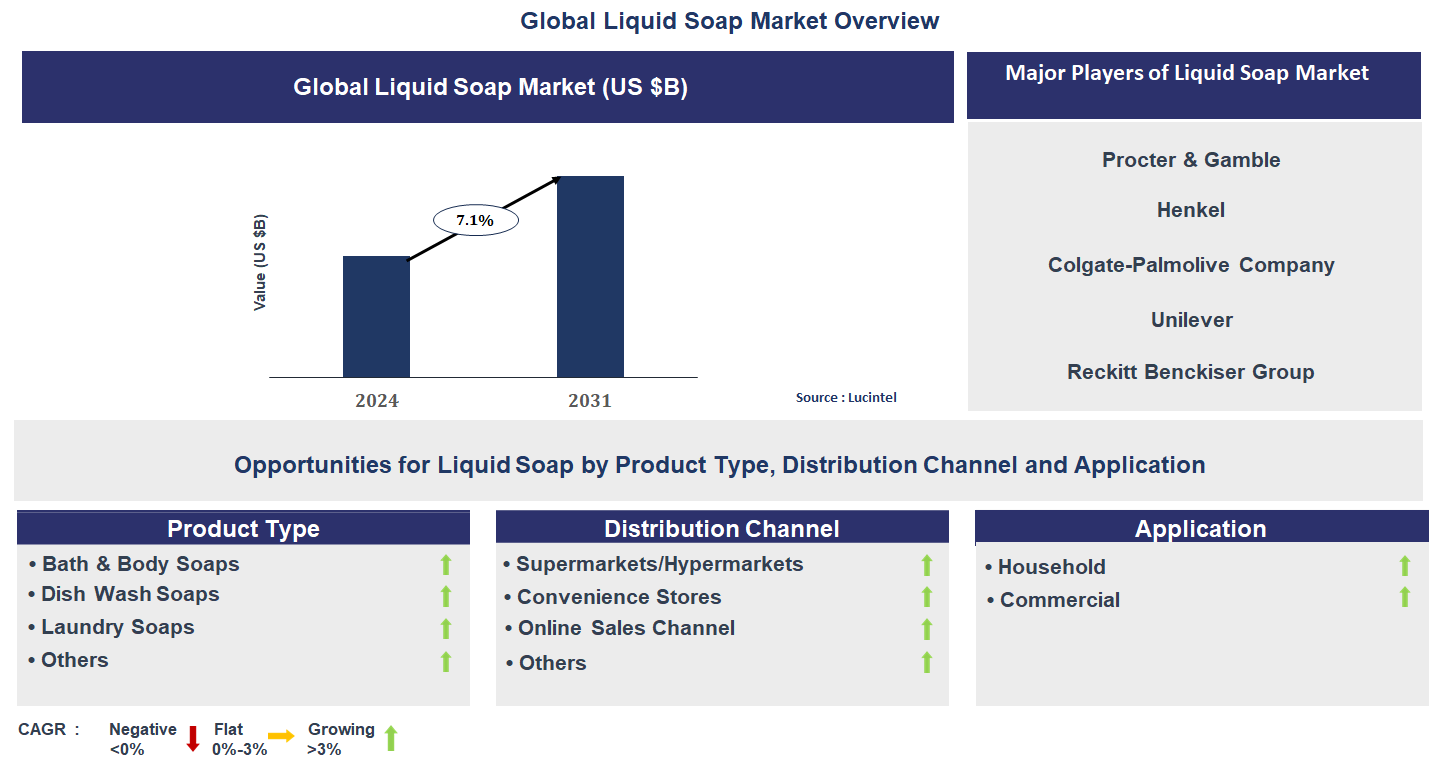
The future of the global liquid soap market looks promising with opportunities in the household and commercial markets. The global liquid soap market is expected to grow with a CAGR of 7.1% from 2025 to 2031. The major drivers for this market are the increasing awareness of personal hygiene, the rising preference for liquid-based products, and the growing shift towards convenient packaging.• Lucintel forecasts that, within the product type category, laundry soap is expected to witness the highest growth over the forecast period.
• Within the application category, household is expected to witness higher growth.
• In terms of region, APAC is expected to witness the highest growth over the forecast period. Gain valuable insights for your business decisions with our comprehensive 150+ page report. Sample figures with some insights are shown below.
Emerging Trends in the Liquid Soap Market
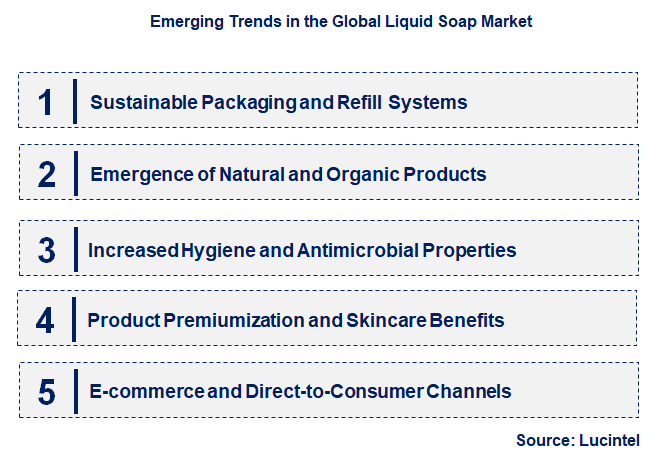
The liquid soap market is not static but rather dynamic, influenced by a combination of changing consumer trends and sustainability imperatives. The market is transitioning away from pure cleansing, as companies innovate to provide greater hygiene, eco-friendliness, and luxury user experience. These new trends not only affect packaging and product formulation but are also redefining the entire value chain, from ingredient sourcing through to promotion.• Sustainable Packaging and Refill Systems: This trend directly addresses increasing environmental pressure around plastic waste. Brands are moving away from single-use plastic bottles towards greener alternatives. This involves presenting liquid soap in large, bulk refill pouches, which consumers can utilize to refill their permanent, reusable dispensers. Dispensers made of hard, recyclable materials such as glass or aluminum are also being offered by many companies. This development is welcomed by the environmentally aware consumer, lessens the carbon footprint of a brand, and creates a good brand image.
• Emergence of Natural and Organic Products: Consumers are also more closely examining ingredient lists and opting for products that contain no rough chemicals such as sulfates, parabens, and artificial fragrances. This has actually boosted the market for natural, plant-based, and organic liquid soaps by great heights. Brands are promoting such "clean" formulas prominently in their advertising, sometimes with language such as "plant-powered" or "dermatologically tested." This trend is growing the market by reaching a new set of health-focused consumers.
• Increased Hygiene and Antimicrobial Properties: The worldwide pandemic rapidly advanced the demand for products with increased germ-killing properties. Although this was a reaction to a temporary health crisis, the trend has become a standard aspect of the market. Customers today want their liquid soap not just to clean but also to confer a high degree of protection against viruses and bacteria. Brands are reacting by introducing products with antimicrobial ingredients and are actively communicating their effectiveness in health-oriented marketing campaigns.
• Product Premiumization and Skincare Benefits: Liquid soap is shifting up the value chain. Brands are positioning their products as luxuries by adding ingredients that deliver skincare benefits on top of simple cleansing. They are adding moisturizing ingredients such as shea butter, essential oils, and vitamins to keep skin from drying out with repeated washing. Consumers are driving this trend, which is willing to pay extra for a product that delivers a spa experience and adds to the overall health of skin.
• E-commerce and Direct-to-Consumer Channels: Online shopping has had a significant influence on the liquid soap market. E-commerce is offering consumers a hassle-free option to buy bulk refills and specialty items that might not be offered in local shops. Direct-to-consumer (D2C) brands are also increasing their presence, as they can establish a closer connection with customers and provide customized products and subscription services. This is redefining marketing and distribution patterns to make it simpler for emerging brands to penetrate the market. These new trends are all coming together to redefine the liquid soap market, moving it from a commodity status to a more complex and value-oriented category. Emphasis on sustainability, naturalness, and added functionality is opening up new avenues for innovation and brand differentiation. The market is segmenting, with products meeting distinct needs and values of consumers ranging from hygiene to environmentalism and luxury.
Recent Development in the Liquid Soap Market
The liquid soap market has been undergoing a phase of intense innovation and transformation lately, fueled by changing patterns of consumption and a fresh emphasis on cleanliness. Recent trends are affecting everything from product composition and packaging to the way brands communicate with their customers. These developments are not merely incremental enhancements but are about fundamentally reframing the product to address the expectations of contemporary consumers for health, sustainability, and convenience.• Rollout of Bulk and Refill Initiatives: One major development is the mass rollout of bulk and refill programs. Promoted by consumers need for greener alternatives, leading brands now supply their products in big, cost-effective pouches or concentrated measures that can be used to refill current dispensers. This minimizes plastic waste and decreases the products carbon footprint. This trend also affects retail, as some outlets have fitted "refill stations" to cater to customers.
• Emphasis on "Free From" and Natural Ingredients: There has been an increasing trend towards "clean" products. Manufacturers are actively reformulating their brands to be paraben-, phthalate-, sulfate-, and other synthetic chemical-free. Instead, they are adopting naturally sourced ingredients and essential oils. This move is a direct response to consumers desire to avoid the long-term health impact of some chemicals. The natural liquid soap market is increasing as a consequence.
• Foaming and Automatic Dispenser Development: The customer experience is now becoming a major differentiator. The creation of foaming liquid soaps and touchless automatic dispensers has been a huge market influencer. Foaming soaps produce a rich lather using less product, hence are more cost-efficient. Automatic dispensers provide a more hygienic, touch-free soap-dispensing method, which has emerged as a big selling point in both home and commercial applications.
• Addition of Skincare and Therapeutic Properties: Liquid soap no longer serves only for cleansing. The latest trends indicate brands incorporating skincare benefits into products. Ingredients such as hyaluronic acid for moisturizing, vitamin E for antioxidant properties, and calming extracts like aloe vera are added. Such products are positioned as "hand care" rather than "hand wash," obscuring the distinction between personal cleanliness and skincare and establishing a premium category.
• Strategic Partnerships and Brand Collaborations: Brands are now increasingly making strategic partnerships to increase their market outreach. This also involves partnership with hotels, hospitals, and restaurants for supplying their products to be used commercially. These associations not only generate a constant revenue stream but also act as an effective marketing tool. Exposure to a brand in a public place creates consumer awareness and trust, which very frequently results in more purchases from the household. These trends together are collectively influencing the liquid soap industry by making it a more evolved and consumer-driven business. The emphasis on user experience and sustainability is promoting innovation in product design and packaging, while the trend for natural ingredients and higher functionality is upgrading the product from a general commodity to a special personal care product.
Strategic Growth Opportunities in the Liquid Soap Market
The market for liquid soap presents a variety of strategic growth opportunities by building on its core product to reach new applications and consumer bases. With hygiene consciousness still strong, brands can shift their attention beyond the classic hand wash application to cater to other personal and home care areas. These opportunities are fueled by consumer demand for convenience, specialization, and sustainability, offering a way for brands to innovate and differentiate themselves within a highly competitive market.• Commercial and Institutional Sector: The commercial and institutional sector, such as hospitals, hotels, schools, and offices, is a major growth area. These facilities need huge quantities of liquid soap and are today increasingly focusing on hygienic, touch-free dispensing systems. Brands can concentrate on creating specialized antibacterial and antimicrobial products designed specifically for these settings.
• Therapeutic Skincare and Specialty Soaps: A significant opportunity is formulating liquid soaps for particular skincare requirements. Examples are products for sensitive skin, acne, or moisturizing properties for dry skin. Brands may produce upscale lines featuring therapeutic ingredients such as tea tree oil, salicylic acid, or manuka honey. Marketing these products in a focused skincare regimen instead of as mere soap has the ability to attract a high-value consumer segment that is willing to pay for specialist remedies.
• Veterinary and Pet Grooming Applications: Humanization of pets is on the rise, with pet owners looking for quality, safe, and effective products for their pets. Liquid soap for pets, particularly for conditioners and shampoos, is a lucrative yet niche area for growth. Such products must be designed to be kind to animal skin and free from chemical irritants that might inflame. This usage presents a special opportunity for companies to diversify their product portfolio and go into a relatively uncompetitive market.
• Home Cleaning and Washing Dishes: The versatility and efficacy of liquid soap can be taken to home cleaning. The opportunity exists to create multi-purpose liquid soaps for both hand washing and light cleaning purposes such as washing dishes or surface cleaning. These liquids can be sold to consumers who like to have one natural product that serves several purposes, streamlining their home cleaning process and decreasing the amount of products they have to purchase.
• Travel and On-the-Go Formats: With resumed international travel, consumers increasingly look for travel-sized and portable personal hygiene products. Brands can create tiny leak-proof bottles or dissolve-in-soap sheets. This use appeals to the contemporary traveler for convenience and on-the-go hygiene. In-flight or hotel room amenity deals with airline and hotel chains can also be a sizeable growth opportunity, driving brand exposure and sales. These strategic growth possibilities are affecting the liquid soap industry by broadening its definition and function. By stepping beyond simple hand washing, brands are able to capture new consumer segments, become more relevant to a larger number of consumers, and create a more durable business model. The industrys future will be determined by how well it is able to innovate and respond to these new application-based needs.
Liquid Soap Market Driver and Challenges
The liquid soap market is being led by a strong set of drivers, such as global wellness trends and customer preferences for convenience and green offerings. These drivers are driving the market and pushing innovation. The market also has great challenges, such as intense competition, volatile raw materials prices, and product differentiation in a fragmented space. Achieving success in this landscape needs a strategic response that confronts both the opportunities presented by market drivers and the obstacles created by challenges. The factors responsible for driving the liquid soap market include: 1. Growing Global Hygiene Consciousness: The biggest influencer of the liquid soap market is growing global consciousness about personal hygiene, fueled by health emergencies such as the COVID-19 pandemic. Public campaigns, governments, and health agencies have propagated extensive handwashing, leading to a paradigm shift in behavior among consumers. Liquid soap has become a necessity product in homes, business houses, and public places, establishing a long-term demand. 2. Preference for Convenience and Hygiene of Consumers: Liquid soap is commonly thought to be more hygienic and convenient than bar soap. As opposed to bar soap, a liquid soap dispenser is not touched by various people, which reduces the germ spread. The pump dispenser easy to use and no-mess application also resonate well with contemporary, hectic lifestyles. This aspect of convenience is one primary cause of the transition from solid to liquid soap, particularly in urban settings. 3. Product Innovation and Diversification: The market is fueled by ongoing innovation in product formulation and functionality. Companies are launching fresh liquid soaps with moisturizing, antibacterial, and therapeutic ingredients. The creation of various scents, hues, and textures also responds to various consumer tastes. This ongoing product diversification makes the market dynamic and offers consumers numerous alternatives in the form of affordable to high-end and specialty products. 4. Expansion of E-commerce and Contemporary Retail: The spread of online e-commerce platforms has brought liquid soap within easy reach of consumers, especially in emerging markets. On-line retail gives exposure to a greater range of brands and products at competitive prices. Expansion of modern retailing channels such as supermarkets and hypermarkets also gives the ease of purchase and enables brands to display a wider range of products, promoting impulse buying. 5. Emphasis on Sustainable and Green Products: More and more consumers are deciding what to buy based on a companys green credentials. Demand for liquid soaps with biodegradable ingredients and environmentally friendly packaging, like refill pouches and reusable dispensers, is a key driver. This is compelling brands to use more sustainable methods and open communication regarding their environmental practices. Challenges in the liquid soap market are: 1. High Competition and Price Sensitivity: The market is very competitive with various local and global brands, making it highly competitive. Though there is a premium segment, there are price-sensitive consumers who will switch to cheaper alternatives. This makes it difficult for brands to reconcile product quality and innovation with being competitively priced. The pressure to innovate continuously in order to command a premium price is an ongoing challenge. 2. Raw Material Cost Volatility: Liquid soap manufacturing is dependent on an assortment of raw materials such as oils, fragrances, and chemicals. Prices for these raw materials can change as a result of international economic climate, supply chain constraints, and geopolitical tensions. Fluctuations can affect production expenses and profit margins, with manufacturers facing challenges in keeping stable prices and profitability. 3. Green Issues with Plastic Packaging: Even with the shift towards refill systems, most liquid soap remains sold in single-use plastic bottles. The environmental footprint of such packaging is a major challenge facing the industry. Brands are under pressure from consumers and government agencies to minimize their use of plastic. The challenge is discovering affordable and scalable plastic-free packaging alternatives that do not compromise product quality or convenience for consumers. The key drivers are building a robust foundation for the liquid soap market, and demand is being supported by health consciousness and a change in consumer behavior. The convenience and hygiene advantages of liquid soap have made it a leading product in the personal care sector. Nevertheless, the realities of stiff competition, volatile costs, and environmental issues are compelling brands to be more innovative and strategic. The market of the future will be shaped by how well brands can not only satisfy consumer needs for efficient and easy-to-use products but also solve the urgent challenges of sustainability and affordability in a competitive market.List of Liquid Soap Companies
Companies in the market compete on the basis of product quality offered. Major players in this market focus on expanding their manufacturing facilities, R&D investments, infrastructural development, and leverage integration opportunities across the value chain. With these strategies liquid soap companies cater increasing demand, ensure competitive effectiveness, develop innovative products & technologies, reduce production costs, and expand their customer base. Some of the liquid soap companies profiled in this report include-• Procter & Gamble
• Henkel
• Colgate-Palmolive Company
• Unilever
• Reckitt Benckiser Group
• Kimberly-Clark Worldwide
• The 3M Company
• Lion Corporation
• Kao Corporation
• Johnson & Johnson Service
Liquid Soap Market by Segment
The study includes a forecast for the global liquid soap market by product type, distribution channel, application, and region.Liquid Soap Market by Product Type [Value from 2019 to 2031]:
• Bath & Body Soaps
• Dish Wash Soaps
• Laundry Soaps
• Others
Liquid Soap Market by Distribution Channel [Value from 2019 to 2031]:
• Supermarkets/Hypermarkets
• Convenience Stores
• Online Sales Channel
• Others
Liquid Soap Market by Application [Value from 2019 to 2031]:
• Household
• Commercial
Liquid Soap Market by Region [Value from 2019 to 2031]:
• North America
• Europe
• Asia Pacific
• The Rest of the World
Country Wise Outlook for the Liquid Soap Market
The market for liquid soap has experienced a boom in growth and evolution, predominantly driven by increased world consciousness about health and sanitation, especially following the COVID-19 pandemic. Liquid soap is increasingly being preferred over the conventional bar soap due to its perceived hygienic advantage and ease of use. The result is an active market in which companies are competing on multiple fronts in terms of product content, eco-friendly packaging, and distribution.• United States: The US market for liquid soap is dominated by a strong consumer emphasis on "natural" and "clean" ingredients. Recent trends include a large shift towards sustainably packaged products, with an increase in refill pouches and stylishly designed reusable dispensers. Brands are also coming up with innovative new formulations that are paraben- and sulfate-free and adding more essential oils and natural fragrances.
• China: Chinas liquid soap market is growing exponentially, led by the countrys urbanization and rising middle class with more disposable income. The latest trends are e-commerce and social media marketing led, as brands take advantage of platforms such as Douyin and WeChat to connect with consumers and deliver sales. Demand for antibacterial and medicated liquid soaps in the market is also high, mirroring a greater emphasis on hygiene. Local brands are innovating in products that suit local consumer tastes, including those with native herbal ingredients, and battling aggressively with global players.
• Germany: Germanys market for liquid soap is mature and well-focused on product purity and ecological standards. The most notable development is the markets high demand for certified organic and environmentally friendly liquid soaps, with consumers most keen on products gentle on skin and the environment. Current trends demonstrate a desire for fragrance-free and allergen-friendly products, particularly in those being used in public and healthcare environments.
• India: Indias market for liquid soap is in a stage of high growth, driven by increasing hygiene consciousness and the transition from bar soap to liquid soap. One of the most significant developments is the rising penetration of liquid soap in rural and semi-urban areas due to the availability of low-cost products and single-use sachets. The market is also witnessing a huge demand for antimicrobial and medicated liquid soaps, especially in the post-pandemic period.
• Japan: Japans liquid soap industry is advanced and rooted in a long-standing cultural focus on cleanliness and aesthetic simplicity. Trends include a preoccupation with high-quality foams and a pleasant, sensory user experience. Japanese consumers prize products that are functional and beautiful, and as a result have seen a spate of liquid soaps with beautiful packaging and distinct, understated fragrances.

Features of the Global Liquid Soap Market
Market Size Estimates: Liquid soap market size estimation in terms of value ($B). Trend and Forecast Analysis: Market trends (2019 to 2024) and forecast (2025 to 2031) by various segments and regions. Segmentation Analysis: Liquid soap market size by product type, distribution channel, application, and region in terms of value ($B). Regional Analysis: Liquid soap market breakdown by North America, Europe, Asia Pacific, and Rest of the World. Growth Opportunities: Analysis of growth opportunities in different product type, distribution channel, application, and regions for the liquid soap market. Strategic Analysis: This includes M&A, new product development, and competitive landscape of the liquid soap market. Analysis of competitive intensity of the industry based on Porter’s Five Forces model.
FAQ
Q1. What is the growth forecast for liquid soap market? Answer: The global liquid soap market is expected to grow with a CAGR of 7.1% from 2025 to 2031. Q2. What are the major drivers influencing the growth of the liquid soap market? Answer: The major drivers for this market are the increasing awareness of personal hygiene, the rising preference for liquid-based products, and the growing shift towards convenient packaging. Q3. What are the major segments for liquid soap market? Answer: The future of the liquid soap market looks promising with opportunities in the household and commercial markets. Q4. Who are the key liquid soap market companies? Answer: Some of the key liquid soap companies are as follows:• Procter & Gamble
• Henkel
• Colgate-Palmolive Company
• Unilever
• Reckitt Benckiser Group
• Kimberly-Clark Worldwide
• The 3M Company
• Lion Corporation
• Kao Corporation
• Johnson & Johnson Service Q5. Which liquid soap market segment will be the largest in future? Answer: Lucintel forecasts that, within the product type category, laundry soap is expected to witness the highest growth over the forecast period. Q6. In liquid soap market, which region is expected to be the largest in next 5 years? Answer: In terms of region, APAC is expected to witness the highest growth over the forecast period. Q7. Do we receive customization in this report? Answer: Yes, Lucintel provides 10% customization without any additional cost.
Table of Contents
List of Figures
List of Tables
Methodology
- In-depth interviews of the major players in this market
- Detailed secondary research from competitors’ financial statements and published data
- Extensive searches of published works, market, and database information pertaining to industry news, company press releases, and customer intentions
- A compilation of the experiences, judgments, and insights of Lucintel’s professionals, who have analyzed and tracked this market over the years.


Buy Now
Choose a license that fits your team. Instant PDF delivery.
Prices exclude taxes. Instant delivery. Custom licensing available on request.
Key Questions
- • What are some of the most promising, high-growth opportunities for the liquid soap market by product type (bath & body soaps, dish wash soaps, laundry soaps, and others), distribution channel (supermarkets/hypermarkets, convenience stores, online sales channel, and others), application (household and commercial), and region (North America, Europe, Asia Pacific, and the Rest of the World)?
- • Which segments will grow at a faster pace and why?
- • Which region will grow at a faster pace and why?
- • What are the key factors affecting market dynamics? What are the key challenges and business risks in this market?
- • What are the business risks and competitive threats in this market?
- • What are the emerging trends in this market and the reasons behind them?
- • What are some of the changing demands of customers in the market?
- • What are the new developments in the market? Which companies are leading these developments?
- • Who are the major players in this market? What strategic initiatives are key players pursuing for business growth?
- • What are some of the competing products in this market and how big of a threat do they pose for loss of market share by material or product substitution?
- • What M&A activity has occurred in the last 5 years and what has its impact been on the industry? For any questions related to Liquid Soap Market, Liquid Soap Market Size, Liquid Soap Market Growth, Liquid Soap Market Analysis, Liquid Soap Market Report, Liquid Soap Market Share, Liquid Soap Market Trends, Liquid Soap Market Forecast, Liquid Soap Companies, write Lucintel analyst at email: helpdesk@lucintel.com. We will be glad to get back to you soon.


