
Report Feature
Lipstick Market Trends and Forecast
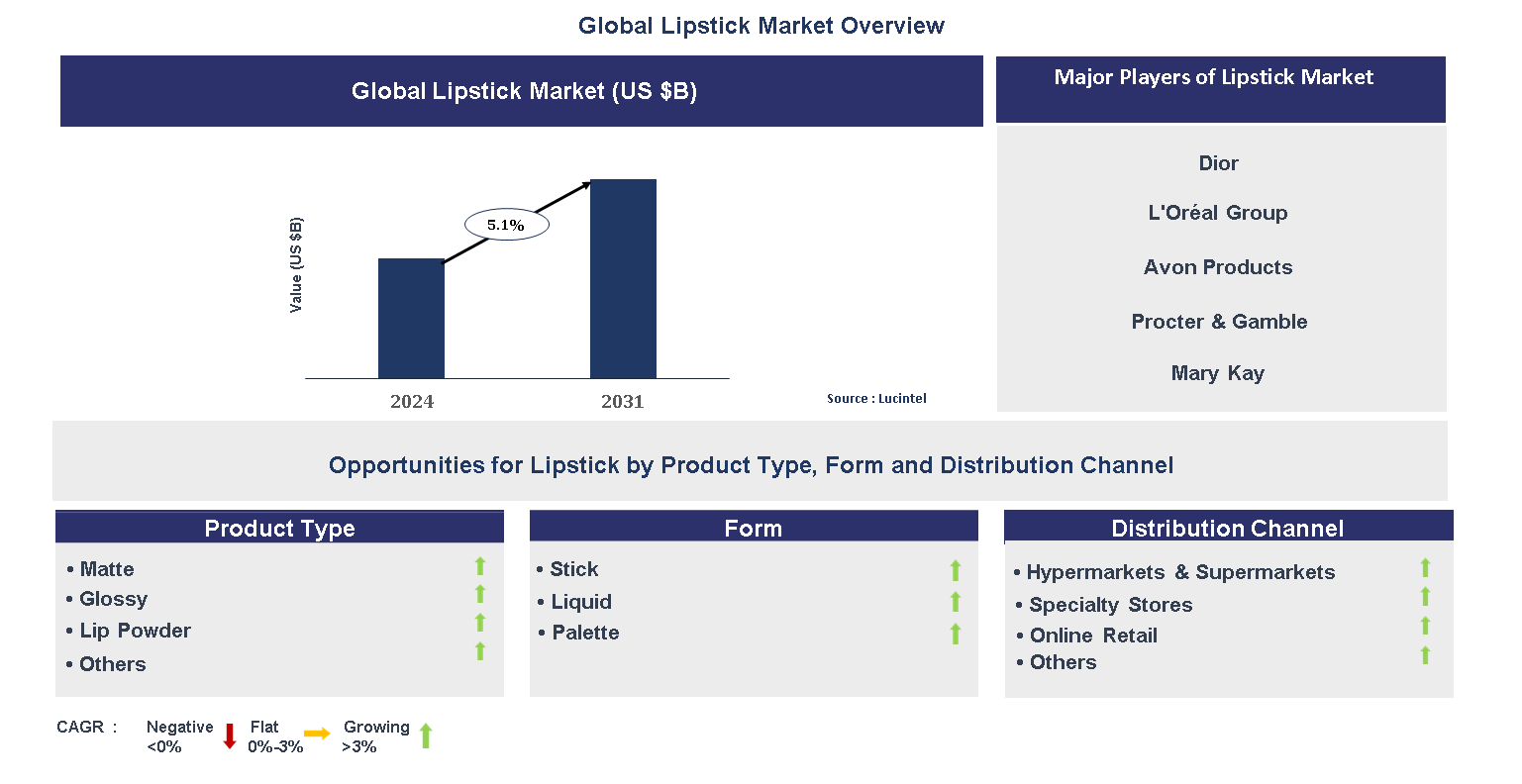
The future of the global lipstick market looks promising with opportunities in the hypermarket & supermarket, specialty store, and online retail markets. The global lipstick market is expected to grow with a CAGR of 5.1% from 2025 to 2031. The major drivers for this market are the increasing demand for long-lasting lipstick formulas, the rising popularity of clean beauty products, and the growing influence of beauty influencers on trends.• Lucintel forecasts that, within the product type category, matte is expected to witness the highest growth over the forecast period.
• Within the distribution channel category, online retail is expected to witness the highest growth.
• In terms of region, APAC is expected to witness the highest growth over the forecast period. Gain valuable insights for your business decisions with our comprehensive 150+ page report. Sample figures with some insights are shown below.
Emerging Trends in the Lipstick Market
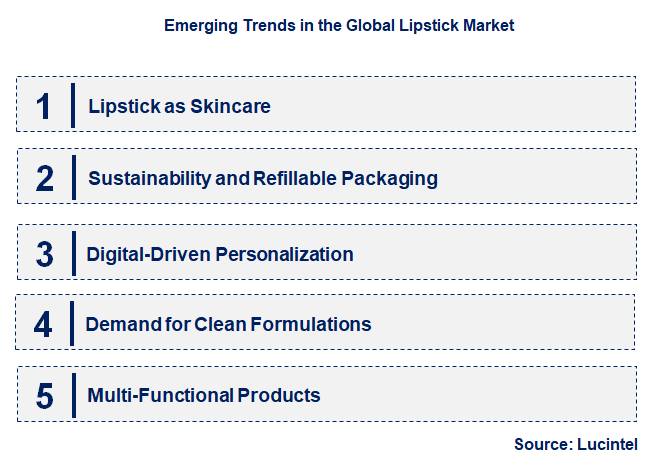
The lipstick market is being reshaped by a new wave of trends that reflect changing consumer priorities. These developments extend beyond simple color, encompassing a desire for health-conscious ingredients, sustainable production, and unique product experiences. Brands are adapting by integrating advanced technology, ethical practices, and personalized offerings to meet the demands of a modern, informed consumer.• Lipstick as Skincare: This trend involves infusing lipsticks with skincare ingredients like hyaluronic acid, peptides, and SPF. The goal is to provide a product that not only offers color but also hydrates, nourishes, and protects the lips. This appeals to health-conscious consumers and blurs the lines between makeup and skincare, offering added value and convenience in a single product.
• Sustainability and Refillable Packaging: A major emerging trend is the move towards sustainable packaging, including refillable cases and materials that are recyclable or biodegradable. This is driven by heightened consumer awareness of environmental issues. Brands are responding by creating eco-friendly product lines and marketing their commitment to reducing plastic waste, influencing purchasing decisions and fostering brand loyalty.
• Digital-Driven Personalization: The use of technology like AI and augmented reality (AR) allows consumers to virtually try on lip shades and receive personalized recommendations. This trend is a game-changer for online retail, as it helps consumers find the perfect shade without needing a physical store. It enhances the shopping experience, builds customer confidence, and drives e-commerce growth.
• Demand for Clean Formulations: Consumers are increasingly seeking lipsticks free from harmful chemicals like parabens, sulfates, and lead. This "clean beauty" trend is powered by a desire for ingredient transparency and safety. Brands are reformulating their products to meet these standards, with a growing market for vegan and cruelty-free options that cater to ethical consumer values.
• Multi-Functional Products: There is a growing demand for lipsticks that serve multiple purposes, such as lip-and-cheek tints or products that can be used as blush and eyeshadow. This trend caters to the minimalist beauty movement and consumers who desire efficiency and versatility. These products offer convenience and help reduce clutter, aligning with a more streamlined and practical approach to makeup. These trends are fundamentally reshaping the lipstick market by pushing brands to innovate beyond traditional product development. They highlight a shift towards a more holistic consumer experience that values health, sustainability, and personalization. The rise of digital tools and multi-functional products is making the market more dynamic and consumer-centric, while the clean beauty movement is setting new standards for ethical and safe formulations.
Recent Development in the Lipstick Market
The lipstick market is undergoing significant transformation, marked by key developments that reflect shifts in consumer behavior and industry innovation. These changes are reshaping the product landscape, marketing strategies, and consumer interaction with brands. From new product formats to the influence of digital platforms, the market is becoming more dynamic, personalized, and responsive to modern demands.• Rise of Liquid Lipsticks and Lip Stains: Liquid lipsticks and lip stains have surged in popularity, offering long-lasting, transfer-proof, and highly pigmented finishes. Their extended wear time and variety of finishes cater to the modern consumers busy lifestyle and desire for durability. This development has expanded the market beyond traditional bullet lipsticks, introducing new textures and application methods to a broader audience.
• Integration of Skincare Ingredients: A major development is the fusion of lipstick and skincare. Brands are incorporating ingredients such as hyaluronic acid, collagen, and antioxidants into their formulas to provide moisturizing and anti-aging benefits. This innovation addresses a growing consumer demand for multi-functional products that not only provide color but also actively improve lip health, blurring the line between makeup and skincare.
• Influence of Social Media and Influencers: Social media platforms like TikTok and Instagram have become powerful drivers of lipstick trends and product discovery. Viral challenges and influencer endorsements can launch a product to widespread popularity overnight. This development has forced brands to adopt agile marketing strategies, creating a highly competitive and trend-driven environment that favors quick-to-market innovation.
• Focus on Customization and Personalization: Brands are offering customizable lipstick services where consumers can choose their desired shade, finish, and even packaging. This personalization trend empowers consumers to create a product that is uniquely theirs. It enhances brand loyalty and provides a more engaging and memorable shopping experience, moving away from a one-size-fits-all model.
• Adoption of Virtual Try-On Technology: The use of augmented reality (AR) technology for virtual try-ons is a significant development, especially for online retailers. This feature allows consumers to test different lipstick shades on their own photos, reducing the uncertainty of online purchases. It boosts consumer confidence and is a crucial tool for brands looking to expand their e-commerce presence. These recent developments are profoundly impacting the lipstick market by making it more interactive, personalized, and efficient. The shift toward liquid formats and multi-functional products reflects a desire for convenience and performance. Simultaneously, the strategic use of social media and virtual technology is transforming how brands connect with consumers, making the purchasing process more engaging and tailored to individual needs.
Strategic Growth Opportunities in the Lipstick Market
The lipstick market offers several strategic growth opportunities by targeting specific applications and consumer segments. These opportunities are driven by evolving beauty standards, a desire for specialized products, and a focus on both aesthetic and functional benefits. Brands can capitalize on these trends to differentiate themselves and capture new market share.• Targeting Professional Makeup Artists: There is a significant opportunity in developing high-performance lipsticks tailored for professional use, such as long-wearing, smudge-proof formulas with an extensive range of shades. By creating a professional line, brands can gain credibility and establish themselves as industry leaders. This application focuses on durability and a wide color spectrum, appealing to the needs of makeup artists and film industries.
• Everyday and Natural-Look Products: The "no-makeup makeup" and minimalist beauty trends present an opportunity for lip products designed for daily wear. This includes tinted lip balms, lip oils, and sheer lipsticks that provide a subtle pop of color and hydration. This application targets consumers who prefer a fresh, effortless look, making lip products a part of their daily routine rather than just for special occasions.
• Special Occasion and Bridal Applications: The market for special occasion lipsticks is a lucrative segment, focusing on products with exceptional longevity and a flawless finish for events like weddings. This includes transfer-proof and highly pigmented formulas. By creating dedicated bridal and event collections, brands can tap into a high-demand market that prioritizes durability and a perfect aesthetic for significant life events.
• Mens Grooming and Unisex Products: A growing opportunity lies in developing lip products for the mens grooming market. This includes clear or subtly tinted lip balms that provide moisture and a natural finish. Creating unisex or gender-neutral product lines addresses a broader, more inclusive consumer base. This application meets the demand for self-care and grooming products that are not limited by traditional gender norms.
• Skincare-Integrated Lip Products: There is a strategic opportunity to develop lipsticks and lip products that are primarily focused on lip health. This includes products with SPF, anti-aging ingredients, or intensive moisturizing benefits. By positioning lip products as part of a skincare routine, brands can appeal to a health-conscious audience. This application highlights the functional benefits of the product beyond just color. These strategic growth opportunities are reshaping the lipstick market by pushing for greater specialization and inclusivity. By focusing on specific applications, brands can create a more targeted product portfolio that addresses the diverse and evolving needs of consumers. This shift from a generalized approach to a more segmented one will drive innovation and foster deeper connections with key consumer groups.
Lipstick Market Driver and Challenges
The lipstick market is influenced by a dynamic combination of drivers and challenges, including technological, economic, and regulatory factors. The market’s growth is propelled by consumer trends and a booming digital landscape, while it faces hurdles from intense competition and a complex regulatory environment. Navigating these forces is essential for brands to maintain and expand their presence. The factors responsible for driving the lipstick market include: 1. Growing Influence of Social Media: Social media platforms are a primary driver, with beauty influencers and content creators dictating trends and product demand. Viral makeup looks and product reviews create a powerful marketing channel for brands. This influence accelerates the product lifecycle and allows for rapid brand growth and consumer engagement, making digital marketing a top priority. 2. Rising Disposable Income in Emerging Economies: The increasing purchasing power of consumers in countries like India and China is a significant driver. As more people enter the middle class, they are willing to spend on discretionary items like cosmetics. This economic trend opens up vast new markets for both international and local brands, fueling market expansion and product diversity. 3. Demand for Multi-Functional Products: Consumers are increasingly seeking products that offer more than one benefit, such as lipstick that also acts as a balm or has skincare properties. This trend towards efficiency and value drives innovation. It encourages brands to develop hybrid products that appeal to a consumer base that values convenience, minimalism, and a streamlined beauty routine. 4. Shift to Clean and Sustainable Beauty: The growing consumer awareness of health and environmental issues is driving demand for lipsticks with clean, natural, and non-toxic ingredients. Brands are also under pressure to adopt sustainable packaging and ethical sourcing practices. This driver is pushing the industry toward greater transparency and a commitment to corporate social responsibility. 5. Product Innovation and Variety: Continuous innovation in lipstick formulas, textures (e.g., matte, satin, glossy), and shades is a key market driver. Brands are constantly launching new products to appeal to diverse consumer preferences. This wide variety encourages experimentation and frequent purchases, keeping the market competitive and dynamic. Challenges in the lipstick market are: 1. Intense Competition and Market Saturation: The lipstick market is highly saturated with countless brands, from global corporations to independent indie labels. This intense competition makes it difficult for new entrants to gain market share and for existing brands to maintain a strong position. It necessitates constant innovation and significant investment in marketing to stand out. 2. Strict Regulatory Standards: The cosmetics industry is subject to stringent regulations regarding ingredient safety and labeling in different countries. Complying with diverse and evolving regulations, particularly in international markets, can be a major challenge for brands. Non-compliance can lead to product recalls, legal issues, and severe damage to brand reputation. 3. Counterfeit Products and Brand Dilution: The proliferation of counterfeit lipsticks, particularly on e-commerce platforms, poses a significant threat to brand integrity and consumer safety. Counterfeits can dilute a brand’s value, erode consumer trust, and lead to health risks for users. This challenge requires brands to invest in intellectual property protection and consumer education. The lipstick market is at a crossroads, with powerful drivers like social media influence and rising incomes creating opportunities for growth. However, it is also facing major challenges from fierce competition, a complex regulatory environment, and the threat of counterfeit products. The interplay of these forces is compelling brands to be more innovative, transparent, and consumer-centric to thrive in a highly competitive global market.List of Lipstick Companies
Companies in the market compete on the basis of product quality offered. Major players in this market focus on expanding their manufacturing facilities, R&D investments, infrastructural development, and leverage integration opportunities across the value chain. With these strategies lipstick companies cater increasing demand, ensure competitive effectiveness, develop innovative products & technologies, reduce production costs, and expand their customer base. Some of the lipstick companies profiled in this report include-• Dior
• LOréal Group
• Avon Products
• Procter & Gamble
• Mary Kay
• Kakao Corporation
• Shiseido Company
• Revlon
• Coty
• Estée Lauder Companies
Lipstick Market by Segment
The study includes a forecast for the global lipstick market by product type, form, distribution channel, and region.Lipstick Market by Product Type [Value from 2019 to 2031]:
• Matte
• Glossy
• Lip Powder
• Others
Lipstick Market by Form [Value from 2019 to 2031]:
• Stick
• Liquid
• Palette
Lipstick Market by Distribution Channel [Value from 2019 to 2031]:
• Hypermarkets & Supermarkets
• Specialty Stores
• Online Retail
• Others
Lipstick Market by Region [Value from 2019 to 2031]:
• North America
• Europe
• Asia Pacific
• The Rest of the World
Country Wise Outlook for the Lipstick Market
Recent developments in the lipstick market are driven by a fusion of technological innovation, changing consumer preferences, and a strong focus on ethical and sustainable practices. The market is evolving from a single-use product to a versatile tool that combines color, skincare, and personal expression. This transformation is compelling brands to innovate across product formulations, packaging, and digital marketing strategies to stay relevant.• United States: The U.S. market is prioritizing clean beauty, with a significant rise in demand for vegan, cruelty-free, and non-toxic lipstick formulas. Brands are also leveraging technology, such as virtual try-on tools, to enhance the online shopping experience. This is driving a shift towards e-commerce and a more personalized consumer journey, catering to a diverse and ethically-conscious customer base.
• China: China’s lipstick market is heavily influenced by social commerce, with livestreaming and key opinion leaders (KOLs) playing a crucial role in sales. The market is seeing a surge in demand for bold, highly pigmented lipsticks and luxury products. Local brands are gaining traction by offering trendy, high-quality products at accessible price points, effectively competing with international giants.
• Germany: In Germany, consumer demand is centered on sustainability and quality. The market favors natural and organic ingredients, with a strong preference for products that are dermatologically tested and have minimal environmental impact. This has led to a proliferation of brands focusing on eco-friendly packaging and ingredient transparency, reflecting a deep-seated commitment to environmental consciousness.
• India: The Indian market is experiencing rapid growth, fueled by rising disposable incomes and urbanization. Consumers are increasingly experimenting with a variety of finishes, from matte to glossy, and are embracing a diverse range of colors. E-commerce platforms are playing a key role in expanding access to both domestic and international brands, catering to a dynamic and fashion-forward consumer base.
• Japan: Japans market is characterized by a demand for high-quality, long-lasting, and skincare-infused lipsticks. Consumers prefer subtle, natural-looking finishes and multi-functional products that provide hydration and sun protection. This trend reflects a cultural emphasis on minimalist beauty routines and high-end formulations that prioritize both aesthetics and lip health.

Features of the Global Lipstick Market
Market Size Estimates: Lipstick market size estimation in terms of value ($B). Trend and Forecast Analysis: Market trends (2019 to 2024) and forecast (2025 to 2031) by various segments and regions. Segmentation Analysis: Lipstick market size by product type, form, distribution channel, and region in terms of value ($B). Regional Analysis: Lipstick market breakdown by North America, Europe, Asia Pacific, and Rest of the World. Growth Opportunities: Analysis of growth opportunities in different product types, forms, distribution channels, and regions for the lipstick market. Strategic Analysis: This includes M&A, new product development, and competitive landscape of the lipstick market. Analysis of competitive intensity of the industry based on Porter’s Five Forces model.
FAQ
Q1. What is the growth forecast for lipstick market? Answer: The global lipstick market is expected to grow with a CAGR of 5.1% from 2025 to 2031. Q2. What are the major drivers influencing the growth of the lipstick market? Answer: The major drivers for this market are the increasing demand for long-lasting lipstick formulas, the rising popularity of clean beauty products, and the growing influence of beauty influencers on trends. Q3. What are the major segments for lipstick market? Answer: The future of the lipstick market looks promising with opportunities in the hypermarket & supermarket, specialty store, and online retail markets. Q4. Who are the key lipstick market companies? Answer: Some of the key lipstick companies are as follows:• Dior
• LOréal Group
• Avon Products
• Procter & Gamble
• Mary Kay
• Kakao Corporation
• Shiseido Company
• Revlon
• Coty
• Estée Lauder Companies Q5. Which lipstick market segment will be the largest in future? Answer: Lucintel forecasts that, within the product type category, matte is expected to witness the highest growth over the forecast period. Q6. In lipstick market, which region is expected to be the largest in next 5 years? Answer: In terms of region, APAC is expected to witness the highest growth over the forecast period. Q7. Do we receive customization in this report? Answer: Yes, Lucintel provides 10% customization without any additional cost.
Table of Contents
List of Figures
List of Tables
Methodology
- In-depth interviews of the major players in this market
- Detailed secondary research from competitors’ financial statements and published data
- Extensive searches of published works, market, and database information pertaining to industry news, company press releases, and customer intentions
- A compilation of the experiences, judgments, and insights of Lucintel’s professionals, who have analyzed and tracked this market over the years.


Buy Now
Choose a license that fits your team. Instant PDF delivery.
Prices exclude taxes. Instant delivery. Custom licensing available on request.
Key Questions
- • What are some of the most promising, high-growth opportunities for the lipstick market by product type (matte, glossy, lip powder, and others), form (stick, liquid, and palette), distribution channel (hypermarkets & supermarkets, specialty stores, online retail, and others), and region (North America, Europe, Asia Pacific, and the Rest of the World)?
- • Which segments will grow at a faster pace and why?
- • Which region will grow at a faster pace and why?
- • What are the key factors affecting market dynamics? What are the key challenges and business risks in this market?
- • What are the business risks and competitive threats in this market?
- • What are the emerging trends in this market and the reasons behind them?
- • What are some of the changing demands of customers in the market?
- • What are the new developments in the market? Which companies are leading these developments?
- • Who are the major players in this market? What strategic initiatives are key players pursuing for business growth?
- • What are some of the competing products in this market and how big of a threat do they pose for loss of market share by material or product substitution?
- • What M&A activity has occurred in the last 5 years and what has its impact been on the industry? For any questions related to Lipstick Market, Lipstick Market Size, Lipstick Market Growth, Lipstick Market Analysis, Lipstick Market Report, Lipstick Market Share, Lipstick Market Trends, Lipstick Market Forecast, Lipstick Companies, write Lucintel analyst at email: helpdesk@lucintel.com. We will be glad to get back to you soon.


