
Market Report · July 16, 2026

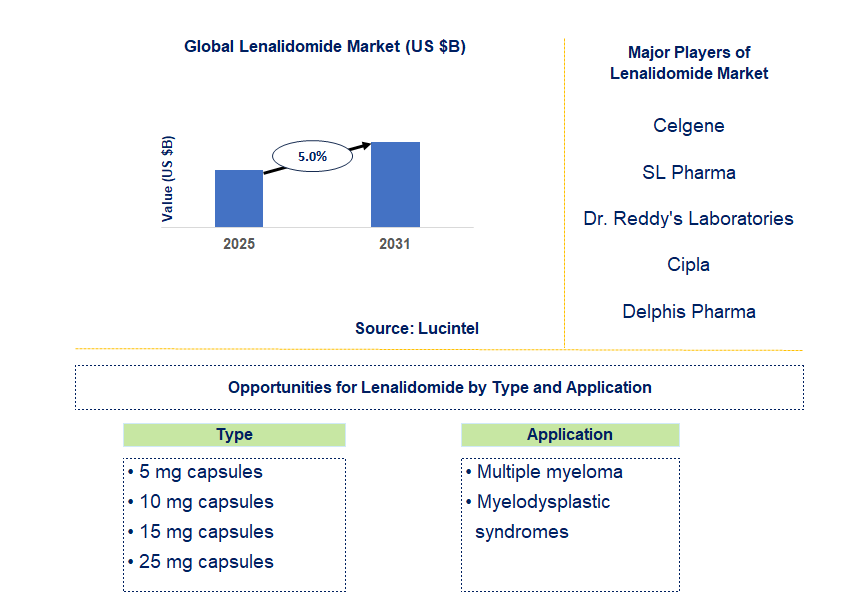
Key data points: The growth forecast = 5% annually for the next 7 years. Scroll below to get more insights. This market report covers Trends, opportunities and forecasts in lenalidomide market to 2031 by type (5 mg capsules, 10 mg capsules, 15 mg capsules, and 25 mg capsules), application (multiple myeloma and myelodysplastic syndromes), and region (North America, Europe, Asia Pacific, and the Rest of the World)
We'll send your sample report shortly.
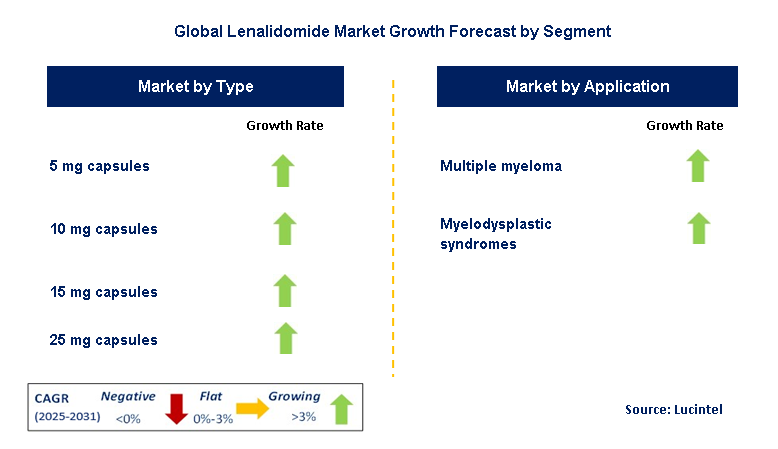
• Lucintel forecasts that, within the type category, 25 mg capsule is expected to witness the highest growth over the forecast period.
• Within the application category, multiple myeloma is expected to witness higher growth.
• In terms of region, North America is expected to witness the highest growth over the forecast period.
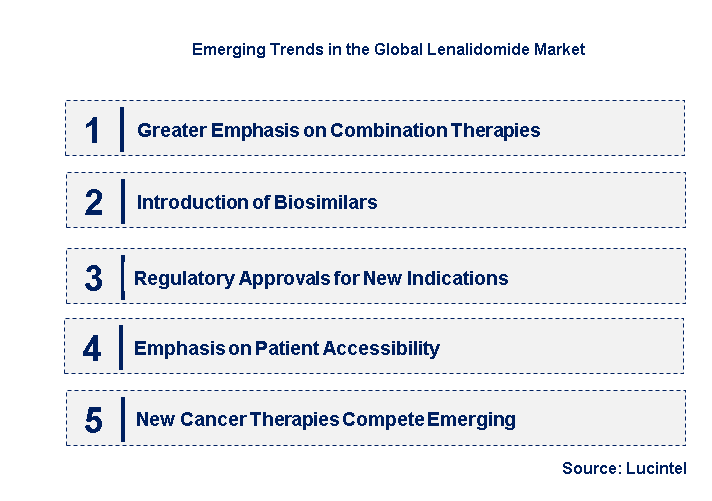
• Greater Emphasis on Combination Therapies: Combination therapies with lenalidomide and other cancer drugs are becoming increasingly popular in the market. Studies indicate that these combinations improve treatment outcomes, providing more targeted and effective treatments for patients. With increasing clinical evidence favoring combination treatments, the use of lenalidomide as part of these treatments is likely to increase, resulting in improved market growth.
• Introduction of Biosimilars: The emergence of biosimilars into the lenalidomide marketplace is proving to be a game changer. Biosimilars, which cost less than brand names, promise to reduce expenditures and open the marketplace to new consumers. Such is the pattern, especially being witnessed in parts of the world where healthcare demands are increasing, like China and India. Biosimilars may keep costs down but create competition for currently established brands too.
• Regulatory Approvals for New Indications: Regulatory agencies like the FDA, EMA, and NMPA are broadening lenalidomide's indications, especially for the treatment of hematologic malignancies. As more clinical trials prove its efficacy in other indications, lenalidomide is being approved for wider usage, opening up new market segments and increasing its uptake globally.
• Emphasis on Patient Accessibility: Patient access is taking center stage with drug affordability and healthcare coverage still issues in many countries. Firms are launching patient support programs and price negotiations with governments to enhance access. In emerging economies such as India and China, increasing distribution networks and decreasing costs through generics and biosimilars will be key to enhancing accessibility.
• New Cancer Therapies Compete Emerging: The lenalidomide market is increasingly threatened by newer cancer therapies, such as targeted therapies and immunotherapies. As the cancer treatment landscape continues to shift, lenalidomide could struggle to hold onto its market share. Pharmaceutical companies are looking to differentiate their products through enhanced formulations and clinical benefits to maintain competitive edge. These trends put the ever-evolving lenalidomide market in focus, where technological development, regulatory action, and changing consumer needs are redefining the landscape. The competition in the market is increasing due to the inclusion of biosimilars, whereas greater emphasis on combination therapies and patient access should encourage growth. New therapies and pricing issues are challenges that should be overcome in order to maintain this growth trend.
• FDA Approvals for Expanded Indications: The U.S. Food and Drug Administration (FDA) has broadened the indications for lenalidomide, specifically for blood cancers such as multiple myeloma. These approvals have opened the door to wider use in the treatment of blood cancers, and lenalidomide is now an essential part of cancer treatment regimens.
• Introduction of lenalidomide Biosimilars: Launching lenalidomide biosimilars has been a major event in the market, particularly in markets such as India and China. These cheaper alternatives are likely to lower the cost of treatment and enhance access to patients, hence growing the drug's market penetration.
• Global Market Expansion: Lenalidomide has witnessed high-speed market growth in emerging nations such as India and China. The availability of lenalidomide in these markets has created new markets, especially for the use of multiple myeloma. With the advancement of healthcare infrastructure, the accessibility of the drug is likely to increase substantially.
• lenalidomide Combination Therapies Research: Research on combining lenalidomide with other cancer treatments is on the horizon. Thus far, this combination has demonstrated potential for enhancing the potency of the treatments, especially in relapsed/refractory multiple myeloma. The success of such combinations in the clinic may further accelerate the use of lenalidomide in cancer treatment.
• Cost Pressure and Pricing Negotiations: Cost pressure remains a key challenge in the lenalidomide market, particularly from countries with a nationalized system of healthcare. Governments and insurances are making price negotiations with drug companies for the drug to be more cost-effective. It may result in the drug's availability at low prices, thus enhancing patient accessibility. These advancements are fueling the expansion of the lenalidomide market, particularly in developing countries and with the advent of more cost-effective substitutes such as biosimilars. As the medication is approved for additional indications and combination therapies, its distribution expands even further worldwide.
• Growth into New Geographies: Increasing the access of lenalidomide to growing economies like China and India offers great growth opportunities. With developing healthcare systems and an increase in the demand for oncology treatments, firms are able to access these markets for increased penetration. Adjusting pricing strategies to be affordable will be the fulcrum in these markets.
• Development of lenalidomide Biosimilars: With the introduction of lenalidomide biosimilars, drug manufacturers have a special chance to reach the increasing market for cost-effective cancer treatment. Biosimilars ensure quality care while offering an economic alternative, thus passing on the savings to patients. This presents a tremendous market expansion opportunity in price-sensitive markets.
• Investment in Clinical Trials for New Indications: Broader application of lenalidomide from its existing indications, including determining the potential use for other cancer treatment, holds enormous growth value. Clinical trials of its potential combination therapy uses also have potential for future market growth, situating lenalidomide as a convenient choice in cancer oncology treatment.
• Increased Patient Assistance Programs: Expanding and developing patient support programs, especially in the developing world, is a potential opportunity to maximize market access. This approach will make lenalidomide more accessible to underserved patient populations, which will increase both sales and patient satisfaction, as well as foster long-term growth in the market.
• Emphasis on Innovative Formulations: The drug manufacturers can research new forms of lenalidomide, like extended-release or combination drugs. The new forms can improve treatment outcomes and patient compliance, leading to increased market acceptance and positioning lenalidomide as a more inclusive treatment approach. These strategic growth areas point out main areas in which the lenalidomide market can grow, such as new markets in geography, biosimilars, clinical innovations, patient access programs, and improved formulations. Adopting these opportunities will be essential for ensuring long-term growth in the market.
• Celgene
• SL Pharma
• Dr. Reddy's Laboratories
• Cipla
• Delphis Pharma
• 5 mg capsules
• 10 mg capsules
• 15 mg capsules
• 25 mg capsules
• Multiple myeloma
• Myelodysplastic syndromes
• North America
• Europe
• Asia Pacific
• The Rest of the World
• received FDA approval for a variety of conditions, particularly multiple myeloma. Recent milestones involve the approval of new combination regimens, adding to the drug's use in combination with other drugs to maximize effectiveness. The U.S. market is also directed towards increasing access via healthcare reforms and insurance coverage. The growing incidence of multiple myeloma, along with the expanding number of clinical trials exploring lenalidomide's applications in other malignancies, continues to drive its market expansion. Even at exorbitant prices, lenalidomide's integration into treatment protocols guarantees its leading status in the American healthcare system.
• China: In China, lenalidomide is also gaining momentum, especially as the country's healthcare infrastructure continues to develop and hematological cancers gain more awareness. lenalidomide has been listed under the National Reimbursement Drug List (NRDL), giving patients cheaper access. Chinese government approval for new indications in lenalidomide, e.g., to treat myelodysplastic syndromes, has also increased usage. Though the cost of the drug continues to be an issue, attempts at regulation and price standardization by the Chinese government have opened up access to the general public. Market for lenalidomide in China is anticipated to expand with the growing demand for cancer therapy.
• Germany: Germany possesses a well-established health system, and lenalidomide is extensively used to treat multiple myeloma and other forms of cancer. The approval of the drug for additional indications has helped to grow the market in Germany. The German health system's focus on evidence-based treatment means that lenalidomide's very high effectiveness in the treatment of multiple myeloma and related disorders is well established. Pricing pressures and reimbursement continue to be problematic, though, as lenalidomide is a costly drug. Germany's policy towards health technology assessment and reimbursement policies significantly influences its market penetration.
• India: In India, the market for lenalidomide has been growing, particularly with its growing presence in the private healthcare sector. The use of lenalidomide in treating multiple myeloma and other cancers is gaining more traction, supported by enhanced access to healthcare and government programs. Yet, affordability continues to be an issue, and most patients opt for generic forms of the drug, which lowers the cost burden. Indian market is experiencing higher cancer treatment awareness, which results in higher demand for efficient treatments such as lenalidomide. Government initiatives to enhance cancer care are also making the drug more accessible.
• Japan: Japan has a matured healthcare market, and lenalidomide is well established in the treatment of multiple myeloma. The market for lenalidomide in Japan is expanding as additional clinical trials and wider indications, including for the treatment of mantle cell lymphoma, become approved. The healthcare system in the country is very efficient, and patients are covered with extensive insurance for their lenalidomide therapies. Moreover, Japan's aging population with a rising incidence of cancers such as multiple myeloma is a strong force behind market expansion. Usage of lenalidomide in Japan will likely rise as more people are diagnosed and treated for various hematologic malignancies.


• Celgene
• SL Pharma
• Dr. Reddy's Laboratories
• Cipla
• Delphis Pharma Q5. Which lenalidomide market segment will be the largest in future? Answer: Lucintel forecasts that, within the type category, 25 mg capsule is expected to witness the highest growth over the forecast period. Q6. In lenalidomide market, which region is expected to be the largest in next 5 years? Answer: In terms of region, North America is expected to witness the highest growth over the forecast period. Q7. Do we receive customization in this report? Answer: Yes, Lucintel provides 10% customization without any additional cost.


Choose a license that fits your team. Instant PDF delivery.
Prices exclude taxes. Instant delivery. Custom licensing available on request.
Market Report · July 16, 2026
Market Report · July 15, 2026
Market Report · July 15, 2026
Trusted partner for strategic intelligence and business growth


Receive a complimentary market analysis tailored to your industry. Our analysts will identify key growth opportunities and competitive dynamics specific to your business.

Market size, growth rate, and key trend analysis for your specific sector.

Top competitor positioning and market share analysis.

Strategic recommendations backed by data-driven insights.
Get curated market intelligence and competitive moves straight to your inbox.
By subscribing, you agree to receive our monthly insights. Unsubscribe anytime.
Receive a complimentary market analysis tailored to your industry. Our analysts will identify key growth opportunities and competitive dynamics specific to your business.
Market size, growth rate, and key trend analysis for your specific sector.
Top competitor positioning and market share analysis.
Strategic recommendations backed by data-driven insights.
Get curated market intelligence, emerging trends, and competitive moves straight to your inbox each month.
By subscribing, you agree to receive our monthly insights. Unsubscribe anytime.
We'll send your sample report shortly.