
Report Feature
Legging Market Trends and Forecast
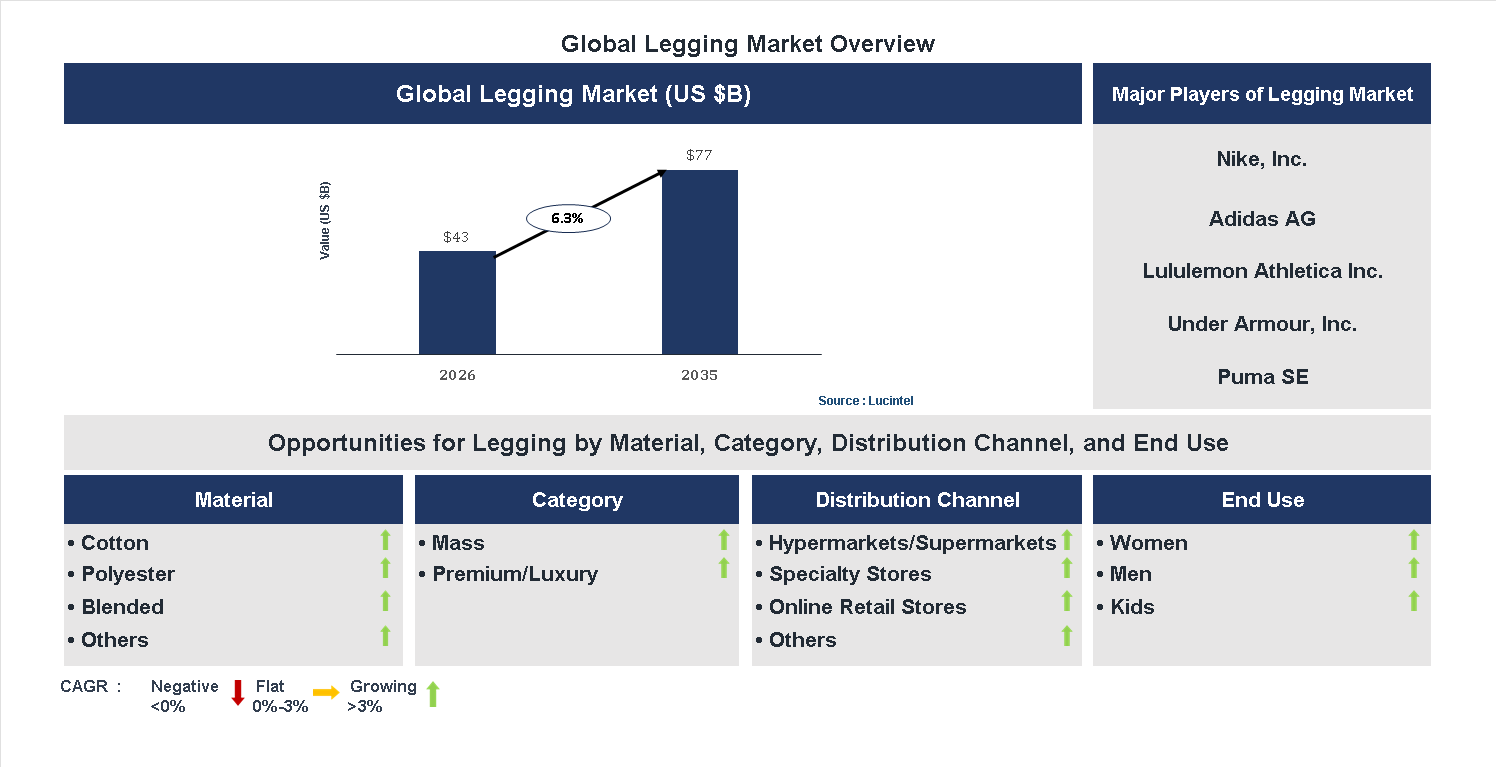
The future of the global legging market looks promising with opportunities in the women, men, and kid markets. The global legging market is expected to reach an estimated $77.0 billion by 2035 with a CAGR of 6.3% from 2026 to 2035. The major drivers for this market are the increasing preference for comfortable activewear, the rising demand for versatile fashion choices, and the growing trend of athleisure clothing.• Lucintel forecasts that, within the distribution channel category, specialty store is expected to witness the highest growth over the forecast period.
• Within the end use category, men is expected to witness the highest growth.
• In terms of region, North America is expected to witness the highest growth over the forecast period. Gain valuable insights for your business decisions with our comprehensive 150+ page report. Sample figures with some insights are shown below.
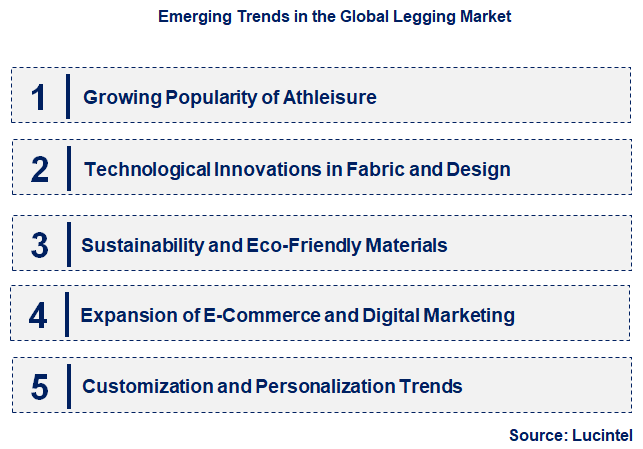
Emerging Trends in the Legging Market
The legging market is experiencing rapid growth driven by changing consumer preferences, technological advancements, and evolving fashion trends. As athleisure continues to blend comfort with style, brands are innovating to meet increasing demand across various demographics. The market is also influenced by sustainability initiatives, digital marketing strategies, and the rise of e-commerce platforms. These developments are transforming how consumers shop for and perceive leggings, making the market more dynamic and competitive. Understanding these key trends is essential for stakeholders aiming to capitalize on emerging opportunities and adapt to the shifting landscape of this versatile apparel segment.• Growing Popularity of Athleisure: The blending of athletic and casual wear has made leggings a staple in everyday fashion. Consumers seek versatile clothing that offers comfort and style, fueling demand beyond traditional workout settings. This trend has expanded the market to include a broader demographic, including working professionals and teenagers. Brands are designing leggings with fashionable elements, such as unique prints and high-end fabrics, to appeal to style-conscious consumers. The athleisure trend is expected to continue driving sales, encouraging innovation in fabric technology and design to meet evolving consumer needs.
• Technological Innovations in Fabric and Design: Advances in textile technology are enhancing the functionality and appeal of leggings. Features such as moisture-wicking, anti-odor, compression, and UV protection are becoming standard, offering added value to consumers. Additionally, seamless construction and eco-friendly materials are gaining popularity. These innovations improve comfort, durability, and sustainability, attracting a wider customer base. Brands investing in R&D are gaining competitive advantages by offering high-performance leggings suitable for various activities, from workouts to casual outings, thus expanding market reach and consumer loyalty.
• Sustainability and Eco-Friendly Materials: Increasing environmental awareness is prompting brands to adopt sustainable practices. The use of recycled fabrics, organic cotton, and biodegradable dyes is on the rise, aligning with consumer demand for eco-conscious products. Certifications and transparent supply chains are becoming important purchase criteria. This shift not only enhances brand reputation but also appeals to environmentally conscious consumers, especially Millennials and Gen Z. As sustainability becomes a key differentiator, companies investing in eco-friendly leggings are likely to see long-term growth and market differentiation.
• Expansion of E-Commerce and Digital Marketing: The rise of online shopping platforms has significantly impacted the leggings market. Consumers now prefer the convenience of purchasing from digital channels, which offer a wider selection and competitive pricing. Social media marketing, influencer collaborations, and targeted advertising are boosting brand visibility and engagement. Virtual try-on tools and augmented reality features are enhancing the online shopping experience. This digital shift enables brands to reach global markets efficiently, gather consumer data for personalized marketing, and respond swiftly to trends, thereby accelerating sales and market penetration.
• Customization and Personalization Trends: Consumers increasingly seek personalized products that reflect their individual style and preferences. Brands are offering customizable leggings with options for colors, patterns, and fit. This trend enhances customer engagement and loyalty by providing a unique shopping experience. Advanced manufacturing techniques, such as on-demand production, facilitate quick turnaround times for personalized orders. The demand for bespoke leggings is driven by a desire for self-expression and exclusivity, prompting brands to innovate in design and production processes. Personalization is thus becoming a key differentiator in a competitive market. In summary, these trends are reshaping the legging market by making products more functional, sustainable, accessible, and personalized. The integration of technology, eco-conscious practices, and digital marketing strategies is creating a more dynamic and consumer-centric industry. As these developments continue, the market is poised for sustained growth, driven by innovation and changing consumer lifestyles.
Recent Development in the Legging Market
The legging market has experienced significant growth driven by changing fashion trends, increased health consciousness, and the rise of athleisure wear. Consumers now prioritize comfort and versatility, leading to innovations in fabric technology and design. E-commerce platforms have expanded access to a wide range of products, fueling market expansion globally. Additionally, the influence of social media and celebrity endorsements continues to boost demand. These developments are shaping a dynamic landscape, offering new opportunities for brands and manufacturers to innovate and capture market share.• Growing Popularity of Athleisure: The blending of athletic and casual wear has made leggings a staple in everyday fashion, increasing demand across demographics. This trend encourages brands to develop stylish, functional leggings that cater to both fitness and leisure activities, expanding market reach. The versatility of athleisure has also led to higher sales volumes and brand loyalty, fostering sustained growth in the industry.
• Technological Fabric Innovations: Advances in fabric technology, such as moisture-wicking, anti-odor, and four-way stretch materials, have enhanced product performance and comfort. These innovations attract consumers seeking high-quality, durable leggings for various activities. Manufacturers investing in R&D are gaining competitive advantages by offering innovative products, which boosts sales and market differentiation, ultimately expanding the overall market size.
• E-commerce Expansion and Digital Marketing: The rise of online shopping platforms has made leggings more accessible to a global audience. Digital marketing strategies, including influencer collaborations and social media campaigns, have increased brand visibility and consumer engagement. This shift has reduced reliance on traditional retail channels, enabling brands to reach niche markets and increase sales, thereby accelerating market growth and diversification.
• Sustainability and Eco-friendly Materials: Consumers are increasingly demanding environmentally sustainable products, prompting brands to adopt eco-friendly fabrics like recycled polyester and organic cotton. This focus on sustainability appeals to eco-conscious buyers and enhances brand reputation. The adoption of green practices is also opening new market segments, encouraging innovation and investment in sustainable manufacturing, which positively impacts overall market development.
• Customization and Personalization Trends: The demand for personalized leggings, including custom prints, fits, and styles, is rising. Brands offering customization options attract consumers seeking unique products, fostering brand loyalty. This trend encourages manufacturers to adopt flexible production techniques, leading to increased innovation and market differentiation, which drives overall growth in the legging industry. These developments are transforming the legging market by enhancing product quality, expanding consumer reach, and promoting sustainability. The integration of technology, e-commerce, and customization is creating a more dynamic and competitive landscape. As consumer preferences shift towards comfort, style, and eco-consciousness, the market is poised for continued growth. These opportunities are enabling brands to innovate, diversify, and strengthen their market positions, ultimately driving the global legging industry forward.
Strategic Growth Opportunities in the Legging Market
The legging market is experiencing rapid growth driven by changing fashion trends, increasing health consciousness, and the rise of athleisure wear. Consumers seek versatile, comfortable, and stylish options suitable for various activities and settings. Innovations in fabric technology and sustainable materials further enhance market appeal. E-commerce expansion and global urbanization contribute to increased accessibility and demand. Companies focusing on product differentiation and strategic collaborations are poised to capitalize on emerging opportunities, ensuring sustained growth and market expansion in the coming years.• Growing Popularity of Athleisure Wear: The increasing adoption of athleisure as everyday fashion has significantly boosted legging sales. Consumers prioritize comfort without sacrificing style, leading to higher demand for versatile leggings suitable for workouts, casual outings, and even formal settings. This trend is driven by health consciousness, remote work culture, and social media influence, encouraging brands to innovate with trendy designs, functional fabrics, and inclusive sizing to capture a broader customer base.
• Expansion of E-commerce Channels: The rise of online shopping platforms has transformed how consumers access leggings. E-commerce offers convenience, a wider product range, and competitive pricing, attracting a diverse demographic. Digital marketing, influencer collaborations, and virtual try-on technologies enhance customer engagement and personalization. Brands investing in robust online presence and seamless logistics are better positioned to reach global markets, increase sales, and respond swiftly to changing consumer preferences.
• Technological Advancements in Fabric and Design: Innovations in fabric technology, such as moisture-wicking, anti-odor, and four-way stretch materials, improve comfort and performance. Additionally, seamless construction and eco-friendly fabrics appeal to environmentally conscious consumers. Design enhancements like high-waist styles, compression features, and aesthetic details cater to various needs, from athletic performance to everyday fashion, driving product differentiation and customer loyalty in a competitive market.
• Rising Demand in Emerging Markets: Rapid urbanization, increasing disposable incomes, and changing lifestyles in emerging economies present significant growth opportunities. Consumers in regions like Asia-Pacific, Latin America, and Africa are adopting Western fashion trends, including leggings. Local brands are expanding their presence, and international companies are entering these markets through strategic partnerships, offering affordable, trendy options that meet regional preferences, thus fueling overall market expansion.
• Focus on Sustainable and Eco-friendly Products: Growing environmental awareness influences consumer purchasing decisions, prompting brands to develop sustainable leggings using recycled materials, organic fabrics, and eco-conscious manufacturing processes. Certifications and transparency about supply chains enhance brand credibility. The shift towards sustainability not only aligns with consumer values but also opens new market segments, encouraging innovation and responsible growth, ultimately strengthening brand loyalty and market positioning. The overall market outlook is positively impacted by these growth opportunities, fostering innovation, expanding consumer bases, and encouraging sustainable practices. Companies that effectively leverage these trends will likely achieve competitive advantages, ensuring long-term growth and resilience in the evolving legging market landscape.
Legging Market Driver and Challenges
The legging market is influenced by a variety of technological, economic, and regulatory factors that shape its growth and development. Innovations in fabric technology and manufacturing processes have enhanced product quality and comfort, attracting a broader consumer base. Economic factors such as rising disposable incomes and changing fashion trends drive demand, while regulatory standards related to sustainability and safety influence production practices. Additionally, the increasing popularity of athleisure and fitness lifestyles has expanded market opportunities. However, the market also faces challenges like intense competition, fluctuating raw material costs, and regulatory hurdles that could impact profitability and innovation. Understanding these drivers and challenges is essential for stakeholders aiming to capitalize on market trends. The factors responsible for driving the legging market include:• Technological Advancements: The development of innovative fabrics such as moisture-wicking, stretchable, and eco-friendly materials has significantly improved product performance and appeal. Advanced manufacturing techniques like seamless knitting and digital printing enable customization and reduce waste, leading to higher consumer satisfaction and brand differentiation. These technological improvements have lowered production costs and accelerated time-to-market, fostering rapid industry growth. As consumers seek high-quality, functional, and sustainable leggings, ongoing innovation remains a key driver for market expansion.
• Rising Health and Fitness Trends: Increasing awareness about health, fitness, and wellness has led consumers to adopt activewear as part of their daily wardrobe. The popularity of gym workouts, yoga, and athleisure has boosted demand for comfortable, stylish leggings suitable for various activities. This trend is reinforced by social media influencers and fitness icons promoting active lifestyles, which influence consumer preferences. As a result, brands are continuously innovating to meet the evolving needs for performance, comfort, and style, fueling sustained growth in the market.
• E-commerce Expansion: The rapid growth of online retail platforms has made leggings more accessible to a global audience. E-commerce offers consumers a wide variety of options, competitive pricing, and convenient shopping experiences, which traditional brick-and-mortar stores cannot match. Digital marketing strategies, influencer collaborations, and targeted advertising further enhance brand visibility and consumer engagement. The ease of online purchasing has significantly contributed to market expansion, especially among younger demographics who prefer shopping digitally, thereby driving sales and market penetration.
• Changing Fashion Trends: The shift towards casual and athleisure wear has transformed leggings from purely functional activewear to fashionable everyday apparel. Consumers now seek versatile, trendy designs that can be styled for various occasions. This trend encourages brands to innovate with patterns, colors, and cuts, catering to diverse consumer preferences. The influence of fashion designers and celebrity endorsements also plays a role in popularizing stylish leggings, which boosts demand and encourages product diversification, ultimately expanding the market.
• Sustainability and Eco-Friendly Materials: Growing environmental awareness among consumers has increased demand for sustainable leggings made from recycled or organic fabrics. Brands adopting eco-friendly practices and transparent supply chains are gaining a competitive advantage. Regulatory pressures and consumer preferences are pushing manufacturers to innovate with biodegradable materials and reduce carbon footprints. This focus on sustainability not only enhances brand reputation but also opens new market segments, encouraging investment in green technologies and sustainable product lines, which are vital for long-term growth. The challenges facing the legging market include:
• Intense Competition: The market is highly competitive, with numerous established brands and new entrants vying for consumer attention. This saturation leads to price wars, reduced profit margins, and increased marketing expenses. Differentiating products through innovation, branding, and quality becomes crucial but challenging, especially for smaller players. The competitive landscape pressures companies to continuously innovate and adapt, which can strain resources and impact overall profitability.
• Fluctuating Raw Material Costs: The cost of raw materials such as spandex, nylon, and recycled fabrics can be volatile due to supply chain disruptions, geopolitical issues, and environmental factors. These fluctuations directly impact manufacturing costs and profit margins. Companies may face difficulties in maintaining stable pricing strategies, which can affect competitiveness and consumer pricing. Managing supply chain risks and securing cost-effective raw materials are ongoing challenges that require strategic planning.
• Regulatory and Sustainability Standards: Increasing regulations related to environmental impact, labor practices, and product safety impose compliance costs on manufacturers. Meeting these standards often requires significant investment in sustainable materials, eco-friendly processes, and transparent supply chains. Non-compliance can lead to legal penalties, reputational damage, and loss of consumer trust. Navigating complex regulatory environments across different regions adds to operational challenges, necessitating continuous adaptation and resource allocation. In summary, the legging market is driven by technological innovation, health and fitness trends, e-commerce growth, changing fashion preferences, and sustainability initiatives. However, it faces challenges from intense competition, raw material cost volatility, and regulatory pressures. These factors collectively influence market dynamics, requiring companies to innovate, adapt, and strategically manage risks to sustain growth and competitiveness in a rapidly evolving landscape.
List of Legging Companies
Companies in the market compete on the basis of product quality offered. Major players in this market focus on expanding their manufacturing facilities, R&D investments, infrastructural development, and leverage integration opportunities across the value chain. With these strategies legging companies cater increasing demand, ensure competitive effectiveness, develop innovative products & technologies, reduce production costs, and expand their customer base. Some of the legging companies profiled in this report include-• Nike, Inc.
• Adidas AG
• Lululemon Athletica Inc.
• Under Armour, Inc.
• Puma SE
• Gap Inc.
• Spanx, LLC
• Levi Strauss & Co.
• Gymshark Ltd.
• Calzedonia Group
Legging Market by Segment
The study includes a forecast for the global legging market by material, category, distribution channel, end use, and region.Legging Market by Material [Value from 2019 to 2035]:
• Cotton
• Polyester
• Blended
• Others
Legging Market by Category [Value from 2019 to 2035]:
• Mass
• Premium/Luxury
Legging Market by Distribution Channel [Value from 2019 to 2035]:
• Hypermarkets/Supermarkets
• Specialty Stores
• Online Retail Stores
• Others
Legging Market by End Use [Value from 2019 to 2035]:
• Women
• Men
• Kids
Legging Market by Region [Value from 2019 to 2035]:
• North America
• Europe
• Asia Pacific
• The Rest of the World
Country Wise Outlook for the Legging Market
The legging market has experienced significant growth globally, driven by changing fashion trends, increased health consciousness, and the rise of athleisure wear. Consumers are seeking versatile, comfortable clothing options that can transition from workout to casual settings. Technological advancements in fabric materials and sustainable production practices are also shaping the industry. As key markets like the United States, China, Germany, India, and Japan adapt to these trends, they are witnessing unique developments that influence global market dynamics. These countries are innovating in product design, expanding distribution channels, and emphasizing eco-friendly manufacturing to meet evolving consumer demands.• United States: The US legging market continues to grow rapidly, fueled by the popularity of athleisure and fitness culture. Major brands are investing in innovative fabrics that offer better stretch, moisture-wicking, and durability. E-commerce sales dominate, with online platforms expanding their offerings. Sustainability is gaining importance, prompting brands to adopt eco-friendly materials and ethical manufacturing practices. Additionally, collaborations between fashion designers and sportswear brands are creating trendy, functional products that appeal to a broad demographic. The market is also seeing increased demand for size inclusivity and gender-neutral options.
• China: Chinas legging market is expanding swiftly, driven by rising health awareness and urbanization. Domestic brands are gaining ground by offering affordable, stylish options that cater to young consumers. The integration of technology, such as smart textiles with temperature regulation and anti-odor properties, is a notable trend. E-commerce platforms like Tmall and JD.com are key distribution channels, facilitating rapid market penetration. Sustainability initiatives are emerging, with brands exploring recycled fabrics and eco-conscious production methods. The influence of Western fashion trends is also evident, leading to a diverse product range that combines functionality with style.
• Germany: The German legging market emphasizes quality, sustainability, and innovation. Consumers prefer high-performance fabrics that are eco-friendly and durable. Brands are investing in research to develop biodegradable and recycled materials, aligning with Germanys strong environmental ethos. The market is characterized by a focus on technical performance, such as moisture management and compression features, suitable for both athletic and everyday wear. Retailers are expanding their online presence, while brick-and-mortar stores focus on experiential shopping. Collaborations with designers and emphasis on ethical production are key strategies to attract discerning consumers.
• India: The Indian legging market is experiencing rapid growth, driven by increasing urbanization, rising disposable incomes, and changing fashion preferences. Local brands are gaining popularity by offering affordable, trendy options that cater to diverse body types. The market is witnessing a surge in demand for sustainable and organic fabrics, reflecting growing environmental awareness. E-commerce platforms like Flipkart and Myntra are expanding their reach, making products accessible nationwide. Additionally, there is a rising trend of fusion styles blending traditional Indian motifs with modern designs. The market is also seeing increased investment in marketing and brand positioning to capture the youth demographic.
• Japan: Japans legging market is characterized by a focus on innovation, comfort, and aesthetics. Consumers prefer high-quality, functional fabrics with advanced features such as UV protection and odor control. The trend toward minimalistic and sleek designs remains strong, with an emphasis on subtle elegance. Japanese brands are integrating technology into fabrics, including moisture-wicking and temperature regulation. Sustainability is gaining traction, with brands exploring eco-friendly materials and production processes. The retail landscape combines online and offline channels, with specialty stores and boutiques playing a significant role. Collaborations with fashion designers and emphasis on unique, limited-edition collections are common strategies to attract consumers.

Features of the Global Legging Market
Market Size Estimates: Legging market size estimation in terms of value ($B). Trend and Forecast Analysis: Market trends (2019 to 2025) and forecast (2026 to 2035) by various segments and regions. Segmentation Analysis: Legging market size by various segments, such as by material, category, distribution channel, end use, and region in terms of value ($B). Regional Analysis: Legging market breakdown by North America, Europe, Asia Pacific, and Rest of the World. Growth Opportunities: Analysis of growth opportunities in different materials, categories, distribution channels, end uses, and regions for the legging market. Strategic Analysis: This includes M&A, new product development, and competitive landscape of the legging market. Analysis of competitive intensity of the industry based on Porter’s Five Forces model.
FAQ
Q1. What is the legging market size? Answer: The global legging market is expected to reach an estimated $77.0 billion by 2035. Q2. What is the growth forecast for legging market? Answer: The global legging market is expected to grow with a CAGR of 6.3% from 2026 to 2035. Q3. What are the major drivers influencing the growth of the legging market? Answer: The major drivers for this market are the increasing preference for comfortable activewear, the rising demand for versatile fashion choices, and the growing trend of athleisure clothing. Q4. What are the major segments for legging market? Answer: The future of the legging market looks promising with opportunities in the women, men, and kid markets. Q5. Who are the key legging market companies? Answer: Some of the key legging companies are as follows:• Nike, Inc.
• Adidas AG
• Lululemon Athletica Inc.
• Under Armour, Inc.
• Puma SE
• Gap Inc.
• Spanx, LLC
• Levi Strauss & Co.
• Gymshark Ltd.
• Calzedonia Group Q6. Which legging market segment will be the largest in future? Answer: Lucintel forecasts that, within the distribution channel category, specialty store is expected to witness the highest growth over the forecast period. Q7. In legging market, which region is expected to be the largest in next 5 years? Answer: In terms of region, North America is expected to witness the highest growth over the forecast period. Q8. Do we receive customization in this report? Answer: Yes, Lucintel provides 10% customization without any additional cost.
Table of Contents
List of Figures
List of Tables
Methodology
- In-depth interviews of the major players in this market
- Detailed secondary research from competitors’ financial statements and published data
- Extensive searches of published works, market, and database information pertaining to industry news, company press releases, and customer intentions
- A compilation of the experiences, judgments, and insights of Lucintel’s professionals, who have analyzed and tracked this market over the years.


Key Questions
- • What are some of the most promising, high-growth opportunities for the legging market by material (cotton, polyester, blended, and others), category (mass and premium/luxury), distribution channel (hypermarkets/supermarkets, specialty stores, online retail stores, and others), end use (women, men, and kids), and region (North America, Europe, Asia Pacific, and the Rest of the World)?
- • Which segments will grow at a faster pace and why?
- • Which region will grow at a faster pace and why?
- • What are the key factors affecting market dynamics? What are the key challenges and business risks in this market?
- • What are the business risks and competitive threats in this market?
- • What are the emerging trends in this market and the reasons behind them?
- • What are some of the changing demands of customers in the market?
- • What are the new developments in the market? Which companies are leading these developments?
- • Who are the major players in this market? What strategic initiatives are key players pursuing for business growth?
- • What are some of the competing products in this market and how big of a threat do they pose for loss of market share by material or product substitution?
- • What M&A activity has occurred in the last 7 years and what has its impact been on the industry? For any questions related to Legging Market, Legging Market Size, Legging Market Growth, Legging Market Analysis, Legging Market Report, Legging Market Share, Legging Market Trends, Legging Market Forecast, Legging Companies, write Lucintel analyst at email: helpdesk@lucintel.com. We will be glad to get back to you soon.


