
Report Feature
LED Lighting Market Trends and Forecast
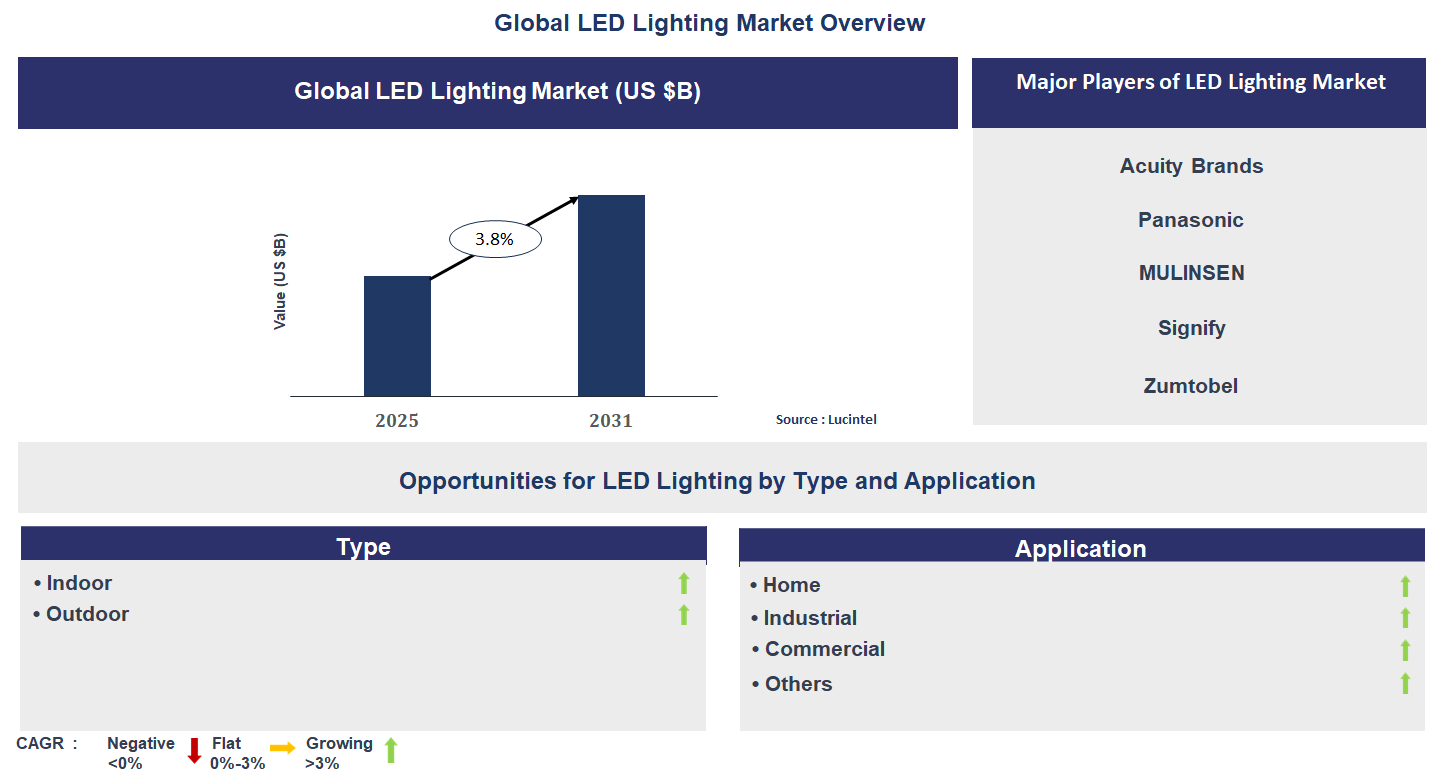
The future of the global LED lighting market looks promising with opportunities in the home, industrial, and commercial markets. The global LED lighting market is expected to grow with a CAGR of 3.8% from 2025 to 2031. The major drivers for this market are the increasing demand for affordable energy-efficient lighting, the rising environmental awareness, and the growing adoption of smart connected lighting systems.• Lucintel forecasts that, within the type category, outdoor is expected to witness higher growth over the forecast period.
• Within the application category, commercial is expected to witness the highest growth.
• In terms of region, APAC is expected to witness the highest growth over the forecast period. Gain valuable insights for your business decisions with our comprehensive 150+ page report. Sample figures with some insights are shown below.
Emerging Trends in the LED Lighting Market
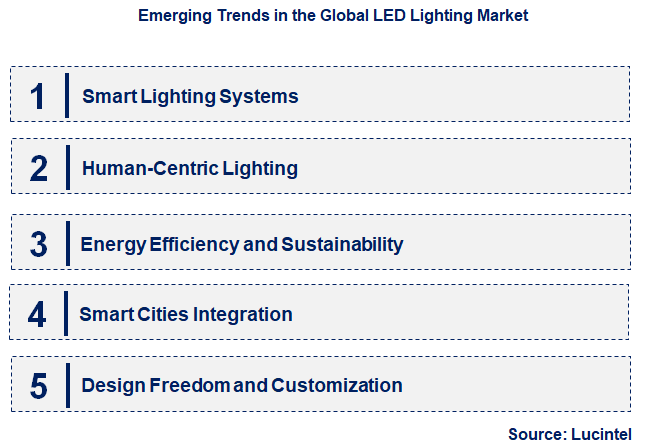
The LED lighting industry is witnessing a revolution fueled by technological innovation, green consciousness, and changing consumer behaviors. Here are five emerging trends shaping the future of LED lighting:• Smart Lighting Systems: LEDs, integrated with IoT technologies, represent one of the strongest trends in the lighting sector. Smart lighting provides such features as remote control, automation, and energy monitoring, making it possible for users to personalize lighting according to their needs or preferences. The trend is especially trendy in smart home and commercial spaces where efficiency, convenience, and sustainability are preferred. As consumers look for increased convenience, demand for smart LED lighting will keep growing.
• Human-Centric Lighting: Human-centric lighting focuses on enhancing well-being by simulating natural daylight cycles and adapting lighting according to the time of day. This movement is picking up momentum in offices, schools, hospitals, and homes. Through enhanced mood, productivity, and sleep quality, human-centric lighting systems are transforming indoor spaces. LED lighting systems that have been developed for this specific application are increasingly becoming the norm as research proves the positive impact of circadian rhythm-based lighting systems.
• Energy Efficiency and Sustainability: Energy efficiency continues to be among the key drivers for the use of LED technology. With increasing energy prices and growing environmental issues, businesses and consumers alike are turning to LED lighting solutions because of their low power consumption and long lifetime. LEDs are also eco-friendly since they contain no toxic chemicals and are recyclable. Manufacturers are also turning more and more to creating sustainable lighting solutions to address the increased market demand for green products.
• Smart Cities Integration: With cities becoming increasingly connected, there is a greater need for smart lighting solutions in public infrastructure, including streetlights and parks. Smart streetlights with sensors and IoT integration can dynamically adjust brightness depending on the environment, enhancing energy efficiency. These intelligent systems also provide advantages such as real-time monitoring and maintenance notification. Incorporating LED lighting into smart city infrastructure will be likely to contribute significantly to achieving more sustainable and efficient cities.
• Design Freedom and Customization: The need for customizable lighting is increasing, especially in residential and commercial applications. LED lights are growing more flexible, with variable color temperatures, dimming capabilities, and adaptable designs. This trend enables users to personalize lighting to suit particular requirements, be it for mood creation, functionality, or cost savings. More flexible and creative LED solutions are being provided by manufacturers to address varied customer tastes, opening opportunities for the market to grow. These new trends—smart lighting, human-oriented designs, energy efficiency, smart city integration, and customization—are transforming the LED lighting industry. As these trends keep advancing, LED lighting will also become increasingly sophisticated, efficient, and programmable to suit different applications, fueling further growth in the market.
Recent Development in the LED Lighting Market
The LED lighting industry has witnessed a number of major developments over the past few years, spurred by technological advancements, rising demand for energy-efficient products, and changing consumer tastes. Here are five of the major developments driving the market:• Smart Technology Integration: The use of IoT-based smart lighting systems has been one of the major advancements in the LED lighting industry. These systems provide functionalities such as remote control, automation, and energy management. Smart lighting is finding increasing application in residential, commercial, and industrial sectors through enhanced energy savings and user convenience. The trend towards smart homes and smart devices is fueling universal adoption of smart LED lighting.
• LED Efficiency Innovations: Ongoing advancements in LED technology have resulted in more energy-saving lighting systems with increased lumen output and extended lifespan. Recent innovations in LED chips and drivers have further made LEDs more energy-efficient, minimizing electricity usage while delivering enhanced light quality. This innovation is set to increase adoption in a broad spectrum of applications such as commercial, residential, and public infrastructure.
• Tunable White and Color-Changing Lighting: Tunable white and color-changing LED lights have become increasingly popular in both domestic and commercial settings. The ability to change the color temperature and brightness of the light provides users with a tailored lighting solution. This has made LEDs a favorite among business sectors, especially in retail and hospitality, where ambiance is everything.
• Eco-Friendly Products and Sustainability: Sustainability in the environment is still a major concern in the LED lighting industry. Companies are focusing on the creation of energy-efficient and recyclable LED lighting products, lowering the carbon emission of lighting systems. Eco-friendly practices, coupled with increasing green product demand, are defining the creation of new LED lighting products that conform to sustainability objectives.
• Government Regulations and Incentives: Tough government regulations on energy efficiency and sustainability have played a pivotal role in increasing the LED lighting market. In most places, rebates and incentives for energy-efficient lighting technologies are persuading businesses and consumers alike to switch to LEDs. Governments are also imposing aggressive targets for curbing carbon emissions, which is further propelling the use of LED lighting. These critical advances—smart technology integration, energy efficiency, tunable lighting, sustainability, and regulatory support—are profoundly influencing the LED lighting market. As such trends continue to evolve, the market is anticipated to experience a high rate of growth, fueled by innovation and demand for efficient, customizable, and eco-friendly lighting solutions.
Strategic Growth Opportunities in the LED Lighting Market
The LED lighting market offers various strategic growth opportunities in key applications. These growth opportunities are being fueled by technological advancements, shifting consumer behavior, and the growing focus on sustainability. The following are five strategic growth opportunities in the LED lighting market:• Lighting in Residences: The need for energy-efficient, customizable, and intelligent lighting systems in residential use is increasing. As consumers become more embracing of smart home technology, there is increasing potential for LED lighting manufacturers to provide products that can be compatible with home automation systems. LED lighting is also an attractive proposition to residential customers because of its affordability and energy efficiency.
• Commercial Lighting: Commercial properties, such as offices, retail, and hospitality establishments, offer excellent growth opportunities for LED lighting. The emphasis on energy savings, combined with the advantages of enhanced light quality and improved aesthetics, is generating momentum toward LED solutions in commercial lighting. Smart lighting systems are also increasingly popular in commercial environments, providing additional growth opportunities.
• Industrial Lighting: The industrial segment is increasingly using LED lighting for its reliability, efficiency, and cost-saving property. In factories, warehouses, and manufacturing units, LED lighting is emerging as a more durable and sustainable option compared to conventional lighting. With the advancement of sensor technology and automation, the industrial segment is the major growth opportunity for manufacturers of LED lighting.
• Public Infrastructure and Smart Cities: With governments investing in smart city projects, the need for efficient lighting in public infrastructure like streetlights, parks, and highways is expanding. LED lighting systems are ideal for use in these areas, providing both energy efficiency and improved performance. Smart streetlights that have sensors and IoT capability can adjust intensity according to surrounding conditions, further fueling use in urban infrastructure projects.
• Retail and Hospitality Lighting: The hospitality and retail sectors are embracing LED lighting solutions more and more to build ambiance, improve customer experience, and save on energy expenditure. With tunable white and color-changing capabilities, LED solutions enable businesses to build customized lighting experiences. The increasing emphasis on energy efficiency and sustainability in these markets provides a major growth opportunity for LED manufacturers. The LED lighting industry is set to grow across a variety of applications such as residential, commercial, industrial, public infrastructure, and retail segments. Companies that ride on these opportunities, emphasizing energy-efficient, tailored, and smart lightings, will be in a position to dominate this fast-changing market.
LED Lighting Market Driver and Challenges
The LED lighting industry is influenced by several drivers and issues that are technological, economic, and regulatory in nature. Knowledge of these drivers is essential to understanding how to navigate the changing landscape. Following are the most important drivers and issues impacting the market: The factors responsible for driving the LED lighting market include: 1. Demand for Energy Efficiency: With increasing energy prices and environmental pressure, there is a growing demand for energy-efficient lighting products, especially LEDs. LEDs use less power than conventional lighting, so they are the preference for consumers and companies alike who want to lower their carbon footprint. 2. Technological Developments: Ongoing technological advancements in LED technology, including enhancements in color rendering, dimming, and smart integration, are fueling the growth of the market. Such developments are making LEDs more functional and adaptable, leading to their increased use across different industries. 3. Regulatory Incentives and Support: Governments across the globe are making regulations and providing incentives to drive the use of energy-efficient lighting alternatives. This regulatory stimulus, coupled with tax rebates and subsidies, is convincing companies and consumers alike to switch to LED lighting. 4. Environmental Issues: Increasing concern for environmental sustainability is propelling the implementation of energy-efficient lighting technologies. LED lighting, which is more sustainable and durable than traditional light sources, is becoming increasingly popular as an alternative that is more environmentally friendly. 5. Cost Savings: The cost of LED lighting keeps falling as a result of improved manufacturing processes and economies of scale. As the price of LEDs becomes increasingly competitive with conventional lighting technologies, more businesses and consumers are making the transition to LEDs. Challenges in the LED lighting market are: 1. High Upfront Costs: While there are long-term cost savings, the initial expense of LED lighting may be greater than other conventional alternatives. The high upfront cost may discourage adoption, especially in price-conscious markets. 2. Limited Awareness in Emerging Markets: Limited awareness of the advantages of LED lighting exists in some developing nations. Accordingly, adoption rates are relatively low in these markets, in spite of the cost savings and environmental considerations. 3. Quality Control Issues: With the rapid growth of the LED market, some manufacturers may prioritize cost over quality, leading to concerns about product reliability and performance. These quality control issues can hinder consumer confidence and slow market growth. The LED lighting industry is propelled by technological advancements, energy efficiency needs, and regulatory stimuli, but is hindered by high upfront cost, low awareness in developing markets, and control over quality. Combatting these obstacles while taking advantage of the drivers will be the most important means of ensuring long-term growth in the industry.List of LED Lighting Companies
Companies in the market compete on the basis of product quality offered. Major players in this market focus on expanding their manufacturing facilities, R&D investments, infrastructural development, and leverage integration opportunities across the value chain. With these strategies LED lighting companies cater increasing demand, ensure competitive effectiveness, develop innovative products & technologies, reduce production costs, and expand their customer base. Some of the LED lighting companies profiled in this report include-• Acuity Brands
• Panasonic
• MULINSEN
• Signify
• Zumtobel
• Opple Lighting
• Current Lighting Solutions
• Foshan Electrical and Lighting
• Pak
• Savant Systems
LED Lighting Market by Segment
The study includes a forecast for the global LED lighting market by type, application, and region.LED Lighting Market by Type [Value from 2019 to 2031]:
• Indoor
• Outdoor
LED Lighting Market by Application [Value from 2019 to 2031]:
• Home
• Industrial
• Commercial
• Others
LED Lighting Market by Region [Value from 2019 to 2031]:
• North America
• Europe
• Asia Pacific
• The Rest of the World
Country Wise Outlook for the LED Lighting Market
The global LED lighting industry has witnessed accelerated expansion as innovation and investment have fueled energy-efficient lighting adoption across industries. Some of the leading countries include the United States, China, Germany, India, and Japan, which are charting the course with their emphasis on sustainability, smart technology, and energy conservation efforts. LED technology, with its longevity, low energy usage, and environmental advantages, is quickly taking the place of conventional lighting systems. In the below sections, we consider prominent developments in each country and their implications for the international LED lighting market.• United States: The United States LED lighting market has witnessed impressive growth, led by government regulations, green activities, and the demand for energy-saving solutions. The government initiative towards green building codes and energy efficiency, especially in the form of the Energy Star program, has speeded the use of LED lighting in the residential, commercial, and industrial spaces. Moreover, improvements in smart LED technology have provided IoT integration and control system automation within easier reach. Large retailers and public spaces are converting to LED solutions in order to minimize energy usage and lower operational expenses.
• China: China continues to lead the global market for LED lighting, with primary interest in enhancing energy efficiency and lowering carbon emission. The government has actively encouraged the shift to LED lighting through supporting policies, subsidies, and tax credits. Chinas huge industrial establishment, coupled with growing urbanization, is fueling demand for effective and durable lighting technologies. China is also making rapid advances in the smart lighting market, with emerging innovations that combine IoT technology, offering consumers greater control of lighting surroundings.
• Germany: Germany is one of the main drivers for the LED lighting industry in Europe, with a leadership role when it comes to energy efficiency and sustainability. The industrial sector in Germany has been quickly embracing LED technology, promoted by government policies and energy-saving legislation. Smart city investments from both public and private sectors have fueled the demand for smart lighting solutions, particularly in urban infrastructure. German manufacturers have led the charge in creating advanced LED systems with expanded capabilities, including tunable white lighting and better color rendering.
• India: Indias LED lighting industry has witnessed spectacular growth in recent times, spurred by policies such as the "Unnat Jyoti by Affordable LEDs for All (UJALA)" initiative to replace traditional incandescent bulbs with LED bulbs. Urbanization and infrastructure growth in India, coupled with an increase in electricity tariffs, has stimulated the growth of energy-efficient lighting solutions. Indias swift transition to LED technology, facilitated by both state subsidies and corporate efforts, is reducing consumption of energy and enhancing the quality of lighting.
• Japan: Japans LED lighting market has concentrated on technological advancement, energy efficiency, and adopting smart systems. The industrial and commercial industries in the country are embracing LED technology at a fast rate, fueled by stringent government policies on energy use. Smart LED lighting solutions, which can be integrated with IoT systems to provide remote control and automated functionality, are increasingly being used, especially for commercial buildings, offices, and public infrastructure. Japans focus on developing sustainable urban environments has resulted in increasing demand for energy-efficient and eco-friendly lighting technologies. Japanese businesses are at the forefront of creating innovative LED products and solutions.

Features of the Global LED Lighting Market
Market Size Estimates: LED lighting market size estimation in terms of value ($B). Trend and Forecast Analysis: Market trends (2019 to 2024) and forecast (2025 to 2031) by various segments and regions. Segmentation Analysis: LED lighting market size by type, application, and region in terms of value ($B). Regional Analysis: LED lighting market breakdown by North America, Europe, Asia Pacific, and Rest of the World. Growth Opportunities: Analysis of growth opportunities in different types, applications, and regions for the LED lighting market. Strategic Analysis: This includes M&A, new product development, and competitive landscape of the LED lighting market. Analysis of competitive intensity of the industry based on Porter’s Five Forces model.
FAQ
Q1. What is the growth forecast for LED lighting market? Answer: The global LED lighting market is expected to grow with a CAGR of 3.8% from 2025 to 2031. Q2. What are the major drivers influencing the growth of the LED lighting market? Answer: The major drivers for this market are the increasing demand for affordable energy-efficient lighting, the rising environmental awareness, and the growing adoption of smart connected lighting systems. Q3. What are the major segments for LED lighting market? Answer: The future of the LED lighting market looks promising with opportunities in the home, industrial, and commercial markets. Q4. Who are the key LED lighting market companies? Answer: Some of the key LED lighting companies are as follows:• Acuity Brands
• Panasonic
• MULINSEN
• Signify
• Zumtobel
• Opple Lighting
• Current Lighting Solutions
• Foshan Electrical and Lighting
• Pak
• Savant Systems Q5. Which LED lighting market segment will be the largest in future? Answer: Lucintel forecasts that, within the type category, outdoor is expected to witness higher growth over the forecast period. Q6. In LED lighting market, which region is expected to be the largest in next 5 years? Answer: In terms of region, APAC is expected to witness the highest growth over the forecast period. Q7. Do we receive customization in this report? Answer: Yes, Lucintel provides 10% customization without any additional cost.
Table of Contents
List of Figures
List of Tables
Methodology
- In-depth interviews of the major players in this market
- Detailed secondary research from competitors’ financial statements and published data
- Extensive searches of published works, market, and database information pertaining to industry news, company press releases, and customer intentions
- A compilation of the experiences, judgments, and insights of Lucintel’s professionals, who have analyzed and tracked this market over the years.


Buy Now
Choose a license that fits your team. Instant PDF delivery.
Prices exclude taxes. Instant delivery. Custom licensing available on request.
Key Questions
- • What are some of the most promising, high-growth opportunities for the LED lighting market by type (indoor and outdoor), application (home, industrial, commercial, and others), and region (North America, Europe, Asia Pacific, and the Rest of the World)?
- • Which segments will grow at a faster pace and why?
- • Which region will grow at a faster pace and why?
- • What are the key factors affecting market dynamics? What are the key challenges and business risks in this market?
- • What are the business risks and competitive threats in this market?
- • What are the emerging trends in this market and the reasons behind them?
- • What are some of the changing demands of customers in the market?
- • What are the new developments in the market? Which companies are leading these developments?
- • Who are the major players in this market? What strategic initiatives are key players pursuing for business growth?
- • What are some of the competing products in this market and how big of a threat do they pose for loss of market share by material or product substitution?
- • What M&A activity has occurred in the last 5 years and what has its impact been on the industry? For any questions related to LED Lighting Market, LED Lighting Market Size, LED Lighting Market Growth, LED Lighting Market Analysis, LED Lighting Market Report, LED Lighting Market Share, LED Lighting Market Trends, LED Lighting Market Forecast, LED Lighting Companies, write Lucintel analyst at email: helpdesk@lucintel.com. We will be glad to get back to you soon.


