
Market Report · July 29, 2026

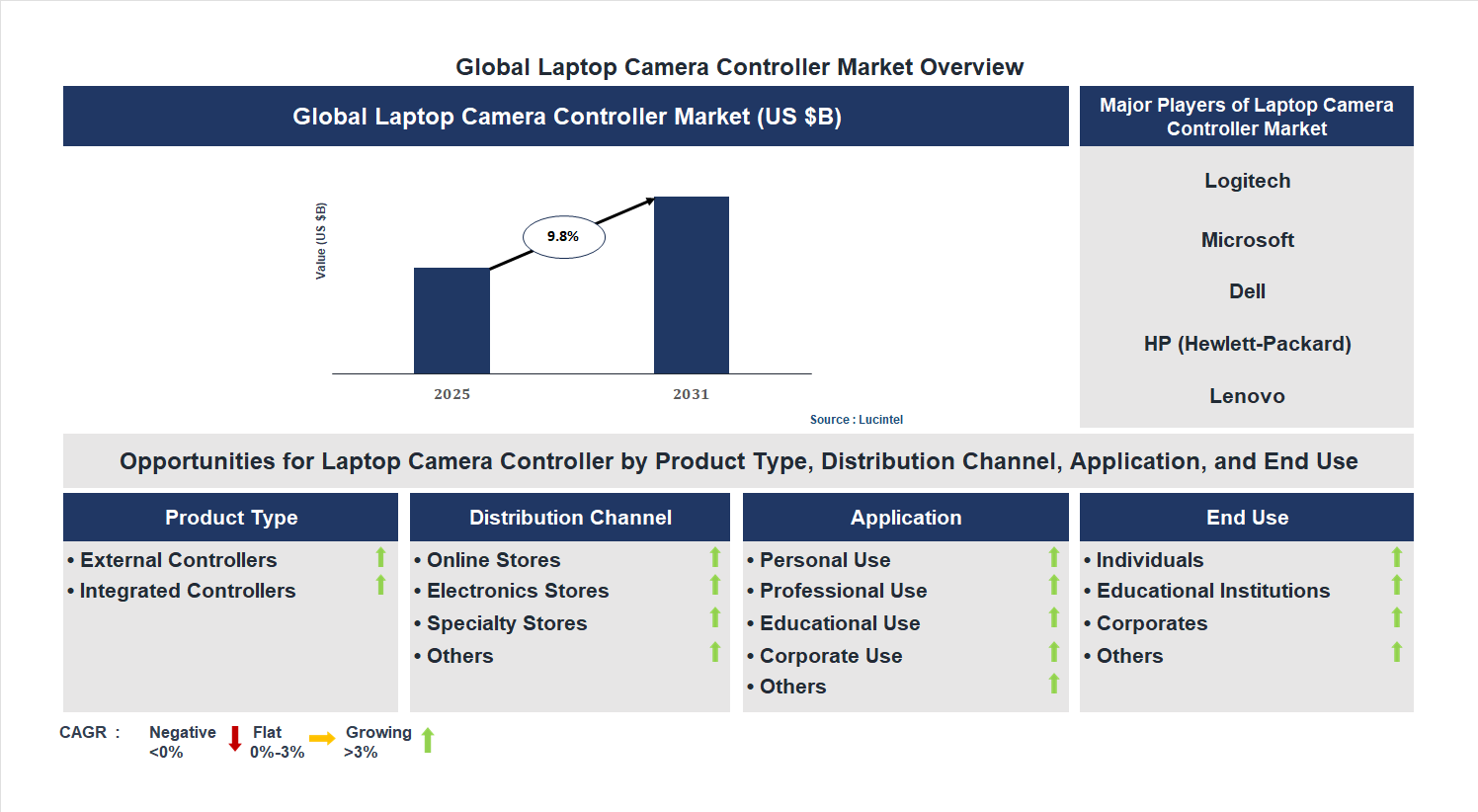
Key data points: The growth forecast = 9.8% annually for the next 7 years. Scroll below to get more insights. This market report covers trends, opportunities and forecasts in laptop camera controller market to 2031 by product type (external controllers and integrated controllers), distribution channel (online stores, electronics stores, specialty stores, and others), application (personal use, professional use, educational use, corporate use, and others), end use (individuals, educational institutions, corporates, and others), and region (North America, Europe, Asia Pacific, and the Rest of the World)
We'll send your sample report shortly.
• Lucintel forecasts that, within the product type category, external controller is expected to witness higher growth over the forecast period.
• Within the end use category, individual is expected to witness the highest growth.
• In terms of region, APAC is expected to witness the highest growth over the forecast period. Gain valuable insights for your business decisions with our comprehensive 150+ page report. Sample figures with some insights are shown below.
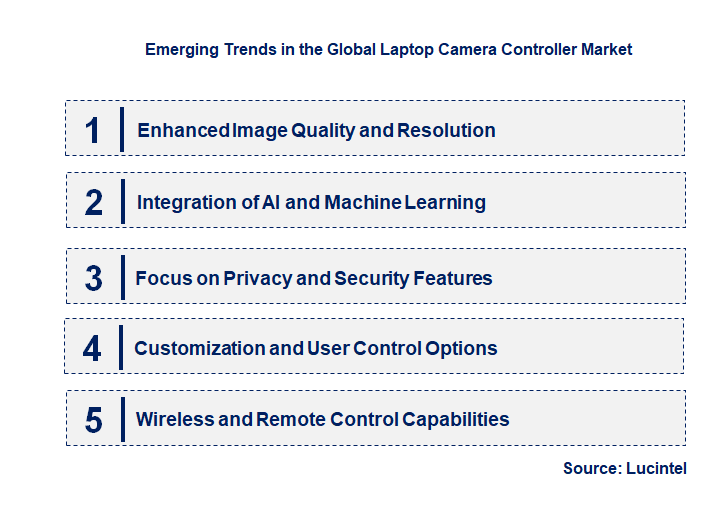
• Enhanced Image Quality and Resolution: The market is witnessing a shift towards controllers that support higher resolution and better image clarity. This trend is driven by the increasing demand for professional-quality video conferencing and content creation. Advanced controllers now incorporate features like auto-focus, exposure adjustment, and image stabilization, which improve overall video quality. As remote work and virtual collaboration become standard, users seek more reliable and high-quality camera controls, prompting manufacturers to innovate in hardware and software solutions. This trend elevates user experience and broadens the market scope for high-end controllers.
• Integration of AI and Machine Learning: AI-powered camera controllers are emerging as a key trend, offering features such as automatic framing, background blurring, and facial recognition. These intelligent systems adapt to user movements and environmental changes, providing a more seamless and professional video experience. AI integration reduces the need for manual adjustments, making camera control more intuitive and accessible. This trend enhances security through facial authentication and privacy features, while also enabling personalized user experiences. As AI technology advances, its incorporation into camera controllers is expected to become more sophisticated, significantly impacting the market.
• Focus on Privacy and Security Features: With increasing concerns over digital privacy, market players are prioritizing security features in camera controllers. This includes hardware-based privacy shutters, encryption of video streams, and user authentication protocols. These features help prevent unauthorized access and ensure user data protection, which is critical in corporate and sensitive environments. Privacy controls are becoming a key differentiator for manufacturers, aligning with regulatory standards and consumer expectations. The emphasis on security not only boosts user confidence but also opens new avenues for specialized security-focused camera controllers in the market.
• Customization and User Control Options: The market is moving towards offering more customizable camera control solutions tailored to individual and enterprise needs. Users can now select specific features such as zoom, pan, tilt, and preset configurations through intuitive interfaces. This flexibility enhances user experience, especially for content creators, educators, and corporate users who require precise control. Manufacturers are developing modular and software-based controllers that can be integrated with various platforms. Customization trends are fostering greater user engagement and expanding the market to diverse sectors, including education, entertainment, and security.
• Wireless and Remote Control Capabilities: The adoption of wireless technology in camera controllers is transforming user convenience and flexibility. Remote control options via Bluetooth, Wi-Fi, or dedicated apps allow users to operate cameras from a distance, facilitating more dynamic and professional setups. This trend is particularly relevant for live streaming, virtual events, and multi-camera environments. Wireless controllers reduce clutter and improve mobility, enabling more versatile use cases. As connectivity technology advances, the market is likely to see more sophisticated remote control features, further enhancing the overall user experience and expanding the application scope of laptop camera controllers. In summary, these trends are collectively reshaping the laptop camera controller market by enhancing image quality, integrating intelligent features, prioritizing security, enabling customization, and promoting wireless connectivity. These developments are driving innovation, improving user experience, and opening new opportunities across various sectors, ultimately transforming how users interact with and utilize laptop cameras in both personal and professional contexts.
• Integration of AI-based features: AI-powered camera controllers now offer automatic framing, background blurring, and facial recognition, enhancing video quality and user experience. This development improves remote communication clarity and security, making virtual meetings more professional and secure. It also reduces the need for manual adjustments, increasing convenience for users.
• Enhanced security protocols: New security measures, including encryption and biometric authentication, have been incorporated into camera controllers to prevent unauthorized access and hacking. These features are critical as privacy concerns grow, especially in corporate and sensitive environments. They bolster user confidence and compliance with data protection regulations.
• Wireless and remote control capabilities: The shift towards wireless connectivity allows users to control camera functions remotely via smartphones or tablets. This flexibility improves usability, especially for remote workers and content creators, enabling seamless adjustments without physical access to the device. It also supports integration with smart home and office systems.
• Development of customizable hardware: Manufacturers are offering customizable camera controllers tailored to specific user needs, such as gaming, streaming, or professional conferencing. This personalization enhances user satisfaction and broadens market reach. It also encourages innovation in hardware design and functionality.
• Adoption of 4K and higher resolution standards: The move towards higher resolution camera controllers provides sharper, more detailed video output. This development caters to the increasing demand for high-quality visuals in professional and entertainment applications. It elevates the overall user experience and supports advanced video conferencing and content creation. In summary, these recent developments are transforming the laptop camera controller market by making devices more intelligent, secure, flexible, and high-quality. They are driving increased adoption across various sectors, enhancing user satisfaction, and fostering innovation. As a result, the market is poised for continued growth, with a focus on security, customization, and superior visual performance.
• Enhanced Video Conferencing Capabilities: The integration of advanced camera controls improves video quality and user experience, boosting remote communication efficiency and supporting the rise of virtual meetings across corporate and educational sectors.
• Growth in Content Creation and Streaming: As content creators demand higher quality visuals, innovative camera controllers enable better control and customization, fueling the expansion of live streaming, vlogging, and digital media production markets.
• Increased Adoption in Education Sector: Interactive learning environments benefit from sophisticated camera controls, facilitating remote teaching and hybrid classrooms, which enhances engagement and learning outcomes.
• Rising Demand from Enterprise Security: Advanced camera controllers support surveillance and security applications, providing better management and real-time monitoring, thus strengthening security infrastructure in corporate and public spaces.
• Integration with IoT and Smart Devices: The convergence of camera controllers with IoT ecosystems enables seamless device management, automation, and remote access, opening new avenues for smart office and home environments. In summary, these growth opportunities are significantly impacting the laptop camera controller market by driving innovation, expanding application scope, and enhancing user experience. They are fostering market competitiveness and encouraging technological advancements, ultimately leading to increased adoption across various industries.
• Technological Innovation: The continuous evolution of camera hardware and controller software enhances user experience by providing better image quality, faster response times, and advanced features like auto-focus and low-light performance. Integration with AI and machine learning further improves functionality, enabling smarter control options. These technological advancements attract consumers seeking high-performance solutions and encourage manufacturers to develop innovative products, thereby expanding the market. As technology becomes more sophisticated and affordable, adoption rates are expected to increase, fueling overall market growth.
• Rising Remote Work and E-Learning Trends: The global shift towards remote work and online education has significantly increased the demand for high-quality video communication tools. Laptop cameras are now essential for virtual meetings, online classes, and content creation. This surge in demand has prompted manufacturers to develop specialized camera controllers that enhance video quality and user control. As organizations and individuals prioritize seamless virtual interactions, the market for laptop camera controllers is poised for substantial growth, driven by the need for reliable, high-performance video solutions.
• Increasing Focus on Privacy and Security: Growing concerns over data privacy and security have led to stricter regulations and standards for video devices. Consumers and organizations seek products that offer secure control features, such as encrypted data transmission and user authentication. Manufacturers are responding by integrating security protocols into camera controllers, which not only protect user data but also comply with regulatory requirements. This focus on security enhances consumer trust and opens new opportunities for market players to differentiate their products, ultimately fostering market expansion.
• Expansion of Consumer Electronics Market: The proliferation of laptops and portable devices globally has expanded the potential customer base for camera controllers. As consumers increasingly invest in high-quality peripherals to enhance their digital experience, demand for specialized camera controllers grows. Market expansion is further supported by the rising adoption of gaming, streaming, and content creation, where precise camera control is vital. This broadening consumer interest and the increasing penetration of electronic devices contribute significantly to the growth trajectory of the laptop camera controller market.
• Growing Adoption of Video Conferencing Solutions: The widespread adoption of video conferencing platforms across industries has created a sustained demand for enhanced camera control solutions. Businesses seek to improve virtual communication quality, requiring advanced camera controllers that offer features like zoom, pan, and tilt controls. This trend is reinforced by the need for professional-grade video setups in corporate environments, leading to increased investments in compatible hardware. As remote collaboration becomes a standard practice, the market for laptop camera controllers is expected to expand further, driven by the demand for superior video quality and control. The challenges facing this laptop camera controller market include:-
• Compatibility and Standardization Issues: The diverse range of laptop models and operating systems presents significant compatibility challenges for camera controllers. Manufacturers must develop versatile products that work seamlessly across various devices, which can be technically complex and costly. Lack of standardization in hardware interfaces and software protocols can hinder product adoption and limit market growth. Additionally, frequent updates to operating systems may require continuous software adjustments, creating ongoing development challenges and potential user dissatisfaction.
• Privacy and Regulatory Concerns: While privacy is a driver, it also poses challenges due to evolving regulations and consumer concerns. Manufacturers must ensure their products comply with strict data protection laws, which can increase development costs and time-to-market. Non-compliance risks legal penalties and damage to brand reputation. Furthermore, consumer apprehensions about potential misuse of camera controls may limit adoption, requiring companies to implement robust security features and transparent privacy policies, adding complexity to product development.
• Rapid Technological Obsolescence: The fast-paced nature of technology development means products can quickly become outdated. Companies face pressure to continuously innovate and upgrade their camera controllers to stay competitive. This rapid obsolescence can lead to increased R&D costs and inventory management issues. Additionally, frequent product updates may cause consumer hesitation or dissatisfaction if new features are not backward compatible, impacting overall market stability and growth prospects. In summary, the laptop camera controller market is shaped by significant technological advancements, increasing demand driven by remote work and e-learning, and heightened focus on security and privacy. However, challenges such as compatibility issues, regulatory compliance, and rapid technological changes pose hurdles for market players. Overall, these drivers and challenges collectively influence the market’s growth trajectory, requiring stakeholders to innovate strategically and address regulatory and technical complexities to capitalize on emerging opportunities.
• Logitech
• Microsoft
• Dell
• HP (Hewlett-Packard)
• Lenovo
• Apple
• ASUS
• Acer
• Samsung
• Sony
• External Controllers
• Integrated Controllers
• Online Stores
• Electronics Stores
• Specialty Stores
• Others
• Personal Use
• Professional Use
• Educational Use
• Corporate Use
• Others
• Individuals
• Educational Institutions
• Corporates
• Others
• North America
• Europe
• Asia Pacific
• The Rest of the World
• United States: The US market has seen rapid adoption of advanced laptop camera controllers with integrated privacy features, driven by heightened security concerns. Major tech companies are investing in AI-powered solutions for better image quality and user control. The rise of remote work has increased demand for seamless video conferencing, prompting innovations in controller design. Regulatory focus on data privacy has also influenced product features, emphasizing user security. Additionally, startups are exploring IoT-enabled camera controllers, expanding market options. Overall, the US remains a leader in integrating cutting-edge technology into laptop camera controllers.
• China: China’s market for laptop camera controllers is expanding swiftly, fueled by government initiatives promoting digital infrastructure and remote working. Domestic manufacturers are developing cost-effective, feature-rich controllers with enhanced privacy controls. The integration of AI and facial recognition technologies is gaining popularity, aligning with local security policies. E-commerce platforms facilitate rapid distribution, boosting accessibility. The Chinese market also emphasizes customization to meet diverse consumer needs, including gaming and professional use. As a result, China is becoming a significant hub for innovative and affordable laptop camera controller solutions, with strong government support fostering growth.
• Germany: In Germany, the focus is on high-quality, secure, and environmentally sustainable laptop camera controllers. The market is driven by strict data protection regulations, such as GDPR, which influence product design to prioritize user privacy. German manufacturers emphasize durability and eco-friendly materials, aligning with sustainability goals. The adoption of smart controllers with integrated encryption and biometric security features is increasing. The professional and enterprise sectors are primary consumers, seeking reliable and secure video communication tools. Additionally, collaborations between tech firms and research institutions are fostering innovation in ergonomic and energy-efficient controller designs, positioning Germany as a leader in secure and sustainable solutions.
• India: The Indian market for laptop camera controllers is witnessing rapid growth due to the surge in remote working and online education. Local manufacturers are focusing on affordable, feature-rich controllers to cater to a price-sensitive population. There is a rising demand for controllers with enhanced privacy features and compatibility with various devices. E-commerce platforms and regional distributors are expanding access to these products across urban and rural areas. The market is also seeing increased adoption of AI-enabled controllers for better image quality and security. Government initiatives promoting digital literacy and infrastructure development are further supporting market expansion, making India a key emerging market for innovative laptop camera controllers.
• Japan: Japan’s market emphasizes advanced technology, security, and user comfort in laptop camera controllers. The focus is on integrating AI and facial recognition for improved functionality and security. Japanese companies are developing controllers with ergonomic designs and high durability to meet professional standards. Privacy and data security are prioritized, with features like encryption and biometric access. The market also sees a trend toward eco-friendly materials and energy-efficient products, aligning with Japan’s sustainability goals. Collaboration between tech firms and academic institutions fosters innovation, especially in AI and IoT integration. Overall, Japan’s market is characterized by high-quality, secure, and technologically sophisticated laptop camera controllers.


• Logitech
• Microsoft
• Dell
• HP (Hewlett-Packard)
• Lenovo
• Apple
• ASUS
• Acer
• Samsung
• Sony Q5. Which laptop camera controller market segment will be the largest in future? Answer: Lucintel forecasts that, within the product type category, external controller is expected to witness higher growth over the forecast period. Q6. In laptop camera controller market, which region is expected to be the largest in next 5 years? Answer: In terms of region, APAC is expected to witness the highest growth over the forecast period. Q7. Do we receive customization in this report? Answer: Yes, Lucintel provides 10% customization without any additional cost.


Choose a license that fits your team. Instant PDF delivery.
Prices exclude taxes. Instant delivery. Custom licensing available on request.
Market Report · July 29, 2026
Market Report · July 15, 2026
Market Report · July 13, 2026
Trusted partner for strategic intelligence and business growth


Receive a complimentary market analysis tailored to your industry. Our analysts will identify key growth opportunities and competitive dynamics specific to your business.

Market size, growth rate, and key trend analysis for your specific sector.

Top competitor positioning and market share analysis.

Strategic recommendations backed by data-driven insights.
Get curated market intelligence and competitive moves straight to your inbox.
By subscribing, you agree to receive our monthly insights. Unsubscribe anytime.
Receive a complimentary market analysis tailored to your industry. Our analysts will identify key growth opportunities and competitive dynamics specific to your business.
Market size, growth rate, and key trend analysis for your specific sector.
Top competitor positioning and market share analysis.
Strategic recommendations backed by data-driven insights.
Get curated market intelligence, emerging trends, and competitive moves straight to your inbox each month.
By subscribing, you agree to receive our monthly insights. Unsubscribe anytime.
We'll send your sample report shortly.