
Market Report · July 31, 2026

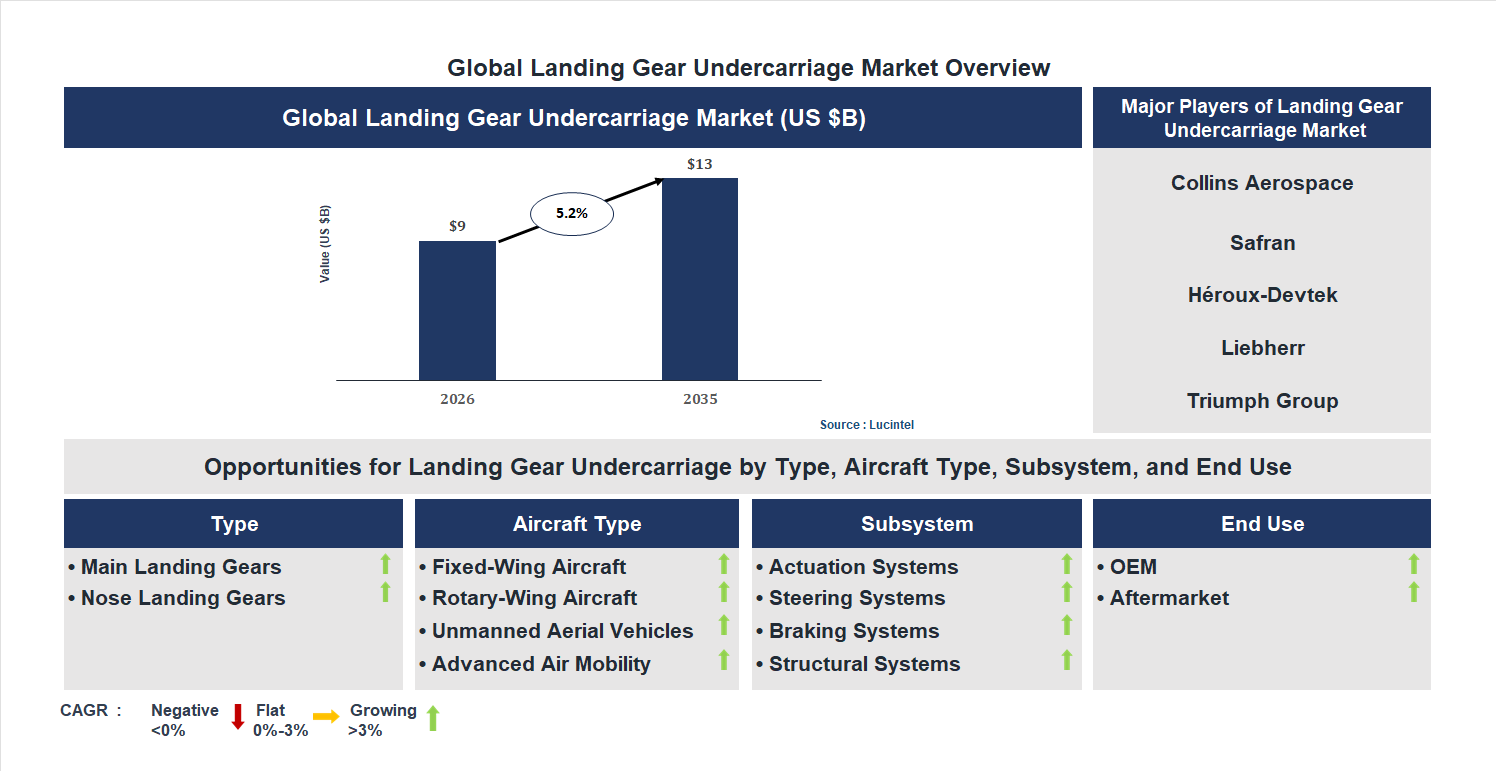
Key data points: The market size in 2035 = $13 billion, growth forecast = 5.2% annually for the next 8 years. Scroll below to get more insights. This market report covers trends, opportunities and forecasts in landing gear undercarriage market to 2035 by type (main landing gears and nose landing gears), aircraft type (fixed-wing aircraft, rotary-wing aircraft, unmanned aerial vehicles, and advanced air mobility), subsystem (actuation systems, steering systems, braking systems, and structural systems), end use (OEM and aftermarket), and region (North America, Europe, Asia Pacific, and the Rest of the World)
We'll send your sample report shortly.
• Lucintel forecasts that, within the type category, main landing gear is expected to witness higher growth over the forecast period.
• Within the aircraft type category, fixed-wing aircraft is expected to witness the highest growth.
• In terms of region, APAC is expected to witness the highest growth over the forecast period. Gain valuable insights for your business decisions with our comprehensive 150+ page report. Sample figures with some insights are shown below.
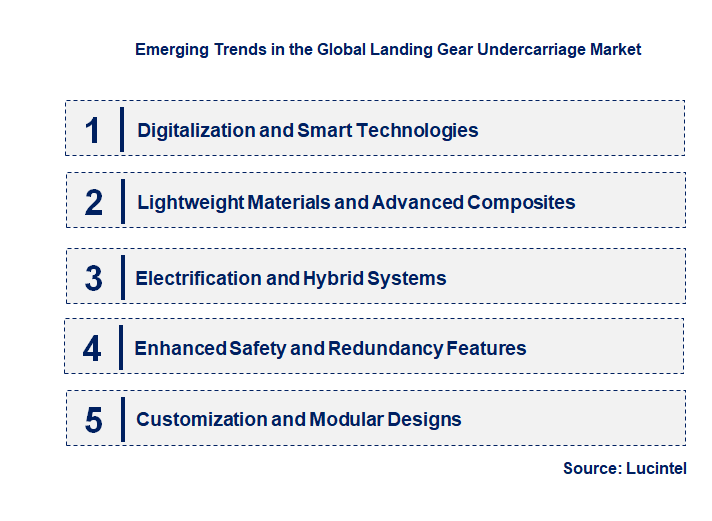
• Digitalization and Smart Technologies: Integration of IoT and sensors in landing gear systems is revolutionizing maintenance and monitoring. Real-time data collection allows predictive maintenance, reducing downtime and costs. Smart systems enhance safety by providing early warnings of potential failures, improving reliability. This trend also facilitates remote diagnostics, enabling quicker response times and better resource allocation. As digitalization advances, the market will see more intelligent, connected landing gear solutions that optimize performance and operational efficiency.
• Lightweight Materials and Advanced Composites: The adoption of lightweight materials such as carbon fiber composites and titanium alloys is significantly reducing aircraft weight. Lighter landing gear improves fuel efficiency and extends aircraft range, aligning with environmental regulations. These materials also offer higher strength-to-weight ratios, enhancing durability and safety. Manufacturers are investing in research to develop more resilient composites that withstand harsh operational conditions. This trend is crucial for meeting the demands of next-generation aircraft and reducing the overall carbon footprint of aviation.
• Electrification and Hybrid Systems: The shift towards electric and hybrid landing gear systems aims to improve energy efficiency and reduce emissions. Electrification enables smoother, quieter operations and simplifies maintenance by reducing hydraulic and pneumatic components. Hybrid systems combine traditional and electric power sources for optimized performance. This trend supports the broader move towards sustainable aviation and aligns with regulatory pressures to lower environmental impact. As technology matures, electrified landing gear is expected to become standard in new aircraft designs, offering operational and environmental benefits.
• Enhanced Safety and Redundancy Features: Safety remains a top priority, prompting innovations in redundancy and fail-safe mechanisms. Advanced locking systems, emergency retraction capabilities, and improved shock absorption are being integrated to prevent accidents and ensure reliable landing gear operation. These features are especially critical for military and commercial aircraft operating in diverse environments. Enhanced safety features also include better corrosion resistance and damage detection systems, which extend the lifespan of landing gear components. This trend underscores the industry’s commitment to passenger and crew safety through technological advancements.
• Customization and Modular Designs: Increasing demand for tailored solutions has led to the development of modular landing gear systems. These designs allow easier upgrades, maintenance, and repairs, reducing downtime and costs. Customization enables manufacturers to meet specific aircraft requirements, from small regional jets to large wide-body aircraft. Modular systems also facilitate rapid integration of new technologies, ensuring the market remains adaptable to future innovations. This trend enhances flexibility, reduces lead times, and supports the diverse needs of global aerospace operators, fostering a more responsive and efficient market environment. These emerging trends are transforming the landing gear undercarriage market by making systems smarter, lighter, more sustainable, safer, and adaptable. They are driving innovation, improving operational efficiency, and supporting the global push towards greener, safer, and more reliable aviation. As these trends continue to evolve, they will shape the future landscape of aerospace landing gear technology and market dynamics.
• Technological Innovations in Materials: Lightweight composites and advanced alloys are revolutionizing landing gear design, reducing aircraft weight and fuel consumption. These materials enhance durability and performance, leading to longer service life and lower maintenance costs. The adoption of such innovations is driven by the need for fuel efficiency and environmental sustainability. As a result, manufacturers are gaining a competitive edge by offering more reliable and cost-effective undercarriage systems, boosting market growth.
• Automation and Smart Systems Integration: The integration of sensors, IoT, and automation in landing gear systems improves safety, monitoring, and maintenance efficiency. Smart systems enable real-time diagnostics, predictive maintenance, and quicker response to issues, minimizing downtime. This technological shift reduces operational costs and enhances aircraft safety standards. Airlines and OEMs are increasingly adopting these solutions, which are expected to drive market expansion and innovation in landing gear undercarriage systems.
• Increasing Demand for Narrow-Body Aircraft: The surge in demand for narrow-body aircraft, especially in emerging markets, is fueling the need for efficient landing gear undercarriages. These aircraft are favored for short to medium-haul routes, requiring reliable and lightweight landing gear solutions. Manufacturers are developing tailored undercarriage systems to meet specific aircraft requirements, boosting sales and market share. This trend supports overall market growth, driven by rising air travel and fleet modernization initiatives.
• Focus on Maintenance, Repair, and Overhaul (MRO): The growing emphasis on MRO services for landing gear undercarriages is creating new revenue streams. Advanced inspection techniques, such as non-destructive testing, improve maintenance accuracy and safety. The market is witnessing increased investments in training, spare parts, and service centers. Enhanced MRO capabilities ensure compliance with safety standards and extend component lifespan, making this a critical growth driver for the industry.
• Regulatory Standards and Safety Enhancements: Stricter safety regulations and certification requirements are prompting innovations in landing gear systems. Manufacturers are developing systems that meet or exceed regulatory standards, ensuring aircraft safety and operational reliability. These standards drive technological advancements and quality improvements, fostering market confidence. Compliance costs are balanced by the benefits of safer, more efficient aircraft, ultimately supporting market stability and growth. The recent developments in materials, automation, aircraft demand, MRO services, and regulatory standards are collectively transforming the landing gear undercarriage market. These innovations are enhancing safety, efficiency, and sustainability, leading to increased market competitiveness and growth opportunities. As the industry continues to evolve, stakeholders are positioned to benefit from technological advancements and expanding global air travel, ensuring a robust future for the market.
• Increasing Demand for Commercial Aircraft and Military Vehicles: The rising production of commercial airplanes and military aircraft fuels the need for advanced landing gear systems. Enhanced safety features, lightweight materials, and improved durability are critical for modern aircraft, creating opportunities for manufacturers to innovate. The growth in air travel and defense budgets globally supports the expansion of landing gear undercarriage markets, especially in emerging economies where aviation infrastructure is rapidly developing.
• Adoption of Lightweight and High-Strength Materials: The shift towards lightweight composites and high-strength alloys in landing gear design aims to reduce aircraft weight, improve fuel efficiency, and enhance performance. Innovations in materials such as titanium and carbon fiber composites enable manufacturers to develop more durable, corrosion-resistant, and maintenance-friendly undercarriage systems. This trend is particularly prominent in the development of next-generation commercial and military aircraft, offering significant market growth potential.
• Integration of Smart Technologies and IoT for Maintenance: The incorporation of smart sensors and IoT technology into landing gear systems allows real-time monitoring of structural health and operational parameters. Predictive maintenance reduces downtime and operational costs, improving safety and efficiency. This technological integration opens new avenues for service providers and component manufacturers, fostering a shift towards more intelligent, connected landing gear solutions that meet evolving regulatory and safety standards.
• Focus on Sustainable and Eco-Friendly Solutions: Environmental concerns are prompting the development of eco-friendly landing gear components, such as recyclable materials and energy-efficient hydraulic systems. Manufacturers are exploring alternative lubricants and lightweight designs to reduce carbon footprints. These sustainable innovations align with global regulations and corporate responsibility initiatives, creating opportunities for market differentiation and growth in environmentally conscious segments of the aerospace industry.
• Expansion in Emerging Markets and Aftermarket Services: Rapid urbanization and increasing air travel in regions like Asia-Pacific and the Middle East drive demand for new aircraft and maintenance services. The aftermarket segment offers significant growth potential through spare parts, repair, and overhaul services. Strategic partnerships, localized manufacturing, and service centers are key to capturing market share in these expanding regions, supporting overall industry growth and technological advancement. These growth opportunities collectively shape a dynamic landscape for the landing gear undercarriage market, fostering innovation, sustainability, and regional expansion. Embracing technological advancements and evolving customer needs will enable industry players to strengthen their market positions. As demand for safer, lighter, and smarter landing gear systems increases, the market is poised for sustained growth, benefiting manufacturers, service providers, and end-users worldwide.
• Technological Innovation: The continuous development of lightweight, durable materials and advanced manufacturing techniques enhances the performance and safety of landing gear systems. Innovations such as composite materials and smart sensors improve reliability and reduce maintenance costs, making aircraft more efficient and safer. These technological advancements attract OEMs and airlines seeking to optimize operational efficiency, thereby fueling market growth.
• Rising Air Travel Demand: The global increase in passenger and cargo air traffic drives the need for new aircraft and the replacement of aging landing gear systems. Emerging markets, especially in Asia-Pacific, are experiencing rapid growth in air travel, creating a substantial demand for modern, reliable undercarriage components. This surge supports market expansion as manufacturers cater to both new aircraft production and aftermarket services.
• Regulatory and Safety Standards: Stringent safety regulations imposed by aviation authorities such as FAA and EASA necessitate the adoption of high-quality, compliant landing gear systems. These standards compel manufacturers to innovate and improve product safety features, which in turn boosts market confidence and adoption rates. Compliance with evolving regulations ensures market players remain competitive and trustworthy.
• Increasing Aircraft Fleet Modernization: Airlines are investing in fleet renewal to improve fuel efficiency and passenger experience. Modern aircraft require advanced landing gear systems that meet new performance standards. This trend accelerates demand for innovative undercarriage solutions, encouraging manufacturers to develop next-generation products aligned with airline modernization strategies. The challenges facing the Market include:
• High Manufacturing and Maintenance Costs: Developing and maintaining advanced landing gear systems involve significant expenses due to complex engineering, specialized materials, and rigorous testing. These costs can limit market entry for smaller players and increase overall expenses for airlines, impacting profitability and pricing strategies within the industry.
• Regulatory Compliance Complexities: Navigating diverse and evolving regulatory requirements across different regions can be challenging. Ensuring compliance involves extensive testing, certification processes, and documentation, which can delay product launches and increase costs. This complexity hampers rapid innovation and market responsiveness.
• Supply Chain Disruptions: The global supply chain for aerospace components faces disruptions due to geopolitical tensions, pandemics, and logistical issues. Shortages of critical materials and delays in component delivery can hinder production schedules, increase costs, and affect the timely availability of landing gear systems, thereby impacting overall market growth. In summary, the landing gear undercarriage market is shaped by technological advancements, rising air travel, and regulatory standards that promote growth and innovation. However, high costs, regulatory complexities, and supply chain issues pose significant challenges. These factors collectively influence market dynamics, requiring stakeholders to adopt strategic approaches to leverage opportunities while mitigating risks. The markets future depends on balancing innovation with operational and regulatory efficiencies to sustain growth in a competitive environment.
• Collins Aerospace
• Safran
• Héroux-Devtek
• Liebherr
• Triumph Group
• Main Landing Gears
• Nose Landing Gears
• Fixed-Wing Aircraft
• Rotary-Wing Aircraft
• Unmanned Aerial Vehicles
• Advanced Air Mobility
• Actuation Systems
• Steering Systems
• Braking Systems
• Structural Systems
• OEM
• Aftermarket
• North America
• Europe
• Asia Pacific
• The Rest of the World
• United States: The US market has seen substantial advancements with increased adoption of composite materials to reduce weight and improve fuel efficiency. Major aerospace companies are investing in automation and smart landing gear systems that enhance safety and maintenance. The rise of private space exploration has also spurred innovations in landing gear technology for space vehicles. Additionally, regulatory agencies are pushing for stricter safety standards, prompting manufacturers to upgrade existing systems. The US remains a leader in R&D, with collaborations between government agencies and private firms driving innovation.
• China: China’s landing gear market is rapidly expanding due to the booming domestic aircraft manufacturing industry. The country is focusing on developing indigenous landing gear systems to reduce reliance on imports and support its commercial and military aviation sectors. Investments in advanced materials and manufacturing processes are evident, aiming to improve durability and performance. The government’s strategic initiatives, such as the "Made in China 2025" plan, emphasize technological self-sufficiency. Chinese firms are also exploring eco-friendly and lightweight solutions to meet international environmental standards, positioning themselves as key players in the global market.
• Germany: Germany continues to lead in aerospace engineering, with a focus on high-precision, reliable landing gear systems for commercial and military aircraft. The country’s aerospace industry emphasizes innovation in materials and design, integrating digital technologies for predictive maintenance. German companies are also developing environmentally sustainable solutions, including lightweight alloys and energy-efficient systems. Collaborations within the European Union facilitate shared research projects, fostering advancements in safety and performance. The market is characterized by a strong emphasis on quality, safety, and compliance with international standards, maintaining Germany’s reputation as a top-tier aerospace hub.
• India: India’s landing gear market is witnessing rapid growth driven by expanding commercial aircraft fleets and military modernization programs. The country is investing in indigenous manufacturing capabilities to reduce import dependence, with several startups and established firms developing advanced landing gear components. Focus areas include lightweight materials, cost-effective manufacturing, and enhanced safety features. Government initiatives like "Make in India" aim to boost local production and innovation. The increasing demand for regional and narrow-body aircraft is fueling market expansion, with Indian companies increasingly collaborating with global aerospace firms to adopt cutting-edge technologies.
• Japan: Japan’s aerospace sector is characterized by technological innovation and a focus on safety and reliability. The country is investing in research to develop advanced landing gear systems that incorporate smart sensors and automation for better performance monitoring. Japanese firms are also exploring eco-friendly materials and energy-efficient designs to meet environmental standards. The market benefits from strong government support and collaborations with international aerospace companies. Japan’s emphasis on precision engineering and quality control ensures high standards in landing gear manufacturing. The country’s strategic focus on sustainable aviation fuels and green technologies is shaping future developments in the market.


• Collins Aerospace
• Safran
• Héroux-Devtek
• Liebherr
• Triumph Group Q6. Which landing gear undercarriage market segment will be the largest in future? Answer: Lucintel forecasts that, within the type category, main landing gear is expected to witness higher growth over the forecast period. Q7. In landing gear undercarriage market, which region is expected to be the largest in next 8 years? Answer: In terms of region, APAC is expected to witness the highest growth over the forecast period. Q8. Do we receive customization in this report? Answer: Yes, Lucintel provides 10% customization without any additional cost.


Choose a license that fits your team. Instant PDF delivery.
Prices exclude taxes. Instant delivery. Custom licensing available on request.
Market Report · July 31, 2026
Market Report · July 31, 2026
Market Report · July 31, 2026
Trusted partner for strategic intelligence and business growth


Receive a complimentary market analysis tailored to your industry. Our analysts will identify key growth opportunities and competitive dynamics specific to your business.

Market size, growth rate, and key trend analysis for your specific sector.

Top competitor positioning and market share analysis.

Strategic recommendations backed by data-driven insights.
Get curated market intelligence and competitive moves straight to your inbox.
By subscribing, you agree to receive our monthly insights. Unsubscribe anytime.
Receive a complimentary market analysis tailored to your industry. Our analysts will identify key growth opportunities and competitive dynamics specific to your business.
Market size, growth rate, and key trend analysis for your specific sector.
Top competitor positioning and market share analysis.
Strategic recommendations backed by data-driven insights.
Get curated market intelligence, emerging trends, and competitive moves straight to your inbox each month.
By subscribing, you agree to receive our monthly insights. Unsubscribe anytime.
We'll send your sample report shortly.